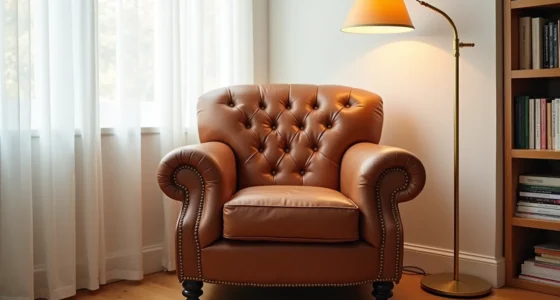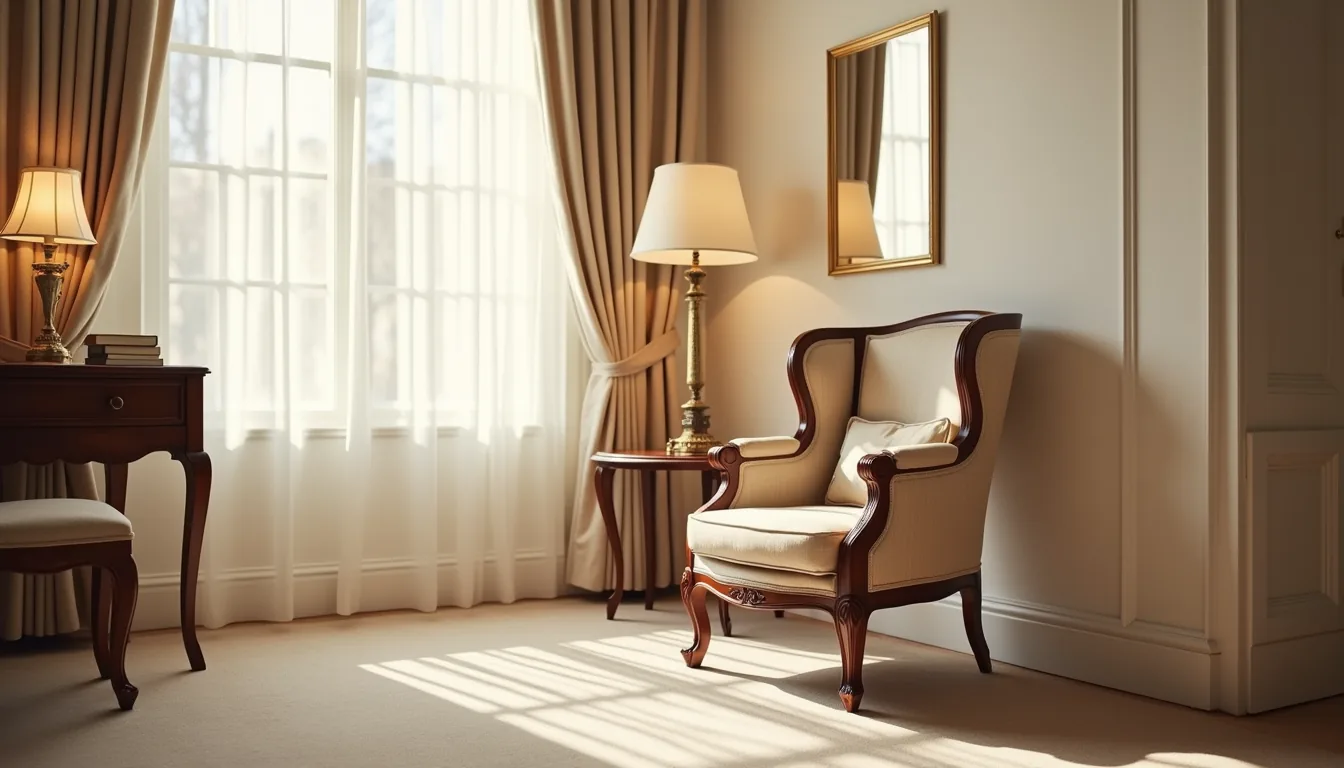

King Chair Design works when you treat the chair as the room’s anchor piece, its scale, materials, and silhouette dictate everything else around it. Before you buy, you need a clear answer to one question: do you want a throne-like statement or a low-profile lounger? The six approaches below break down how to match each style to your space, budget, and maintenance tolerance, from a $200 renter-friendly hack to a $2,000+ heirloom investment.
Key takeaways
- Measure first: A king chair’s back height should stay 12–18 inches below your ceiling, and its arm width must clear doorways by at least 4 inches on each side.
- Match the frame to your room’s traffic flow: in small spaces, choose a carved wood throne with a 28–32-inch seat depth, leaving 36 inches of clearance in front for walking.
- Choose upholstery by lifestyle: performance-grade polyester or Crypton fabric resists pets and spills, while linen or velvet suits low-traffic formal rooms but requires professional cleaning twice yearly.
- Budget smartly: a reupholstered vintage frame costs 30–50% less than new custom hardwood, but factor in $200–$600 for foam replacement and fabric yardage before committing.
The Tall-Back Silhouette: Scale and Proportion Rules
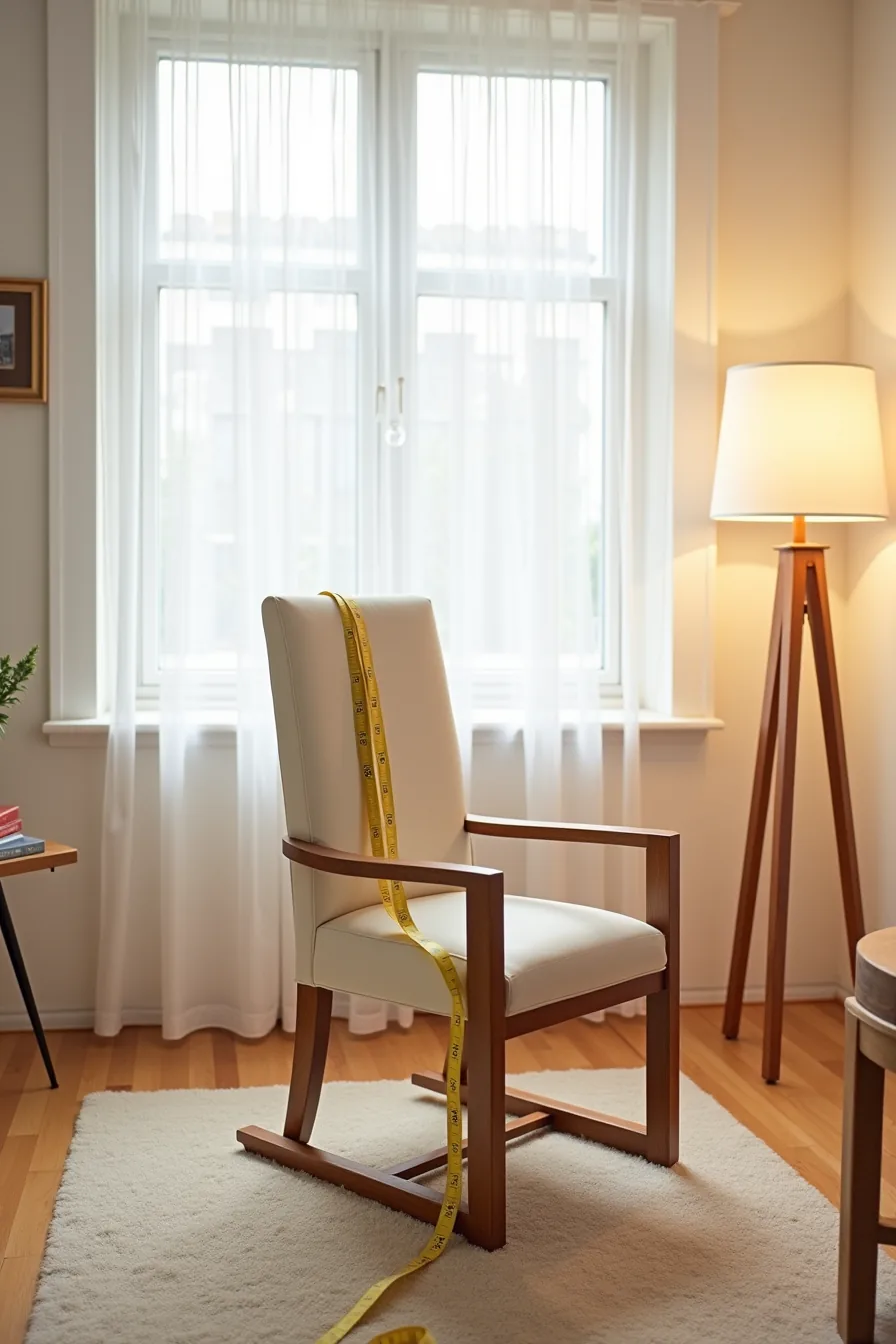
The tall-back silhouette is the defining feature of King Chair Design, but it demands disciplined proportioning. For a medium to large room, measure your ceiling height first, anything under 9 feet calls for a backrest that stops at 48-54 inches, preserving visual breathing room. Seat height should land between 18-20 inches, matching standard dining or lounge tables so the chair doesn’t dominate the conversation circle.
Picture this setup: a measuring tape draped across a high-back chair frame, revealing both seat height and backrest rise, with a medium-sized area rug anchoring the space and neutral walls framing the scene. The rug should extend at least 24 inches beyond the chair’s front edge to prevent a floating look. In a 12×14-foot room, a tall-back chair works best against a solid wall, not in a corner, where the vertical lines compress awkwardly.
Keep side tables lower than the chair’s armrest, and ensure 30-36 inches of clearance behind the chair for traffic flow.
Carved Wood: Statement Pieces for Formal Rooms
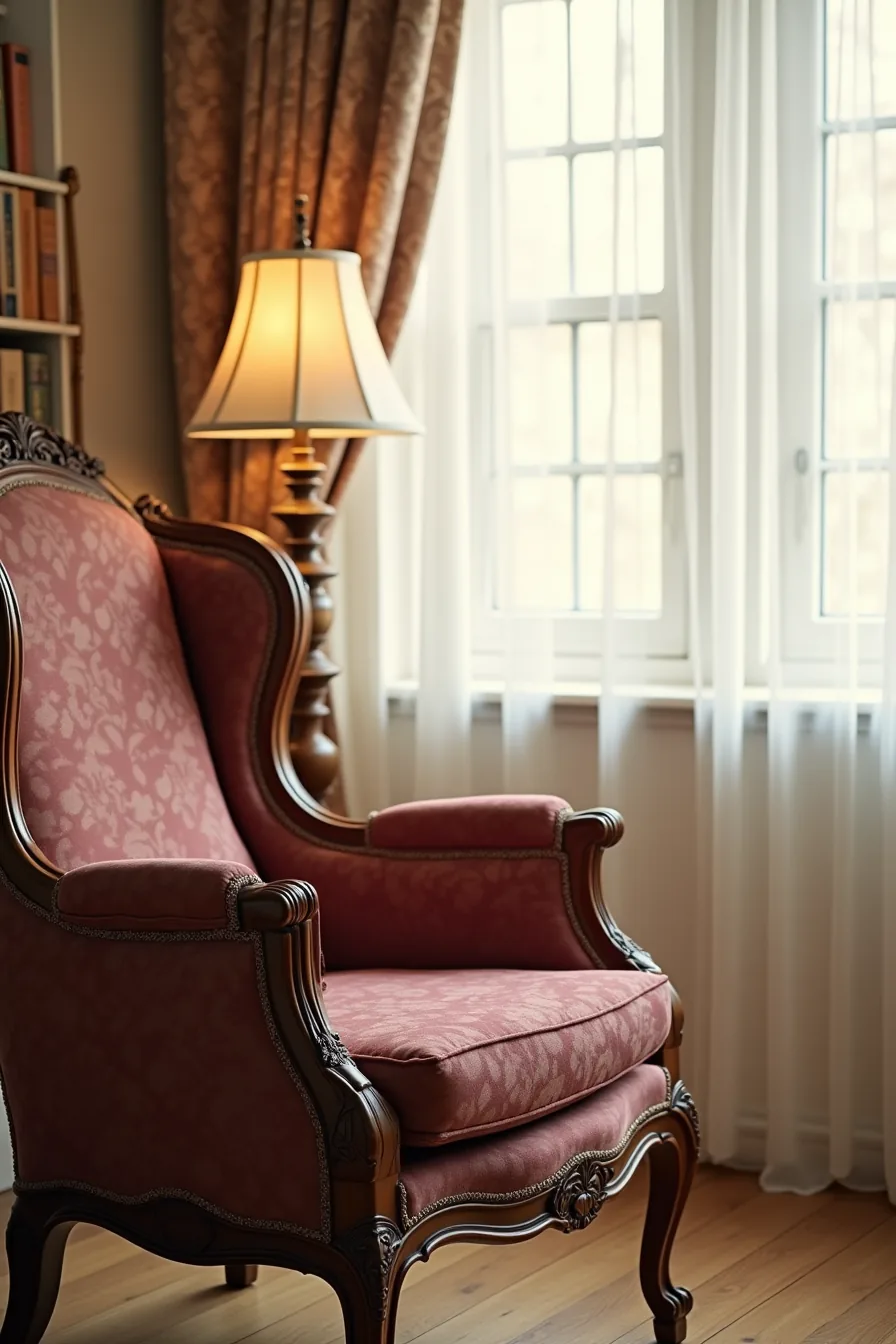
Carved wood is King Chair Design in its most literal form, with the joinery and relief work carrying the visual weight instead of upholstery. Walnut, mahogany, and cherry accept deep cuts cleanly and expose grain more honestly than painted softwoods, which hide flaws but also blur the artisan’s hand. The crest rail and leg turnings are where you’ll notice the difference: hand-carved pieces show irregular, flowing cuts, while machine-carved ones repeat with mechanical precision.
A walnut wingback with a carved crest and fluted leg turnings pairs naturally with a burgundy damask cushion and a patterned wallpaper accent wall, but the effect works only if the room’s other furniture stays quieter in texture. This route suits traditional, transitional, or library-style rooms, place it in an ultra-minimal space and the carving reads as clutter rather than craftsmanship. Expect to dust carved crevices weekly with a soft brush; the real maintenance cost is refinishing every 10-15 years, which runs several hundred dollars for a professional strip and re-polish.
The trade-off between carving vs upholstery comes down to this: carving gives you permanent structure that never sags, but it offers zero comfort by itself, you’ll still need a seat cushion, and it commits you to a formal aesthetic. Budget-conscious buyers can find solid-wood carved frames at antique auctions for $200-400, but budget for a structural check, since loose joints and hidden worm damage are common in older pieces.
Upholstered Thrones: Comfort and Modern Throne Concept Integration
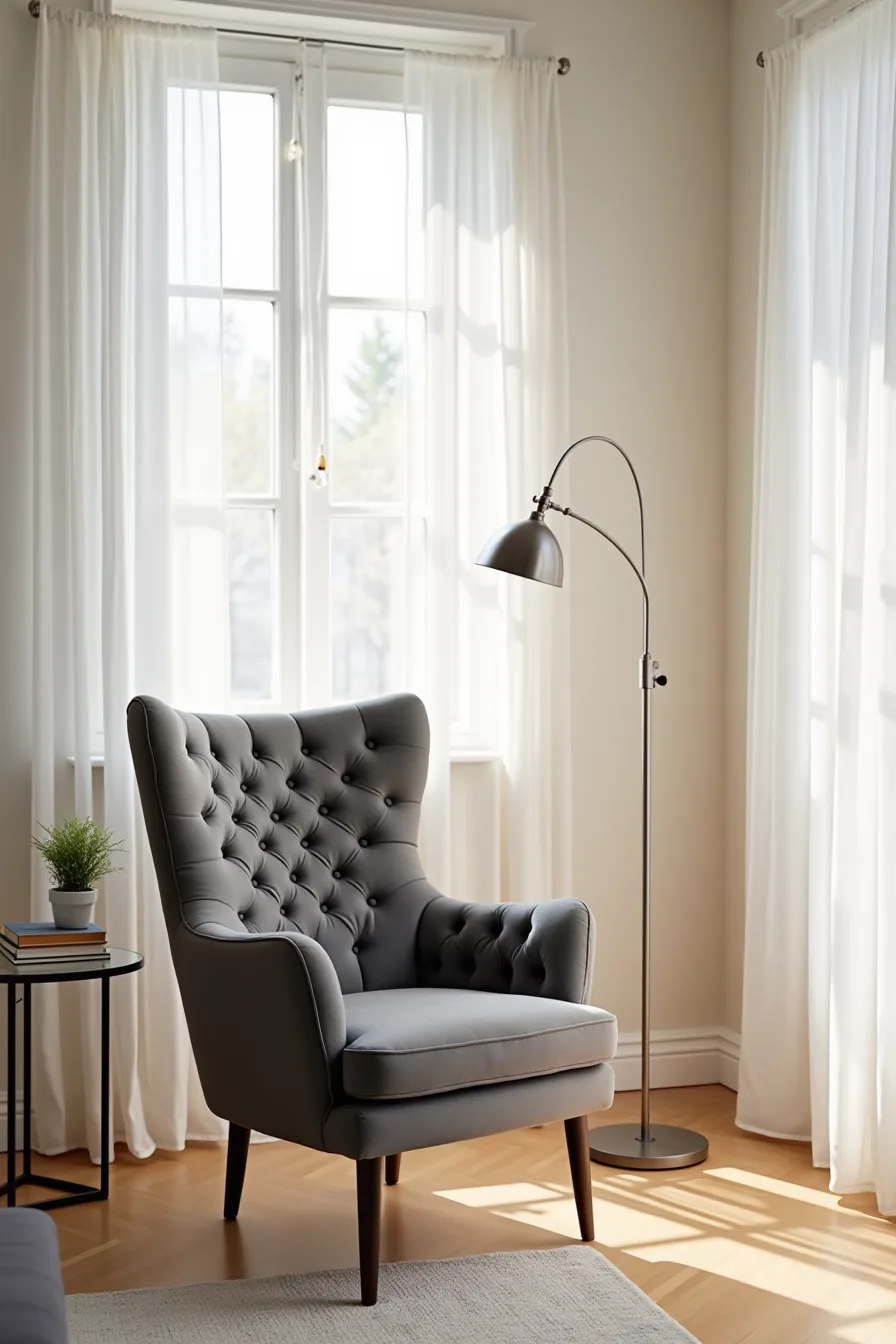
Upholstered high-back chairs translate the modern throne concept into everyday livability, prioritizing enveloping support over ornamental structure. The charcoal linen example here works because the tall backrest creates vertical drama without competing with neighboring furniture, the glass side table and slim contemporary floor lamp keep sightlines open, so the chair owns the corner without dominating it)Skip this container.
Fabric durability matters more than thread count. Linen blends in this price tier typically fall into 15,000–30,000 double-rub ratings, which suits a low-traffic reading nook but fails in a high-use family room, go for a synthetic microfiber if you’ve kids or pets. Cushion density directly affects longevity: foam rated at 1.8–2.5 pounds per cubic foot feels plush initially but loses resilience within two years, while 3.0+ pound high-resilience foam holds its shape for a decade but feels firmer on day one.
Button tufting adds a tailored look but creates crevices that collect dust and require monthly vacuuming with a brush attachment; skip deep tufting if you want washable covers. Expect to professionally clean upholstery every 12–18 months, costing $75–150, and rotate seat cushions monthly to prevent uneven compression.
Budget Route: Reupholstered Vintage Frames
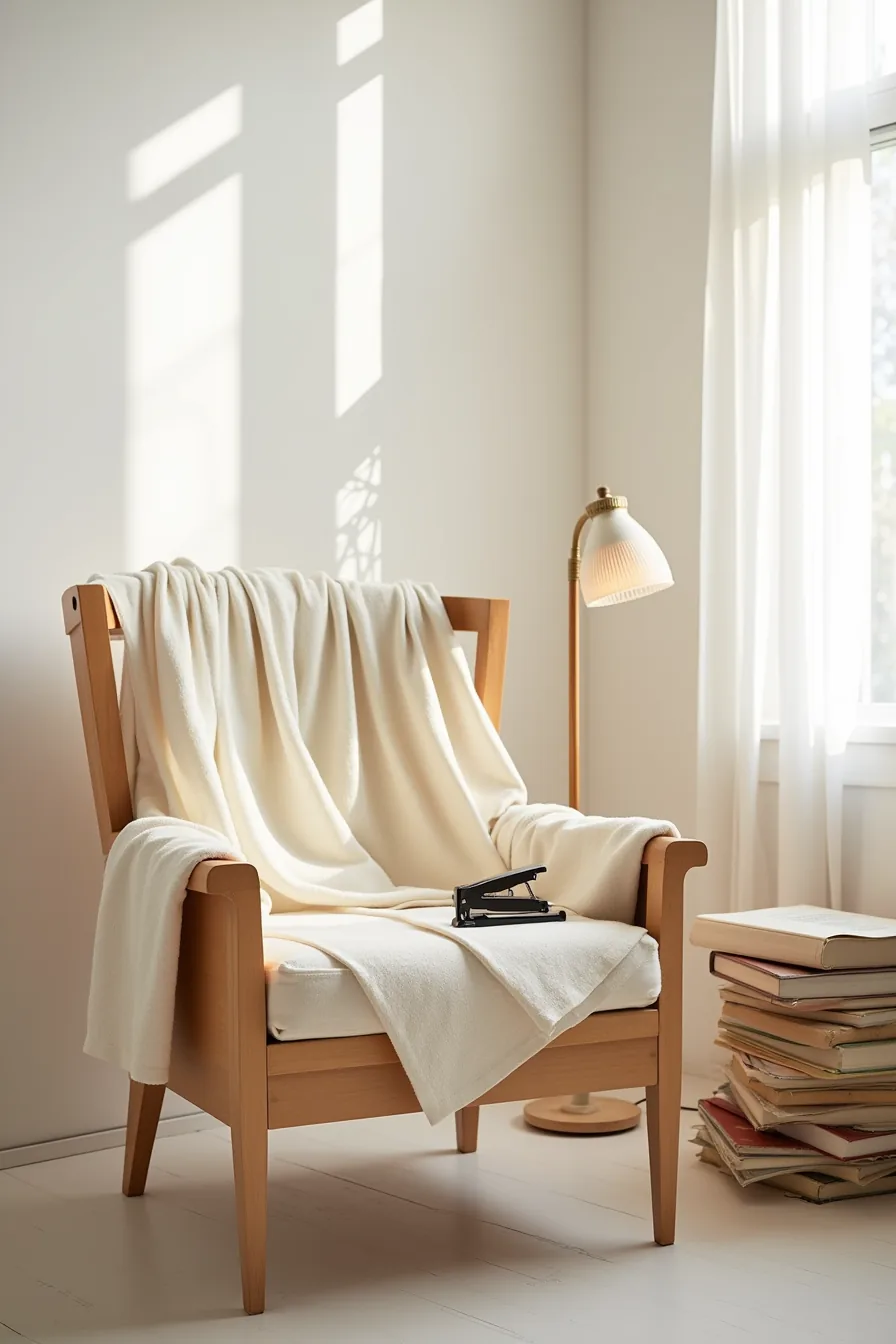
A secondhand wingback frame like the stripped wooden one in this setup typically costs $30–120 at estate sales or thrift stores, versus $800–2,500 for a comparable new piece. Look for solid hardwood joints, check that the arms don’t wobble and the back posts feel dense, since particleboard frames aren’t worth the fabric investment. The cream swatches draped across the seat let you compare tones against your room’s light before committing; hold them at the exact spot the chair will sit, because north-facing and south-facing windows change how the same fabric reads.
DIY reupholstery on a wingback runs 6–12 hours for a first-timer and requires a staple gun, webbing stretcher, and foam shears. Tackle it yourself only if the frame needs simple pad replacement; curved wing sections and rolled arms demand professional skills, a local upholsterer will charge $400–900 for labor plus materials on a frame this size. A mid-grade performance fabric with 30,000+ double-rub resistance costs $25–50 per yard, and a wingback needs 5–7 yards.
That puts a professional restoration at $600–1,200 total, still roughly half the price of new, and the solid-wood bones will outlast any new mass-produced frame.
Renter-Friendly Route: Modular and Removable Options
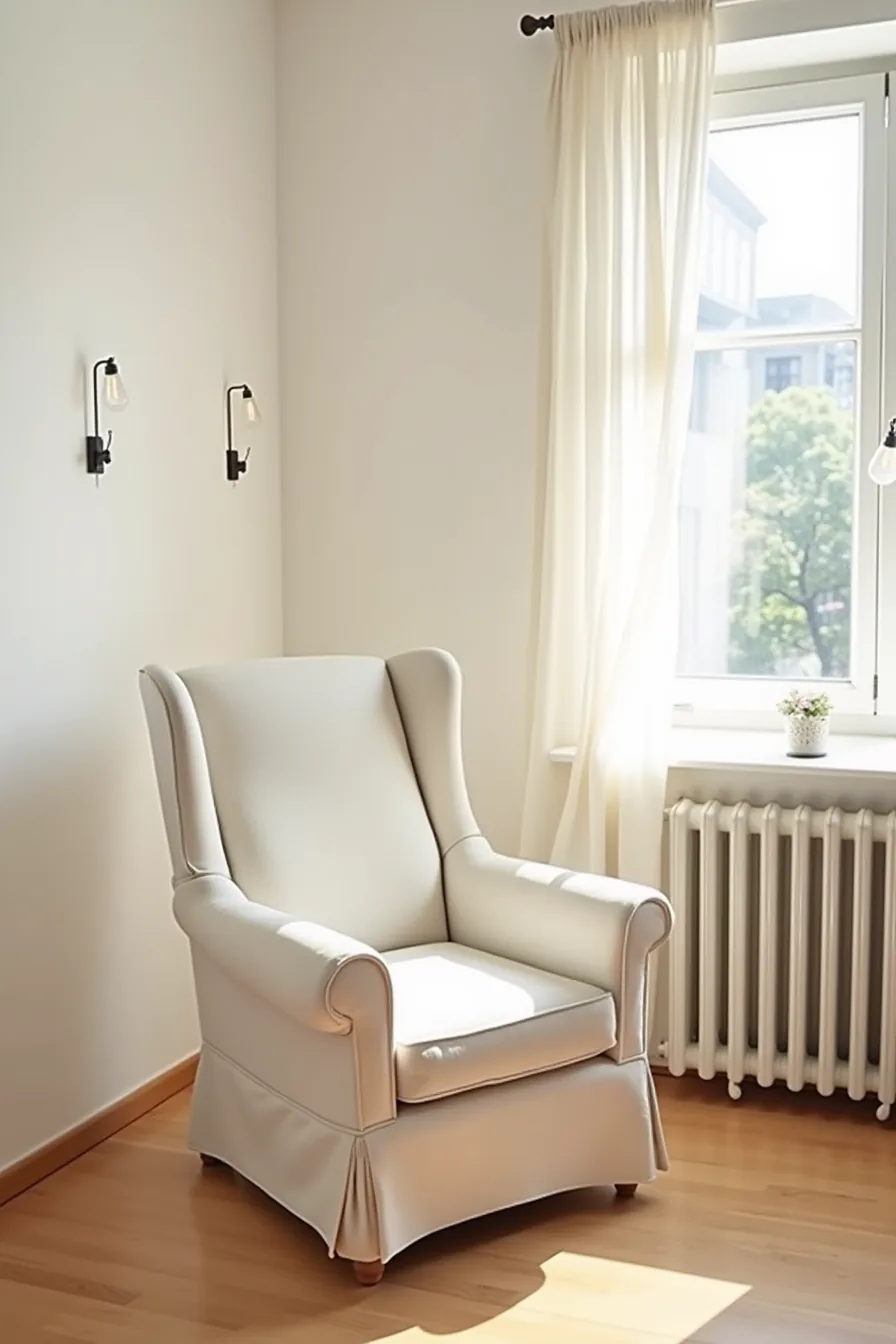
A freestanding high-back chair with a removable canvas slipcover is the most landlord-safe interpretation of King Chair Design. You get the commanding presence of a throne-style seat without a single screw entering the wall, the chair stands alone, and the slipcover unzips entirely for washing, which matters when white or natural fabrics face daily use.
Anchor the setup with adhesive hooks rated for 5–10 pounds to hold a neutral throw blanket; these remove cleanly with a hairdryer on low heat, leaving no residue on standard painted drywall. Skip any chair with attached ottomans or fixed side tables, since those limit your layout options when you move.
Prioritize pieces under 40 inches wide and with a slipcover that fits snugly at the armrests, loose fabric there reads as sloppy, not regal. A canvas or denim slipcover at $150–350 refreshes the look entirely, and you can swap it for a velvet version in winter without replacing the chair. This route suits renters, frequent movers, or anyone testing whether a high-back silhouette works before committing to custom upholstery.
Long-Term Investment: Custom Upholstery and Hardwood Construction
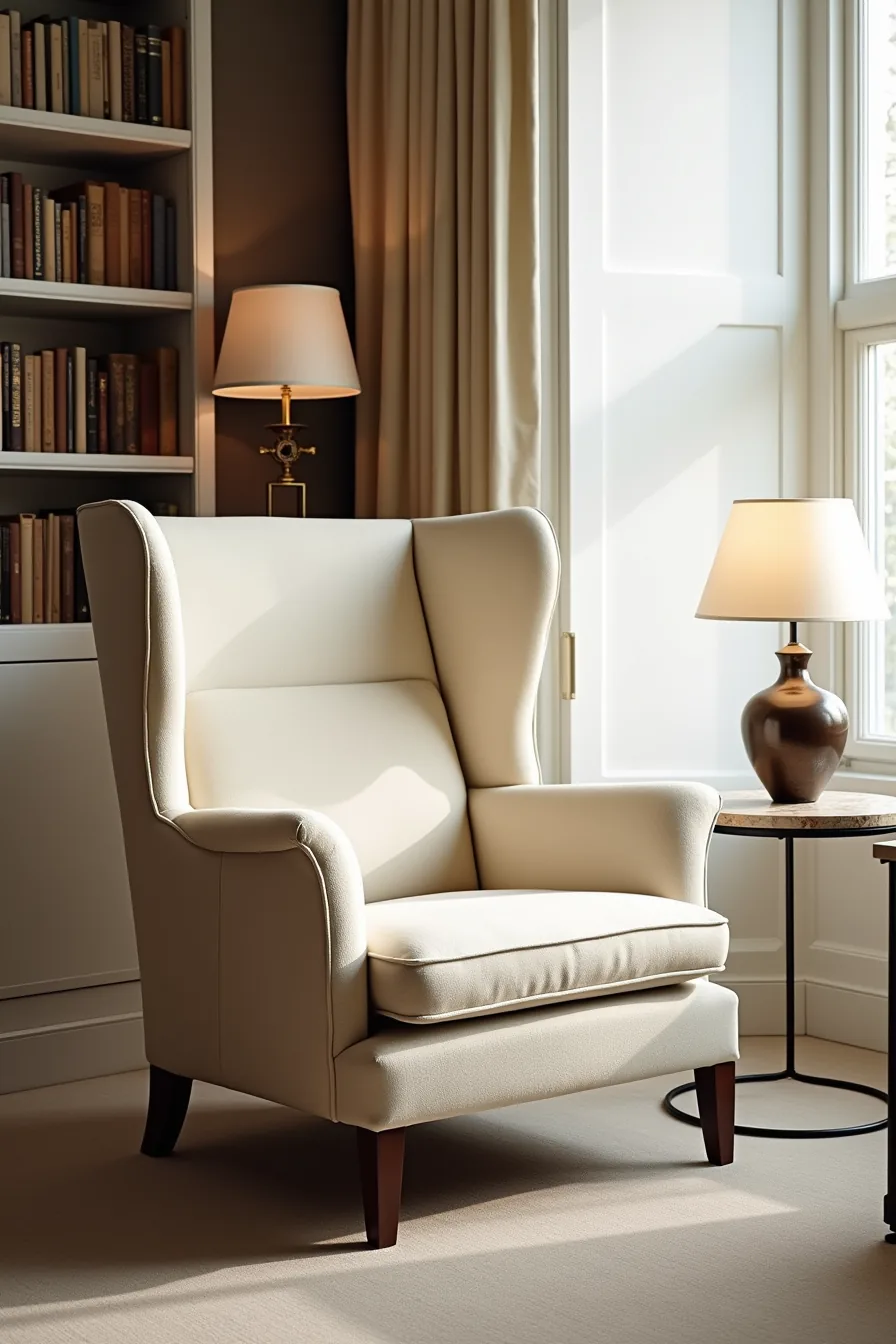
For King Chair Designs for spacious formal interiors, commission a piece with a hand-tied spring base, eight-way hand-tied springs distribute weight evenly and prevent the sinking or sagging that kills a throne’s posture. Inspect the frame before upholstery: kiln-dried hardwood (maple, oak, or ash) with reinforced corner blocks signals a chair that will outlast two decades of daily use; softwoods like pine will loosen within five years.
A luxury wool blend upholstery, typically 12–18 ounces per linear yard, resists crushing and pilling better than cotton, and it breathes in a way that synthetic microfiber can’t. Position the chair in a formal library with floor-to-ceiling shelving; the vertical shelving echoes the chair’s tall back, while a marble-top side table provides a cool, durable surface for a reading lamp without competing with the upholstery’s texture.
Budget for $2,500–6,000 for a fully custom piece, plus a 6–10 week lead time. The payoff is exact proportions for your room and a fabric you can reupholster in twenty years when the wool finally wears at the arms, a cost of $800–1,500 that still undercuts replacing the frame. This route suits homeowners with permanent layouts, high ceilings, and a willingness to wait for craftsmanship that mass production can’t replicate.
Where to start
Start by measuring your space before you shop. A king chair needs roughly 3 feet of clearance in front for comfortable sitting and standing, and about 2 feet on each side for visual breathing room. If your room runs smaller than 12 by 14 feet, skip oversized arms and high backs.
Match the chair to your primary use. Reading and napping call for deeper seats (22–24 inches) with higher backs; conversation spaces work better with shallower profiles around 20 inches. Choose performance fabrics if you’ve pets or kids, and budget for professional cleaning once a year to protect the upholstery.
Your next step is simple: grab a tape measure, mark the footprint with painter’s tape, and live with it for a day. That single test prevents the most common sizing mistakes before you commit.
Frequently Asked Questions
What is the minimum room size to accommodate a king chair without blocking circulation?
You need a room at least 10 by 12 feet. Keep 18–24 inches of clearance on three sides. Smaller spaces fail because the chair’s deep seat and high back consume walking paths.
How do I choose between carved wood and upholstered fabric for a king chair?
Choose carved wood for formal, low-traffic rooms where you want visual weight and easy dusting. Choose upholstered fabric for daily lounging, but accept that it requires vacuuming and spot-cleaning weekly to prevent grime buildup.
Can a king chair work in a small bedroom or does it need a formal living room?
Yes, it works in a small bedroom if you select a slimmer-arm, lower-back version and place it at the foot of the bed. A 10-by-10-foot room still works, provided the chair is under 40 inches wide.
What maintenance schedule should I expect for an upholstered king chair versus a wooden one?
Upholstered chairs need vacuuming weekly, spot-cleaning monthly, and deep cleaning every 6–12 months. Wooden chairs require dusting weekly and polishing quarterly. Expect to re-tighten joints on wooden frames annually, and re-stuff cushions on upholstered models every 3–5 years.