Modern chair design isn’t a single look, it’s a spectrum from stark geometric frames to soft, sculpted curves, and the version that works for you depends on your room’s dimensions, your daily habits, and how much maintenance you’re willing to accept. This guide breaks down six concrete interpretations, each with the scale, material, and cost trade-offs you’ll face. You’ll leave knowing exactly which route fits your space, your budget, and your tolerance for upkeep, without a single useless aesthetic adjective.
Key takeaways
- Measure doorways and hall widths before buying any chair; most modern designs with deep seats or wide arms won’t clear a 30-inch standard interior door without disassembly.
- Opt for mixed materials like powder-coated steel frames with plywood seats to cut maintenance, wipe-down surfaces outperform upholstered options in high-traffic kitchens or entryways.
- In compact rooms, choose chairs with exposed legs and 16-18 inch seat heights to visually open floor space, but keep at least 24 inches of clearance for walking paths.
- For rentals, prioritize lightweight aluminum or molded plastic chairs under 15 pounds that you can move without wall damage, and reserve solid oak or leather investments for permanent homes.
Geometric Minimalism: Clean Lines for Tight Spaces
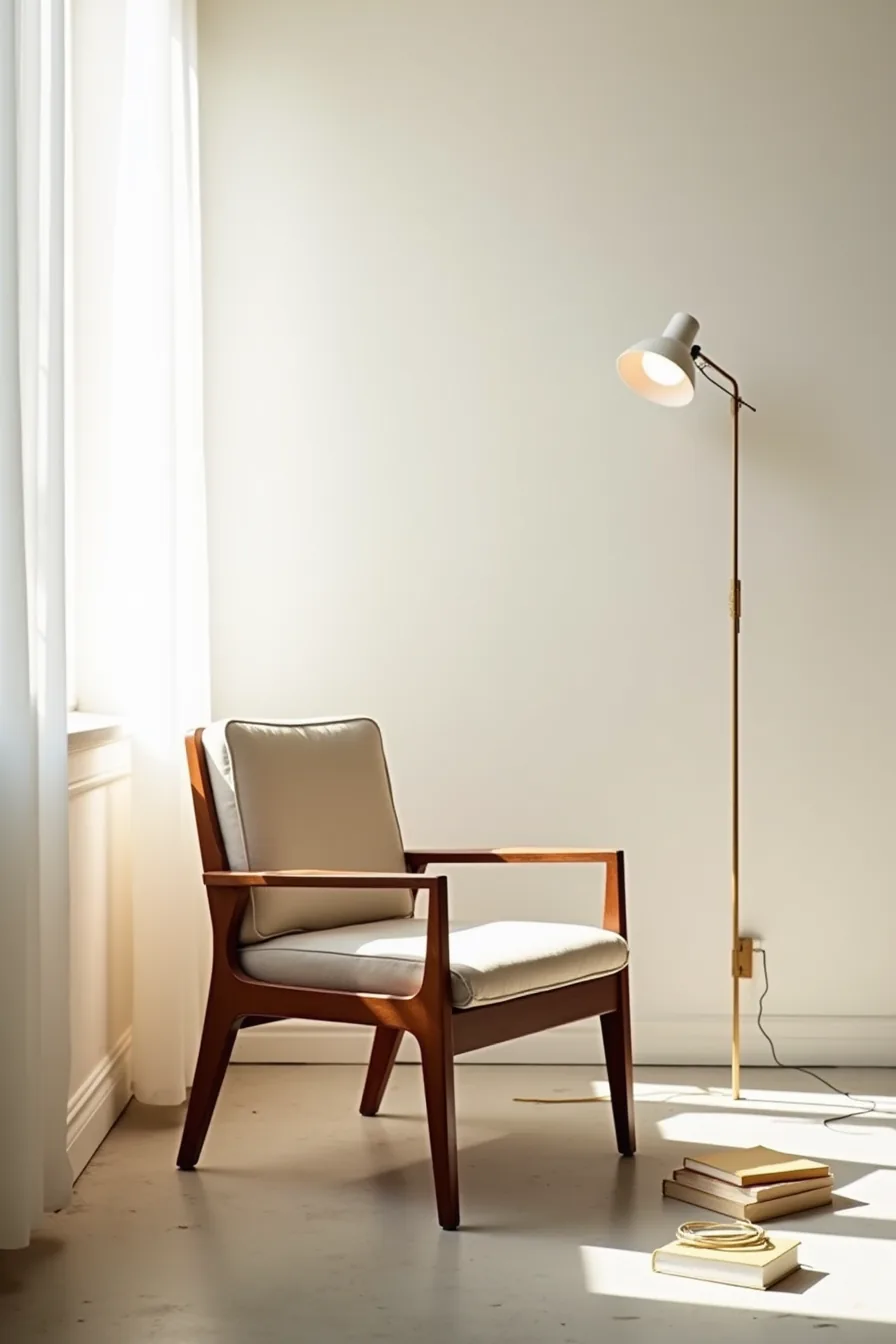
A low-profile geometric chair with an exposed dark wood frame is your smartest ally when floor space is scarce. The sharp-edged silhouette and visible structural legs eliminate visual bulk, letting the chair feel like part of the architecture rather than an obstacle. In a studio corner, positioning it flush against the wall preserves a clear walking path of at least 30 inches, which keeps the room functional without sacrificing style.
When you measure with a tape laid flat along the floor, prioritize seat height (typically 17–19 inches) and overall depth under 30 inches. This ensures the chair tucks neatly under a small desk or folds visually into a tight footprint. The concrete floor beneath it grounds the design, making the dark wood frame pop while requiring zero rug maintenance.
For a small space, this geometric approach beats curved alternatives because it offers more usable surface area, curves vs geometry is a genuine trade-off, but geometry wins when every inch counts.
Curved Comfort: Softness Within Modern Boundaries
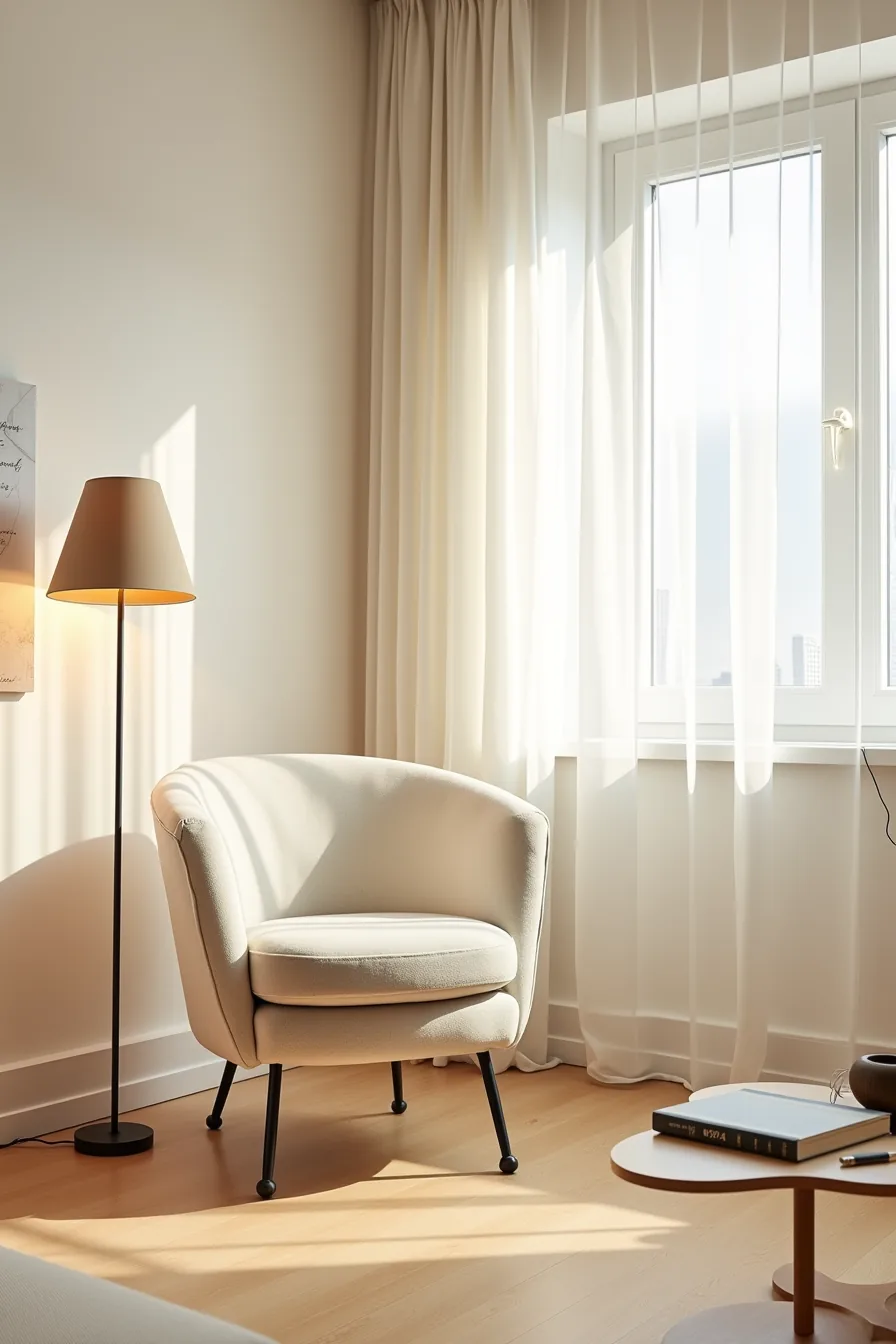
The curved lounge chair with its cream upholstery and thin steel legs resolves the geometry-vs-softness debate in favor of ease. Its rounded back and seat follow your body’s natural resting posture, while the exposed steel legs lift the silhouette so it never reads as a bulky blob. On light wood flooring, the pale cream fabric brightens the room’s lower third, making the chair feel lighter than its actual mass.
This design suits medium to large living rooms where you’ve 3–4 feet of clearance on at least one side for getting in and out comfortably. Choose it when you want a reading nook or conversation anchor that invites lingering rather than quick sitting. Expect to vacuum the upholstery weekly and treat spills immediately, cream fabric shows wear faster than darker tones.
The steel legs require only occasional wiping, but they’ll scratch wood flooring if you drag the chair, so lift when repositioning.
Mixed-Material Chair Construction: Durability and Visual Contrast
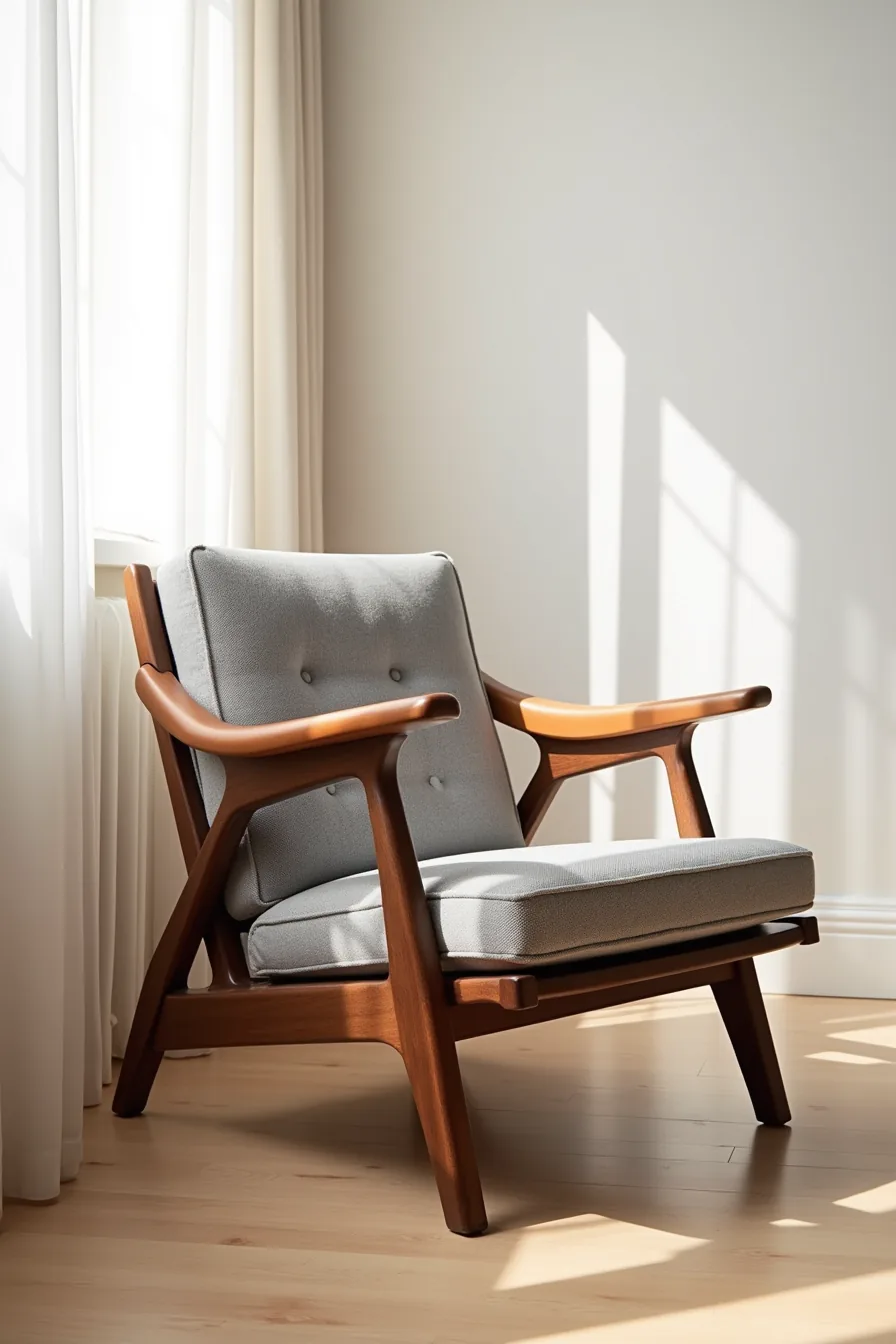
A mixed-material chair stacks different components, each with a distinct job. A walnut frame provides structural stability, black metal brackets reinforce the high-stress joints, gray wool upholstery handles the seat’s daily wear, and tan leather armrests absorb the oils and friction from your hands. This pairing creates modern impact through honest material contrast: the warm wood softens the industrial metal, while the leather breaks up the wool’s monotony.
The result is a chair that reads as deliberate and engineered, not decorated.
This construction suits homes where you want a piece that ages visibly but gracefully. Walnut scratches and dents with use, and wool pills over time; leather develops a patina, none of it looks broken, just lived-in. For a rental, choose this route because you can swap the chair out without altering walls or floors, and minor surface wear won’t jeopardize a security deposit.
Expect to condition the leather armrests every 3-4 months and vacuum the wool weekly. Metal brackets need only a dry cloth wipe, but check the bolts for tightness twice a year, loose fasteners are the first failure point.
Modern in a Classic Room: Bridging Style Periods
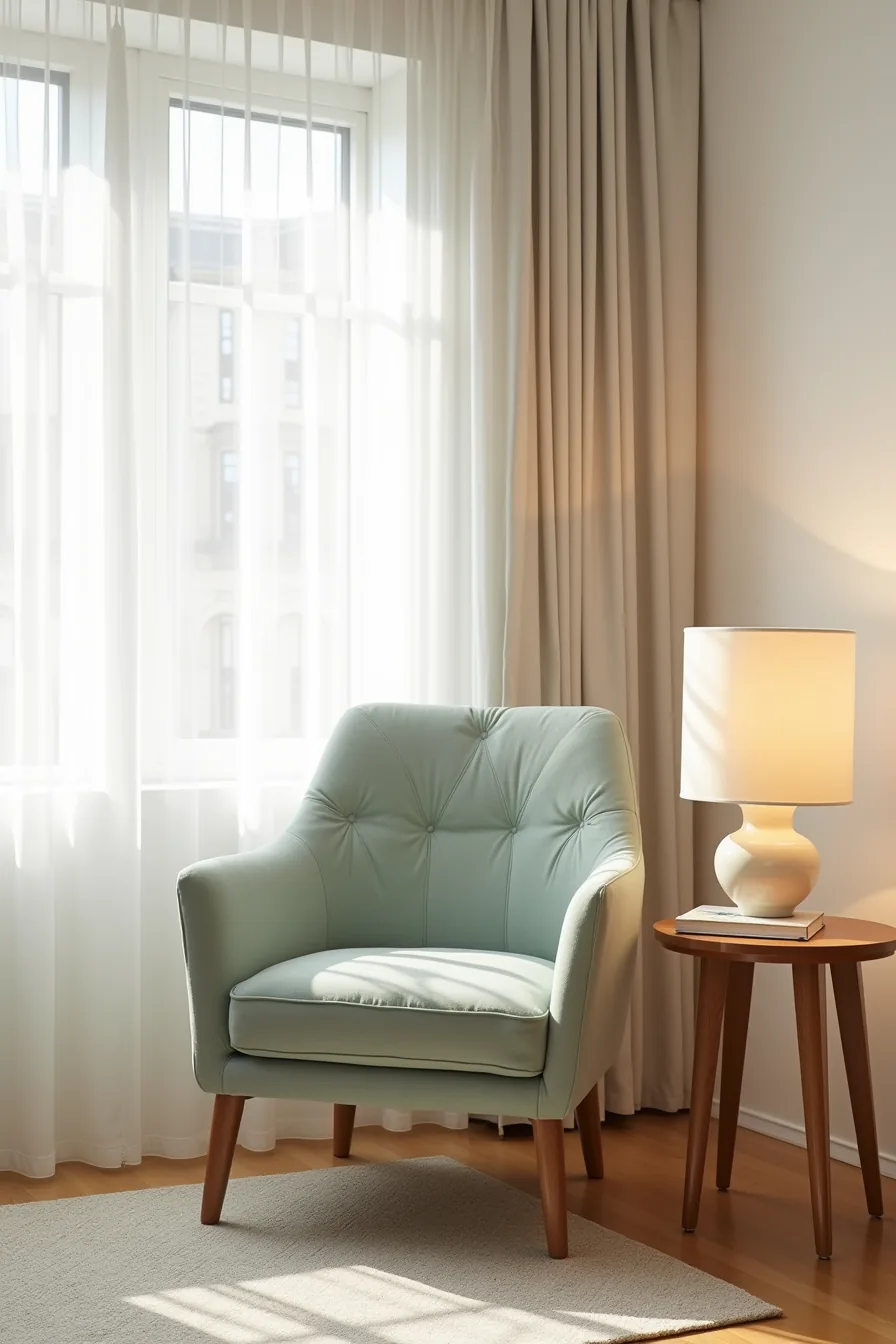
A modern chair in muted sage upholstery beside a traditional side table with curved legs creates tension that works, if you handle the scale. The chair’s clean lines and low profile visually counter the table’s ornamental silhouette, while the sage tone softens the contrast. Match seat height to the table’s scale within a 2-3 inch range so the pairing reads as intentional rather than accidental.
This strategy suits transitional rooms, think crown molding, wainscoting, or a fireplace mantel that leans older than 1980. Keep the palette limited: the sage gray-green blends with the neutral wall while the patterned rug anchors both pieces. For a small room, choose a compact chair (around 30-32 inches wide) and pull the rug 6-8 inches under both chair and table legs to unify the zone.
In larger spaces, allow 18-24 inches between chair and table to let each piece breathe.
Choose textured but low-maintenance fabric in sage, performance weaves resist fading and handle pet traffic. Avoid high-gloss finishes; matte materials bridge eras more convincingly.
Modern Chair Designs That Improve Compact Living Spaces
Compact living demands seating that performs double duty, and nesting chairs deliver the most square footage savings per dollar. The stackable pair in a studio corner occupies roughly 24-28 inches of wall space when nested, then separates into two full-size seats for guests. Push the bottom chair fully under a desk to reclaim that floor area entirely, you lose about 15 inches of legroom underneath, so reserve this move for desks you use while standing or for a vanity.
Swivel chairs earn their footprint in a one-bedroom by replacing both a desk chair and a reading seat. A 26-30 inch base rotates to face your workspace, then pivots toward natural light for breaks without dragging the chair across the floor. Look for a 360-degree swivel with a weighted base; lightweight models tip when you lean forward to type.
Modular ottoman-style chairs split into separate pieces that reconfigure as extra seating, a footrest, or a side table. In a studio, two modules stack vertically against a wall when not in use, freeing a 20-24 inch floor circle for yoga or vacuuming. Place modular pieces along a shorter wall, not in the main traffic path, and keep at least 30 inches of clearance to the nearest doorway.
Budget, Rental, and Investment Routes: What to Buy When
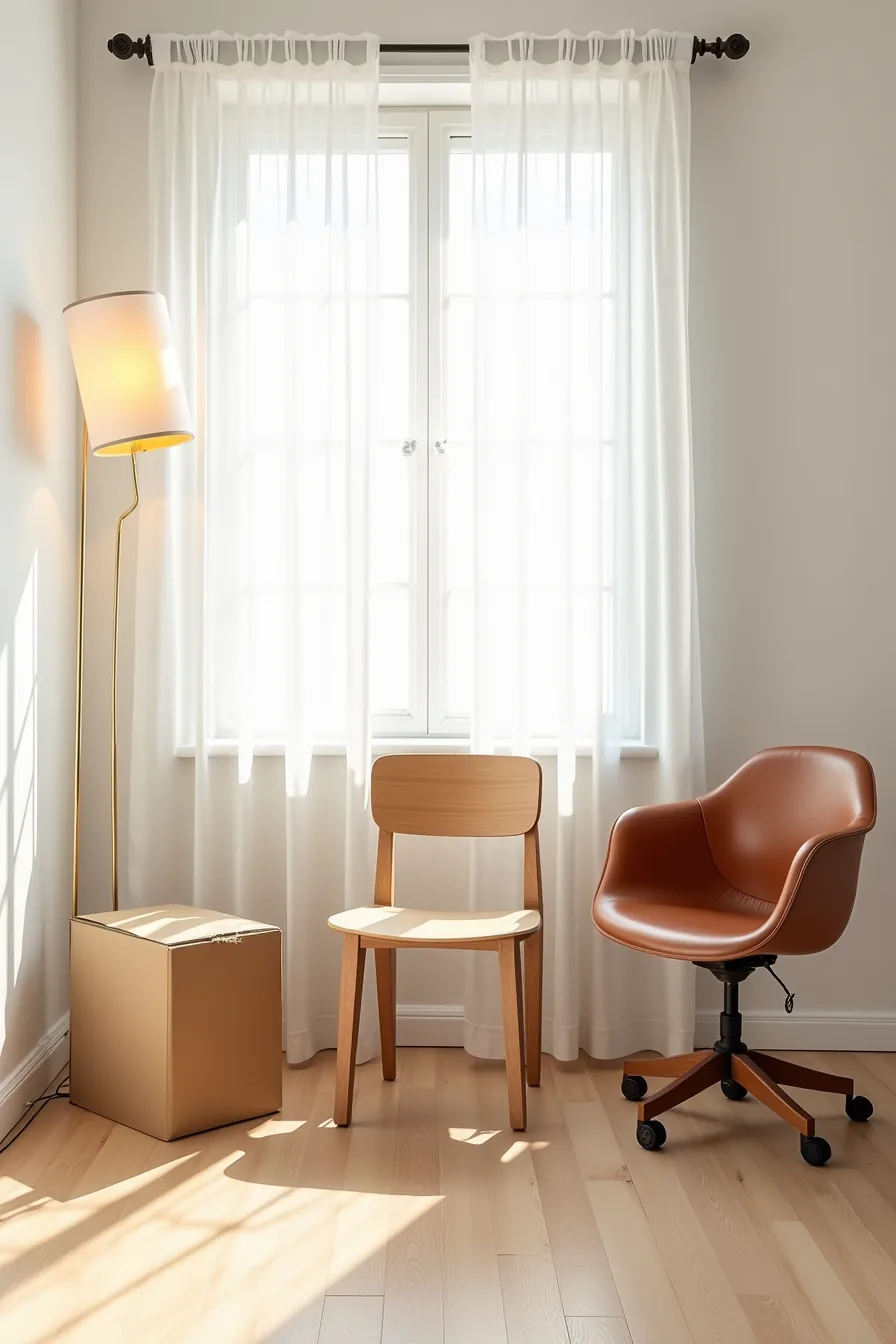
Your budget determines more than the sticker price, it dictates which modern chair designs you can realistically own, move, and maintain. Start with a flatpack chair in the $80–$150 range if you need seating immediately and expect to relocate within three years. Particleboard construction holds up for daily use but swells if you place it near humidifiers or uncovered windows, and you can’t repair a chipped laminate edge.
The cardboard box it ships in doubles as your moving container, which is why this route suits first apartments and temporary assignments.
A mid-range swivel chair on casters, typically $250–$450, is the renter-friendly sweet spot. The five-wheel base protects hardwood floors when you use rubber casters, and the pneumatic lift lets you adjust seat height to match a landlord’s standard 29-inch desk. Polyester upholstery cleans with a damp cloth, so you avoid the security-deposit damage that fabric stains cause.
The trade-off: casters leave divots in plush carpet, so keep a plastic floor mat underneath.
For a long-term investment, a leather-upholstered chair with a solid wood base runs $800–$1,500 and holds 60–70% of its value after five years if you condition the hide twice annually. Solid oak or walnut frames can be reupholstered decades later, unlike glued flatpack joints that fail after one disassembly. This route fits homeowners and professionals who plan to keep the same desk for a decade, but skip it if you move frequently, torn leather and scratched wood dramatically cut resale value.
Where to Start
Pick your room’s worst seating gap, the empty corner, the awkward entry, or the desk chair that hurts after an hour. That single spot dictates your size range, material, and budget, not the other way around. Measure the floor space and walkway clearance before you browse anything.
Match your choice to your actual lifestyle: leather hides stains but needs conditioning twice yearly; performance fabric resists pets but pills on high-friction areas. Your next step is simple, write down your room’s width and depth, then compare that against the six approaches above. That number narrows your options faster than any style preference will.
Frequently Asked Questions
What is the difference between modern and contemporary chair design?
Modern refers to the mid-20th-century movement, clean lines, honest materials like molded plywood and leather. Contemporary shifts with current trends, often blending curves, bold colors, or mixed textures. A modern chair stays timeless; a contemporary one dates faster.
Can I fit a modern chair in a small apartment without it looking cramped?
Yes, if you choose a compact silhouette, an armless side chair or a low-profile lounge, and keep it off the main walkway. Use a slim base with exposed legs to preserve sightlines. Skip bulky upholstery and oversized arms.
How do I clean and maintain a mixed-material modern chair?
Vacuum fabric weekly and wipe metal or wood frames with a damp microfiber cloth. Treat leather with a conditioner every 3–4 months. For spills, blot immediately; never rub.
Check manufacturer tags for specific solvent codes before using any cleaner.
What size modern chair works best for a living room under 150 square feet?
Choose a chair with a seat height of 16–18 inches and a total depth of 28–32 inches. Avoid recliners or chaises. A side chair with a 20–24-inch width leaves room for a side table and easy circulation.
Measure doorways before buying.