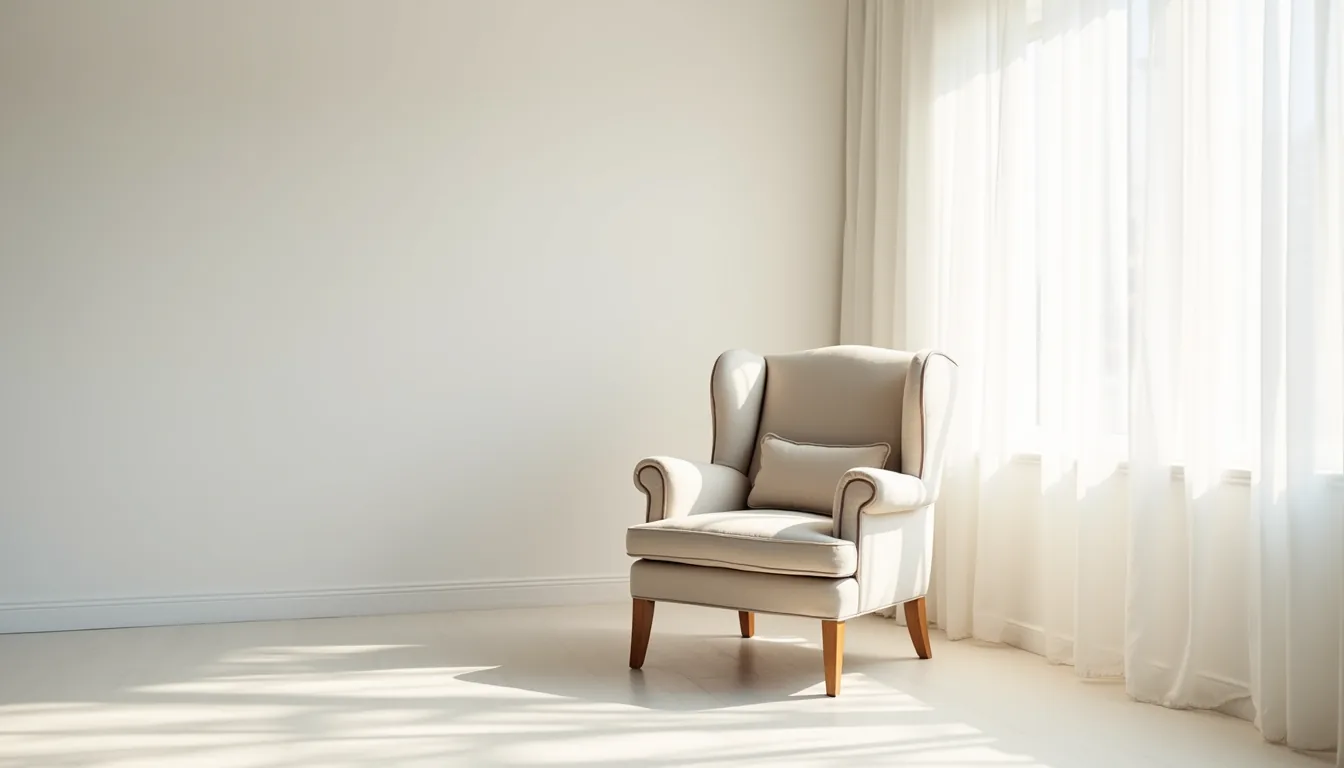

A one seater sofa chair is a full-scale armchair with the depth, cushioning, and upholstered frame of a proper sofa, and it solves the problem of adding generous, lounge-worthy seating to spaces where a full couch simply won’t fit. Unlike a standard accent chair, it offers real recline support and a seat depth that accommodates a tucked-up position, making it a hybrid between a sofa and a lounger. The practical range runs from compact 28-inch-wide models for tight corners to oversized 40-inch designs that anchor a room.
What follows are six distinct interpretations, each with the measurements, placement logic, and material trade-offs you need to choose the right one for your floor plan.
Key takeaways
- Measure your room before shopping: a standard one seater sofa chair spans 28–36 inches wide and 30–38 inches deep, so leave at least 18 inches of clearance for walkways and 24 inches from a coffee table.
- Choose a wingback with a 40–44 inch overall height if you want a dedicated reading nook, as the high back supports your neck and the arms block ambient light without eating floor space.
- Opt for a swivel base if you rent, since it adds function without permanent mounting, but verify the chair’s total diameter (typically 30–35 inches) fits your corner before buying to avoid blocking door swings.
- Pick performance-grade fabric (e.g., solution-dyed polyester or crypton) with a rub count above 30,000 if the chair sits in daily use, and expect to re-fluff foam cushions every 6–12 months to prevent sagging.
The Compact Wingback: Anchoring a Reading Nook
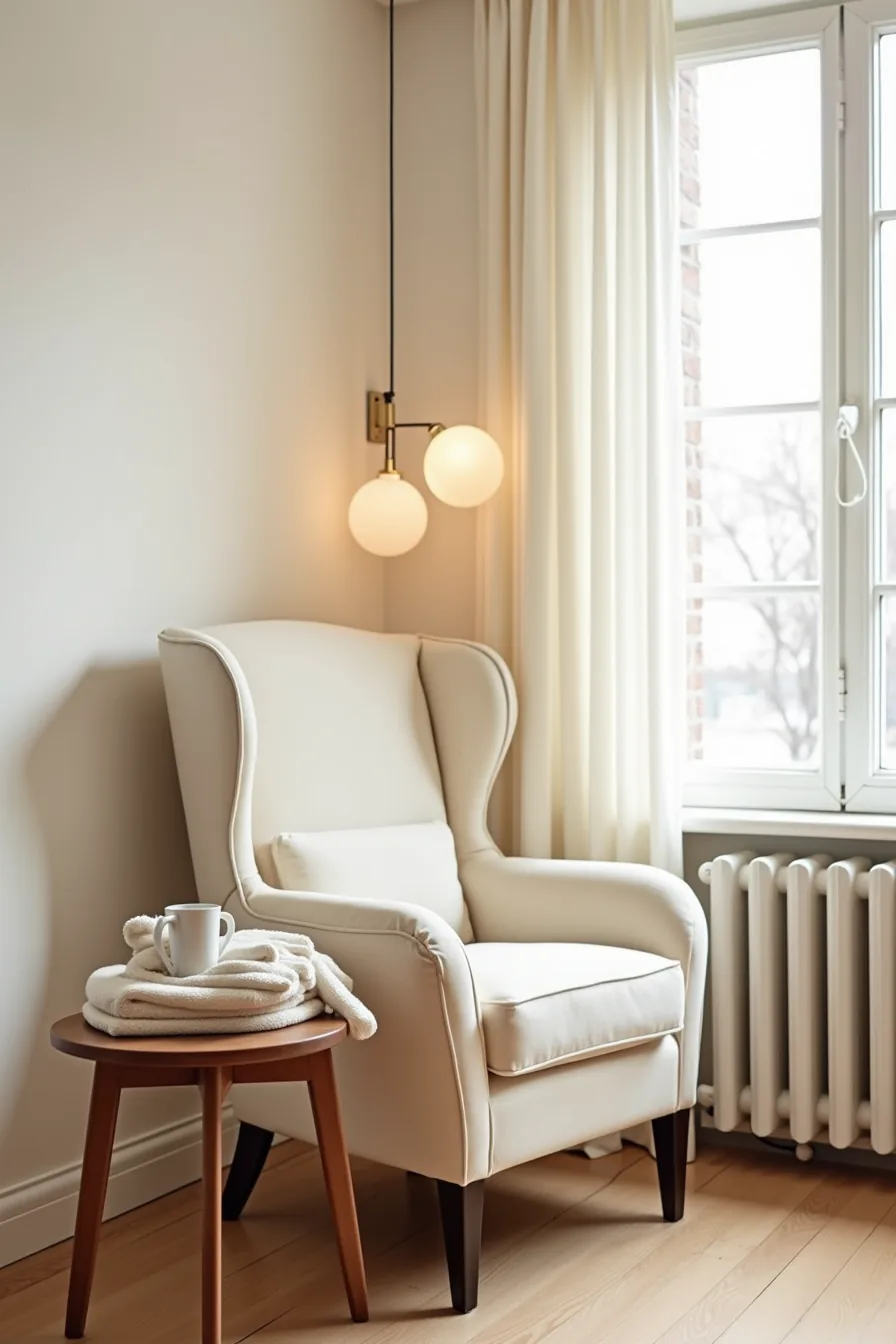
A wingback one seater is the strongest anchor for a solo reading spot because its high back and side wings physically block peripheral movement and sound, narrowing your visual field toward the page. In small spaces, this design matters more than cushion depth, the chair itself can be compact while still delivering the enclosure you need. Most compact wingbacks run 28–34 inches wide and 38–42 inches tall at the arm, which fits comfortably against a 60-inch wall without swallowing the room.
Pair it with a slim side table at armrest height, 22–26 inches, so your ceramic mug and folded throw blanket stay within reach without forcing a lean. Position the chair so window light falls across the wing detail and onto the adjacent wall; this softens contrast and reduces eye strain during longer reads. The cream upholstery works here because light colors diffuse incoming daylight rather than absorbing it, making the corner feel larger than its footprint.
Expect to vacuum the fabric weekly and flip the seat cushion monthly to prevent sagging under daily use.
Wide Seat vs Slim Arms: Balancing Comfort and Floor Space

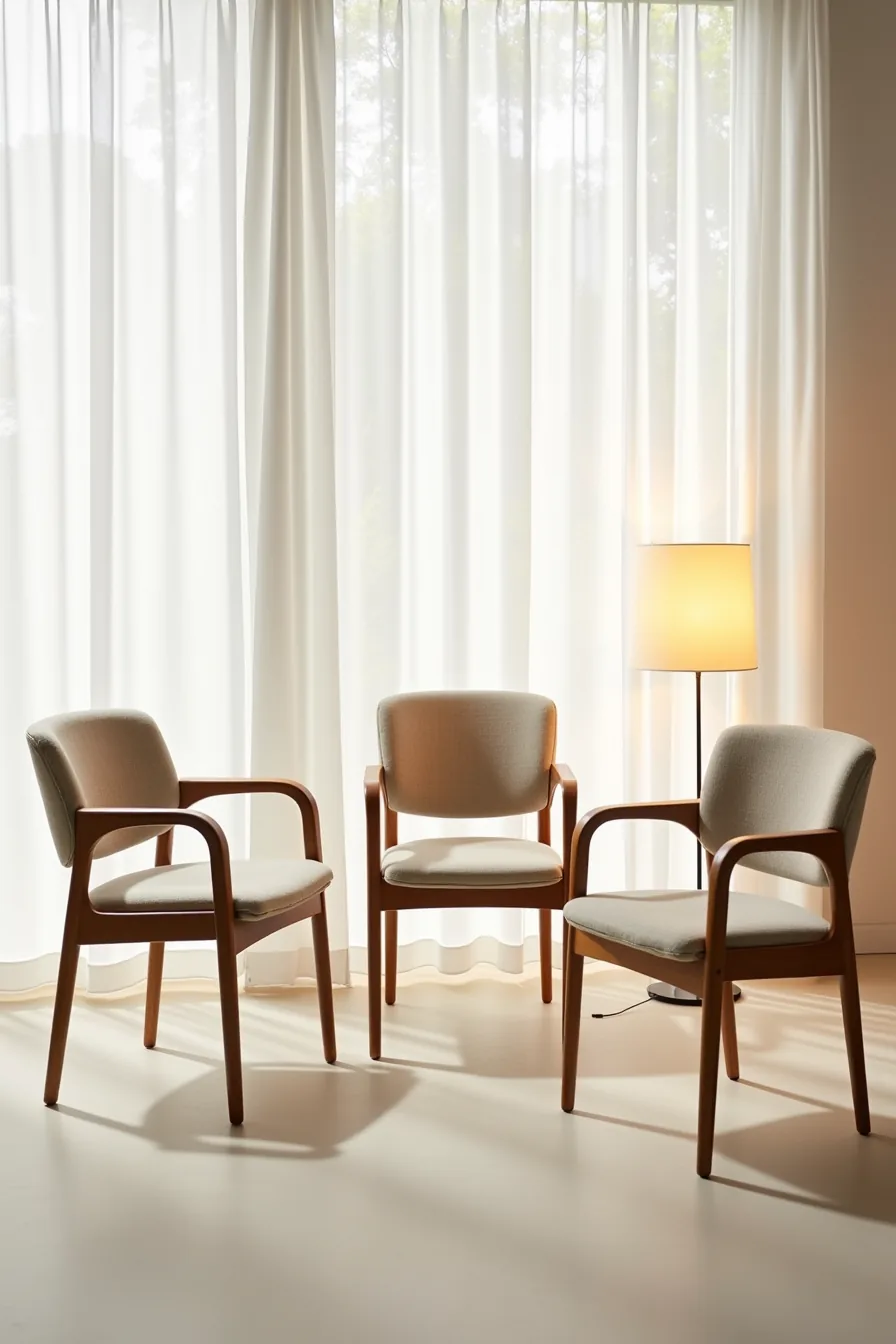
The two chairs side-by-side on that neutral floor capture the central trade-off. The deep-seat chair with narrow arms pushes its width into seat depth, so you can tuck your legs up or recline for a nap, but you lose the padded surface where your forearms naturally rest. The shallow-seat chair with wide padded armrests supports upright sitting and phone scrolling, yet its bulk eats more floor space per inch of usable seat.
Most deep-seat models run 22–26 inches from seat back to front edge, while wide-arm versions often claim 24–28 inches of total width for only 19–21 inches of actual sitting area.
For the floor, the measuring tape between them tells you what matters: measure your room’s traffic path, not just the wall. A wide-arm chair works in a corner where circulation flows around it; a deep-seat chair suits a spot where people walk behind the chair, not beside it. If you lounge cross-legged, choose deep-seat.
If you sit upright to eat or work, wide arms win. Test both by sitting for ten minutes, your elbows will decide faster than any spec sheet.
The Mid-Century Modern Solo Chair: Long-Term Investment Approach
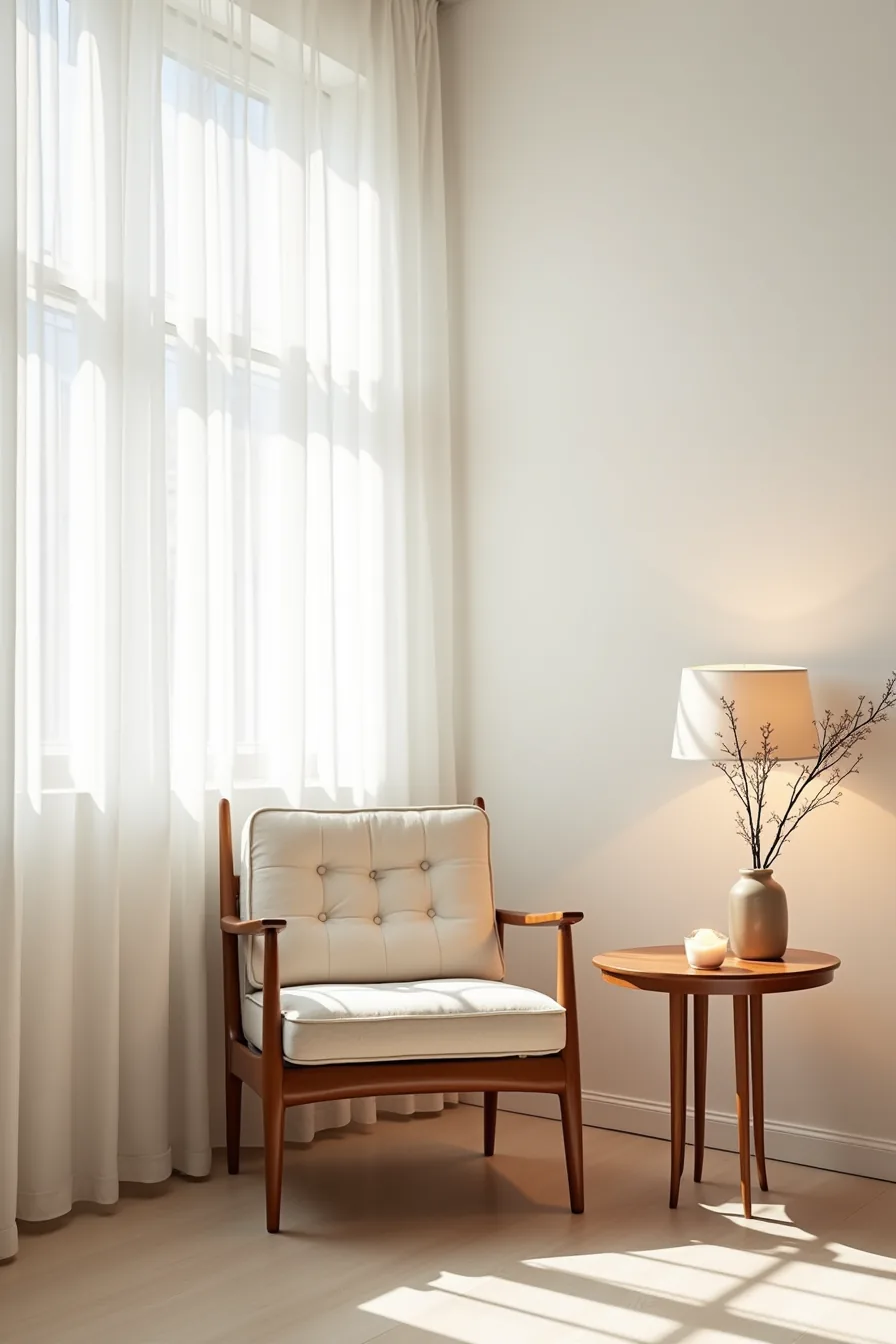
The walnut-framed chair with tapered legs and original upholstery represents the investment tier of One Seater Sofa Chairs. Solid hardwood frames with visible joinery, like the mortise-and-tenon connections you see at the armrests, typically outlast particleboard construction by decades, which is why a quality mid-century piece commands $800–$2,500 while a budget knockoff runs $200–$400. That price gap narrows over time: a well-built frame can be reupholstered twice in its lifespan, while a particleboard base usually ends up in landfill after one fabric refresh.
Position this chair as a deliberate focal point rather than a filler seat. The wooden side table with a simple vase beside it anchors the composition, creating a reading nook that draws the eye without competing with larger furniture. Place it on a rug or within a defined seating zone, floating it in the middle of a room makes the tapered legs feel precarious and interrupts sightlines.
Maintenance is straightforward but non-negotiable. Dust the frame weekly with a dry microfiber cloth, and reapply furniture oil every six months to prevent walnut from drying and cracking. Inspect the joinery annually for wobble; if a leg loosens, tighten it immediately rather than waiting for the joint to wear.
Original upholstery may show wear within 5–10 years depending on use, so budget $400–$700 for a professional reupholster when the fabric thins. This chair suits a reader who values longevity over variety and has a corner that needs a permanent anchor, not a temporary perch.
Renter-Friendly Swivel and Accent Chairs
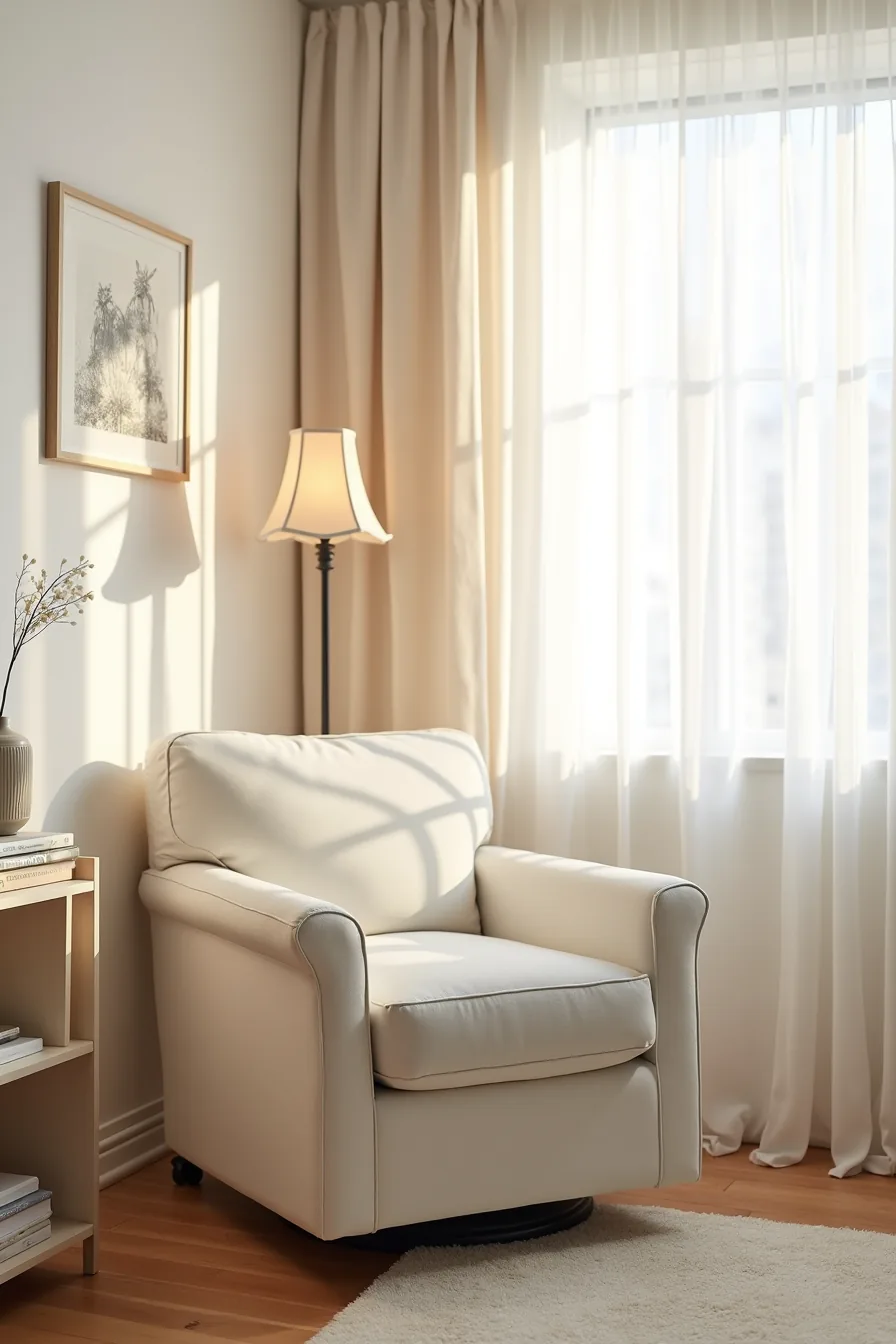
A swivel accent chair with a removable slipcover solves the two biggest rental problems: permanence and wall damage. The lightweight base, typically 20–35 pounds, lets you reposition the chair without scratching floors, and the casters roll smoothly over area rugs or bare wood. Look for a full-length zippered cover and a separate cushion cover; both should survive machine washing on cold, which matters when a lease runs longer than your fabric’s tolerance for daily use.
Position this chair at least 12 inches from any wall so the swivel mechanism has clearance to rotate a full 360 degrees. Angling it toward a window or the room’s main seating group creates a flexible perching spot without anchoring it to a fixed layout. Since nothing mounts to the wall, you can also rotate the chair seasonally, facing it to the light in winter, turning it toward conversation in summer.
Expect to pay $150–$350 for a well-made swivel chair with a removable cover. The trade-off: slipcovers pill or fade faster than fixed upholstery, so budget for a replacement cover ($60–$120) every 2–3 years if you use the chair daily. This option suits renters who move frequently, or anyone who wants one seater sofa chairs that can adapt to a new floor plan without leaving a trace.
Making a One Seater Chair Feel Roomier in Tight Layouts
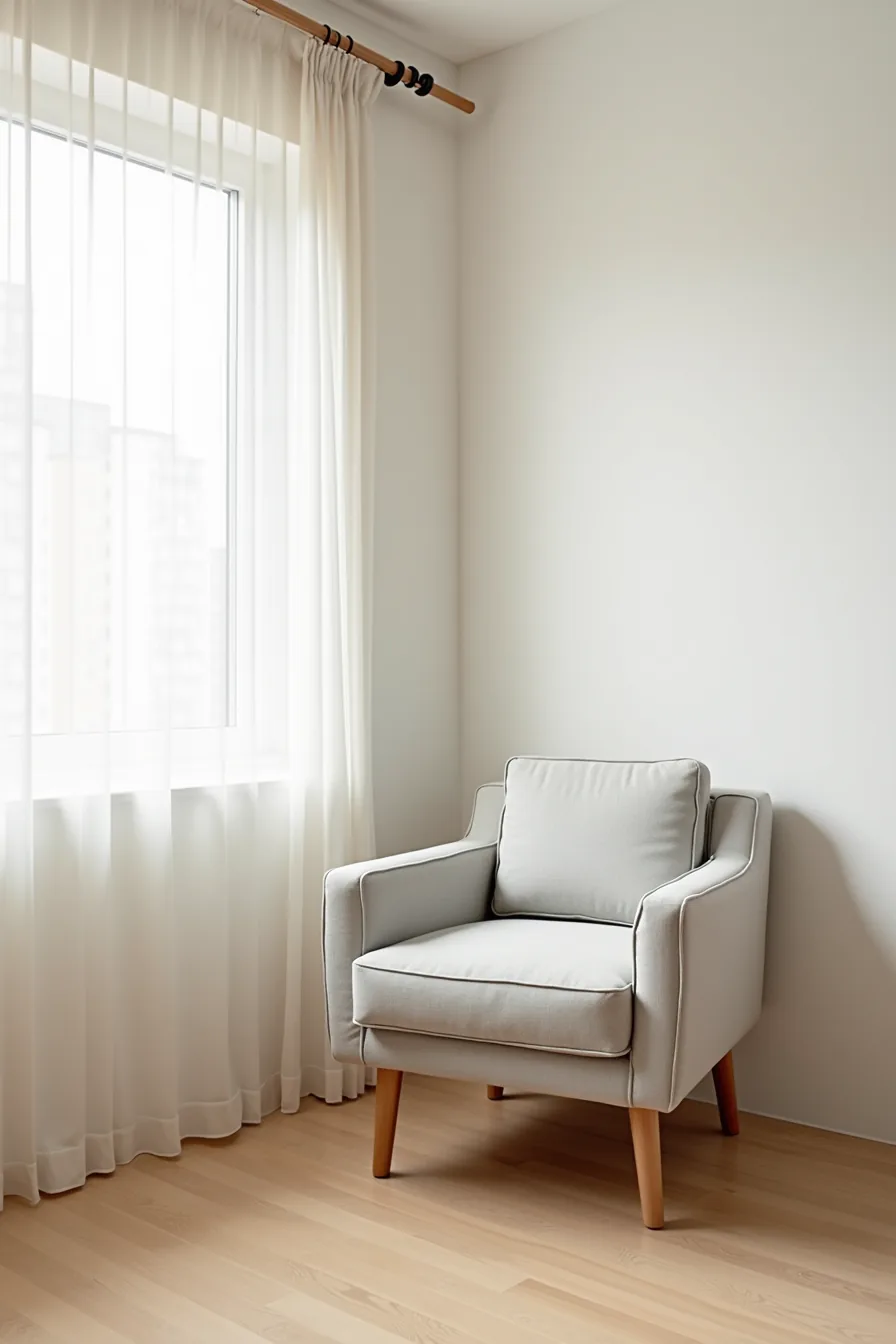
The single most effective trick for a small living room is diagonal placement. Angle a pale gray one-seater with exposed wooden legs into a corner rather than pushing it flush against a wall; that slight rotation opens up sightlines and creates a natural conversation arc with nearby seating. The visible floor space around the chair’s perimeter, a gap of at least 6–10 inches on each side, lets the eye travel uninterrupted, which reads as more square footage than you actually have.
Low-profile arms make the difference here. A chair with arms that sit 20–24 inches from the floor reduces visual bulk at eye level, while lighter upholstery in a cool gray or oatmeal tone reflects more ambient light than a deep navy or chocolate brown would. Wooden legs that are 5–8 inches tall add another sliver of exposed floor beneath the frame, which visually lifts the piece off the ground.
Skip the oversized ottoman and instead pair this chair with a slim side table no wider than 16–18 inches. You keep the footprint compact without sacrificing a place to set a cup. If you’ve 36–42 inches of wall to work with, this configuration fits comfortably and leaves enough clearance for foot traffic behind the chair.
Upholstery, Durability, and Maintenance by Material Type
The three samples you see side by side, linen fabric, leather, and performance microfiber, represent the full spectrum of trade-offs you’ll face. Linen delivers that relaxed, textured look, but it’s the most demanding: expect to vacuum it weekly and dry-clean stains immediately, since natural fibers absorb spills fast. Budget for reupholstery within 5–7 years if the chair sees daily use.
Leather sits at the opposite extreme. It develops a patina over time, hides minor scuffs, and only needs a wipe-down every 2–4 weeks with a damp cloth plus a conditioner twice a year. A quality hide lasts 10–15 years, which lowers its effective annual cost despite the higher upfront price.
Performance microfiber splits the difference on durability and cost, and it resists water-based stains admirably, but it pills noticeably after 3–5 years in high-contact areas. For homes with kids or pets, microfiber wins on practicality; for a reading nook with adult-only traffic, leather earns its keep.
Your Decision Checklist
Before you buy, measure the intended spot and the path to it, doorways, stairwells, and corners account for most returns. Sit in the chair for at least 10 minutes to test seat depth and lumbar support, and check the frame’s sturdiness by rocking gently.
Choose your priority: budget-conscious renters can opt for a washable slipcover model; design-focused buyers should invest in kiln-dried hardwood and high-density foam for longevity. Match the chair’s scale to your room, compact 28–32 inch widths suit small apartments, while 36–40 inch frames anchor larger living areas.
Start now: tape out the chair’s dimensions on your floor and live with the outline for 24 hours. You’ll instantly see if it blocks traffic or feels disproportionate.
Frequently Asked Questions
What is the typical seat width of a one seater sofa chair?
Most one seater sofa chairs have a seat width between 20 and 24 inches. Compact models dip to 18 inches, while oversized loungers reach 28 inches. Always measure your doorway and intended spot before buying.
Can a one seater chair work in a living room with a larger sofa?
Yes, it works as a visual anchor or conversation piece. Place it at a slight angle facing the sofa, not parallel to it. Keep a 12-18 inch gap for traffic flow.
How do I prevent a one seater from making my small room feel cramped?
Choose a chair with exposed legs and a slim backrest under 30 inches tall. Skip rolled arms and tufted upholstery. Position it away from the main walkway, ideally in a corner or beside a window.
What upholstery material is easiest to clean for a frequently used one seater?
Performance polyester or microfiber resists stains and wipes clean with mild soap. Crypton and Sunbrella fabrics are equally durable but cost more. Avoid linen and velvet unless you use a removable, washable cover.