Bathroom wallpaper ideas that actually hold up in a humid environment come down to three decisions you make before you buy: the material, the placement, and the prep work. Skip standard paper and look for vinyl-coated or non-woven options rated for moisture, then confine them to zones that never get direct spray. The payoff is a finish that transforms the room without peeling, but only if you match the pattern scale to your square footage and seal every edge properly.
Key takeaways
Match wallpaper style to your bathroom’s existing character, vintage florals suit clawfoot tubs and pedestal sinks, while geometric prints anchor modern vanities and frameless mirrors. Use the vanity color as your wallpaper’s starting point, a white or light gray vanity gives you freedom to choose bold patterns, but a colored vanity needs wallpaper that pulls one of its undertones to avoid clashing. Scale patterns to room size, choose small-scale prints (under 12-inch repeats) for powder rooms under 50 square feet, and reserve large-scale motifs for walls you can view from 6 feet away without the pattern overwhelming the sightline. Pick peel-and-stick for rentals or a 3-5 year refresh, it runs roughly $8–$15 per roll, removes cleanly from primed drywall, but avoid it in high-splash zones like behind a shower where moisture will compromise the adhesive.
Vintage vs Modern Print: Which Direction Suits Your Space
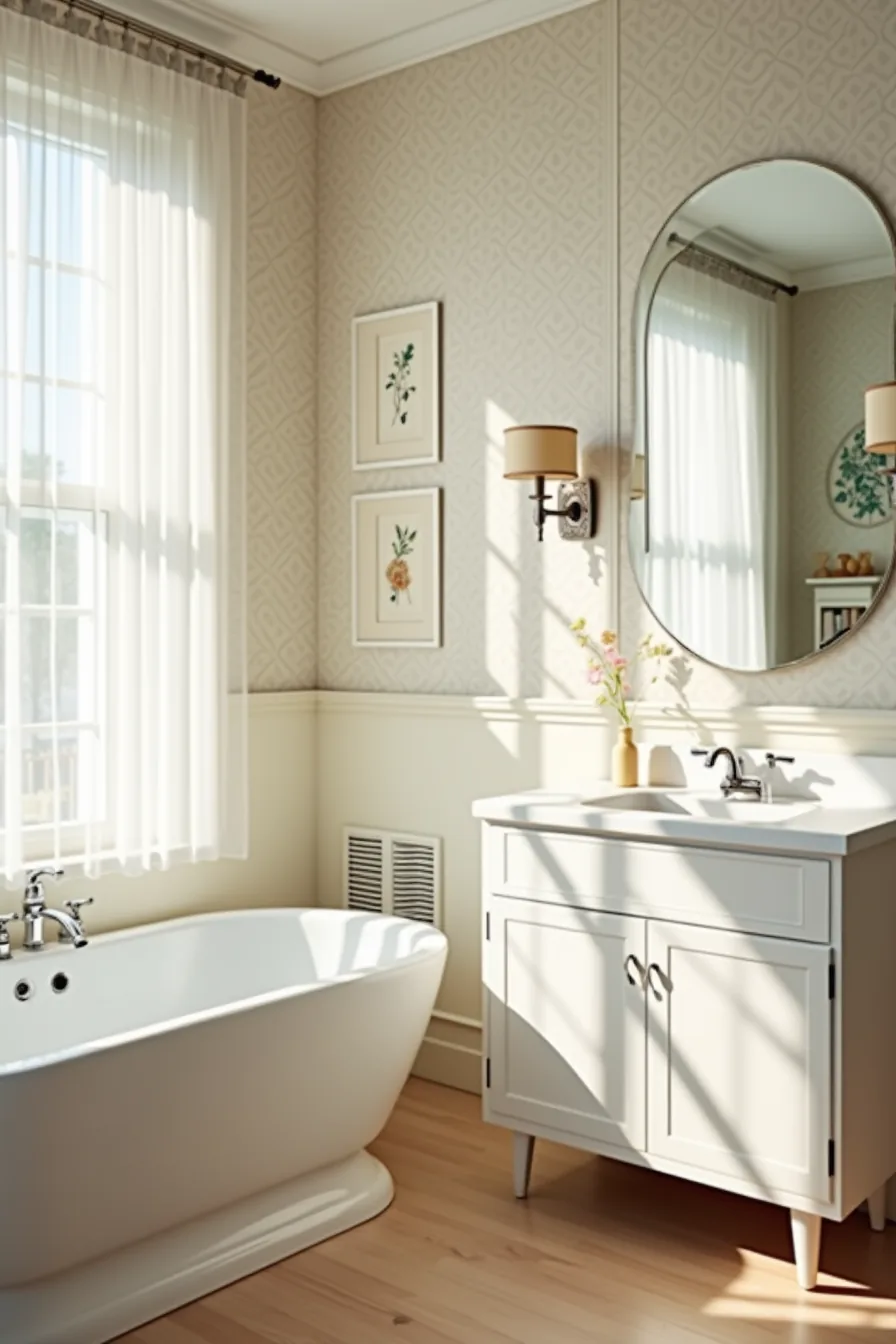
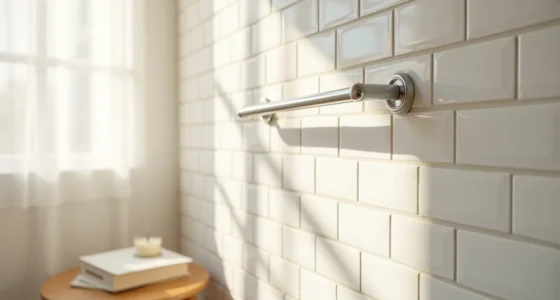
Your existing fixtures are the first filter for this decision. On the left, a 1950s-style small-scale geometric tile pattern pairs with vintage chrome fixtures because the repeating linear grid echoes the era’s precision hardware. That direction suits an original mid-century bathroom or any space where you’re keeping period details, the pattern reads as intentional, not costumed.
The right side shows why contemporary oversized botanical prints demand a different foundation. A modern minimalist vanity with clean lines gives the bold leaf forms room to breathe; the large scale matches the vanity’s uncluttered geometry, so neither element competes. This works best in newer bathrooms or renovated spaces where you’d rather distract from generic fixtures than complement them.
For bathroom wallpaper ideas, match pattern period to the oldest visible element in the room. If your tub, sink, or tile is original to a specific era, choose a print from that same era. If everything is new, you’ve the freedom to pick either direction, just keep the scale proportional to your wall area: smaller bathrooms favor tighter repeats, larger walls can carry bolder botanicals without overwhelming the eye.
Match the Vanity Color to Anchor Your Wallpaper Choice
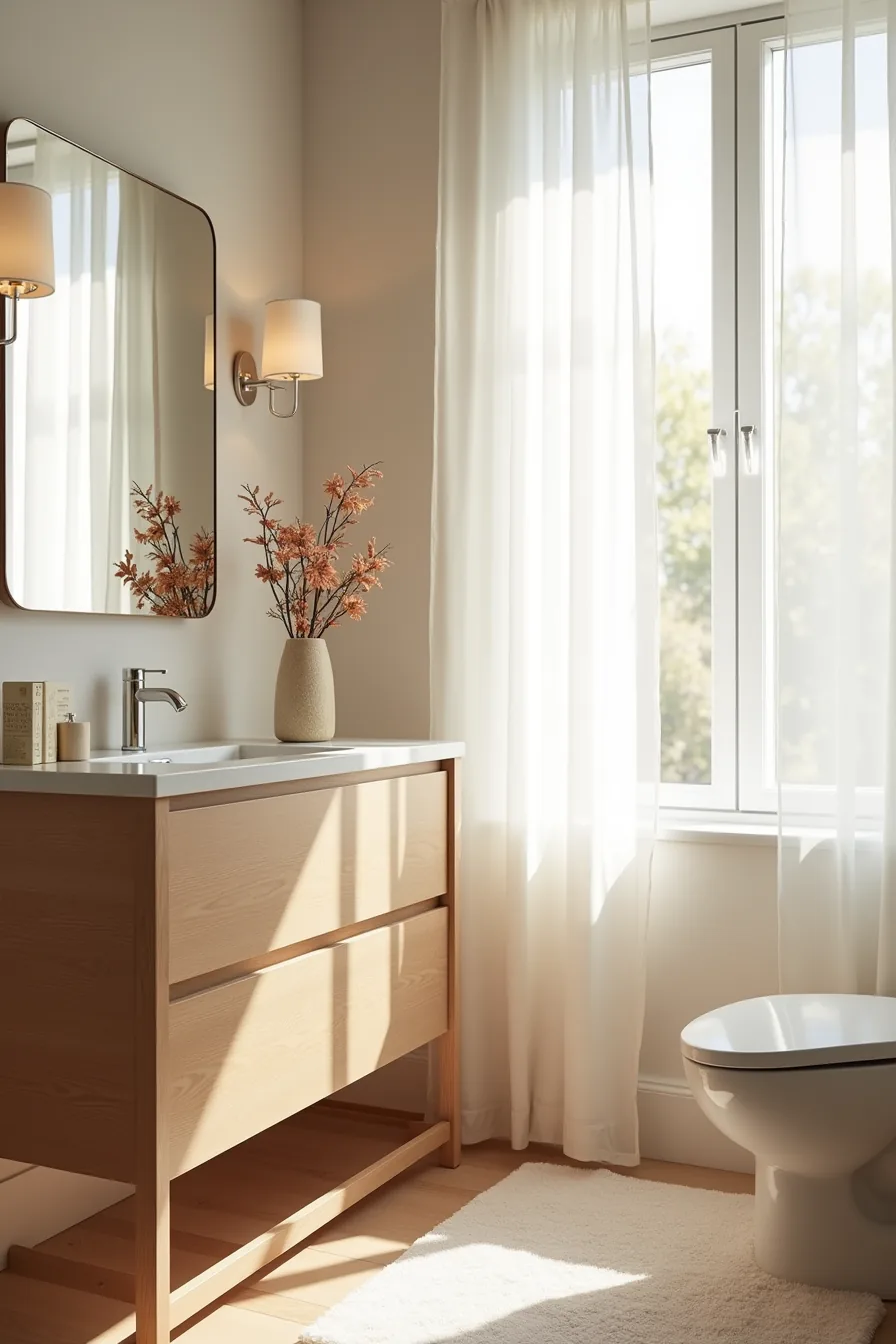
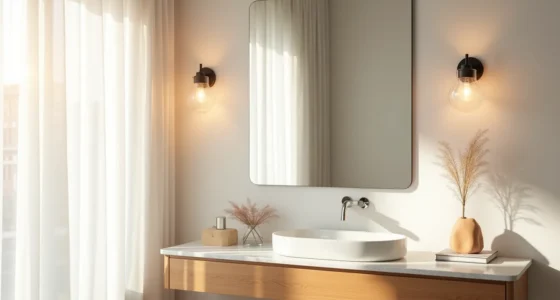
Your vanity is the largest fixed object in the room, so treat its undertone as the starting point for every wallpaper decision. Hold your sample directly against the cabinet wood in the actual lighting conditions of the space, a gray-oak vanity with cool undertones needs a wallpaper that carries the same gray family, while a warm gray-oak finish pairs better with cream or amber-based flowers. The morning light hitting that wood grain shifts how warm or cool the brown appears, so check your sample at the hour you typically use the bathroom.
When you scan the sample against the cabinet side, you’re looking for tonal harmony, not a perfect match. Choose a print where the lightest background color is exactly two shades lighter than the wood’s mid-tone; that contrast keeps the wallpaper from disappearing or shouting. This method works for any cabinet material, painted, laminate, or stained, and it saves you from the common failure of picking a pattern that fights the room’s largest color mass.
Small-Room Pattern Scale: Avoiding Visual Chaos
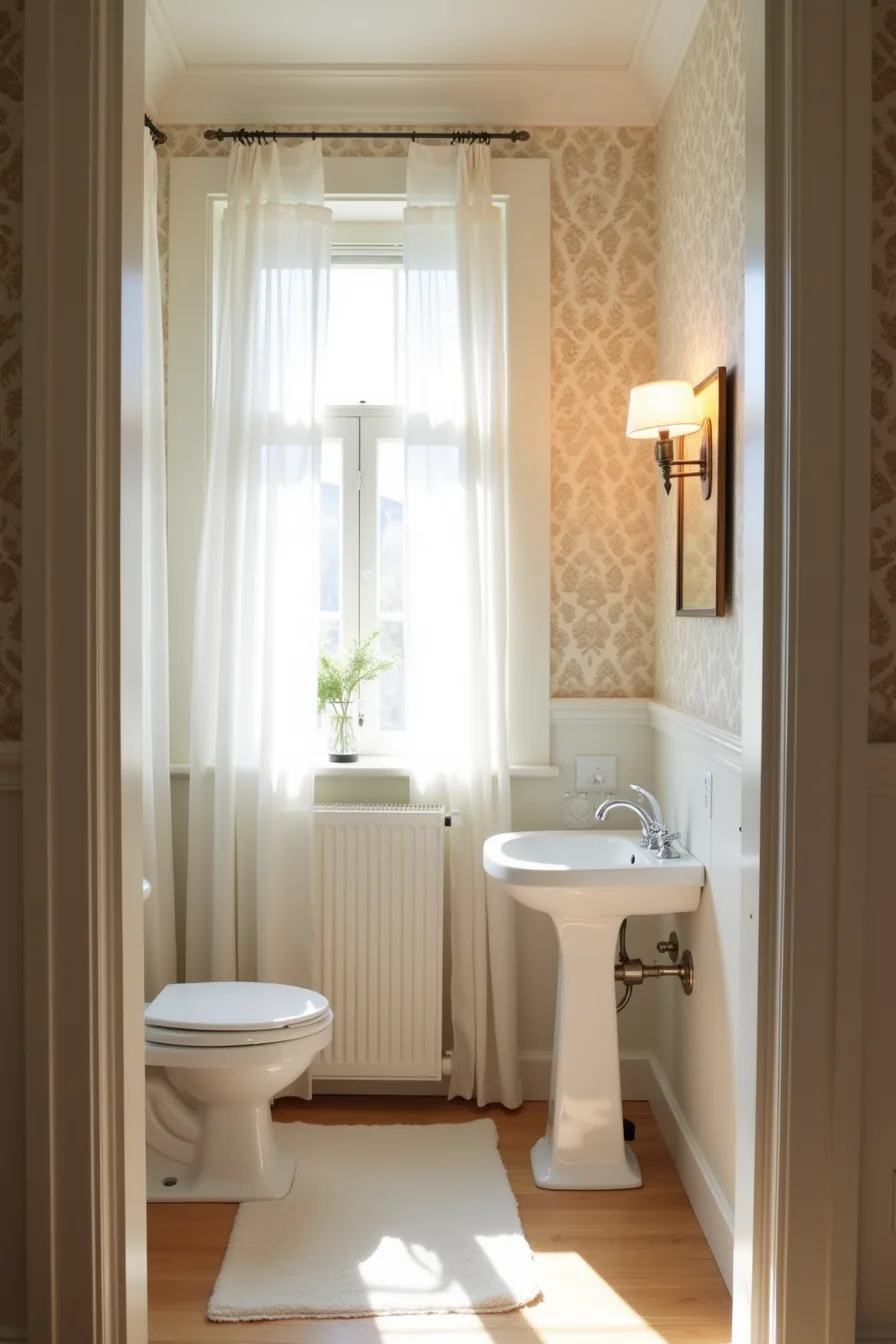
For bathrooms under 40 square feet, the print size matters more than the color palette. A general rule: the pattern repeat should stay under 12 inches, with motifs themselves no larger than 4-6 inches across. Large-scale florals or oversized geometrics will visually compress the walls, making a compact space feel like a closet.
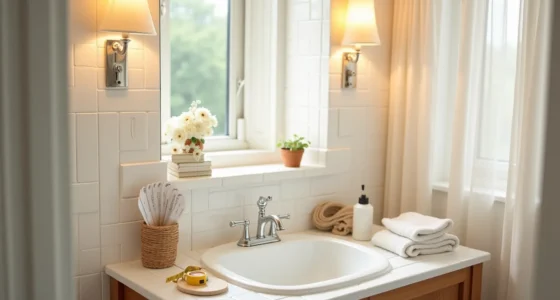
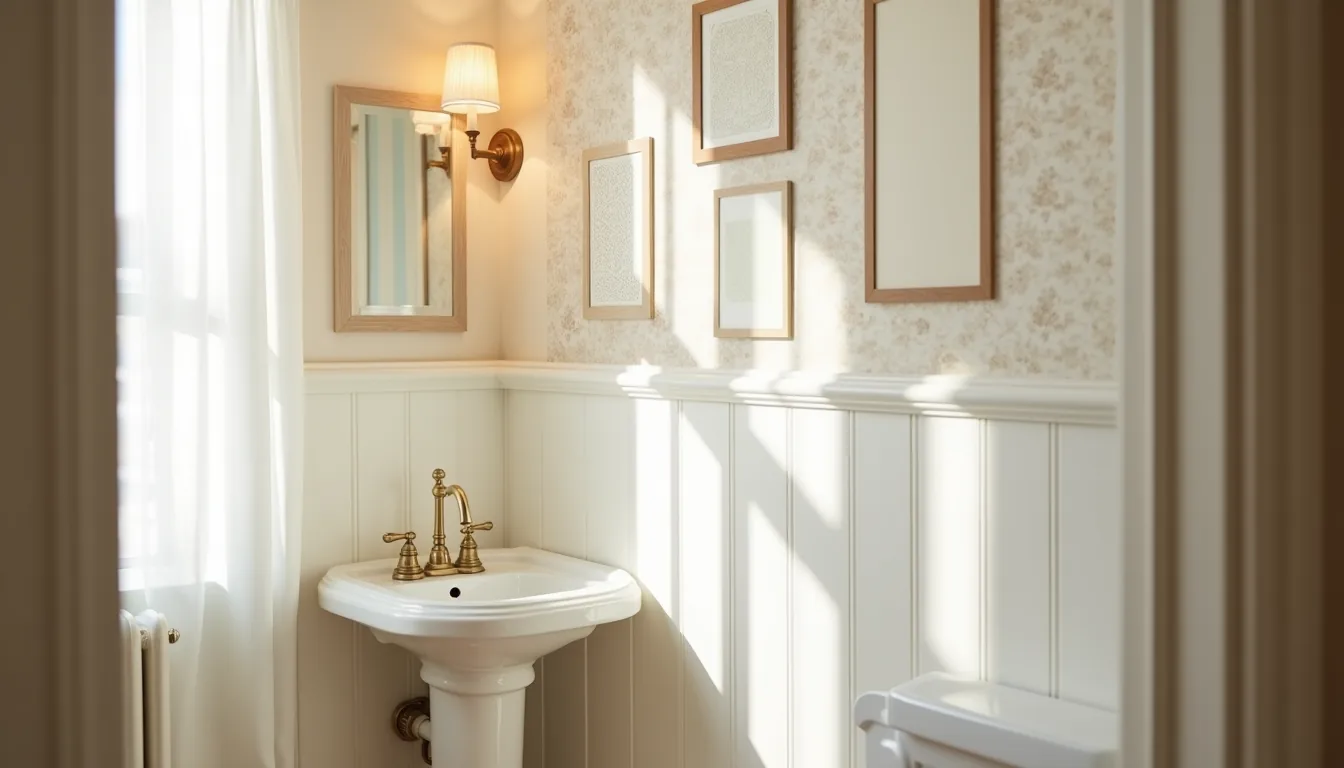
Consider a 5-foot-wide bathroom with small-scale damask wallpaper covering all four walls. The tight, repetitive motif reads as texture from a distance, not pattern, which keeps the eye moving upward rather than bouncing wall-to-wall. The white subway tile backsplash breaks the paper at counter height, giving the eye a resting line, while the corner pedestal sink and narrow mirror keep the visual footprint light.
That combination works because the wallpaper becomes the room’s texture layer, not its focal point, the small repeat does the work without demanding attention. If the same damask were blown up to a 20-inch repeat, the walls would appear to lean inward. Match the scale of the print to the scale of the room, not your personal taste, and the space will feel intentional rather than busy.
Budget Route: Peel-and-Stick Wallpaper for Renters
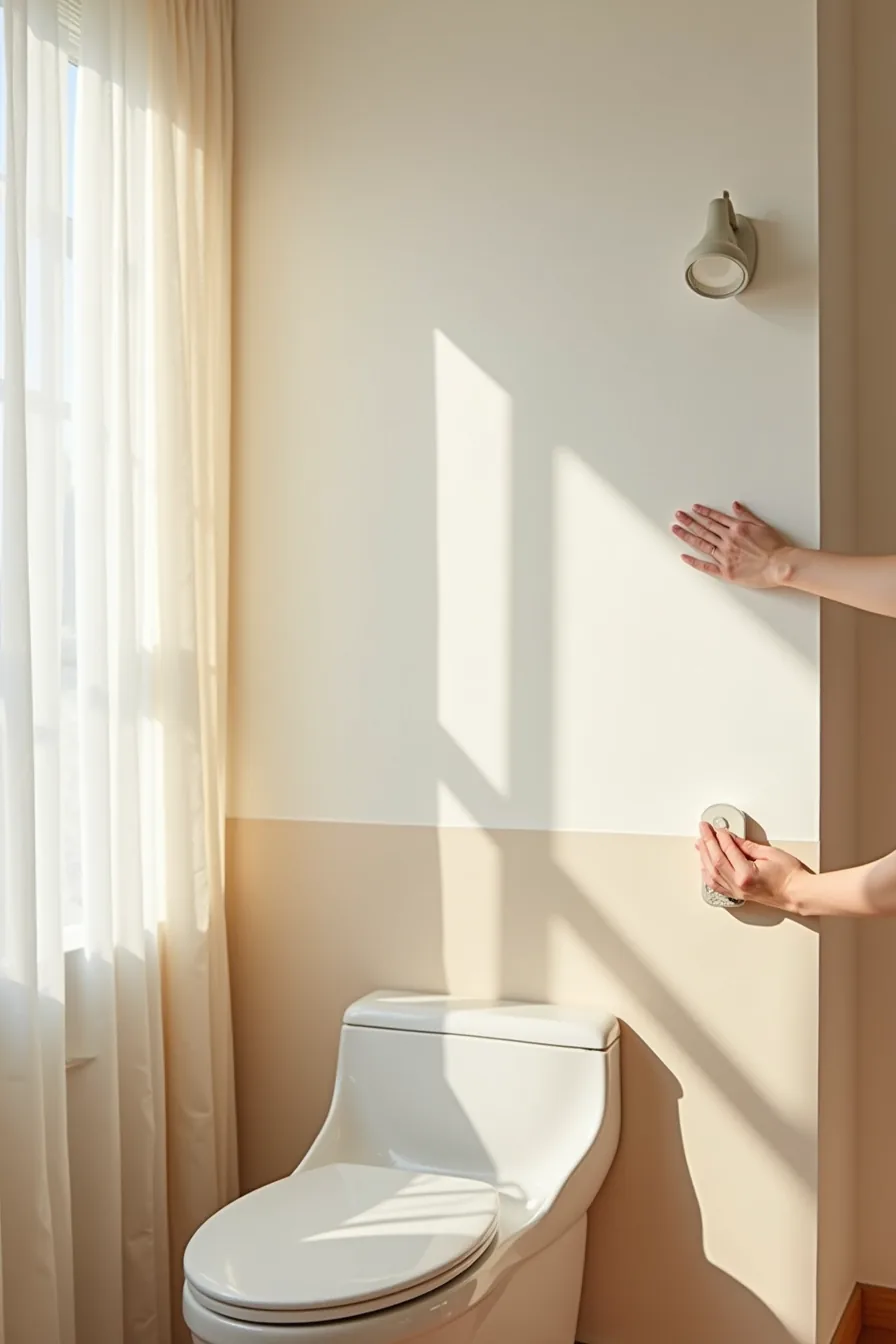
Peel-and-stick wallpaper delivers the visual payoff of permanent paper without a security deposit dispute. A typical roll runs $25–$40 and covers roughly 28–30 square feet, with most small bathrooms needing two to three rolls, a total cost well under $150 compared to $300–$600 for professional installation and removal.
Preparation matters more than the paper itself. Clean the wall with a damp cloth and let it dry fully; any texture, dust, or grease will show through as bubbles or peeling edges within weeks. Smooth, semi-gloss paint is the ideal substrate. If your rental walls are textured, test a small corner first, the paper won’t adhere properly to orange-peel or popcorn finishes.
As you position the roll against the smooth wall, work top-to-bottom with a plastic smoother, pushing air pockets outward from the center. The hands-on application takes about three hours for a half-bath. Expect the paper to last 12–24 months before edges start curling in humid conditions; a quick hair-dryer pass reactivates the adhesive for touch-ups.
When you leave, it pulls off in one piece, just start at a corner and peel at a 90-degree angle.
Long-Term Investment: Permanent Wallpaper and Prep Work
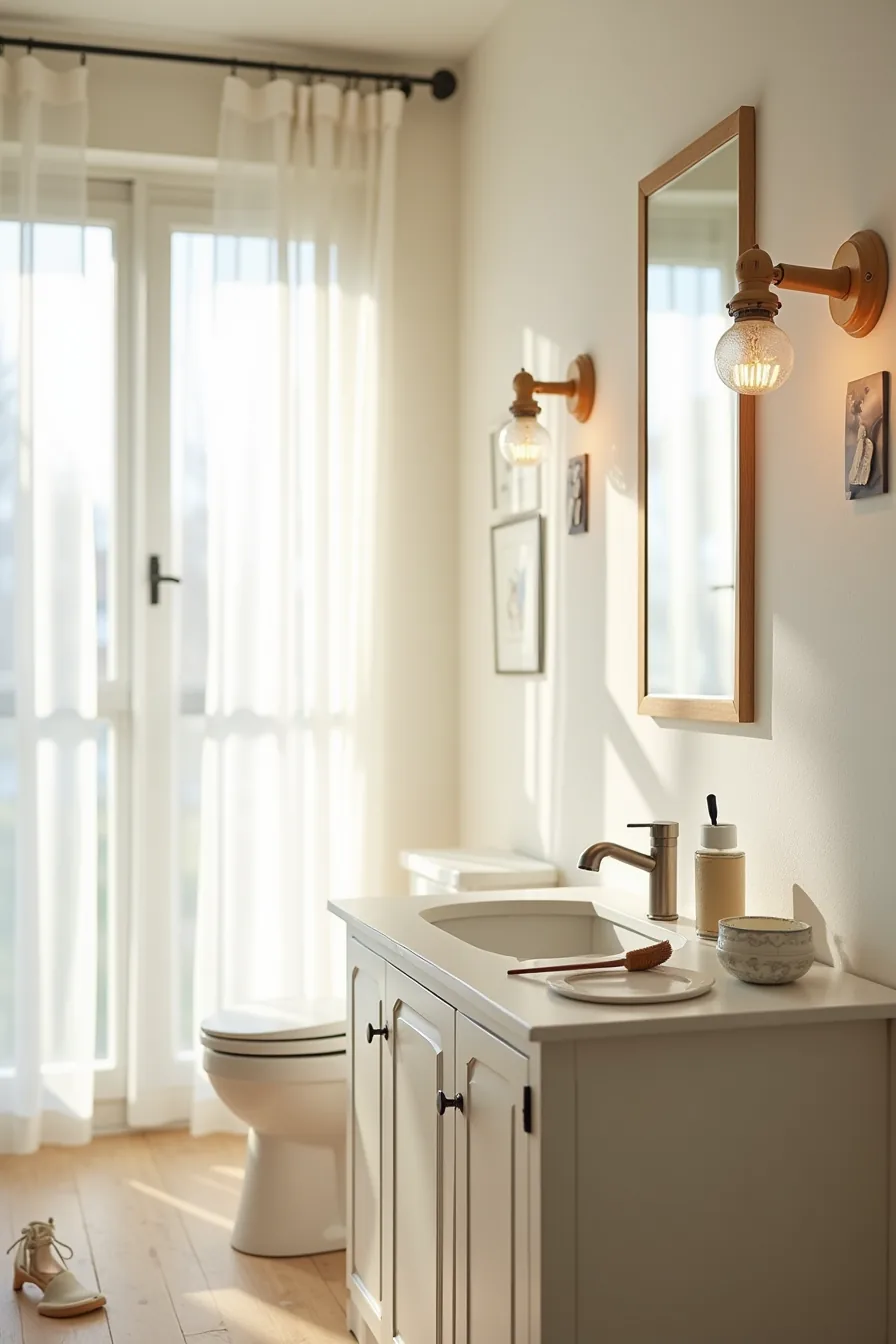
Permanent wallpaper rewards patience, but only if you respect the substrate. The wall must be primed and smoothed first, any imperfection telegraphs through the paper permanently. Expect to budget $150–$300 for professional prep alone, plus $350–$700 for installation of a half-bath, depending on your region and pattern complexity.
Moisture resistance drives material choice. Vinyl-coated or non-woven papers handle humidity best, while untreated grasscloth will stain and sag within a season. A proper installation uses a paste bucket and brush to apply adhesive directly to the primed wall, then a squeegee to work out air bubbles as the sheet is set.
The seams are rolled flat, and the result should last 10–15 years if you run an exhaust fan during and 30 minutes after showers.
The trade-off is removal. Permanent paper requires a scoring tool, chemical stripper, and a stiff scraper, plan for a full day of labor when you eventually redecorate. If you aren’t prepared for that commitment, the peel-and-stick route is the honest alternative.
Placement Strategy: Full Coverage vs Accent Walls
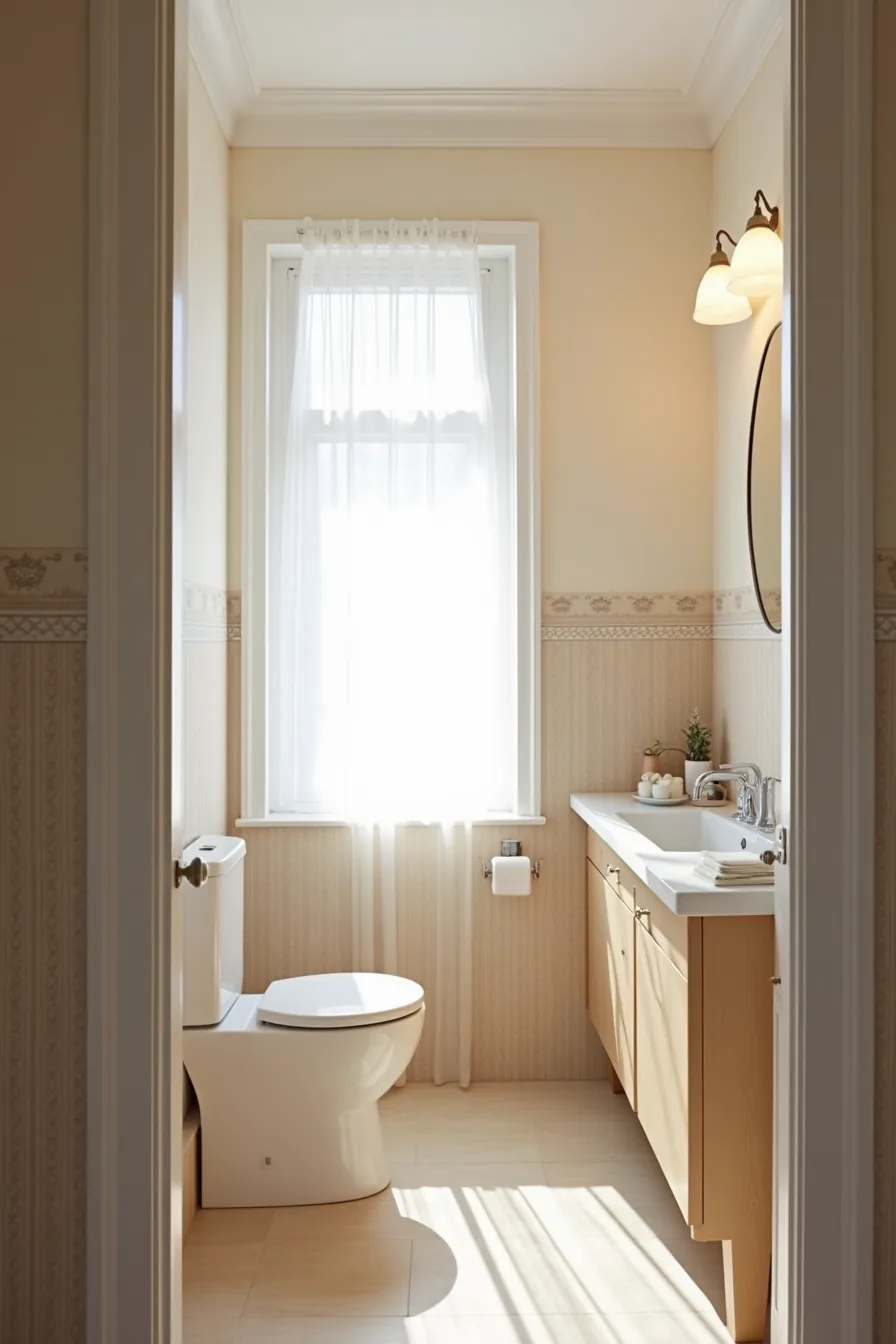
Full coverage delivers the immersive, boutique-hotel effect, but it multiplies your exposure to moisture and pattern fatigue. In a half-bath or powder room under 40 square feet, wallpapering all four walls intensifies the space without overwhelming it, go bold there. In a full bathroom with a shower or tub, restrict paper to the dry zone: anything within 24 inches of the shower opening or directly above a tub will see condensation damage regardless of vinyl content.
The accent-wall route suits larger or busier bathrooms where full coverage risks visual chaos. A common configuration, and the one that works best behind a toilet, is to paper a single wall and leave the remaining three in plain white paint. The contrast anchors the vanity and mirror while the white walls reflect light and keep the room from closing in.
Place the accent wall behind the toilet and vanity, both fixtures sit in the lower third of the wall, so their presence protects the paper from splash damage while your eye is drawn to the pattern above them.
Choose the accent wall for its visibility, not its convenience. The wall you face when standing at the sink is the one you’ll notice daily, but it also takes the most splash. Behind the toilet is safer: water exposure is minimal, and the pattern frames the fixture without competing with the mirror.
If you paper the sink wall anyway, run a clear glass backsplash panel from countertop to 12 inches up, it’s cheap, invisible, and saves the paper from toothpaste splatter.
Your Decision Checklist
Before you buy a single roll, run your plan through this checklist. Confirm the wallpaper is rated for high humidity, or you’ll be redoing it within a year. Verify your wall surface is clean, smooth, and primed, as texture will telegraph through most materials.
Finally, order a sample and live with it for three days, observing it in morning, midday, and evening light.
If you ticked every box, your next move is to measure your wall space and calculate the exact square footage, adding 10-15% for pattern matching and waste. That number is your starting point for ordering. Go measure now, while the idea is fresh.
Frequently Asked Questions
Can you use regular wallpaper in a bathroom, or do you need special moisture-resistant material?
You need vinyl-coated, non-woven, or commercial-grade wallpaper. Standard paper-backed wallpaper absorbs moisture, warps, and grows mold. Choose a product labeled “bathroom-rated” or “washable” for reliable performance.
How long does bathroom wallpaper typically last before it needs replacing?
With proper installation and a moisture-resistant product, expect 5–7 years in a well-ventilated bathroom. In a steamy, poorly ventilated space, that drops to 2–3 years before edges lift or mildew appears.
What’s the best way to prepare bathroom walls before hanging wallpaper?
Clean walls with a mildew-killing solution, rinse, and dry completely. Fill holes, sand smooth, and apply a primer specifically formulated for high-humidity rooms. Let primer cure for 24 hours before hanging.
Will wallpaper peel or bubble if my bathroom has high humidity or poor ventilation?
Yes, it will. High humidity breaks down adhesive, causing bubbles and peeled seams within weeks. Install a vent fan rated for at least 50 CFM per square foot of floor area, and run it 20 minutes after each shower.