Modern eclectic living room design works when you anchor bold, mismatched pieces to a neutral base and repeat at least one material, color, or shape across the space to keep the mix from looking random. That single recurring element, whether it’s a brass finish, a curved silhouette, or a warm oak tone, turns visual chaos into deliberate composition. Below are six distinct interpretations, each with the exact scale, material, and budget trade-offs you need to replicate them, plus a decision checklist to match the right route to your room’s size and your long-term plans.
Key takeaways
- Anchor with scale: Pair a large, solid vintage sofa (typically 84-96 inches wide) with modern, slim-profile chairs to create a visual hierarchy that prevents either era from overwhelming the room.
- Use a 60-30-10 color rule: Apply your dominant wall color to 60% of the room, a secondary tone to 30% (rugs, curtains), and a bold accent to 10% (pillows, art) to make mismatched pieces feel deliberately unified.
- Edit down to 5-7 focal objects: Arrange your “collected” items in odd-numbered clusters with varying heights (e.g., a 30-inch lamp next to a 12-inch stack of books) to avoid the cluttered look that kills the eclectic style.
- Prioritize low-maintenance materials: For a rental or high-traffic room, choose a performance-grade microfiber sofa (stain-resistant, wipeable) and a flat-weave wool rug over a high-pile option, these hold up to daily use and require minimal upkeep.
Vintage Plus Modern: Pairing Eras Without Collision
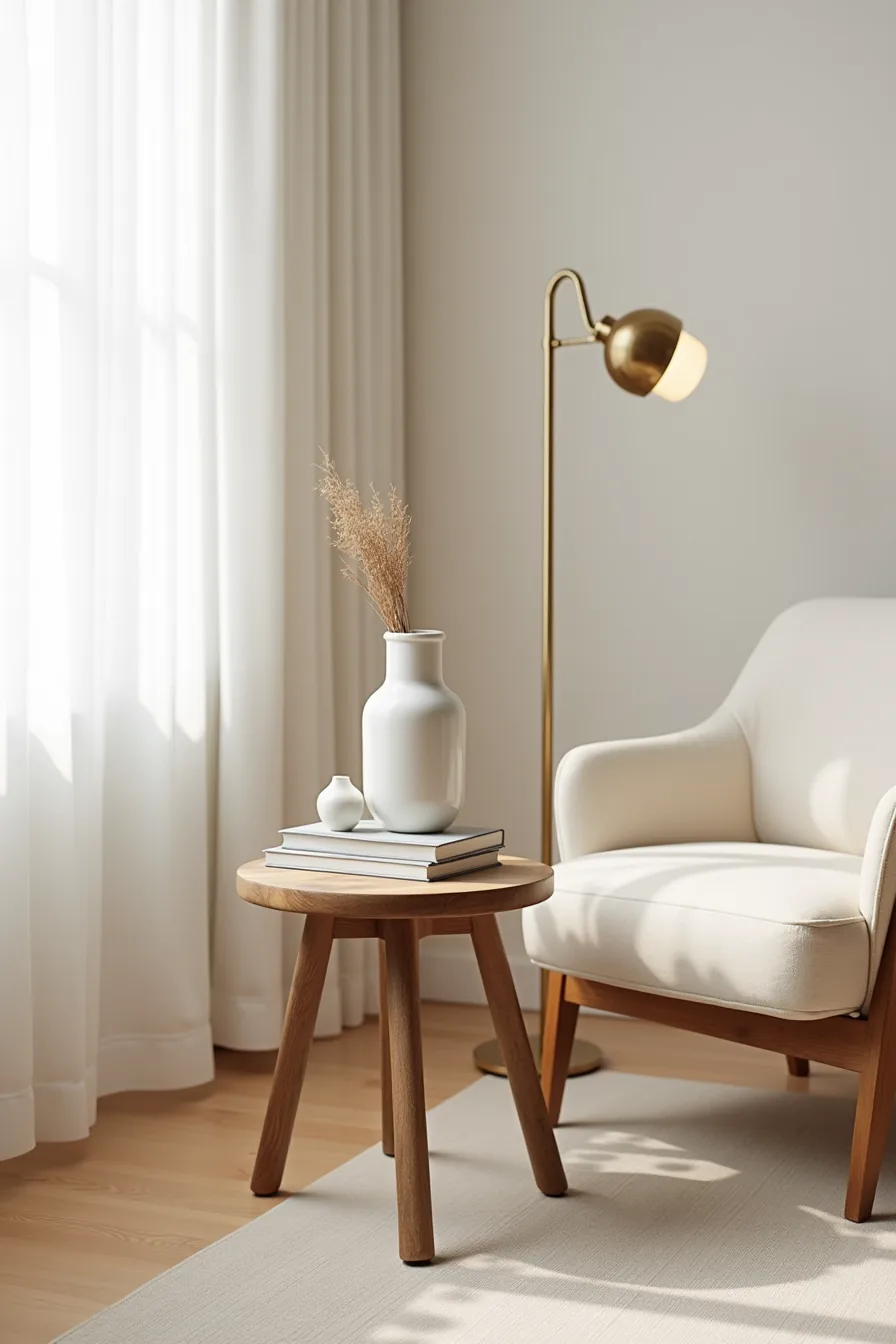
Pairing a weathered wooden three-legged stool with a brushed-steel modern accent chair creates tension that reads as intentional, not accidental. The trick is material contrast: rough, organic wood against smooth, industrial metal gives each piece a distinct voice while their similar scale keeps the pairing balanced. A ceramic vase and a minimal metal sculpture resting on the stool bridge the two eras, the vase leans organic, the sculpture leans modern, and together they signal curation rather than coincidence.
This approach suits rooms where you want conversation pieces without visual shouting. It works best in medium to large spaces where the two pieces can breathe apart by at least 18–24 inches, preventing the eras from colliding. In a small room, place the stool and chair at a 45-degree angle to each other, this softens the contrast and opens up circulation.
For renters, the stool and vase are easily swapped; the chair is the only fixed piece. Expect to pay 30–50% more for well-made vintage stools than for new reproductions, but the patina is what makes the combination work.
Color as the Link: Using Palette to Unify Disparate Pieces
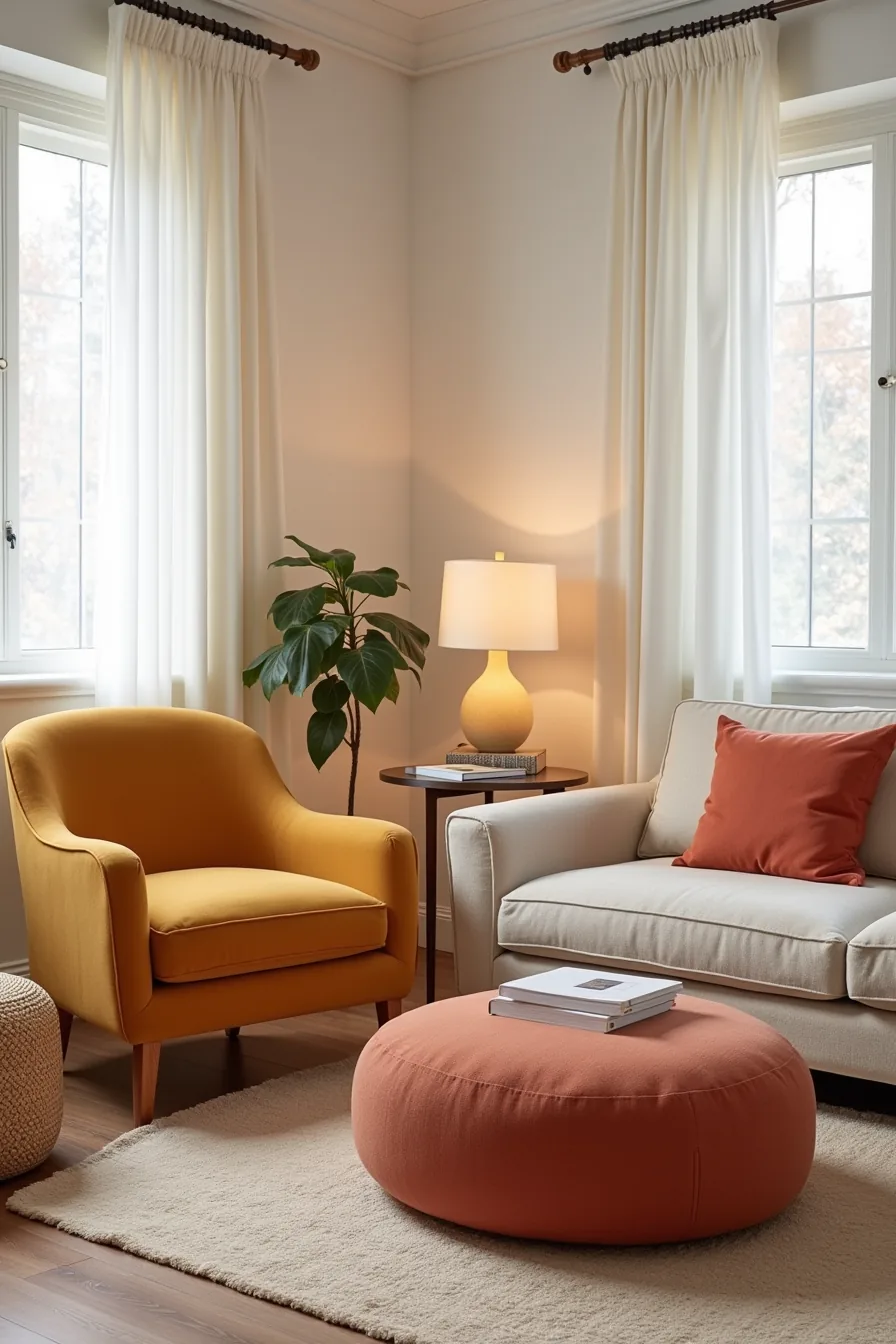
A mustard velvet armchair, a rust-toned linen ottoman, and a coral throw pillow on a neutral sofa share nothing in form or material, yet they read as one family because they occupy the same warm-earth quadrant of the color wheel. That’s the entire mechanism: pick three to four colors within a single temperature range, then distribute them across pieces of different styles and periods. The mustard and rust carry the warmth, the coral acts as the accent, and the neutral sofa gives the grouping a resting place for the eye.
The woven pouf anchors the foreground without adding a new hue, keeping the palette at three colors plus natural fiber.
This works best when you’ve inherited or thrifted mismatched seating and need a cheap unifying trick. You don’t need to repaint or reupholster, just introduce each anchor color in at least two places within the same sightline. In a small room, the loose circle arrangement keeps the grouping tight (roughly 8–10 feet across) so the palette dominates.
For a large space, double down on the rust and mustard in textiles, curtains, a rug, a floor cushion, so the color link travels across the room, not just around the sofa. Maintenance is minimal: velvet and linen both spot-clean with a damp cloth, but keep the coral pillow out of direct sun or it will fade within a season.
Collected Not Chaotic: Editing and Arrangement Strategies
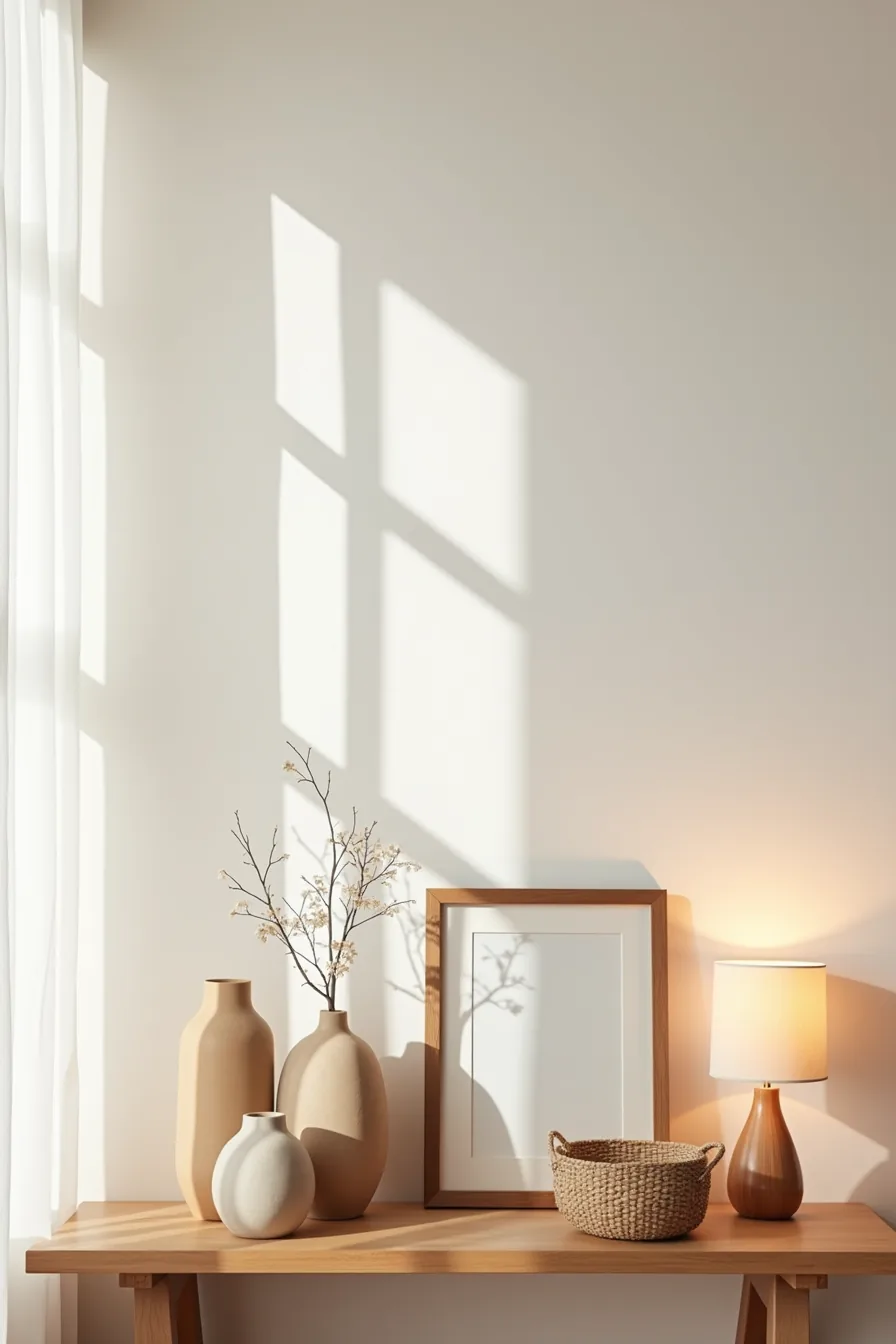
The line between eclectic and cluttered is drawn by negative space. On a styled console table, three ceramic vessels of increasing height create a clear visual ladder, while the framed abstract artwork leaning casually against the wall breaks the rigid vertical line. The small woven basket adds texture without introducing a fourth material, and the empty space between each object is as deliberate as the objects themselves.
Apply the rule of three: group items in odd numbers, vary height by at least 3–4 inches per piece, and leave roughly 2–3 inches of breathing room between each object. If you catch yourself adding a fourth vessel or a second basket, stop, that’s where collected tips into chaotic. In a narrow entry, this single styled surface carries the whole room’s personality without demanding floor space.
For larger consoles, scale the vessels up rather than adding more pieces; a 12-inch ceramic urn reads intentional where a third small vase would read as indecision.
Modern Eclectic Living Rooms for Small Spaces
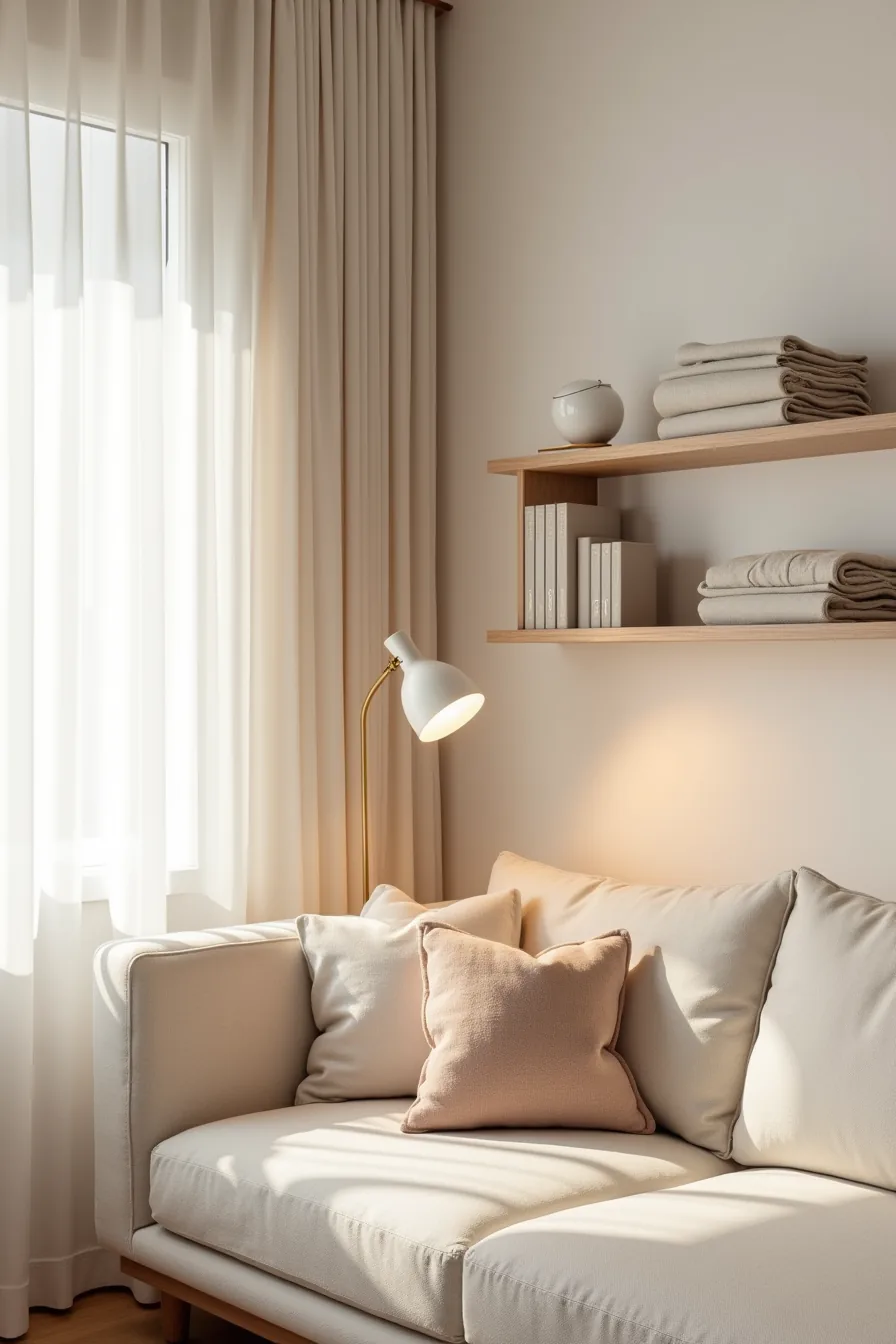
In rooms under 200 square feet, eclectic design fails when it competes for floor area. The successful compact version relies on a strict budget of statement pieces: one low-profile sofa, one accent chair, and one wall-mounted shelf unit that carries the visual weight. The shelf does the work a bulky bookcase would, folded textiles in contrasting patterns stack neatly beside ceramic objects, pulling the eye upward and freeing the floor for circulation.
The accent chair, angled into the corner rather than squared off, defines a secondary seating zone without blocking the path to the sofa.
Limit your material palette to three textures maximum, for instance, linen on the sofa, wool on the folded throws, and matte ceramic on the shelf. This restraint keeps the assortment intentional rather than chaotic. Choose a sofa with exposed legs (typically 4–6 inches of clearance) so the floor reads as continuous, and skip the coffee table in favor of a slim side table between chair and sofa.
You fit personality into a compact footprint by editing vertically, not by adding more pieces.
Budget, Rental, and Investment Routes
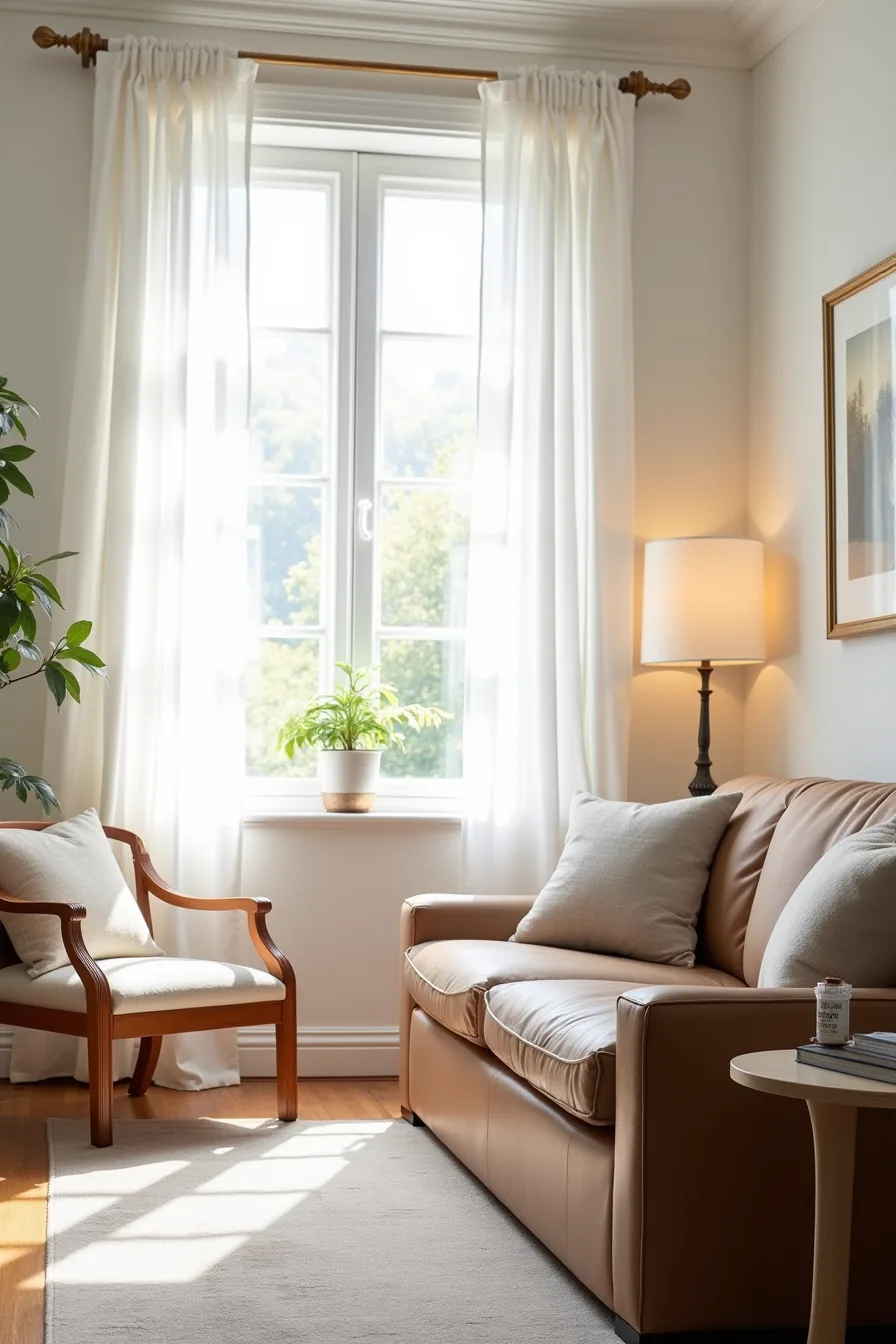
The same floor plan supports three distinct financial commitments. On the left, a thrifted wooden chair with a DIY painted frame provides personality for under $75, though you’ll need to sand and re-coat it every 18-24 months if the surface sees daily contact. This route suits renters who want to leave no permanent trace, the center’s mid-range upholstered pieces in neutral tones, typically $600-$1,200 per sofa, can travel to your next apartment without clashing with new surroundings.
For long-term owners, the right zone’s designer leather sofa and heirloom side table justify their cost through durability: quality full-grain leather develops a desirable patina over 10-15 years, and a solid-wood side table with proper joinery outlives three fast-fashion replacements. Mix these investment anchors with one budget find rather than the reverse, the contrast reads as curation, not compromise. Your allocation depends on timeline: under three years in the space, spend 70% on the middle tier and 30% on accents; over five years, invert that ratio.
Materials and Maintenance: Keeping Mixed Styles Cohesive
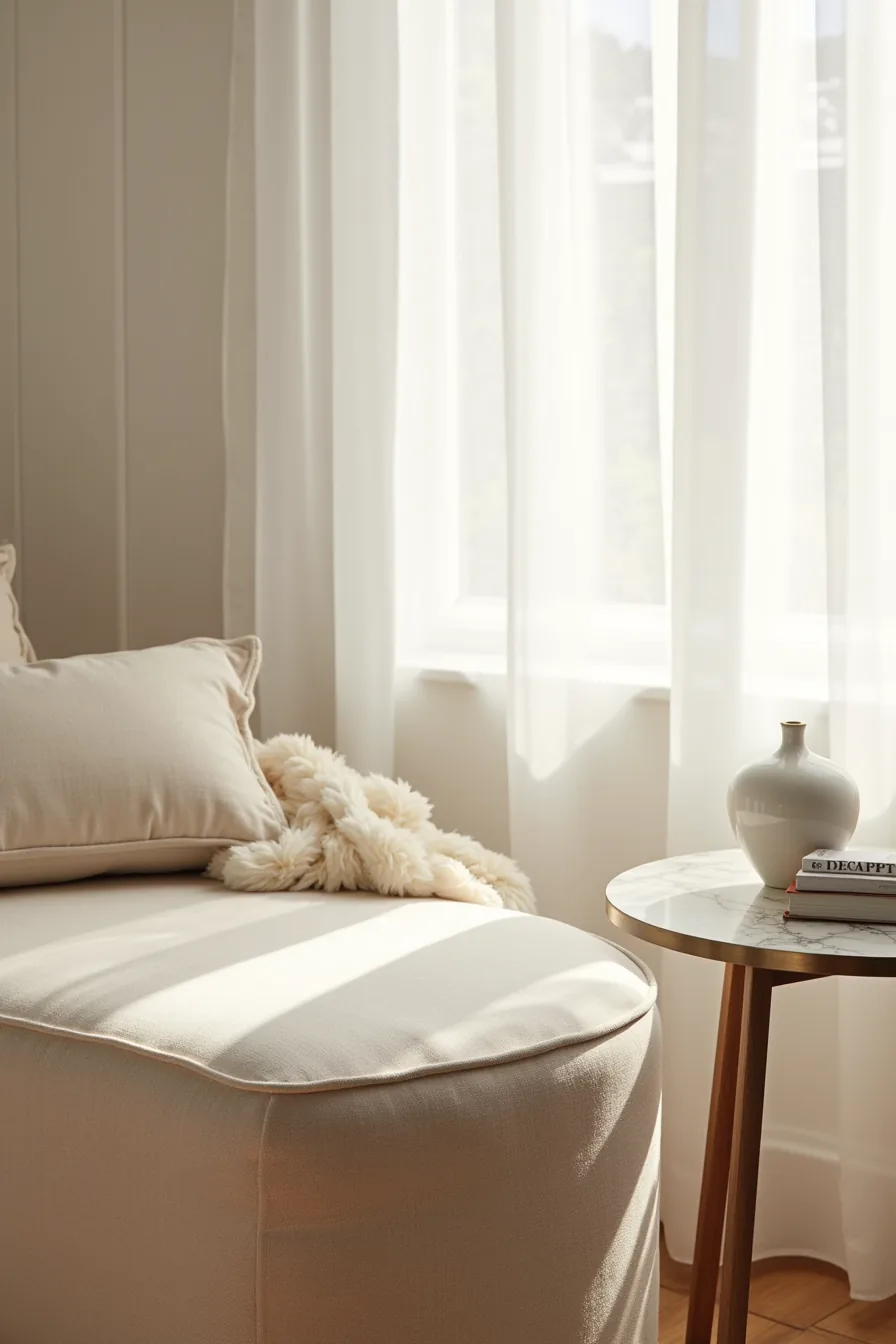
The durability of an eclectic scheme lives or dies in material pairing. A linen ottoman, brushed-metal side table, marble top, wool throw, and ceramic object hold together because their finishes share a muted, matte quality, avoid glossy surfaces next to raw textures, as the contrast reads as accidental rather than intentional. Marble stains within hours of red wine contact, so seal it annually; linen pills visibly after about two years of daily use, but that softness actually helps anchor the harder metal edges.
Set one cleaning protocol across all pieces. Vacuum the wool throw weekly with a brush attachment, wipe the metal frame with a dry microfiber cloth to prevent water spots, and dust the ceramic with a soft paintbrush to avoid scratching the glaze. When a piece starts to feel tired, swap the throw or add a second ceramic object rather than replacing the anchor furniture, this preserves the room’s character while letting your palette evolve naturally.
Your Next Move
You now have the framework, mix textures, balance eras, and respect your room’s dimensions. The easiest way to test the look without commitment is to start with one anchor piece and build outward.
Pick the smallest, least expensive swap that moves your room toward the style: a textured wool throw, a single vintage ceramic lamp, or swapping three accent pillows. Live with it for a week before buying anything else. This prevents the mismatched-warehouse effect and gives you the confidence to layer gradually.
Frequently Asked Questions
How do you keep a modern eclectic living room from looking cluttered or random?
Anchor the room with one neutral base, walls, sofa, or rug, then limit accent pieces to three materials and two bold colors. Edit ruthlessly: if an object serves no function or conversation, remove it.
Can you mix vintage and modern furniture in a small living room?
Yes, if you cap furniture at five main pieces and keep sightlines clear. Choose one oversized vintage anchor, like a low credenza, then pair it with slim, modern seating to preserve floor space.
What color palettes work best for modern eclectic design?
Start with warm whites, greiges, or deep charcoal as your backdrop. Layer in earthy terracotta, olive, or mustard for vintage warmth, plus one cool accent like slate blue to create deliberate contrast.
Is modern eclectic living room design more expensive than buying a matching set?
Not inherently. A matching set costs $2,000–$5,000 for a sofa and chairs; eclectic sourcing via thrift stores, auctions, and sales can hit $800–$1,500. You pay in time, expect 4–8 weeks of hunting, not upfront cash.