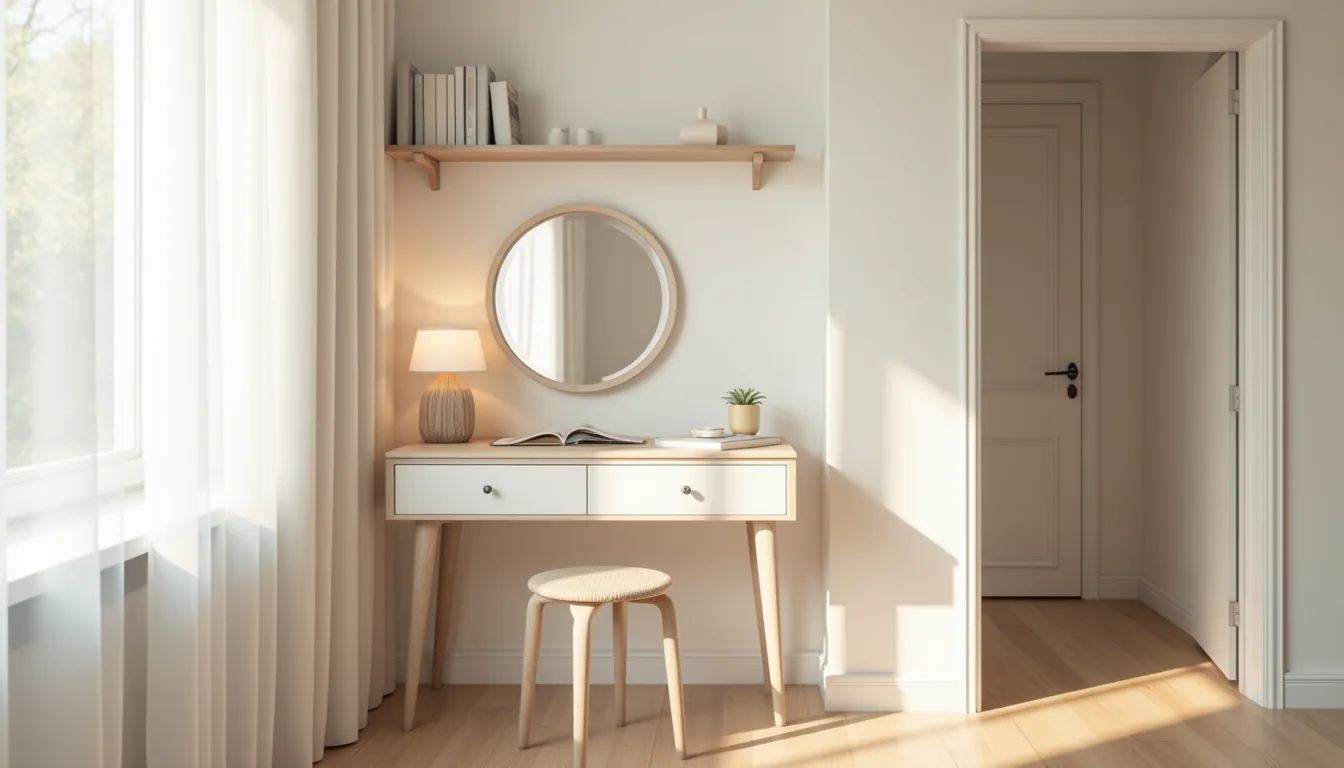

A dressing table works only when its surface, storage, and lighting match how you actually use it each morning, so here are six distinct setups that solve real spatial and routine problems. You’ll find a budget option under $150, a renter-friendly build that leaves no holes, and a long-term hardwood investment, each paired with the exact dimensions and layout logic they demand. Whether you’ve a 24-inch alcove or a 10-foot wall, the following breakdown tells you precisely what to buy, where to place it, and why each configuration succeeds or fails for your habits.
Key takeaways
- Measure your room before choosing a dressing table: a corner vanity needs roughly 24-30 inches of depth, while a wall-mounted option frees up floor space in rooms under 8 feet wide.
- Pair a swing-arm mirror with a 3-way light setting (warm, cool, dim) to cut morning prep time by eliminating shadow, mount it 16-20 inches above the tabletop for best facial coverage.
- Prioritize drawer count over surface area if you own more than 15 beauty products: a storage-first design with two deep drawers and one shallow tray slot beats a wide, bare top that collects clutter.
- Choose a desk-vanity hybrid if your space does double duty, look for a 48-60 inch width that fits a laptop and a mirror prop, and skip glass tops if you’ll write or use a keyboard daily.
The Corner Vanity for Tight Spaces
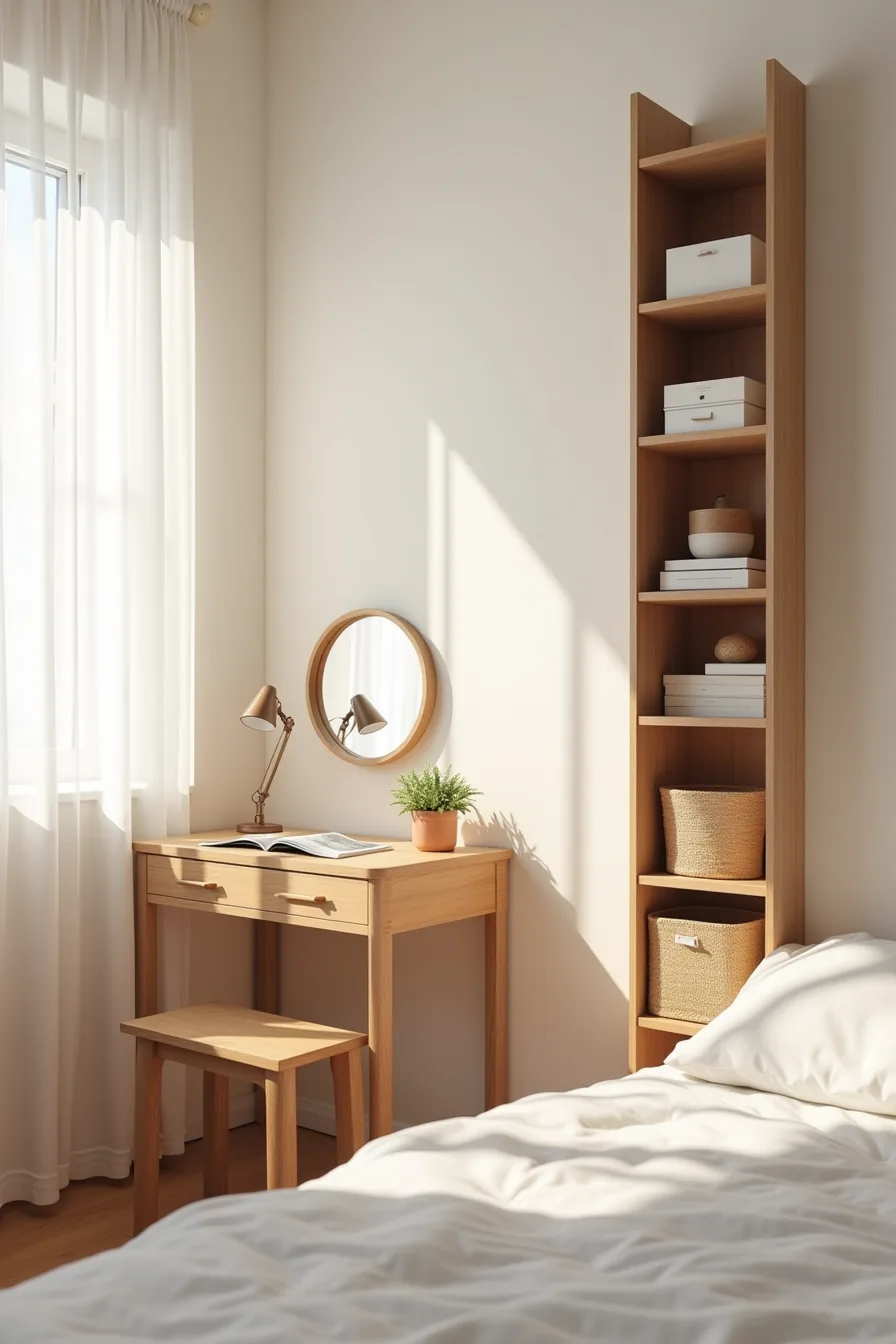
A corner placement is the single most efficient way to claim a dressing area in a bedroom under 30 square feet. The junction of two walls gives you built-in depth for free, so you can use a compact 24-inch-wide table without sacrificing mirror clearance. That narrow footprint leaves roughly 18 inches of floor space in front, enough to sit comfortably but not enough for a full chair, so opt for a slim backless stool you can tuck underneath.
The round mirror mounted 18 inches above the surface sits at eye level when you’re seated, which prevents the hunching that happens when mirrors are placed too high or too low. Because the depth is tight, the vertical shelving unit on the adjacent wall becomes your primary storage: stacked boxes and baskets keep brushes, palettes, and daily products within arm’s reach without consuming counter space. This small vanity corner works best in studios or guest rooms where every square foot earns its keep, and it costs less than a full-width dresser setup since you need only one wall-mounted shelf unit and a basic table.
Just measure the wall junction diagonally before buying, corner desks often assume a wider angle than your room actually has.
Mirror and Light Pairing for Morning Speed
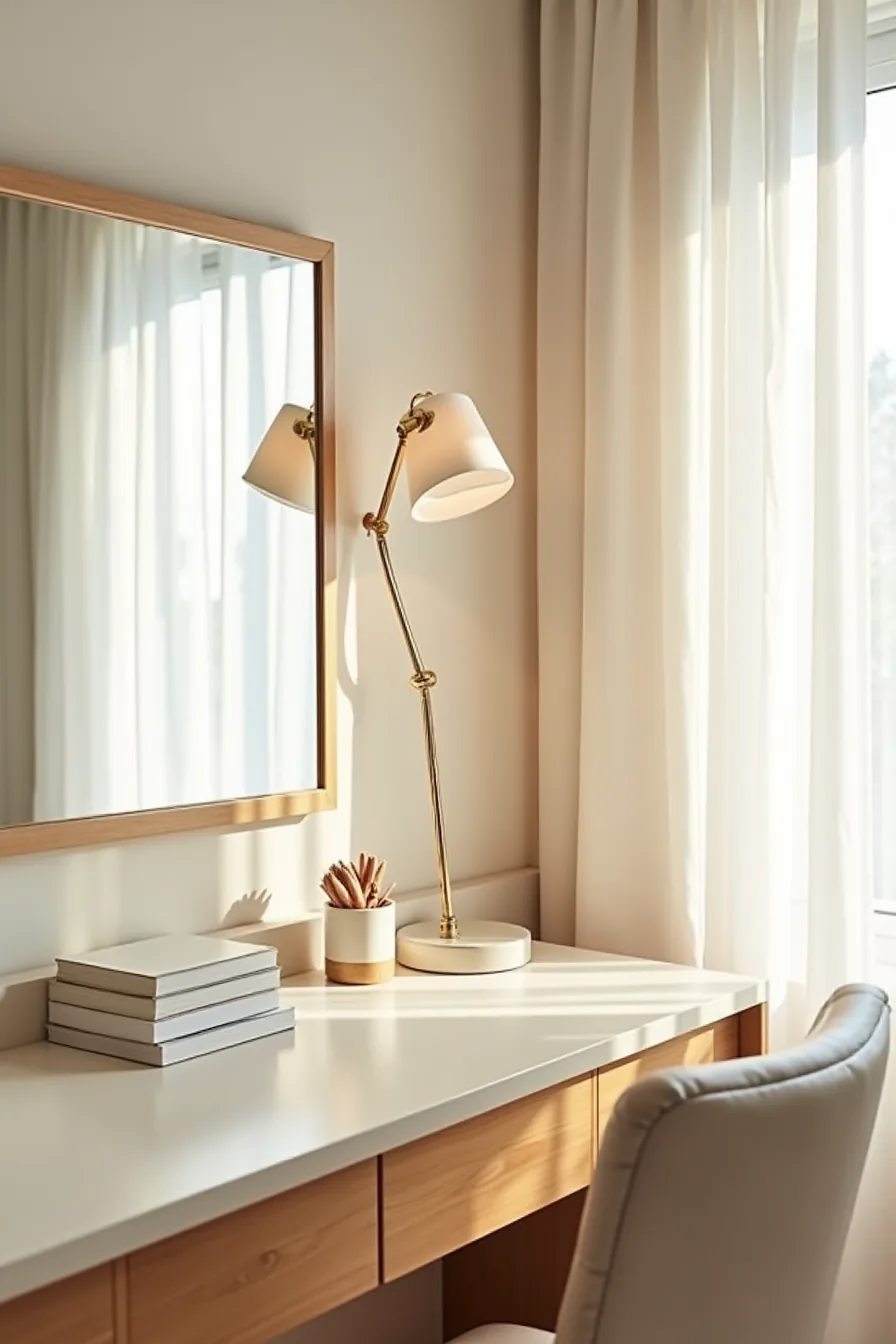
A 36-inch-wide rectangular mirror paired with two adjustable swing-arm sconces mounted at ear height creates the fastest possible grooming setup. The width matters: a mirror this size frames your full face and shoulders simultaneously, so you stop repositioning your head to check each feature. Ear-height sconces, roughly 60 inches from the floor when seated, direct light horizontally across your cheeks rather than casting shadows from above.
Choose 2700K–3000K bulbs at 60–75 watts equivalent for a warm but bright wash that matches daylight makeup application. Position the sconce arms so they angle inward at 30–45 degrees, hitting the center of your face from both sides without creating glare on the mirror’s reflective surface. This pairing suits anyone who gets ready in under 15 minutes daily, and it eliminates the need for overhead lighting that flattens facial contours.
Swing arms add roughly $40–$120 per fixture over fixed sconces, but the adjustability lets you pivot light toward your neck or jawline for detail work like brow shaping or concealer blending.
Storage-First Dressing Table Design
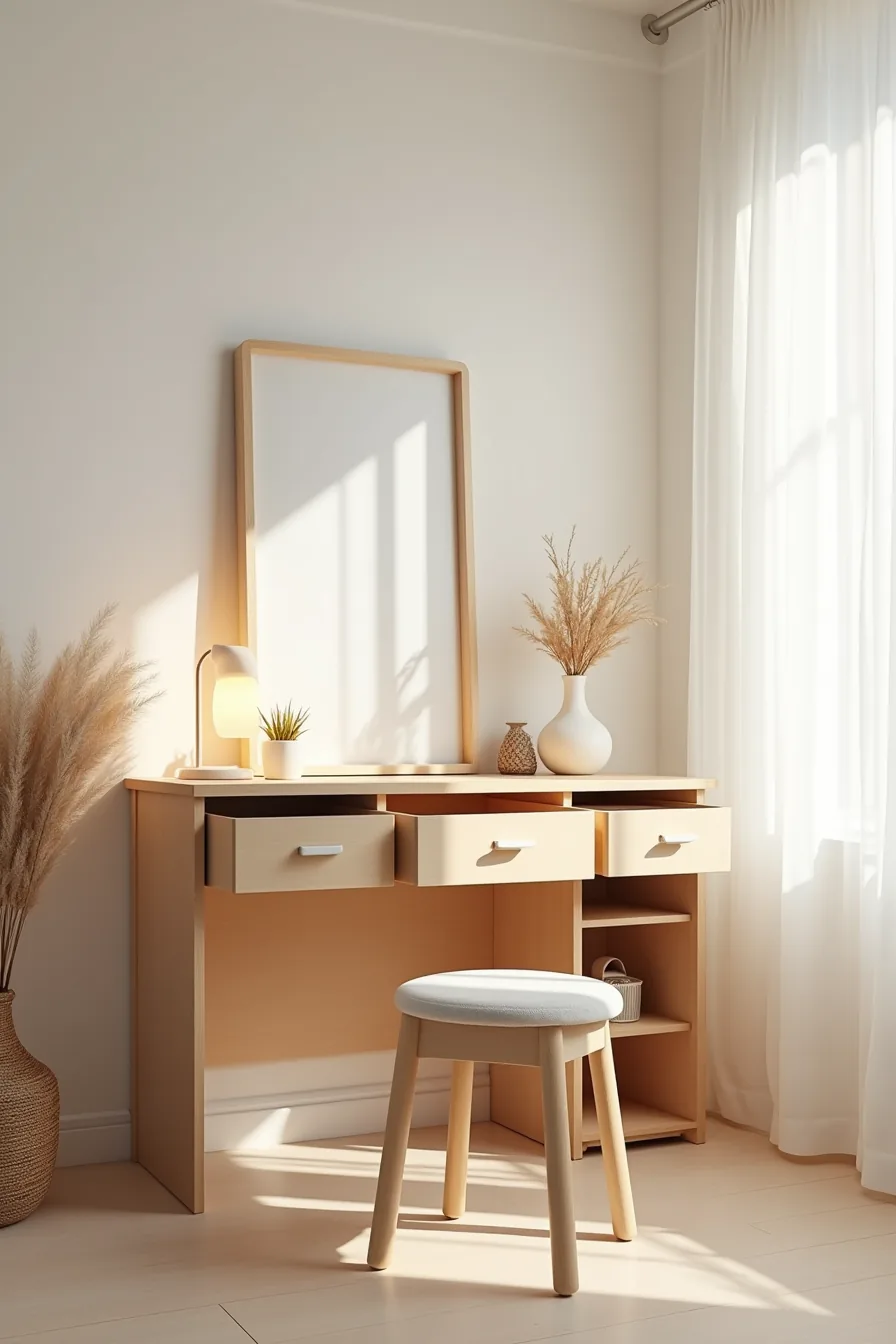
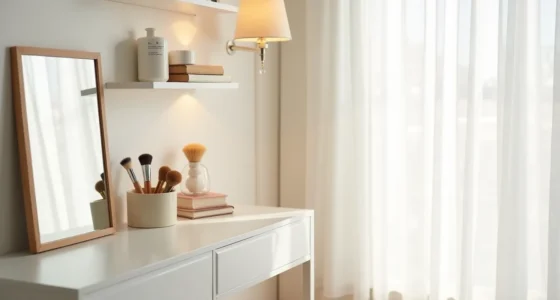
A storage-first dressing table prioritizes drawer depth and count over surface area, and the five-drawer layout across the front is the classic execution of this principle. Each drawer at 3-4 inches deep suits flat items, palettes, compacts, jewelry trays, so you can see everything at a glance without digging through stacked layers. The 8-10-inch upper cubbies handle taller bottles and styling tools, while the open shelf below the counter catches baskets for hair dryers or backup products you use weekly.
The drawer-to-counter ratio matters: roughly 60 percent of the table’s footprint should be drawer fronts, leaving 40 percent as visible countertop. You want drawer pulls that clear your thighs when seated, bar pulls or cup pulls sit flush and avoid snagging clothing. This design suits anyone with more than 20 beauty products or a small bathroom where counter clutter accumulates quickly.
Drawer slides rated for 75-100 pounds each prevent sagging when you overload them, and soft-close hardware adds about $15-$40 per drawer but saves your patience during rushed mornings.
Wall-Mounted and Floating Options
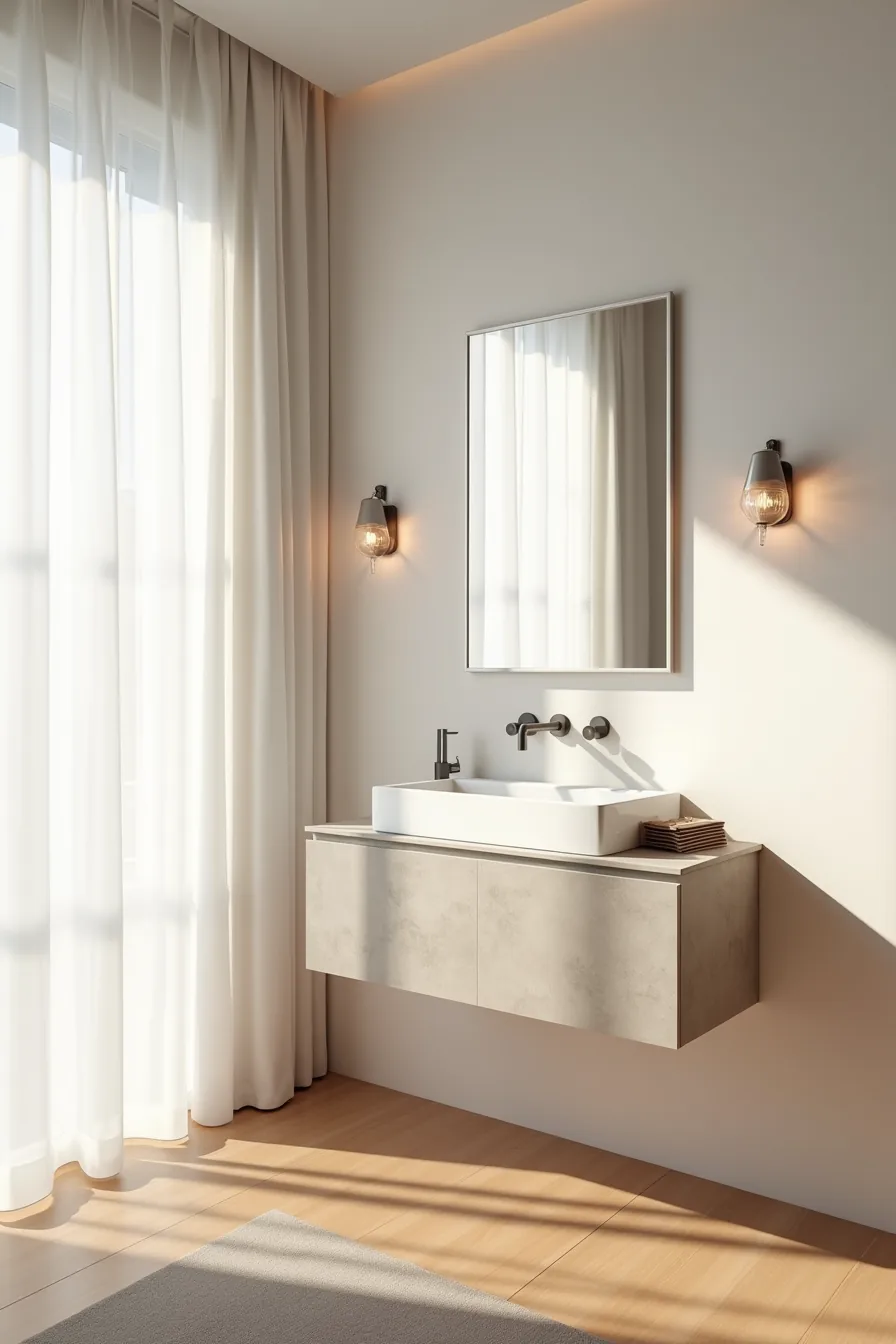
A floating vanity eliminates the floor footprint entirely, freeing up visual and physical space in a room where every inch counts. The 18-20-inch depth shown here’s the practical sweet spot: deep enough for a mirror and daily products, shallow enough that you won’t knock your knees against the wall when seated. The gap between the counter edge and the wall isn’t just aesthetic, it lets you tuck a stool fully underneath, reclaiming that floor area for circulation or a laundry basket.
This setup works best for renters or small-space dwellers, but only if you can find the studs. The wall brackets must anchor into wood or metal studs, not drywall alone; a 30-40 pound hollow-core wall will fail under the combined weight of the surface, mirror, and your leaning elbows. For drywall-only installation, use heavy-duty toggle bolts rated for 50+ pounds per bracket, and keep the counter to 10-12 inches deep to reduce use stress.
The polished concrete or plywood surface demands minimal upkeep, just a damp wipe, but avoid abrasive cleaners on the concrete’s sealant. This option suits someone who rarely stores heavy items on the surface and prefers a visually open room, not a maximalist collector.
Multipurpose Desk-Vanity Hybrids
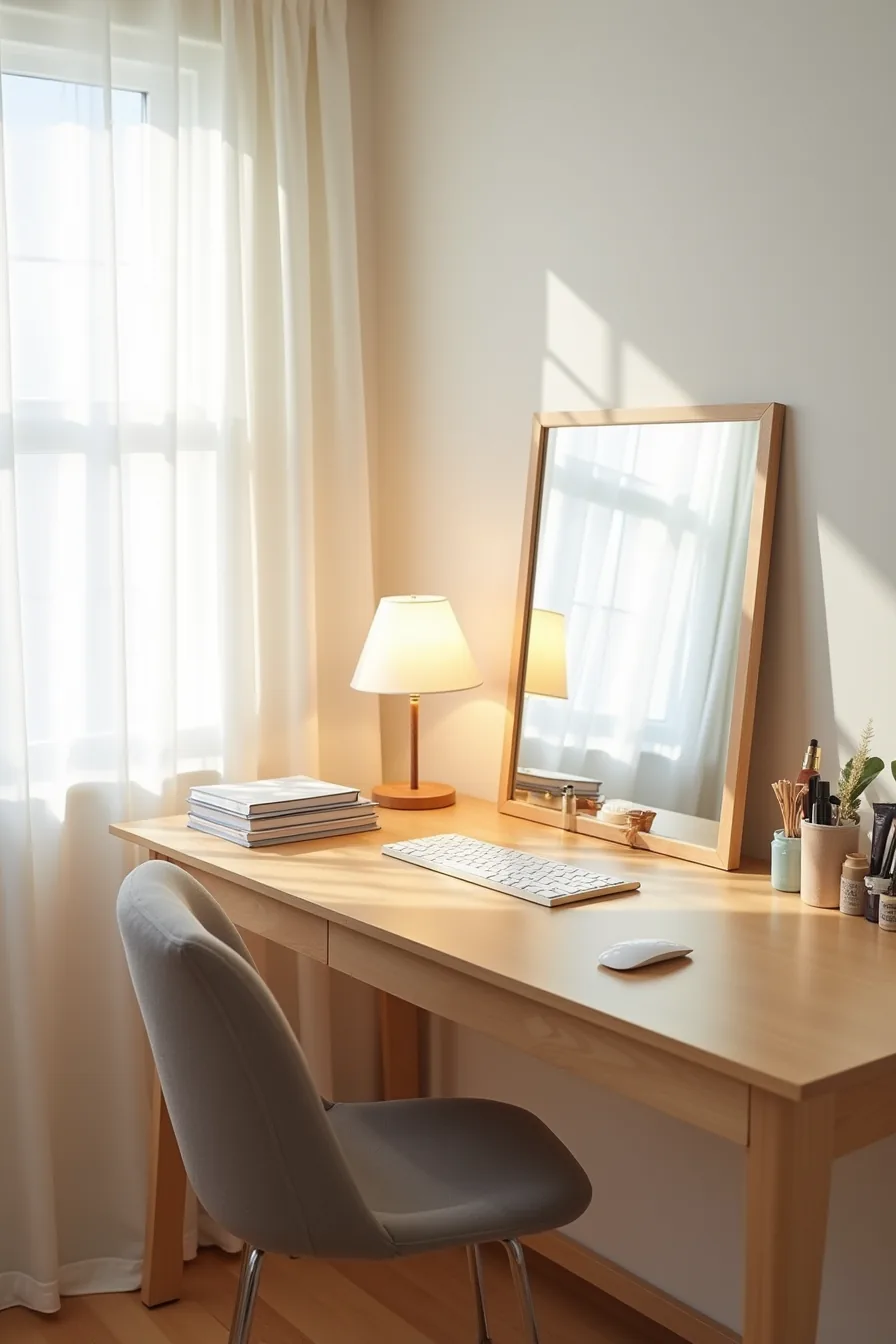
A single table at least 48 inches long gives you two distinct zones without a physical divider: a desk lamp, keyboard tray, and files on one side, a mirror, cosmetic organizer, and grooming supplies on the other. The key is committing to a consistent boundary, keep work items left of the mirror’s center line and beauty products right of it, and you’ll never find yourself moving papers around to find your concealer. This hybrid suits medium rooms (roughly 10 by 12 feet or larger) where a separate desk and vanity would crowd the floor plan.
For the split to feel intentional, choose a table 20-24 inches deep; anything shallower forces the keyboard and makeup into overlapping piles. Cable management matters more here than anywhere else: run the lamp and monitor cords along the back edge with adhesive clips, and keep a small tray for bobby pins or a lip balm near the mirror so the work zone doesn’t absorb loose items. Expect to spend 10 minutes a week resetting the boundary, it’s the only way the dual-purpose setup stays functional rather than chaotic.
Investment Pieces That Grow With Your Space
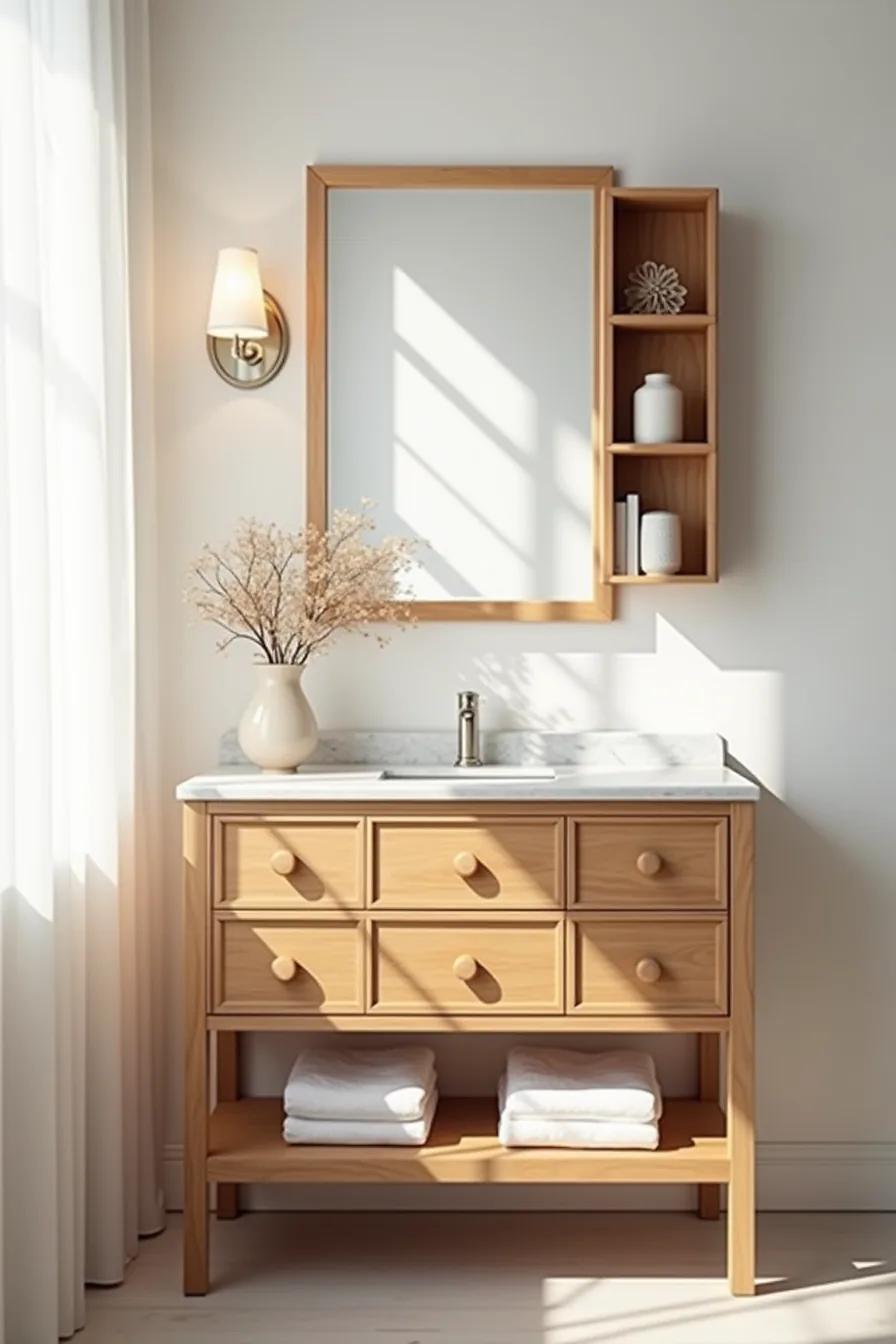
If you’re ready to commit for a decade rather than a season, a solid wood vanity with dovetail drawers is the benchmark for longevity. The dovetail joinery, interlocking pins at each corner, is what prevents the drawer face from pulling loose after years of daily use, and it’s the first detail to inspect before you pay a premium. Pair that with a marble or granite top, and you get a surface that shrugs off spilled foundation and acetone without staining or warping, unlike laminate or engineered wood.
The modular mirror frame is the feature that lets the piece relocate with you. When the frame detaches, the base works as a standard writing desk or a console in a hallway, so the piece isn’t obsolete if your bedroom layout changes. The matching shelf unit extends your storage vertically without eating floor space, which matters when you move from a large room to a compact apartment.
Expect to invest in the $800 to $2,500 range for this quality tier, and plan on annual conditioning of the wood top to prevent drying or cracking. Resale holds at 50–70 percent of original value if you keep the hardware intact, better than any presswood alternative.
Your 3-Step Starting Point
Begin by measuring your available wall space and the depth you can spare, most dressing tables need 15–18 inches of surface depth, plus 30 inches of clearance for a chair. Then pick one priority: storage, lighting, or style. That single decision narrows your options faster than any mood board.
Your next step: take a photo of the empty corner, tape out the footprint on the floor, and live with that outline for 24 hours. If the tape feels cramped, adjust before you buy anything.
Frequently Asked Questions
What is the minimum width needed for a functional dressing table?
You need at least 30 inches of clear surface width to fit a mirror, skincare bottles, and makeup essentials side by side. Anything narrower forces stacking and slows your routine.
Can you use a regular desk as a dressing table, and what adjustments are needed?
Yes, if it matches your seated elbow height, typically 28–30 inches. Add a wall-mounted mirror, a task lamp, and a small tray to separate cosmetics from paperwork. Desk drawers work fine for storage.
How much lighting do you actually need above a dressing table mirror?
Aim for 800–1,200 lumens from two side fixtures at eye level, not just one overhead light. This eliminates facial shadows. If that’s too bright, use a dimmer to drop to 400 lumens for evening use.
What is the best height for a dressing table to avoid neck and shoulder strain?
Set the tabletop at your seated elbow height, generally 28–30 inches for most adults. Your mirror’s center should align with your eye line, roughly 15–18 inches above the tabletop. Adjust with a chair cushion if needed.