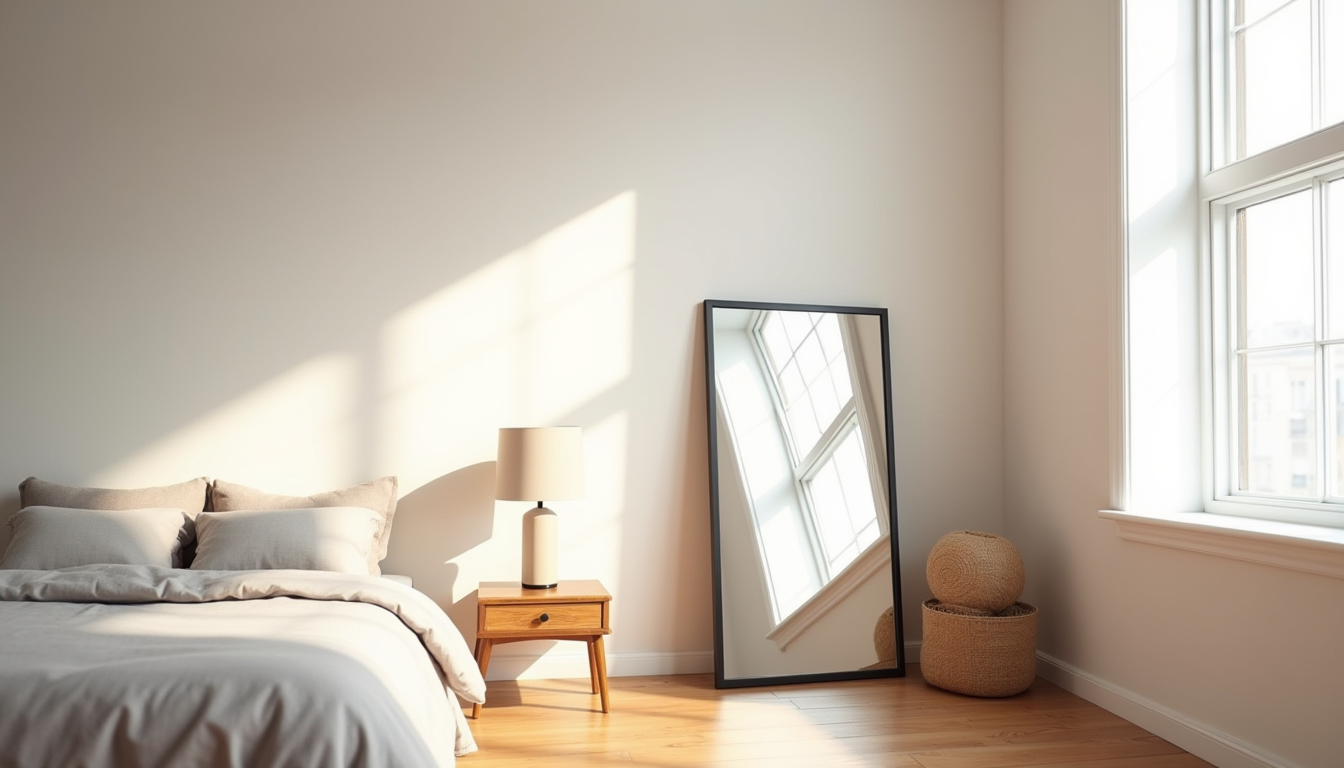

A standing mirror in your bedroom serves both functional and decorative purposes, offering full-length visibility while enhancing light and space perception. For a budget-friendly option, a frameless leaning mirror (60-70 inches tall) adds style without mounting, while larger spaces benefit from ornate floor mirrors or those integrated into storage solutions. Placement, scale, and reflection angles drastically impact utility, here’s how to choose the right one for your layout and needs.
Key takeaways
- Corner placement maximizes space in bedrooms under 120 sq ft while keeping the mirror functional.
- Leaning mirrors work best behind dressers or nightstands in medium-sized rooms (120-200 sq ft).
- Cheval mirrors offer adjustable angles ideal for renters who need non-permanent solutions.
- Full-height statement mirrors visually expand small bedrooms but require at least 24 inches of clearance.
Corner Placement for Small Bedrooms
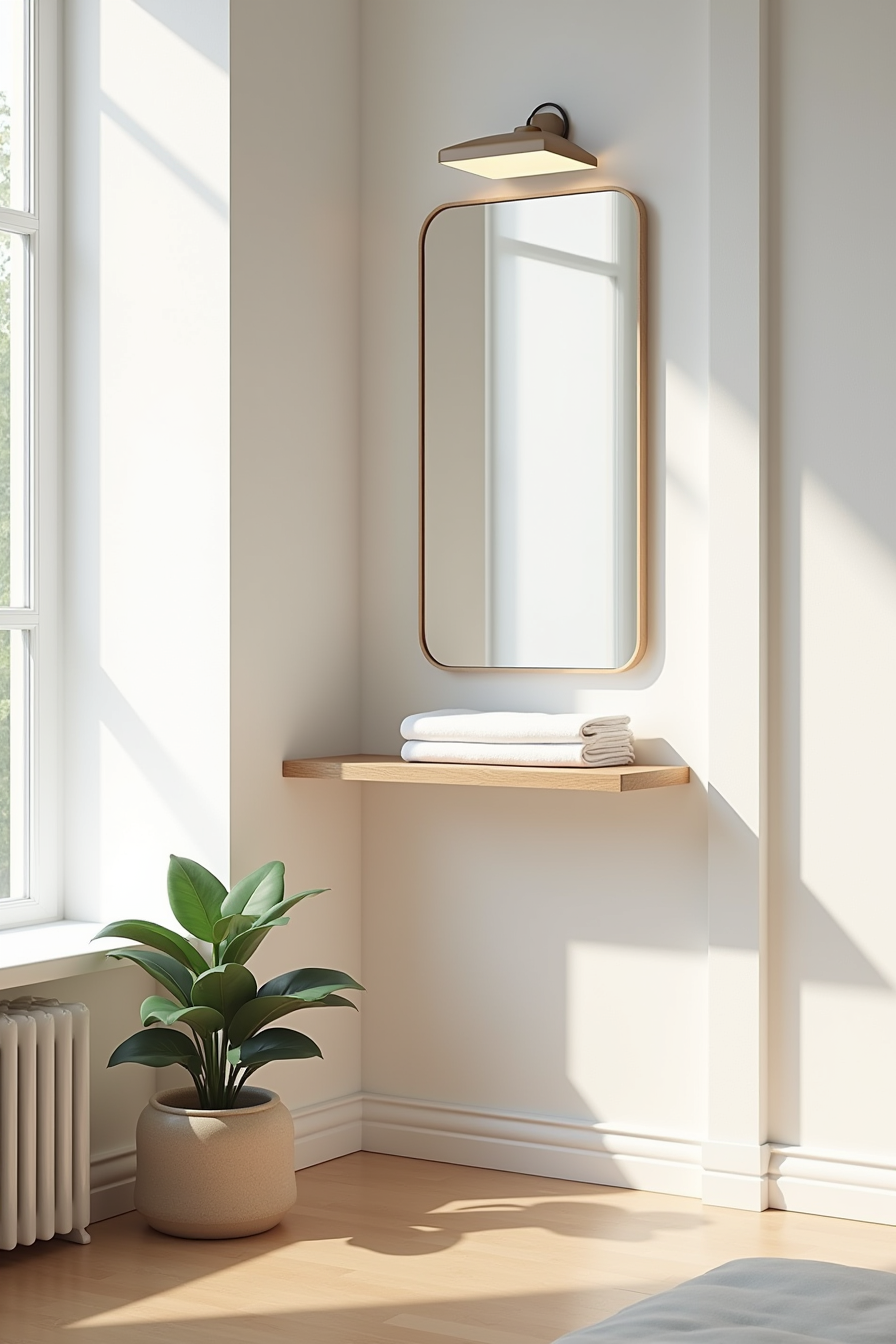
A corner is the most forgiving spot for a standing mirror in bedroom layouts under 10 feet wide. Angling a tall rectangular mirror diagonally across a corner reclaims the floor area that a flat-against-wall placement would waste, while the angle still catches ambient light from two directions. This works best when the mirror’s height reaches at least 5 feet, so it can reflect a full outfit without requiring you to step back into circulation space.
Position the mirror so its edge clears the baseboard trim by 2–3 inches, preventing scratches and allowing air to circulate behind the glass. The potted plant beside the base introduces a natural counterweight that visually anchors the mirror’s height, while the floating shelf above the corner holds folded towels, a practical storage move that turns dead corner volume into usable vertical space. For renter-friendly execution, skip wall mounting entirely; a freestanding mirror with a U-shaped or tripod base needs no hardware and leaves no holes.
Keep the shelf load under 10 pounds to avoid damaging drywall anchors, and wipe the mirror’s lower edge weekly to catch dust that collects where the frame meets the floor.
Full-Length Statement Mirror as Room Divider
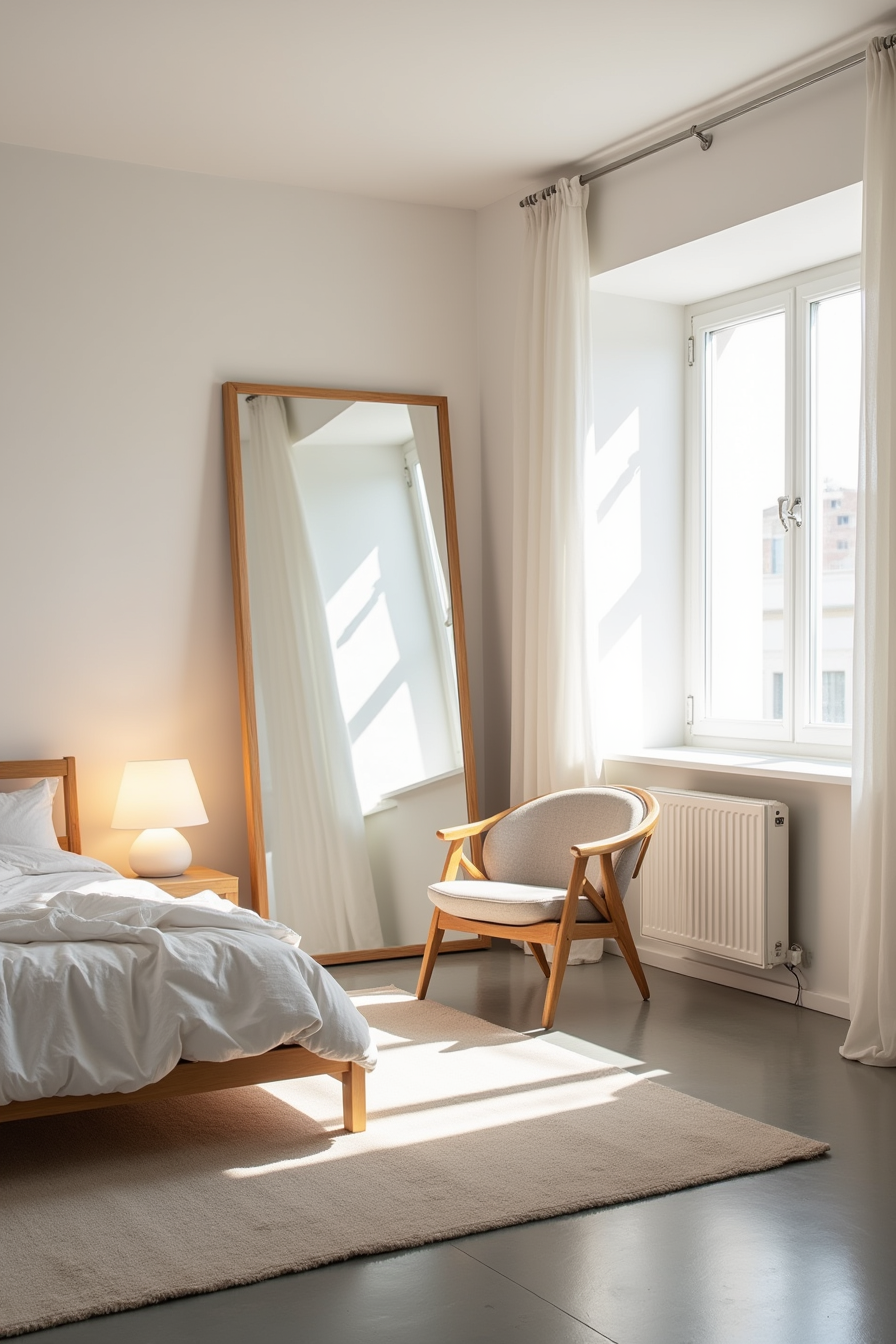
A freestanding mirror that’s tall enough to act as a visual partition is a smart solution for studio layouts where the bed and dressing area share one footprint. Instead of a solid wall, the oversized mirror creates a soft boundary between the sleeping zone and the space where you get ready, allowing natural light to pass around it. This setup suits a single person or a couple who wants distinct zones without the permanence or cost of building a partition.
For this to work, choose a mirror at least 70 inches high and mount it on a pivoting frame so you can angle it as needed. The wide wooden frame in the example provides enough visual weight to feel intentional, while the upholstered armchair sits opposite the bed, anchoring the seating and dressing side of the room. The area rug under the chair defines the floor space, making the division feel deliberate even though the mirror is the only physical barrier.
Stability is non-negotiable here, look for a base that’s at least 18 inches wide or use wall anchors if the mirror has a top tether point. A mirror that tips over is both a safety hazard and a practical failure, so avoid slim or top-heavy designs if you’ve pets or kids. Also, keep the glass 6 to 12 inches away from the bed edge so you don’t hit it when you sit up or reach for a book.
The concrete floor in the example means you’ll want felt pads under the base to prevent scratches, and you should wipe the glass weekly with a microfiber cloth since the open position exposes it to more dust than a wall-mounted mirror.
Leaning Mirror Behind Furniture
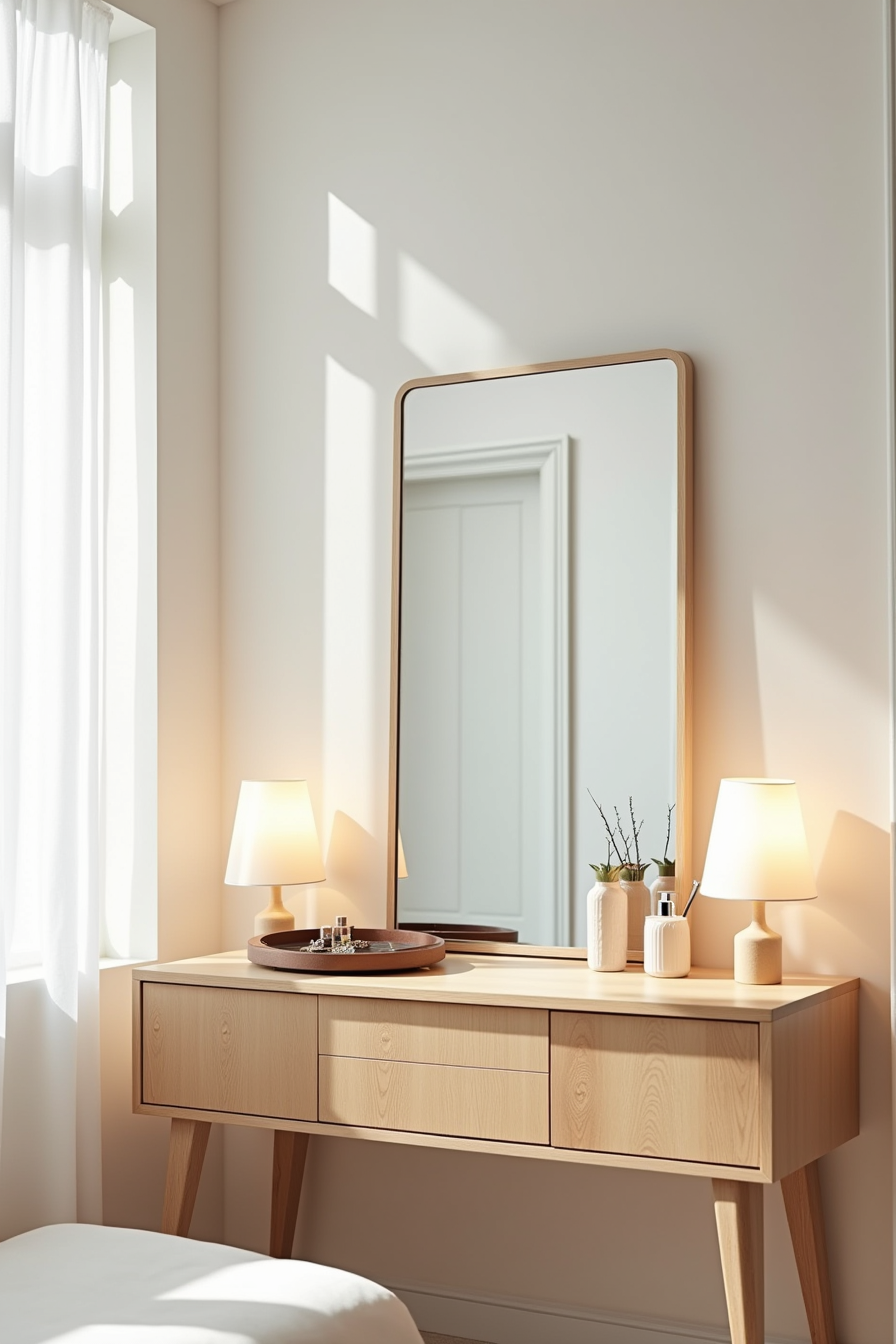
A frameless mirror leaned against the wall behind a low dresser is the most renter-friendly way to add a standing mirror in bedroom without drilling a single hole. The dresser anchors the mirror’s base, so you don’t need a bulky stand, and the jewelry tray and perfume bottles on the dresser top create a practical styling station in front of the glass.
This works best in a medium bedroom (roughly 10 by 12 feet or larger) where the dresser is at least 30 inches tall, anything shorter lets the mirror slide forward. Choose a mirror between 60 and 72 inches tall and lean it at a 10- to 15-degree angle; steeper angles risk the glass slipping on smooth floors, so add a rubber gripper pad under the bottom edge. The frameless design keeps the reflection clean, and the mirror will pick up the ceiling pendant light behind you, which doubles as dressing illumination.
For a practical standing mirror in bedroom planning tip, keep the dresser surface clutter-free within 12 inches of the glass so bottles and trays don’t appear duplicated in the reflection.
Arched Standing Mirror for Traditional Spaces
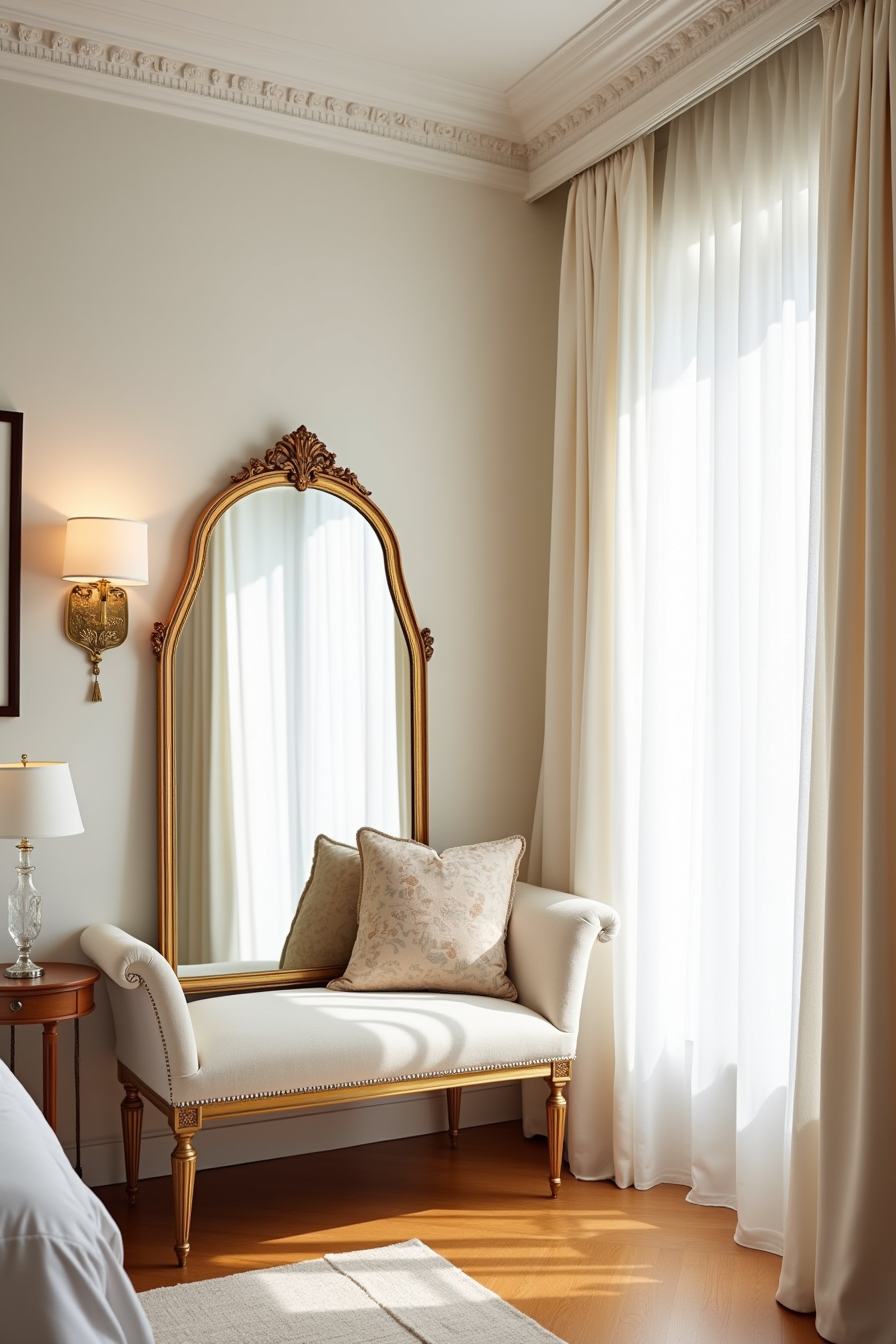
An arched mirror with an ornate gold-tone frame reads as a deliberate architectural gesture, not a utility item. In a room with crown molding, the curved top echoes the trim’s formality while the gold finish picks up warm brass hardware elsewhere. Position it beside an upholstered bench to create a dedicated dressing corner that keeps the mirror from competing with the bed as the room’s visual anchor.
The arch’s height matters more than its width. For an 8-foot ceiling, cap the mirror at 70 inches so the curve clears the crown molding without visually crowding it; a 9-foot ceiling can take a 78-inch piece. The ornate frame suits bedrooms with patterned textiles or traditional case goods, it will look heavy in a minimalist space.
Place framed artwork on the adjacent wall at least 6 inches above the mirror’s highest point to keep the two elements from feeling stacked. Dust the frame’s carved details weekly; recessed crevices collect lint quickly.
Adjustable Cheval Mirror for Flexibility
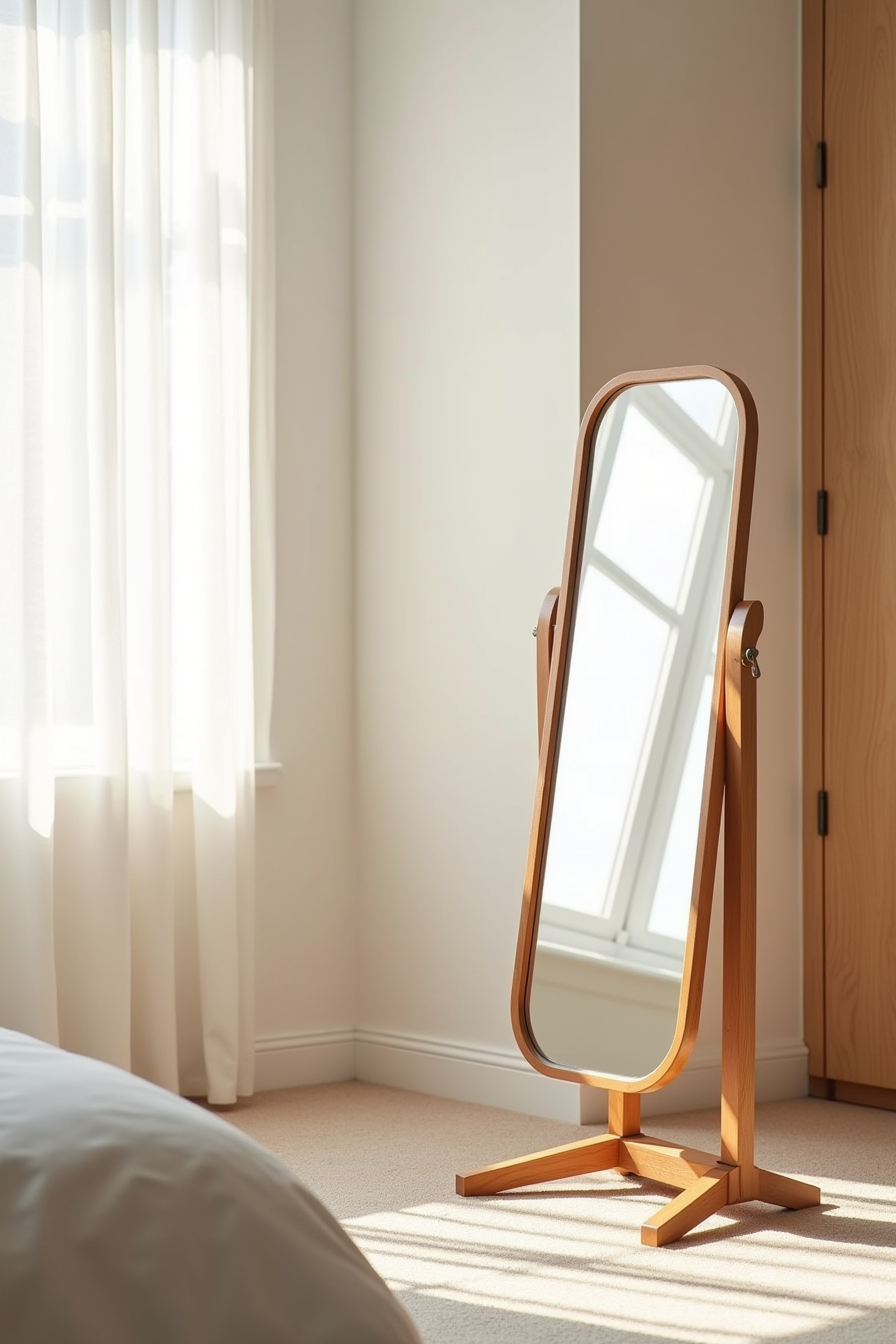
A cheval mirror solves the problem of fixed wall placement. Its pivoting frame lets you tilt the glass to capture better light or check your outfit from multiple angles without moving the base. This adjustability is especially valuable in bedrooms where the only natural light source sits off-center from your main dressing area.
You’ll need roughly two feet of floor space for a standard cheval mirror, making it a workable option for medium-sized rooms. The full-length view typically spans 60 to 70 inches tall, which suits most adults. Before purchasing, measure your floor-to-ceiling height and confirm the mirror’s tilt range doesn’t collide with baseboards or nearby furniture.
Stability matters more than style here. Look for a wide, cross-bar base and a sturdy swivel mechanism, cheap pivots wear out within a year of daily use. Positioning the mirror perpendicular to a window reduces glare, while placing it near your closet door creates a convenient dressing nook.
For safety, anchor tall mirrors to the wall if you’ve children or pets.
Budget vs Investment: Material and Longevity Trade-Offs
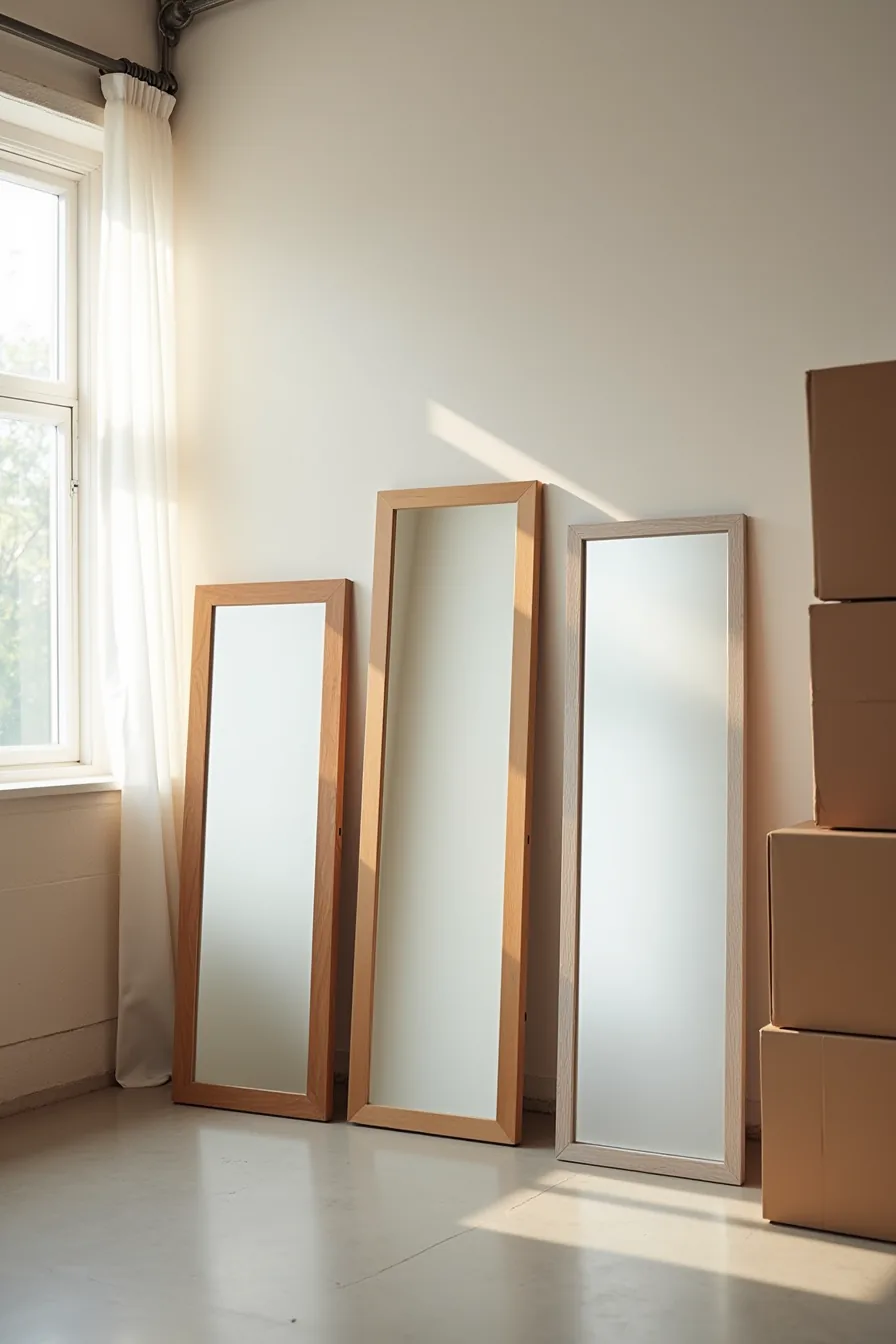
The three mirrors leaning against that garage wall represent the full spectrum of what you’ll pay for and how long it will last. The lightweight composite frame is your budget route, typically 40 to 60 percent cheaper than solid wood, but it scratches easily and the finish peels when exposed to humidity. Expect two to three years of daily use before the joints loosen.
It suits a guest bedroom or a rental where you want the function without the commitment.
The solid oak frame with its visible grain is the long-term investment. It costs two to three times more, but it resists warping, takes minor dents without showing them, and can be refinished if the finish ever dulls. Budget five to ten minutes monthly for dusting and an occasional wood conditioner.
The brushed metal frame sits in the middle: durable, lightweight, and easy to wipe clean, though it shows fingerprints and can develop small rust spots in damp climates unless it has a powder-coated finish.
A common standing mirror in bedroom mistakes to avoid is choosing a frame purely on appearance without weighing how much humidity your room generates. That composite mirror will look identical to the oak one in a showroom, the difference emerges after a year of bathroom-adjacent moisture or a radiator nearby.
Your Next Step
Before you buy anything, measure the wall space where the mirror will live and mark the floor with tape. This 60-second check prevents the most common mistake: a 70-inch mirror overwhelming a 6-foot wall or a slim 18-inch frame disappearing beside a wide dresser. Walk past the tape for a day to confirm the reflection works from your usual vantage points.
Once the footprint feels right, order a sample or buy from a retailer with free returns. A standing mirror only earns its floor space when you actually use it daily.
Frequently Asked Questions
How far should a standing mirror be from the wall to prevent tipping?
Place the mirror base flush against the wall, with the top leaning back 10-15 degrees from vertical. This angle shifts the center of gravity rearward, significantly reducing the risk of tipping forward during normal use.
What size standing mirror works best in a 10×12 bedroom?
Choose a mirror 60-72 inches tall and 20-28 inches wide for a 10×12 room. This scale allows full-body viewing without overwhelming the wall space or blocking circulation paths around the bed and dresser.
Can you place a standing mirror directly on carpet without damage?
Yes, but use a protective pad or furniture coaster under each foot. Heavy mirrors can crush carpet fibers and leave permanent indentations over time, especially on plush or high-pile carpeting.
Do standing mirrors need to be anchored to the wall for safety?
Anchoring is strongly recommended if you’ve children, pets, or live in an earthquake-prone area. Use a furniture anti-tip strap rated for at least 50 pounds, attaching it to a wall stud behind the mirror frame.