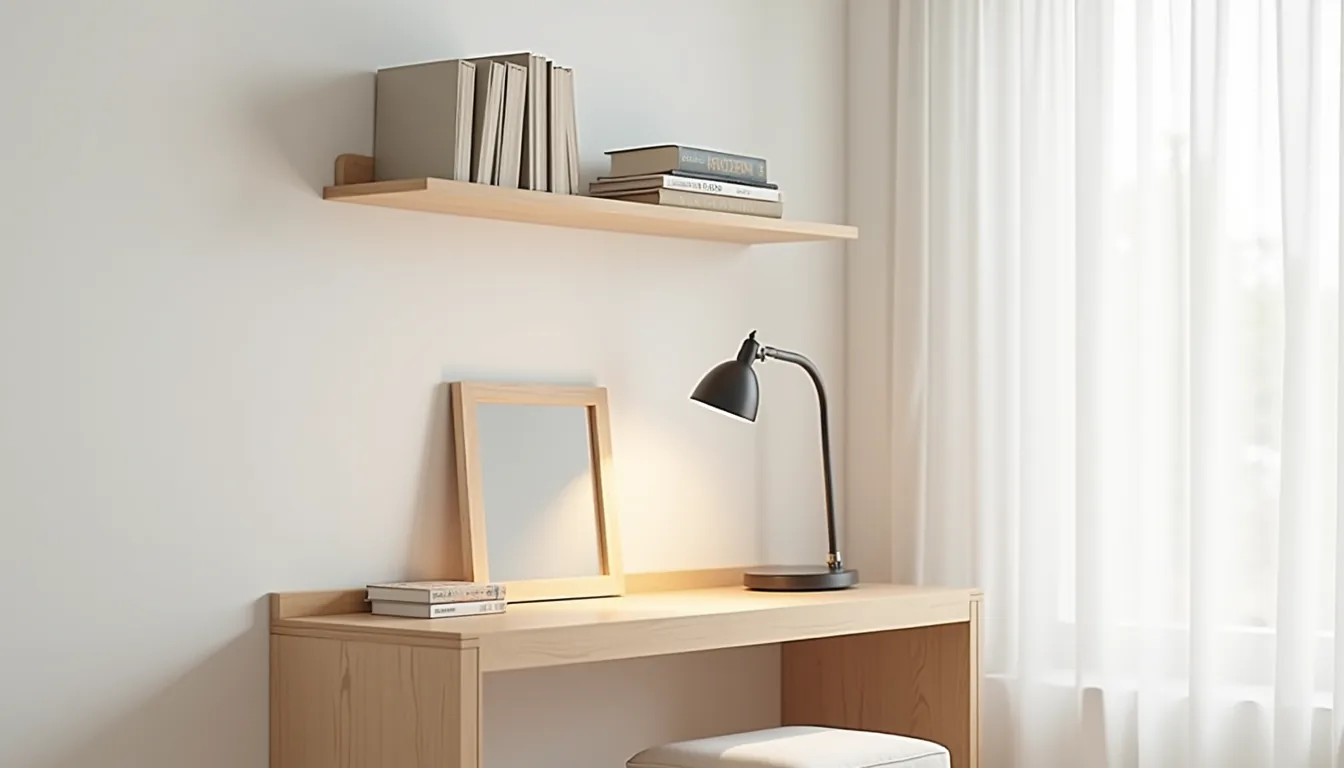

A dressing table ideas bedroom setup fails most often not from a lack of style, but from a mismatch between the furniture’s footprint and the room’s traffic flow, storage demands, and lighting conditions. The fix is choosing one of six distinct configurations, from a wall-mounted shelf to a full vanity, based on your square footage and daily routine. Each option below specifies the exact space, materials, and budget trade-offs so you can match the right piece to your room without guesswork.
Key takeaways
- Measure your room’s clear wall space and traffic paths before buying, a compact corner vanity fits a 30–36 inch depth, while a standard 48–60 inch table needs 3 feet of walkway clearance.
- Choose the mirror based on your daily routine: a wall-mounted or backlit option suits quick makeup users, but a tri-fold mirror works better for detailed hairstyling or skincare.
- Prioritize storage drawers over open shelves if you’ve clutter-prone mornings, two shallow drawers (3–5 inches deep) hold more than a single deep shelf and keep products dust-free.
- Invest in a solid-wood frame and a quartz or tempered-glass top for a long-term piece; budget builds use a wall-mounted shelf and a folding stool, while renters can install a tension-rod curtain to hide a simple desk without drilling.
The Compact Corner Vanity for Small Bedrooms
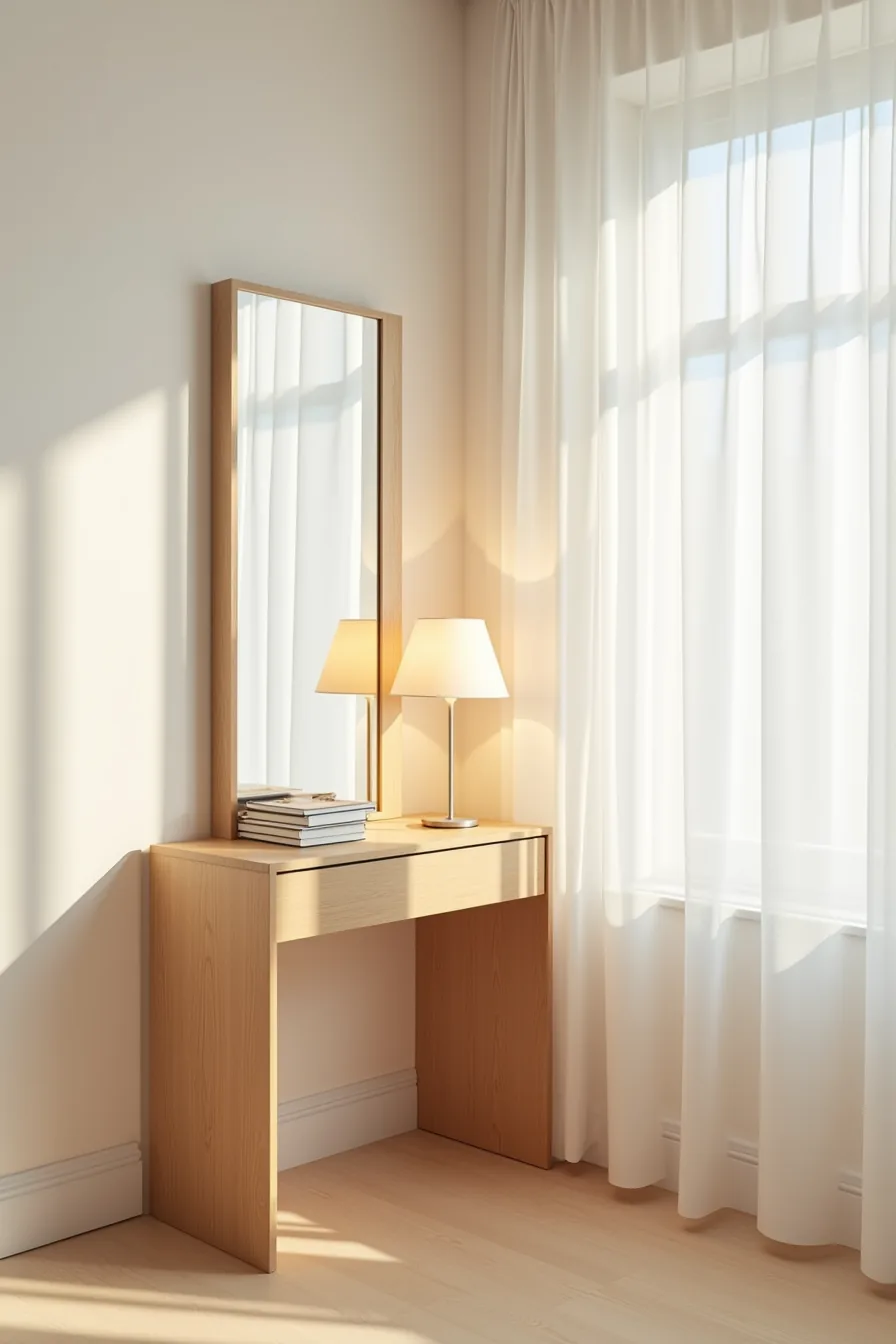
Your tightest layouts can usually spare a 24-inch corner. A narrow rectangular table there leaves roughly 30 inches of open floor space on both adjacent sides, which is the minimum clear path you need to sit and stand comfortably without bumping the walls. The angled mirror frame lets you see your face without leaning forward or blocking the window light that often hits corners in small rooms.
The small drawer unit below gives you a place for daily-use makeup or brushes, keeping the tabletop clear for a lamp or jewelry tray. This setup suits you if you apply makeup for under ten minutes most days and prefer a compact, low-cost fix. Avoid it if you need a full skincare routine with dozens of products, because the narrow depth (typically 12–15 inches) leaves no room for spreading out.
For renters, a freestanding corner table requires no wall mounting and can be moved to a new room untouched.
Classic vs Minimal Vanity: Which Suits Your Routine
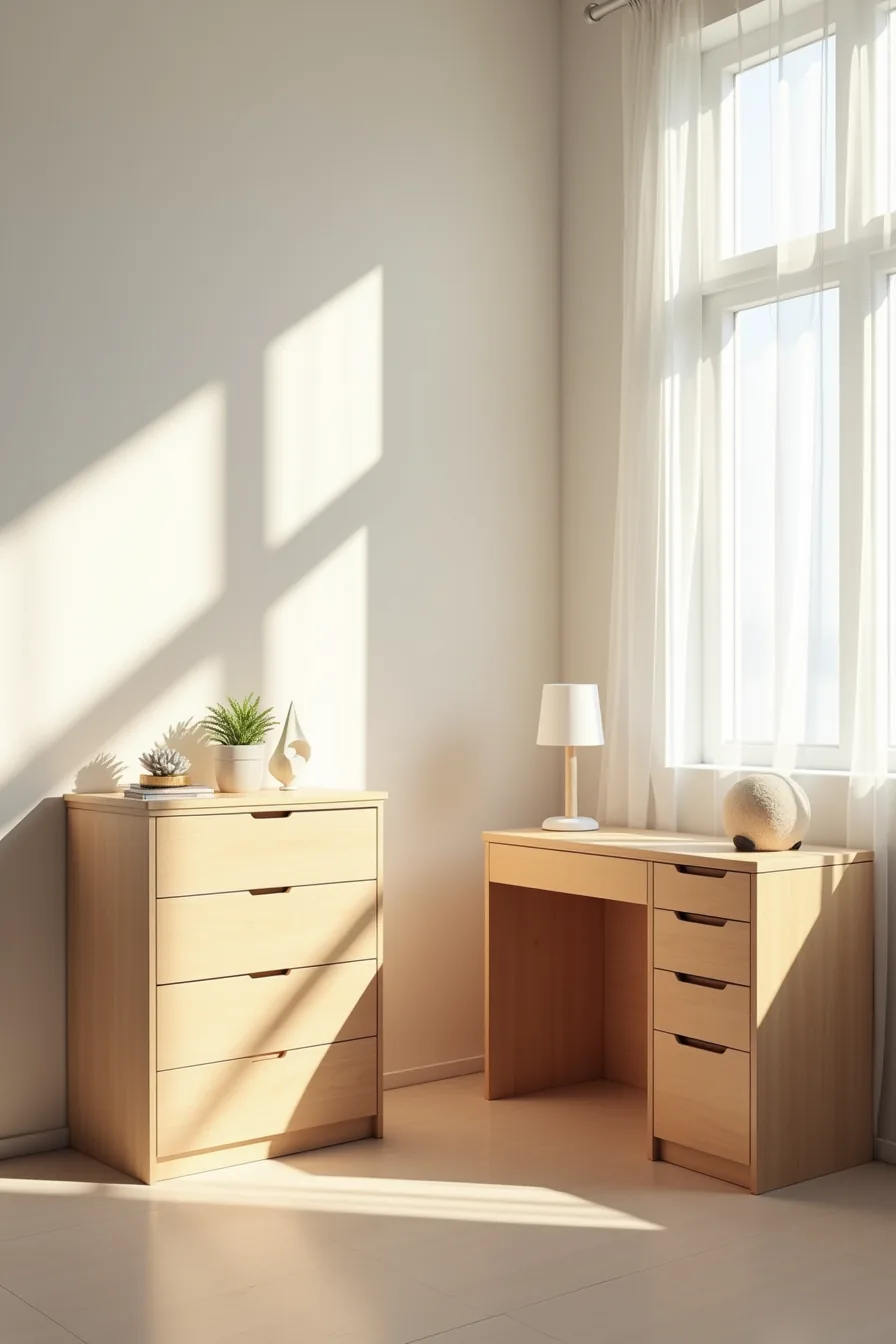
The enclosed vanity with multiple drawers and cabinet doors is the stronger choice if you keep roughly 15 to 25 products on rotation and want them hidden from view. Expect to budget for soft-close hardware and solid wood drawer boxes if you buy one built to last a decade; these units typically need 30–36 inches of wall width and a 20-inch depth. You’ll also spend five minutes a week wiping down the interior surfaces to prevent powder residue from settling into the joints.
The open desk-style table with exposed surface suits you if you use fewer than ten items daily and prefer seeing everything at a glance. You gain the flexibility to swap in a stack of books or a plant when the surface isn’t in use, but you also commit to tidying it before guests see the room. The exposed surface requires weekly dusting, while the enclosed vanity hides that same dust behind closed doors for a month at a time.
Your actual routine, not your aspirational one, determines which trade-off you can live with.
Storage Needs First: Building Your Layout Around Function
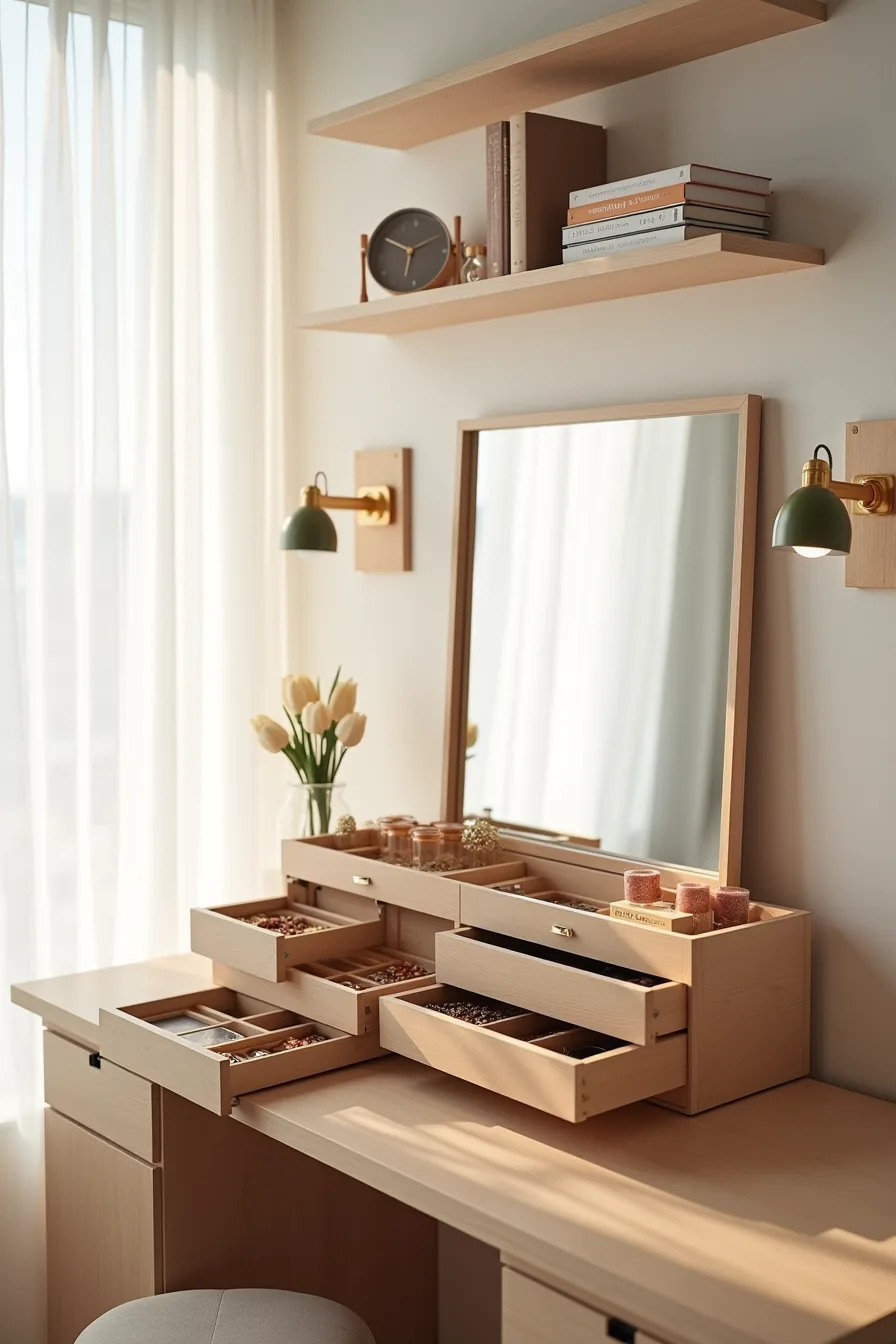
Before you choose a table, open your drawers and count actual categories, not items. Most routines break down into three groups: makeup and brushes, skincare bottles, and jewelry or tools. Each group demands a different depth, shallow trays suit lipsticks and rings, while 6-inch-tall containers handle serums and lotions.
A table depth of 16 to 18 inches works for most users because it leaves room for a mirror without forcing you to lean forward; any deeper and you waste wall space.
The overhead view shows the practical payoff of matching storage to habits. Tiered drawer organizers keep upright products from toppling, while small boxes corral loose items like bobby pins. A jewelry tray on the surface holds daily pieces within reach, and open shelving above the table absorbs overflow without adding floor footprint.
Wall-mounted shelves also raise your usable storage by 12 to 18 inches, which matters in bedrooms under 10 feet wide. This layout suits someone with 20 to 30 items who wants everything visible but categorized, not a collector with hundreds of products, who would need a deeper cabinet.
Statement Mirror Option and Lighting Setup
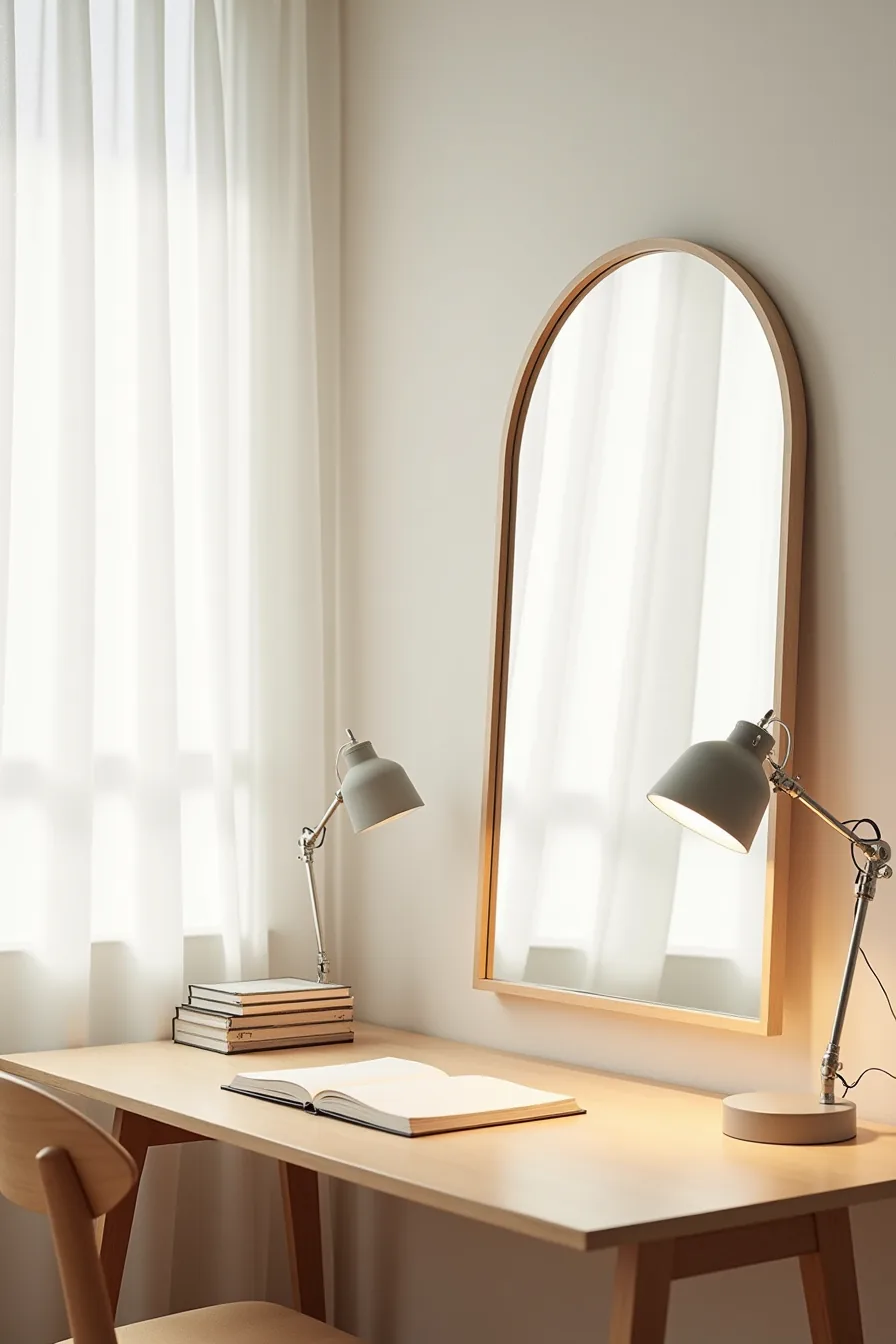
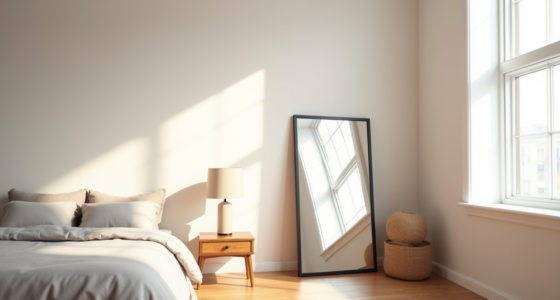
A large statement mirror transforms a basic table into a focal point, but its size must follow your wall space, not your taste. For a table width of 40 to 48 inches, choose a mirror that spans 60 to 75 percent of that width, any narrower and it reads as an afterthought, any wider and it crowds the flanking light fixtures. An arched frame softens hard corners and suits bedrooms with angular furniture, while a rectangular frame echoes clean, modern lines.
Mount the mirror bottom 8 to 12 inches above the table surface so your face lands in the center of the reflection when seated.
Lighting position determines whether the mirror actually helps you. Two adjustable task lights mounted at the mirror’s sides, roughly at eye level, eliminate the shadows your head casts under a single overhead fixture. Angle each light toward your face at 30 to 45 degrees, and choose matte or diffused bulbs to prevent glare bouncing off the mirror surface.
This setup suits anyone who does detailed grooming daily; if you only use the table for quick touch-ups, one light on the dominant side will suffice.
Budget, Rental, and Investment Routes
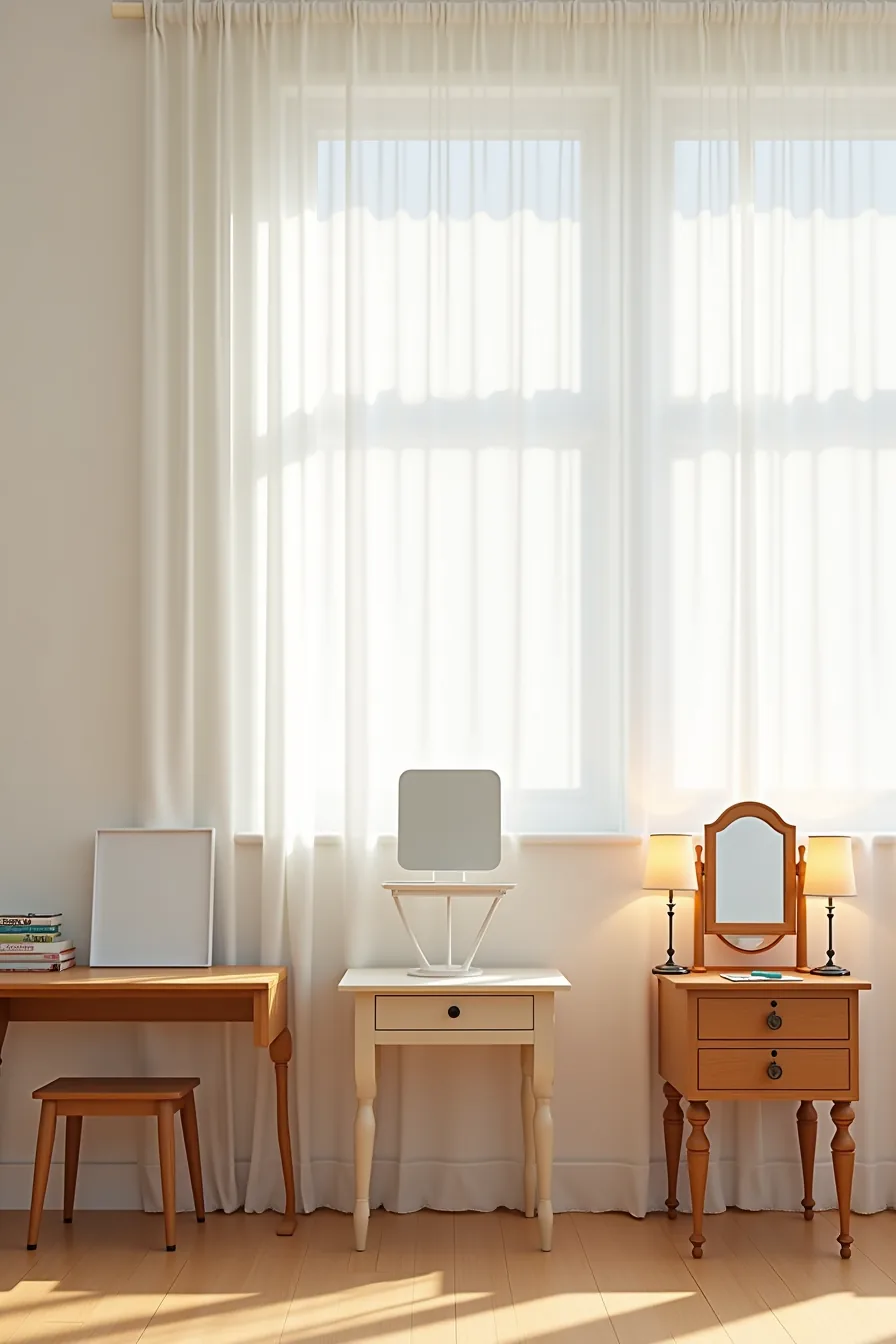
Your budget tier dictates the materials, not the outcome. A particle-board desk with a clip-on mirror kit gets you a functional station for roughly $80-$150 total, but expect the surface to swell if you leave damp towels on it, a silicone mat solves that for under $10. This route suits a guest room or a teenager’s space where the table will see hard use but not daily professional grooming.
For renters, a removable adhesive wall-mounted shelf paired with a portable mirror leaves zero permanent damage. Look for shelves rated to hold 10-15 pounds, which accommodates your cosmetics and a small organizer. The trade-off is placement flexibility: you’re limited to the shelf’s fixed height, so measure your seated eye level before adhering anything to the wall.
The long-term play is a solid wood vanity with turned legs and decorative hardware. Expect to pay $400-$800 for oak or walnut, but you can refinish it three or four times over its life, and it holds 70-80 percent of its resale value if you keep the original finish. If your bedroom serves as a dressing area for the next decade, the cost per year drops below a cheap replacement desk that dies in two.
Bedroom Dressing Table Ideas for Small Morning Spaces
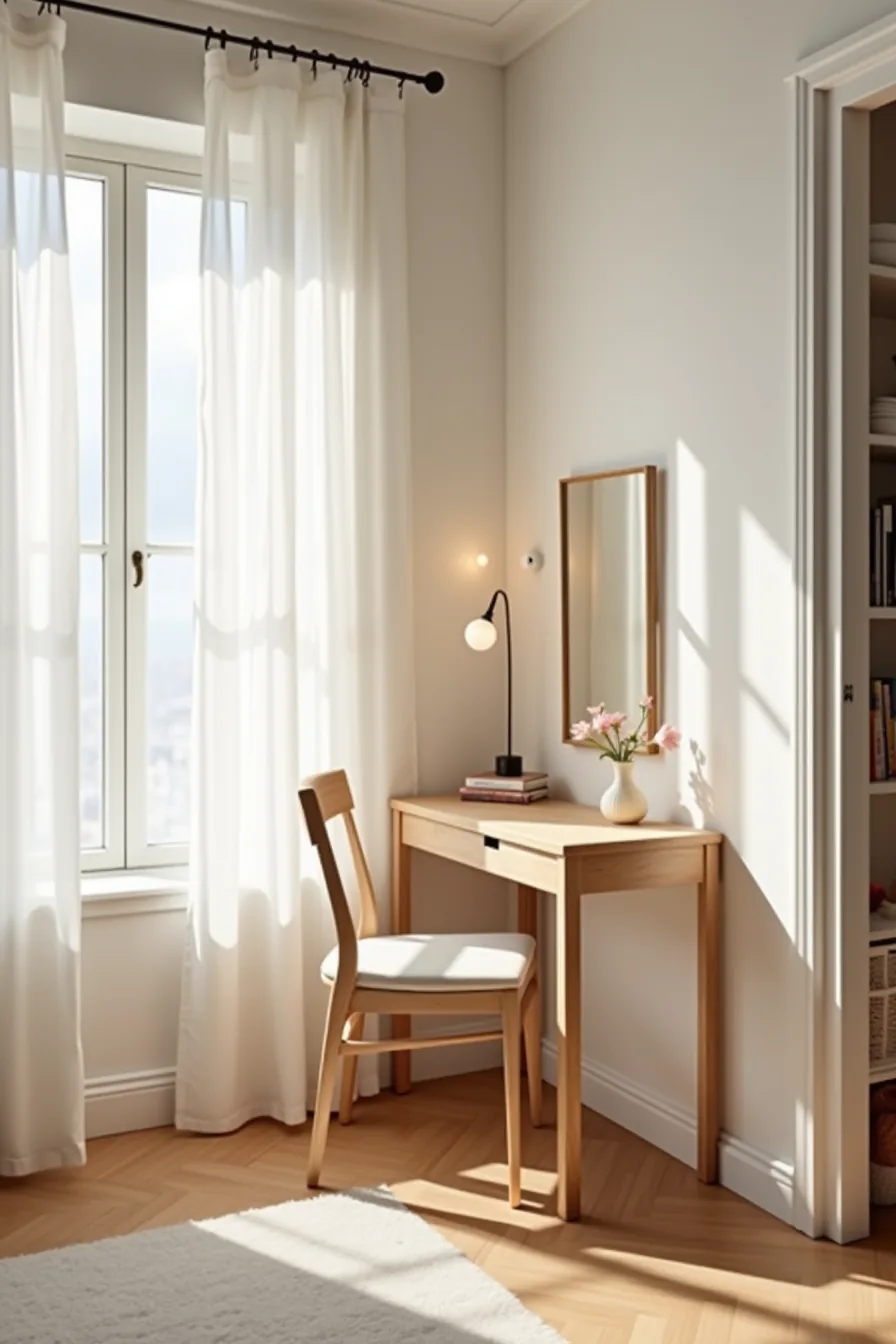
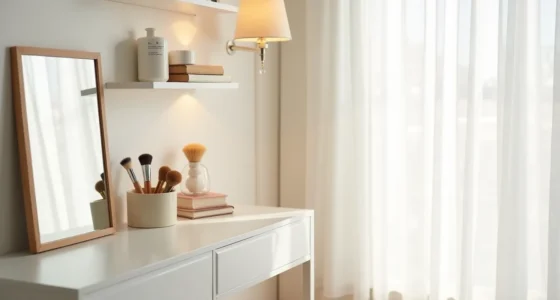
In rooms under 100 square feet, a dedicated furniture piece rarely fits; you need a system instead. The setup that works most often pairs a narrow desk (24-30 inches wide) in a corner with a wall-mounted mirror above it, keeping the footprint less than two feet deep. That corner placement matters more than the furniture itself, it uses dead space without stealing the 30-36 inches of clearance a doorway requires.
The vertical wall organizer beside the mirror becomes your primary storage, so choose one with deep shelves or enclosed bins rather than open cubbies that collect dust. A shallow under-desk storage basket catches the daily-use items, hair tools, moisturizer, a makeup bag, so the surface gets wiped clean in under a minute. Keep the pathway from the door to the vanity open; if you’ve to shuffle sideways past a chair, the station will become a shelf for mail within a week.
This approach suits a renter or anyone who needs the floor space for a yoga mat or a laundry basket when not grooming. It also forces a realistic edit of your products: if everything doesn’t live in that organizer and basket, you own more than the room can reasonably support.
Your First Move
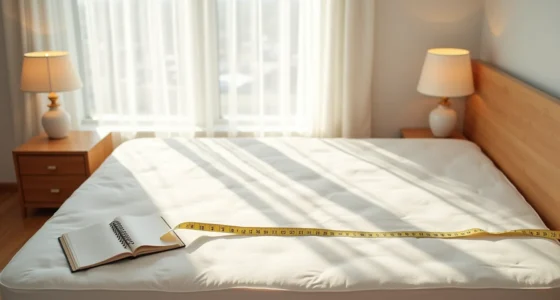
Start with the space you’ve, not the furniture you want. Measure the wall you intend to use and confirm you’ve at least 30 inches of clear floor space in front of it for a chair to slide out comfortably.
Match the piece to your lifestyle. If you apply makeup daily, prioritize a drawer unit and a mirror with good lighting. If you primarily pay bills or journal, a simple table with surface space will do.
Your next step is to tape the proposed dimensions onto the floor with painter’s tape. Live with the footprint for 24 hours. If it doesn’t feel obstructive, you’re ready to buy.
Frequently Asked Questions
What is the minimum width for a functional bedroom dressing table?
Aim for at least 30 inches of clear surface width. This accommodates a mirror, daily skincare, and a small jewelry tray without crowding. Narrower options under 24 inches force you to store items elsewhere.
Can you use a regular desk as a dressing table, and what do you need to add?
Yes. Add a wall-mounted mirror with task lighting, a tabletop organizer for cosmetics, and a small stool at desk height. Ensure the desk depth is at least 18 inches so elbows have room while applying makeup.
How do you prevent a dressing table from becoming a junk collector in a small bedroom?
Limit surface space to one tray and one caddy. Install a drawer or rolling cart underneath for overflow. Assign a five-minute nightly reset to return every item to its designated spot, preventing piles from forming.
What lighting wattage and color temperature work best for makeup application at a vanity?
Use 60–75 watt equivalent bulbs with a color temperature between 3000K and 4000K (neutral white). This range mimics natural daylight without harshness. Place lights at eye level on both sides of the mirror to eliminate facial shadows.