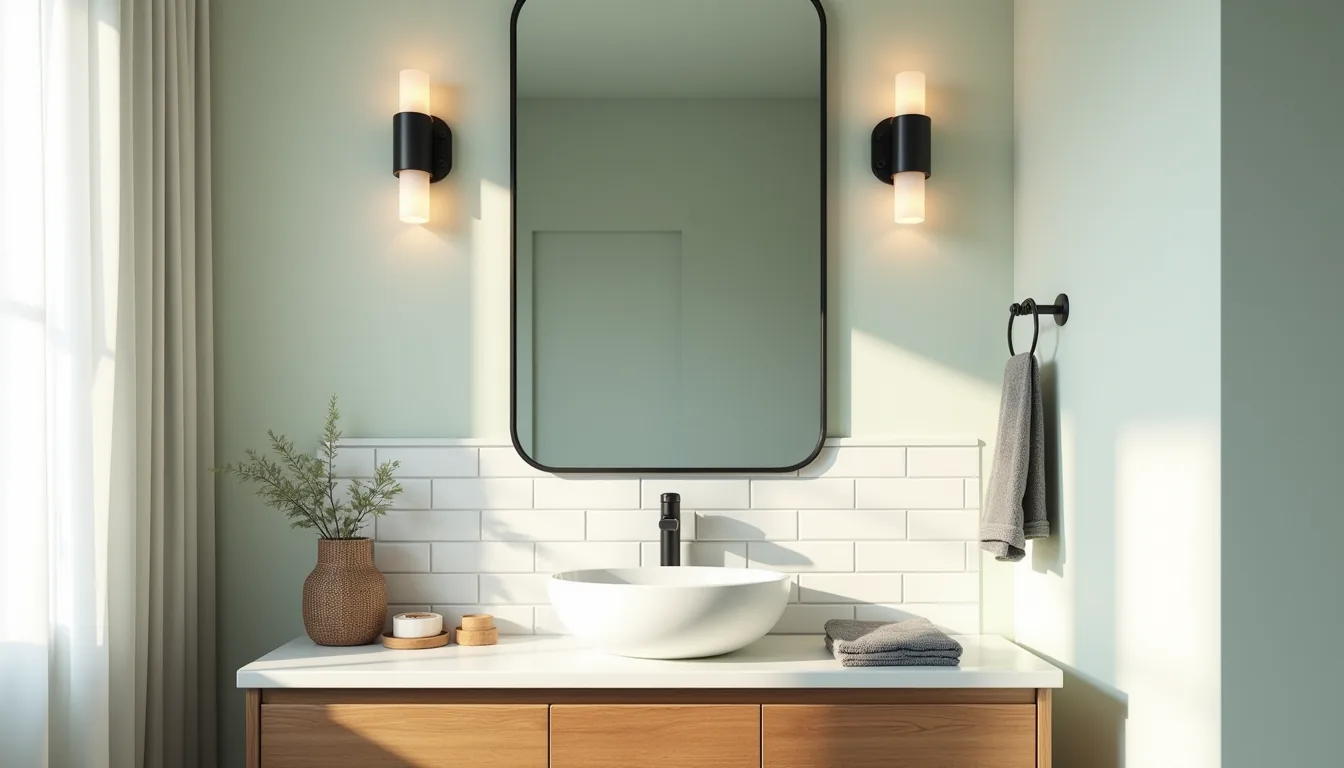
A green and black bathroom works best when you treat it as a two-layer system: one dominant color for walls and large surfaces, the other for fixtures, trim, and accents, so decide which shade leads before you buy a single tile. That single decision dictates everything from paint sheen to grout color, and it determines whether the room feels moody, crisp, or botanical. The six approaches below show how to shift that balance for different budgets, rental restrictions, and square footage, plus the exact proportion rules that keep the palette from turning flat or chaotic.
Key takeaways
- Pairing sage green with matte charcoal fixtures suits medium bathrooms where you want calm contrast without the maintenance burden of high-gloss black tile.
- Deep emerald walls demand natural or layered lighting and work best in large, well-ventilated spaces; glossy black tile accents reflect light but show water spots daily.
- For small bathrooms, anchor the floor with black penny tile and reserve green for the vanity or upper wall to avoid visually shrinking the room.
- Budget-conscious renovations should prioritize black matte fixtures over green tile, since repainting sage walls costs under $100 while swapping tile runs $800–$1,500.
Sage Green with Charcoal Accents: Calm and Grounded
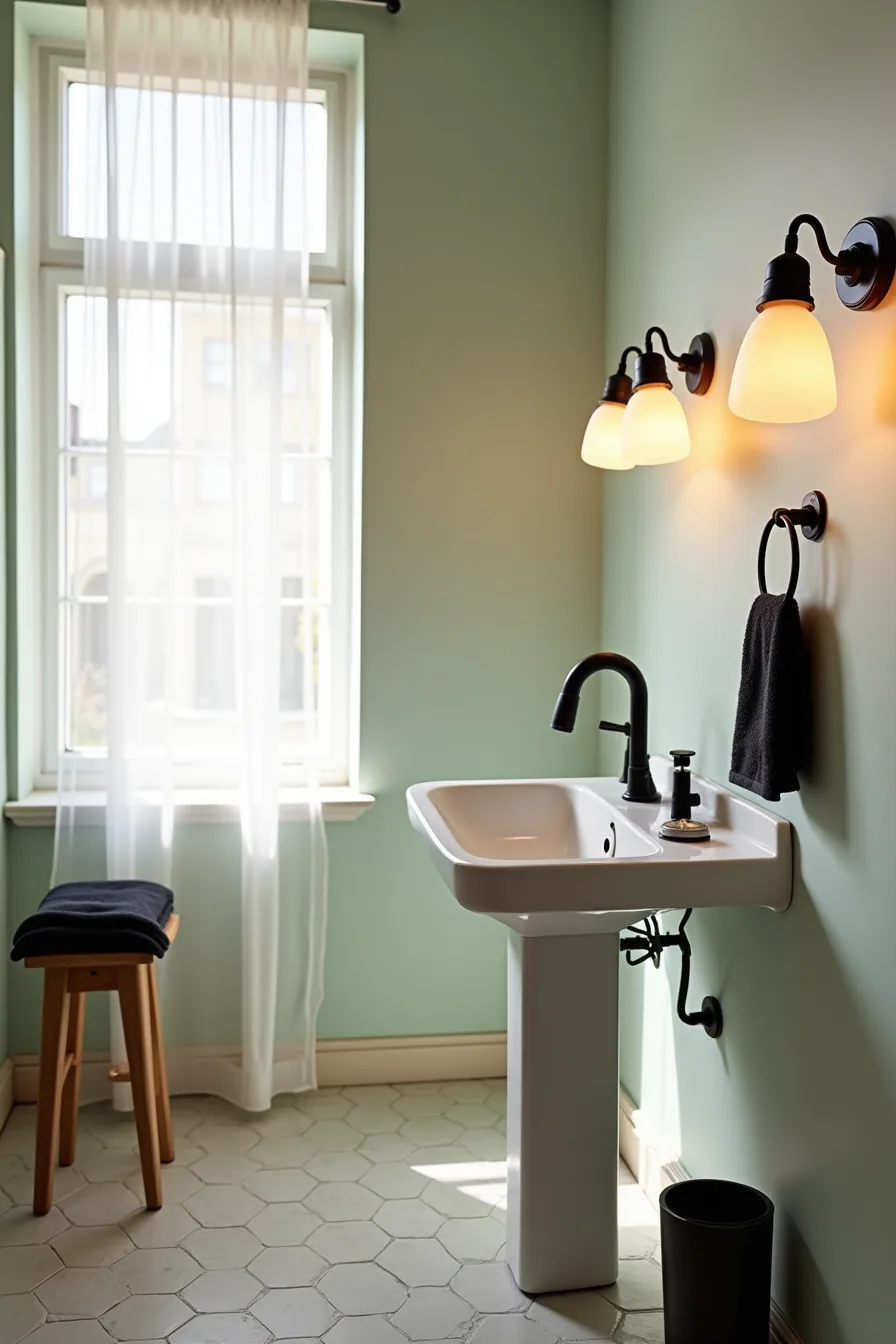
Sage walls paired with black matte fixtures create the lowest-contrast version of a green and black bathroom, which is precisely why it works in compact spaces. The muted green reads as a neutral, expanding the room visually, while the black matte faucet anchors the palette without drawing the eye to any single point. For a small or medium bathroom where visual rest matters more than drama, this combination delivers it.
The charcoal grout lines on the floor tiles are the quiet workhorse here, they tie the black fixtures into the lower half of the room and hide the daily grime that light grout reveals within weeks. A white porcelain pedestal sink keeps the scheme from turning cave-like, and the folded black hand towel draped over its edge repeats the accent color at a third height level, completing the composition without adding permanent fixtures. This setup suits renters and first-time renovators: sage paint costs the same as any other color, black fixtures install exactly like chrome ones, and if you decide the look is too subdued, repainting the walls in a weekend changes the entire feel.
Deep Emerald Walls with Black Tile: High-Impact Drama
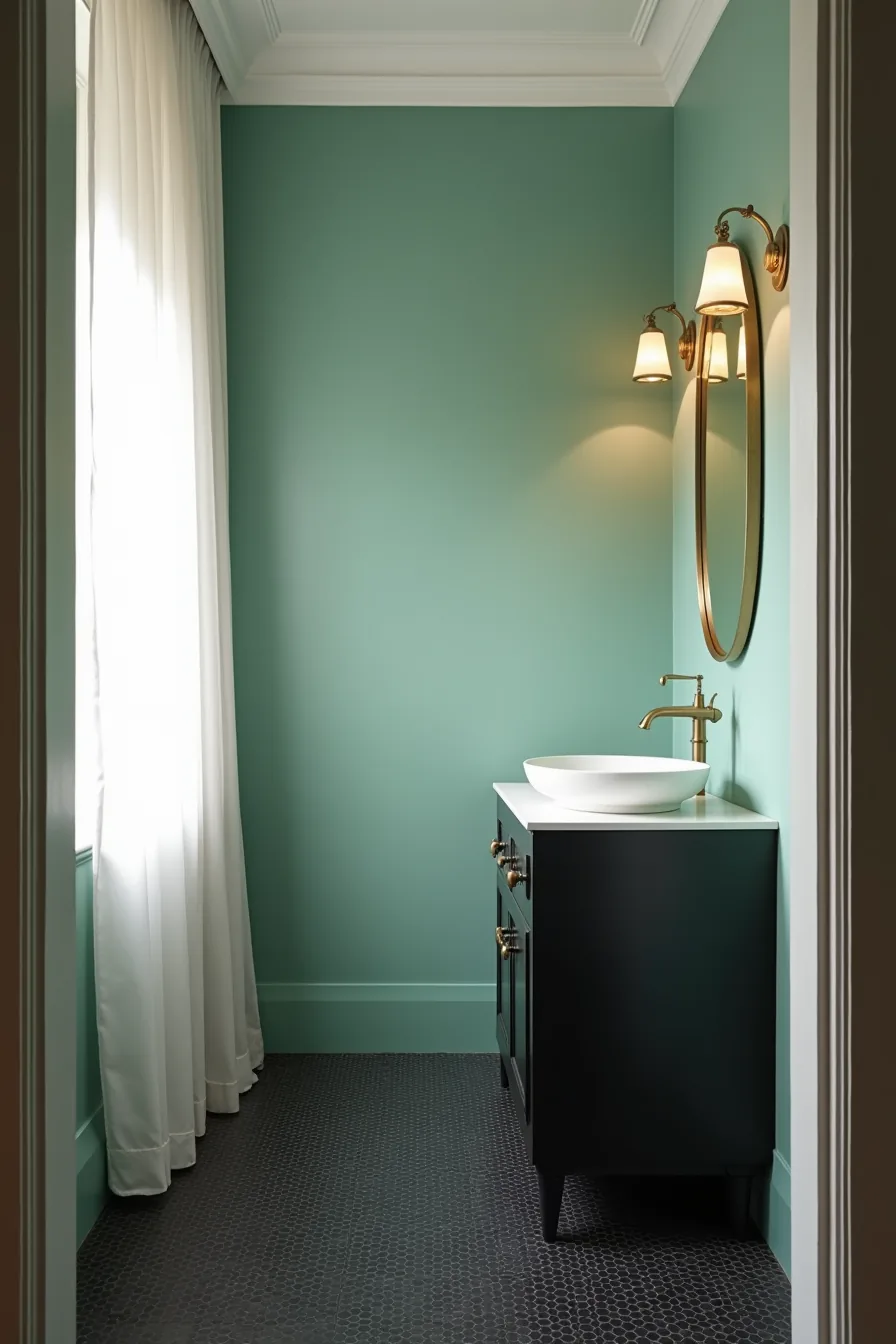
An emerald-painted wall demands a bathroom with enough square footage and light to absorb its intensity, aim for at least 60 square feet with a window or strong ventilation, since dark walls make moisture issues and cramped proportions obvious. The black hexagon floor tiles ground the vivid green plane, while the black vanity cabinet with brass hardware bridges the two extremes: the warm metal pulls the emerald toward jewel-toned richness rather than forest gloom, and the white porcelain vessel sink breaks the dark mass at eye level.
This is the route for owners who want a daily dose of maximalism without committing to permanent tile everywhere. The paint costs under $60 per gallon and covers a standard 8-foot wall in two coats, making it reversible in a weekend if the drama wears thin. It suits medium to large bathrooms where you can step back far enough to appreciate the full wall plane, and it rewards confident color choices, if you hesitate at the paint counter, choose a shade one step lighter and add a second black towel bar instead.
Black Tile Base with Olive Accents: Grounded and Balanced
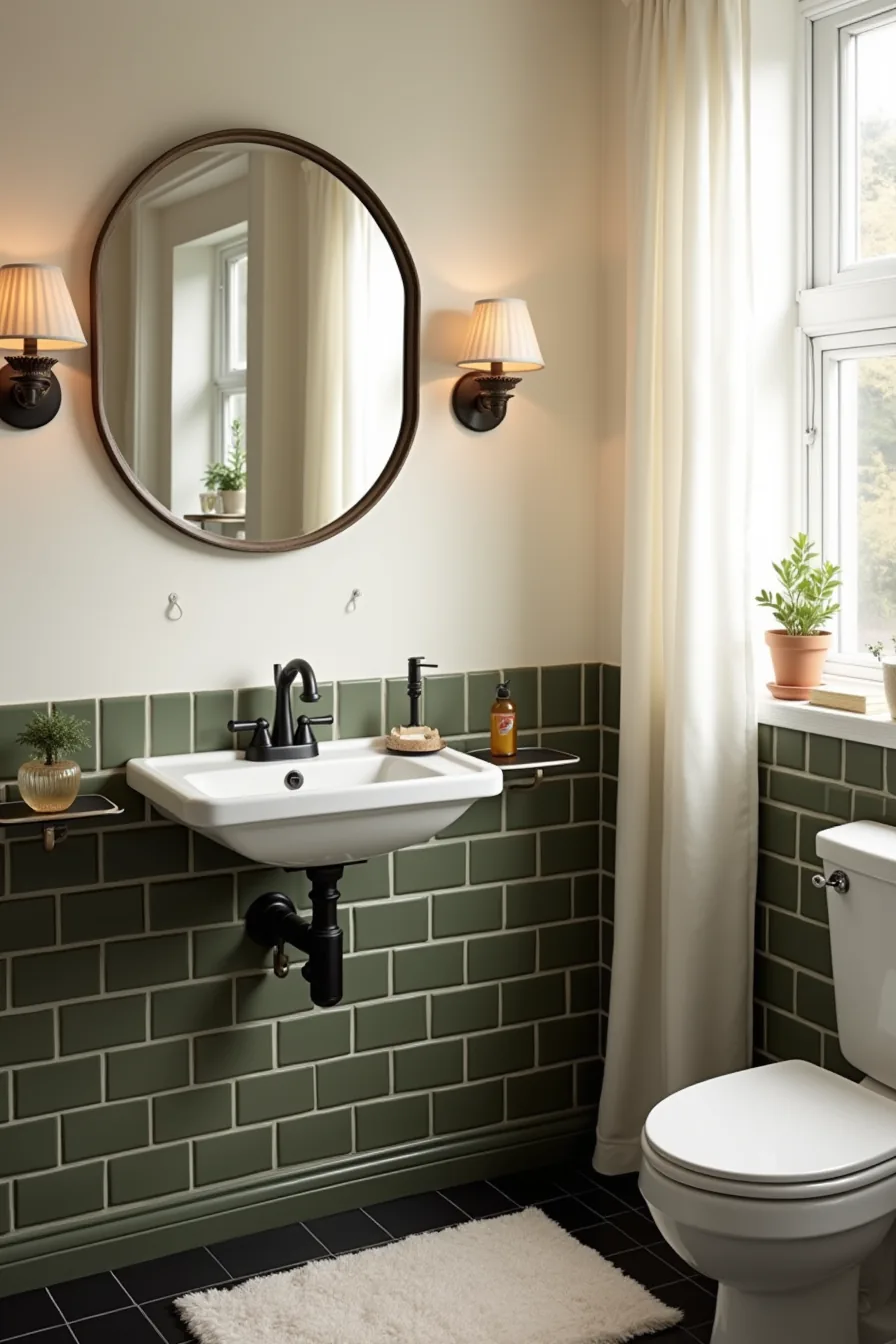
This interpretation flips the previous look entirely: black becomes the solid foundation, and olive carries the color story. Black subway tiles wrapping the lower half of the wall, typically stopping at 42 to 48 inches, roughly counter height, create a wainscot effect that visually anchors the room. White grout lines break up the black mass and add a crisp grid that keeps the lower zone from reading as a void.
Above that line, olive-green paint takes over, and the vertical color division gives the eye a clear resting point, which is why this setup works so well in compact bathrooms where full-wall dark tile would swallow the space.
The potted olive plant on the black tile corner shelf does double duty: its silver-green foliage picks up the painted wall color and softens the hard tile edge, while the matte black shelf disappears against the tile so the plant appears to float. Suits renters and first-time renovators alike, the tile stops mid-wall, so you install roughly half the tile you would for a full coverage, and the upper paint is a weekend project you can repaint before moving out. Black with olive also tolerates imperfect lighting: the olive warms and softens the black, so you don’t need the bright, direct light that the emerald-and-black combination demands.
Keep the grout lines narrow (1/8 inch) and sealed annually to prevent moisture trapping in the lower tile zone.
Botanical Mood: Plants, Texture, and Black Hardware
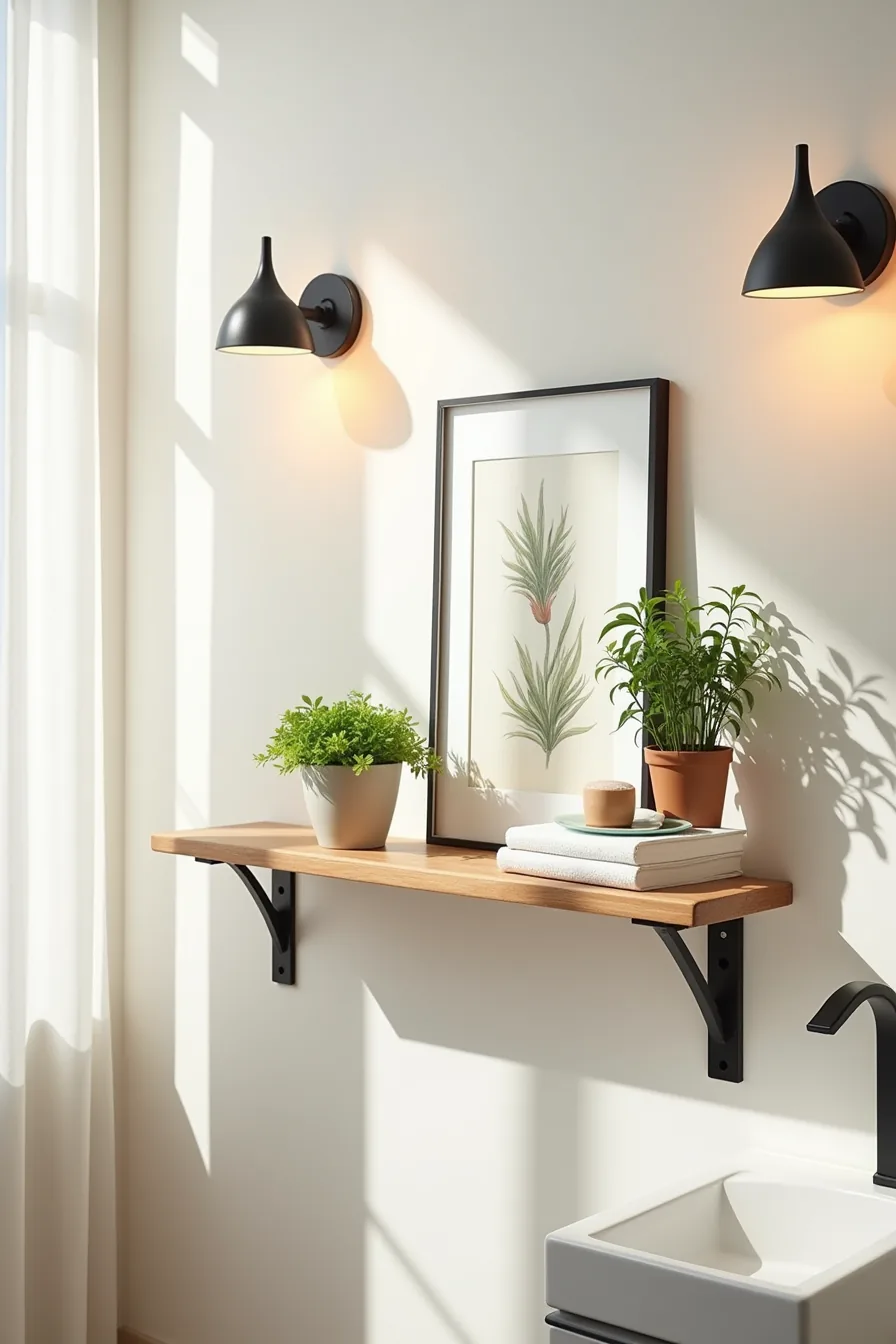
This look replaces painted color with living green, and it’s the most forgiving interpretation of the green and black bathroom for renters. A natural wood floating shelf at eye level holds three potted plants of staggered heights, tall, mid, and trailing, so the arrangement forms a triangle the eye reads as intentional. Matte black metal brackets anchor the shelf without competing with the foliage, while a botanical print in a simple black frame on the wall behind echoes the leaf shapes without adding another pattern to manage.
The matte black faucet visible at the shelf’s left ties the hardware to the brackets, creating a single metallic language across the room. What makes this work is humidity planning: locate the shelf away from the direct shower spray, and choose plants that tolerate steam, pothos, philodendron, or ferns handle the moisture that kills succulents. For renters, everything here’s removable and leaves no residue; owners can upgrade the same setup with a wall-mounted black faucet and waterproof wallpaper behind the shelf.
The trade-off is maintenance: expect to water weekly, wipe mineral deposits off black fixtures every few days, and rotate plants monthly so all sides receive even light.
Green and Black Bathroom Ideas for Small Spaces
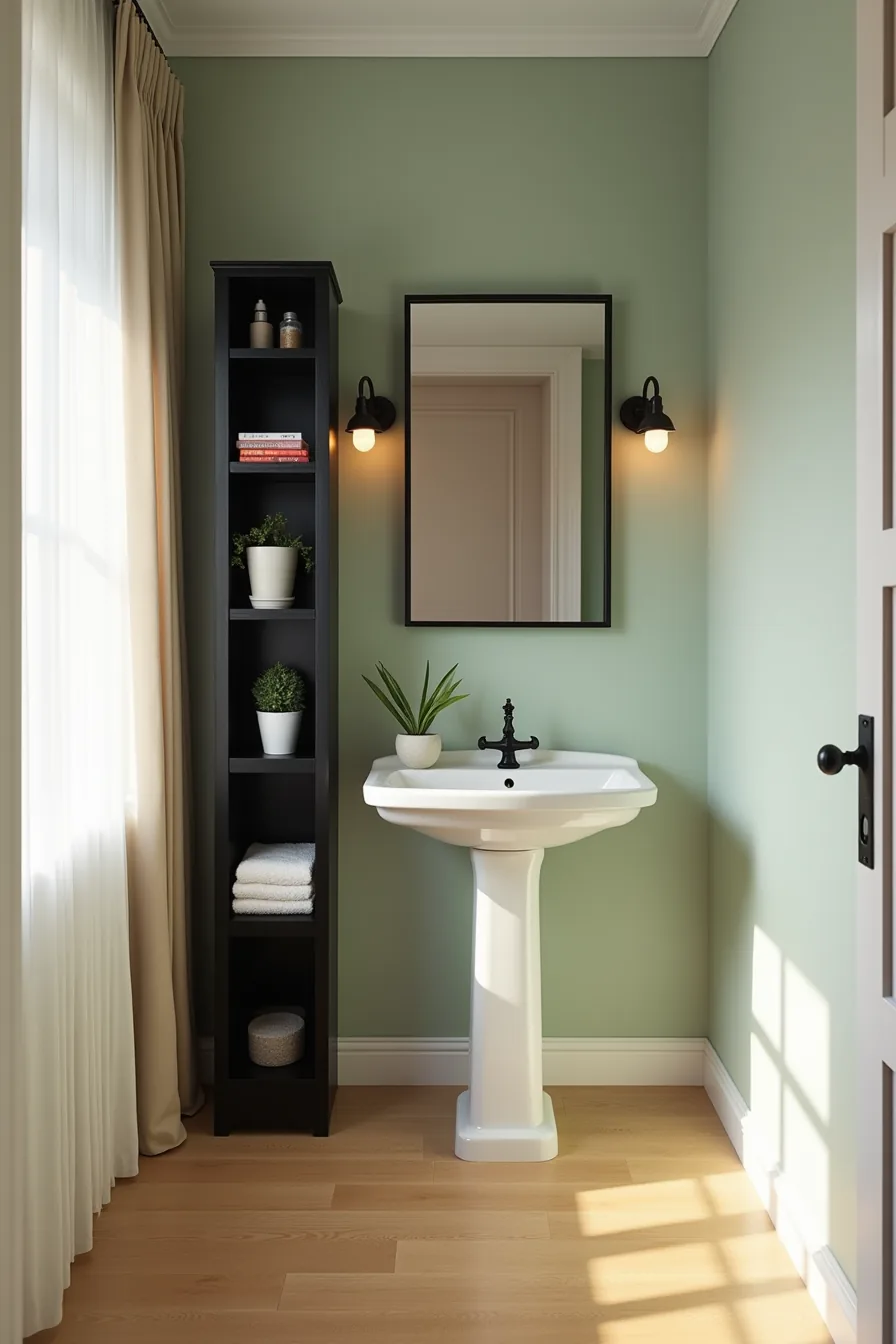
Bathrooms under 40 square feet punish bulky fixtures, so the strategy shifts from color blocking to vertical stacking. The setup that works best pairs sage-green walls with a floor-to-ceiling black storage tower in the corner, the dark column recedes visually while pulling your eye upward, and the green keeps the remaining wall space from feeling like a tunnel. A black-framed mirror opposite the tower doubles the perceived depth by reflecting the green wall, and a white pedestal sink keeps the floor footprint minimal since it occupies roughly half the visual mass of a vanity cabinet.
Keep color placement disciplined: restrict black to vertical lines and hardware, never the ceiling or lower walls, where it will absorb the limited natural light. The single potted plant on the narrow shelf above the sink adds life without sacrificing counter space, scale it to under 12 inches tall so it reads as an accent, not an obstruction. This layout suits renters because the tower, mirror, and plant are freestanding, and it suits anyone whose daily routine prioritizes clearance over countertop storage.
Material and Maintenance Trade-Offs Across Budgets
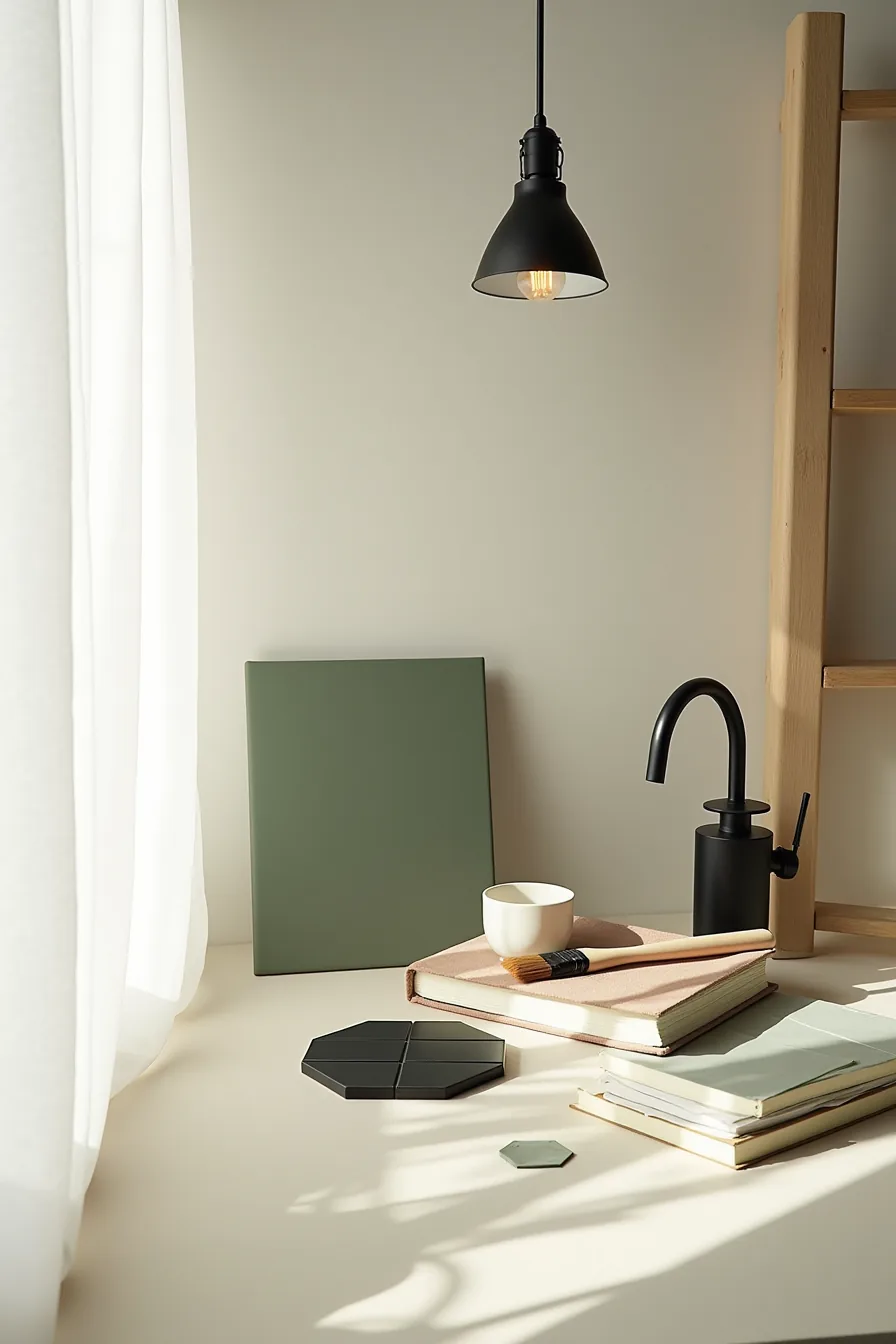
The flat-lay arrangement of a sage paint swatch, black subway tile, black hexagon tile, olive ceramic tile, matte black faucet handle, paint brush, and grout sample captures the core cost decision: paint runs $30–$80 per gallon and covers roughly 300 square feet, making it the budget route at $50–$150 total for an average bathroom. Tile, by contrast, lands at $4–$15 per square foot for materials alone, and when you factor in backer board, thinset, and grout, a 40-square-foot floor typically runs $400–$900 if you DIY, double that for professional installation.
Matte black faucets and hardware look identical to their polished counterparts but require more upkeep: the darker finish shows water spots and toothpaste splatter within days, so plan on wiping them down weekly with a mild cleaner, abrasive scrubbers will strip the coating over time. Wallpaper offers a middle path; quality peel-and-stick options cost $3–$8 per square foot, and the olive-toned ceramic tile sample reminds you that partial tile backsplashes (4–6 inches above the counter) deliver the visual impact without the full-wall expense. Renters should stick to paint and peel-and-stick wallpapers (both reversible), while long-term owners get the best return from tile and a proper matte black faucet, which holds up for a decade or more when the finish is PVD-coated rather than painted.
Where to start
You already know which direction fits your space, budget, and tolerance for maintenance. Commit to one anchor element first, whether that’s a black vanity, a green tile wall, or a black toilet, and build everything else around it.
Your move today: measure your bathroom’s longest wall and order three paint swatches or tile samples in your chosen green tone. Live with them against your existing fixtures for 48 hours before buying anything else. That single step prevents the most common color mismatch regrets.
Frequently Asked Questions
Does a green and black bathroom work in a small space, or does it feel too dark?
Yes, it works if you cap black at 20–30% of surfaces and use matte finishes. Pair deep green walls with white or brass fixtures to reflect light; skip black on all four walls.
What’s the difference between sage and emerald green for bathroom walls, and which is easier to maintain?
Sage reads lighter and hides water spots and toothpaste splatter better, needing less frequent wiping. Emerald is richer but shows hard-water streaks and soap scum faster, so it demands weekly descaling and a squeegee after every shower.
Can I rent an apartment and still create a green and black bathroom without permanent changes?
Absolutely. Use removable peel-and-stick tile for the floor or backsplash, a tension-rod shower curtain in black, and sage-green temporary wallpaper. All lift off without residue, and you keep the original fixtures untouched.
How do I prevent a green and black bathroom from looking dated or too trendy in five years?
Anchor the scheme with timeless materials, white subway tile, brushed nickel, and natural stone, so green and black stay as accents, not the whole story. Avoid overscaled geometric patterns and neon-green tones; choose muted sage or forest green instead.