Black tile bathroom designs range from subtle accent strips to floor-to-ceiling drama, and choosing the right interpretation depends less on trend and more on your room’s proportions, lighting, and how much upkeep you’re willing to accept. A matte charcoal penny tile on a wet wall behaves nothing like a large-format glossy slab behind a vanity, each demands different grout care, cleaning routines, and visual weight. You’ll also need to weigh cost per square foot against durability, since some finishes hide water spots better than others.
The six approaches below break down exactly what each look requires, who it fits, and where it fails.
Key takeaways
- Choose large-format black tiles (12×24 inches or larger) to minimize grout lines and make a small bathroom feel more expansive.
- Pair matte black tiles with warm wood vanities or shelving to prevent the space from feeling cold and to add visual contrast.
- Use glossy black tiles only in well-ventilated areas, as they show water spots and soap scum more readily than matte finishes.
- Test a peel-and-stick black tile backsplash (around $2-$4 per square foot) as a renter-friendly alternative that removes cleanly without damaging walls.
Large-Format Black Tile for Modern Minimalism
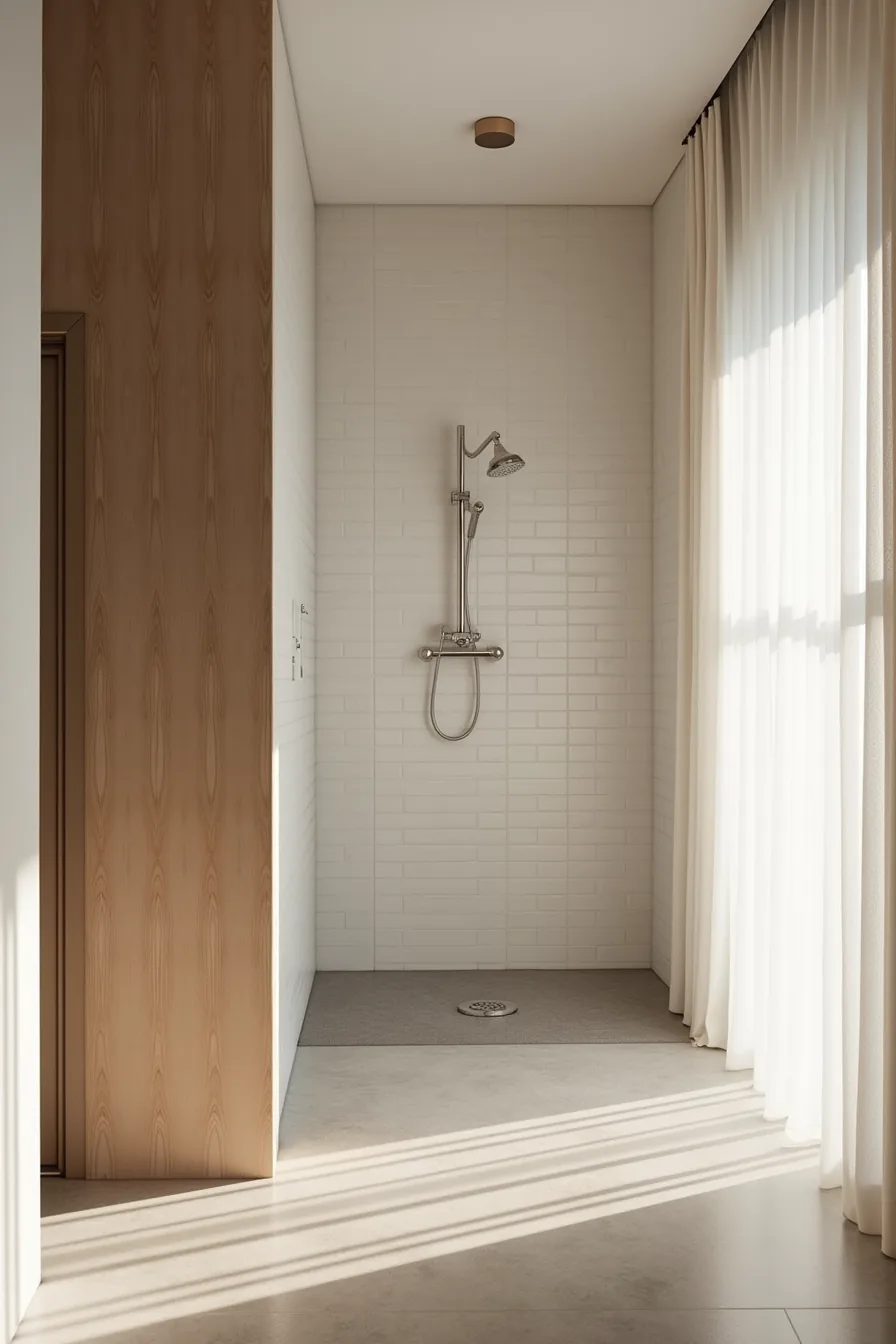
A 12×24-inch black tile laid floor-to-ceiling in a shower enclosure delivers the cleanest possible line for a contemporary bathroom. The oversized format cuts grout joints by roughly half compared to standard 4×12 subway tile, which means fewer interruptions across the visual plane and less surface area for soap scum to collect. This installation suits medium to large bathrooms, rooms that can absorb the visual weight of a full dark wall without feeling like a cave.
Pair those large-format black tiles with chrome fixtures and a polished concrete floor outside the shower to reinforce the industrial-minimalist intent. The white grout lines actively participate in the design here: they add a crisp grid that prevents the black surface from reading as a flat void. Keep grout lines at a standard 1/8 inch; anything wider shifts the look from deliberate to dated.
You’re committing to a darker, moodier space, so ensure your bathroom has adequate ceiling lighting or a skylight to balance the absorbed light.
Mosaic and Small-Format Black Tile for Texture
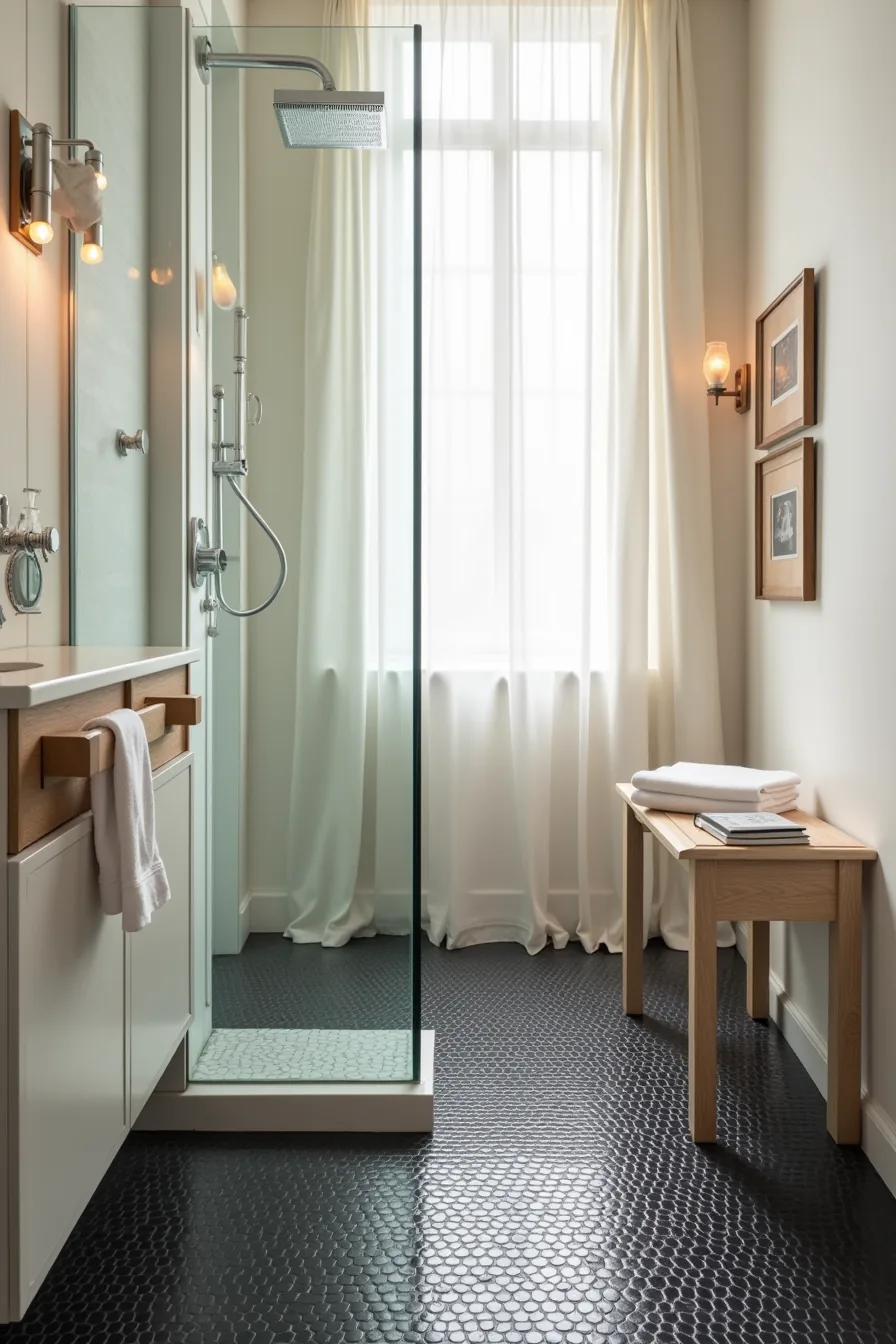
Small-format black tile, typically 2×2 inches or smaller, excels in wet zones where grip matters more than uninterrupted surface. On a shower floor, the dense web of grout lines creates natural traction underfoot, outperforming large-format tile that can become slick when wet. That same grid pattern also adds tactile depth: the recessed joints catch light differently across the mosaic, giving the floor a subtle, non-slip texture that reads visually even from a standing position.
The setup you’re looking at, black mosaic underfoot, a white towel draped over a glass partition, and visible grout lines catching water, works because the small format confines the dark color to a single functional zone. You get the drama of black tile without committing the entire enclosure to it. This approach suits compact bathrooms where a full wall of black would shrink the perceived space; the mosaic reads as an accent rather than a dominating surface.
For maintenance, expect the increased grout area to require sealing annually and more frequent scrubbing than large-format tile, since mineral deposits and soap scum will find more seams to cling to. Use a dark-gray grout rather than white if you want to minimize visible staining between cleanings. The trade-off is straightforward: mosaic vs large format comes down to prioritizing grip and texture versus minimal upkeep and uninterrupted visual planes.
Gloss Versus Matte: Performance and Aesthetic Trade-Offs
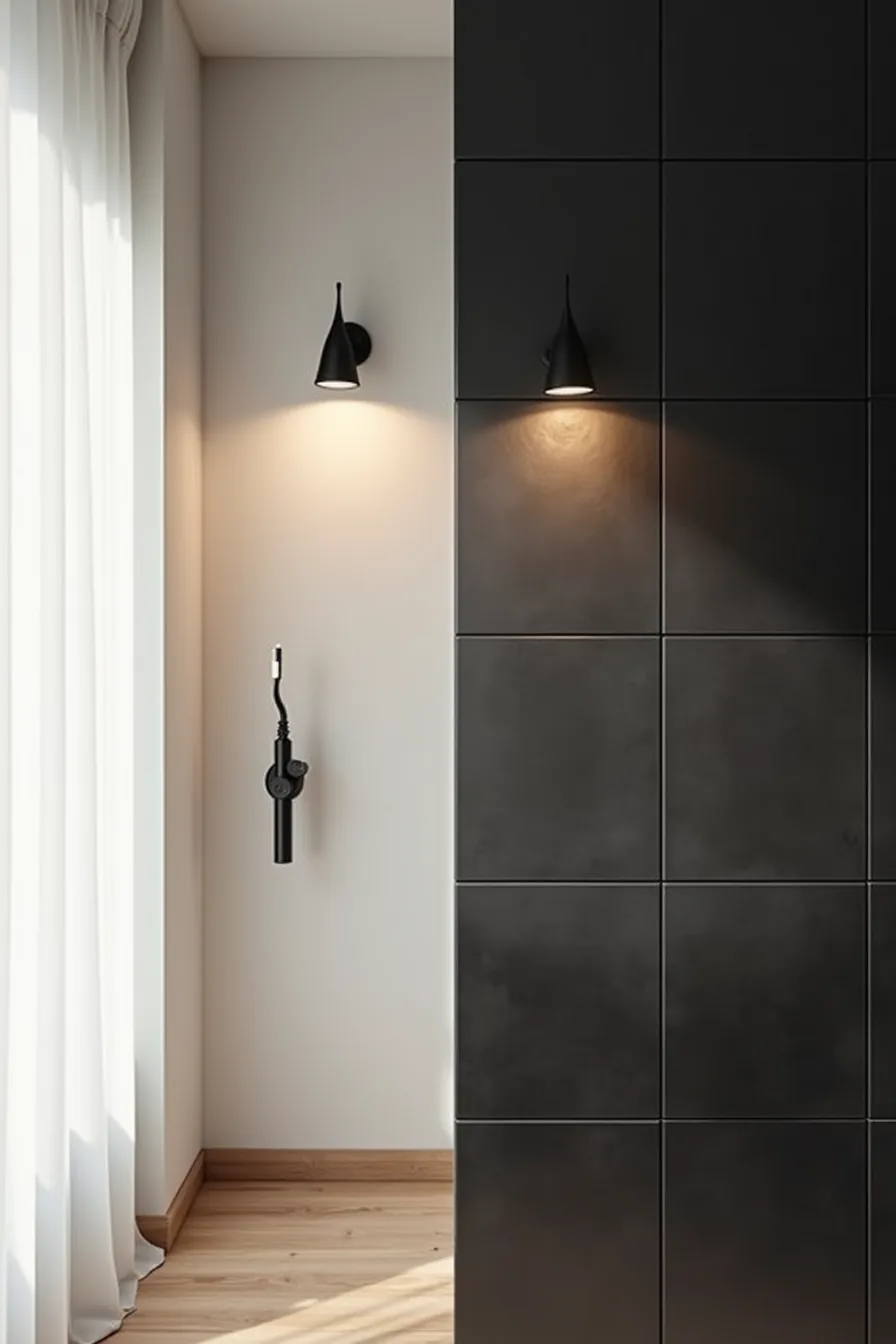
The split between matte and gloss black tile in a single wall gives you a direct comparison of how finish dictates both mood and maintenance. On the matte side, the toothbrush holder stays visually quiet because the low-reflectivity surface hides fingerprints, toothpaste splatter, and hard-water residue far longer than its shiny counterpart. That forgiving nature makes matte the sensible choice for walls behind sinks, vanities, and any surface your hands touch daily.
The glossy side tells a different story. It throws overhead light back into the room, visually expanding a narrow bathroom, but every water droplet from a steamy shower becomes a visible spot until wiped down. Restrict gloss to feature walls away from direct splash zones, behind the toilet or opposite the shower, where you want the reflective payoff without constant detailing.
The grout line where both finishes meet is the only real maintenance seam: keep it narrow and use a penetrating sealer to prevent the two surfaces from staining differently over time.
Black Tile with Wood: Balancing Dark and Warm
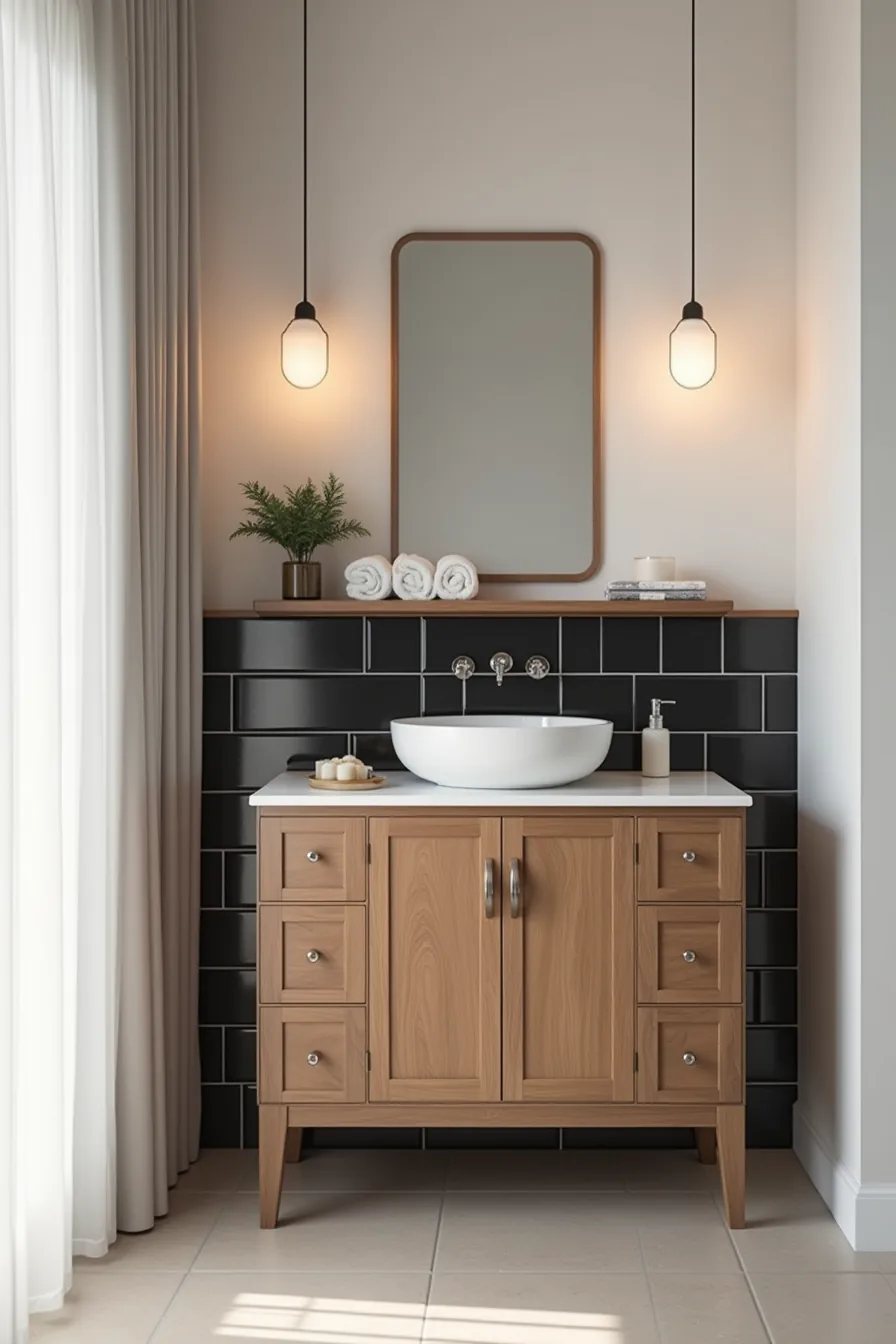
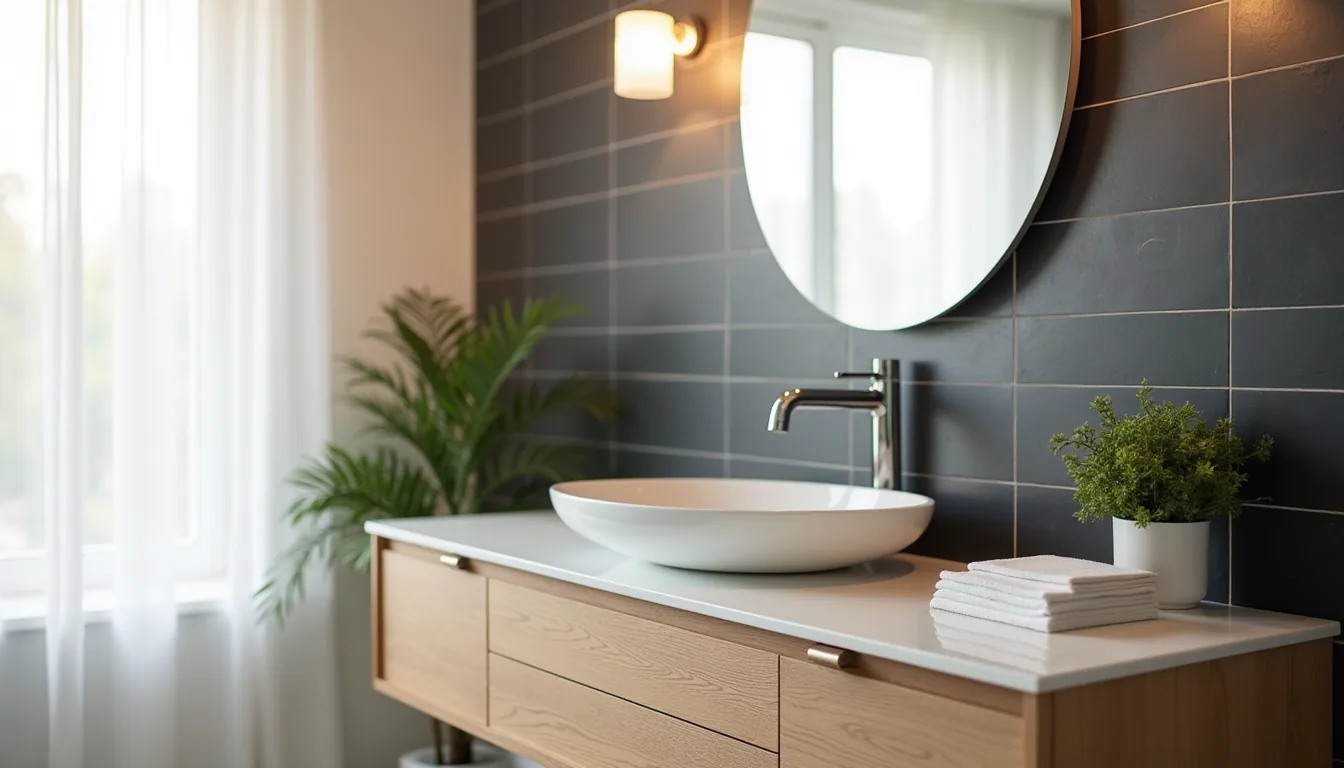
Pairing black tile with wood is the most reliable way to keep a dark bathroom from feeling like a cave. The wood interrupts the monotony of the dark surface and adds a natural grain pattern that softens the hard edges of the tile. In the setup you see here, a medium walnut vanity and open wooden shelf sit against a black tile accent wall, with a ceramic vessel sink providing a bright counterpoint.
The combination works because the tile reads as a backdrop rather than the entire room’s personality.
Choose wood with visible grain and mid-range tone, walnut, oak, or teak, to create contrast. Pale woods like ash or maple will look stark against the black; very dark woods like ebony will disappear into it. For the tile, keep the accent wall tight: a single wall behind the vanity, running floor-to-ceiling, is enough to anchor the space without overwhelming it.
In a small bathroom, limit the wood to the vanity and one shelf, as you see here, and leave the remaining walls in a lighter finish. In a large bathroom, you can extend the wood to flooring, but know that black tile with wood floors requires a zone rug or bath mat to prevent water damage to the wood. Natural wood needs yearly sealing in a moisture-heavy environment; consider a teak or ipe vanity if you want to skip that maintenance cycle entirely.
Black Tile Bathroom Ideas for a Small Space
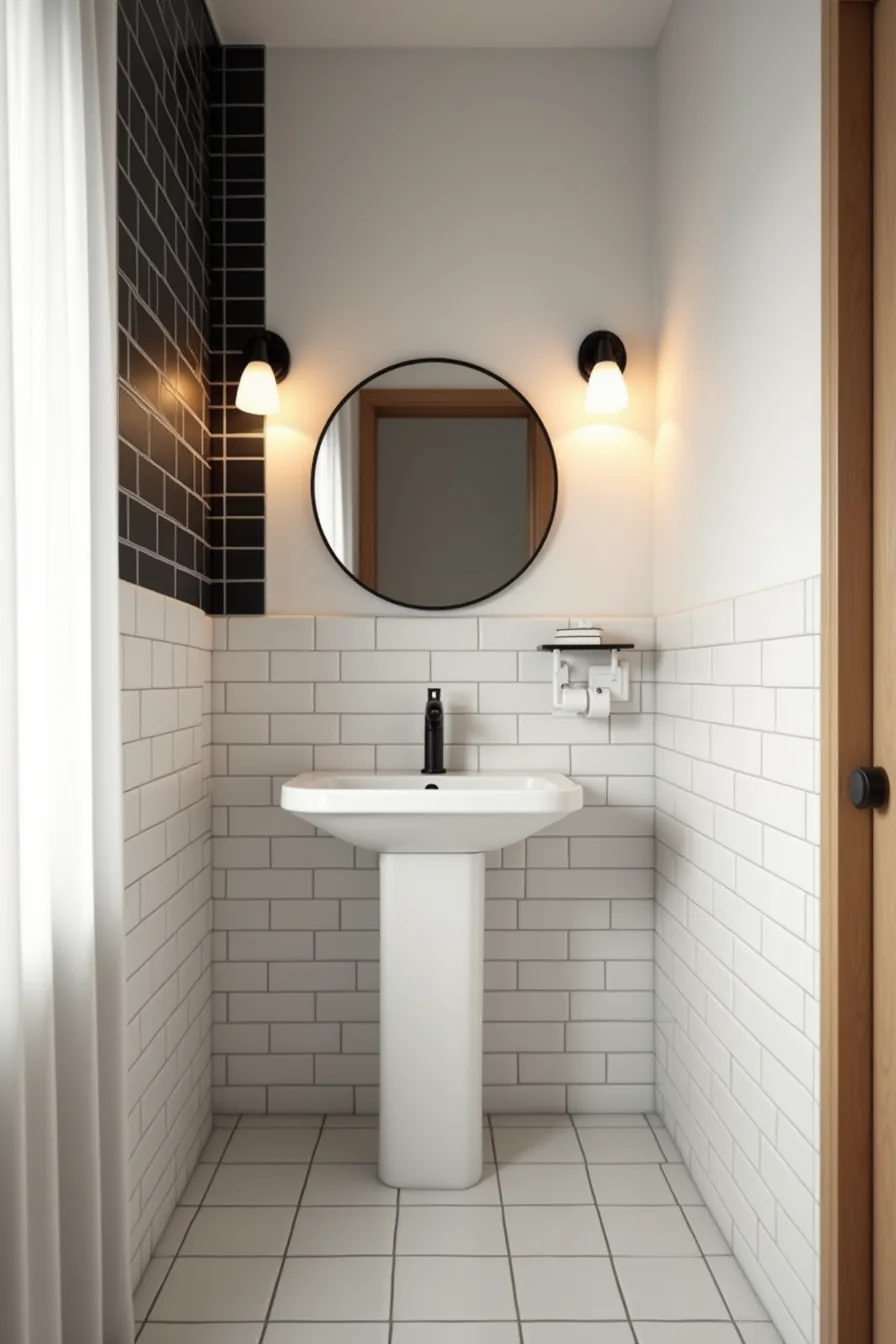
In a bathroom under 40 square feet, black tile works only when it occupies one surface and no more. Confine it to a single accent wall, ideally the wall behind the pedestal sink, and run it from floor to ceiling. The black tile visually recedes, making the wall feel further away, while the white subway tiles on the opposite wall bounce light back across the room.
This one-wall rule prevents the cave effect while still delivering the dramatic contrast you’re after.
The round mirror matters more than you’d think: its curved edges break the vertical lines of the tile and prevent the space from feeling like a corridor. A pedestal sink keeps the floor visually open, and a single floating shelf above it provides storage without adding bulk. For lighting, use a sconce mounted at eye level on the black tile wall, overhead fixtures in small dark rooms cast shadows that exaggerate the narrowness.
White grout on the black tile will visually enlarge the wall; black grout will make it recede further, so choose based on whether you want depth or dimension in the smaller footprint.
Budget, Rental, and Investment Routes
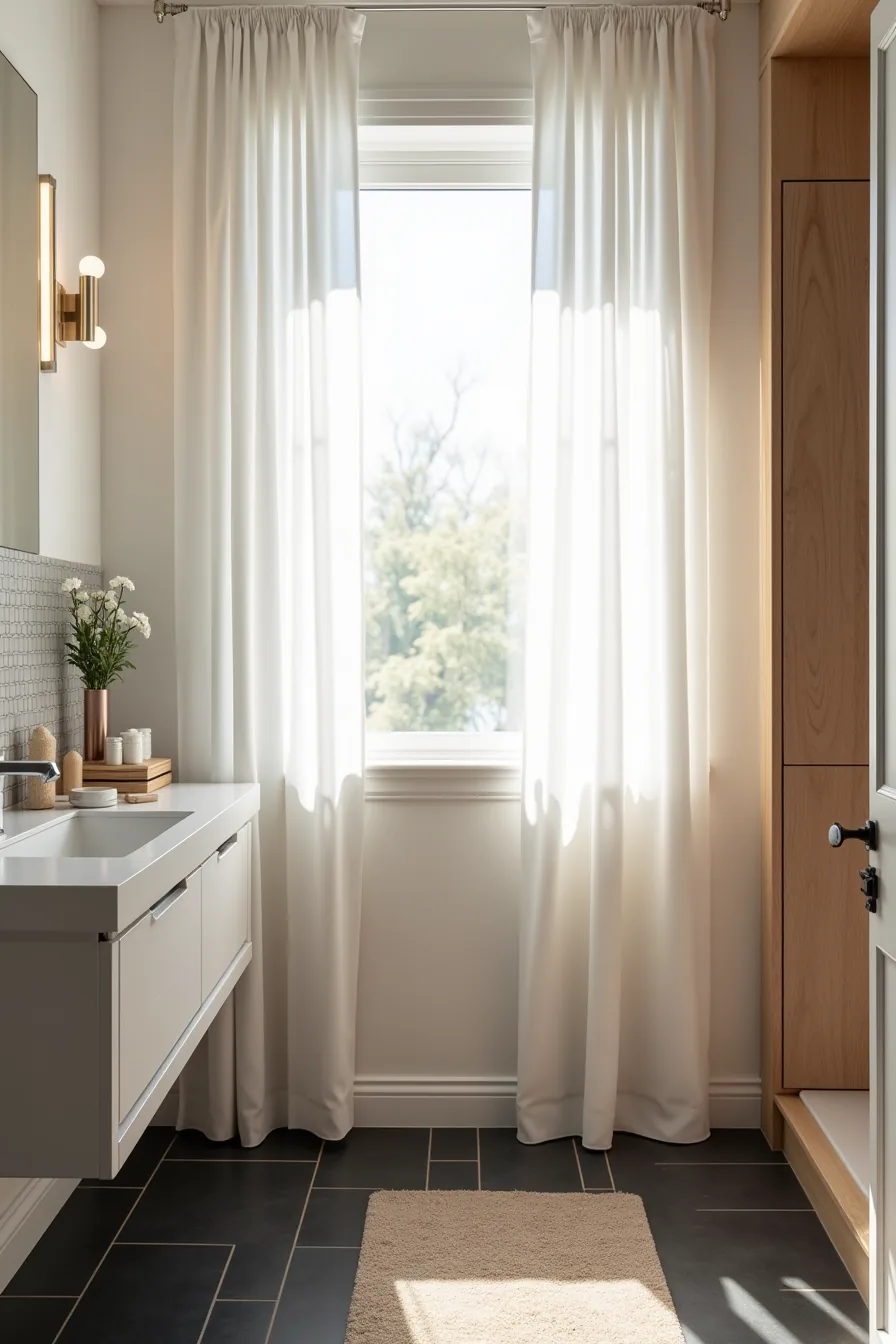
Three distinct black tile bathroom looks exist along the same spectrum, and your choice should hinge on tenure and budget. Peel-and-stick tiles, applied to the lower wall behind the toilet, give renters the drama without the deposit forfeiture, they remove cleanly with a heat gun and putty knife, and at roughly $2-4 per square foot, they’re a low-stakes experiment. Keep the grout lines on these thin vinyl tiles tight and straight; any misalignment reads immediately in a glossy finish.
Your mid-range commitment is a matte ceramic tile, suitable for the shower surround where moisture and daily wear demand a denser surface. Expect to pay $5-12 per square foot installed, and know that ceramic’s glaze makes it forgiving of hard water spots compared to its porous cousins. The floor’s natural stone, slate or honed basalt, represents the long-term play: it’s the one surface where you shouldn’t economize, since resale value and scratch resistance both improve with quarried material.
Budget 2-3x the ceramic cost per square foot, and seal it annually to prevent etching from acidic cleaners. If you’re in a temporary home, skip the stone entirely; in a forever home, skip the peel-and-stick.
Your decision checklist
Before you buy a single tile, match your choice to your room’s reality. Small bathrooms suit large-format glossy tiles (12×24 inches or bigger) to bounce light; large spaces can handle matte finishes and dramatic mosaic accents without feeling like a cave.
Confirm your lighting setup first, black tile absorbs 80-90% of light, so if your bathroom has one small window, budget for extra fixtures. Check your grout choice too: epoxy holds its color, while cement-based grout will need sealing and annual re-scrubbing.
Your non-negotiables are slip resistance (ask for COF ratings above 0.6 for wet areas), waterproofing behind the tile, and a sample test at home before ordering.
Start here: Take one photo of your bathroom, measure the floor and shower walls, then order three samples under your actual lighting. That single step eliminates most installation regrets.
Frequently Asked Questions
Will a black tile bathroom feel too dark or cave-like?
Only if every surface is black. Pair black tile with white grout, light walls, and warm lighting. Use large-format tile to reduce grout lines, which keeps the room feeling open rather than enclosed.
How do I clean and maintain black tile without showing every water spot?
Choose matte or honed finishes, they hide streaks better than glossy tile. Wipe down surfaces with a squeegee after each shower. Use a pH-neutral cleaner weekly; avoid vinegar or bleach, which can etch the surface.
Can I use black tile in a small bathroom without making it look smaller?
Yes. Install black tile only on one feature wall or the floor, keeping other walls light. Use large-format tile (12×24 inches or larger) and thin grout lines to minimize visual fragmentation.
Add a large mirror to reflect light.
What’s the cost difference between mosaic black tile and large-format black tile?
Mosaic tile typically costs 30–50% more per square foot due to more labor-intensive installation and more grout required. Large-format tile costs less in material and labor but may require a level subfloor. Expect mosaics around $5–15 per square foot; large-format runs $3–10.