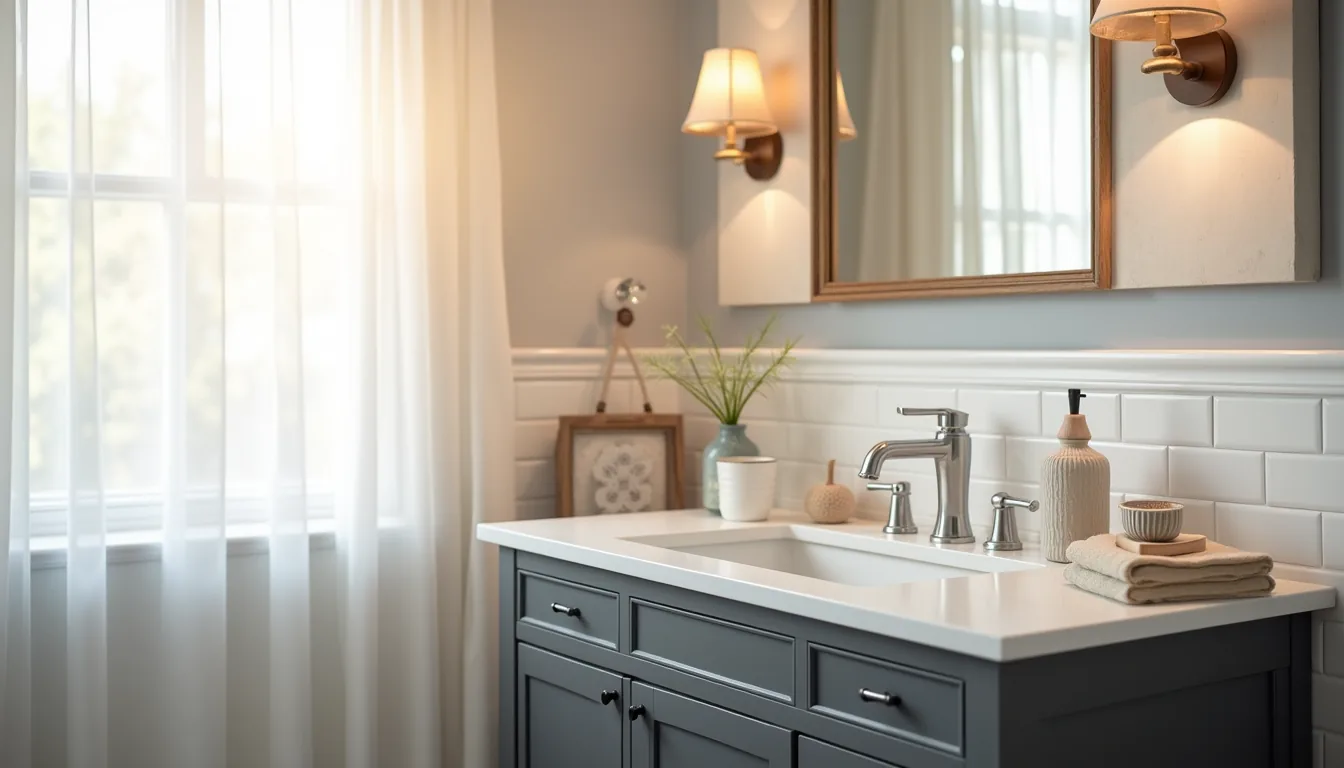
Dark bathroom ideas aren’t a single look, they range from full-room charcoal schemes to single accent walls, and choosing the right version depends on your square footage, natural light, and tolerance for maintenance. The wrong pick turns a spa-like retreat into a cramped cave, while the right one can make a small powder room feel dramatically larger or a master bath feel like a boutique hotel. You need to know which materials absorb light, which finishes reflect it, and exactly where the line sits between moody and murky.
Key takeaways
Dark vanity alone anchors a room without overwhelming it, so pair a matte black or deep green vanity with light walls and a mirror to keep the space airy. Layered charcoal tones work best when you use at least three distinct shades, like slate tile, graphite paint, and a lighter gray countertop, to prevent a flat, murky look. A dark accent wall behind the vanity or toilet draws the eye and needs a 3000K–4000K sconce or recessed light aimed at it to avoid cave-like shadows. Dark floors with light uppers visually expand a small bathroom, so choose matte porcelain tile (12×24 inches or larger) and keep the top half white or off-white for contrast.
Dark Vanity Only: The Anchor Approach
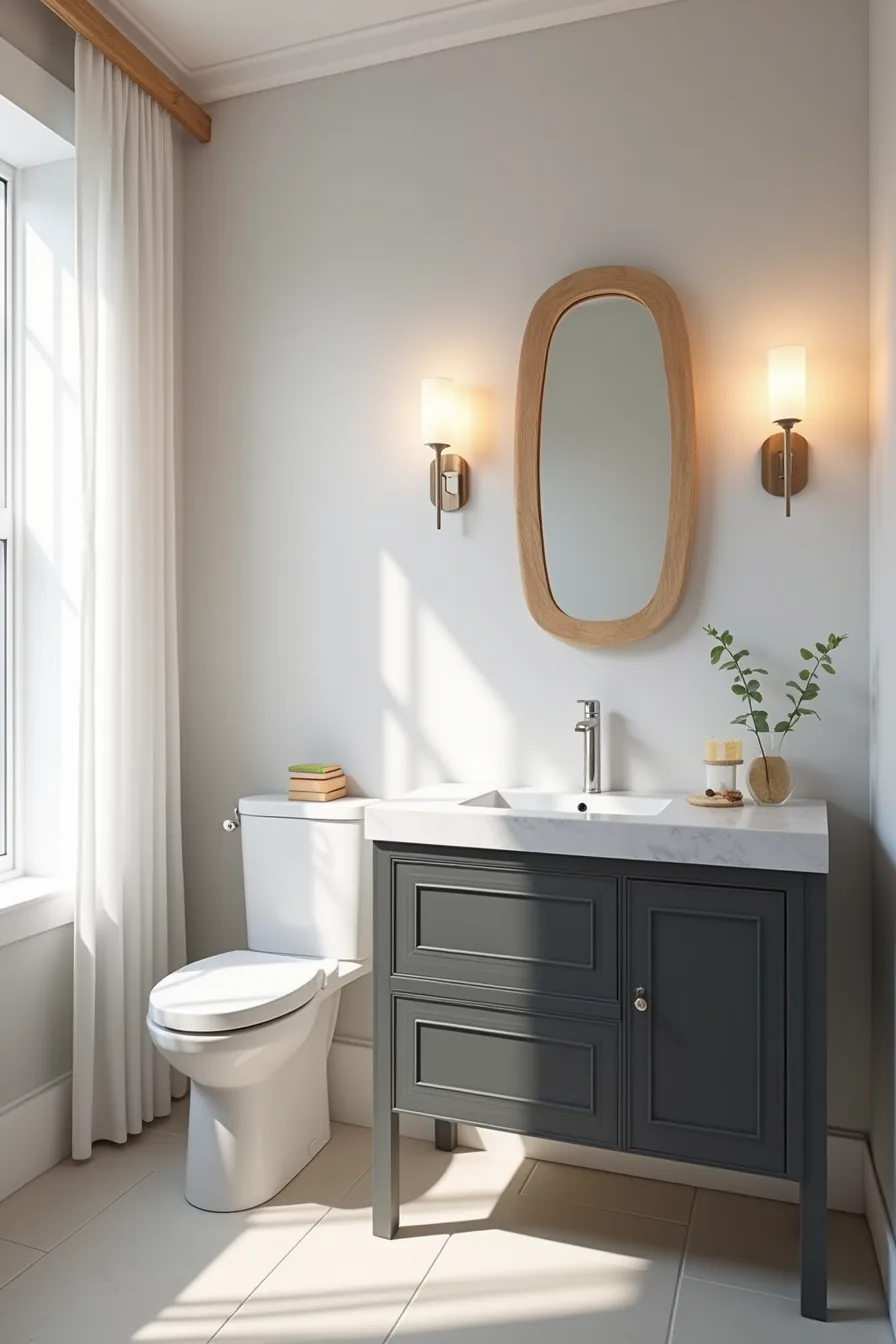
A single dark vanity is the lowest-commitment entry point into dark bathroom ideas, and it works by giving the room a visual weight without swallowing the light. In a typical setup, a deep gray-black cabinet anchors the floor while light gray walls, a white ceiling, and brushed nickel hardware keep the space airy. The marble countertop reflects window light upward, so the room reads as bright even with that dark mass at its center.
This approach suits small to medium bathrooms where a full dark treatment would close the space in. It’s also the most renter-friendly route: you swap the vanity, not the walls. For a standard single-sink cabinet, expect a 30- to 36-inch footprint, and choose a matte finish over glossy, it hides water spots and fingerprints far better.
Pair it with a pedestal sink base or wall-mounted faucet to keep the floor visually open. The dark element stays low, so your eye naturally travels up to the lighter surfaces, making the ceiling feel taller than it’s.
Layered Charcoal Tones: Building Depth Without Darkness
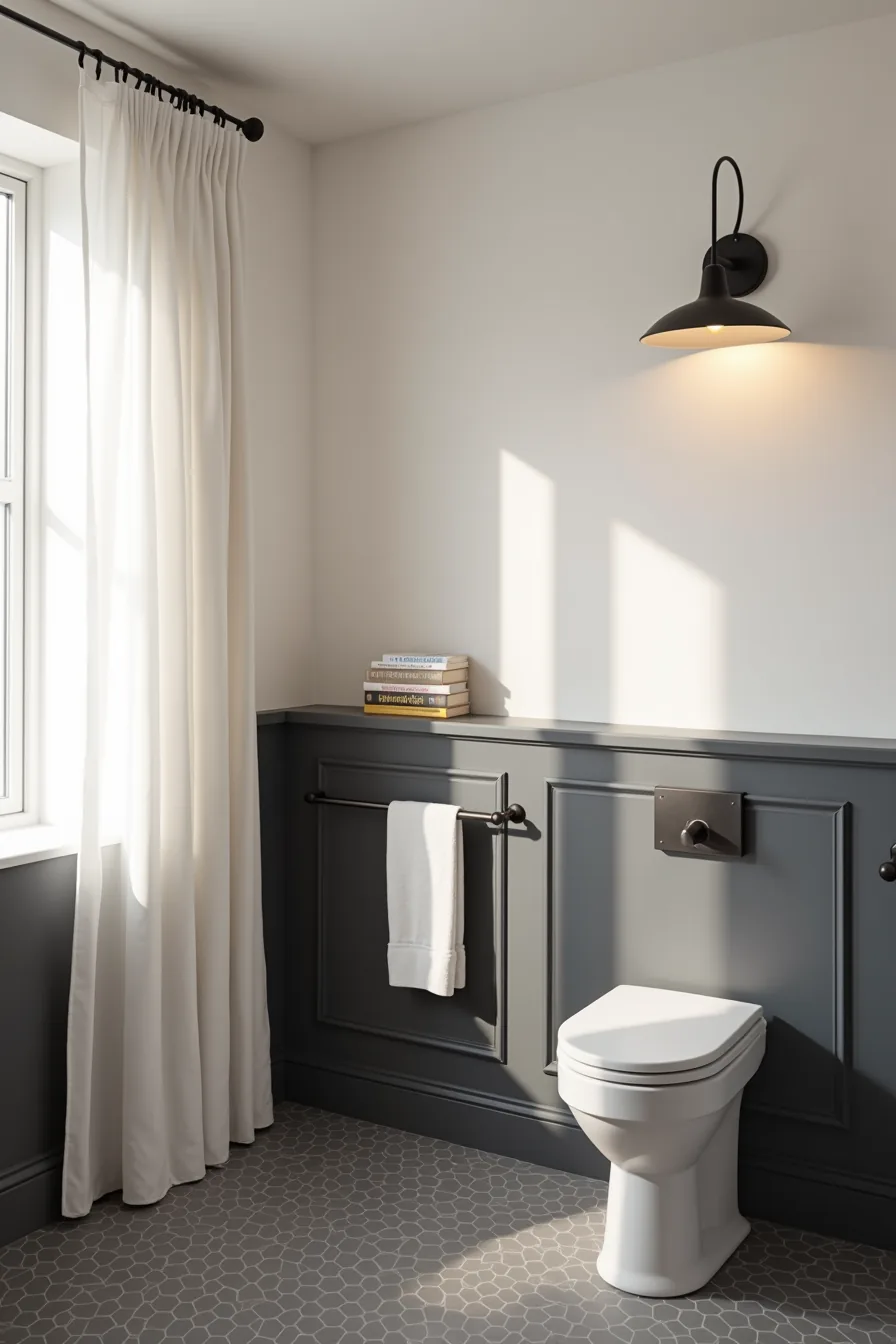
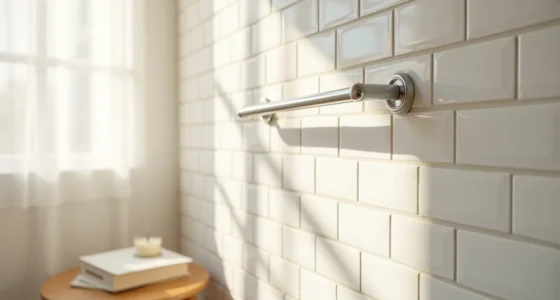
The trick to layered charcoal tones is separating the darks by finish and scale so they read as deliberate composition, not a blackout. Picture this corner setup: charcoal wall paint above a medium gray subway tile wainscot, dark gray hexagonal floor tiles below, and a matte black towel bar cutting horizontally across the lighter tile field. The chrome sconce above breaks the wall mass with a bright reflective point, while the white ceiling keeps the room from feeling like a cave.
This works because each surface reflects light differently, matte paint absorbs, glazed tile bounces a soft sheen, and polished metal sparkles. For reproduction, keep the wall tone two to three shades lighter than the floor, and limit the charcoal paint to the upper half so the lighter subway tile carries the eye around the room. Use a six-inch hexagonal tile for floors; anything smaller reads busy, anything larger loses the texture.
Maintenance is forgiving: dark grout on both tile surfaces hides soap scum and hard-water staining, and the matte black towel bar won’t show toothpaste splatter the way polished chrome does. This suits medium bathrooms with one window, where a full dark wall would dim the far corner beyond usability.
Dark Accent Wall with Strategic Lighting
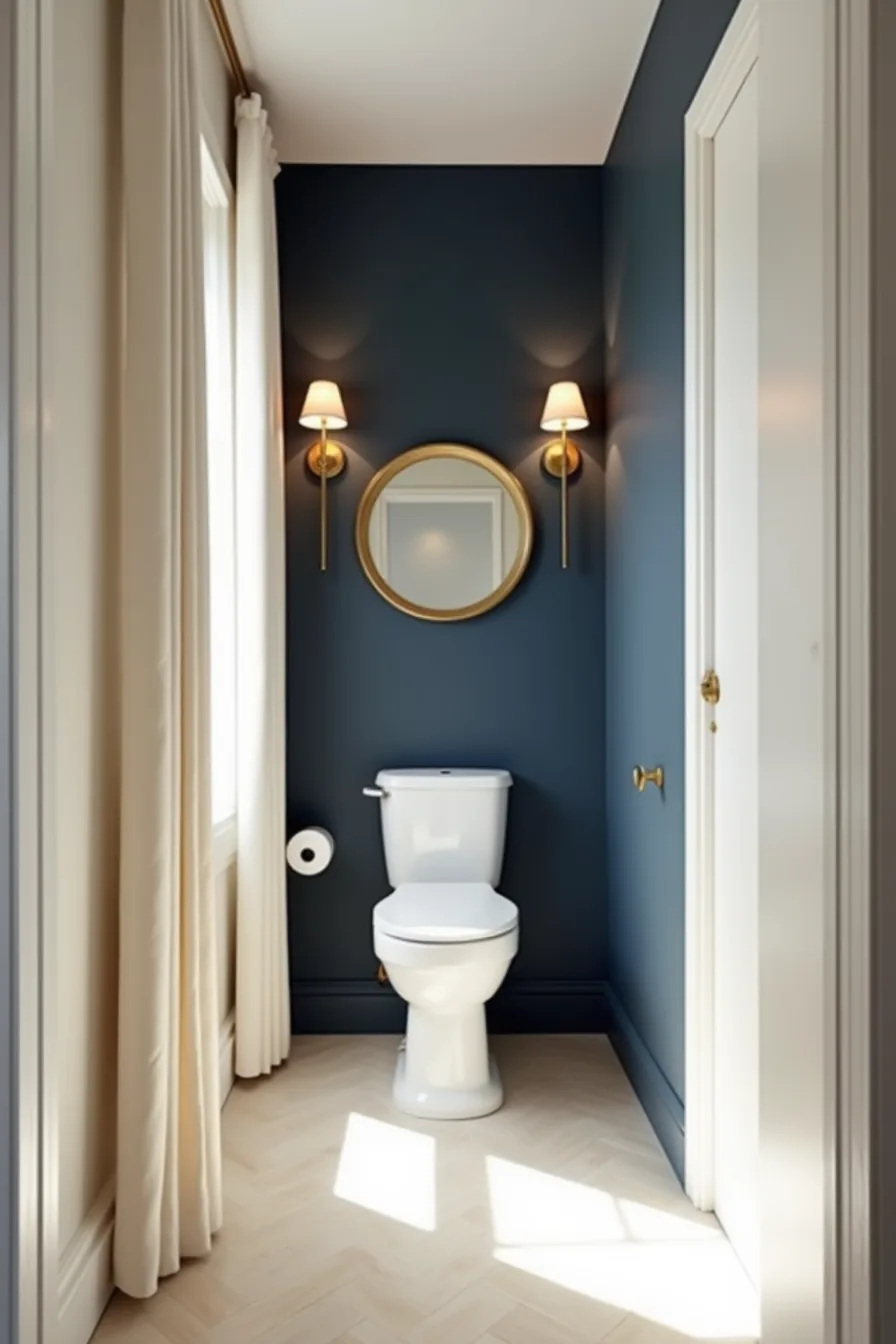
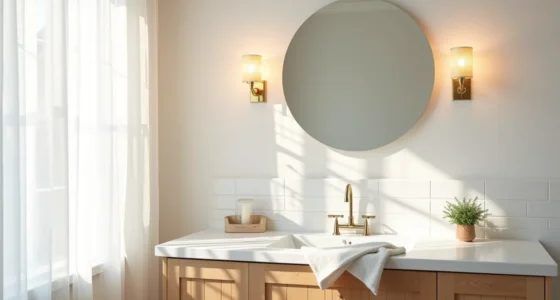
Painting a single wall deep navy, charcoal, or black, while leaving the other three white or light gray, delivers the moody look without swallowing the room’s light. In a typical setup, the navy accent wall sits behind the toilet, with the round mirror mounted directly on it. Flanking the mirror with two brass sconces at eye level (roughly 60–66 inches from the floor) throws warm light across the dark surface, preventing the wall from receding into shadow.
The white tile floor and pale side walls reflect that glow back, so the room stays functional for daily grooming.
This approach suits renters and first-time DIYers because it requires only paint, not tile or demolition. Use a satin or eggshell finish for wipeability; flat paint on a dark wall shows every splash and fingerprint. Budget-wise, one gallon covers most accent walls (around 350–400 square feet), and you can reverse it with a single weekend of repainting before you move out.
If your bathroom has no window, skip navy and choose a warm charcoal instead, it reads as intentional rather than cavernous under artificial light.
Warm Accent Materials: Balancing Cool Darks
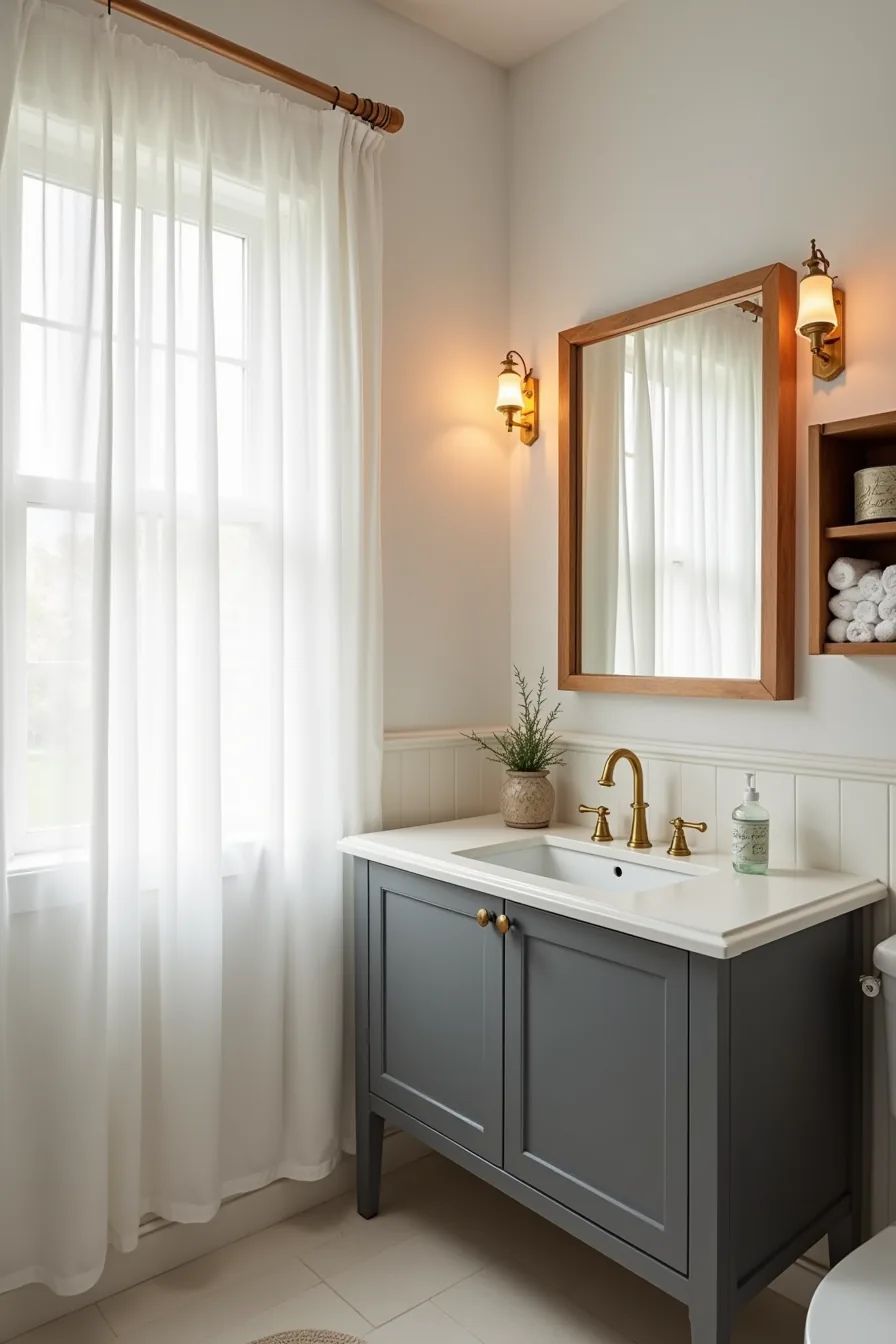
Charcoal cabinetry and matte black walls absorb the warm spectrum, leaving a room feeling sterile if you stop there. Introducing wood, brass, copper, or warm stone creates the contrast that makes dark surfaces feel deliberate rather than gloomy. A side angle of the vanity shows the system in practice: charcoal cabinetry paired with a brass faucet and matching hardware, a wood-framed mirror above, and natural wood shelving on the adjacent wall, with a pale tile countertop holding the line between dark and light.
The brass works because it sits in the 2700–3000 Kelvin range of reflected warmth, which reads as intentional against cool charcoal. Wood shelves in oak or walnut, typically 1–1.5 inches thick, break up vertical dark surfaces and give the eye a resting point. For budget, swap solid brass for brushed nickel with a warm undertone or paint existing hardware with a metallic spray formulated for bathrooms, expect a 2–3 year lifespan before touch-ups.
If you’re renovating long-term, invest in unlacquered brass, which patinas gracefully but requires wiping dry after each shower to avoid water spots.
Dark Tile Floors and Light Upper Walls
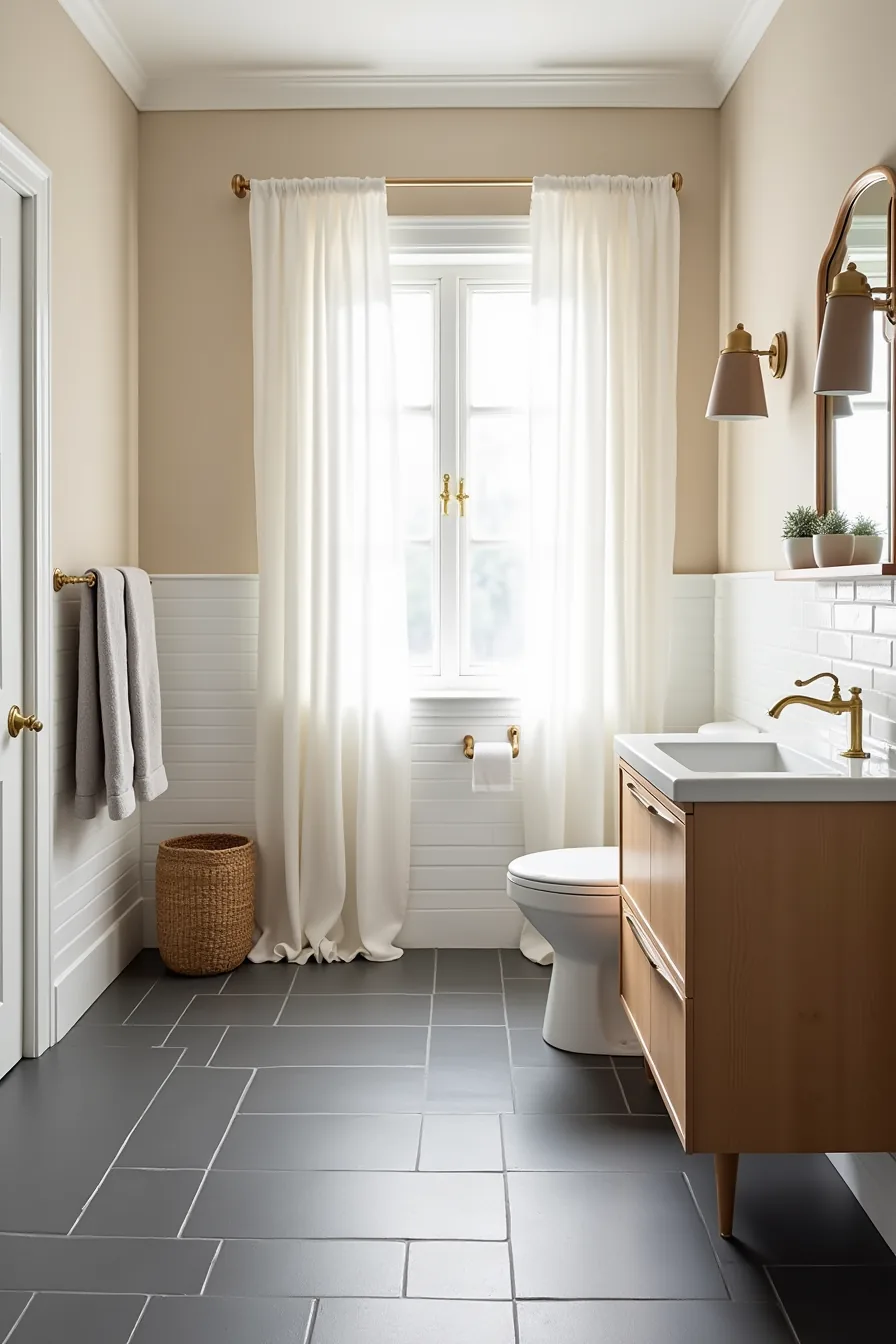
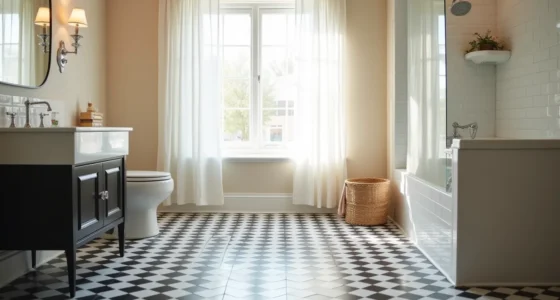
This approach flips the usual formula: the heaviest visual weight goes underfoot, while the walls, ceiling, and fixtures stay pale. Charcoal rectangular floor tiles in a running bond pattern anchor the room, and pale gray grout lines keep the grid visible rather than letting the floor read as a black void. The contrast between the dark floor and white subway tiles on the lower walls creates a clear horizon line, which makes the room feel taller and more structured.
You benefit most from this strategy in a larger bathroom, ideally one with a window opposite the door, because the bright upper surfaces draw natural light downward and prevent the dark floor from swallowing the space. A brass towel rack and woven basket on the pale floor edge add softness without competing with the tile pattern. For maintenance, choose matte-finish porcelain tiles with a PEI rating of 3 or higher, they hide water spots better than polished stone, which requires sealing every 12–18 months.
For renters, large-format peel-and-stick vinyl tiles in charcoal mimic the look at a fraction of the cost, though expect replacement every 2–3 years in high-traffic zones.
Small-Space Dark Bathroom Ideas: Mirrors and Reflective Surfaces
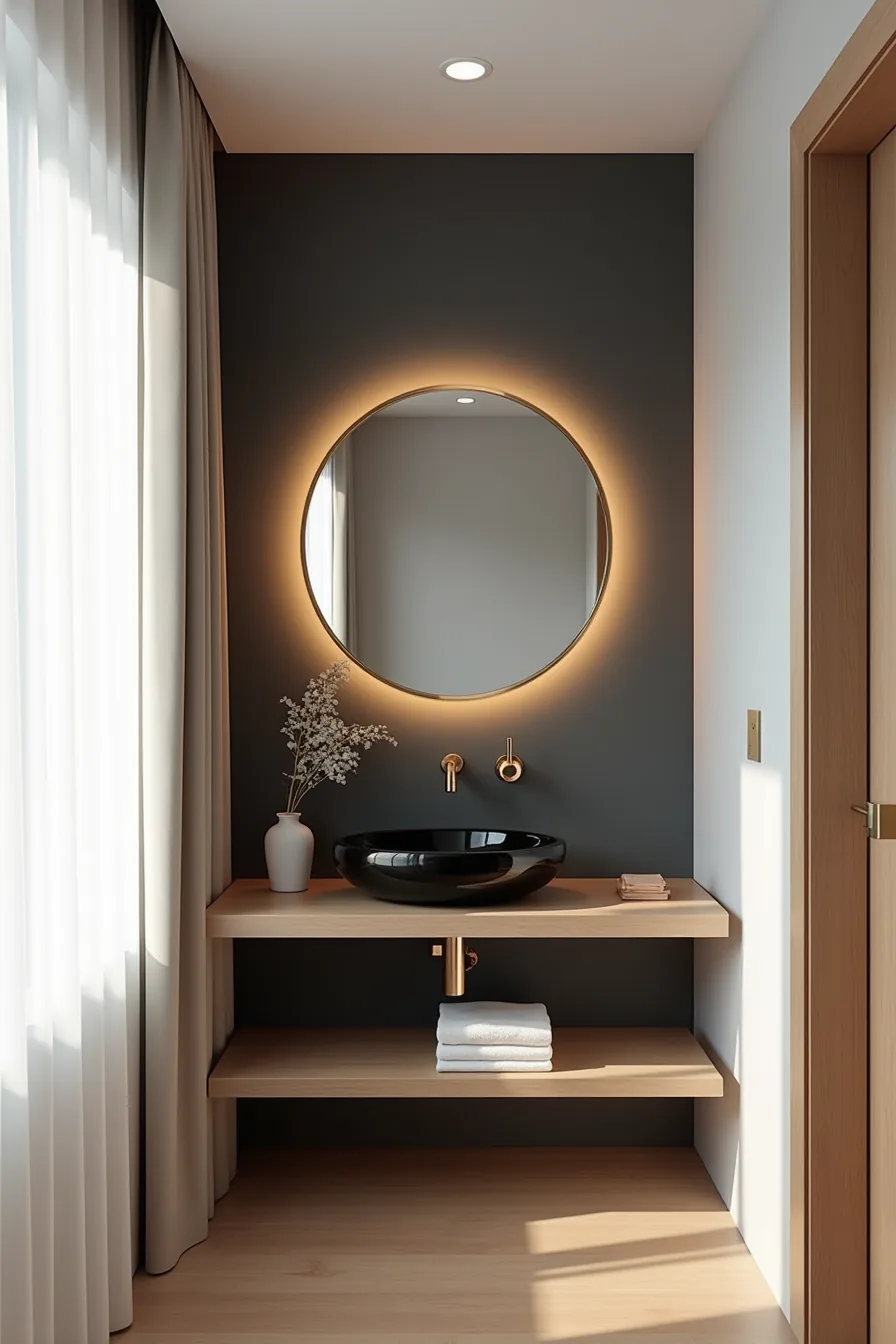
Dark bathroom ideas that still feel bright rely on strategic reflection, and the mirror is your most powerful tool in a compact room. A large round mirror with a polished chrome frame, centered above a small floating vanity, does double duty: it bounces light from the recessed ceiling fixture across the opposite wall while visually doubling the room’s depth. The key is scale, your mirror should span at least 80% of the vanity’s width, and in a small bathroom, a round shape outperforms rectangular because it softens the hard vertical lines of dark walls.
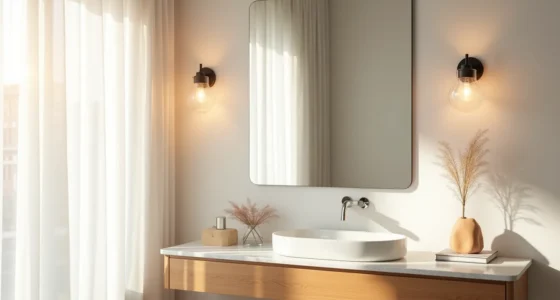
Glossy surfaces carry the reflective strategy further. A black ceramic vessel sink with a brushed gold faucet adds a light-catching focal point without requiring wall space, and the floating vanity’s exposed floor line keeps the room from feeling bottom-heavy. White ceiling paint and bright grout between dark tiles prevent the room from reading as a cave, light grout lines create a subtle grid that interrupts the darkness and gives the eye a pattern to follow.
For a rented space, swap the painted walls for removable dark peel-and-stick wallpaper and keep the mirror and faucet as your permanent investments; both transfer easily to your next bathroom.
Where to start
Pick the single darkest surface you actually want to live with, not the one that photographs best. Paint a 3-by-3-foot patch of it on your wall and live with it for a week before committing to the full room, lighting alone changes how a deep green or charcoal reads from morning to night.
Start with the vanity wall, since it gives you the most visual payoff for the least square footage. That one move covers roughly 30-40 percent of the room’s visual weight. If you still like it after seven days, expand to the remaining walls.
If not, you’ve spent under $50 on paint and learned exactly what your light levels can support.
Frequently Asked Questions
Will a dark bathroom make my small bathroom feel smaller?
Not necessarily. Dark walls recede when paired with bright fixtures, mirrors, and layered lighting. In a small bathroom, use one dark feature wall instead of all four, and keep the ceiling light to prevent a cave-like effect.
How do I prevent a dark bathroom from looking dingy or dated?
Choose deep, saturated tones like charcoal, forest green, or navy rather than muddy browns. Add warm metallic accents and high-gloss or matte finishes that reflect light. Avoid flat paint, which absorbs light and collects grime visibly.
Can I rent an apartment and still use dark bathroom ideas?
Yes. Use removable peel-and-stick tile for a dark backsplash or vanity wrap, and swap in dark shower curtains, towels, and accessories. Skip permanent paint changes unless your lease allows.
All these reverse without damage when you move out.
What lighting setup do I need for a dark bathroom to feel bright?
Layer three sources: overhead ambient light, a vanity light at eye level, and an accent light like a sconce or LED strip. Use 2700–3000K bulbs for warmth and place vanity lights on both sides of the mirror, not above it, to eliminate shadows.