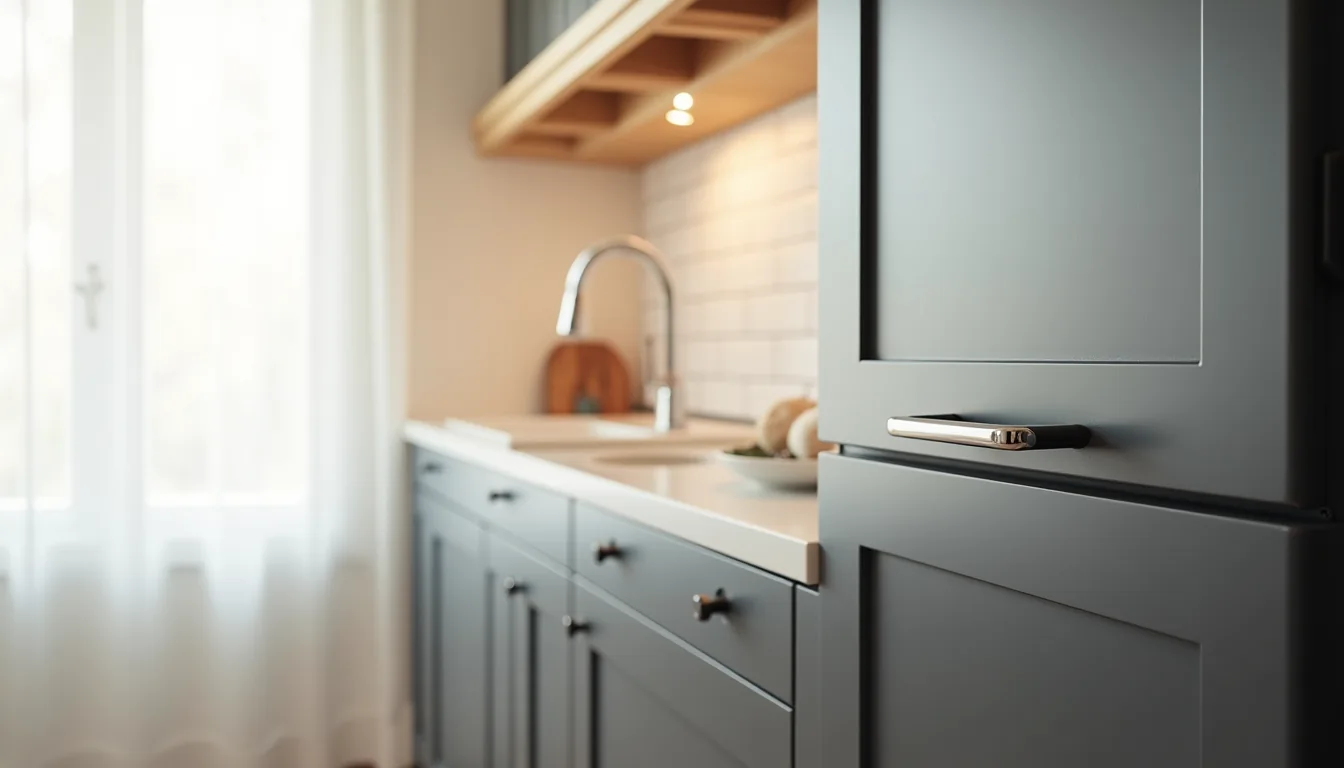
Black bathroom cabinets aren’t a single look but a design system that spans matte lacquer, wood-grain veneers, brushed metal accents, and stone countertops, each configuration demanding different maintenance, budget, and spatial planning before you commit. The difference between a sleek, modern powder room and a warm, organic primary bath often comes down to one material choice. The following six approaches break down exactly what each style requires, who it suits best, and where the hidden costs and upkeep will surface.
Key takeaways
Black isn’t one finish, matte lacquer reads modern, wood-grain adds warmth, and high-gloss reflects light, so choose based on your room’s natural lighting and existing textures. Pair black with brass for contrast, but limit warm-metal hardware to handles and faucets only, overdoing it turns sleek into gaudy. White stone countertops (quartz or marble) prevent a black cabinet from swallowing a small bathroom, especially if you use a 2–3 inch waterfall edge to keep visual weight low. Renters can fake it with peel-and-stick matte vinyl on cabinet fronts (costs $20–$40 per door) and swap hardware back before moving out, while owners should invest in moisture-resistant MDF or plywood lacquered cabinets that last 10–15 years.
Matte Black Lacquer for Modern Minimalism
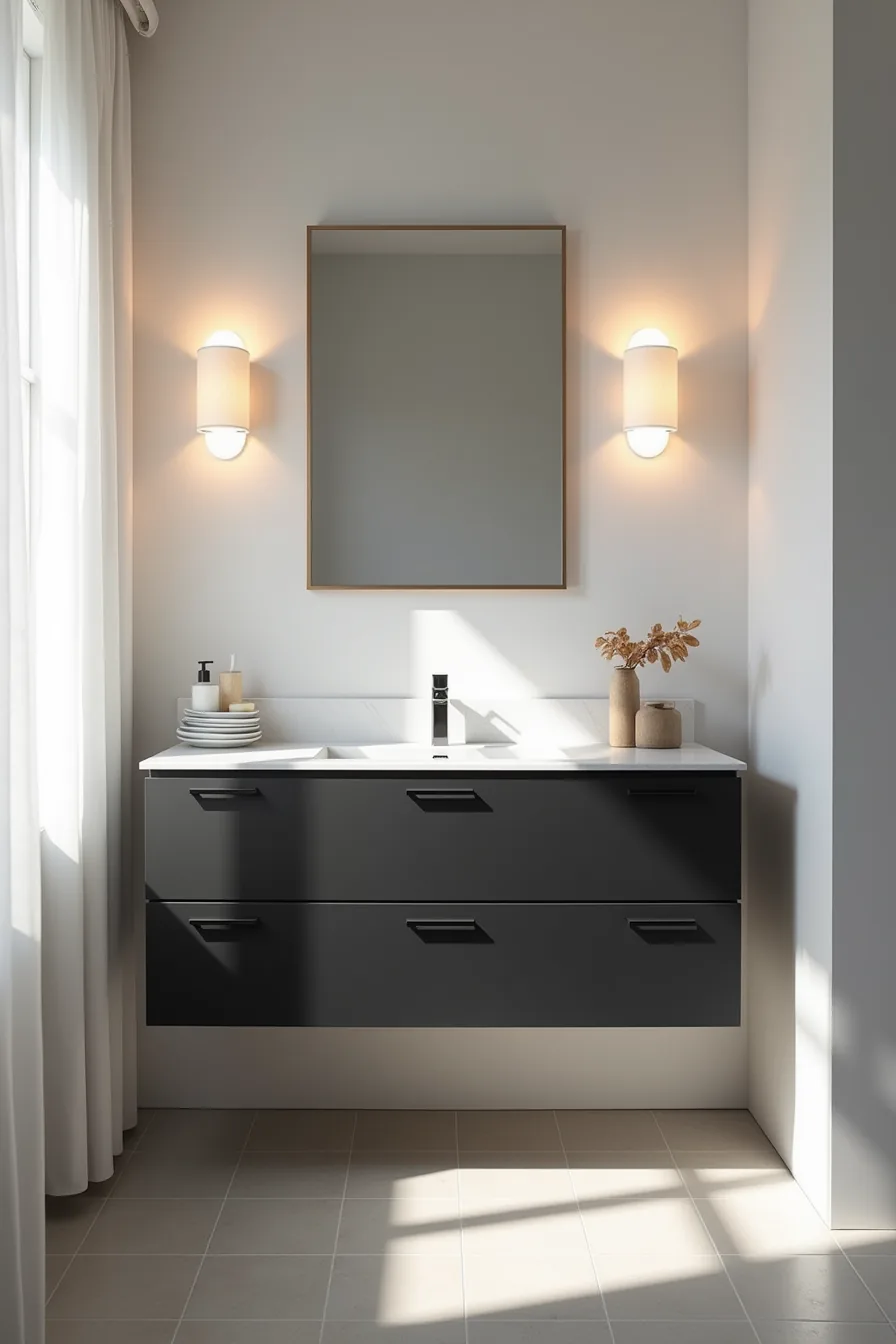
Matte black lacquer is the most literal reading of black bathroom cabinets, and it delivers a smooth, sculptural presence that reads unmistakably contemporary. The ultra-smooth finish eliminates visual noise, letting the cabinet’s geometry do the talking, recessed handles on matte black vanity cabinets create a flush plane that catches light softly rather than reflecting it. That subtle softness is why this finish suits medium-to-large bathrooms best; in a tight space, the low contrast against light walls can make the room feel broader, but the finish’s subtlety rewards distance, so give it room to breathe.
Maintenance is the trade-off. Matte lacquer shows water spots, toothpaste splatter, and hard-water residue more readily than glossy or wood-grain finishes, so budget five minutes weekly for a microfiber wipe-down with pH-neutral cleaner, abrasive pads will mar the surface permanently. Here, the matte black vanity cabinets sit against a light gray wall with a single rectangular mirror above and concrete-look floor tiles below, a combination that works because the gray and concrete temper the black’s weight rather than competing with it.
For a small bathroom, extend the same pairing but reduce the cabinet footprint: a wall-hung 24-inch unit keeps the floor visible and the matte finish from dominating.
Black with Brass Hardware and Warm Metals
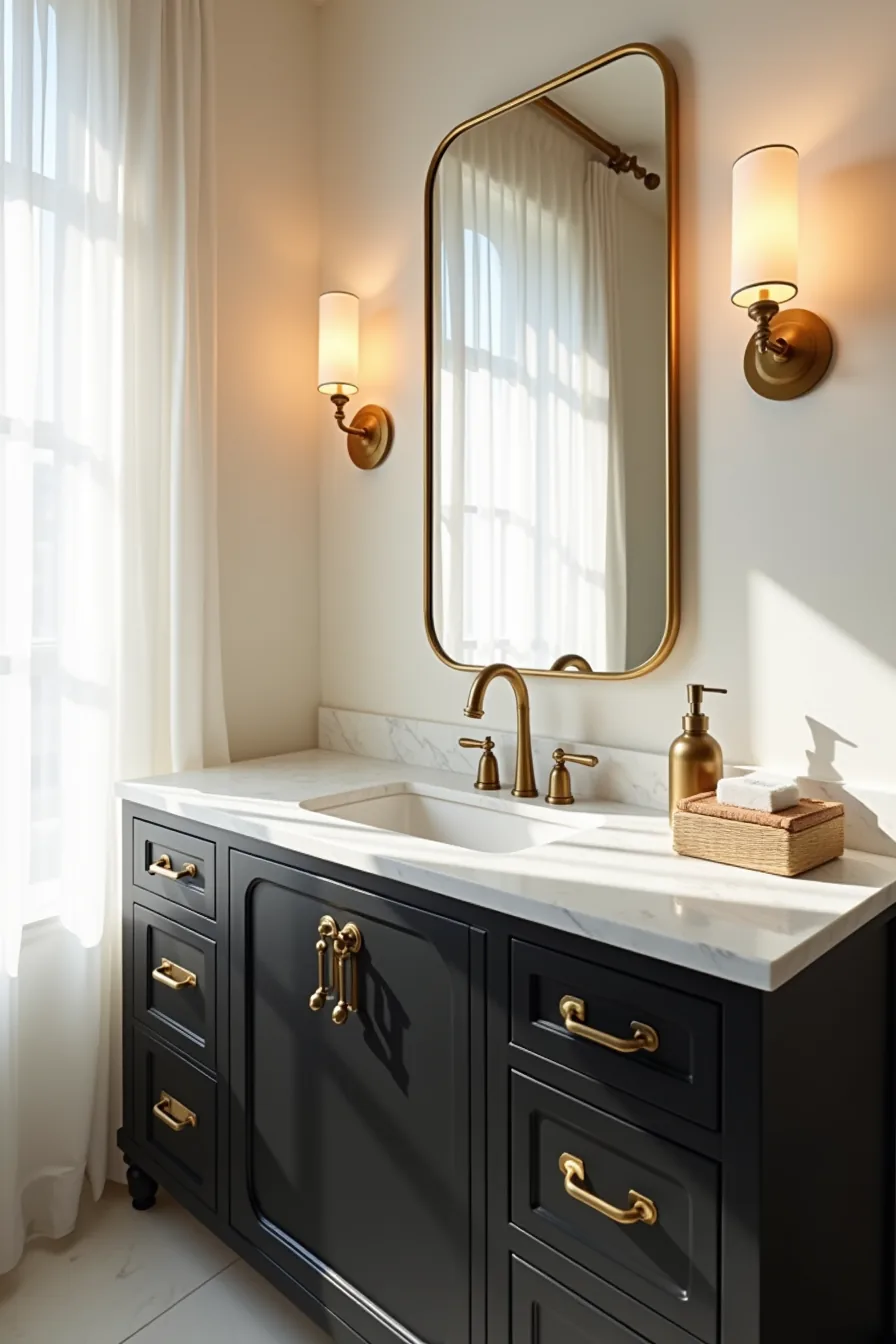
Black with brass is the highest-contrast metal pairing you can put on a cabinet, and it works because the warm gold pulls the eye to the hardware while the black recedes. The payoff depends heavily on scale: on a standard 30-inch vanity, knobs in the 1.25-to-1.5-inch range read as refined, while anything under 1 inch disappears against the dark front. Large round brass knobs on black cabinet fronts, paired with a brass-framed mirror and warm brass sconces, anchor a marble countertop and brass-rimmed soap dispenser in a cohesive loop of metallic accents that never competes with the cabinetry itself.
The cost reality is straightforward: solid brass hardware runs roughly three to five times the price of zinc alloy with a brass finish, but the finish on cheaper options can pit or flake within two to three years in a steamy bathroom. Solid brass, by contrast, develops a patina you can polish back if you prefer the original shine. This combination suits anyone wanting a classic, slightly formal bathroom, the brass softens the black’s severity, so the look reads intentional rather than stark.
Black Cabinets Paired with White Stone Countertops
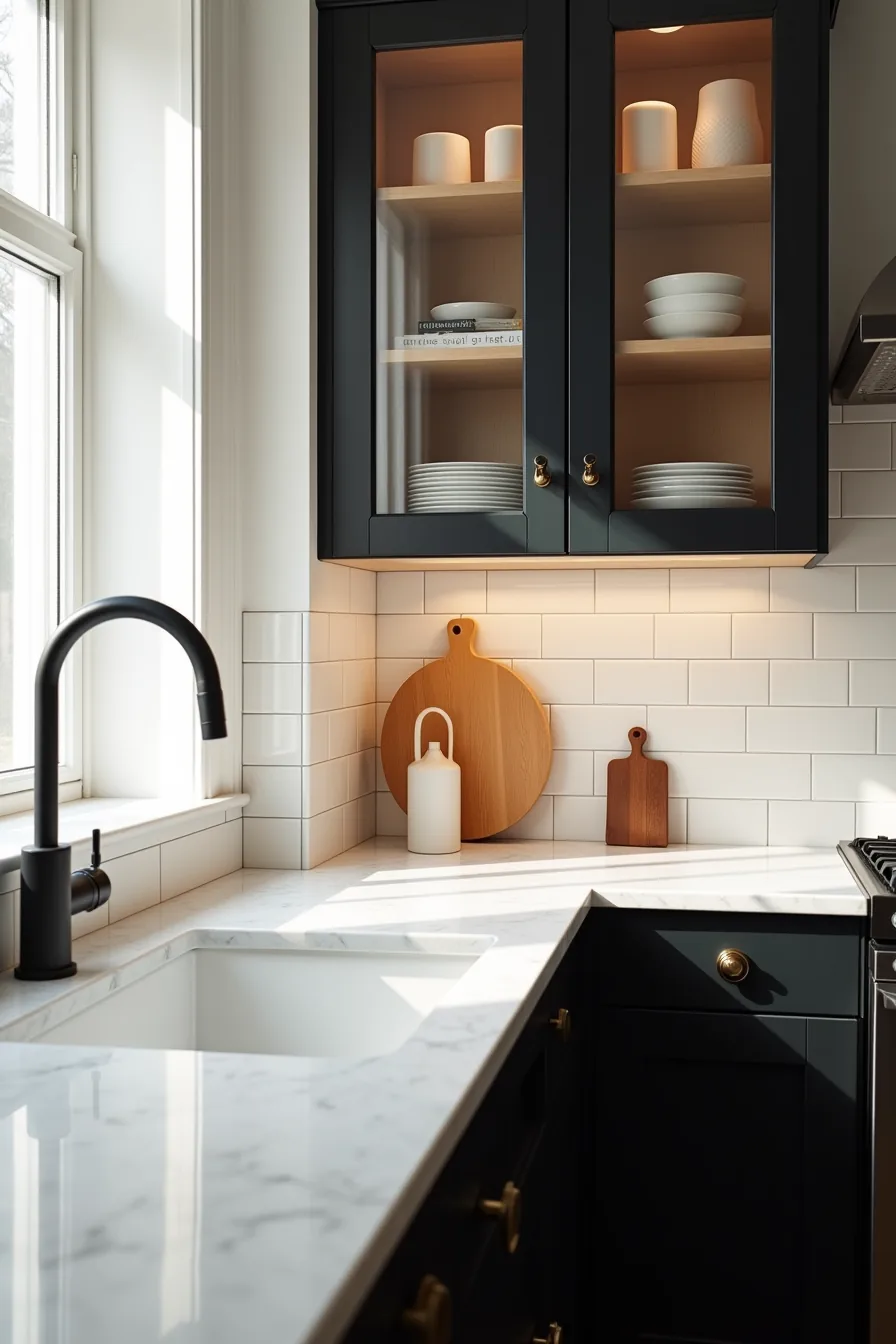
Black with white stone delivers the sharpest contrast you can achieve in a bathroom, and it hinges on veining. A busy, bold-veined marble visually shrinks a compact vanity; a quieter quartz with subtle gray movement keeps a small room from feeling chopped into pieces. For a standard 36-inch base cabinet, you want a countertop overhang of 1 to 1.5 inches on the sides to protect the cabinet fronts from water splashes that dry into hard-water spots.
The material trade-off matters: marble etches when acidic toiletries sit on it, so quartz is the lower-maintenance pick if you routinely leave bottles on the surface. The white subway tile backsplash behind the black upper cabinet with glass fronts closes the loop, reflecting light back onto the dark base cabinets instead of letting them absorb everything. That glass-front upper breaks up the mass of black at eye level, so you get the drama of dark cabinetry without a cave-like feel, suitable for medium bathrooms where you can keep a 30-inch clearance between the vanity edge and the tub or shower.
Wood Grain Black Finishes for Warmth and Texture
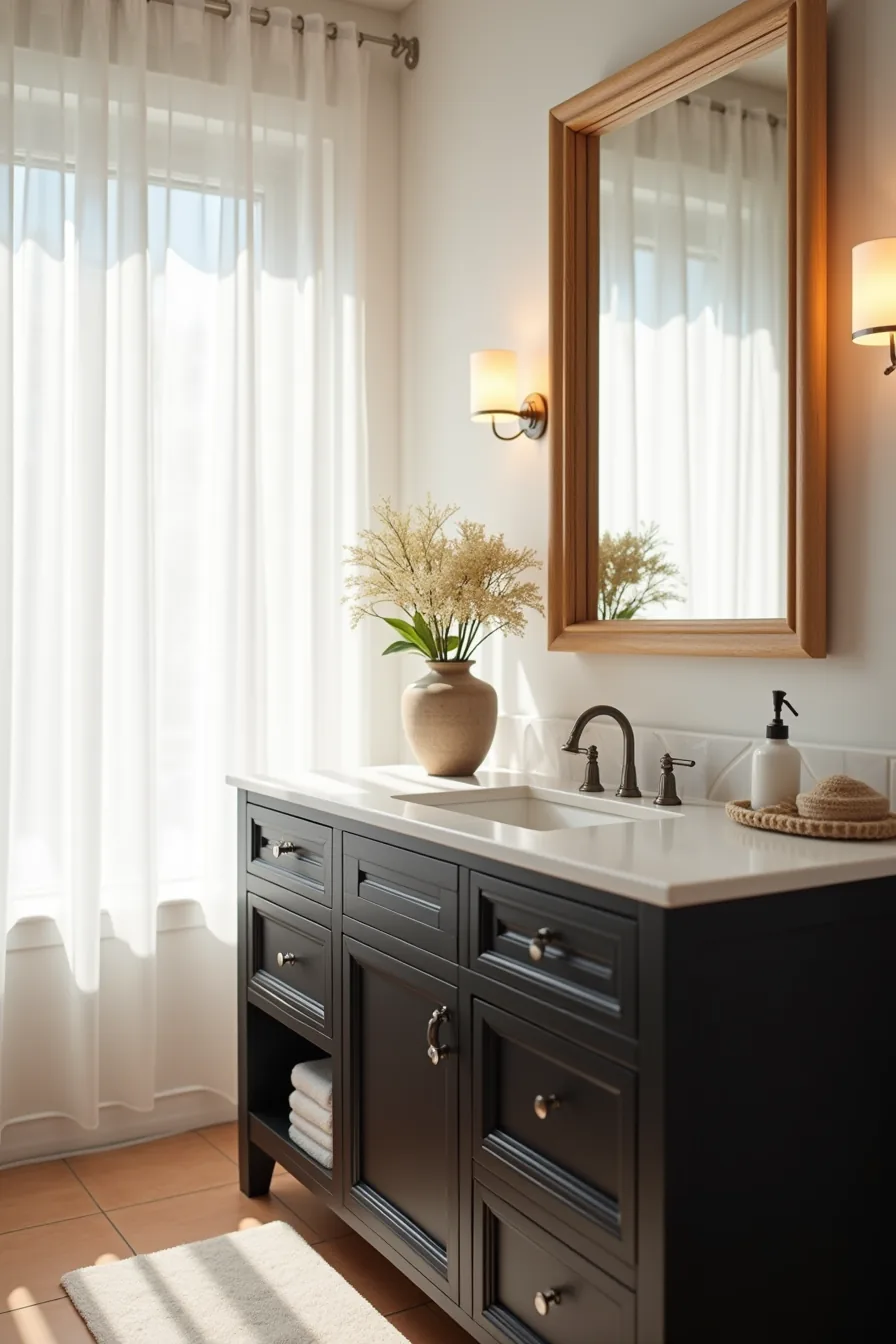
A wood-grain black finish is a different species from matte black. Instead of a flat, opaque surface, the door carries a visible wood texture, usually achieved through a multi-step staining process that opens the grain and seals it dark. This makes the cabinet read as furniture rather than built-in millwork, which suits bathrooms where you want warmth without abandoning a moody palette.
The wood texture you see on the cabinet doors does the heavy lifting here, so the surrounding materials should stay quiet. The natural wood trim around the mirror frame echoes the grain pattern without competing with it, and the warm-toned ceramic tile flooring anchors both. That combination works best in medium to large bathrooms where you can let the vanity stand as the focal point rather than squeezing it between competing patterns.
Maintenance differs from solid black, too. The open grain traps toothpaste splatter and hard-water residue more readily than a sealed matte surface, so you’ll need to wipe the door fronts weekly with a damp microfiber cloth. Budget for a higher price point than standard matte black, the multi-step finishing process typically adds 15 to 30 percent to the cabinet cost.
Black Bathroom Cabinets for a Sleek Small Space
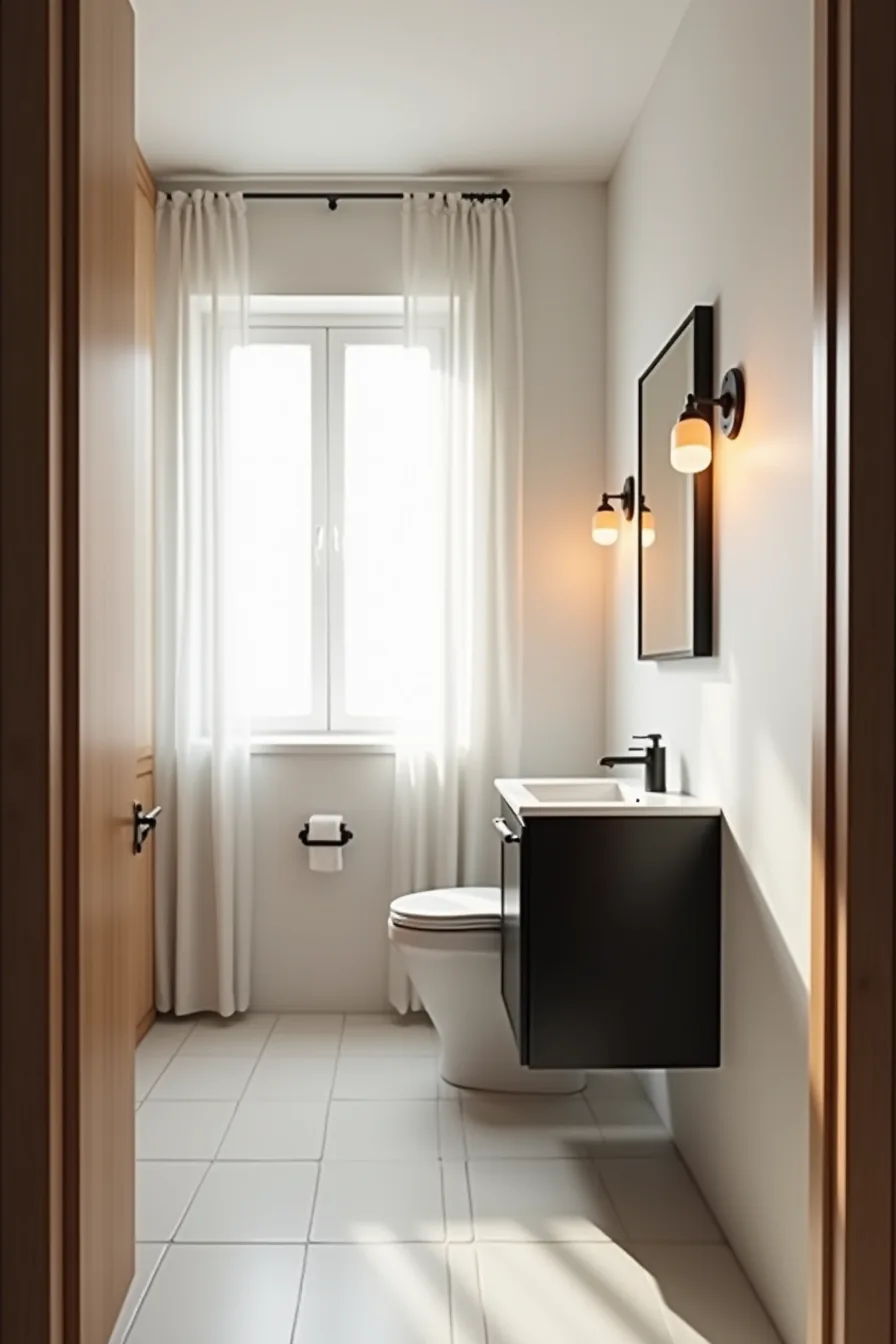
In a compact bathroom, the instinct is often to shrink the vanity, but a wall-mounted black cabinet above the toilet actually buys you back floor area while adding storage where a blank wall would otherwise sit idle. Pair it with a corner pedestal sink that includes a slim black base cabinet underneath, this keeps grooming essentials within reach without pushing a full-width vanity into the circulation path. You should leave at least 24 to 30 inches of clear floor space in front of the toilet and sink so the room never feels like an obstacle course.
The large mirror mounted opposite the window reflects daylight across the entire room, which is the single most effective trick for keeping dark cabinetry from visually shrinking the space. Use narrow white tile flooring to create long sightlines toward the mirror, and skip any wall sconces in favor of a ceiling-mounted fixture, surface-mounted lights would eat into the same vertical clearance the wall cabinet needs. This layout suits a powder room or guest bath where you need function but can’t sacrifice the feeling of openness.
Budget, Rental, and Investment Routes
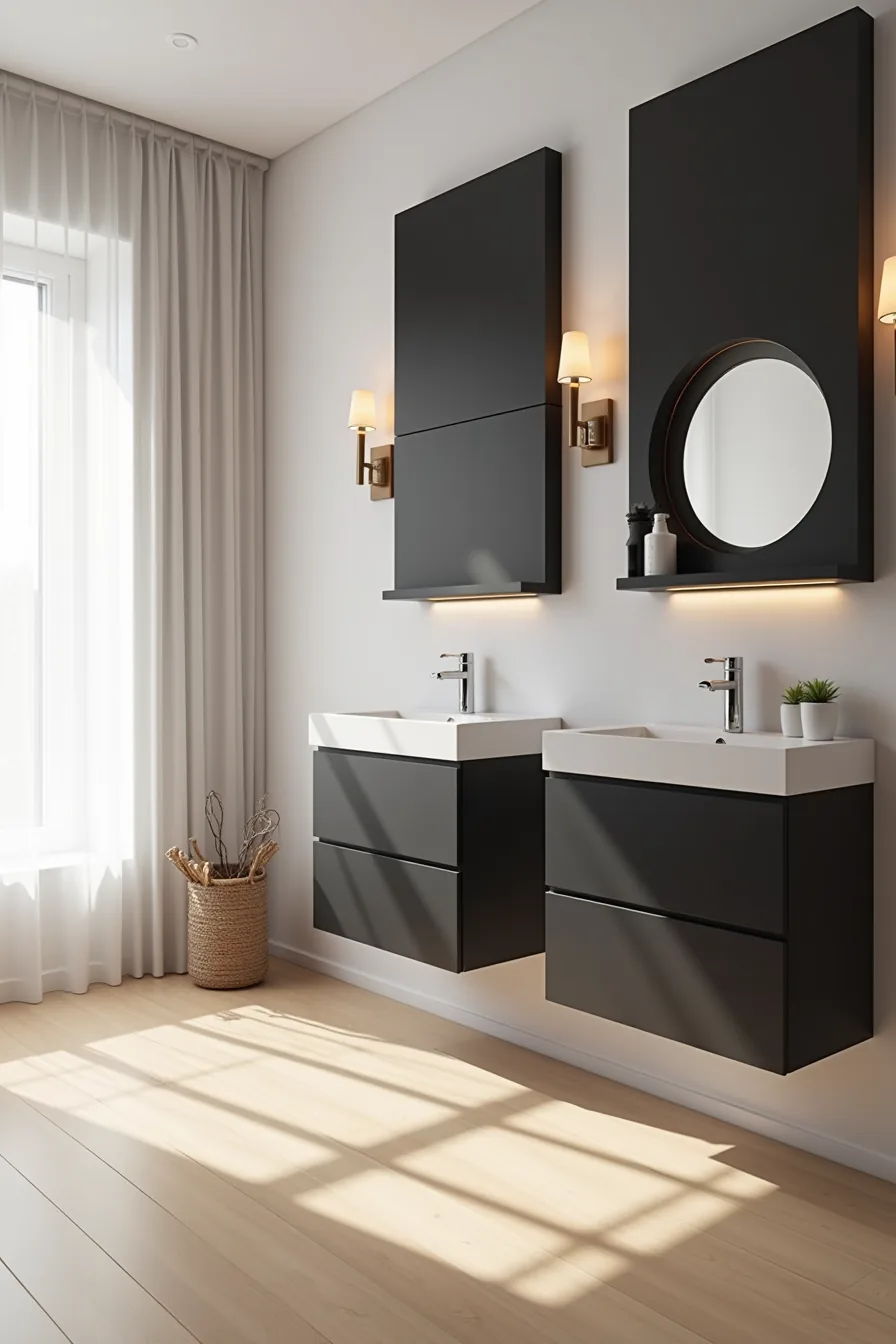
Your cheapest route is an adhesive peel-and-stick cabinet panel, which runs roughly $30 to $80 per sheet depending on thickness and texture. You can apply it directly over existing cabinet doors, and it removes cleanly with a heat gun when your lease ends, just test a small corner first, since cheap adhesive can leave residue on certain laminate finishes. This works best on flat-front doors, not raised-panel styles, where the film will wrinkle at the edges.
A mid-range stock black vanity from a big-box retailer costs between $400 and $900, and it’s the practical choice if you own but plan to sell within five years. Expect medium-density fiberboard construction with a thermofoil or painted finish that holds up for a decade with consistent sealing, but budget an extra $120 to $250 for a quartz or solid-surface countertop since most stock units ship with laminate. This suits a secondary bathroom where durability matters more than custom proportions.
A custom built-in with integrated lighting runs $2,500 to $6,000 installed, and you’re paying for marine-grade plywood, soft-close hardware, and a spray-finished lacquer that withstands humidity without peeling. The integrated LED strips under the cabinet and inside drawers cost $200 to $500 extra, but they eliminate the need for wall sconces in tight layouts. This is the long-term investment for a primary ensuite you intend to occupy for a decade or more, where the cabinet is cut to fit an awkward alcove or sloped ceiling.
Your First Move
Start with your walls. Black cabinetry reads dramatically against white, warm greige, or soft sage, but quickly feels cave-like against dark tile. Paint or re-wallpaper before you commit to the cabinets themselves.
Measure your vertical clearance: most standard vanities run 30-32 inches tall, leaving roughly 12-18 inches to the countertop edge. If you’re under 8-foot ceilings, skip matte black upper cabinets and reserve the finish for the vanity base only.
Order one paint sample or a single door from your chosen manufacturer. Live with it for three days in natural and evening light. Then decide.
Frequently Asked Questions
Do black bathroom cabinets make a small bathroom feel smaller?
Not necessarily. Glossy black finishes reflect light, while matte blacks absorb it. Pairing black cabinets with white walls, large mirrors, and under-cabinet lighting keeps the space visually open.
Avoid dark floors and ceilings simultaneously.
How often do matte black cabinets need refinishing or touch-ups?
With normal use, matte black cabinets show water spots and fingerprints weekly, requiring mild soap wiping. Refinishing typically becomes necessary every 5–7 years. High-traffic bathrooms may need touch-up paint annually on edges and handles.
What countertop colors work best with black bathroom cabinets?
White quartz, marble-look porcelain, and light gray granite create crisp contrast. For a warmer look, choose beige travertine or cream limestone. Avoid dark charcoal or brown counters, they blend into the cabinets, losing visual definition.
Can you install black bathroom cabinets in a rental without permanent changes?
Yes, use peel-and-stick contact paper over existing cabinet fronts, or swap hardware with black pulls. Freestanding black vanities with legs work well, just store original pieces. Never paint landlord-owned cabinetry without written permission.