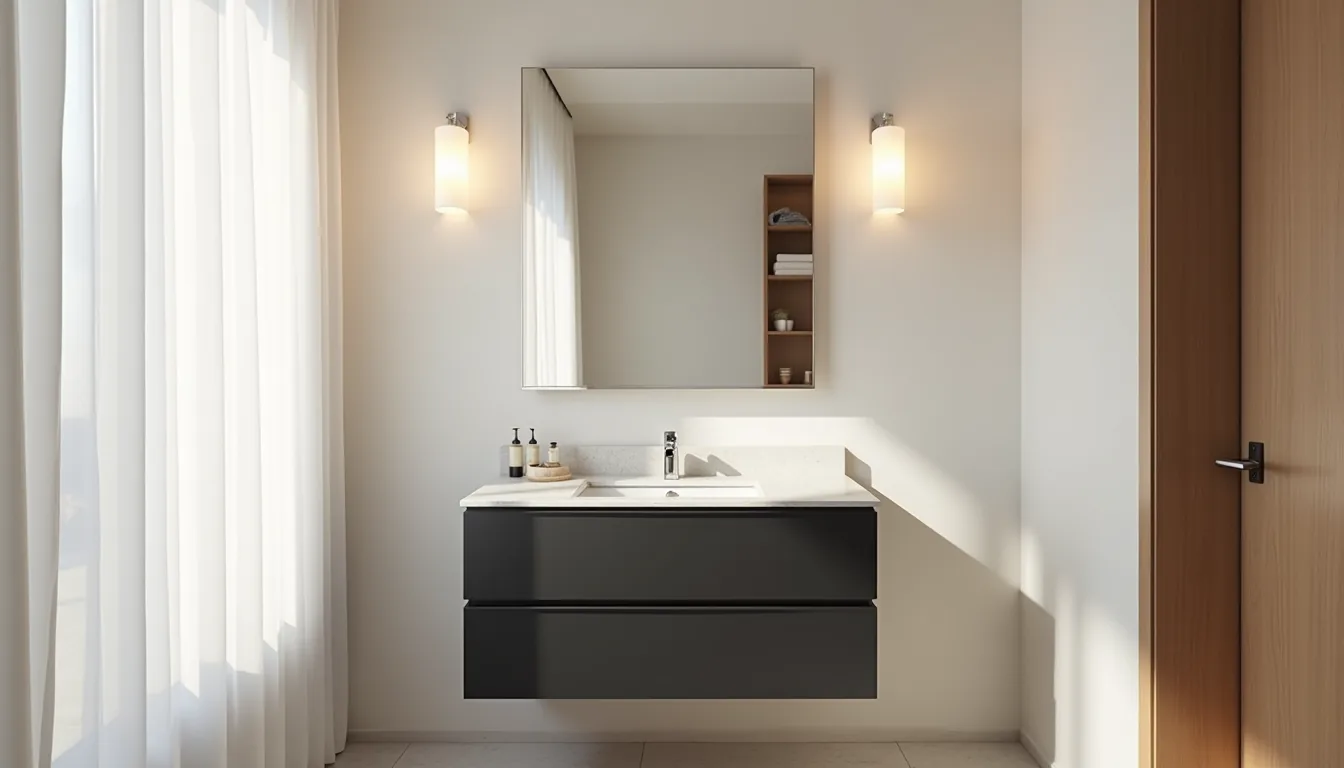
A black vanity bathroom works in nearly any space because the color itself does the heavy lifting, anchoring the room, hiding water spots, and pairing with everything from warm oak to cool marble. But the finish, placement, and hardware decide whether you get a dramatic focal point or a maintenance headache. The six approaches below range from a $200 cabinet refresh to a full custom build, each with specific sizing, material, and cleaning trade-offs you can apply immediately.
Key takeaways
Black vanity bathrooms work in any room size if you match cabinet depth to floor plan, not style trend. Prioritize the countertop as the light-reflecting anchor, a white or light-stone surface prevents the vanity from visually swallowing a small space. Choose hardware by maintenance over looks: brass highlights scratches and water spots more than chrome, making it better for low-traffic powder rooms. For renters or budgets, a peel-and-stick veneer on the existing vanity plus a new flat-front door panel delivers the look without a full fixture swap or plumbing adjustment.
Modern Minimalist: Black Vanity with Clean Lines
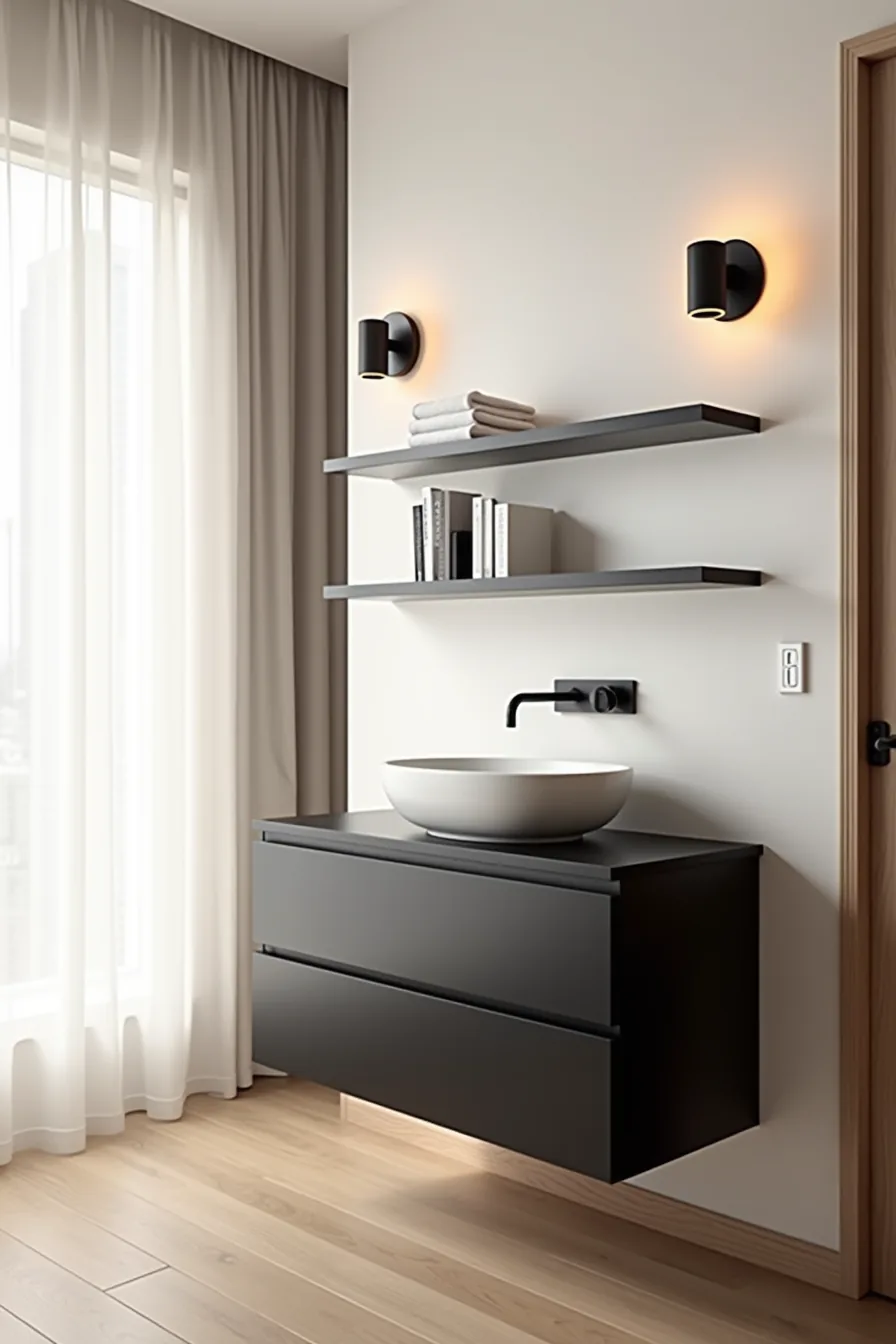
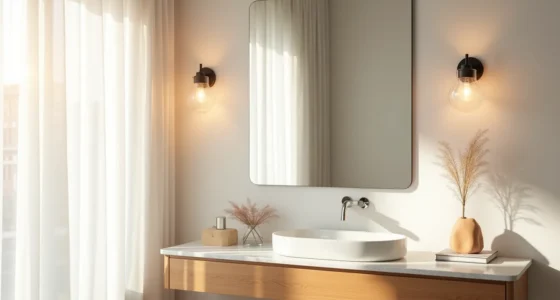
A flat-front black vanity with handle-less push-to-open drawers reads as a single sculptural block, which is why it works best in medium to large bathrooms where you can view it from a few feet away. The horizontal drawer pulls, or their absence, visually widen the cabinet, so it anchors a room without feeling heavy. Pair it with a white ceramic vessel sink that sits on the countertop; the contrast defines the vanity’s edge and makes cleaning simpler since there’s no rim to trap grime.
Install open floating shelves above instead of upper cabinets. They hold folded white towels within easy reach while keeping the wall visually light, and they force you to commit to a strict towel inventory, typically three to five per shelf, rolled or stacked. This setup suits contemporary homes with matte or satin wall finishes; gloss paint will compete with the cabinetry.
Budget for soft-close hinges on every drawer; the mechanism costs more upfront but prevents the hollow slap that cheapens minimalist spaces.
Black Vanity Focal Point with Light Stone Countertop
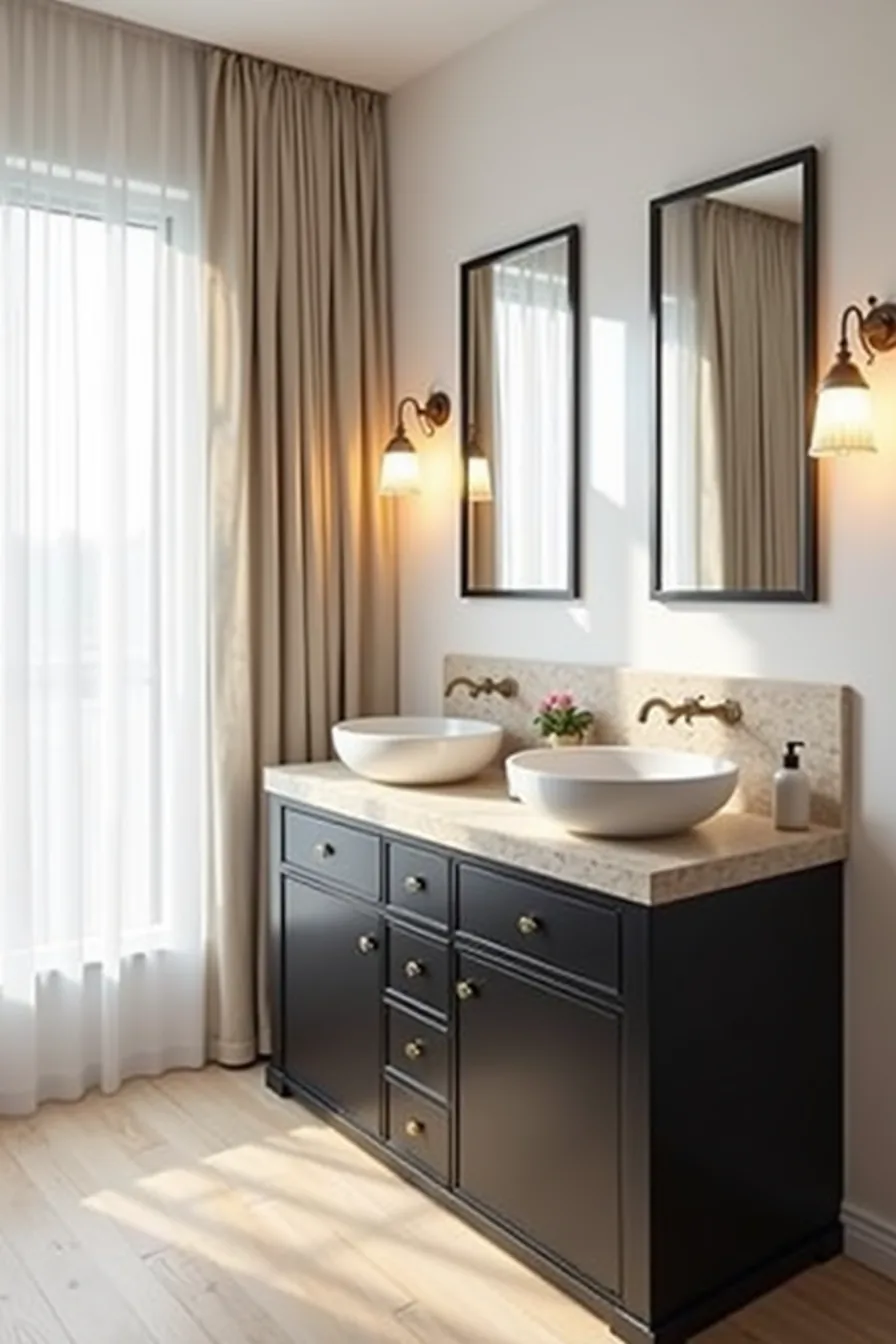
A black vanity base paired with a thick pale limestone countertop creates the strongest focal point in any bathroom because the tonal jump pulls your eye directly to the cabinet’s silhouette. The stone’s light surface catches natural light and bounces it across the room, which prevents the dark base from swallowing ambient brightness in windowless or north-facing spaces. Limestone reads softer than marble and costs less, but it requires sealing every one to two years; a honed finish hides etching better than a polished one.
The integrated double sink bowls in this setup mean the countertop is fabricated as a single piece, eliminating the seam where water typically seeps and stains. Request a minimum thickness of three centimeters, anything thinner looks fragile against a substantial black base and may flex under heavy stone vessels. This configuration suits primary bathrooms with at least six feet of wall width; scaling it down to a single basin keeps the contrast intact for smaller en-suites.
Budget for a reinforced cabinet carcass, since natural stone at this thickness adds roughly forty to sixty percent more weight than laminate.
Brass vs Chrome Hardware on Black Vanities
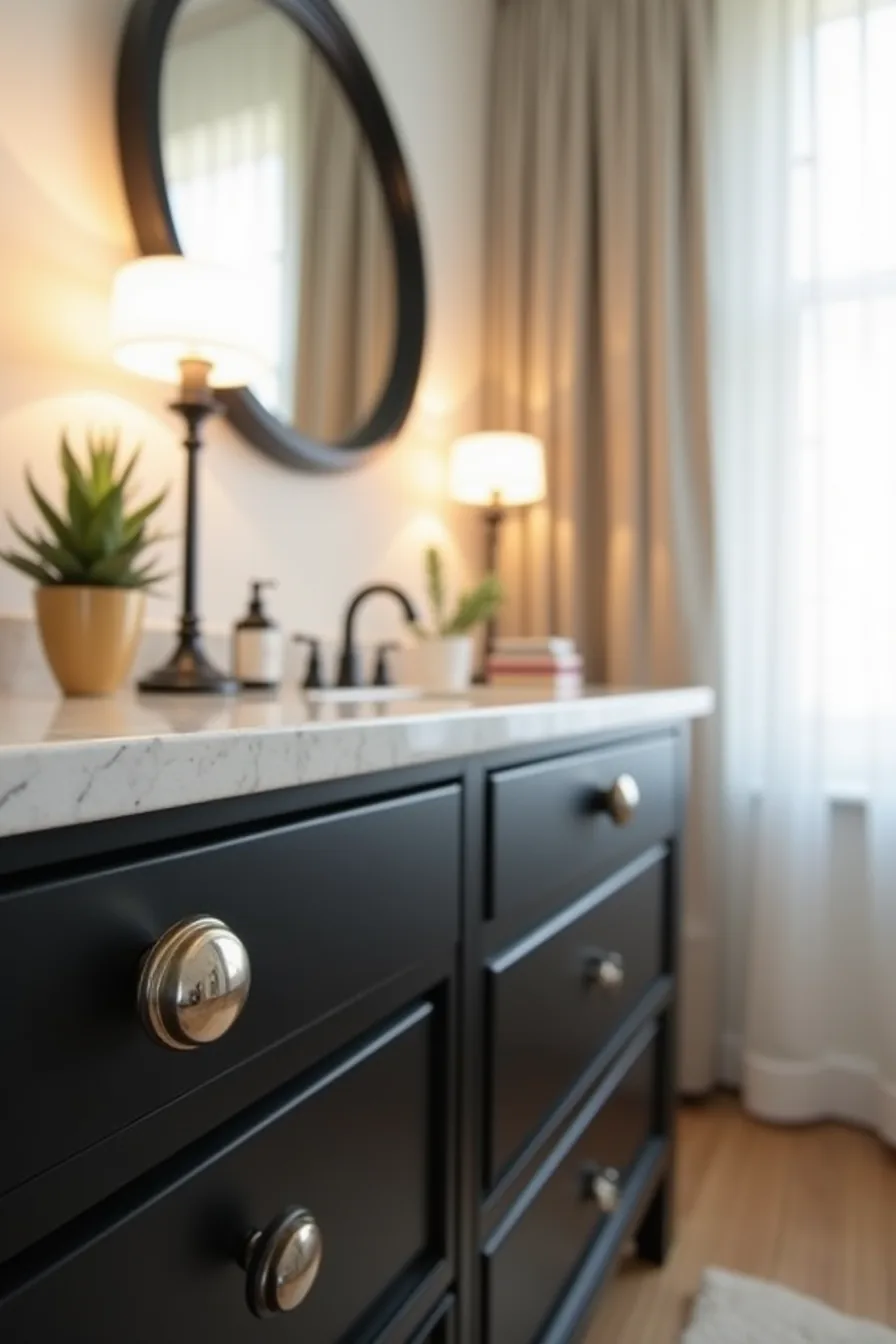
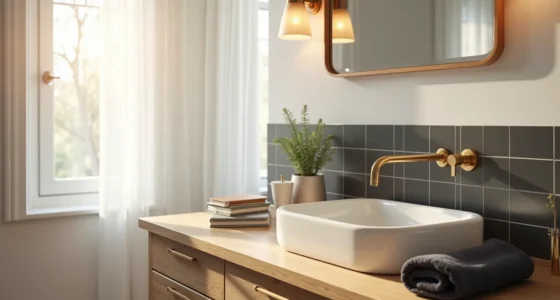
The hardware finish you choose shifts the entire mood of a black vanity. Warm brass reads as traditional and slightly opulent, softening the dark cabinet’s edges, while polished chrome delivers a crisp, modern contrast that feels cooler and more clinical. In a side-by-side comparison on the same black drawer fronts, brass knobs tend to pick up fingerprints and water spots within days, requiring a microfiber wipe weekly; chrome hides smudges far longer but shows hard-water mineral deposits if you live in an area with high calcium content.
Cost separates them clearly: solid brass pulls run roughly $8–$25 each, whereas chrome options typically fall between $4–$12. For a double vanity with eight pulls, that difference adds up to $60–$100. Brass also patinas naturally over two to five years, developing a deeper tone that some homeowners love, but if you prefer an unchanging finish, look for lacquered brass.
Chrome stays consistent indefinitely but scratches more visibly, especially if you wear rings while opening drawers. Match the finish to your faucet and shower trim; mixing metals across the room creates visual clutter unless you deliberately repeat each finish twice.
Black Vanity Ideas for a Small Bathroom Refresh
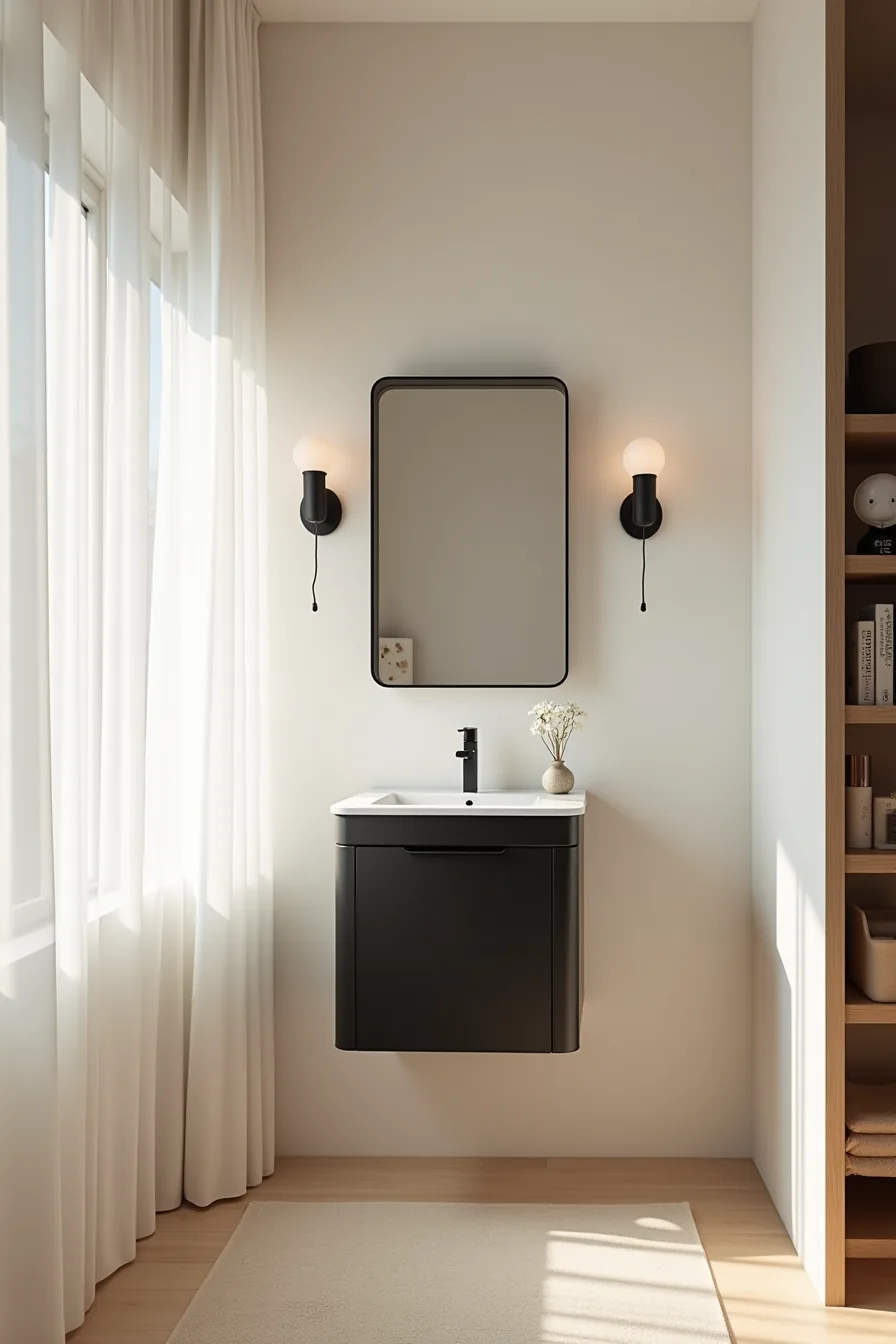
A wall-mounted black vanity is your strongest move in a compact space because it lifts the cabinet off the floor, exposing more tile and visually widening the room. In a corner alcove, a single-sink unit around 24–30 inches wide leaves 18–24 inches of clearance in front for comfortable standing, anything less feels cramped when you bend to wash your face. Pair it with a narrow mirror that spans the same width as the vanity, not the full wall, so the empty wall space reads as breathing room.
Vertical open shelving beside the cabinet pulls your eye upward and stores towels or toiletries without stealing floor area. Choose a matte black finish over glossy here; matte hides water streaks and toothpaste splatter better in tight quarters where the sink is always within arm’s reach. Wall-mounting requires solid backing or reinforced studs, so confirm your wall construction before committing, a floating unit adds roughly $150–$400 in labor versus a standard floor model, but it buys back 6–8 inches of perceived space that makes a small bathroom feel twice its size.
Renter-Friendly Black Vanity Solutions
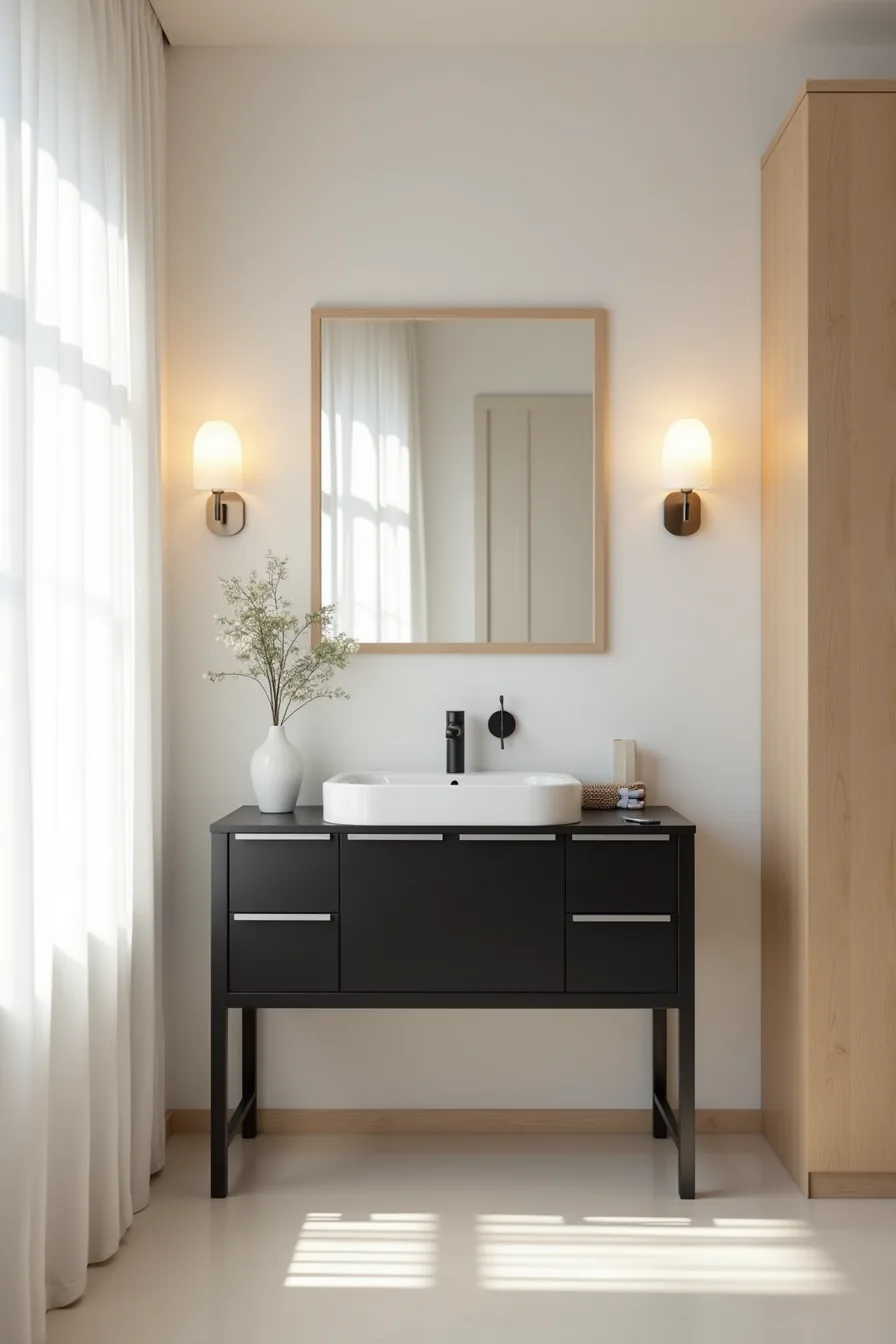
A freestanding vanity on legs is your best bet when you can’t touch the walls or floor. Look for a unit with exposed legs that clear the floor by at least 4–6 inches so you can clean underneath and avoid trapping moisture against the subfloor. This style typically costs $200–$600, and you can move it to your next place without patching drywall or forfeiting a security deposit.
Upgrade the look with peel-and-stick adhesive hardware, matte black knobs and pulls that press onto drawer fronts and lift off without residue. Behind the unit, apply a temporary backsplash film in a stone or geometric pattern; it protects the wall from splashes and peels away cleanly when you leave. Finish with a removable mirror frame that snaps around your existing mirror, adding the black accent without drilling a single hole.
Investment-Grade Black Vanity with Custom Millwork
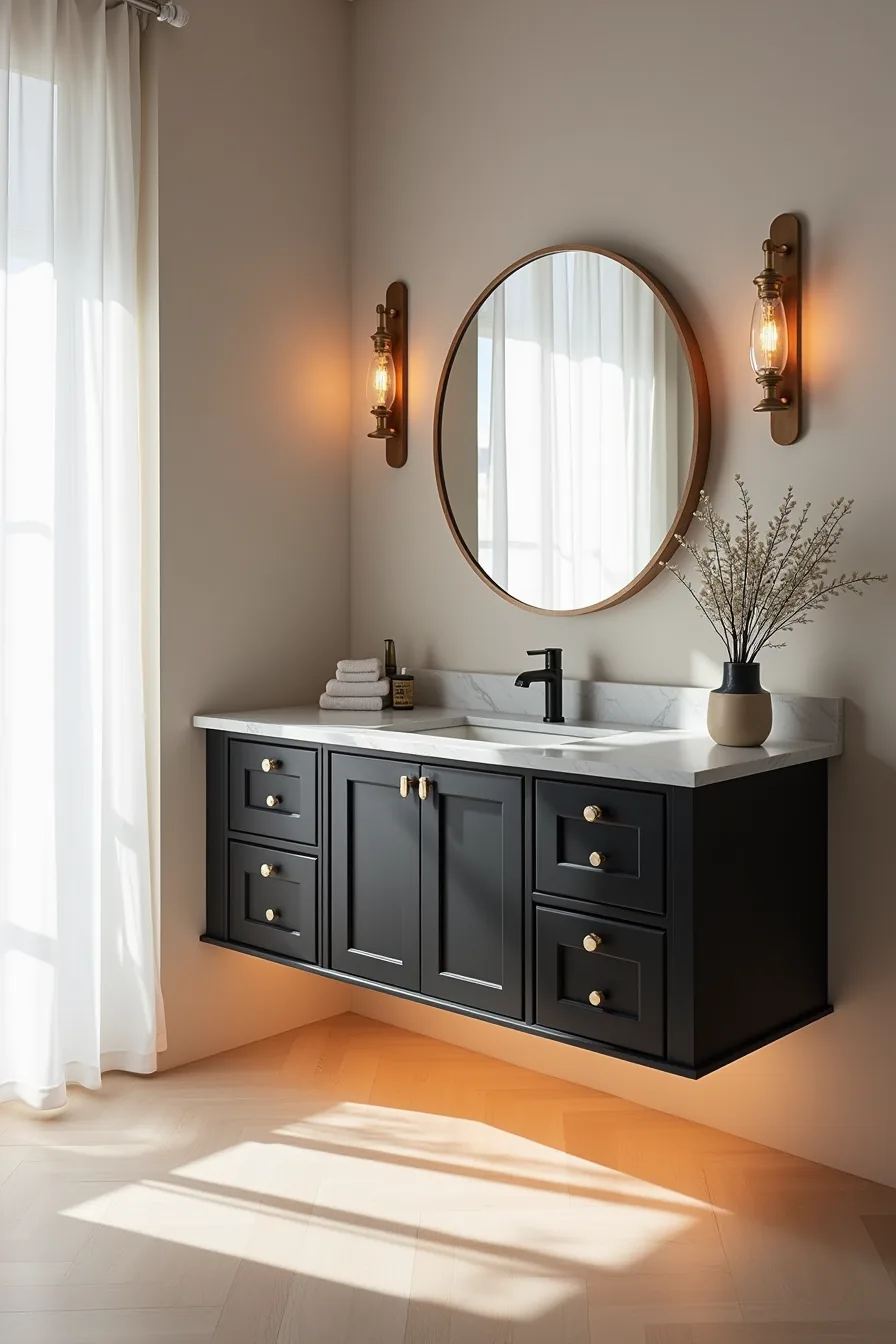
You’re looking at a vanity built for the next two decades, not the next two years. The solid wood frame, typically oak, walnut, or maple in a matte black lacquer, holds up to humidity far better than the MDF or particleboard found in most mid-range units. Inset panel doors sit flush within the frame rather than overlaying it, a joinery detail that signals bespoke craftsmanship and resists warping that plagues cheaper overlay doors.
Integrated under-cabinet LED strip lighting runs along the lower edge, casting a soft glow across the floor and eliminating the harsh shadow your body would otherwise throw onto the countertop. A custom-fitted marble top, not a stock slab, extends exactly to your wall dimensions, with a backsplash cut from the same stone so there’s no seam where grime collects. This setup runs $3,000–$8,000 depending on wood species and stone grade; you recoup a measurable share in resale value since real-wood millwork ranks among the top bathroom features buyers ask for.
The trade-off is commitment. Custom fabrication takes 6–10 weeks, requires a contractor for electrical work on the lighting, and the marble needs yearly sealing. It suits homeowners who plan to stay put for five-plus years and want a piece that anchors the whole room rather than a fixture you’ll replace alongside the next trend.
Your Decision Checklist
Before you commit to a black vanity bathroom, weigh these four factors: your available light, the vanity’s scale relative to the room, your plumbing budget for relocation, and your tolerance for visible water spots. Matte finishes hide smudges but require gentle cleaners; gloss needs daily wiping. For rentals, a peel-and-stick film or a temporary contact-paper wrap delivers the look without permanent changes.
Start here: Measure your room’s width and subtract 30 inches for clearance. If that number exceeds your planned vanity width, you’ve a workable layout. Then order three 4×4-inch material samples, matte lacquer, brushed metal, and stone composite, and tape them to your existing cabinetry for 48 hours.
Live with them under your actual lighting before purchasing anything.
Frequently Asked Questions
Does a black vanity bathroom make a small bathroom feel smaller?
Not automatically. A matte black vanity with a light countertop and wall-mounted mirror keeps visual weight low. Use floating vanities and recessed lighting to preserve floor visibility and airflow.
What countertop colors work best with a black vanity?
White, warm gray, and light beige create the strongest contrast and reflect light. Avoid dark charcoal or brown counters, they blend into the vanity and reduce depth. Quartz or marble in soft veined patterns adds texture without competing.
How often do you need to clean and maintain black vanity finishes?
Matte black shows water spots and fingerprints daily; wipe after each use. Glossy finishes need weekly cleaning with a non-abrasive spray. Touch-up paint for chips is required every 12–18 months on high-traffic edges.
Can you install a black vanity in a rental bathroom without permission?
No, replacing a permanent vanity requires landlord approval. Instead, use a freestanding black console table with a vessel sink, or paint an existing vanity with removable peel-and-stick film. Both reverse without damage.