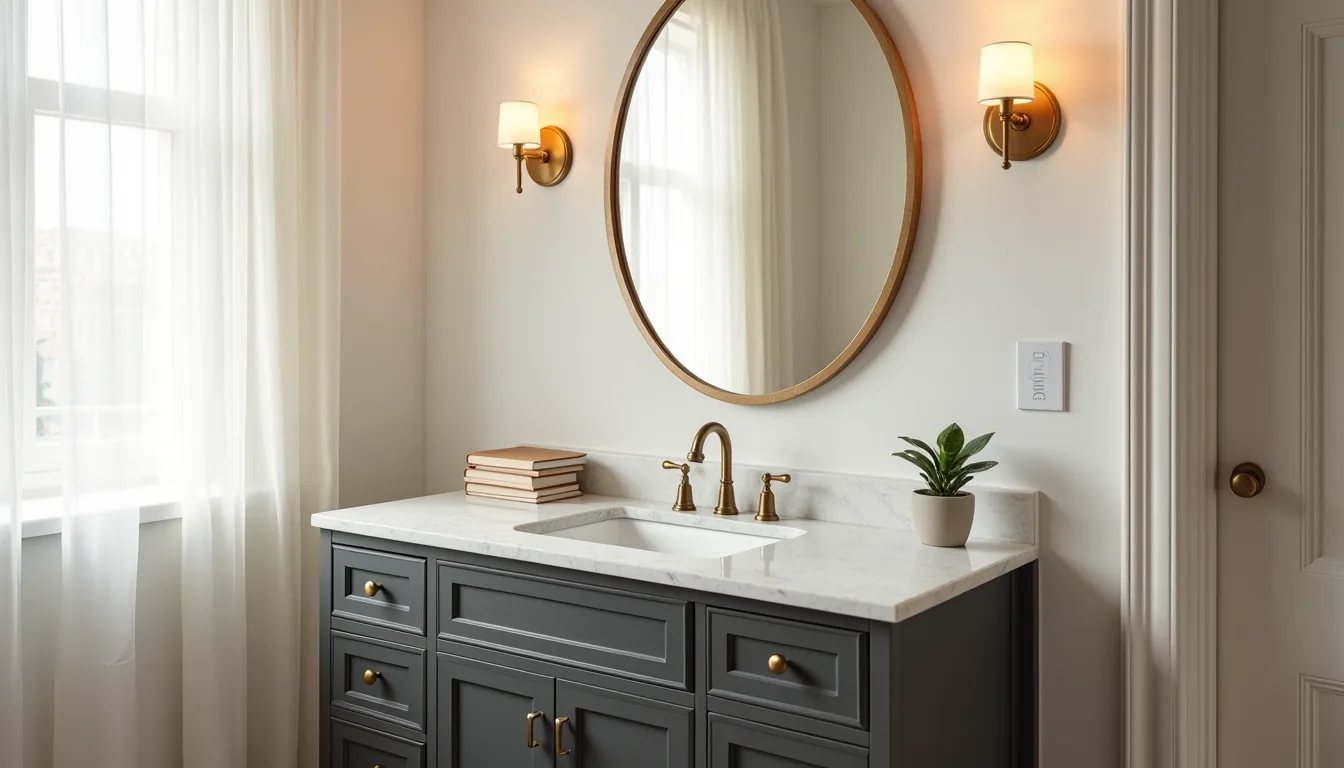
Brushed gold bathroom fixtures occupy a narrow design lane, warm enough to feel intentional, muted enough to avoid the flash of polished brass, and choosing the right interpretation depends less on trend and more on your space’s scale, lighting, and existing hardware. The finish spans from satin champagne to deep bronze-gold, each with distinct maintenance demands and visual weight. Before you buy a single faucet or towel bar, you need to know which variation fits your room’s proportions and your tolerance for upkeep.
What follows maps that decision to six concrete, buildable looks.
Key takeaways
Brushed gold pairs best with dark navy, charcoal, or espresso vanities because the contrast makes the metal read as intentional rather than accidental.
Cream stone countertops and warm brass hardware create a low-maintenance, timeless combination that suits both traditional and transitional bathrooms without requiring full fixture replacement.
For renters or tight budgets, swap out only the faucet, towel bar, and cabinet knobs, three pieces typically cost $80–$150 total and install in under an hour with basic tools.
A full brushed gold system (faucet, shower valve, trim, and accessories) costs 30–50% more than mixed metals but delivers a cohesive look that holds resale value, provided you choose PVD-coated finishes to resist water spotting.
Brushed Gold Fixtures with Dark Vanity Cabinets
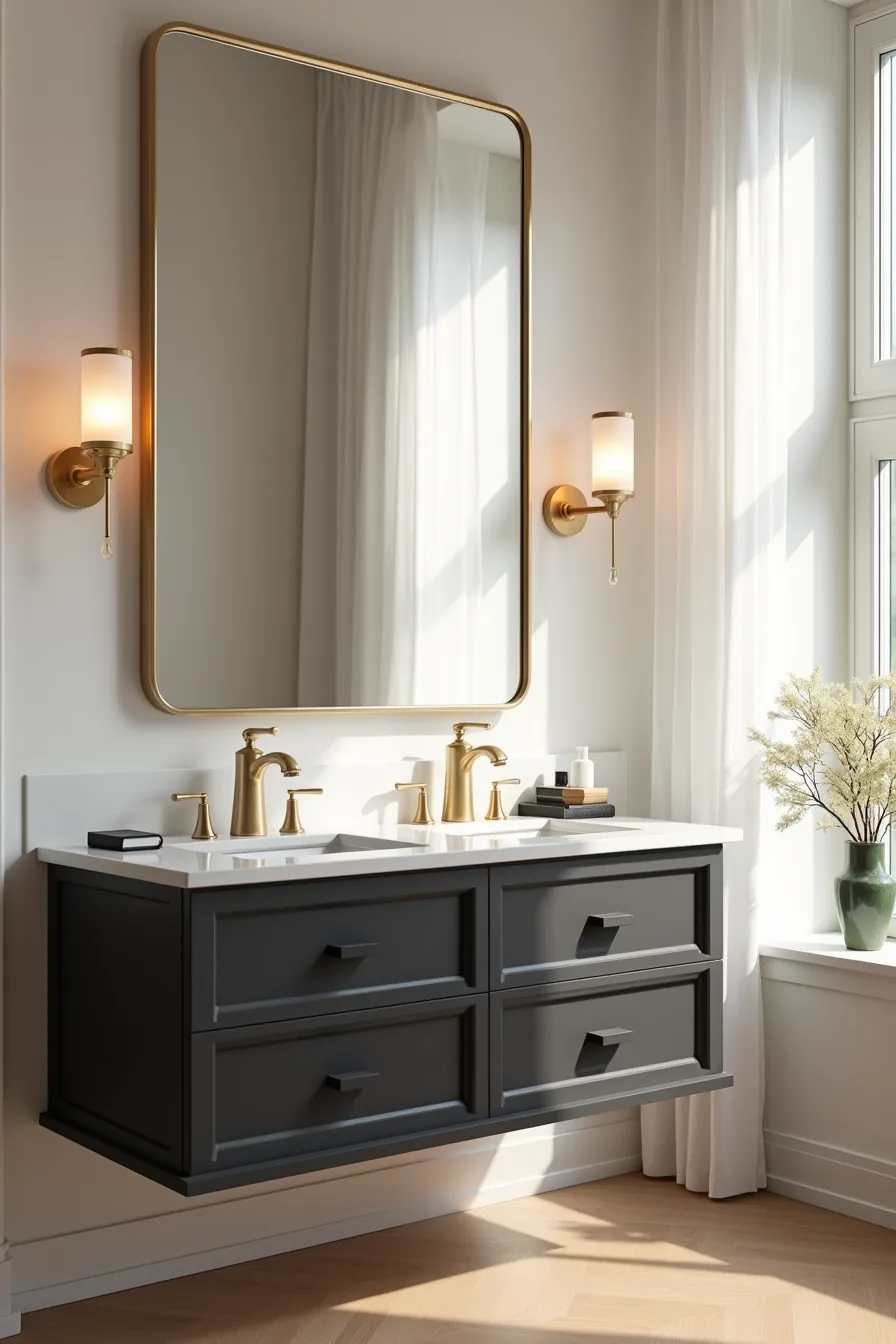
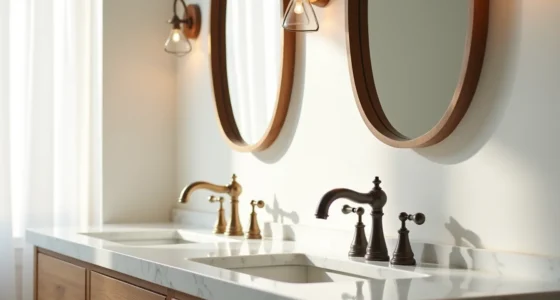
Pairing brushed gold bathroom fixtures with charcoal or black vanity cabinets is the fastest way to introduce contrast without adding color. The warm metallic finish catches the light against matte dark surfaces, preventing the space from feeling like a cave. This combination works best in medium to large bathrooms (roughly 50 square feet or more) where the visual weight of the dark cabinetry won’t overwhelm the room.
For a double-sink setup, choose faucets with a substantial profile, gooseneck or widespread styles with a 6- to 8-inch spout height hold their own against the cabinet’s mass. Balance the composition by keeping drawer pulls black, as this unifies the hardware family while letting the gold act as the singular accent. A large mirror stretching at least 80% of the vanity’s width amplifies the soft reflected light and keeps the dark cabinetry from feeling heavy.
If your bathroom runs narrow, stick to one gold element, the faucets, and skip gold accessories to avoid clutter.
Cream Stone Countertops and Brushed Gold Hardware
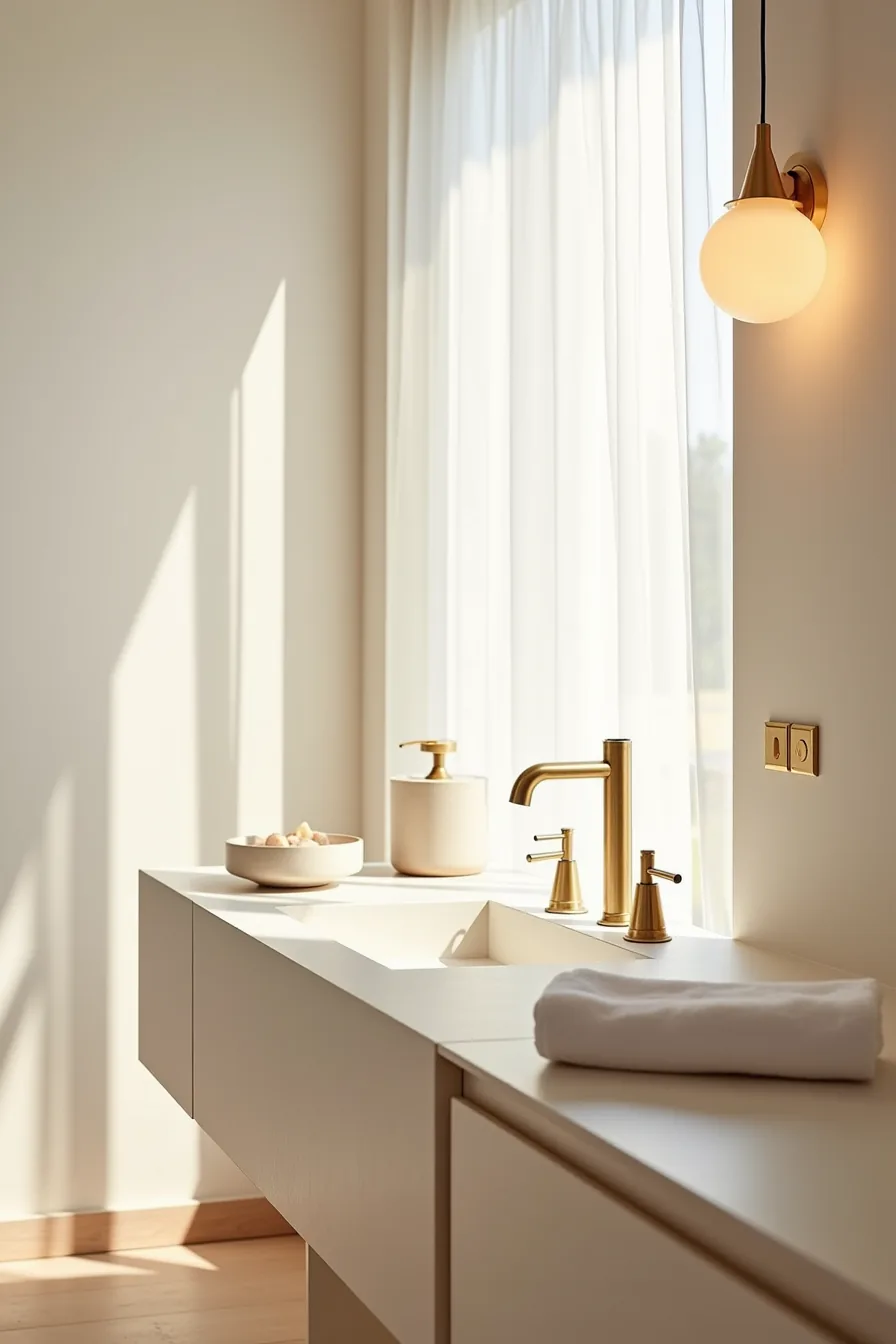
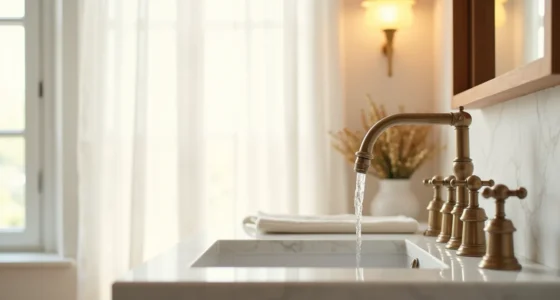
Cream limestone or travertine countertops behave differently from white marble with brushed gold bathroom fixtures: the stone’s warm beige undertones absorb the metallic finish rather than contrast it. This pairing suits bathrooms with natural light and a relaxed, spa-like intention, ideal for primary baths where you dress and unwind in the same space. On the countertop, arrange a brushed gold faucet, a matching soap dispenser, and a toothbrush holder in a row, spacing them 4 to 6 inches apart creates a deliberate rhythm that reads as curated instead of scattered.
Cream stone is porous, so expect to seal it annually and wipe up water quickly to prevent etching. The gold hardware, meanwhile, needs only a microfiber cloth and mild soap; abrasive cleaners will strip the brushed finish over time. Keep a single white towel folded nearby as a neutral anchor, it prevents the gold and stone from competing for attention.
This setup works best on vanities wider than 48 inches, giving the three gold pieces room to breathe without crowding the sink basin.
Warm Metal Focal Point with Minimal Fixtures
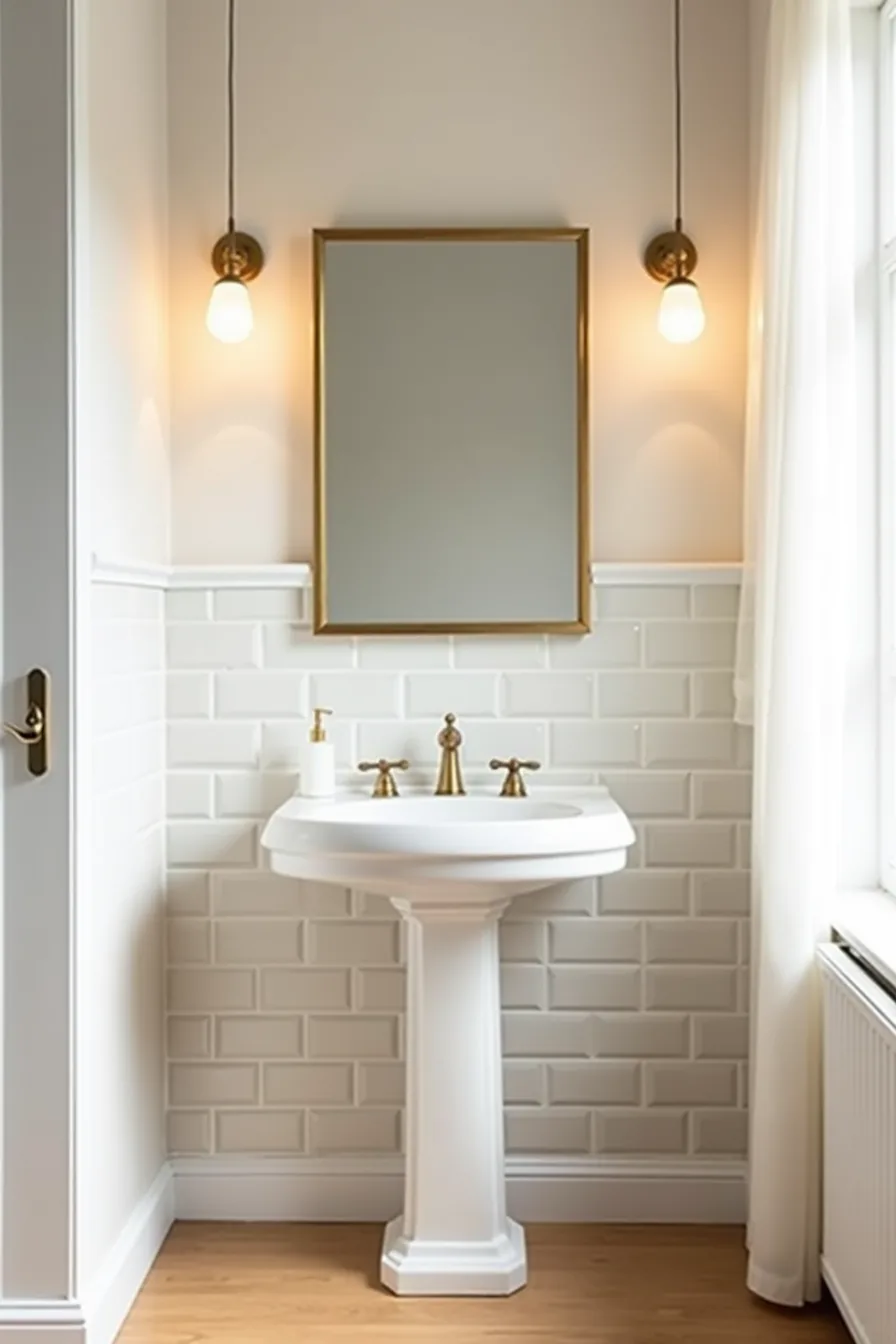
A single brushed gold mirror frame anchored above a white pedestal sink gives a small bathroom a deliberate center of gravity without adding a single plumbing fixture in the finish. The pale subway tile and bare walls on either side do the heavy lifting, they keep the visual noise near zero so the warm metal focal point registers as intentional design rather than an accent that drifted in by accident. This approach suits renters and anyone with a powder room under 40 square feet, where a full suite of gold fixtures would crowd the eye.
The trick is proportion: the mirror should span roughly two-thirds of the sink width, not match it exactly. Mount it 5 to 7 inches above the backsplash or rim so it clears faucet reach. You can install a framed mirror with two screw hooks in under 15 minutes, and swapping it back before move-out takes the same effort.
The pedestal sink stays white, introducing a second color into the vignette would split the focal point and dilute the gold’s pull.
Brushed Gold Fixtures for a Softer Bathroom Mood
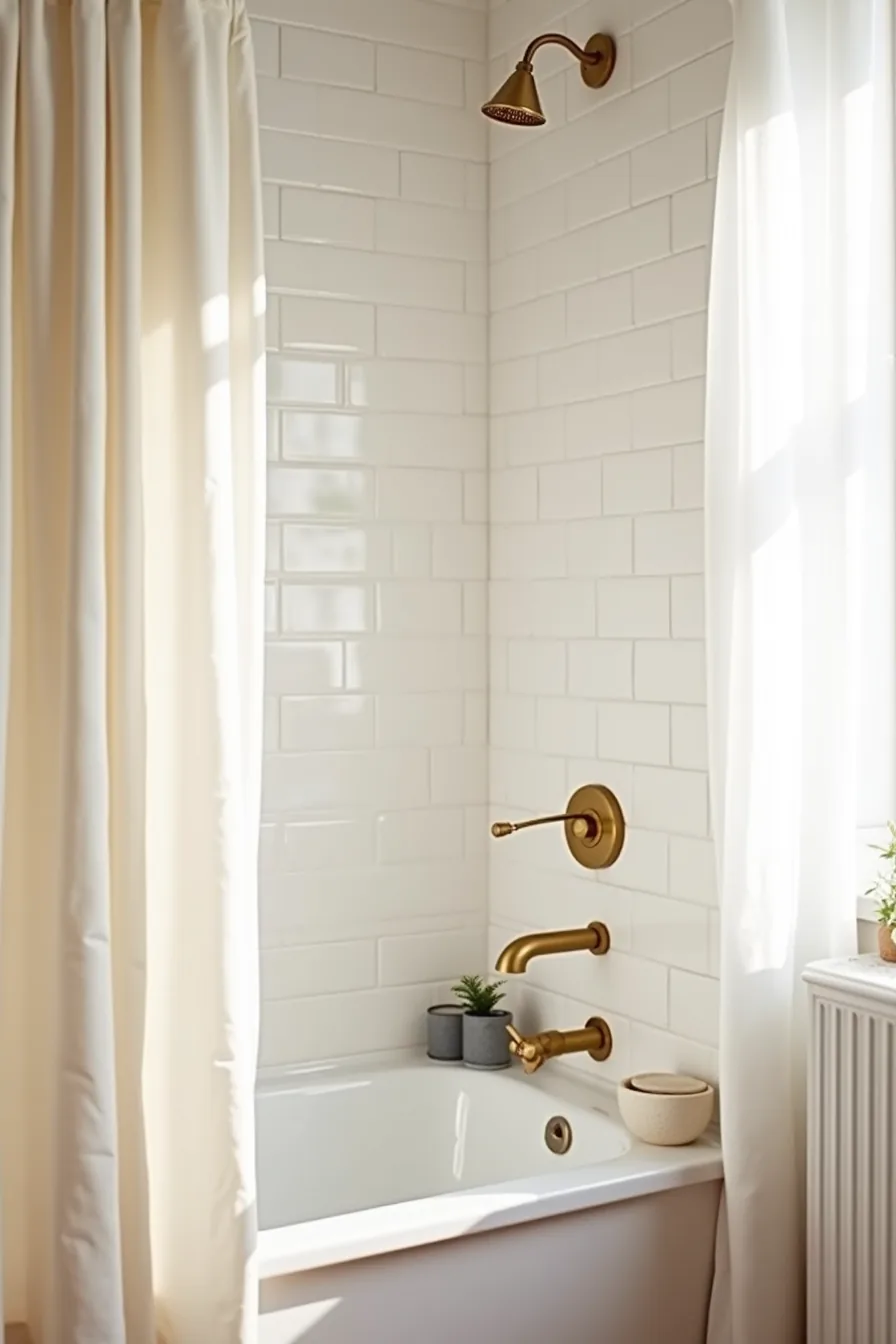
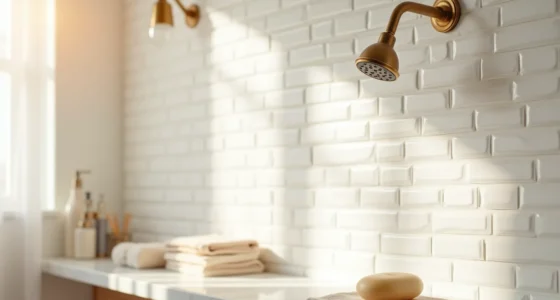
Pairing brushed gold with matte finishes changes how the metal reads. Against a matte white subway tile wall, the brushed gold wall-mounted faucet with its curved spout stops looking glamorous and starts looking calm, the soft sheen reflects diffused light instead of throwing sharp highlights. This combination suits a main bathroom used daily, where the goal is warmth without the formality of polished chrome or the heaviness of oil-rubbed bronze.
The pale cream linen shower curtain softens the room’s acoustics and light bounce, while the off-white ceramic soap dish on the tile ledge keeps the palette monochromatic. The key restraint: no second metallic finish in the space. Brushed gold fixtures for a softer bathroom mood tolerate matte white, cream, and ceramic; they clash with brushed nickel or polished stainless within the same line of sight.
Expect to clean the faucet weekly with a damp microfiber cloth, brushed finishes hide fingerprints but retain hard-water spots in areas with mineral-heavy supply.
Budget and Renter-Friendly Brushed Gold Updates
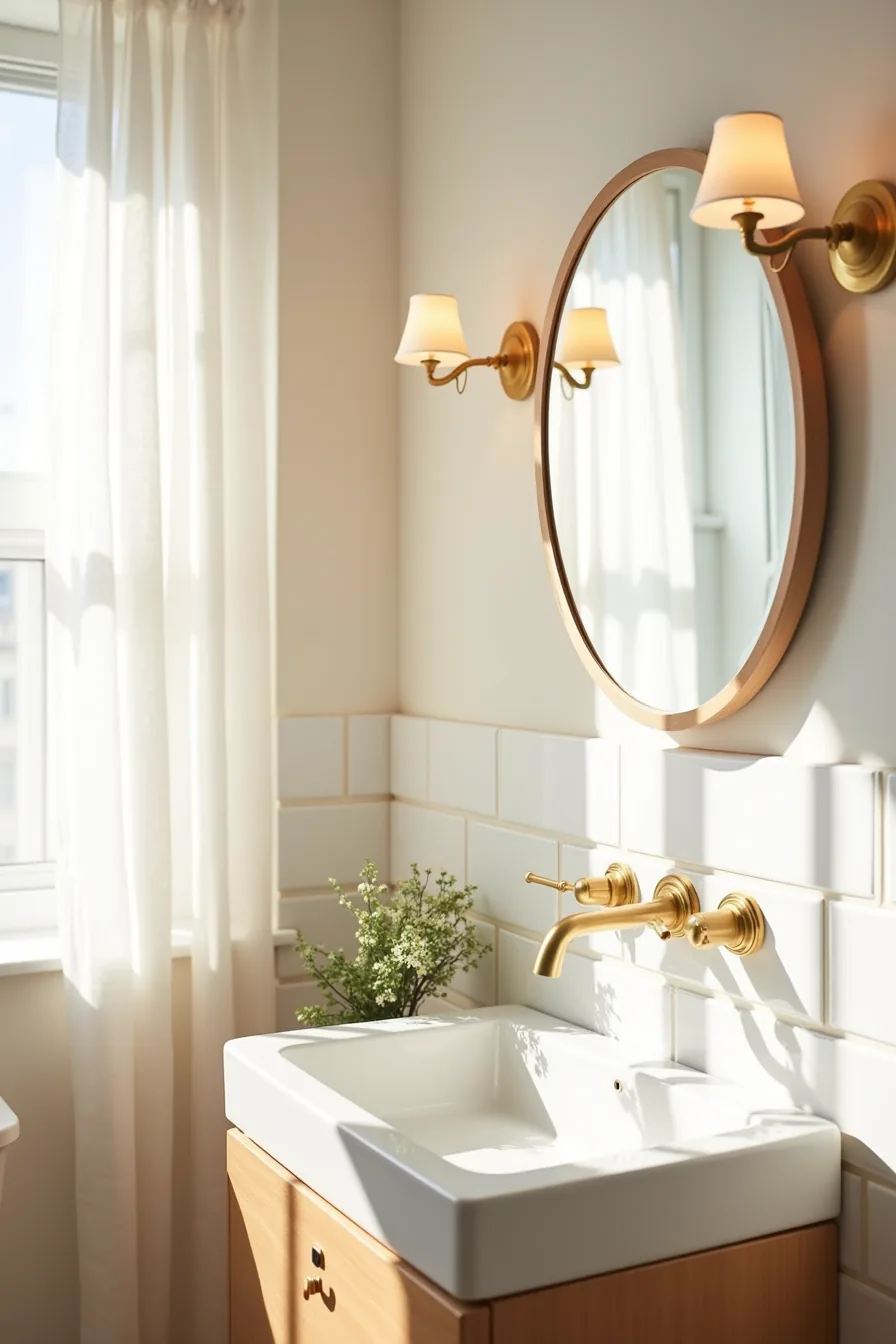
You don’t need a plumber or a security deposit sacrifice to test brushed gold. An adhesive towel bar rated for 8–10 pounds will hold bath towels when mounted on clean, dry subway tile, just rub the strip with rubbing alcohol beforehand and press firmly for 30 seconds. Pair it with removable brushed gold hooks (the kind with 3M strips that peel off without residue) and a portable mirror that leans on the sink backsplash rather than screwing into the wall.
This exact trio, adhesive bar, removable hooks, portable mirror, transforms a standard white rental bathroom in under 20 minutes.
The strategy works because none of it requires altering the landlord’s fixtures. Adhesive hardware fails on textured, painted, or wallpaper surfaces, so confirm your bathroom wall is smooth tile before committing. Budget reality: expect to pay $12–25 for a quality adhesive bar and $8–15 per hook; the portable mirror runs $20–40.
When you move out, heat the adhesive with a hairdryer for 60 seconds, and the strips lift cleanly, leaving only a faint residue that wipes off with dish soap. This route suits renters, dorm dwellers, or anyone still deciding whether full brushed gold commitment fits their daily routine.
Long-Term Investment: Full Brushed Gold Fixture Systems
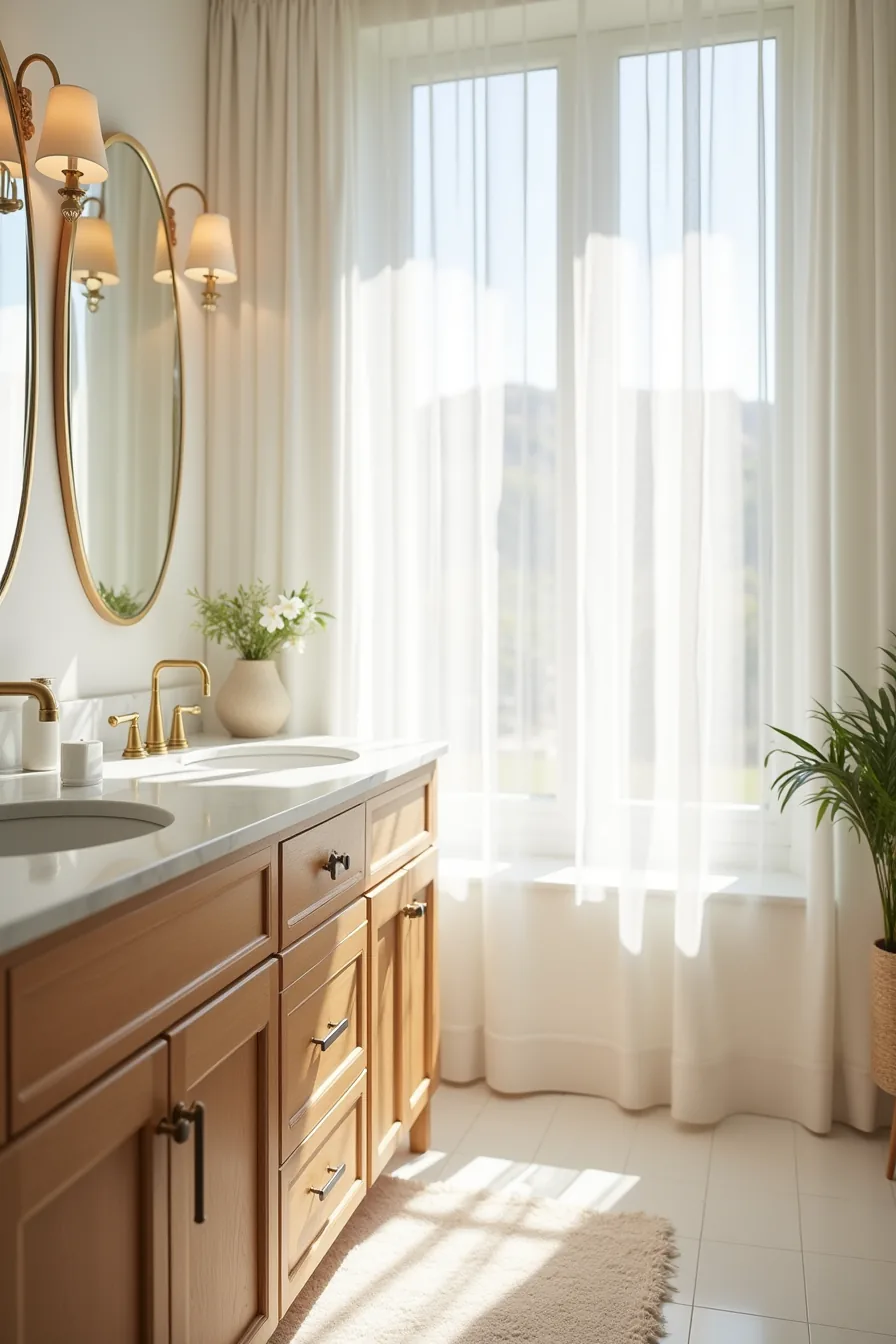
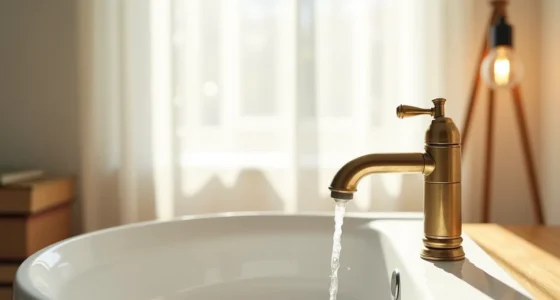
When you’re ready to commit for a decade or more, a coordinated system, faucet, towel bars, robe hook, drawer pulls, and cabinet knobs, creates a visual through-line that mixed metals can’t replicate. The light oak cabinetry and marble backsplash in this setup give the brushed gold an anchor: the warm wood prevents the metal from reading too yellow, while the cool stone keeps the overall palette from tipping into brass-heavy territory. Every piece from the same manufacturer guarantees the finish matches batch to batch, which matters because brushed gold varies slightly between brands.
Expect to pay $250–400 for a quality brushed gold faucet, $60–120 per towel bar, and $40–80 per robe hook; the full hardware set for a standard double-vanity runs $150–300. Look for PVD (physical vapor deposition) finishes rather than electroplated ones, PVD resists tarnishing from cleaning chemicals and humidity for 10–15 years with normal use. This route suits homeowners who plan to stay put for at least five years and want a cohesive, resale-friendly aesthetic.
Coordinate the finish across every visible metal item, including the shower head and drain cover, or the installed system will feel incomplete.
Your 10-Minute Decision Checklist
Before you buy, tick through these five points: (1) Does the finish match your existing metals within a 3-foot radius? Mixing brushed gold with chrome or nickel works only if separated by at least 6 feet. (2) Will the fixture clear your vanity depth and mirror swing? Measure twice. (3) Is the base material solid brass or zinc?
Solid brass tolerates daily moisture; zinc needs a quality PVD coating. (4) Can you reach the shut-off valve for maintenance? (5) Does your landlord allow permanent swaps? If not, stick with the showerhead and towel bar route.
Start now: photograph your bathroom, note your faucet hole spacing, and order one small accessory, a towel ring or cabinet knob, to test the finish against your lighting before committing to larger pieces.
Frequently Asked Questions
Is brushed gold the same as matte gold, and do they look different in bathrooms?
No. Brushed gold has a subtle linear texture with low sheen, while matte gold is completely flat with zero reflection. In bathrooms, brushed gold reads warmer and slightly metallic; matte gold looks closer to painted hardware.
How do I prevent brushed gold fixtures from tarnishing or showing water spots?
Wipe fixtures dry after each use with a microfiber cloth. Apply a clear lacquer or wax coating annually if your finish lacks factory protection. Avoid abrasive cleaners, use mild soap and water only, then buff gently.
Can I mix brushed gold with chrome or stainless steel in the same bathroom?
Yes, but limit to two finishes total. Use brushed gold on visible fixtures like faucets and towel bars, chrome or steel on showerheads and drains. Keep them separated visually, gold on one wall, silver on another, to avoid clashing.
What wall color works best behind brushed gold bathroom fixtures?
Warm whites, soft greiges, or deep forest greens make brushed gold pop without competing. Avoid cool grays or stark white, which dull the warmth. For drama, charcoal or navy walls create a rich, jewel-box contrast with gold tones