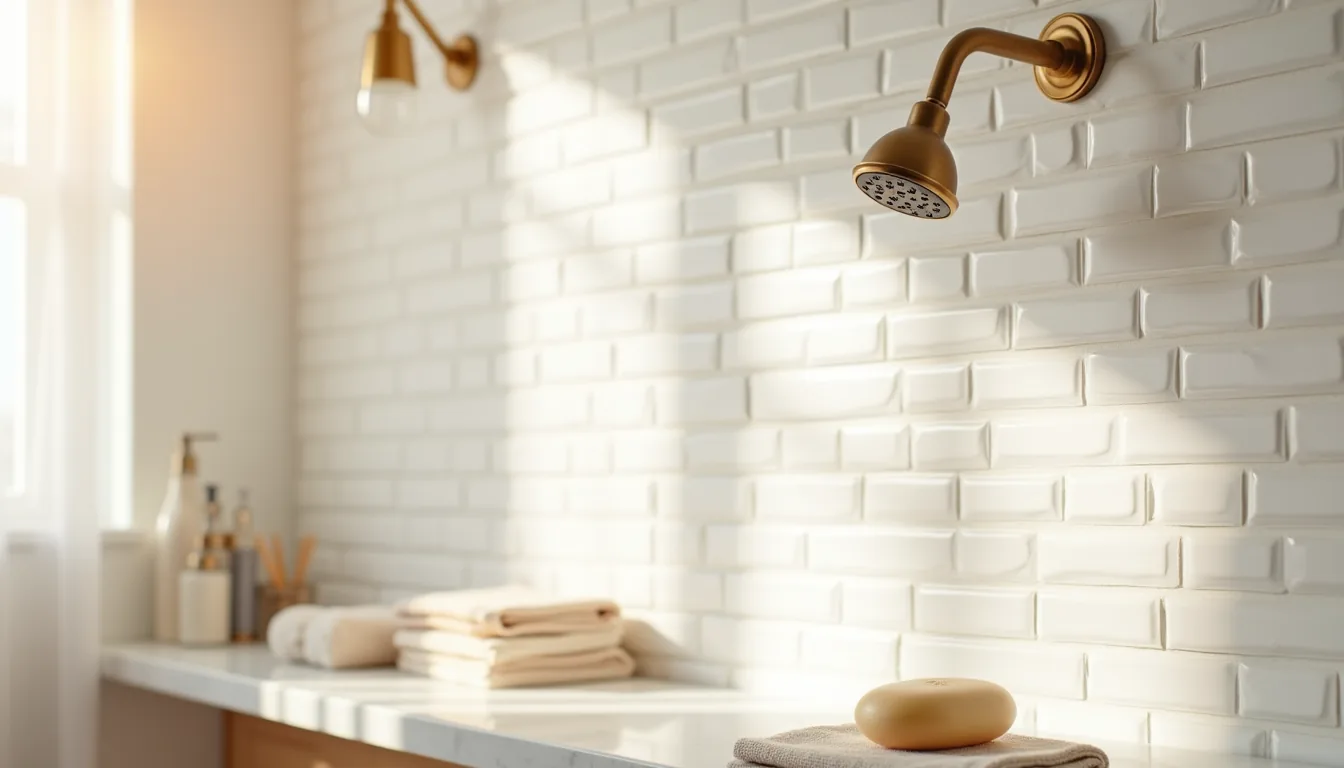
Brass shower fixtures are a practical choice for upgrading your bathroom, but the range of styles, from polished unlacquered to aged oil-rubbed, demands that you first decide whether you want a warm statement piece or a subtle accent. That single decision determines everything downstream: finish longevity, cleaning effort, and how the fixtures interact with your tile, lighting, and vanity hardware. The six approaches that follow break down each finish’s real-world trade-offs, with placement guidance for small, medium, and large layouts so you can match the look to your actual space and budget.
Key takeaways
- Polished brass pairs best with marble and white tile, but it demands regular wiping to prevent water spots, so reserve it for low-humidity bathrooms.
- Brushed brass on dark tile hides fingerprints and water marks far better, making it the practical choice for busy family bathrooms.
- Exposed brass pipes cost roughly half as much as concealed plumbing and suit industrial or rustic styles, but they require easy access for cleaning and leak checks.
- Solid brass fixtures last 20-30 years with proper care, while plated options fade within 5-10 years, choose solid if you plan to stay put for over a decade.
Polished Brass with Marble: The Classic Luxury Route
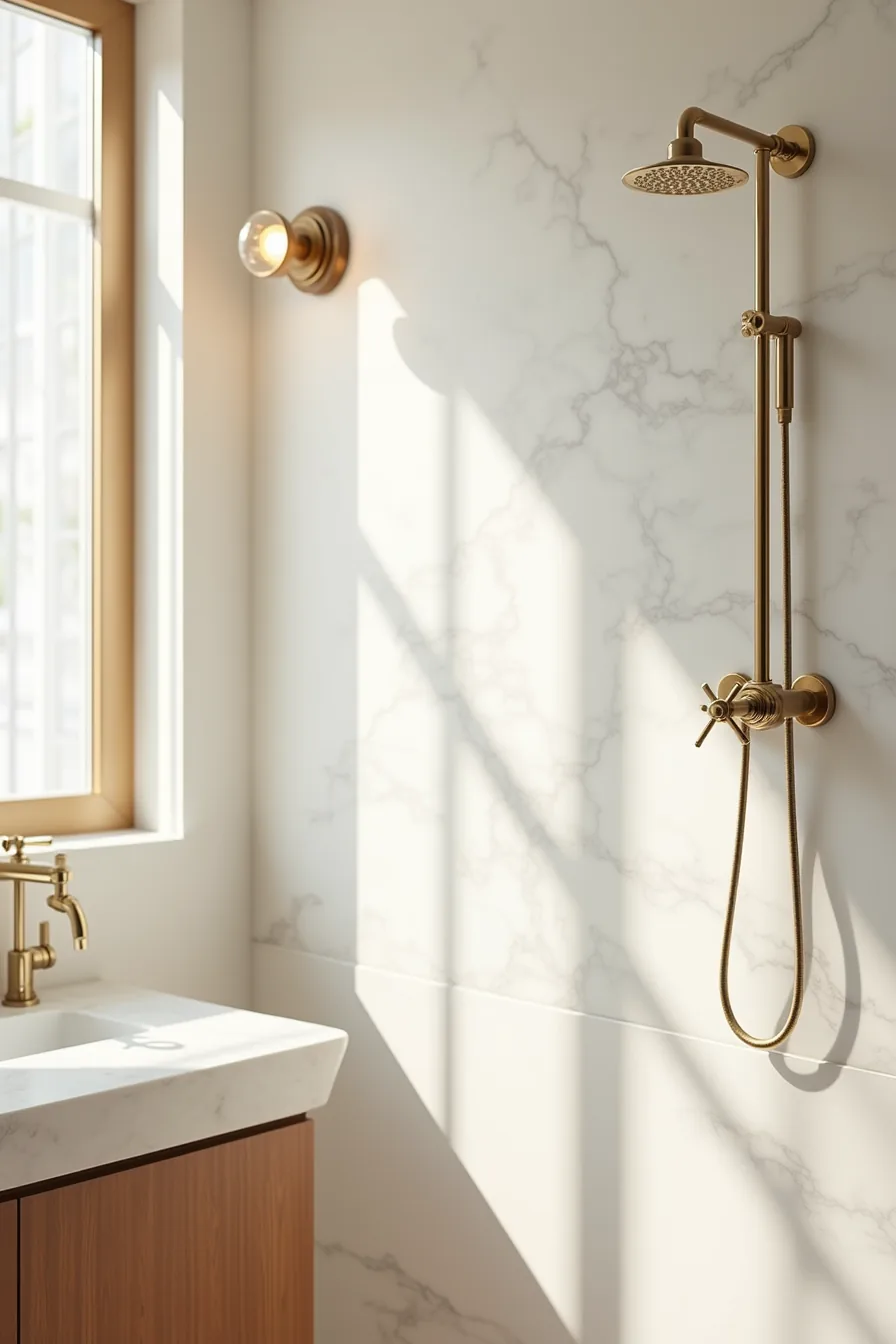
Polished brass with marble delivers the most traditional interpretation of brass shower fixtures, and it works because the two materials share a similar visual temperature, both feel warm, luminous, and inherently expensive. The polished brass wall-mounted faucet and handheld showerhead catch light in tight, bright spots, while the large-format honed marble wall panel softens that glare with its matte, low-reflectivity surface. The contrast is what sells the look: high-shine metal against a stone that refuses to compete.
This combination suits medium-to-large bathrooms where you can stand back and appreciate the pairing. In a small space, the polished finish will amplify every light source, which can feel overwhelming, opt for a single brass fixture and keep the marble to one accent wall instead. The marble-topped vanity to the left and the chrome mirror frame edge introduce a second metallic tone; polished brass and chrome can coexist if you separate them visually, but commit to one dominant finish for at least 70 percent of the hardware.
Maintenance is the real cost here. Honed marble etches with acidic soaps and requires sealing every 12 to 18 months. Polished brass shows water spots within one or two showers unless you wipe it dry, and it develops a patina over time that some love and others hate.
Budget for a squeegee in the shower and a microfiber cloth on the vanity, this look demands ten minutes of upkeep per week, and the brass will cost roughly 50 to 100 percent more than a comparable chrome setup. The payoff is a bathroom that reads as intentionally curated rather than assembled.
Brushed Brass on Dark Tile: Modern and Low-Maintenance
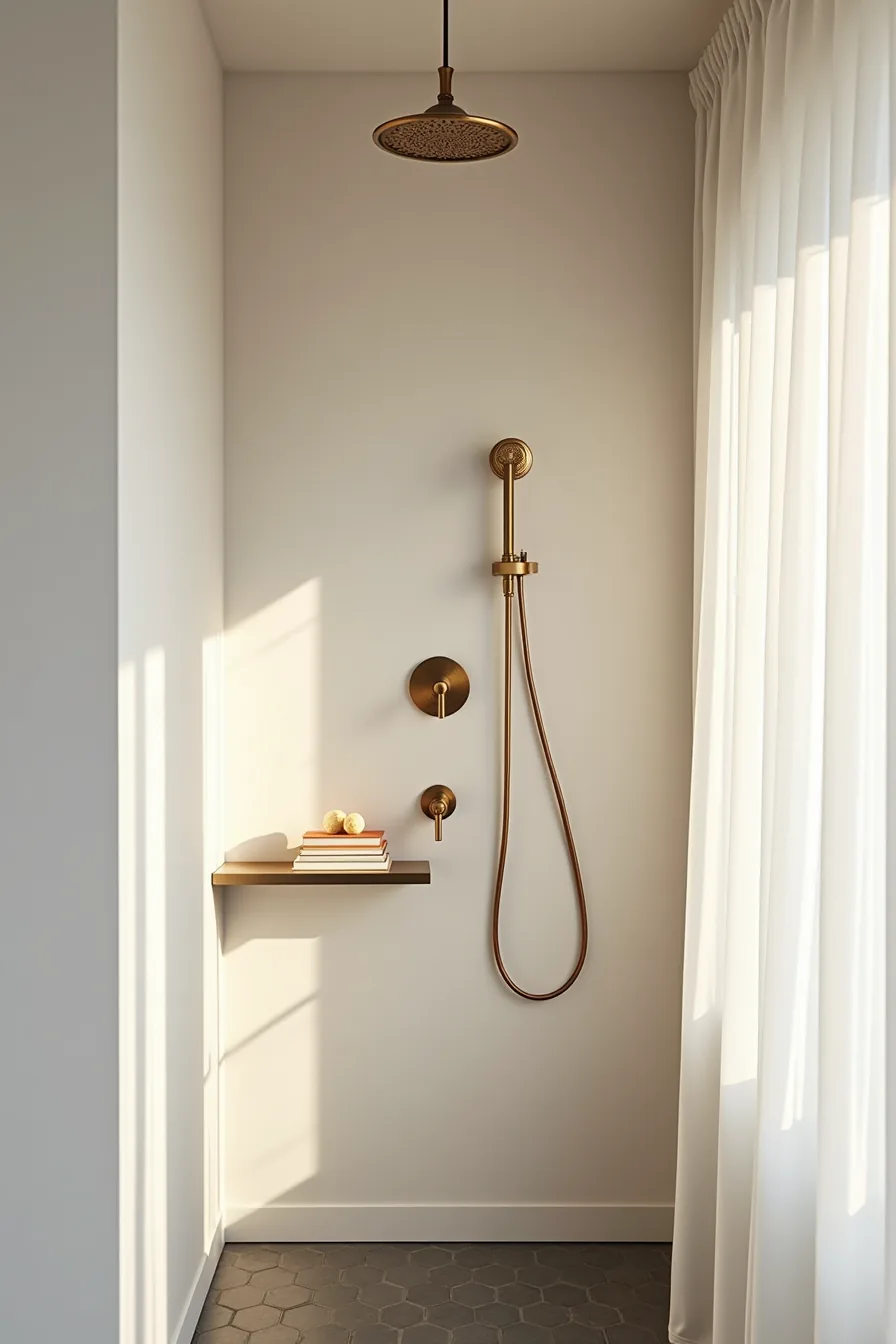
Brushed brass with dark tile flips the script on the polished approach, the matte, slightly textured finish of the metal absorbs rather than reflects light, so it won’t compete with the deep charcoal backdrop. The matte charcoal hexagonal tile does the heavy lifting for visual interest, while the brushed brass rainfall showerhead and valve trim act as quiet anchors. That stainless steel corner shelf and the concrete floor below introduce cooler, industrial tones that keep the warm brass from tipping into traditional territory.
This pairing suits contemporary bathrooms and anyone who wants brass without the weekly polishing ritual. Brushed brass’s surface hides water spots between cleanings, and the dark tile masks soap scum, expect to wipe down just once a week instead of after every shower. Mount the showerhead at 80–84 inches and the valve trim at hip height for ergonomic reach and balanced sightlines against a full wall of tile.
In smaller spaces, the dark tile shrinks the room visually, so reserve this combination for medium or large bathrooms or limit the dark tile to one wet-wall.
Exposed Brass Pipes Versus Concealed Plumbing
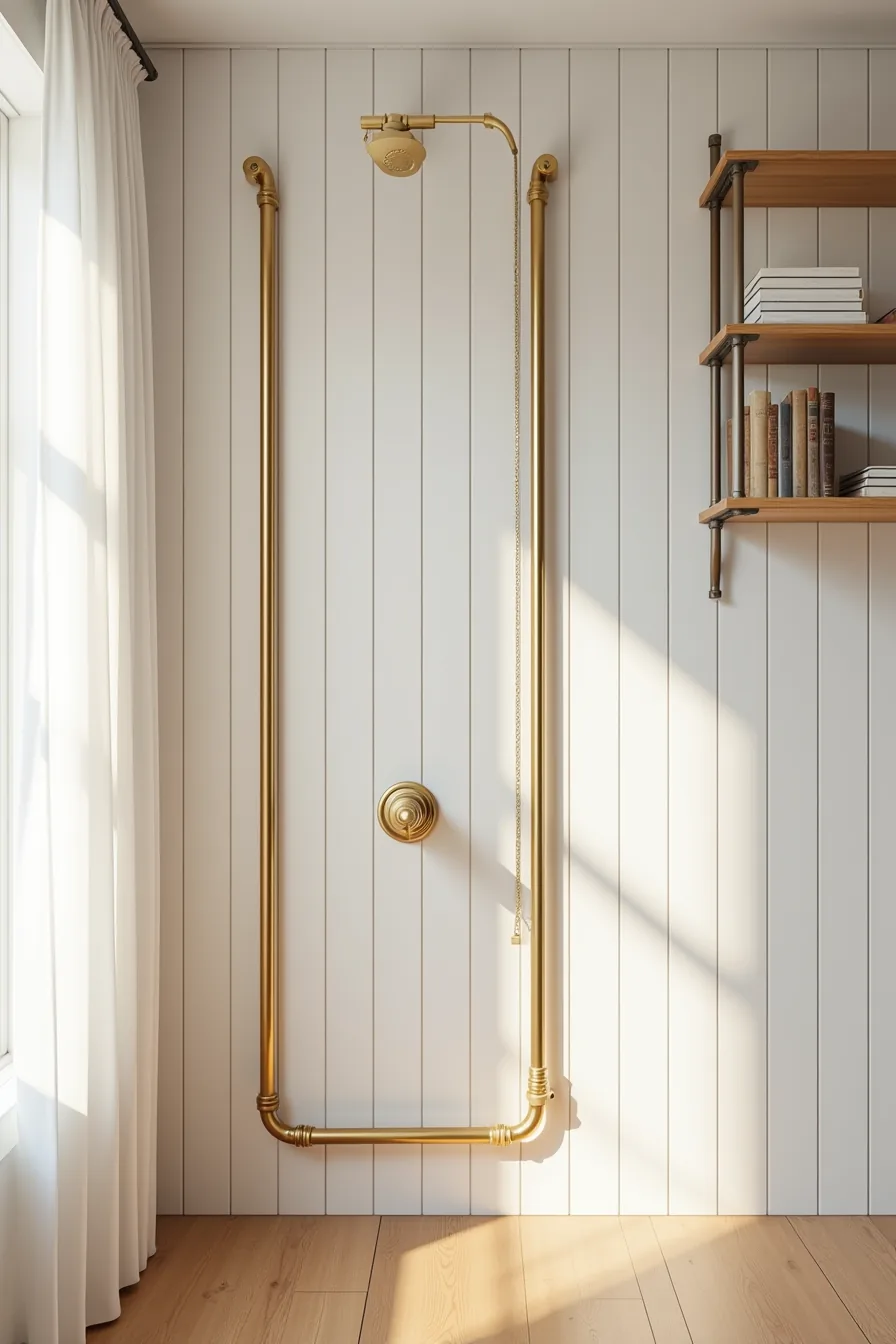
Exposed polished brass supply pipes running floor-to-ceiling against white shiplap deliver a deliberately engineered look that concealed systems simply can’t replicate. The vertical runs with brass elbows and a wall-mounted brass shower valve become architectural features, not just functional hardware. This approach suits industrial-style bathrooms, loft conversions, and anyone comfortable with their plumbing becoming the focal point.
The practical trade-offs are substantial. Exposed pipework requires access to a floor or ceiling void for supply connections, and you’ll need wall thickness to accommodate the drop-ear elbows securing the pipes. Retrofitting exposed pipes into an existing bathroom is easier than chasing walls for concealed lines, expect a two-to-three-day job versus a full re-tile for in-wall work.
Concealed systems offer cleaner sightlines and easier cleaning around the valve, but they demand professional installation and leave you with zero access once the tile goes up. Choose exposed for character and serviceability, concealed for minimalism and maintenance ease.
Brass Shower Fixtures for a Boutique-Hotel Feel
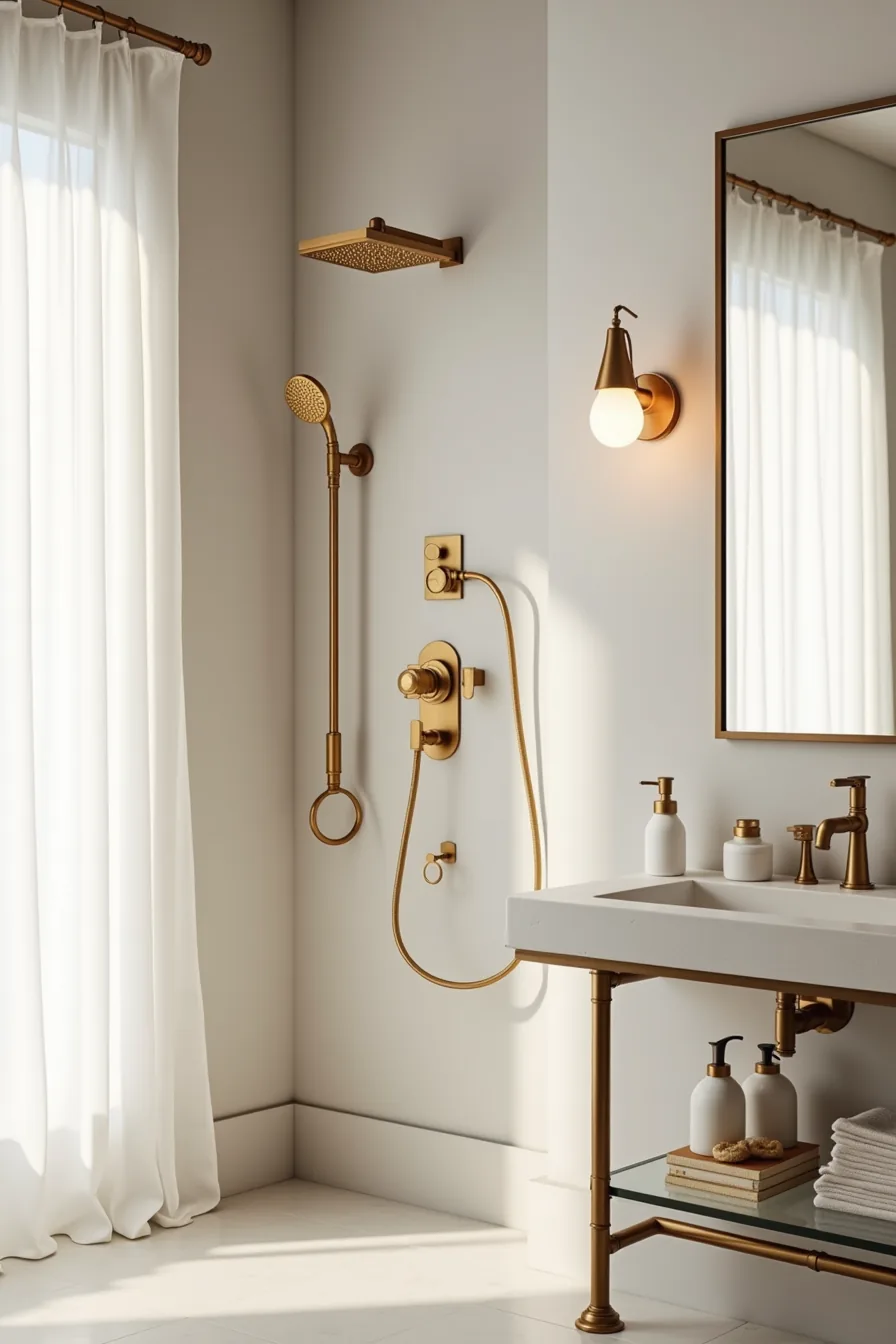
The layered setup of a brass rainfall showerhead overhead, a separate brass hand-held wand on a slide bar, and two brass body jets set at shoulder height on soft grey tile creates the full-service spa effect hotels charge a premium for. You get three distinct water experiences in one shower, which suits anyone who treats their morning routine as a ritual rather than a chore. The brass-framed mirror and brass-edged glass shelf holding white ceramic dispensers extend the metal’s presence beyond the wet zone, tying the whole room together without making the fixtures feel like an afterthought.
Position the rainfall head dead-center above where you stand, typically 20 to 30 inches from the wall, and mount the body jets at 42 to 48 inches from the floor for chest-level coverage. The hand-held wand should sit opposite the rainfall head to serve as a secondary rinse station. This arrangement works in medium to large showers, roughly 48 by 36 inches or larger; anything smaller and the body jets crowd you.
Warm recessed lighting at 2700K to 3000K keeps the brass from looking brassy and instead reads as soft gold, which is the single most important lighting choice for this finish.
Budget-Friendly Brass: Renter and Quick-Update Options
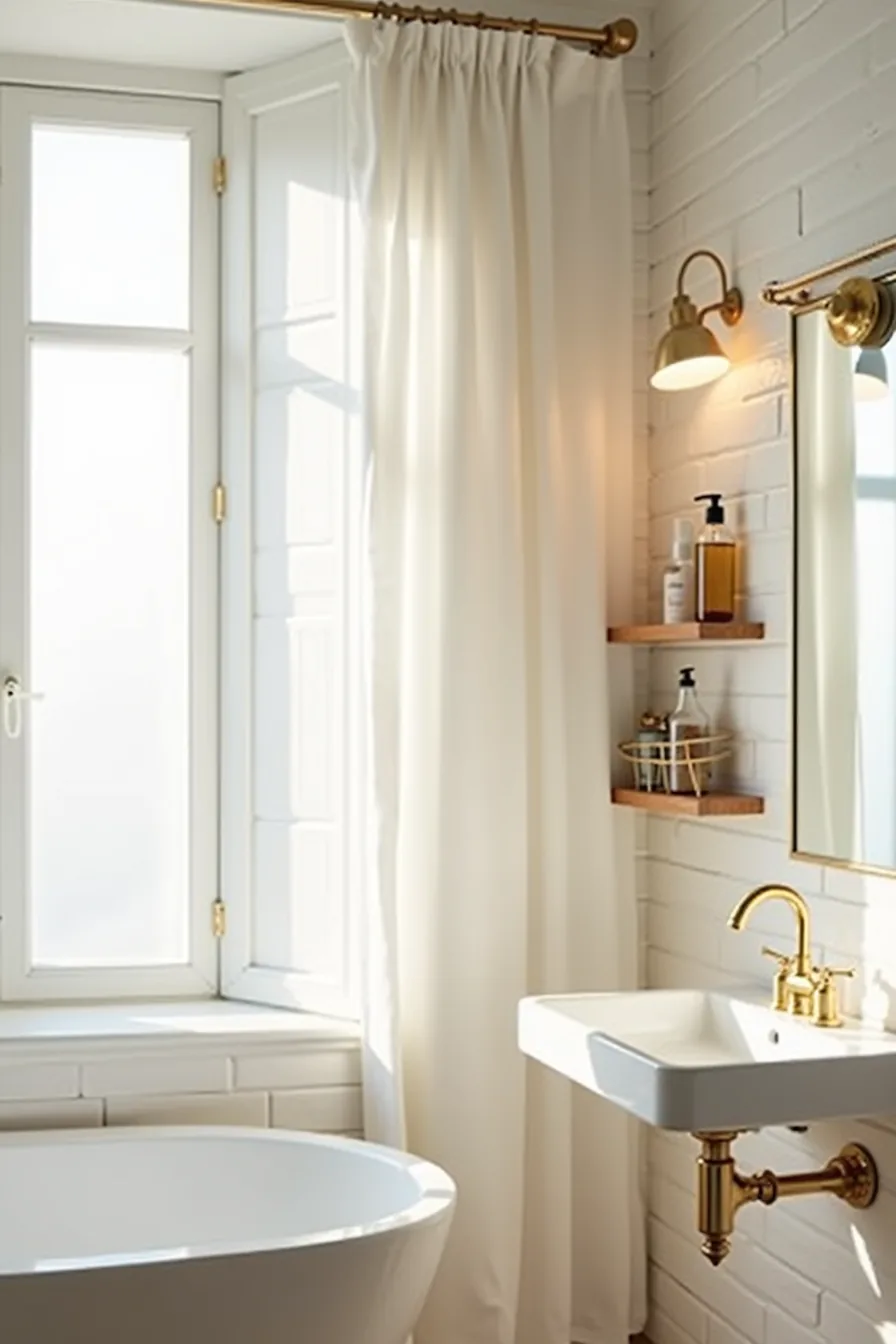
You don’t need a plumber or a security deposit at risk to get the brass look. An adhesive-backed brass showerhead mount presses onto existing tile and holds your current fixture securely, with most rated for showers up to 8-10 pounds, well within the weight of a standard chrome head. Pair it with a tension-rod brass towel bar that requires zero drilling and an adhesive brass corner caddy for your bottles, and the entire wet wall transforms for under $150 in most cases.
This route suits renters, temporary spaces, or anyone testing whether brass fits their lifestyle before committing to permanent plumbing. The white subway tile keeps the setup visually grounded, so the brass accents pop without competing against busy patterns. Expect to replace adhesive strips every 12 to 18 months as humidity degrades the bond; clean them with a damp cloth only, since abrasive sprays can weaken the adhesive.
When you move, everything peels off with a hairdryer and some dental floss, leaving zero trace.
Long-Term Investment: Solid Brass Selection and Care
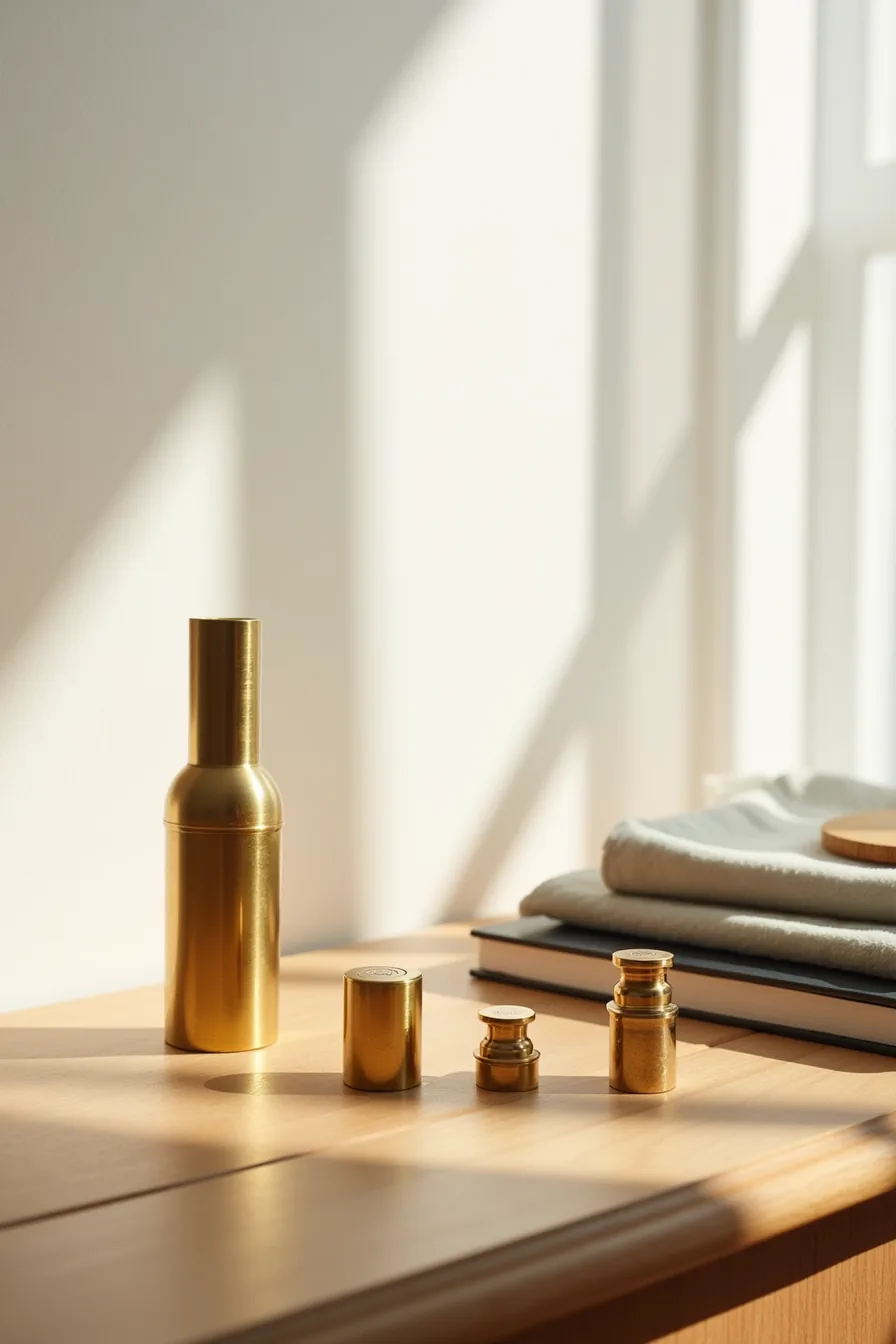
When you’re ready to commit, solid brass valve bodies and fixtures typically run $200–$600 per piece, compared to $50–$150 for plated alternatives. The genuine article feels substantial in hand, a solid brass showerhead weighs roughly three to four times more than its chrome-plated zinc counterpart, and the threads on the valve body should be cleanly machined with no rough edges. Look for “solid brass” stamped on the box rather than “brass finish” or “brass tone,” which indicate plating over cheaper metals.
Polished brass develops a warm honeyed patina over two to five years; brushed brass stays closer to its original tone but still shifts subtly. You can accelerate or slow this process deliberately. A monthly wipe with a microfiber cloth and mild soap maintains the finish, while skipping the wipe for a season lets the patina deepen naturally.
Avoid acidic cleaners, they strip lacquer coatings and cause splotchy uneven aging. Seasonal maintenance means checking set screws and O-rings twice a year; replacing a $3 rubber gasket proactively beats a $200 wall repair when a fitting fails.
Your decision checklist
Before you order anything, confirm three things: your valve type (pressure-balance vs. Thermostatic), your rough-in depth, and your finish compatibility with your water chemistry. Hard water above 7 grains per gallon will dull unlacquered brass within months, choose PVD-coated or clear-lacquered finishes instead.
Match the fixture scale to your shower size: 8-inch rain heads suit walk-in showers over 48 inches wide; smaller spaces need handheld or 6-inch fixed heads. Set your budget first, quality brass runs $150–$500 per fixture set.
Start by measuring your existing valve rough-in and snapping a photo of your current trim plate. That single step determines every compatible option.
Frequently Asked Questions
Will polished brass fixtures tarnish in a steamy bathroom?
Yes, polished brass can tarnish over time, especially with constant moisture and soap residue. You’ll need to wipe fixtures dry after showers and polish them monthly with a brass-specific cleaner to maintain the shine.
Can I install brass shower fixtures in a rental without damaging walls?
Use a renter-friendly route: swap out the showerhead and handheld unit only, not the wall-mounted valve. These typically thread onto existing pipes with a wrench, leaving no permanent marks. Always keep the original parts for reinstallation.
What’s the difference between brushed and brushed brass in terms of upkeep?
Brushed brass has a matte, satin finish that hides water spots and fingerprints far better than polished brass. Polished brass requires frequent drying and polishing to avoid streaks and tarnish; brushed brass needs only occasional wiping with a soft cloth.
Do brass fixtures work in small bathrooms or do they look too heavy?
Brass works in small bathrooms if you keep the scale compact. Choose a slim showerhead and a single-handle valve, and pair it with light-colored tiles to avoid a heavy feel. Avoid oversized rain heads or bulky thermostatic valves in tight spaces.