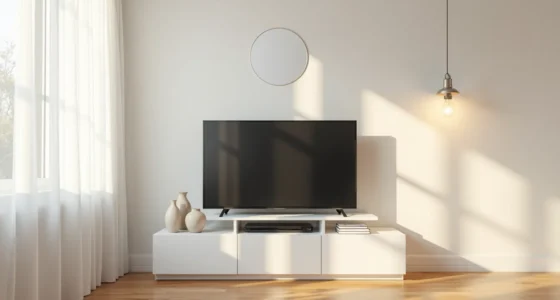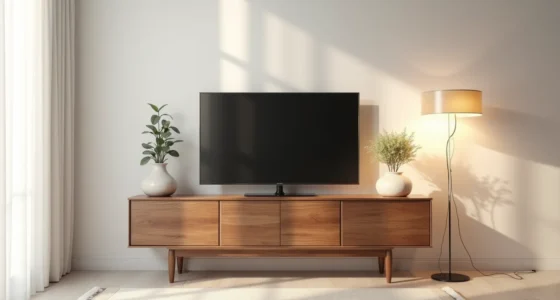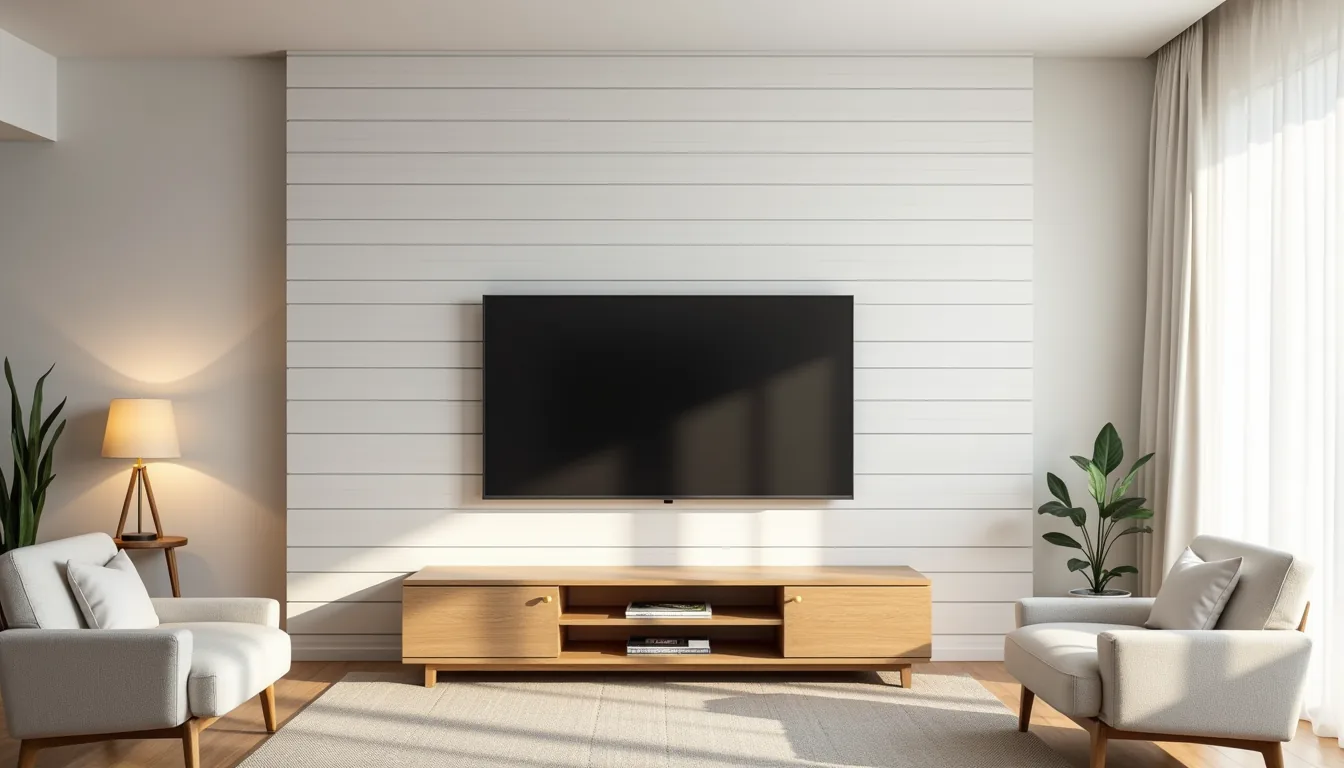

A TV mounted on a 10-foot wall can look lost, dwarfed by empty space above and around it. The fix isn’t a bigger screen, it’s a deliberate composition that treats the entire vertical plane as your canvas. You’ve six proven strategies, ranging from budget-friendly gallery walls to permanent architectural built-ins.
Each solves the proportion problem differently, and your choice depends on your ceiling height, room size, and whether you rent or own.
Key takeaways
- Vertical paneling hides the empty zone above a TV by drawing the eye floor-to-ceiling, but it only works if you match the panel width to your wall proportion (most rooms suit 6–10 inch slats).
- A floating console with 18–24 inches of negative space above it keeps a high ceiling feeling open, yet you must anchor the console at 60–65 inches from the floor to avoid a floating, disconnected look.
- Tall flanking shelving at 70–80% of your wall height visually brackets the screen and shrinks the void, but it requires at least 12 inches of clearance on each side to avoid crowding the TV.
- Mounting the TV higher (center at 60–70 inches) only works if you pair it with a low architectural element like a linear fireplace or bench below, or you’ll strain your neck during daily viewing.
Floor-to-Ceiling Vertical Paneling to Ground the Space
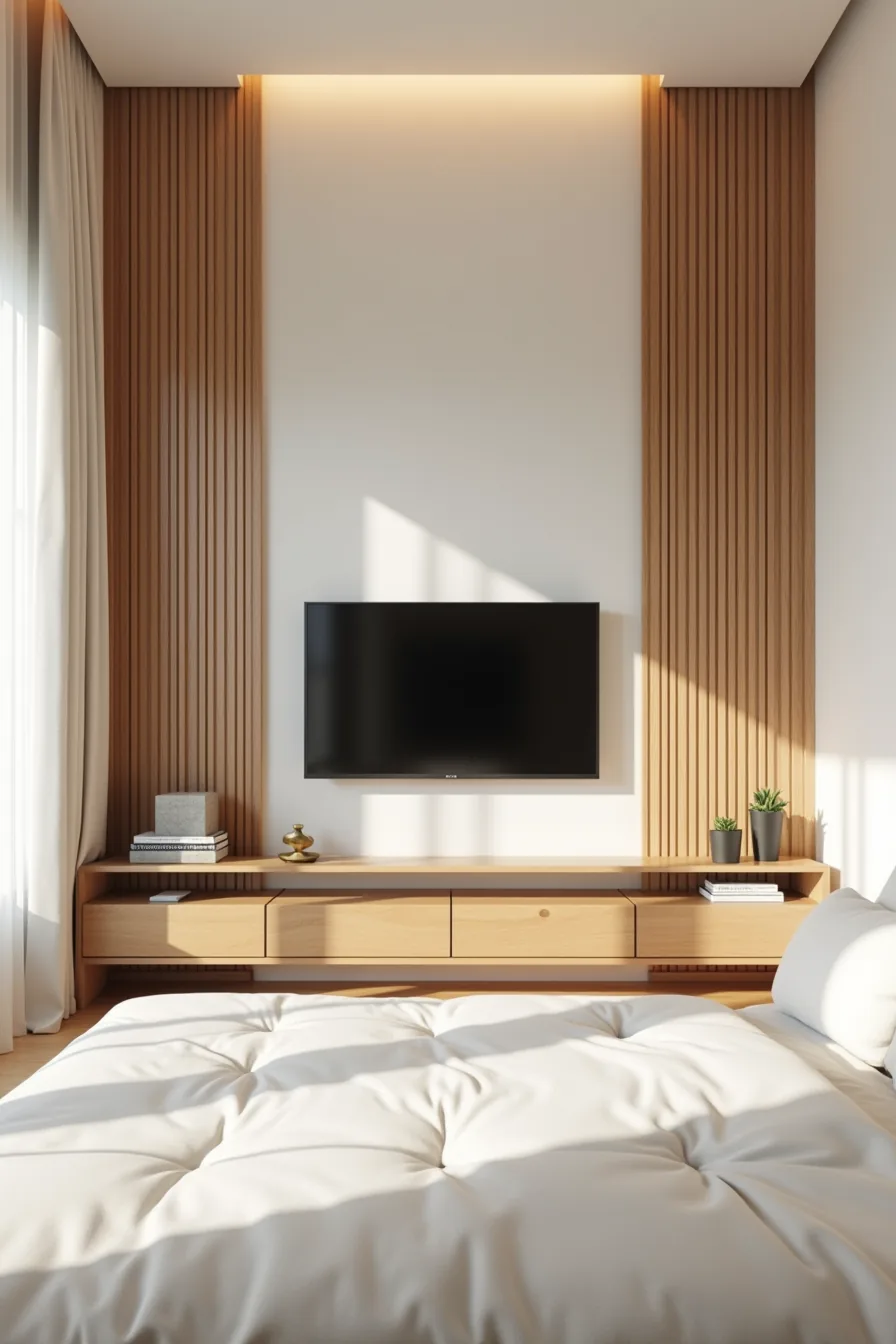
Vertical paneling is the most reliable fix for a TV that looks stranded on a tall wall. By running wood slats or shiplap from the floor to the ceiling, you create a continuous vertical line that pulls the eye downward, anchoring the screen to the room’s lower half. This works because the repetitive texture gives the wall a defined scale, so the empty space above the TV reads as intentional breathing room rather than neglect.
In a typical installation, cover the entire wall behind the TV with slats spaced 2–4 inches apart, leaving a 1–2 inch gap between the paneling and the ceiling to avoid a cramped feel. The setup suits bedrooms and living rooms where you want warmth without adding furniture bulk, the low platform bed frame in the example leaves the floor clear, letting the paneling do all the work. Plan for 6–10 hours of installation time if you’re DIYing, and budget $300–$700 for materials on a 10-foot wall.
It’s a permanent solution, so commit to the look before you cut.
Floating Media Console with Negative Space Above
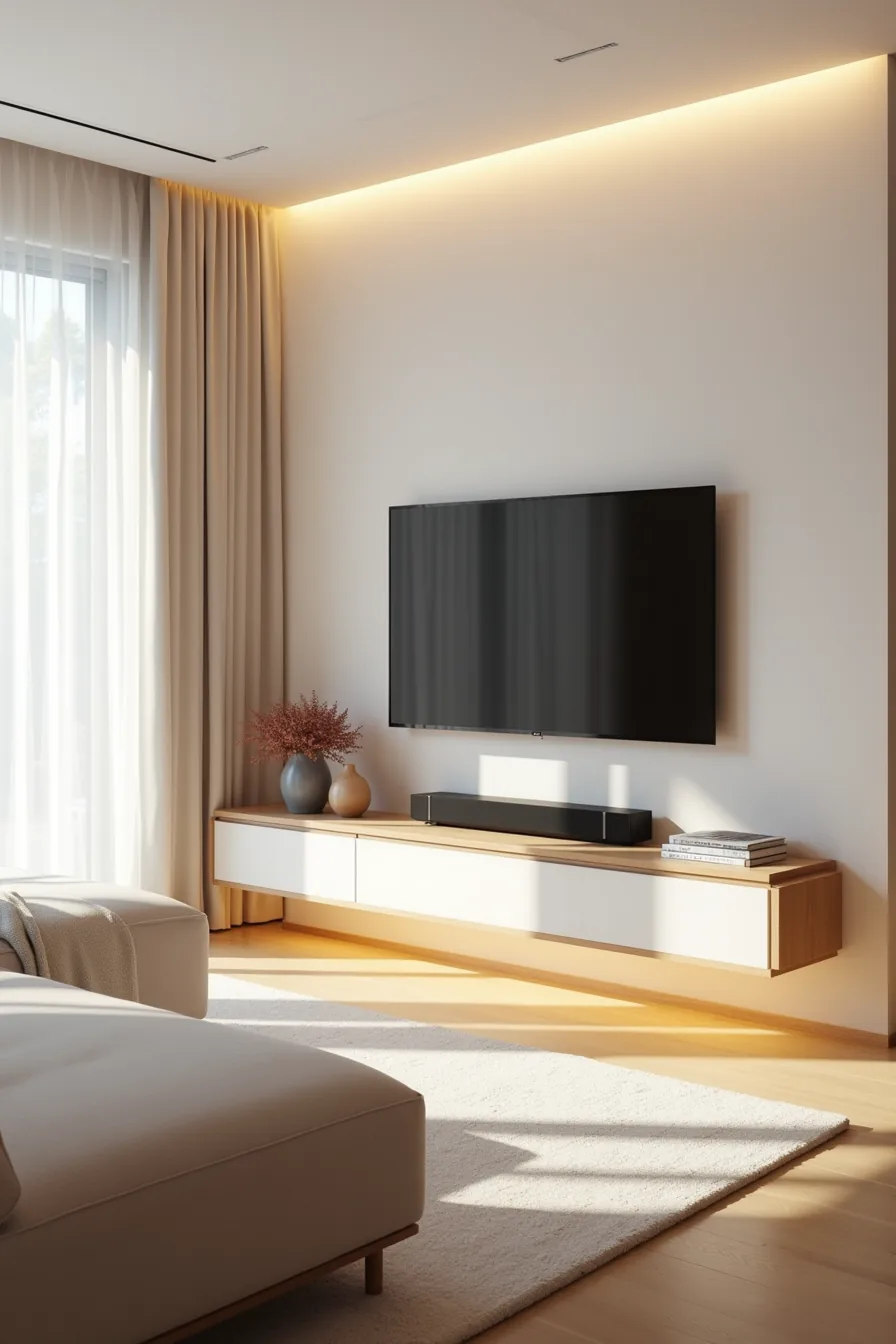
Mounting the TV at eye level, typically 42–48 inches from floor to screen center, while leaving the upper wall bare is the most forgiving option for tall ceilings. The floating console grounds the screen visually, while the empty space above prevents the composition from feeling top-heavy. In this setup, a sleek floating console sits directly below the TV, holding a sound bar and a few decorative objects, with a sectional sofa anchored across from it.
You want the console to be roughly two-thirds the width of the TV for proper proportion. The negative space above works best when it stays completely empty, resist the urge to add art or shelves up high, as that splits the wall into competing zones. This approach suits renters since floating consoles require minimal wall damage and the TV mount is the only permanent fixture.
Expect to spend $200–$500 for a sturdy floating console and $150–$400 for installation if you don’t have a stud finder and level handy.
Accent Wall Behind the TV to Create Visual Weight
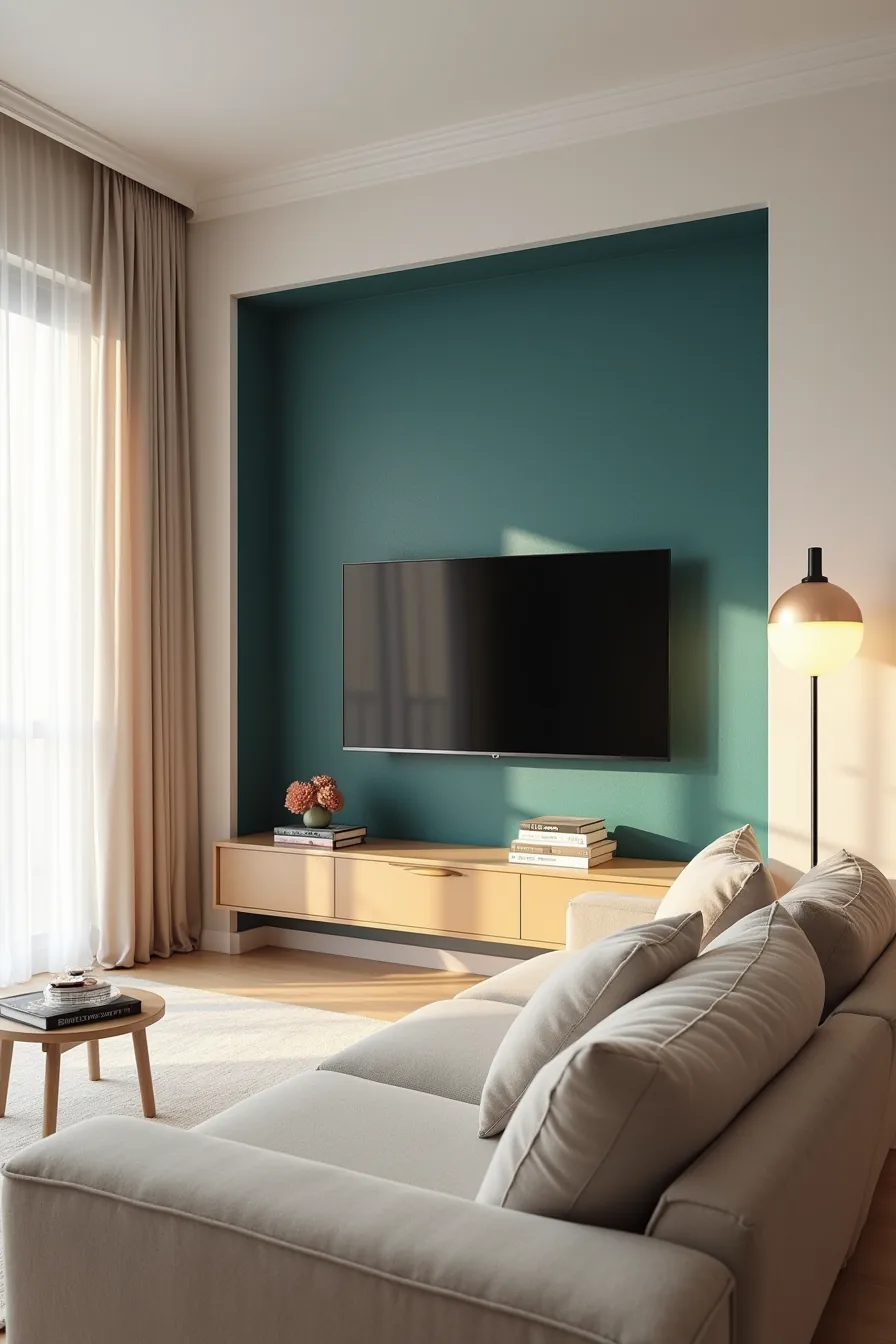
Painting or papering a defined vertical zone behind the screen does more than add color, it shrinks the perceived height of the wall. When you apply a deep teal textured wallpaper in a rectangle that extends from the floor to roughly 12–18 inches above the top of the TV, your eye reads that block as the wall’s horizon line. Everything outside it, the neutral plaster above and beside, recedes, which stops your gaze from traveling upward into dead space.
Texture matters here more than hue. Grasscloth or a subtle geometric pattern adds dimension that catches light differently throughout the day, preventing a large single-color field from feeling flat at various distances. Standard wallpaper rolls cover 56–60 square feet each; for a typical wall span, budget $80–$180 per roll plus $400–$800 for professional hanging (a fastening that peels off clean enough for most rentals with landlord approval).
The beige sofa and side table placed in the foreground echo neutral tones outside the accent zone, keeping the television as the only loud object. This technique suits those who want the TV wall finished without sacrificing the airy feel a tall ceiling provides, and it pairs well with a warm wood console or floor cushions, though you may consider adding a slim sound bar to ensure the lower half holds equal visual weight to the patterned upper block.
Tall Shelving Units Flanking the Screen
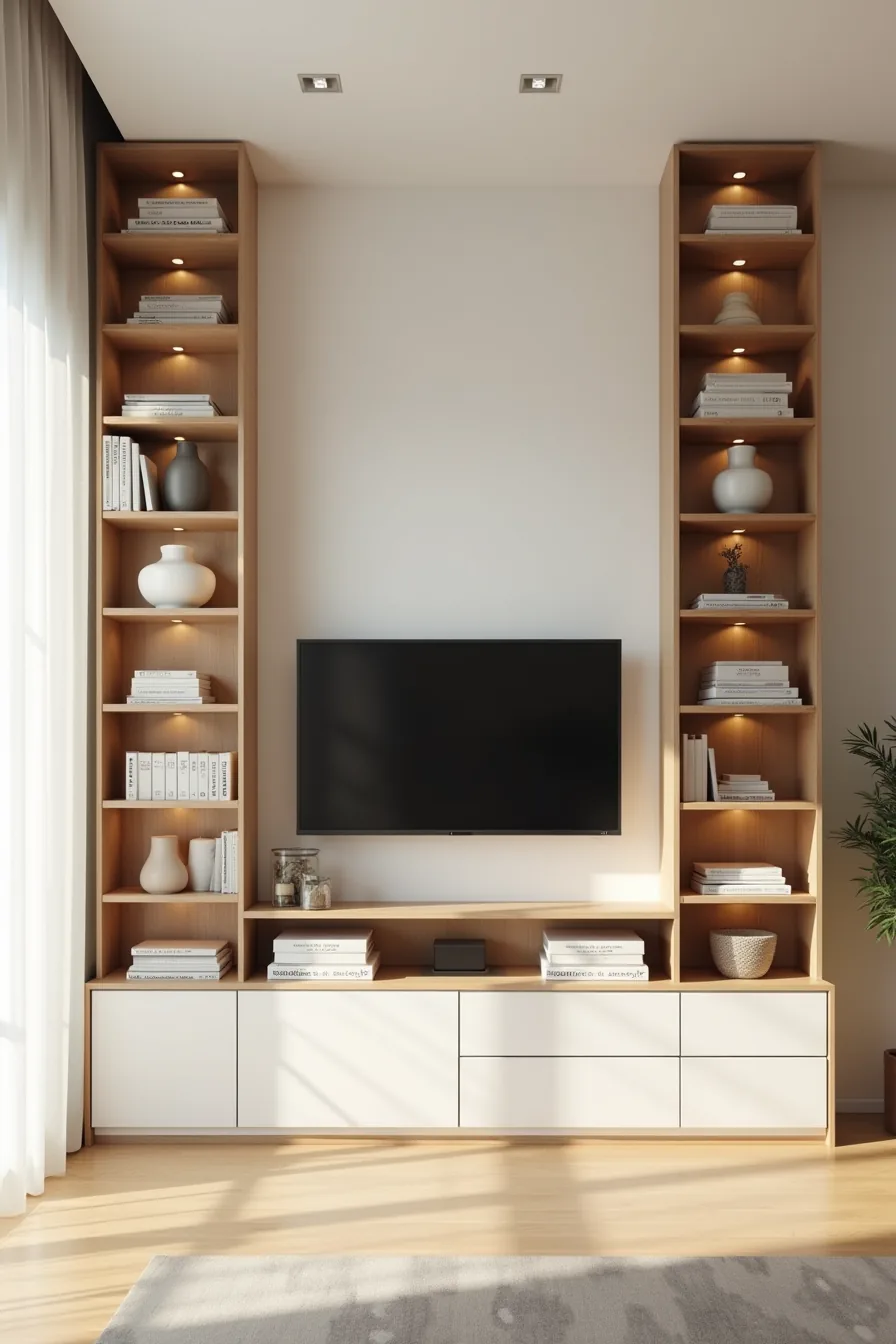
Built-in shelving that runs from floor to ceiling on both sides of the television turns dead vertical space into storage while anchoring the screen at a comfortable viewing height. In this setup, the custom units frame a centered TV mounted at mid-height, roughly 42–48 inches to the center of the screen, so the eye lands naturally on the action rather than drifting upward. The stacked books, ceramic vases, and decorative boxes fill the shelves with varied heights and textures, creating a balanced composition that makes the tall wall feel intentional instead of cavernous.
This approach works best in living rooms with at least 8–10 feet of available wall width, since each flanking unit typically needs 18–24 inches of depth for functional storage. Built-ins will run $150–$350 per linear foot installed; for a rent-friendlier route, use freestanding bookcases that reach within 12 inches of the ceiling and secure them to the wall with anti-tip brackets. Keep the lower two shelves for everyday items and reserve the top shelves for lighter decor, you’ll need a step stool to reach anything above eye level anyway.## Tall Shelving Units Flanking the Screen
Built-in shelving that runs from floor to ceiling on both sides of the television turns dead vertical space into storage while anchoring the screen at a comfortable viewing height. In this setup, the custom units frame a centered TV mounted at mid-height, roughly 42–48 inches to the center of the screen, so the eye lands naturally on the action rather than drifting upward. The stacked books, ceramic vases, and decorative boxes fill the shelves with varied heights and textures, creating a balanced composition that makes the tall wall feel intentional instead of cavernous.
This approach works best in living rooms with at least 8–10 feet of available wall width, since each flanking unit typically needs 18–24 inches of depth for functional storage. Built-ins will run $150–$350 per linear foot installed; for a rent-friendlier route, use freestanding bookcases that reach within 12 inches of the ceiling and secure them to the wall with anti-tip brackets. Keep the lower two shelves for everyday items and reserve the top shelves for lighter decor, you’ll need a step stool to reach anything above eye level anyway.
Gallery Wall Layout Extending Vertically
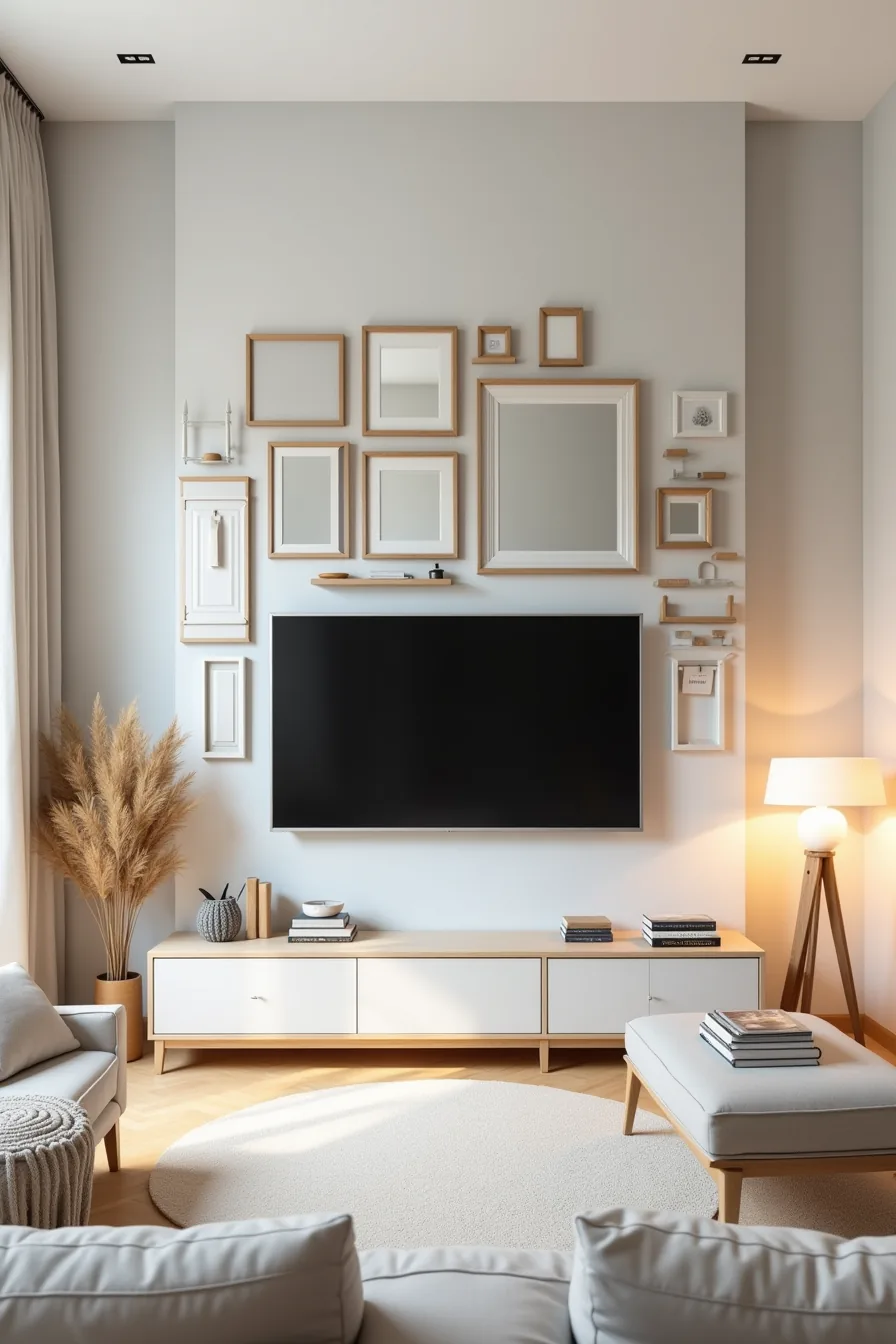
A vertical gallery wall treats the entire height of your wall as one continuous canvas, with the TV as the anchor point rather than the focal line. In this arrangement, framed art and mirrors of varying sizes cluster around a centered television, with the frames deliberately stretching from mid-wall to within 10–14 inches of the ceiling. The mix of reflective surfaces and matte prints breaks up the vertical expanse without drawing the eye to a single static point, your gaze travels naturally from the screen outward and upward.
This layout suits narrow walls where flanking shelving would feel cramped, and it works especially well in open-plan living areas with 10–12 foot ceilings. To reproduce it, gather 7–11 frames in a unified palette, black, white, and natural wood tones keep the composition cohesive without matching. Lay the arrangement out on the floor first: keep the TV at standard viewing height, then build the frame cluster outward and upward from there.
Expect to spend $120–$300 on frames and hanging hardware, and budget an afternoon for the layout and leveling work. For renters, use damage-free hanging strips rated for 10–16 pounds per frame instead of nails.
Mounting the TV Higher with Architectural Elements Below
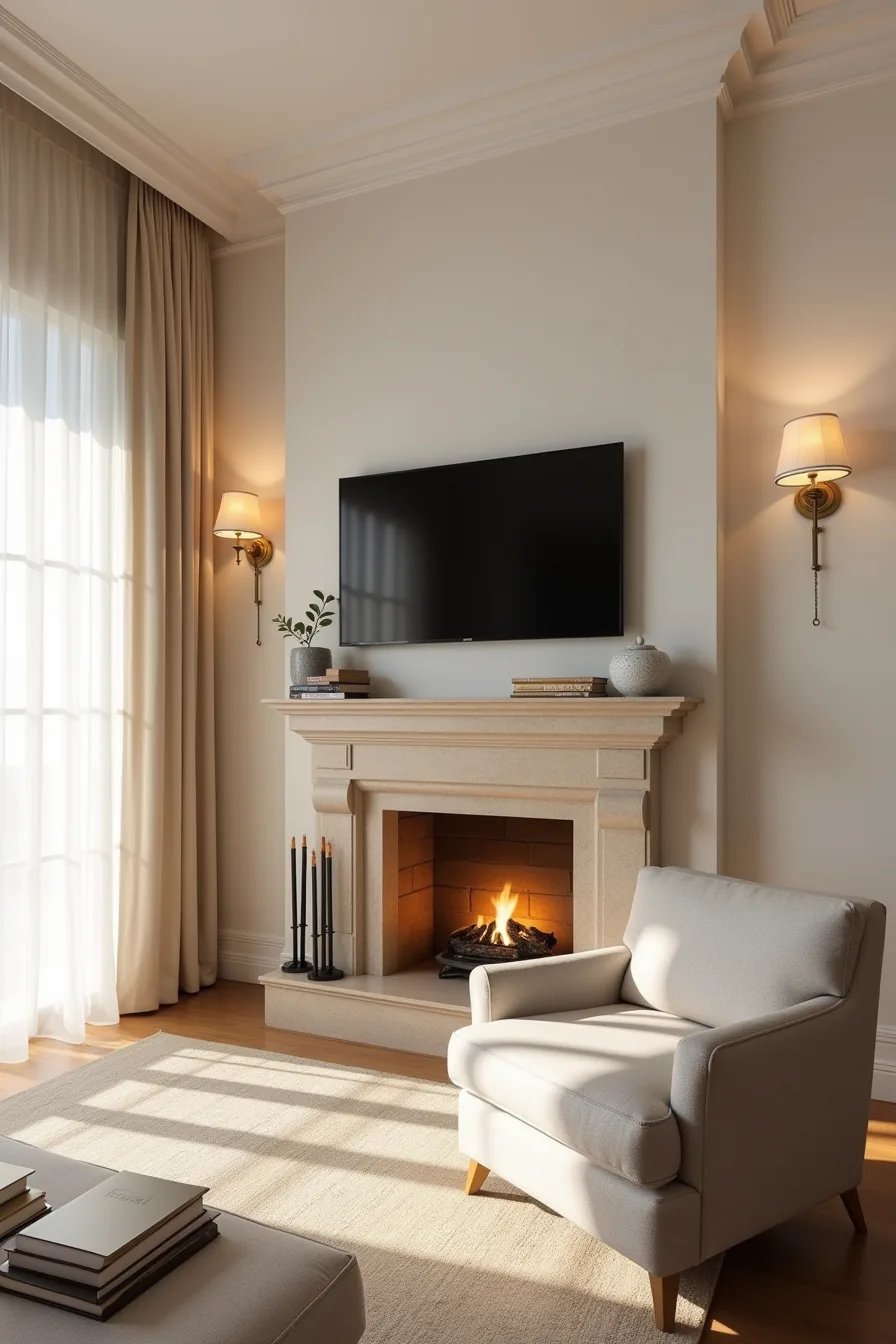
This arrangement inverts the standard approach: the screen sits in the upper third of the wall, typically with its center line 60–72 inches from the floor, while a built-in fireplace with a stone surround anchors the lower section directly beneath it. The mantel becomes a visual bridge, holding decorative objects that echo the scale of the TV above. That deliberate pairing, heavy, textured stone below and a slim floating panel above, creates what designers call high-ceiling balance, where no single element competes with the vertical emptiness for attention.
It suits formal living rooms or vaulted great rooms where you want a fireplace and television without stacking them in a cramped corner. The key trade-off is viewing comfort: you’ll look slightly upward from a standard armchair, so keep seating 8–12 feet back to reduce neck strain. Reproducing this look requires a structural wall to support the combined weight of a stone surround and a cantilevered TV mount, expect $1,500–$4,000 for materials and installation if you don’t have existing masonry.
For a lighter alternative, use plaster or large-format porcelain tiles that mimic stone at roughly half the cost, and pair them with an electric fireplace insert that needs no chimney.
Where to start
You already know your ceiling height and room proportions, so the next decision is mechanical: at what height will the screen sit, and how will the mounting system support it? Measure your seated eye level first, then choose one approach from the six above that fits your wall construction, budget, and whether you rent.
Pick the longest cable run you’ll realistically need before buying hardware. Then, tape a paper outline of the TV to the wall and live with it for 24 hours, adjust the center height until your neck stays neutral. That one hour of testing prevents a regretful mount.
Frequently Asked Questions
At what height should I mount a TV on a high ceiling wall?
Mount the TV center at eye level when seated, typically 42–48 inches from the floor, regardless of ceiling height. Higher placement strains your neck. Use the wall above for art, shelving, or acoustic panels instead.
How do I prevent a TV on a tall wall from looking lost or out of proportion?
Anchor the TV with a vertical element: a tall media console, floor-to-ceiling shelving, or a large framed panel behind it. Extend the visual mass upward with a matching column or lighting. Balance the wall’s height, not the TV alone.
Can I use high ceiling TV wall ideas in a small room?
Yes, choose a low-profile console and keep the TV at standard seating height. Add a tall, slim plant or vertical art beside it to draw the eye up without adding bulk. Avoid oversized panels that crowd the floor space.
What’s the most budget-friendly way to make a high ceiling TV wall feel intentional?
Paint one tall accent stripe behind the TV, or install peel-and-stick wallpaper in a vertical pattern. Add a single floating shelf above the TV for decor. Total cost stays under $50 and transforms the empty vertical space.