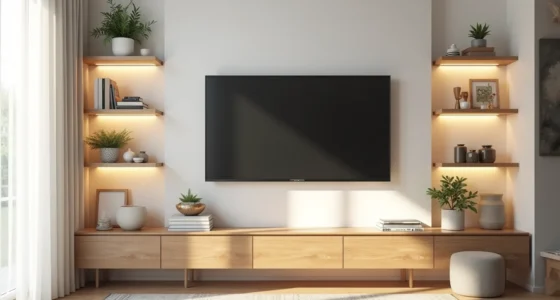

The living room TV wall is the single highest-impact surface in your home, and getting it right comes down to three decisions: mounting height, visual weight, and how the wall handles storage. Most homeowners default to a floating console and a 65-inch screen, but that’s only one of six valid approaches. The right choice depends on your room’s dimensions, whether you rent, and how much you’re willing to spend.
Each option below carries specific trade-offs in cost, installation effort, and long-term flexibility.
Key takeaways
- Recessed built-ins demand 6–8 inches of wall depth and professional carpentry, making them ideal for large rooms but a costly permanent commitment.
- Floating consoles work for renters and small spaces since they require only two wall anchors and leave the TV wall untouched, though cable management needs a cord cover.
- Accent walls succeed only when the paint or texture contrasts subtly with the screen; high-contrast patterns compete with the TV and cause visual fatigue during viewing.
- Scale rules dictate that a 55-inch TV suits a 10-foot viewing distance, while a 75-inch TV needs 12–14 feet, so measure your seating before choosing any wall layout.
Recessed Built-In with Surround Storage
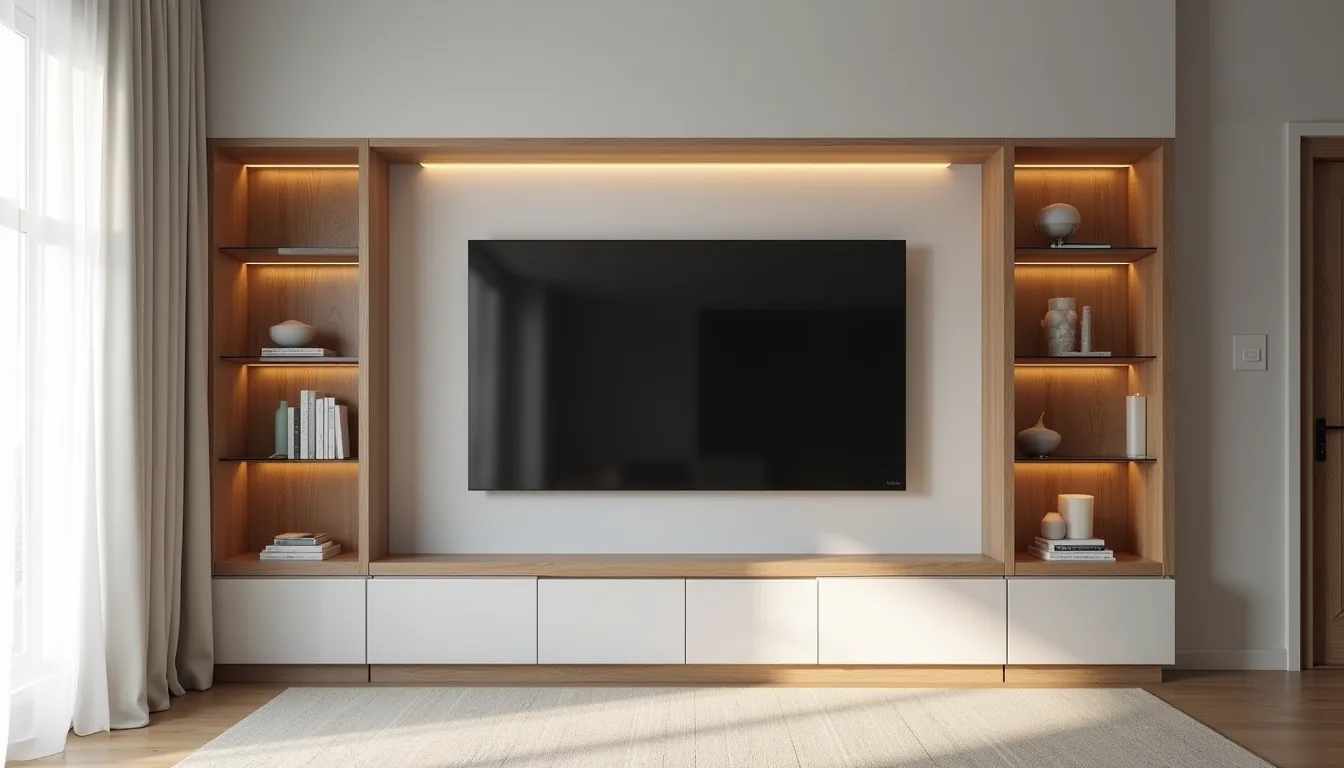
You gain roughly 6–10 inches of floor depth by recessing the TV into the wall cavity, which makes this the strongest option for narrow living rooms where a protruding screen eats into walking space. The flanking white shelving units create a symmetrical frame around the screen, and their practical payoff is storage that hides everyday clutter while displaying small plants, books, and framed photos at eye level. This setup suits homeowners who plan to stay put for five-plus years and are willing to commit to structural work: you’ll need a licensed contractor to reframe the opening, reroute electrical wiring, and reinforce the cavity with fire-blocking materials, typically costing $1,500–$4,000 depending on wall construction.
The smooth baseboard and wall plane mean you must patch, sand, and repaint the entire surrounding surface, not just the niche. For a budget route, skip the custom cabinetry and install prefabricated IKEA Billy bookcases on either side of a flush-mounted TV, leaving a 2–3 inch gap for ventilation behind the screen. Be aware that recessing a TV reduces rear airflow, so confirm your model’s manufacturer-specified minimum clearance, most require 2–4 inches, or you risk overheating and shortened panel life.
A low-storage composition works here if you leave the lower shelves empty, shifting visual weight upward to match the screen’s center. This is a permanent, high-impact Living Room TV Wall that pays off in resale value but demands patience through a 2–3 week renovation window.
Floating Media Console Without Wall Mounting
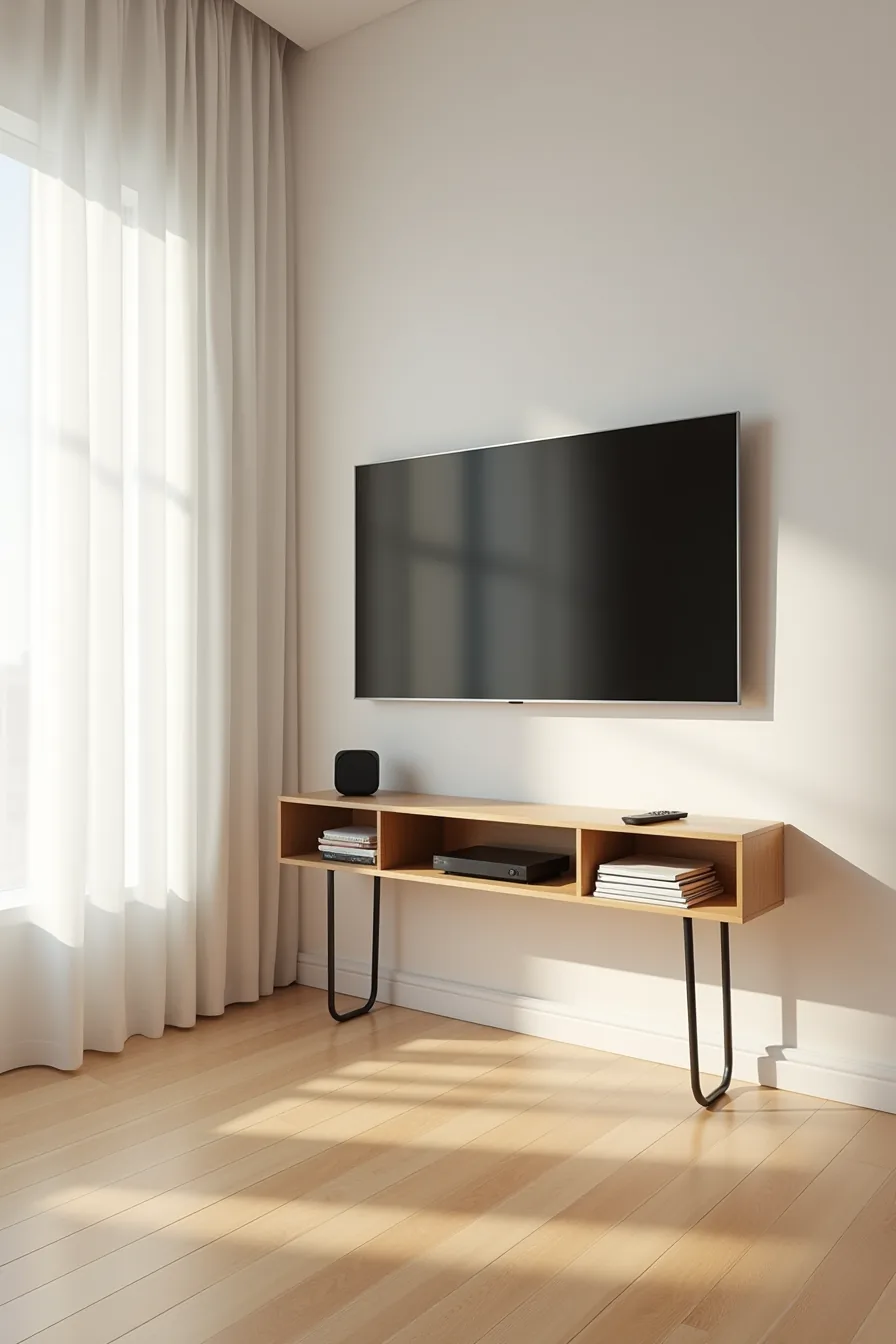
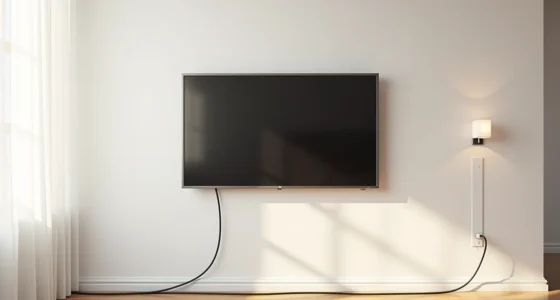
A wall-mounted TV paired with a floating console on slim metal legs gives you the clean, lifted look of a built-in without committing to structural changes. The console floats 8–12 inches above the floor, leaving visible floor space that makes the room feel larger and simplifies vacuuming or mopping beneath it. Your media player, small speaker, and remote collection sit on the surface, while cables route discreetly down the wall and behind the console leg nearest the outlet.
This approach suits renters because you only drill into the wall for the TV bracket, usually two bolts into studs, and the console itself stands freely, leaving no permanent footprint. It also preserves your ability to rearrange the seating or swap the console for a taller piece if your needs change. For the best view from the sofa, mount the TV so its vertical center sits at seated eye level, roughly 42–48 inches from the floor, rather than aligning it with the console top.
Choose a console 6–12 inches wider than the TV on each side to maintain visual balance, and confirm the legs are rated for the combined weight of your components before loading it up.
Accent Wall with Competing Focal Points
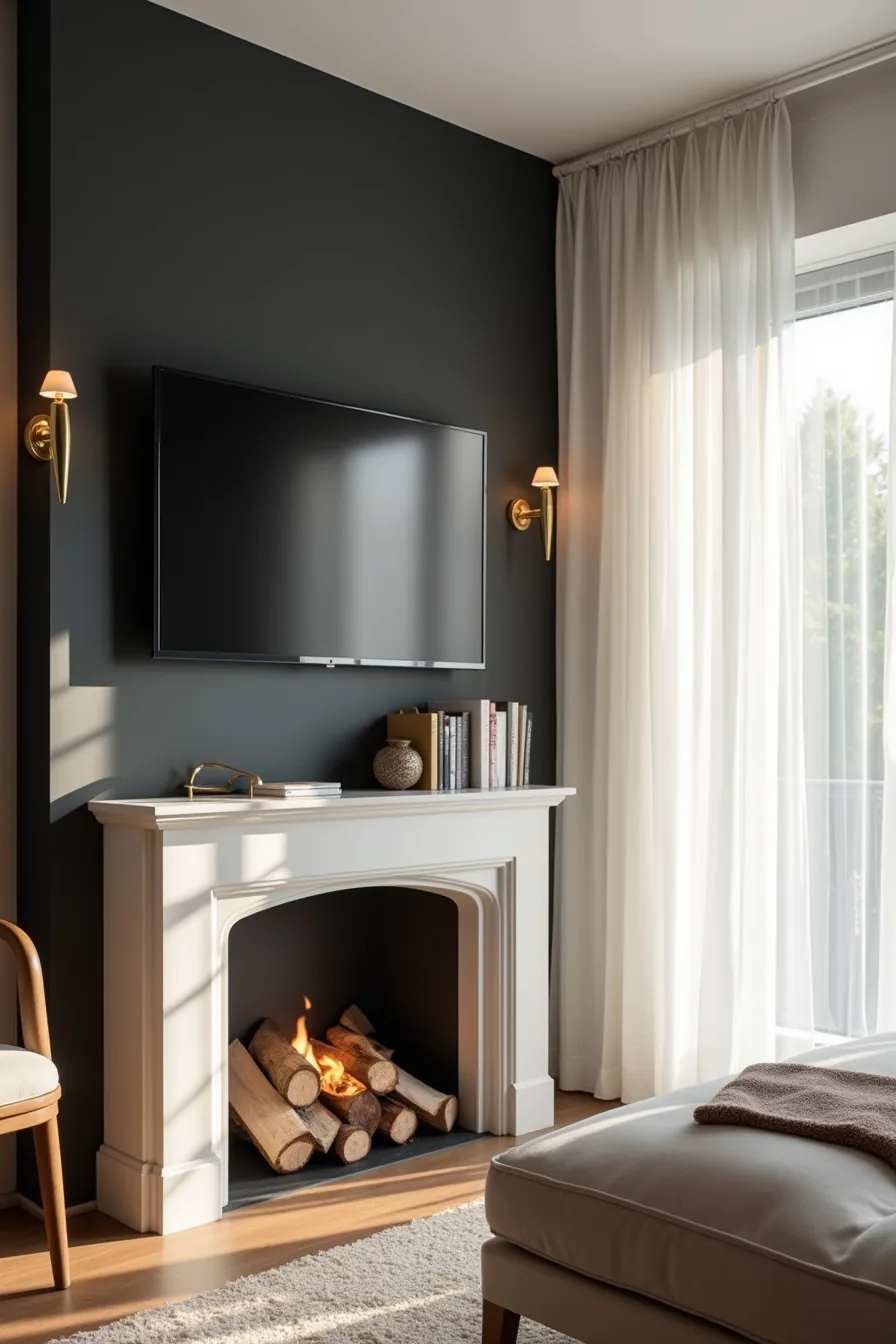
A matte black accent wall behind the TV creates a deep, immersive backdrop that makes the screen recede when off and pop when on. Introducing a white fireplace surround with a mantel and burning logs to the left establishes a second focal point roughly equal in visual weight, so the room reads as layered rather than TV-dominated. This composition works best in open-plan living rooms where seating naturally angles toward both features, giving you a cozy winter view and a clear screen view without swiveling.
To replicate this, paint the entire wall behind the TV in a matte finish, black or a deep charcoal, and ensure the fireplace surround is at least 12–18 inches wider than the firebox to anchor the mantel. Position the TV so its center sits 42–48 inches from the floor, and keep the fireplace mantel at a similar height to avoid one feature towering over the other. This setup suits larger rooms (over 250 square feet) where two focal points have room to breathe; in smaller spaces, skip the mantel decor to prevent visual clutter.
Budget-wise, a single paint gallon covers roughly 350 square feet, while a prefabricated fireplace surround runs $800–$2,500 installed, a long-term investment that adds resale value but demands regular dusting of the mantel and soot cleaning if you burn real logs.
Gallery Wall Layout Around the Screen
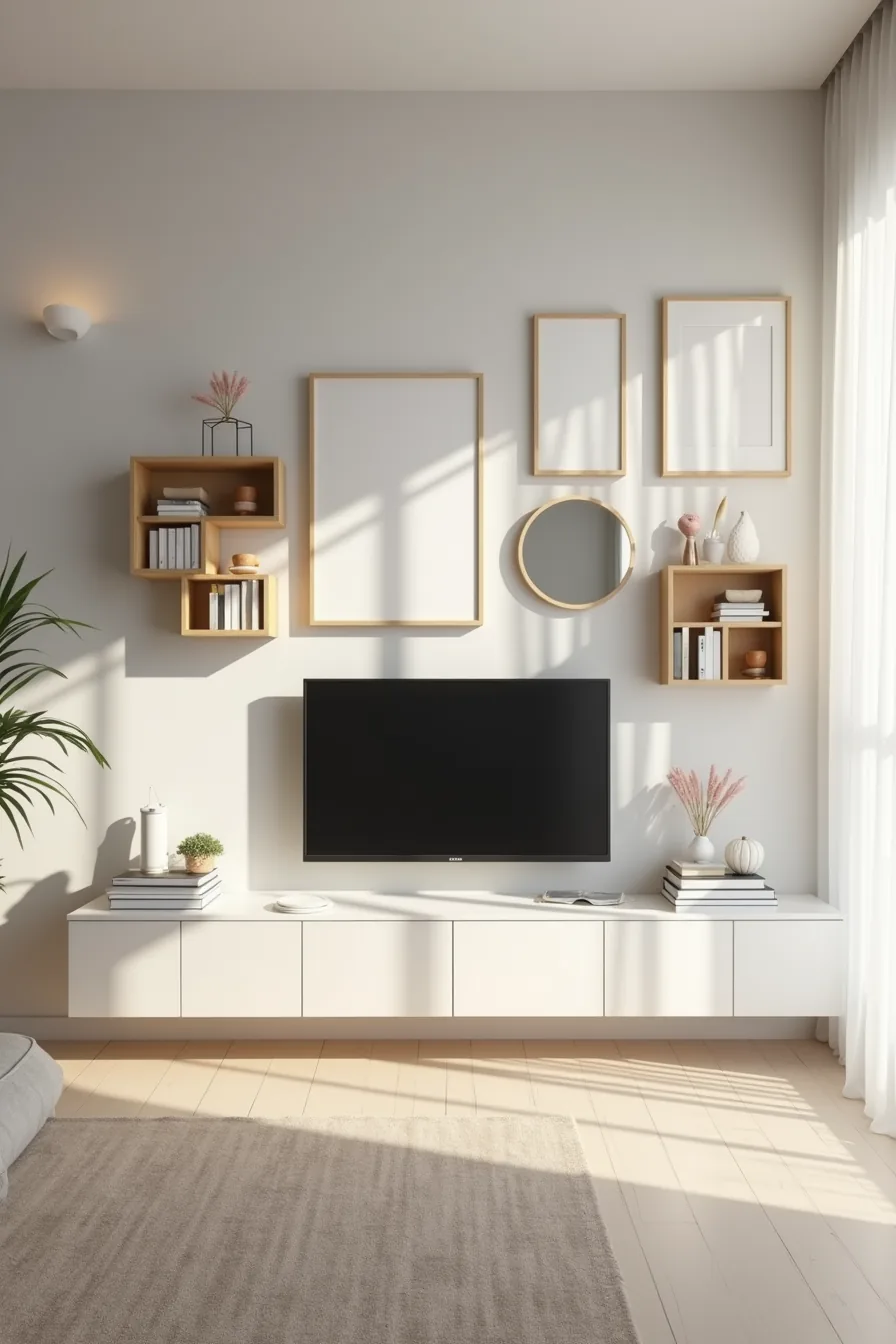
Surrounding the TV with an asymmetrical arrangement of framed prints, round mirrors, and open wooden shelves breaks up the screen’s hard edges and turns the wall into a curated composition. The six prints at varied sizes draw the eye outward, the two round mirrors add visual relief from all the rectangles, and the three shelves introduce depth while holding small objects. Because the arrangement is asymmetrical, the TV feels like one element in a deliberate cluster rather than the sole reason for the wall’s existence.
This approach suits renters and frequent re-decorators, each piece hangs independently, so you can rearrange or pack them without patching a single hole. Mount the TV first at your standard viewing height (42–48 inches to screen center), then build the gallery around it, keeping a 3–5 inch gap between the TV frame and adjacent art. Use lightweight frames under 5 pounds with Command picture-hanging strips for walls you can’t drill; for shelves, choose floating options rated for 10–15 pounds.
Budget runs $100–$400 total if you mix thrifted frames with prints you already own, and the only maintenance is periodic dusting of the shelves and glass.
Low-Storage Composition for a Cleaner Look
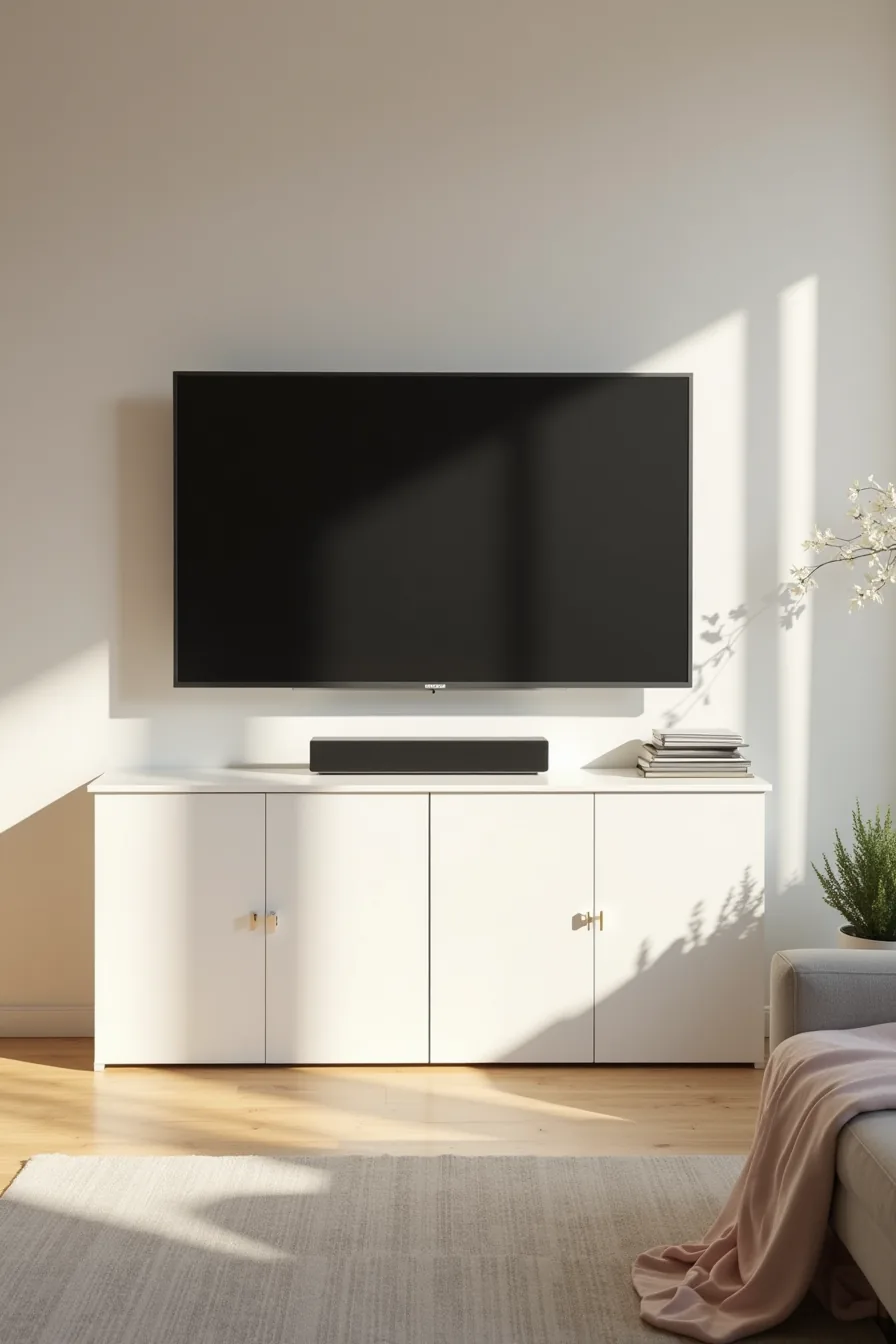
A wall where the TV floats above a closed cabinet with no visible handles reads as pure surface: one screen, one soundbar, one uninterrupted line of cabinetry. The push-to-open mechanism eliminates hardware clutter, and every cable, HDMI, power, ethernet, disappears behind the cabinet’s back panel. What remains is a composition that works because it refuses to compete with itself; your eye lands on the screen and stops there.
This suits minimalists, families with young children, or anyone who resents dusting shelves of trinkets. You must be willing to drill into studs for both the TV mount and the cabinet’s anti-tip wall anchor. Budget $300–$900 for the cabinet (frameless European-style units run highest), plus $150–$600 for a low-profile mount that leaves a 1–2 inch gap.
The trade-off: everything you hide must be accessible, so keep a small integrated media drawer or side cabinet for the router and game consoles you’ll otherwise dig out weekly.
Adapting TV Wall Scale to Room Size
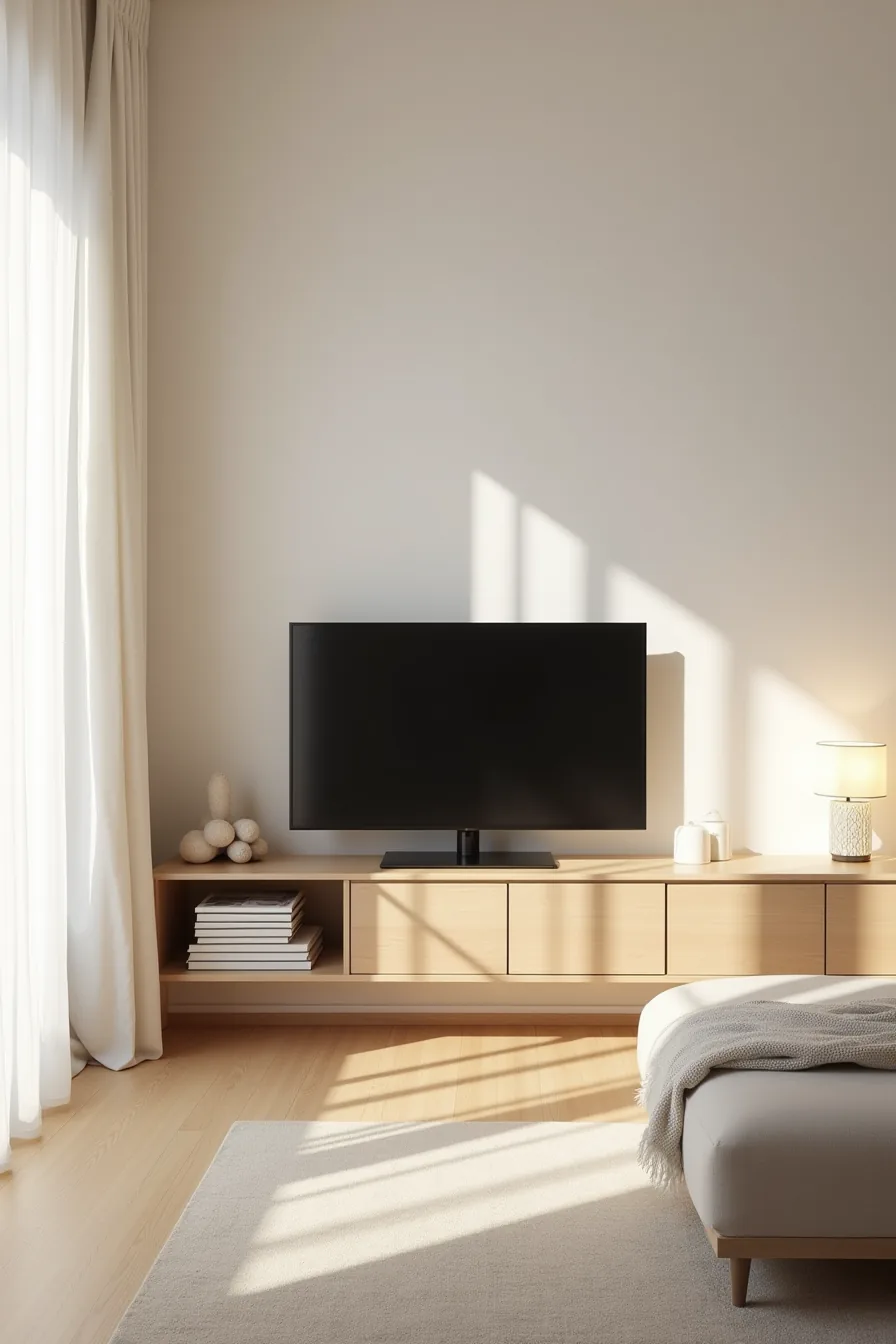
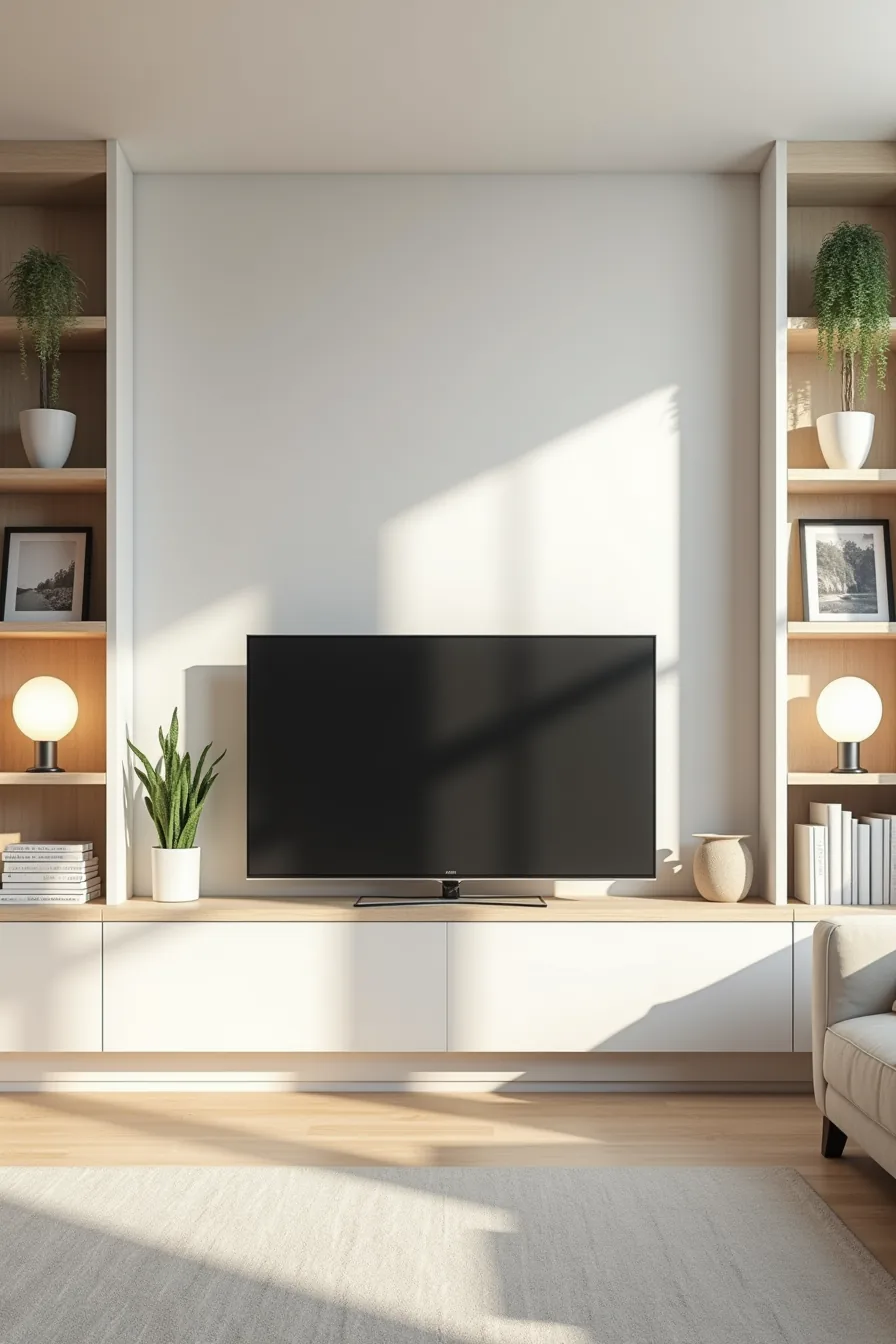
In a room roughly 12 feet wide, a 43-inch TV paired with a slim console creates a balanced focal point without swallowing the space. The rule of thumb: your TV should span about 40-50 percent of the wall’s width, and your console should be at least 2-4 inches wider than the TV on each side. A narrow console, typically 12-16 inches deep, keeps the walkway clear while still housing a soundbar or a single row of media components.
For a room this size, resist the urge to fill surrounding wall space with tall shelving or oversized art. A single narrow storage unit beside the console or a floating shelf above the TV adds function without breaking the visual line. The 43-inch screen sits comfortably at eye level when the TV’s center is 42-48 inches from the floor, which aligns with seated viewing.
This composition leaves negative space on either side, and that emptiness is what prevents a small room from feeling boxed in. If your wall measures 15 feet or more, scale up: a 65-75 inch TV and a deeper, full-width media unit will read as intentional rather than disproportionate.
Your first move, mapped
You now have six distinct routes for your living room TV wall. Before you buy anything, measure your viewing distance and wall width. That single number will eliminate half the options instantly.
Match the solution to your lease length, budget, and how often you actually host. A floating console suits renters; a full built-in rewards homeowners with five-plus years of permanence. Tape the proposed outline on the wall and live with it for 48 hours to test proportion.
Order paint swatches and one material sample this week. Commit to the option that fits your room’s traffic flow first, aesthetics second.
Frequently Asked Questions
What height should a TV be mounted on a living room wall?
Center the screen at your seated eye level, typically 40–45 inches from the floor. If you recline deeply, mount slightly lower. Never exceed 60 inches unless you’ve a dedicated viewing area above a fireplace.
How do I hide cables and cords behind a TV wall?
Install an in-wall cable pass-through kit with low-voltage rated plates, or run cords through a recessed channel behind the drywall. For rentals, use paintable cord covers that match your wall color and secure them with adhesive clips.
Can I create a living room TV wall in a rental apartment?
Yes, use a freestanding media console and mount the TV on a heavy-duty floor-standing stand instead of drilling. Alternatively, apply removable adhesive picture-rail hooks and cord covers, no permanent damage, and you can restore walls before moving out.
What’s the ideal distance to sit from a TV, and how does it affect wall design?
Sit 1.5 to 2.5 times the screen’s diagonal length away, for a 55-inch TV, that’s roughly 6.5 to 11 feet. This determines your wall’s visual weight: larger screens need wider consoles and more surrounding decor to balance proportions.