Living room TV wall luxury isn’t about budget, it’s about deliberate material, proportion, and lighting choices that turn a functional black rectangle into the room’s architectural anchor. The difference between a flat, forgettable setup and one that feels bespoke comes down to six repeatable strategies, each with specific trade-offs in cost, effort, and spatial fit. You’ll see why a 55-inch screen demands different treatment than an 85-inch model, and where a $200 upgrade outperforms a $2,000 one.
Key takeaways
Stone and timber add instant texture but demand structural support, verify wall load capacity before installing heavy veneers. Smooth cabinet fronts hide AV equipment best when you plan ventilation gaps of at least 2–3 inches behind closed doors. Layered lighting (dimmable spots, sconces, and floor lamps) prevents the screen from becoming the room’s only light source. Floating modular shelves suit renters and small spaces, since they require fewer wall penetrations and adapt to changing decor.
Stone and Timber: Textured Warmth Behind the Screen
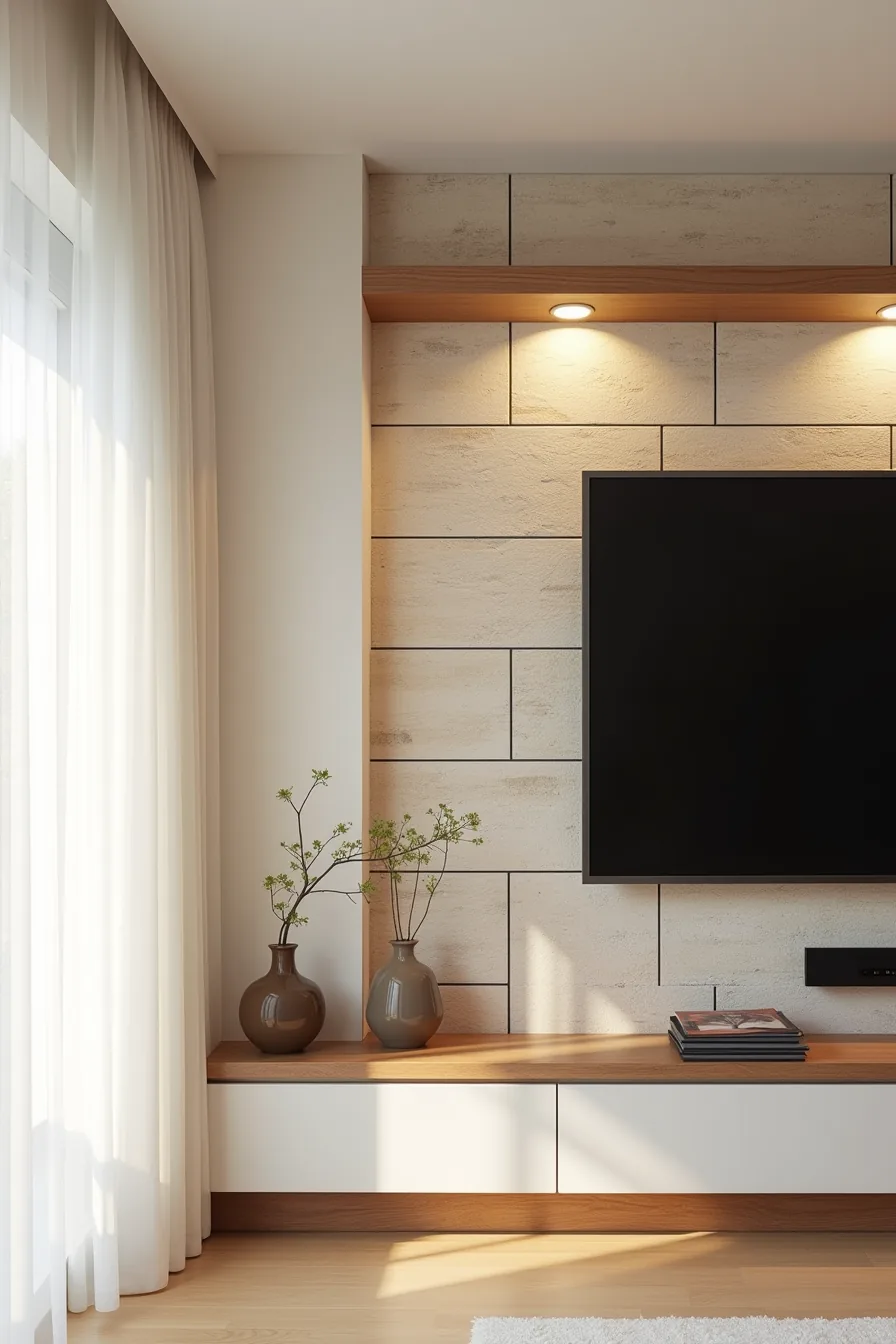
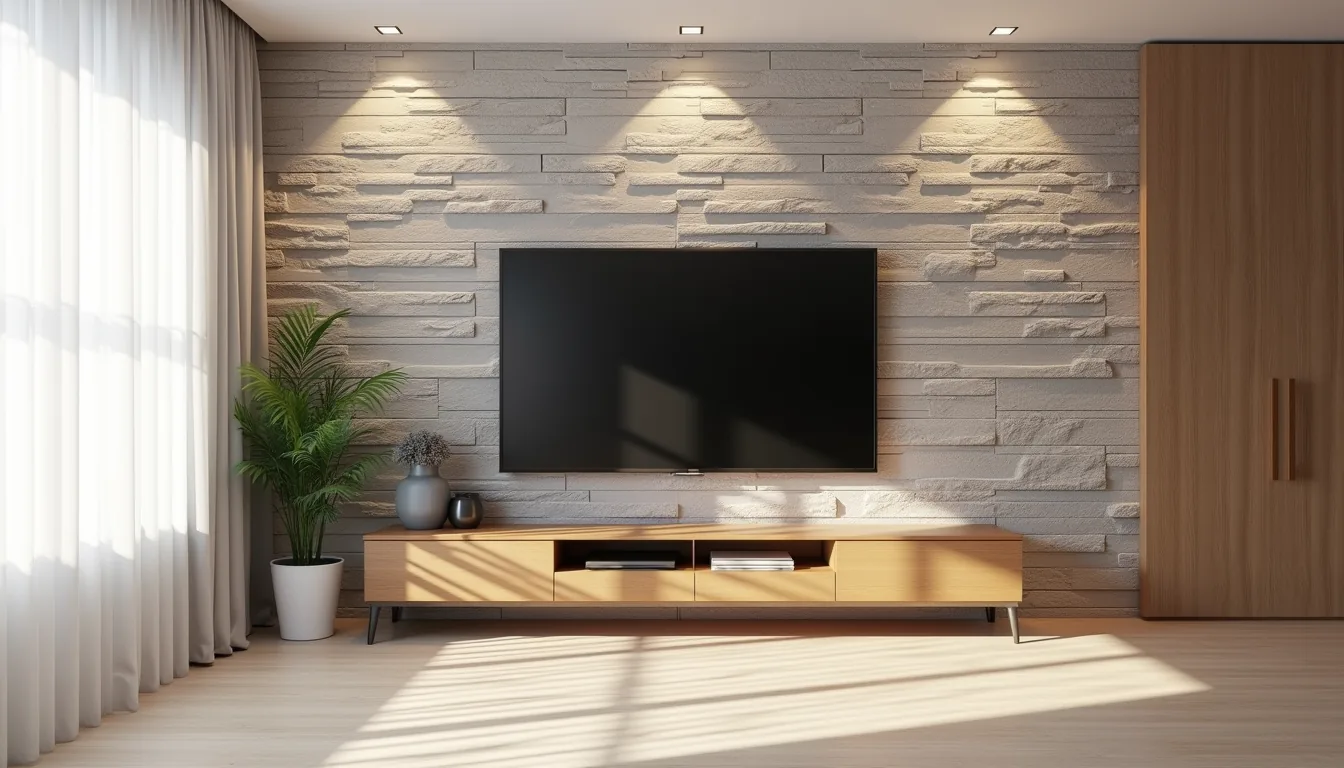
This setup pairs irregular cream and taupe stone tiles in a running bond pattern with three horizontal weathered walnut battens, creating a layered surface that keeps the wall from reading as cold or corporate. The contrast works because the stone supplies organic irregularity while the timber introduces rhythm and a warmer color temperature, together they give the screen a grounded, gallery-like presence.
You’ll need a structurally sound wall capable of supporting the combined weight of tile, mortar, and hardwood; expect installation to take two to three days for an average 10-foot wall. For small rooms, limit battens to two and use lighter oak tones to avoid visual weight, while larger spaces can handle the full three-batten layout with wider stone formats. Sealing the stone every 12 to 18 months and wiping timber with a dry microfiber cloth prevents dust buildup in the mortar joints and keeps the shadow play between materials crisp.
This approach suits living rooms where you want texture to do the heavy lifting rather than decor accessories.
Smooth Cabinet Fronts: Hidden Storage Meets Minimalism
Floor-to-ceiling cabinetry in matte white oak with invisible push-to-open hardware creates a single flush plane across the entire wall, letting the TV read as a deliberate architectural element rather than an appliance. The recessed TV opening sits at eye level when seated, typically 42 to 48 inches from the floor to the screen’s center, while floating shelves above break up the mass without disrupting the flat surface. This approach works best in medium-to-large rooms where you can dedicate 18 to 24 inches of depth to cabinetry without crowding seating.
The real luxury lives in the details: soft-close hinges, integrated cable management, and doors that require no visible pulls. Budget-conscious builds can substitute MDF panels with a matte laminate finish for roughly half the cost of white oak veneer. Renter-friendly?
Skip the built-ins entirely and use modular floor-standing cabinets pushed together, you get the flush look with zero permanent wall damage, though you sacrifice a few inches of depth and the smooth ceiling-height line.
Relaxed Luxury Mood: Soft Furnishings and Layered Lighting
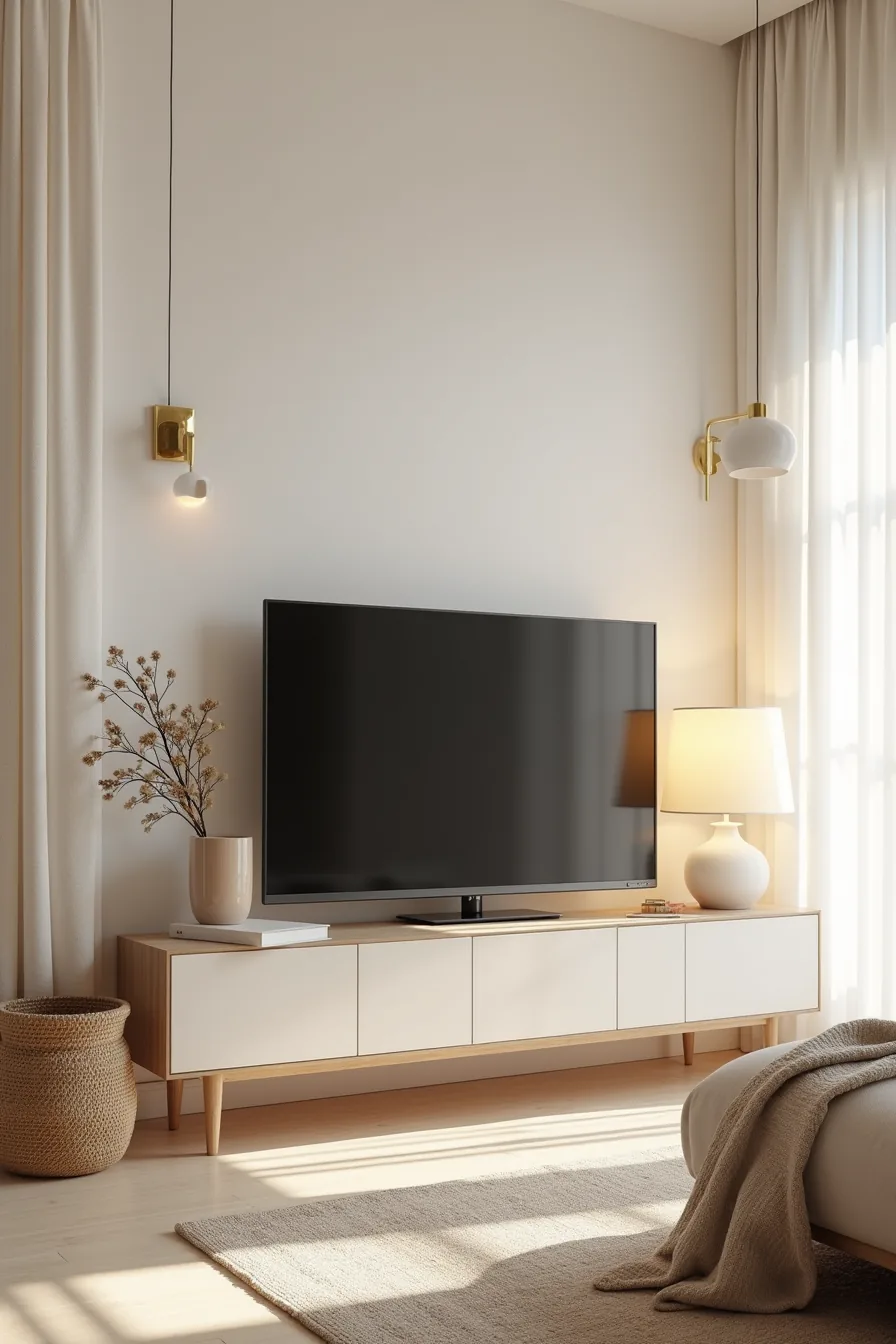
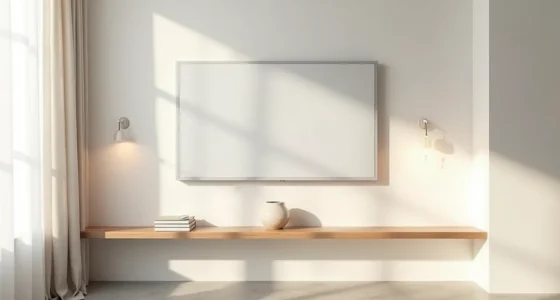
This interpretation shifts the investment from millwork to texture and glow. Anchor the wall with a neutral paint color, then hang a single draped cream linen fabric panel on one side to soften the hard edge of the television. Balance that asymmetry with a brass wall sconce mounted above the screen and a woven jute basket tucked beside the TV stand, the mix of natural fiber and warm metal keeps the composition feeling collected rather than staged.
Lighting does the heavy lifting here. Layer a low-wattage pendant at one corner with a table lamp on the opposite side to create pools of warm light at different heights; this prevents the TV from becoming the room’s only focal point after dark. A textured throw blanket draped over nearby seating ties the seating zone to the wall arrangement without matching anything exactly.
The relaxed luxury mood suits renters and smaller budgets because nothing is permanent, the fabric panel hangs from a lightweight curtain rod, and the sconce can be swapped for a plug-in model with a cord cover. It also works in tight spaces where deep cabinetry would crowd the floor plan. Plan for the sconce at 60 to 66 inches above the floor, slightly higher than the screen’s center, to keep the visual line interesting without interfering with viewing.
Luxury TV Walls That Feel Warm Not Formal: Color and Material Balance

The fastest way to avoid a sterile showroom look is to pair warm neutrals with matte surfaces. Paint the wall in a greige tone, typically a 50/50 beige-gray blend, and mount a soft terracotta accent panel directly behind the television. The contrast between the muted backdrop and the earthy panel creates depth without shouting for attention.
Frame the TV opening with light oak trim to introduce natural grain, then install curved wooden shelves beside the screen. These organic shapes break up the vertical lines of the television and give you a place to display ceramics, small plants, or stacked books. The mix of wood tones, matte paint, and terracotta reads as intentional rather than decorated.
This approach works best in medium to large rooms where the wall has room to breathe; in smaller spaces, scale the terracotta panel down to just slightly larger than the TV itself. Use a low-sheen paint (10-20% gloss) on the greige sections to keep maintenance simple, matte finishes show fingerprints, but a slight sheen wipes clean easily.
Framing and Architectural Detail: Built-In Millwork Solutions
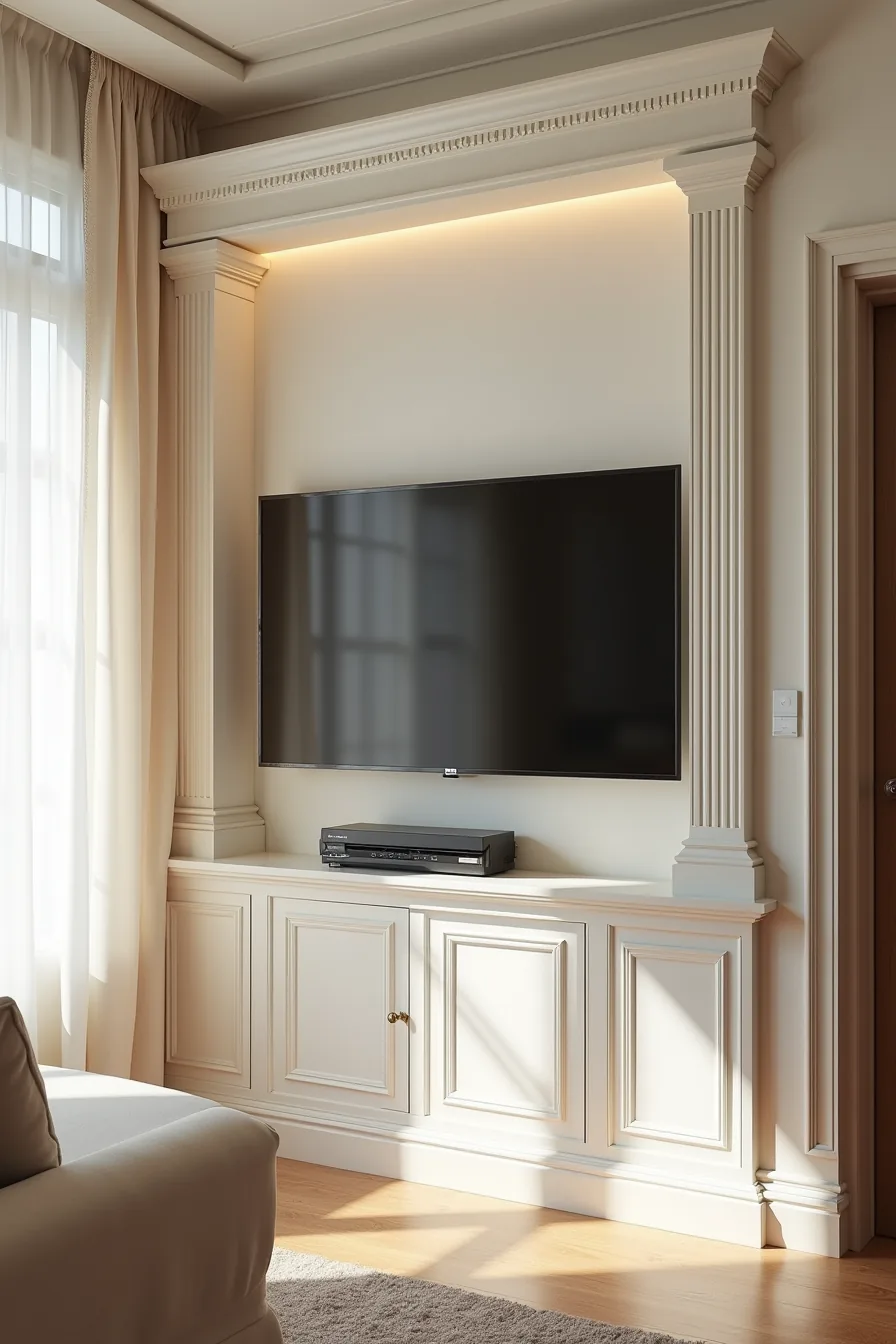
Built-in millwork transforms the TV from an object into an architectural feature, and it remains the single most effective route to long-term luxury. This approach works by giving the screen a permanent frame, crown molding along the top, fluted pilasters on either side, and a shadow-line detail at the base that visually lifts the structure off the floor. The soft charcoal finish against an off-white wall creates a deliberate contrast, while recessed lighting within the frame draws attention to the screen only when you want it.
Custom millwork typically costs $2,500–$6,500 installed, with lead times of 4–8 weeks depending on your carpenter’s schedule. Semi-custom options using prefabricated components run roughly 30–40% less but require your wall to be within an inch of standard dimensions. This is a permanent installation, you commit to the TV size and position, so it suits homeowners who have settled on their screen and don’t plan to move it within the next decade.
Budget route: have a carpenter build only the pilasters and crown molding around an existing TV mount, skipping the recessed lighting. You save on both materials and electrical work while keeping the architectural presence. Renter-friendly route: skip the built-in entirely and use paintable polyurethane molding kits that glue onto the wall and remove cleanly at move-out.
Still, the shadow-line base and fluted details require at least 6 inches of clearance on each side of the TV to read proportionally, measure before you commit.
Floating Shelving and Modular Display: Flexible Luxury for Evolving Spaces

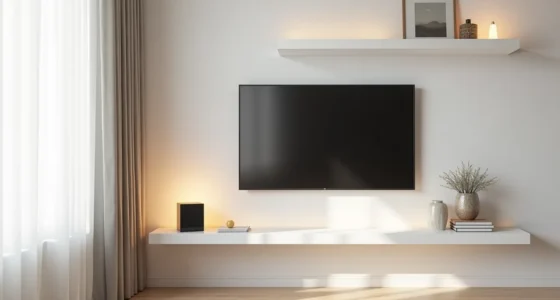
Floating shelves deliver gallery-like polish without committing you to a permanent structure. Three black metal ledges staggered at different heights flanking the TV create visual rhythm, while the mix of ceramic vessels, a framed artwork leaning casually, a small potted plant, and deliberately spaced decorative objects keeps the composition feeling curated rather than cluttered. The warm pendant light above softens the metal edges and makes the display read as intentional after dark.
Load-bearing is the critical constraint: drywall anchors hold roughly 50–75 pounds per shelf across most 12–16 inch depths, but a 24-inch shelf of solid oak can exceed that with dense ceramics. Use toggle bolts rated for at least double your expected load, and keep heavy objects toward the wall-side of the shelf. For spacing, allow 8–12 inches of air between the TV frame and the nearest shelf edge to avoid visual crowding; stagger heights at least 6 inches apart so the eye travels naturally.
This approach suits renters who want to avoid permanent millwork, black metal shelves install with four screws and patch cleanly at move-out, and anyone who rotates decor seasonally. In small rooms, skip the bottom shelf and mount just two at eye level to preserve floor space; in large rooms, extend the system across the entire wall, but maintain the same negative-space discipline so the luxury comes from restraint, not volume. Budget-conscious buyers can source powder-coated steel shelves for $60–$120 each, though expect to pay 2–3 times more for thicker-gauge or solid-wood versions.
Dusting the objects themselves takes 10 minutes weekly, and the open format means you’ll see every speck, this is a look that demands regular upkeep.
Your first move: measure, then choose a lane
Before you browse a single material sample, measure your wall width and ceiling height, and note where the sofa sits. That single set of numbers determines whether you build a floating console, a full-height panel, or a gallery-style arrangement. A 120-inch wall with a 90-inch sofa calls for a different scale than a compact 80-inch space.
Pick one route from the six ideas and commit to it for a week using painter’s tape to outline the TV and furniture footprint. If the proportions feel wrong in daylight, adjust the tape before you spend a cent. Then order your largest piece first, the TV or the panel, and build everything else around that anchor.
Frequently Asked Questions
What’s the difference between a luxury TV wall and just mounting a TV on the wall?
A luxury TV wall integrates the screen into a designed composition, built-in cabinetry, layered lighting, textured panels, or architectural framing. Simply mounting a TV leaves cables exposed and the screen visually isolated. Luxury prioritizes concealment, proportion, and material richness.
Can you achieve living room TV wall luxury in a small space under 150 square feet?
Yes. Use a slim floating media console, a matte black or warm wood panel behind the TV, and recessed LED strip lighting. Avoid bulky cabinetry, opt for a single accent wall that visually expands the room.
Scale the TV to 55–65 inches maximum.
How much does it cost to build a luxury TV wall, and what’s the cheapest way to start?
Full custom builds range from $2,500 to $15,000 depending on materials and labor. The cheapest route: a painted accent wall with a floating shelf, cord-hiding raceway, and dimmable sconces, under $400 in materials. Upgrade gradually with panels or cabinetry later.
Are luxury TV walls practical if you rent, or do they require permanent installation?
Renter-friendly options exist: peel-and-stick wood veneer panels, freestanding media consoles, and plug-in picture lights. Avoid drilling into plaster, use heavy-duty adhesive strips for lightweight panels. For a permanent built-in look, negotiate with your landlord or invest in a modular system you can disassemble.