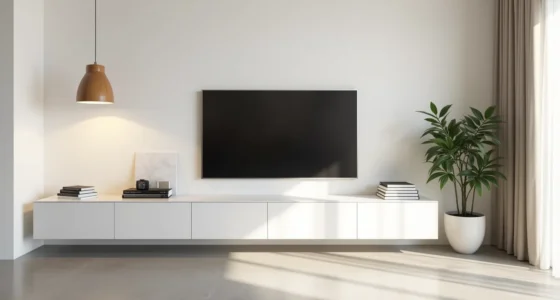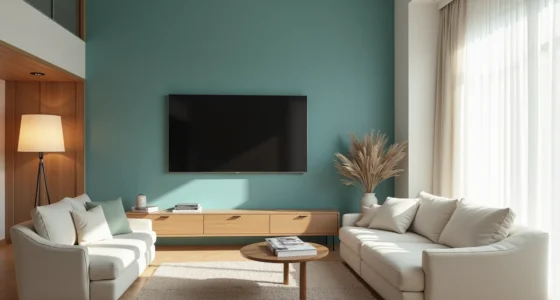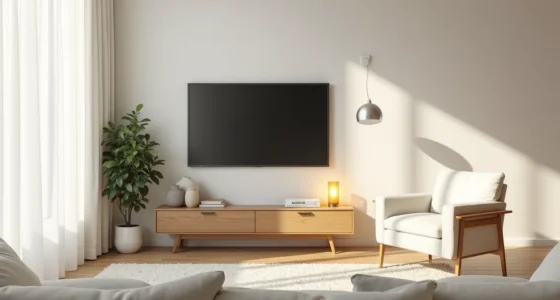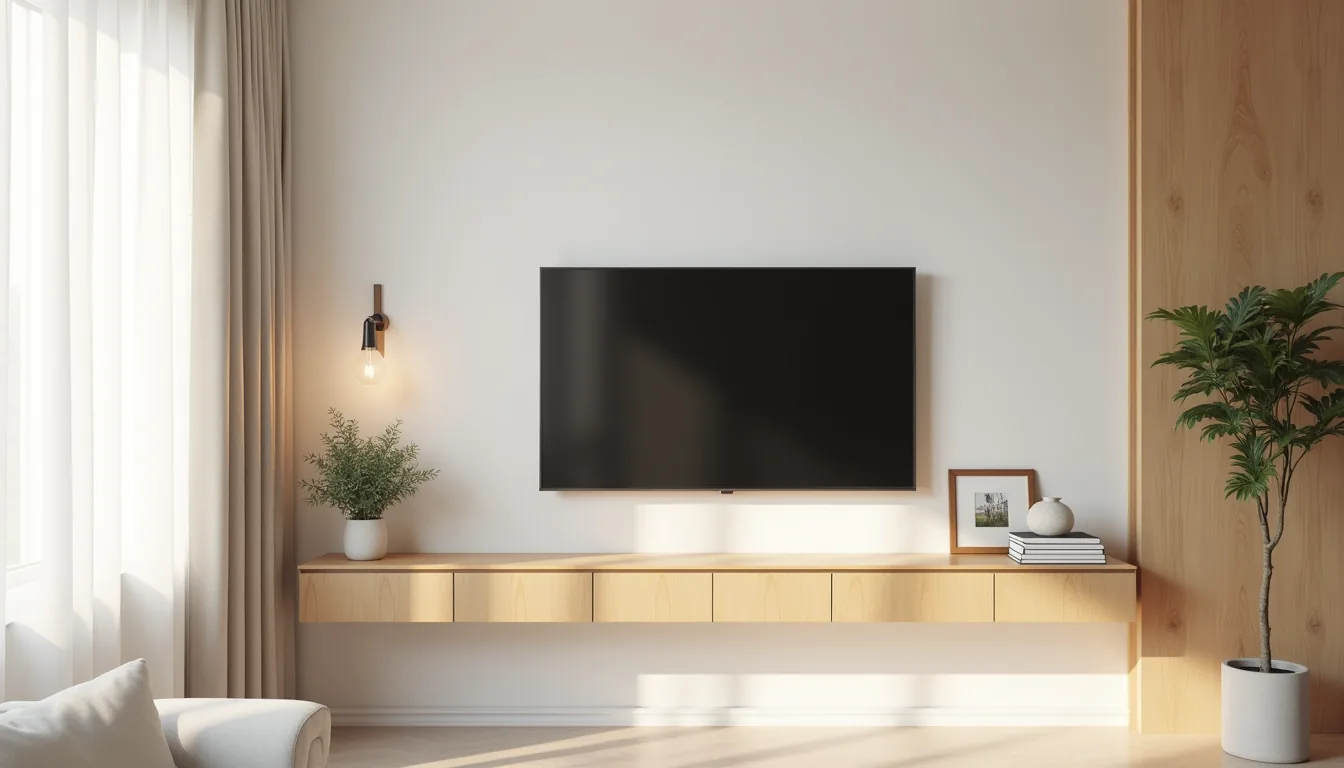
A Scandinavian TV wall isn’t a fixed style but a set of design rules, pale woods, clean lines, and purposeful storage, that you can adapt to your room’s size, your lease, and your budget. Whether you favor a floating oak console, a full-height built-in, or a renter-friendly pegboard system, the choices hinge on three variables: your wall’s proportions, your traffic flow, and your tolerance for maintenance. Below, you’ll find six distinct interpretations, each with the exact scale, material, and cost trade-offs to make the decision straightforward, no vague inspiration, just actionable specifications.
Key takeaways
- Anchor the screen to the wall’s structural studs, not just drywall, and leave a 6–10 cm gap between the TV and a floating shelf for cable access and airflow.
- For renter-friendly setups, use a freestanding pale-wood console with a cord cover taped along the baseboard, no drilling required, and you can reverse it in under an hour.
- Scale the TV wall to your room: in a compact living room under 15 m², cap the TV at 43–50 inches and pair it with a single 30–40 cm deep shelf; in larger spaces, extend the timber paneling to the full wall height to avoid a floating look.
- Budget-conscious builds cost 40–60% less by using pine veneer panels and open shelving instead of solid oak and wall-mounted cabinets, but expect to sand and re-oil the veneer every 2–3 years to maintain the pale finish.
Pale Timber Wall with Floating Media Shelf
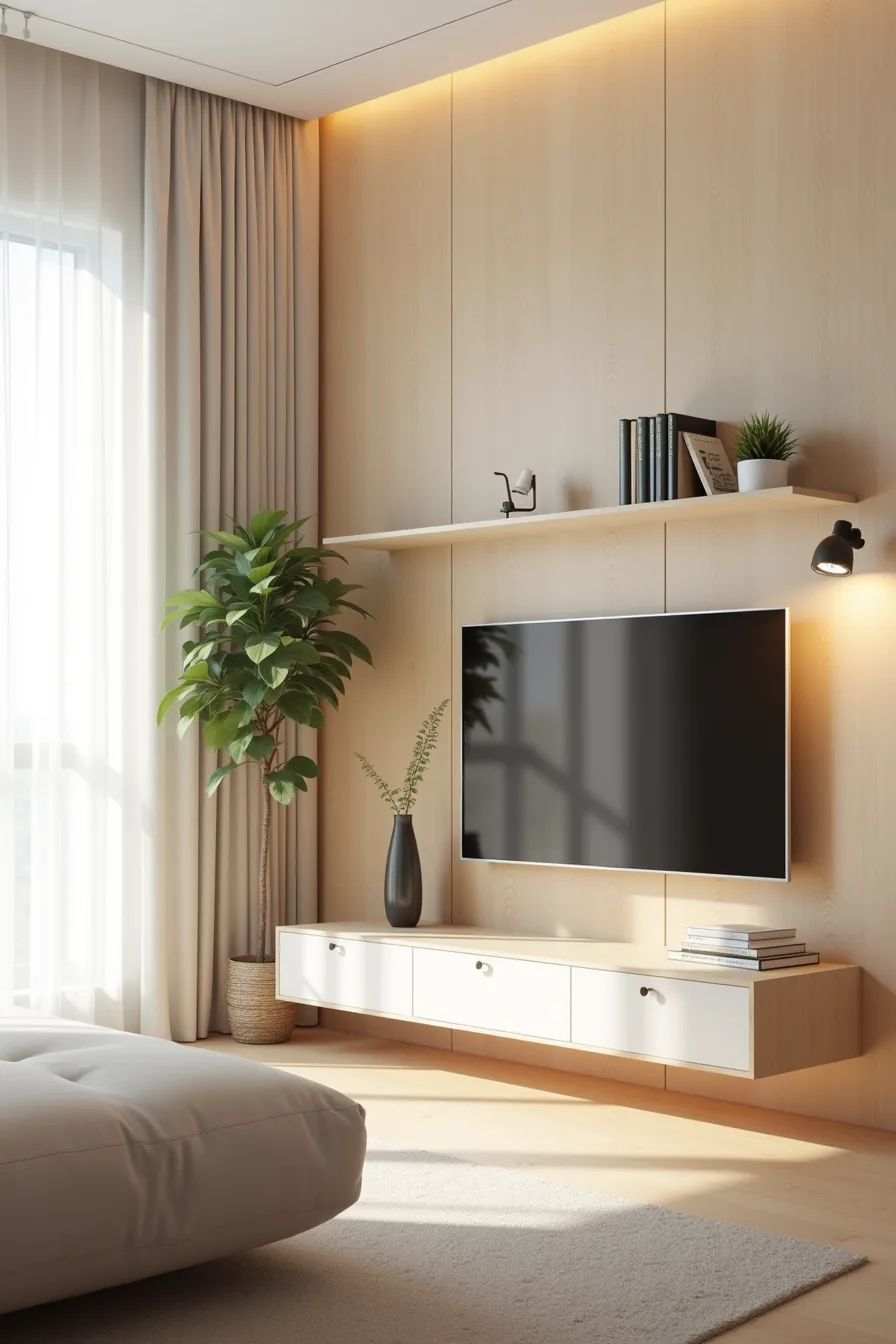
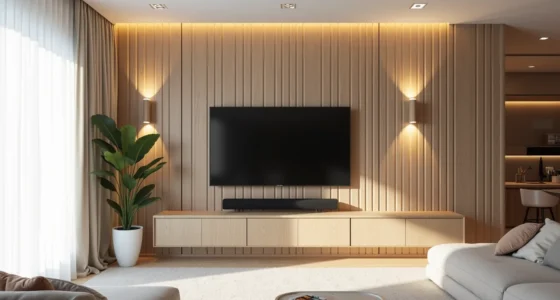
A pale timber wall behind the TV turns the screen into part of the architecture rather than the room’s focal point. Light oak or ash paneling, typically vertical planks 60–120mm wide, diffuses visual noise and adds warmth without the heaviness of dark wood. The effect works because the texture reads from a distance, so you don’t need decor competing for attention.
The single cantilevered shelf carries just three items: one potted plant, one book with the spine facing out, and one small decorative object. That restraint is the entire point, each piece earns its place, and negative space does the styling work. Mount the shelf 300–450mm below the TV’s bottom edge to keep the sightline clean from a seated position.
This approach suits medium rooms (roughly 12–25 square metres) where a full media unit would eat valuable floor space. You’ll need to confirm the wall can support both the TV bracket and the shelf, studs or solid masonry are non-negotiable for cantilevered loads. Expect to budget 15–30% more than a painted wall for quality timber paneling, and allow a weekend for installation if you’re handy with a level.
Nordic Neutral Palette with Open Shelving
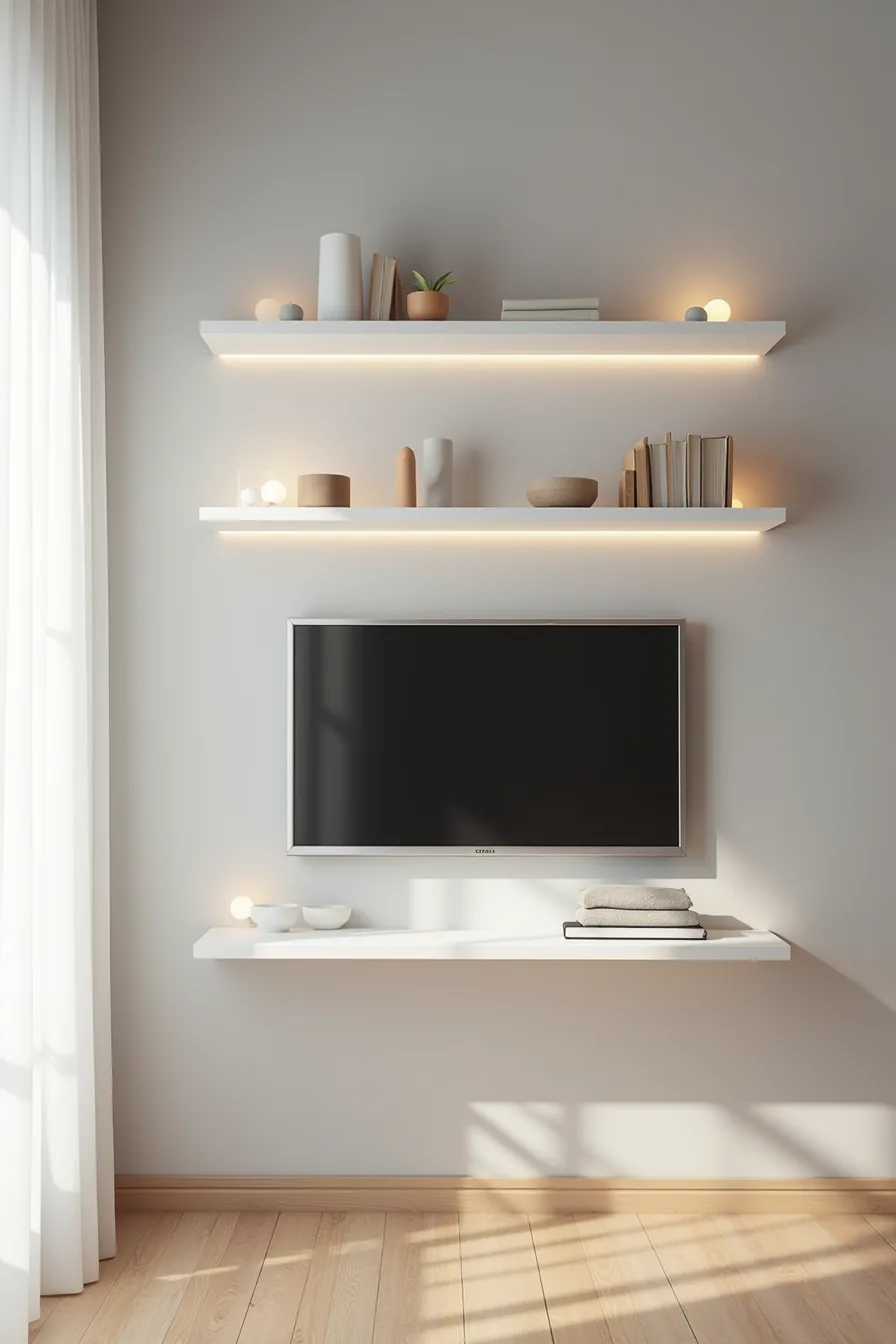
A gray wall, soft, mid-tone, not battleship, anchors this composition because it lets white shelving read as objects rather than architecture. Three floating shelves set at staggered heights create an asymmetrical rhythm around the screen, which suits rooms where you want visual interest without adding furniture volume. The arrangement works for anyone who collects ceramics or textiles but dislikes visible clutter.
Each shelf holds two to three pieces: a ceramic vase, a small sculpture, a folded stack of linen. The empty space between items is the actual design element, it gives the eye somewhere to rest and prevents the display from reading as a shop shelf. Keep the heaviest object on the lowest shelf and the lightest at the top to maintain visual stability from standing height.
This approach suits small to medium living spaces (10–20 square metres) because it uses wall area, not floor area. Budget shelves cost 40–80 euros per unit; expect to reinforce plasterboard with plugs rated for 10–15kg per bracket. Dusting takes ten minutes weekly, but the payoff is a wall that feels calm precisely because nothing competes with the screen.
Minimal Display Styling with Wall-Mounted Cabinet
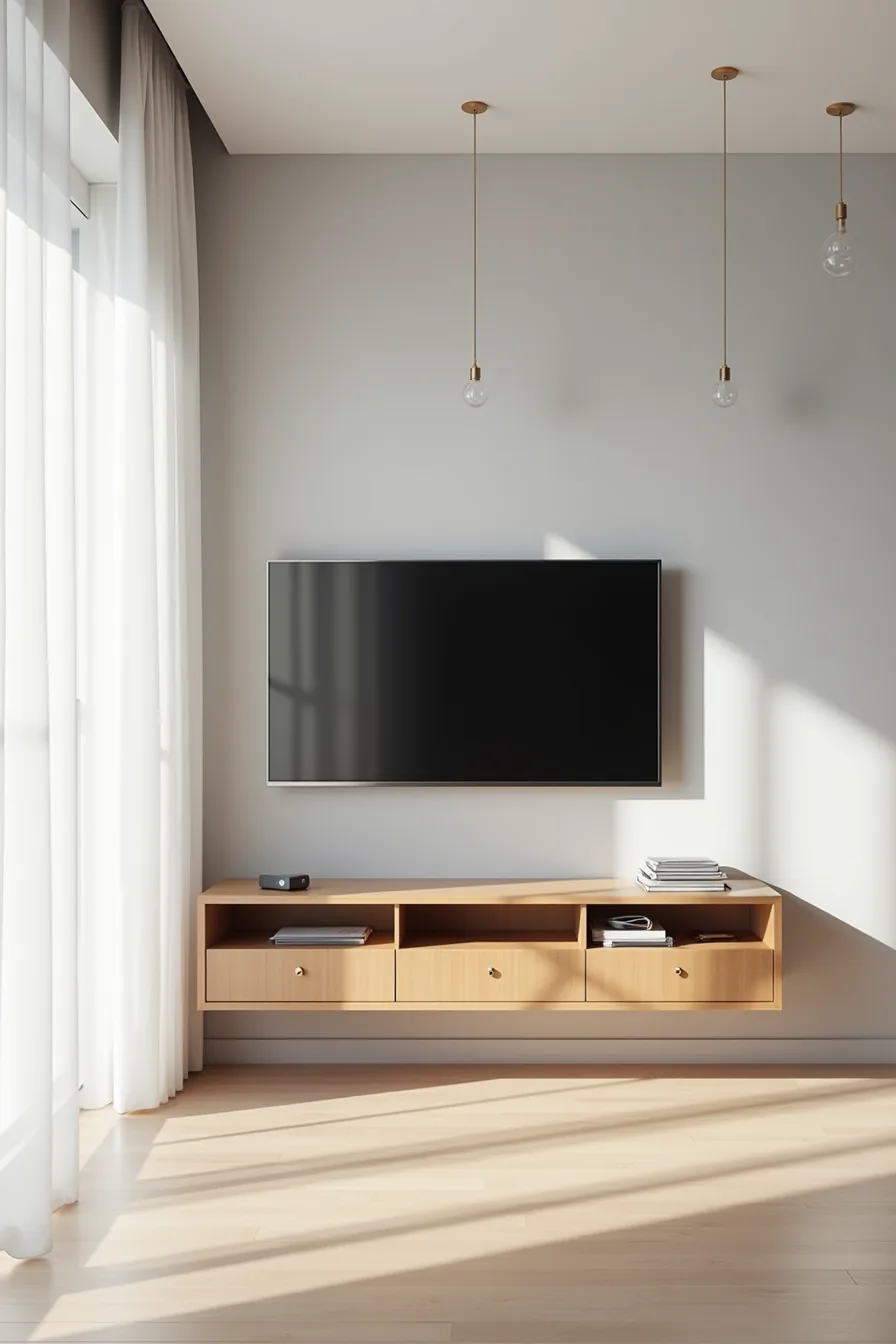
A wall-mounted cabinet solves the wire problem without surrendering to a media console’s footprint. This light gray setup pairs closed lower doors with one open upper section where cables coil into neat, visible loops, the honesty of the hardware becomes part of the design. The cabinet’s top surface carries two or three low-profile objects, never more, so the screen remains the focal point.
This route suits medium to large rooms (15–30 square metres) where you want concealed storage for gaming consoles, DVDs, or children’s toys. Wall-mounting the cabinet frees floor space for a rug or play area, but it demands a solid wall, plasterboard will need heavy-duty toggle anchors rated for at least 25kg if you’re storing electronics inside. Budget units start around 120 euros; expect installation to add 60–90 minutes of labor if you’re not confident with a stud finder.
The open section requires discipline: if you can’t keep cables coiled, choose a fully closed cabinet instead. Otherwise, the visible wiring becomes a daily reminder of the chaos you tried to hide.
Gallery Wall Integration Around the Screen
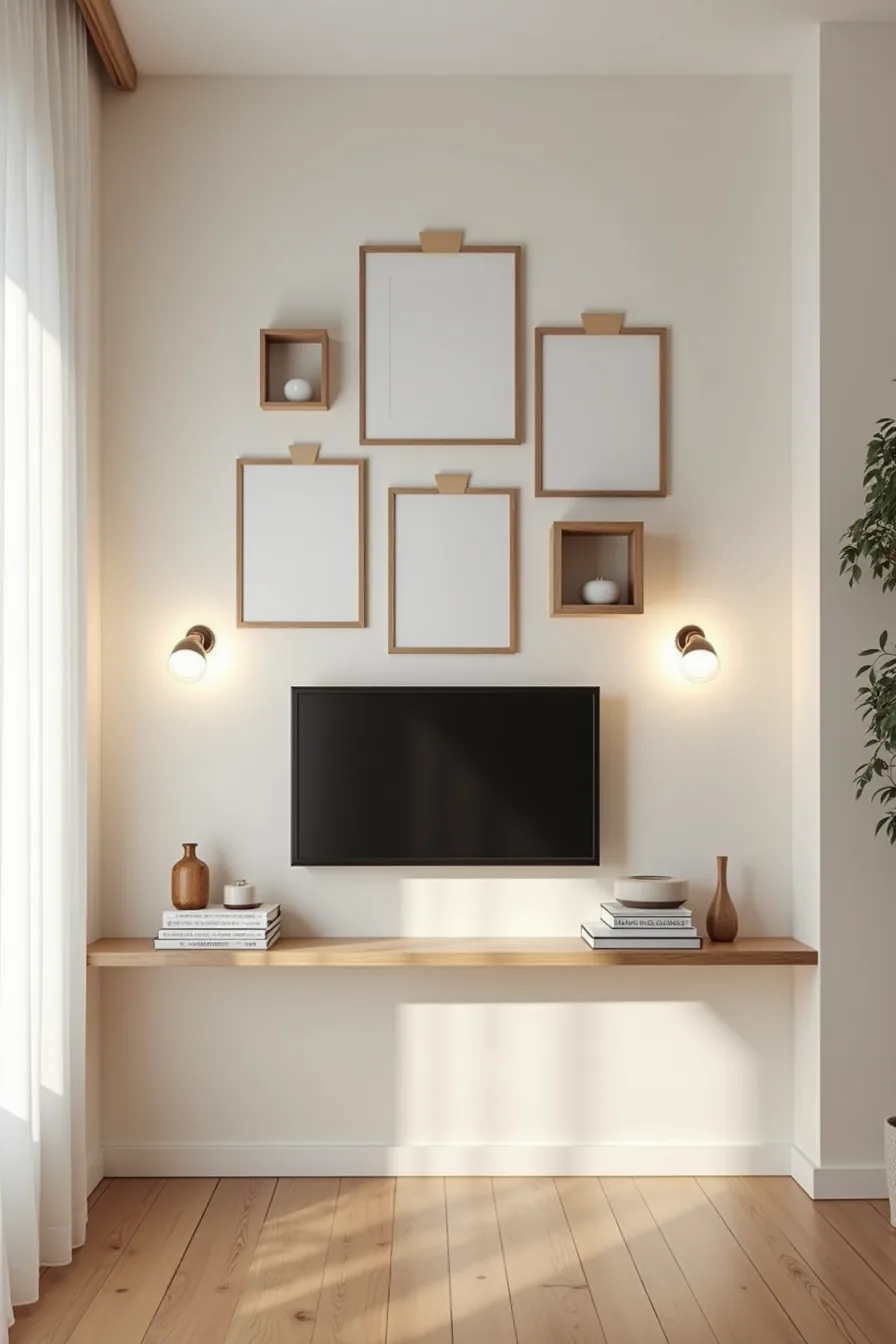
Centering the TV while surrounding it with an asymmetric composition of five framed prints, two small mirrors, and two floating shelves shifts the wall from a screen backdrop into a curated surface. The gallery’s mixed frame sizes and orientations, some landscape, some portrait, draw the eye across the whole arrangement rather than letting it stall on the panel alone. That visual distribution works best in medium rooms (12–20 square metres) where the TV occupies a large wall share and needs companions to feel intentional.
This approach suits renters and homeowners alike, as it requires zero structural work beyond standard picture hooks. For the layout to read as deliberate, maintain a consistent gap of 8–12 cm between every element and extend the gallery roughly 30–40 cm beyond the TV’s width on each side. Spend effort on frame weight and matting, thin, mismatched frames cheapen the effect, while a uniform mat board colour (white or pale oak) ties disparate sizes together.
Styled objects on the shelves should stay minimal: one ceramic vase, one stack of books, nothing that competes with the screen’s brightness.
Scandinavian TV Walls for Calm Compact Living Rooms
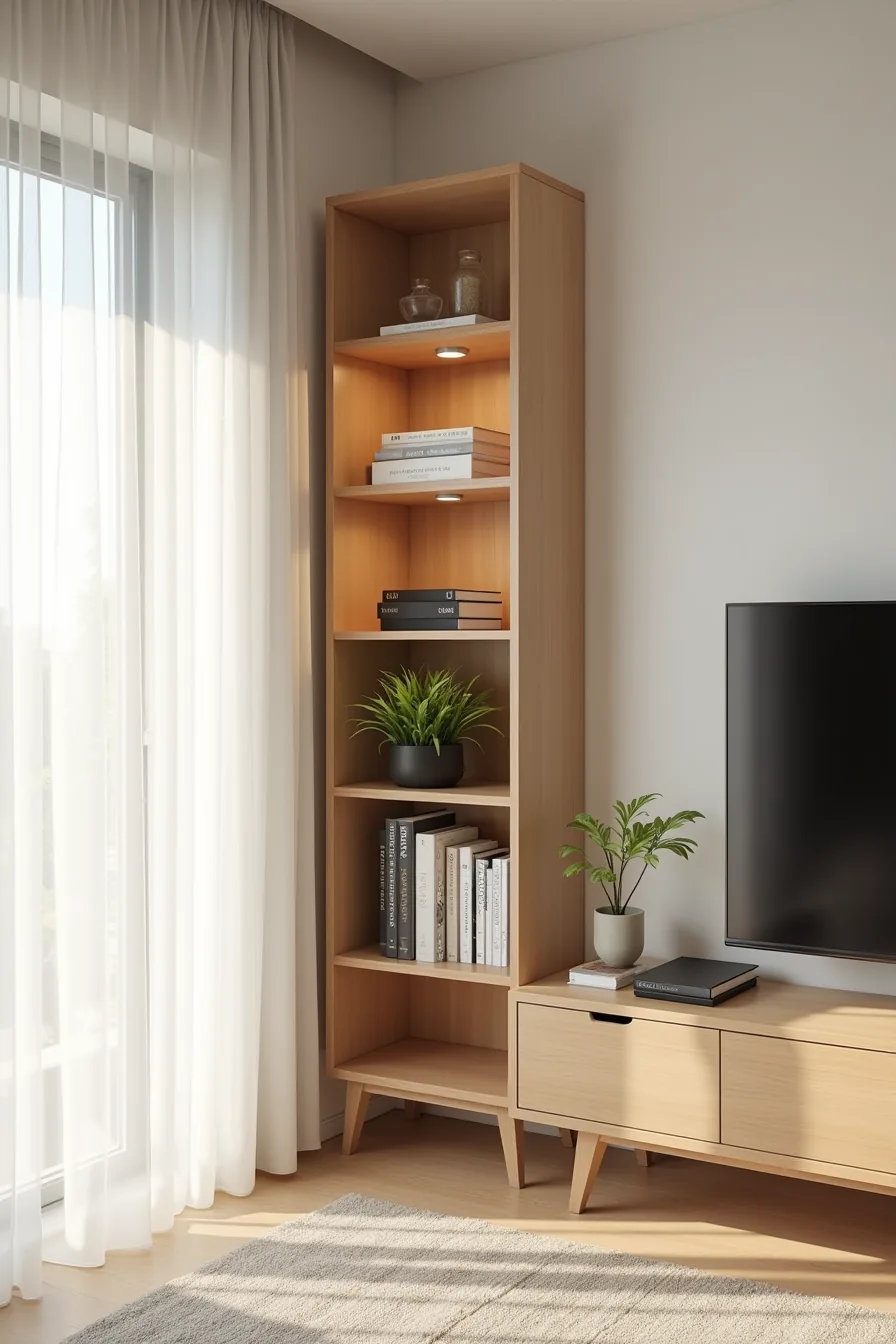
In rooms under 12 square metres, the wall becomes premium real estate. A corner placement pairs the TV with a tall, narrow shelving unit that reaches toward the ceiling, drawing the eye upward and freeing the floor for seating. The shelf holds a potted plant, a few small books, and deliberately empty zones, negative space does the visual lifting in a tight layout, so resist the urge to fill every rung.
This configuration works because it follows proportion rules: the shelving unit’s width should stay under 40 cm, roughly a third of the TV’s footprint, so it reads as a companion rather than a competitor. You gain storage without a bulky media console, and the corner placement reduces glare from perpendicular windows. Keep the TV’s centre line at seated eye level (typically 100–110 cm from the floor) and leave 10–15 cm of clearance between the screen edge and the shelf to prevent a cramped look.
The shallow floor footprint also keeps circulation clear in narrow walkways, critical for rooms that double as passage spaces.
Renter-Friendly and Investment Routes
If drilling into plasterboard feels like a commitment you aren’t ready to make, peel-and-stick wood panels offer a convincing Scandinavian texture without the permanence. Mount a temporary shelf using heavy-duty command strips rated for 10–15 kg, and you’ve a TV stand that survives a lease inspection. Expect the panels to cost roughly 20–40 euros per square metre, and budget 30–60 minutes per panel for application if your wall is flat; textured or uneven walls will need a plywood backing to prevent bubbling.
Modular cubes sit between the two extremes. Individual units with removable backing panels let you route cables behind the TV without fixing anything to the wall, the weight of the cubes themselves anchors the structure. Choose units at least 35 cm deep so the TV’s base rests securely, and add felt pads underneath to protect laminate flooring.
This route costs around 150–400 euros depending on the number of cubes and finishes, and you can reconfigure the layout when you move.
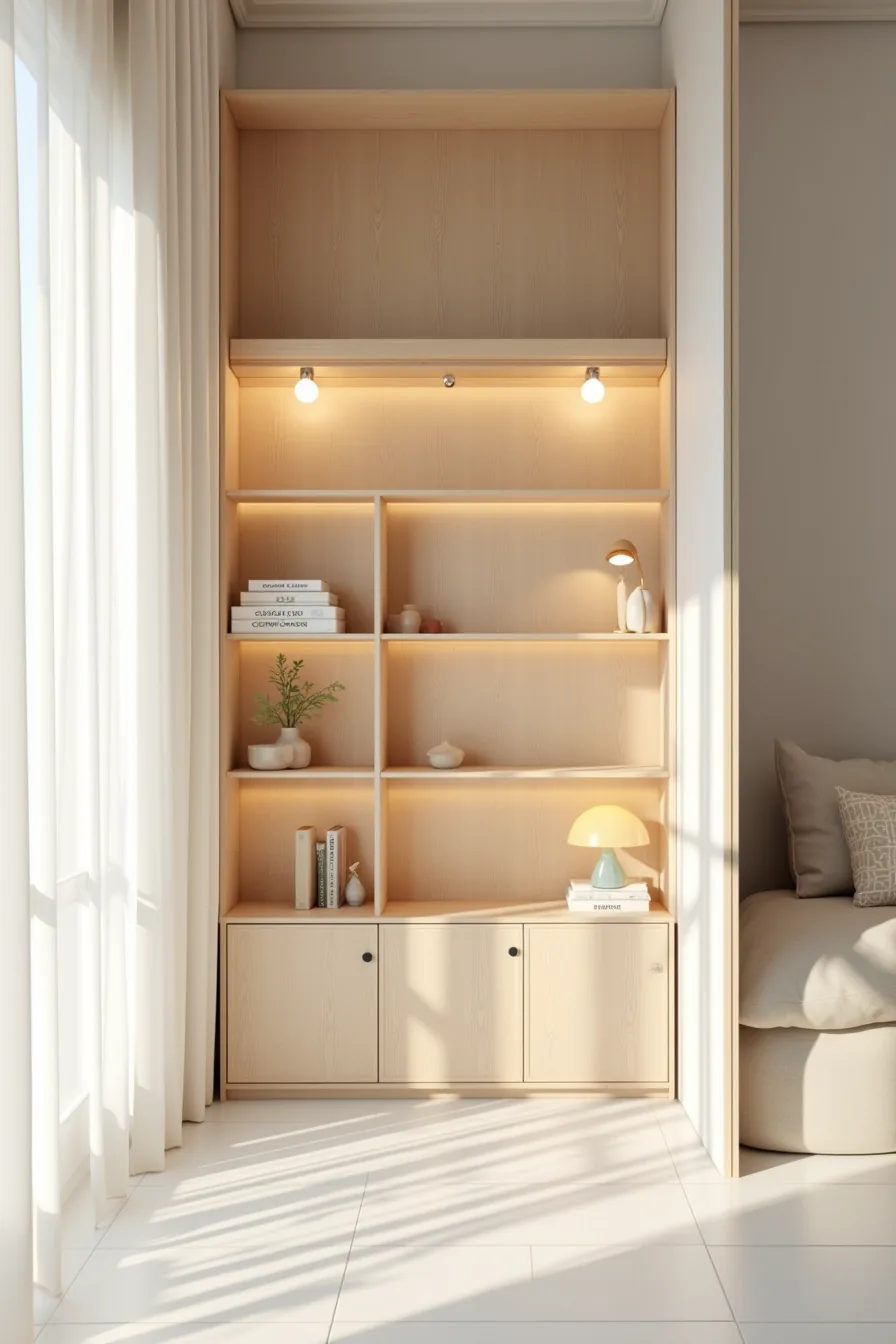
For the long-term investment route, built-in shelving with anchored brackets delivers the cleanest sightline: a flush wall of white oak or matte laminate that hides every wire. Budget 1,500–3,500 euros for materials and carpentry, and expect a 2–3 day installation that requires patching and repainting the wall afterwards. The payoff is a smooth unit that adds 10–15 cm of depth to the room visually, but you forfeit the ability to rearrange, choose this only if you plan to stay for five years or more.
Your First Move
You now have six distinct directions for your Scandinavian TV wall, each with its own trade-offs in cost, permanence, and visual weight. Match the option to your room’s actual constraints, rental agreements, wall structure, and viewing distance, before you fall in love with a specific aesthetic.
Start by measuring your wall and marking the ideal TV center height (typically 42–48 inches from floor to screen center). Then choose one approach and commit to a material sample before purchasing anything.
Order a single paint swatch or wood sample today, and hold it against your floor and furniture in both morning and evening light. That one small purchase will settle half your decisions.
Frequently Asked Questions
What materials work best for a Scandinavian TV wall in a rental?
Peel-and-stick wallpaper in light oak or matte white, plus tension-rod shelving units, are your best bets. They require no drilling and remove cleanly, leaving walls intact and your deposit safe.
How do you hide cables and equipment in a minimal Scandinavian setup?
Use a cord cover kit that paints to match your wall, then route cables into a slim, white cable raceway. Mount your soundbar directly under the TV and store the console box in a closed, low-profile media cabinet.
What’s the ideal distance between a TV and floating shelves on either side?
Keep 12–20 inches of clear wall space between the TV edge and the start of each shelf. This prevents visual crowding and ensures the shelves don’t block your viewing angle from seating positions.
Can you achieve a Scandinavian TV wall look in a very small bedroom?
Yes, mount a 40–50-inch TV flush and use a single floating shelf above it, not beside it. Skip the media console entirely; store devices in a slim under-bed drawer to free up floor space.