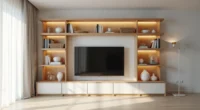
A small TV unit isn’t a piece of furniture, it’s a spatial strategy, and the right one depends less on the size of your television and more on how you live with the wall, floor, and storage around it. In practical terms, a small TV unit typically spans 32–48 inches in width, holds a screen up to 55 inches, and keeps the viewing height at eye level when seated. The six approaches that follow range from a $120 floating shelf to a custom built-in, each matched to a specific room constraint, so you can match the solution to your actual floor plan rather than a generic catalog image.
Key takeaways
- Measure your space first: a small TV unit should leave 10–15 cm of clearance on each side for airflow and easy access, not just fit the screen width.
- Floating shelves support TVs up to 25–30 kg if anchored into studs, making them ideal for renters who avoid drilling into brick or concrete walls.
- A low-profile console with an open base works best in narrow rooms because it keeps sightlines clear and doesn’t block floor-level circulation.
- Built-in niches cost 2–3 times more than freestanding units but add permanent wall storage that boosts resale value, so choose them only for long-term homes.
Floating Shelves: The Renter-Friendly Space Saver
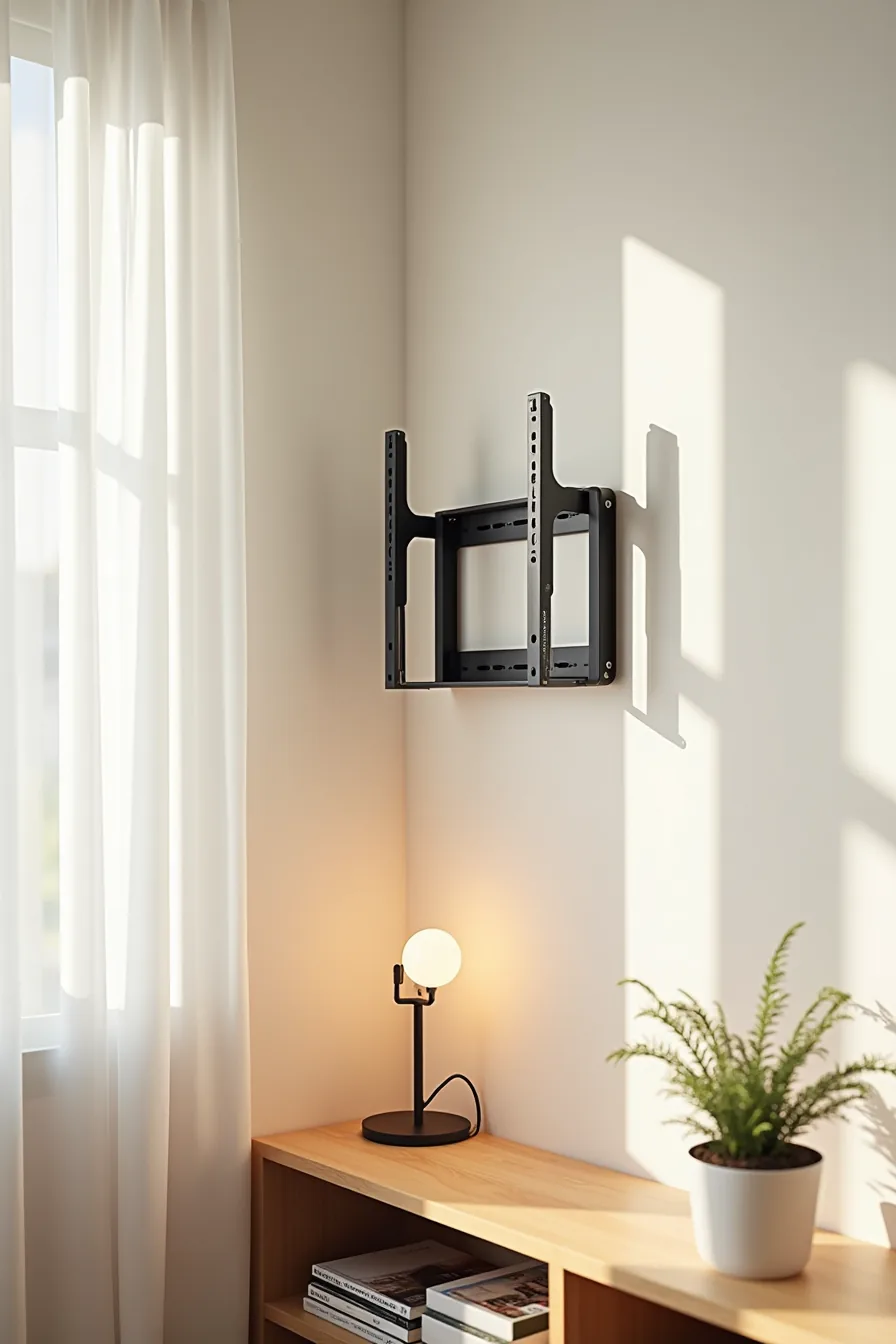
If your apartment is under 600 square feet, a traditional media console eats floor space you likely need for seating. Floating shelves give you a TV perch without the footprint. Most floating shelves support 30–50 pounds per bracket, which covers the vast majority of 43–55-inch TVs when you use a separate wall-mounted bracket for the screen itself.
The shelf holds the streaming box, soundbar, and decor, not the TV’s weight.
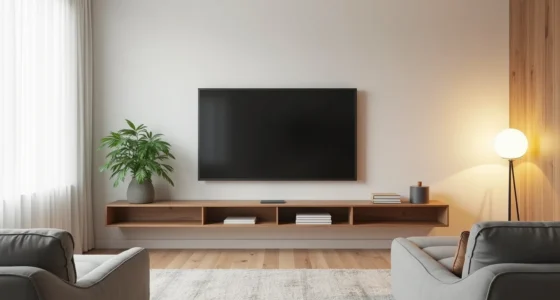
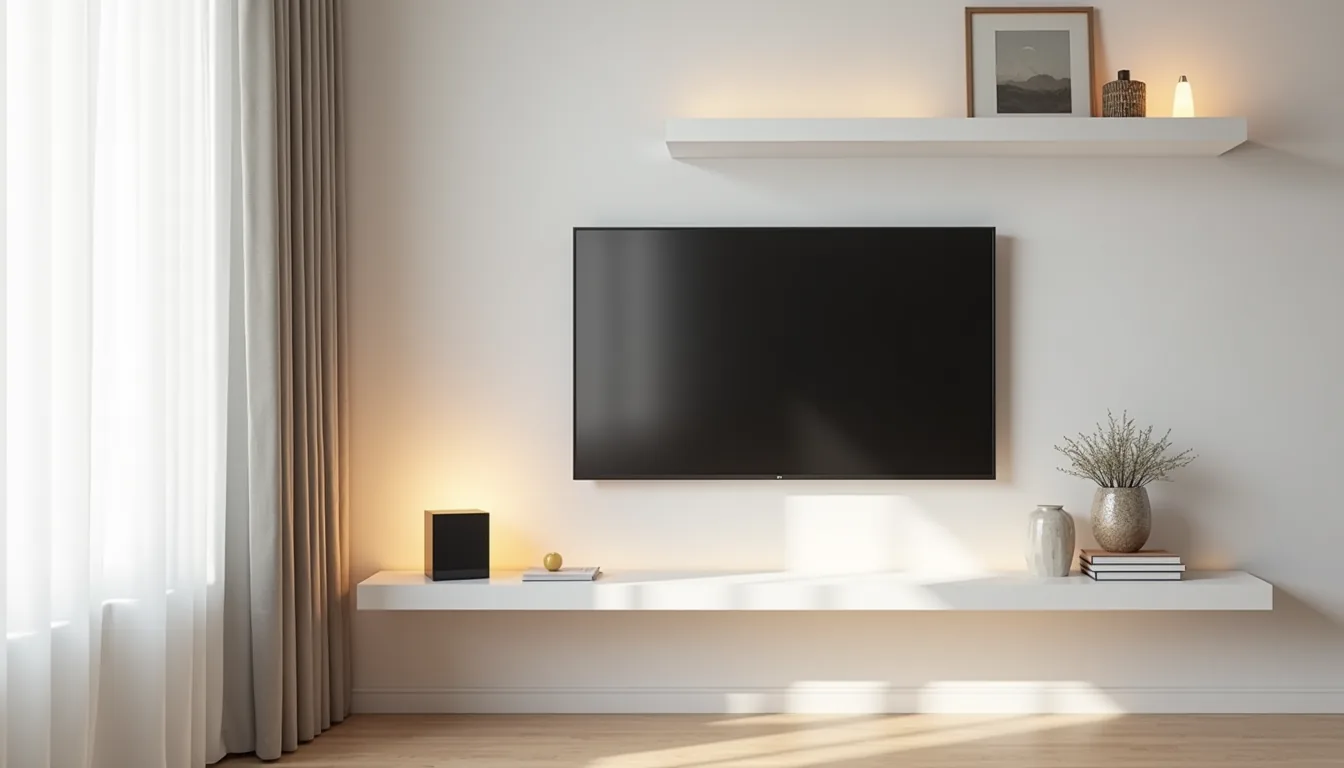
The key to keeping your security deposit is the mounting hardware. Use two heavy-duty brackets anchored into studs, not drywall alone. A cable conduit running flush along the shelf’s underside hides the power cord, so you avoid drilling extra holes for wire management.
The visible bracket attachment in this setup is intentional: it signals structural honesty, and the small potted plant at the shelf’s end softens the utilitarian look. Pair a matte black shelf with a white wall for contrast that reads as deliberate design rather than compromise. This route costs $60–$120 total for shelf, brackets, and conduit.
Low-Profile Console with Open Base

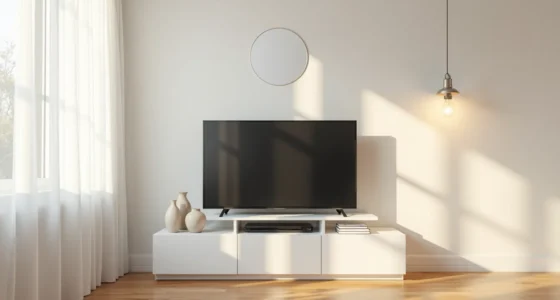
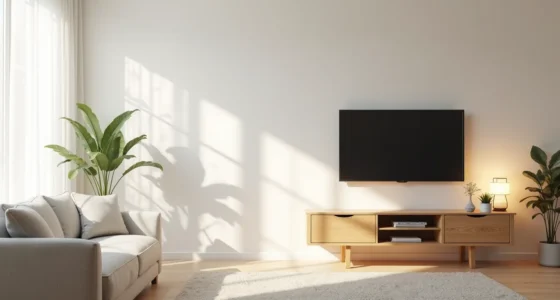
A compact console scale of 24–36 inches wide keeps sightlines open in rooms where you can’t afford visual weight. The 30-inch wooden console in this setup supports a 40-inch TV without overwhelming the wall, leaving roughly 5–10 inches of breathing room on each side. That negative space matters more than centering perfection, it prevents the unit from reading as furniture that swallowed the room.
Open legs change how the floor participates in the design. When you can see the floor beneath the base, the room feels larger because the eye travels past the console instead of stopping at it. The two small storage baskets on the top surface hold remotes and cables you use daily, while the soundbar sits directly below the screen for clean audio projection.
A solid wood top requires dusting every 3–5 days; a matte laminate finish hides smudges better and costs 30–40% less. Opt for hairpin or tapered legs over a solid plinth base to preserve that floor visibility, this is the single most important proportion decision in a compact console.
Corner Cabinet: Maximizing Awkward Spaces

A corner cabinet turns dead wall space into a functional zone, but its value depends on your room’s traffic pattern. This triangular unit, sized 20–28 inches along each wall-facing side, fits into a 90-degree corner without protruding more than 16 inches into the room. That shallow footprint keeps walkways clear, making it the right choice for narrow living rooms or open-plan layouts where a standard console would block the path between doorways.
The 42-inch TV mounts directly to the cabinet’s front face, which places the screen closer to eye level when you’re seated on a nearby sofa. Closed cabinet doors hide cable boxes and gaming consoles behind them, eliminating the visual clutter of exposed wires. This setup suits renters because the cabinet is freestanding, no wall anchors required, and the TV mount attaches to the cabinet, not the wall.
You’ll need to leave 2–3 inches of clearance behind the cabinet for ventilation, and choose a corner unit with pre-drilled cable holes to route wires cleanly.
Wall-Mounted Box Unit with Storage

A wall-mounted box unit solves the floor-space problem entirely while giving you a dedicated frame for the TV and your belongings. The design centers a 38-inch screen inside a rectangular frame, with three open shelves above and three below holding books, a small plant, and decorative boxes. Because the unit hangs from the wall, you reclaim roughly 14–18 inches of floor depth that a console would occupy, a meaningful gain in a room under 200 square feet.
The key constraint is weight distribution. A TV bracket rated for at least 1.5 times your screen’s weight must anchor directly into wall studs, not drywall alone. The surrounding frame adds 30–50 pounds of dead load, so verify your mounting points before committing.
Cable management clips along the interior edges let you run HDMI and power cords vertically behind the unit, then drop them straight down to a floor outlet, no visible wires crossing the shelves. This setup suits renters whose lease allows wall mounting, but confirm your deposit terms first; patching four screw holes costs less than replacing a scratched floor, and the visual gain is substantial. For a budget route, buy an off-the-shelf floating shelf system and mount the TV bracket between two tiers, skipping the custom frame entirely.
Apartment Media Unit: Portable and Modular
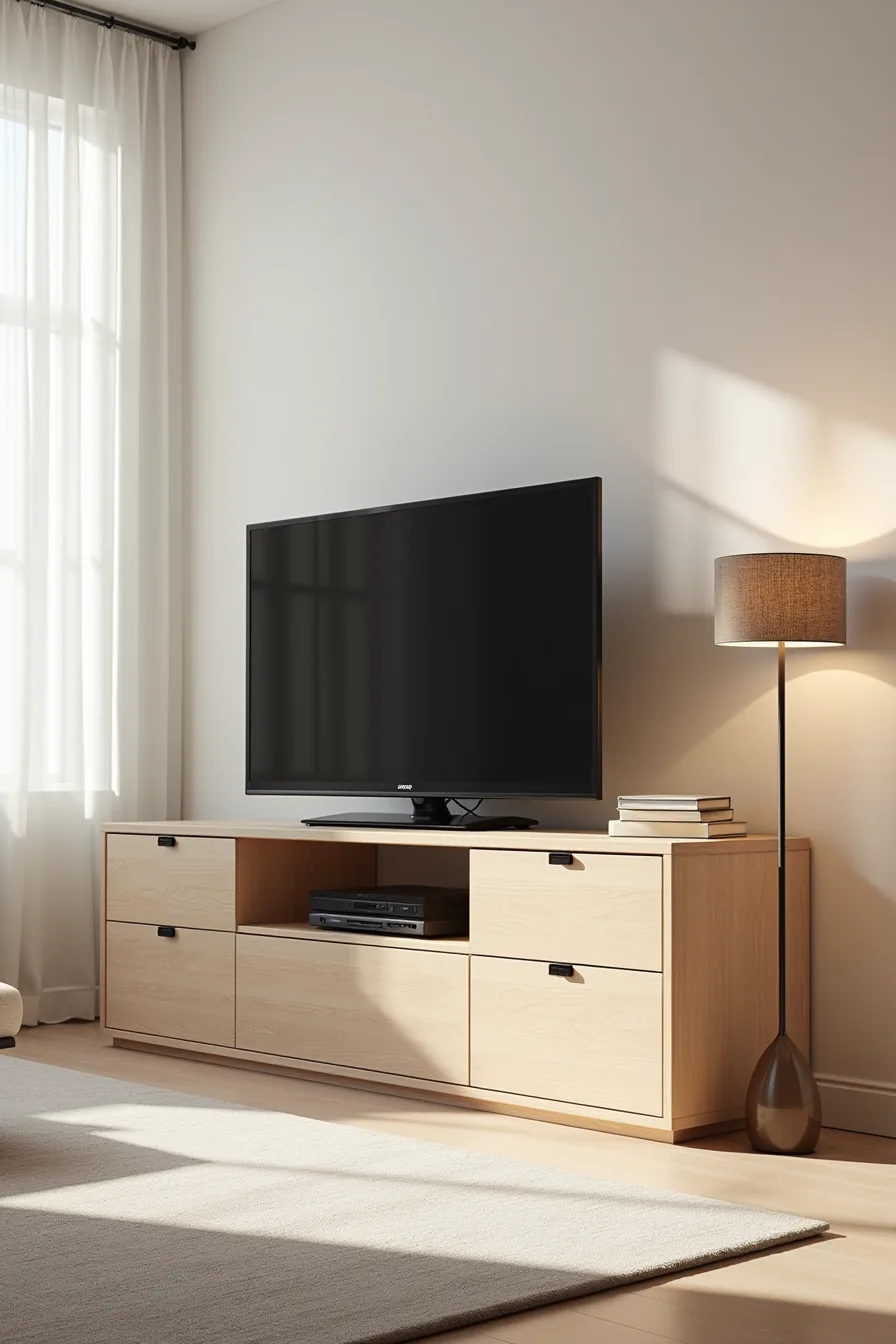
A freestanding modular media unit solves the moving problem outright. This 42-inch-wide configuration stacks three separate storage compartments and butts them together, with a 40-inch TV resting on the top shelf, no wall mounting, no drilling, no patching when you leave. The wheeled base on the bottom module adds genuine portability: you can roll the entire assembly across a room for cleaning or repositioning, though you’ll want to lock the casters once it’s in place to prevent drift on hardwood.
The modularity means you’re buying pieces, not a single fixed piece. A 36–48-inch footprint suits most studio and one-bedroom layouts, and you can reconfigure the vertical stack into a horizontal run against a longer wall if your next apartment has more breathing room. Assembly trade-offs are real: each module typically takes 20–40 minutes to build, and the joints between units can wiggle slightly unless you cinch them together with the included bracket clips.
This setup suits frequent movers and anyone renting without a mounting allowance, and it adapts to small, medium, or large spaces simply by adding or removing modules. For a renter-friendly budget route, skip the wheeled base and use adhesive felt pads instead, cheaper, quieter, and still floor-safe.
Built-In Niche: The Long-Term Investment
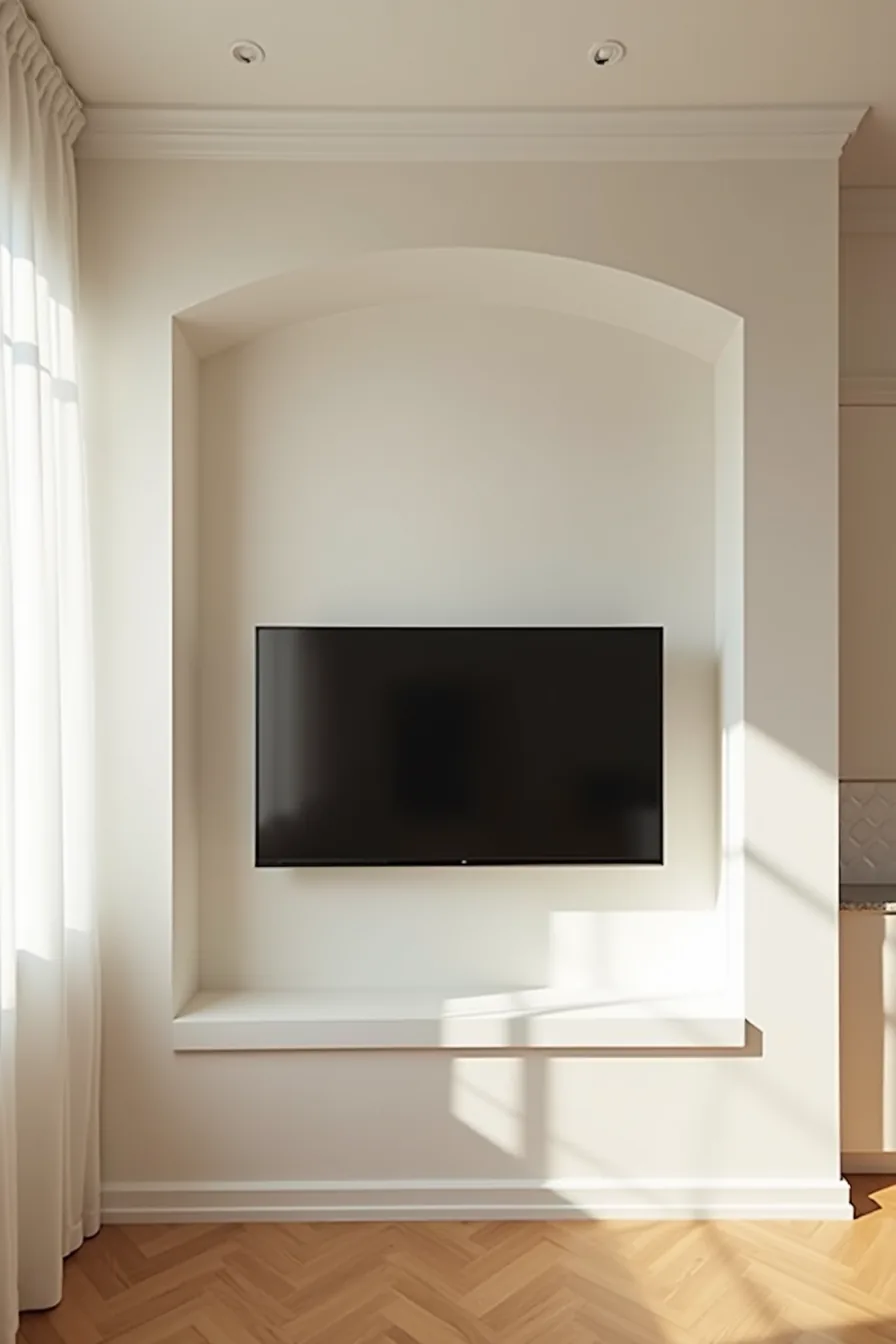
A recessed niche is the permanent solution for a small TV unit. The wall cavity holding that 46-inch television is framed with drywall so the screen sits perfectly flush, reclaiming roughly 10–12 inches of floor depth that a media console would eat. Flanking the opening, two narrow built-in shelves carved into the wall give you a place for the cable box and a few books without any visible shelving hardware.
This approach requires a wall with at least a 4–6-inch cavity depth, which most interior partition walls can offer. The drywall frame and niche construction typically run $500–$1,500 for materials and labor, depending on your region and whether you hire out or DIY. You also need to plan for cabling before you seal the wall, running HDMI and power through the cavity first prevents a frustrating retrofit.
This route suits homeowners, not renters, since it’s permanent. It works in any room size because it claims zero floor space, but the flush mount forces you to commit to a single TV size and position. Ventilation matters: a sealed cavity traps heat, so leave a 1–2-inch air gap around the TV’s back panel or install a small vent grille to avoid shortening the set’s lifespan.
Your decision checklist
Before you commit to any small TV unit, work through these five points:
- Measure your TV first, the unit should be at least 2 inches wider on each side to avoid a top-heavy look.
- Confirm viewing height, the screen center should land at seated eye level, typically 40–45 inches from the floor.
- Check clearance, leave 4–6 inches behind the unit for cable management and ventilation if your TV sits on top.
- Match the unit to your wall, a floating shelf needs studs; a freestanding cabinet needs floor space, not wall support.
- Decide your trade-off, budget builds favor open shelving, renters benefit from freestanding pieces, and long-term owners can invest in custom cabinetry.
Start today by measuring your TV width and your wall space. Write those two numbers down, they’ll filter out half the options you see online before you even browse.
Frequently Asked Questions
What width should a small TV unit be if my TV is 43 inches?
Choose a unit 40–48 inches wide. That keeps the unit visually balanced under the TV without overhanging. For a 43-inch screen, anything narrower than 36 inches looks undersized.
Can I use a small TV unit in a bedroom, or is it only for living rooms?
Yes, bedrooms work well. Opt for a lower profile, 18–22 inches tall, so it clears sightlines from the bed. A closed cabinet hides bedside clutter better than open shelving.
How do I hide cables and clutter behind a floating small TV unit?
Mount a cable raceway vertically behind the unit, then route cords into a power strip hidden inside the cabinet. Use a unit with a back panel cutout or add a grommet for clean pass-through.
Is a small TV unit suitable for renters, or will I lose my security deposit?
Renter-friendly options exist: freestanding units with no wall mounting, or floating units secured with removable adhesive strips rated for your wall type. Avoid drilling unless your lease permits. Most deposits cover damage, not standard furniture placement.