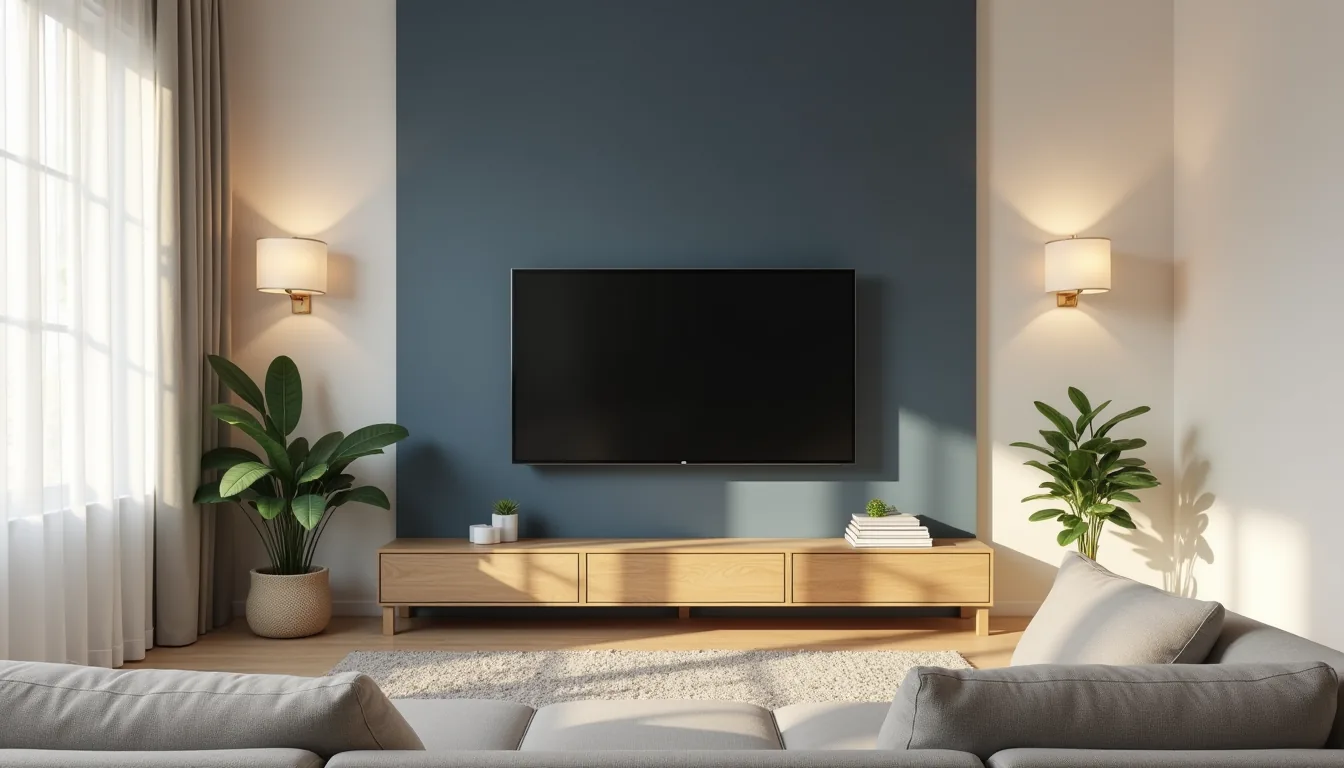
The TV back wall is the largest flat surface your living room asks you to make a decision about, and the wrong choice, too busy, too plain, too fragile, will dominate the room for years. You’ve more valid options than a simple media console, ranging from floating slat panels to painted chalkboard sections. Each approach changes how you mount hardware, manage cables, and control glare.
The six setups below break down what each costs, who it fits, and the exact trade-offs you must accept before you commit.
Key takeaways
Choose the material first, paint, shiplap, wallpaper, stone veneer, shelving, or fabric, because it dictates both the visual weight and the structural prep required for your TV back wall. Match the treatment to room size, a dark painted accent wall suits large open areas, while light shiplap or peel-and-stick wallpaper keeps small rooms from feeling cramped. Budget routes exist, peel-and-stick wallpaper and painted panels cost a fraction of stone or custom built-ins, and both are removable for renters. Plan for ventilation and access, leave at least 2–4 inches of clearance around recessed or wall-mounted TVs, and avoid shelving that blocks heat dissipation or cable routing.
Painted Accent Wall: Color as the Simplest Backdrop
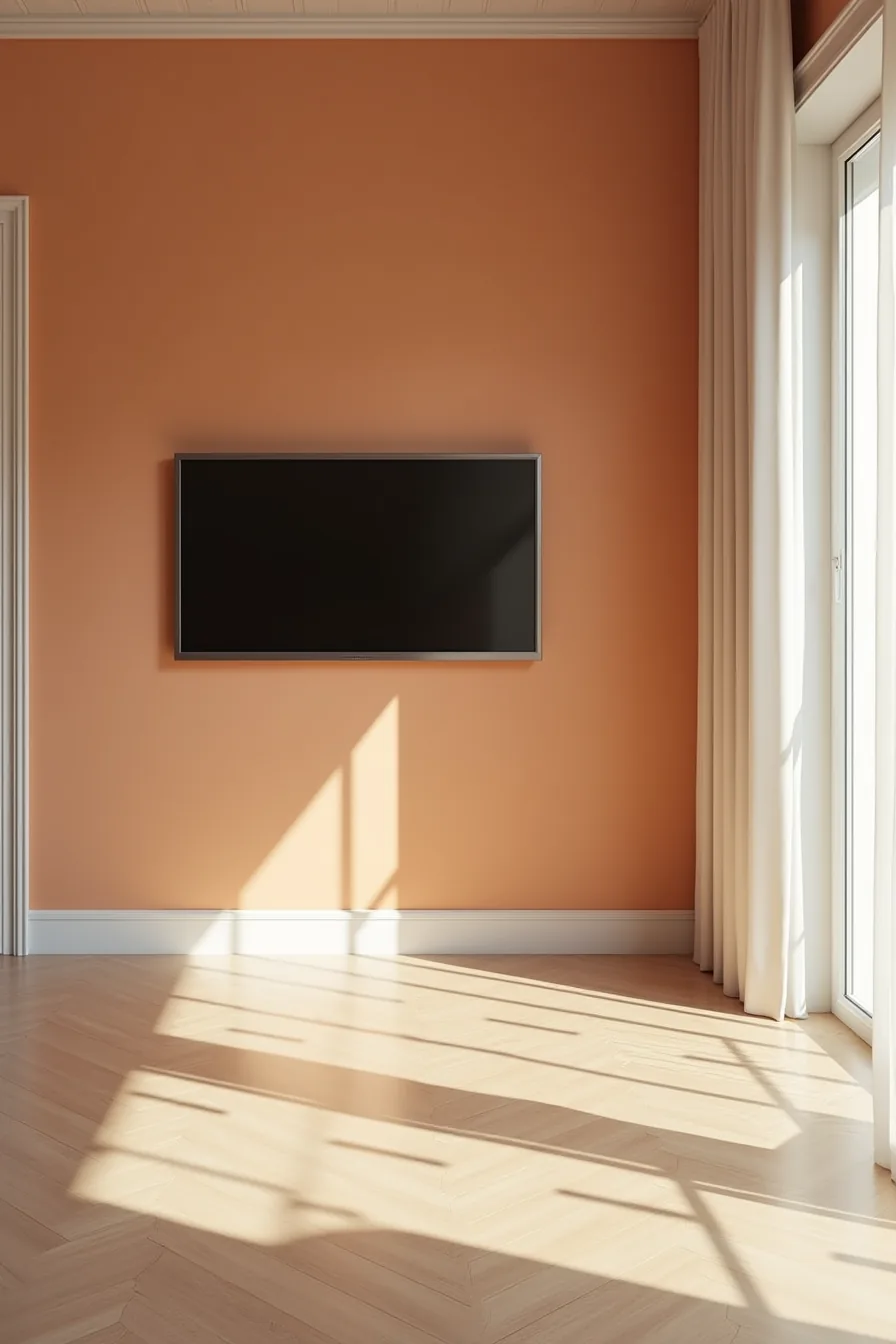
A painted accent wall is the lowest-cost, highest-impact way to define your TV back wall. Warm terracotta paint on the wall behind a mounted screen creates a deliberate focal point while white trim around the edges keeps the look crisp and intentional. The soft shadows cast by afternoon sun across the painted surface add depth without requiring texture or materials.
For small rooms, choose mid-tone colors like terracotta or sage rather than dark hues, which visually shrink the space. In bright, south-facing rooms, matte finishes reduce glare; in darker spaces, a satin sheen helps bounce available light. You can paint a standard 8-foot wall in a weekend for roughly $40–$80 in materials, making this the most budget-friendly route if you own your home.
Renters can achieve the same effect with peel-and-stick paint films, though the texture differs slightly from a true paint finish.
Shiplap and Wood Paneling: Texture Behind TV for Depth
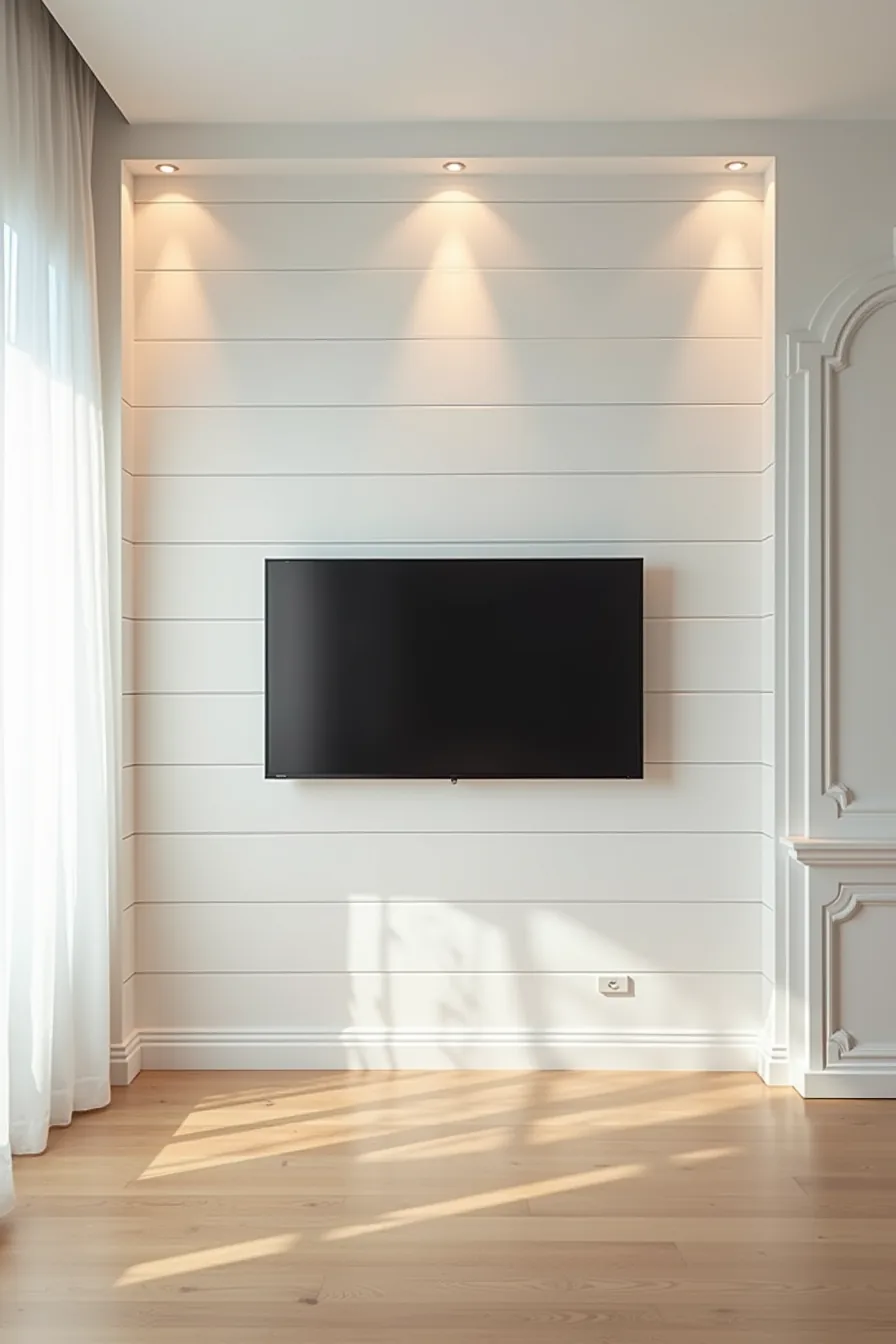
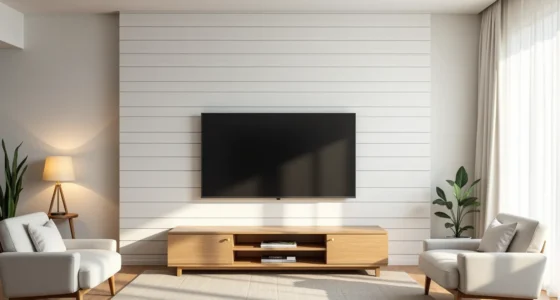
Horizontal shiplap boards running the full width of the wall give a mounted flat-screen TV a clean, grounded backdrop. The white-painted wood reads as classic farmhouse or coastal, and the subtle wood grain visible on each board adds just enough visual interest without competing with the screen. The natural wood tones peeking between boards create fine shadow lines that deepen the texture, especially when recessed lighting above casts soft highlights across the surface.
This treatment suits living rooms with a rustic, transitional, or cottage aesthetic where you want warmth without the heaviness of stone or brick. A standard 8-foot wall requires roughly 32–40 boards for horizontal installation, with material costs ranging $150–$400 depending on whether you choose solid pine or engineered panels. Plan for a full weekend of work, including cutting, leveling, and finishing.
Vertical installation creates a taller, more modern look but uses roughly 15–20 percent more material. Maintenance is straightforward: dust the grooves quarterly and repaint every 5–7 years to keep the surface fresh. This is a permanent homeowner route, removing shiplap damages drywall, so renters should look to peel-and-stick wood planks instead, which offer similar texture behind TV for a fraction of the cost and zero commitment.
Wallpaper and Peel-and-Stick Options: Renter-Friendly Texture
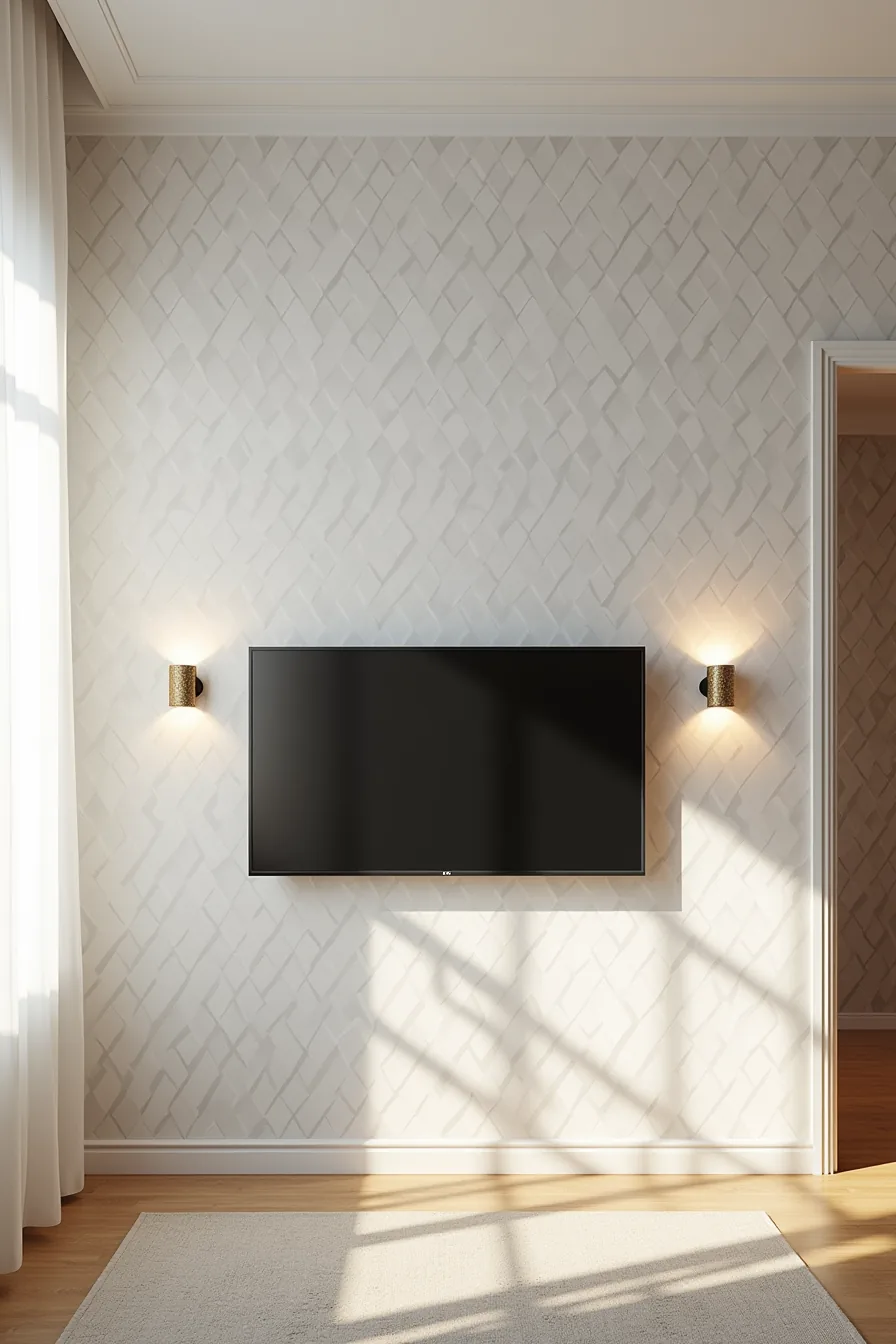
A geometric wallpaper in repeating gray and white diamonds transforms a flat wall into a designed focal point without a single nail or drop of adhesive damage. The pattern’s crisp edges along the wall perimeter draw the eye toward the mounted flat-screen TV at center, while the monochrome palette keeps visual noise low so the screen remains the hero. This approach suits renters, first-time decorators, or anyone who changes their mind seasonally, you can redo the entire look in an afternoon.
Peel-and-stick wallpaper typically costs $30–$80 per roll, covering roughly 25–30 square feet each, making a standard 8-foot accent wall a $120–$300 project. Installation requires a clean, smooth surface; texture or glossy paint reduces adhesion. Removal takes 30–60 minutes per wall using a hairdryer on low heat to soften the adhesive, leaving no residue when applied to standard flat paint.
Expect 3–5 years of durability before edges lift in high-humidity rooms, so avoid bathrooms and kitchens. For pattern-matching designs like this diamond motif, order 10–15 percent extra material to align repeats smoothly.
Stone, Brick, or Faux Veneer: Architectural Statement
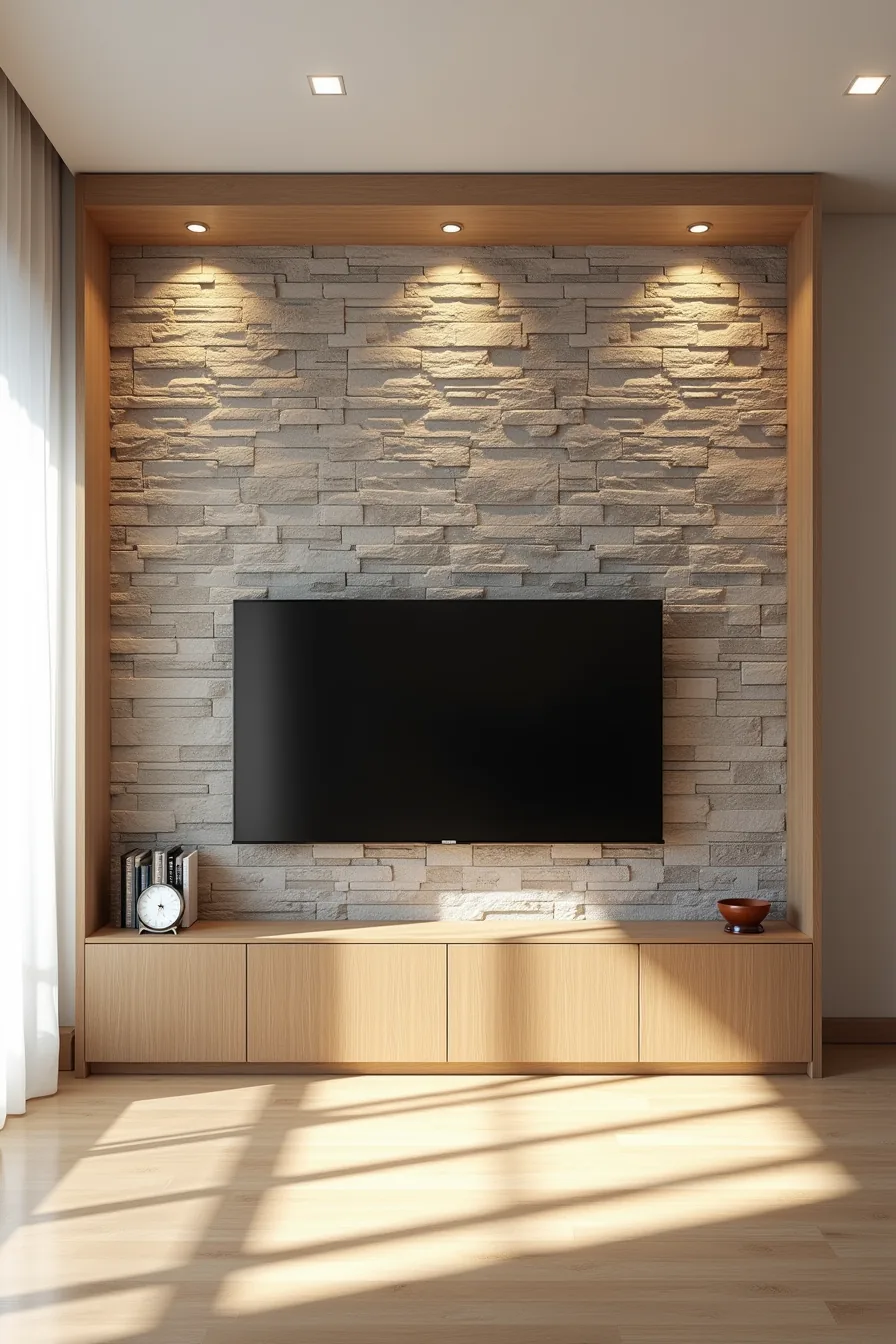
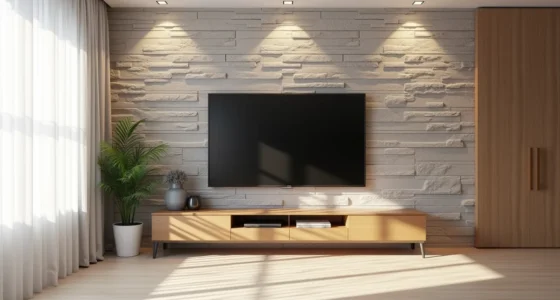
A full stacked stone veneer wall turns your TV area into a permanent, textural anchor. The irregular warm gray and tan rectangles in this arrangement catch recessed spotlights differently across each surface, so the wall reads as sculptural rather than flat. The mounting point at center sits flush against the stone, with visible grout lines reinforcing the material’s depth and the screen’s clean contrast against it.
This is a long-term investment route, running $8–$15 per square foot for materials alone, plus professional installation. Real stone veneer weighs 10–15 pounds per square foot, demanding structural backing and a mounting system rated for combined stone-and-TV weight. Faux polyurethane panels cut that weight to under 2 pounds per square foot and cost $4–$9 per square foot, and you can attach them directly to drywall with construction adhesive.
It suits living rooms with ample floor clearance, the texture visually advances the wall, so leave at least 5 feet of open space in front. Maintenance is minimal: dust monthly with a soft brush, and reseal natural stone every 1–2 years to prevent staining if your TV throws noticeable heat.
Floating Shelves and Built-In Storage: Screen Off Appearance
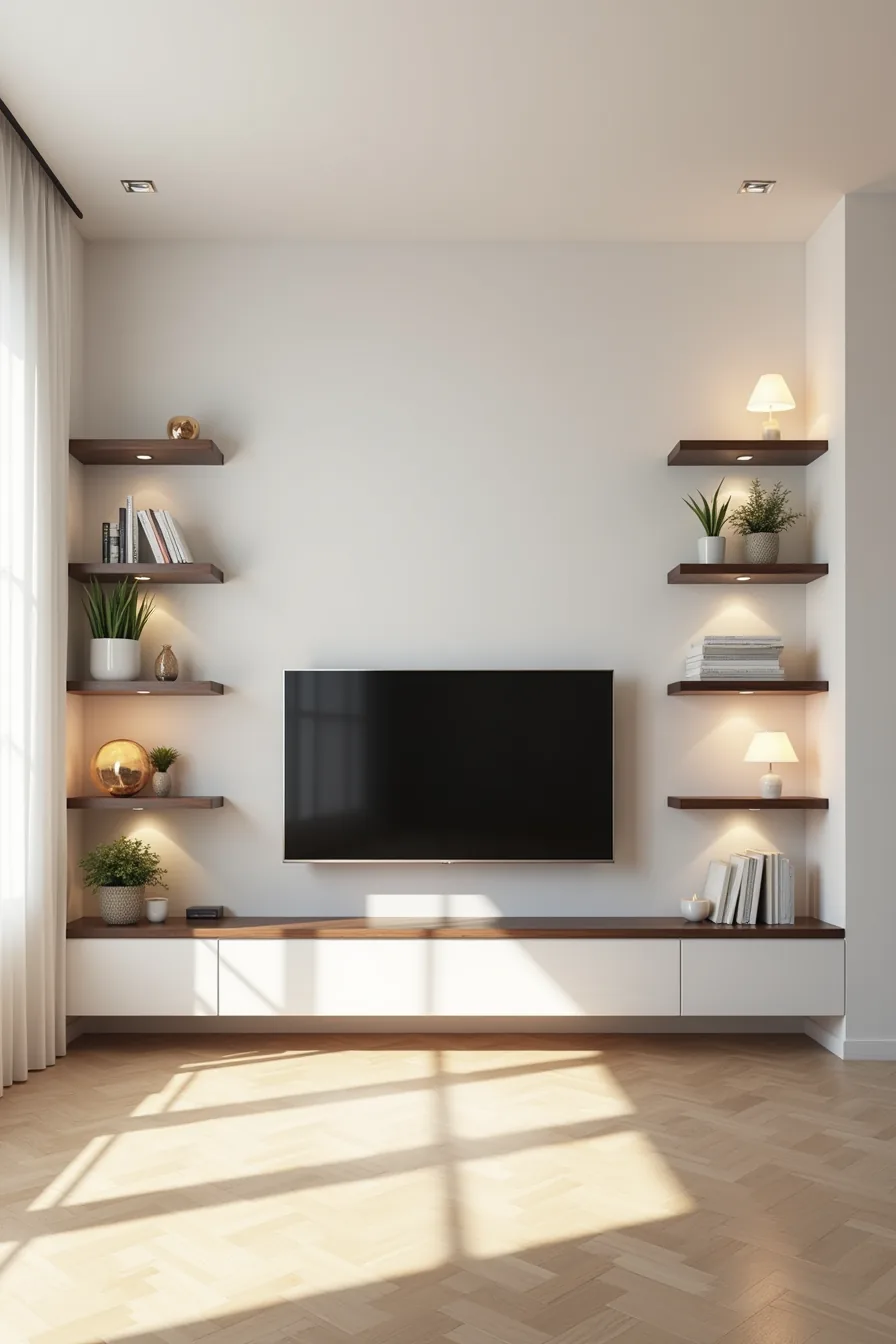
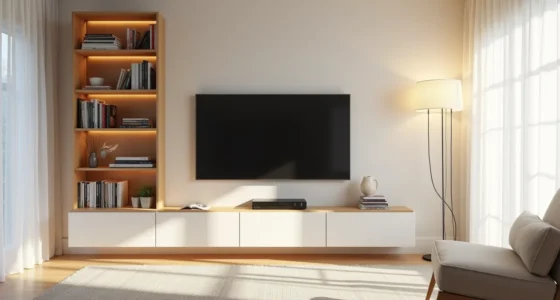
Floating shelves flanking the screen create a framed composition that makes the TV feel like part of a curated display rather than the room’s sole focus. In this arrangement, three dark wooden shelves sit at staggered heights on each side of the flat-screen, holding decorative objects, small plants, and books that draw the eye outward and give the wall a lived-in rhythm. The recessed lighting above each shelf washes the contents in soft pools of light, which adds depth without competing with the screen’s brightness.
This setup suits medium-width walls between 90 and 120 inches, where the combined shelf-and-TV footprint covers roughly two-thirds of the surface. Keep at least 6 inches of clearance between the screen edge and the nearest shelf on each side, and mount the lowest shelf 12–18 inches above your media console to preserve sightlines. For a screen off appearance when not watching, choose shelves with solid side panels or add shallow baskets, this hides clutter while keeping the profile slim.
Budget route: pine boards finished with dark stain run $30–$60 per shelf, and you can install them with heavy-duty French cleats rated for 30–50 pounds each.
Fabric Panels and Acoustic Backing: Soft Texture and Sound Control
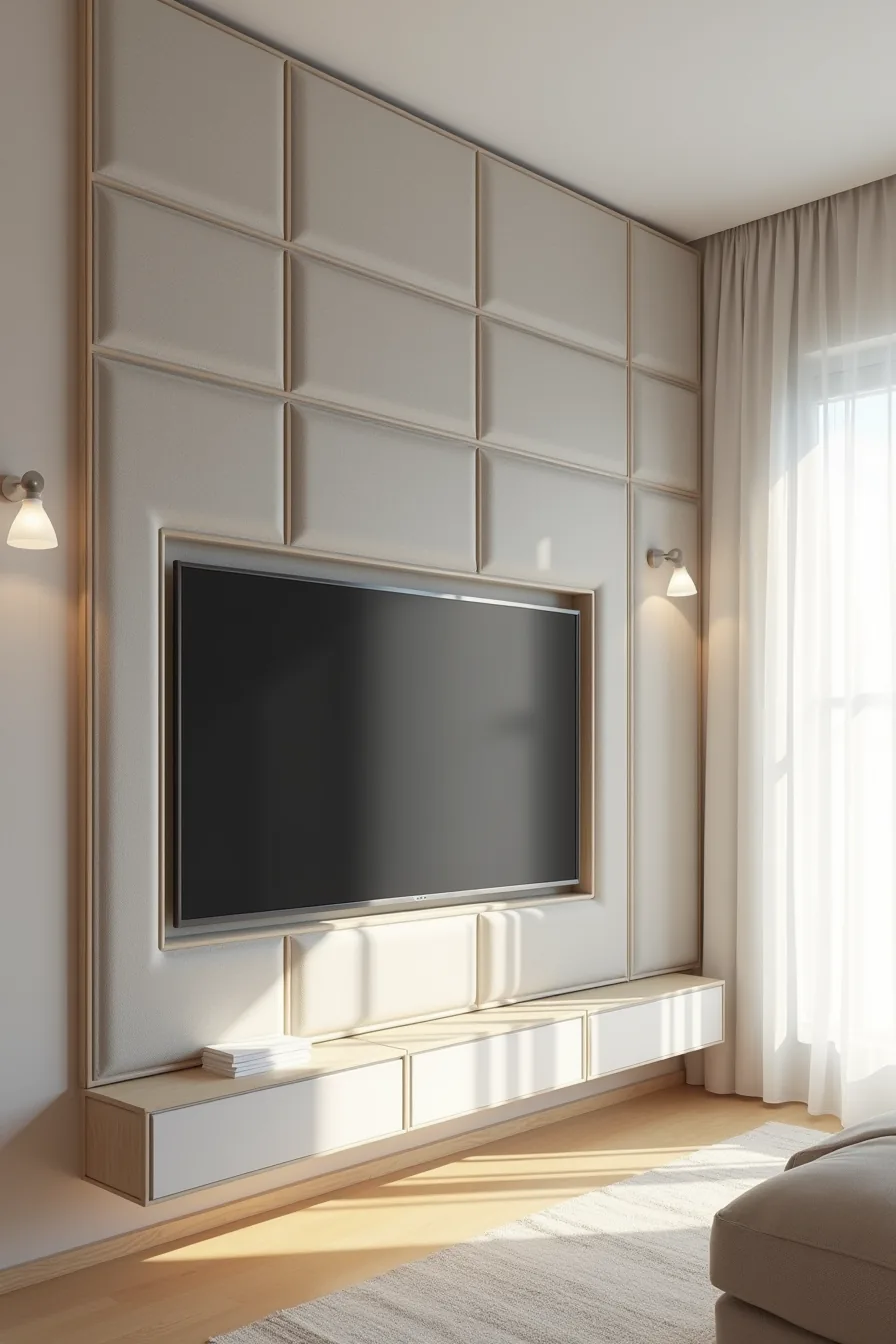
Upholstered acoustic panels transform a hard reflective surface into one that absorbs echo, making dialogue crisper and the room feel quieter. A full coverage grid of gray linen panels, with visible stitching at each edge, creates a tailored, furniture-like finish that reads as intentional design rather than an afterthought. The soft texture also diffuses light, reducing glare on the screen during daytime viewing.
This solution shines in open-plan living areas or rooms with hard flooring, where sound bounces off every surface. You need a wall at least 24 inches wider than your screen to let the panel field extend past the TV edge; a 55-inch screen typically calls for an 80–100-inch wide panel area. If you want the panels to meet smoothly, mount them on a continuous plywood backing board.
For renters, attach each panel with heavy-duty VELCRO brand strips rated for 10–20 pounds per square foot, no drilling, and removal leaves only adhesive residue you can lift with a hairdryer. Expect to pay $25–$50 per square foot for fabric-wrapped acoustic panels. One trade-off to weigh: the textile surface does trap dust, so you’ll need to vacuum it with a soft brush attachment monthly to keep the finish looking fresh.
Your decision checklist
Before you buy anything, measure your wall and seating distance. A 55–65-inch TV suits most 10–12 foot viewing distances; larger screens demand more breathing room and a sturdier mount.
Then decide your priority: budget, renter safety, or permanence. Peel-and-stick panels and floating shelves cost under $300 and remove cleanly. Built-ins run $1,500–$4,000 but add lasting storage and resale value.
Match your material to your lifestyle, matte finishes hide fingerprints, glossy surfaces show every smudge. Dark tones recede visually; light tones expand a small room.
Take this step now: sketch your wall to scale on graph paper, plot the TV center at eye level (42–48 inches from floor), and mark clearance on all sides before you shop.
Frequently Asked Questions
What is a TV back wall and why does it matter in room design?
A TV back wall is the surface directly behind your television, designed to frame the screen and reduce visual clutter. It matters because it anchors the room’s focal point, controls glare, and improves viewing comfort through contrast and depth.
Can I install a TV back wall in a rental apartment?
Yes, if you use renter-friendly methods: peel-and-stick panels, removable wallpaper, or a freestanding room divider. Avoid drilling into plaster or textured walls; use adhesive strips rated for 5–10 kg. Always check your lease for paint or alteration clauses first.
How do I choose between paint and texture for my TV back wall?
Choose paint for minimal cost and easy updates, matte finishes reduce glare best. Texture, like wood slats or 3D panels, adds acoustic absorption and visual interest, but costs 3–5 times more and requires more cleaning. Match texture to room style; paint suits minimalist or rental spaces.
What size should my TV back wall be relative to my screen?
Make the back wall 1.5–2 times the screen’s width for balance. For a 55-inch TV, that means a 82–110-inch wide feature area. Height should extend 12–24 inches above and below the screen, keeping the wall’s visual weight proportional to the room.