
Rich bathroom luxury isn’t about piling on marble and gold, it’s a deliberate layering of deep color, weighty materials, and tailored lighting that makes a small daily ritual feel like a five-star hotel checkout. The trick is that none of it needs a full renovation or a seven-figure budget. You can achieve the effect with a matte black faucet, a linen shower curtain, and a single sculptural sconce, if you know where to place them.
The six routes below break down exactly what to buy, where to put it, and what it costs to maintain, so you can pick the version that fits your space and your habits.
Key takeaways
- Deep, saturated hues like forest green, navy, or charcoal anchor a rich bathroom and hide water spots far better than white or light gray finishes.
- Mixing brushed brass or matte black fixtures with natural stone (quartzite or marble) creates visual depth, but seal porous stone annually to prevent staining from soap and hard water.
- Layer lighting in three zones, overhead, vanity, and accent, using dimmable sconces at eye level (60-66 inches from floor) to avoid shadows and mimic spa-like warmth.
- For renters or tight budgets, swap in a peel-and-stick textured tile backsplash, a plush bath mat, and a framed mirror to achieve the look without permanent alterations or high-cost materials.
Deep Color Palette as Foundation
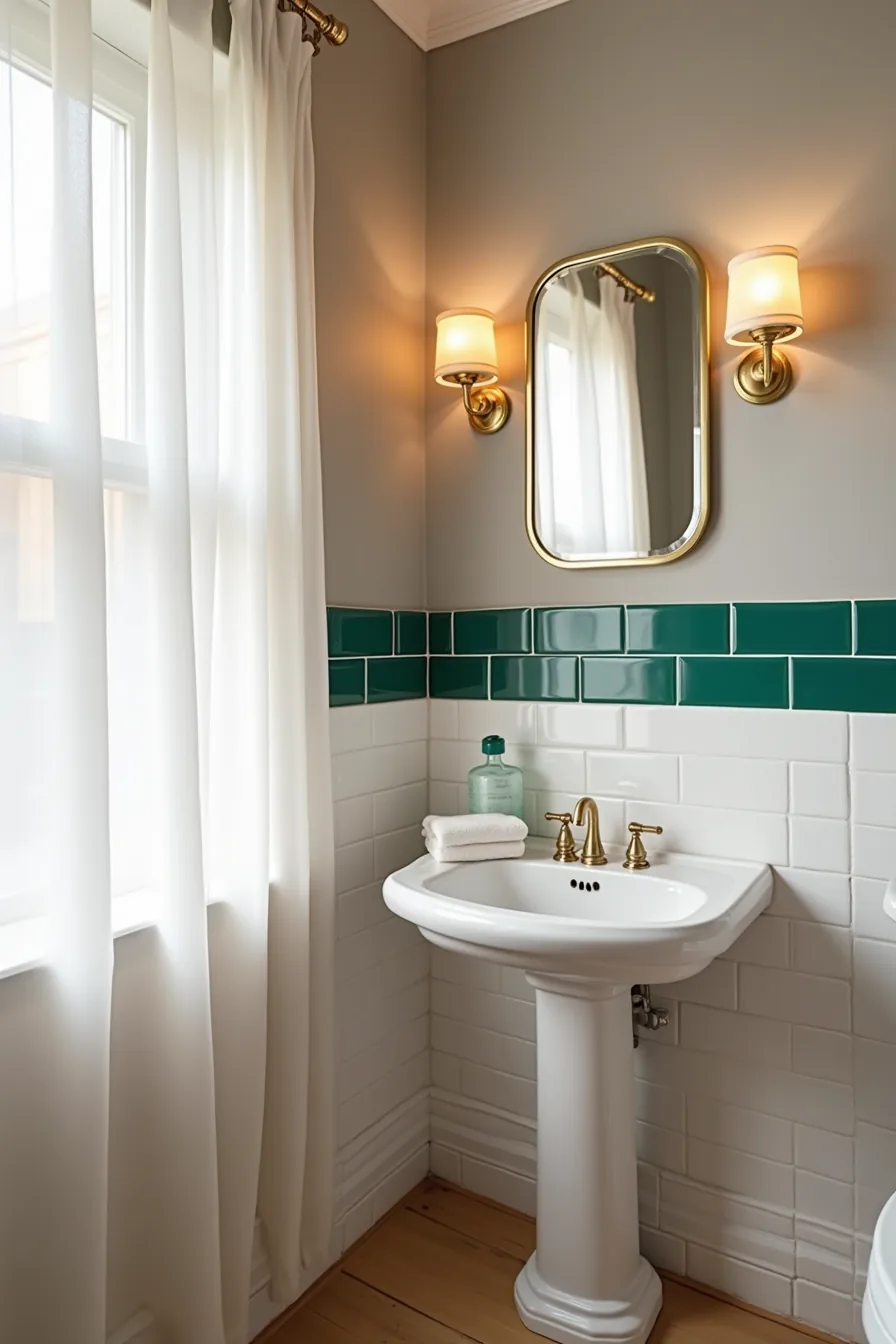
Charcoal walls establish the richness in this setup, but the emerald tile panel above the pedestal sink carries the jewel-tone weight. You don’t need full saturated walls to achieve a deep color foundation; a single accent surface of emerald, sapphire, or amethyst tile delivers the same perceived luxury for roughly one-quarter of the material cost. The white subway tiles below the chair rail serve a practical purpose, they bounce light upward and keep the lower half of the room from feeling heavy while you stand at the sink.
For a small or medium bathroom, cap the dark paint at the upper two-thirds of the wall and let the white tile run from wainscot height down to the floor. That split keeps the room from reading as a cave while still giving you the dramatic contrast that defines a deep palette. The brass mirror introduces warm reflectivity against cool charcoal and emerald, which prevents the scheme from turning clinical.
Expect to repaint charcoal walls every three to five years, flat finishes show water spots quickly, so specify a satin or eggshell sheen in wet zones.
Stone and Metal Mix for Texture

Pairing cool stone with warm metal creates the tactile contrast that separates a rich bathroom from a merely decorated one. The slate tiles stacked beside a matte black towel bar give you rough, irregular edges against a smooth, powder-coated surface, a combination that works because each material makes the other feel more deliberate. The bronze soap dish introduces a mid-tone warm accent that bridges the gap between dark slate and the marble vessel sink below, which carries grey veining that echoes the limestone wall behind it.
For reproduction, keep the metal-to-stone ratio around one part metal to three parts stone by visual weight; too much brass turns opulent into ornamental. Choose honed or tumbled stone over polished, it hides water spots and feels warmer under bare feet. Bronze and matte black both require minimal upkeep, but expect bronze to develop a natural patina over two to three years.
If your bathroom runs small, limit stone to a single backsplash or countertop surface rather than tiling entire walls, and let the metal fixtures carry the richness instead.
Warm Luxury Texture Through Textiles

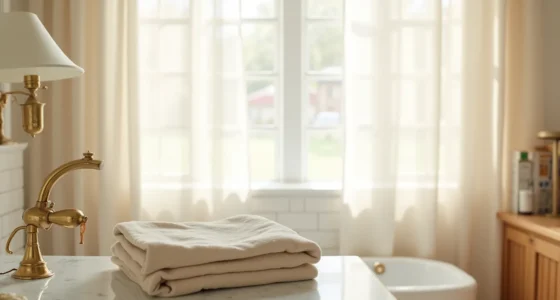
Textiles deliver rich bathroom luxury without a single permanent change, which makes them the fastest route to a high-end feel in a rental or a temporary space. A wooden towel rack holding layered natural linen towels in cream and oatmeal tones introduces two complementary shades of the same fiber, creating depth through variation rather than pattern. The woven jute bath mat beneath it adds a coarser, earthy texture that contrasts with the smooth linen weave, while linen curtains filtering light from a small window soften the entire room’s edges.
For reproduction, buy towels in three graduated tones of one color family, cream, oatmeal, and a deeper sand, and hang them in order of light to dark for a styled, deliberate look. Linen towels dry faster than cotton but feel rougher for the first four to six washes; expect to break them in before they reach peak softness. Jute mats shed fibers for the first two weeks and absorb moisture well, but they can’t go in a washing machine, spot-clean only or they’ll warp.
This approach suits small bathrooms particularly well because textiles add richness at eye level and floor level without consuming counter space or narrowing circulation paths.
Lighting That Elevates the Space

Lighting determines whether deep navy walls read as moody sophistication or gloomy cave, and the fix is layering three distinct sources rather than relying on a single overhead fixture. Brass sconces mounted symmetrically on either side of a dark-framed mirror create the flattering, shadow-free illumination you need for shaving or makeup application, with the warm bulbs casting soft halos against the navy paint. A pendant fixture hanging above adds the third layer, providing general ambient light that fills the center of the room and reduces contrast between the bright mirror zone and darker corners.
Install sconces at eye level, roughly 60–66 inches from the floor to the fixture center, and space them 36–40 inches apart to avoid casting shadows across your face. Pair all three circuits with dimmers, which let you shift from bright task lighting at 7 a.m. To a low, amber glow for evening baths.
Expect to pay a premium for brass finishes, they cost 20–40 percent more than chrome or matte black, but they develop a desirable patina over time that cheaper plated options won’t. This setup rewards anyone pursuing Luxury Bathroom Ideas for a Hotel-Inspired Morning Routine, since layered lighting is what makes a compact room feel intentional rather than merely functional.
Hardware and Accessories as Luxury Details

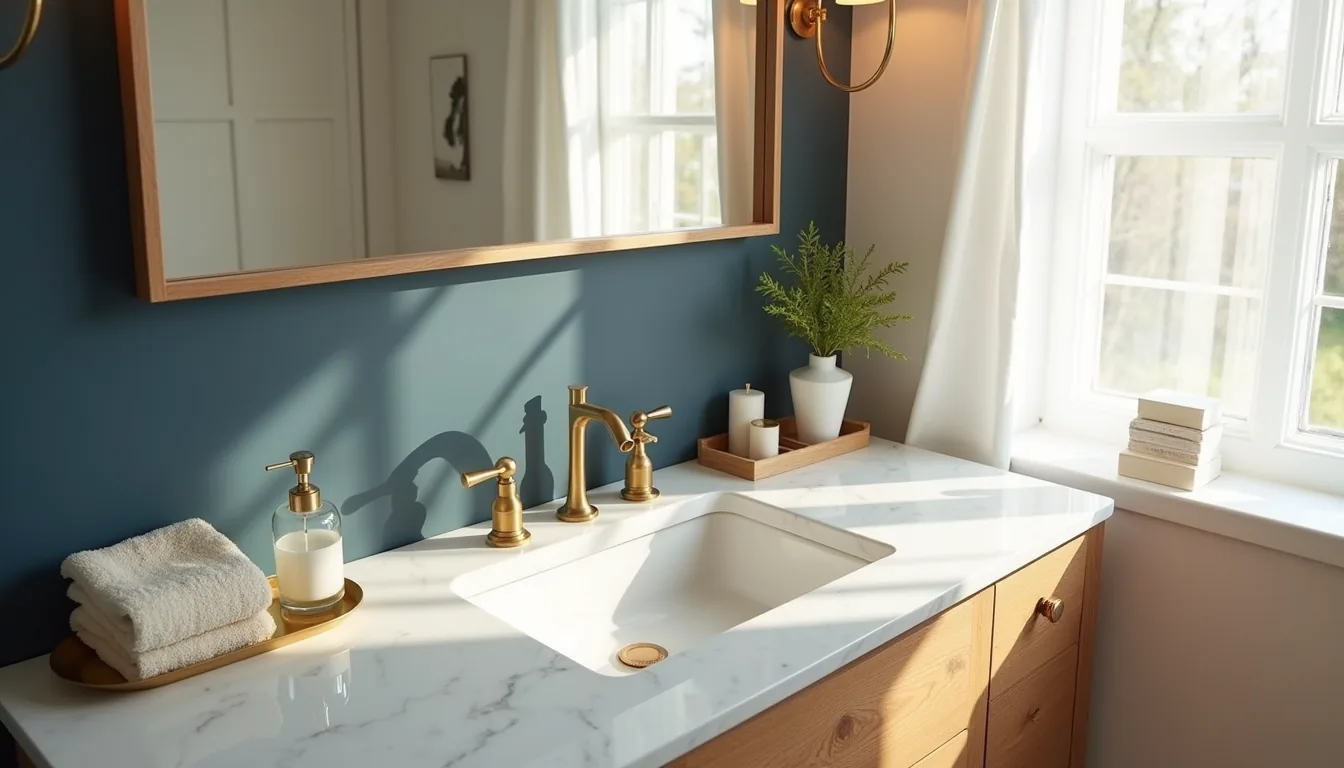
Hardware delivers the tactile proof of Rich Bathroom Luxury, and the combination in this vanity setup works because it pairs materials with contrasting temperatures. The matte black faucet anchors the silhouette with quiet weight, while brass drawer pulls and the polished brass shelf bracket introduce warm reflections that prevent the dark finish from feeling austere. The bronze-edged mirror frames the composition, echoing the warmer tones without duplicating them exactly.
Choose your faucet finish first, since it occupies the most visual space, then match your pulls and brackets within the same metal family but allow one accent piece to vary in texture or shade. A ceramic soap dispenser keeps the countertop functional without introducing plastic, and it requires only a wipe-down with mild soap to maintain its glaze. Budget roughly $150–$400 for a quality matte black faucet, $8–$20 per drawer pull, and $25–$60 for a solid brass shelf bracket, expect to tighten all mounting hardware twice a year, as temperature swings in bathrooms loosen fittings over time.
Adapting Rich Bathroom Luxury to Your Space

Scale dictates your strategy. In a small bathroom, the deep teal walls and a single marble shelf carry the full weight of the look because they occupy the vertical plane, leaving the floor plan untouched. You can replicate this with a 24–30 inch floating marble shelf above the toilet or beside the mirror; it gives you a display surface without the clearance problems a cabinet would create.
For a medium ensuite, you gain the freedom to layer brass fixtures across multiple touchpoints, faucet, shower head, and towel bars, against charcoal walls. The darker backdrop makes each metallic element read as deliberate, and the warmer brass tone prevents the space from feeling clinical. If you rent, choose a peel-and-stick teal wallpaper and a brushed nickel faucet you can swap back to the original before moving out; both can be reversed in an afternoon without drywall damage.
In a large master bath, the same palette expands into permanent investments: a freestanding teal vanity, marble countertops, and wall-mounted brass fixtures. Budget for professional installation and expect the plumbing rough-in to run $500–$1,200 depending on existing pipe locations. Your maintenance load grows too, brass needs polishing every few weeks, while charcoal matte paint hides water spots but shows dust, so plan for weekly dusting.
Your First Move
Rich bathroom luxury isn’t a single look, it’s a set of deliberate choices about texture, light, and scale. Pick the one idea from this guide that solves your biggest current frustration, whether that’s cramped storage, harsh lighting, or a dated vanity.
Before buying anything, measure your floor space and door swing clearance. A freestanding tub or double vanity that blocks circulation will feel cramped, not luxurious, no matter the price tag.
Start with the highest-impact, lowest-risk change: swap your standard showerhead for a rainshower model (most fit existing plumbing). Test the water pressure first, if it drops below typical household flow, you’ll need a pressure-boosting unit instead. That single upgrade delivers the sensory richness you’re after, and you can build the rest of the scheme from there.
Frequently Asked Questions
Can you achieve rich bathroom luxury in a small bathroom without dark paint?
Yes. Richness comes from texture and contrast, not darkness. Use warm brass fixtures, veined white quartz, and plush waffle-weave towels in cream or taupe.
Glossy subway tile with matte grout adds depth without shrinking the space.
What’s the most durable stone for a bathroom with heavy daily use?
Granite or quartzite. Both resist scratching, heat, and staining better than marble or travertine. Seal quartzite annually; granite only needs sealing every one to two years.
Avoid polished finishes on floors, honed reduces slip risk while maintaining durability.
How do you maintain brass or bronze fixtures to keep them looking luxurious?
Wipe after each use with a soft, dry cloth to remove water spots. Deep-clean weekly with mild soap and water only, never abrasive cleaners or ammonia. Apply a thin layer of renaissance wax every three months to preserve the patina and prevent tarnishing.
Is hotel-inspired bathroom design achievable on a budget, and what corners can you cut?
Yes. Prioritize a rainfall showerhead, a large framed mirror, and quality towels, these create instant luxury. Skip expensive stone; use large-format porcelain tiles that mimic marble.
Cut custom cabinetry by installing prefabricated vanities with quartz countertops. Add dimmable lighting for ambiance, and avoid ornate fixtures that inflate cost.