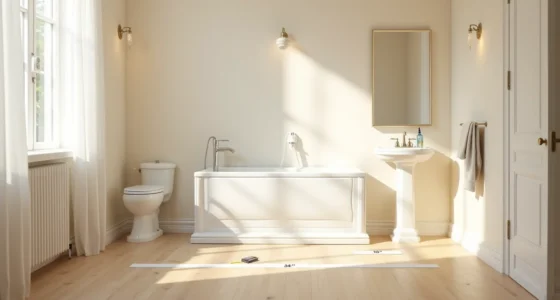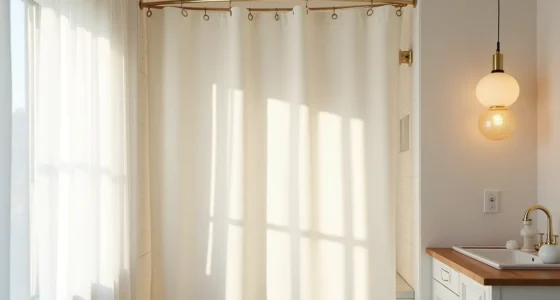
Your bathroom’s visual anchor isn’t the tile or the vanity, it’s the single largest soft surface in the room, and the shower curtain aesthetic you choose determines whether that surface reads as intentional design or afterthought. Most people default to a generic fabric panel, missing the chance to control the room’s mood, scale, and upkeep with one deliberate swap. The six approaches below range from a $20 linen-look poly blend to a fully customizable canvas, each with the exact trade-offs in maintenance and fit.
By the end, you’ll know which route matches your space, your budget, and your tolerance for mildew prevention.
Key takeaways
- Choose the right material for your shower curtain based on maintenance: polyester and PEVA resist mold and wipe clean, while linen and waffle weave require washing every 2-3 weeks to prevent mildew.
- Scale the pattern to your bathroom size: large botanical or vintage tile prints work best in rooms over 60 square feet, while small or medium baths should stick to subtle textures or solid liners to avoid visual clutter.
- Anchor the curtain with hardware and proportion: install the rod 8-10 inches above the tub rim and extend it 6-12 inches past the tub edges to make the space feel taller and wider without blocking access.
- Maximize renter-friendly impact with tension rods and clip-on fabric panels, this avoids drilling, costs under $40 total, and lets you swap the aesthetic seasonally without damaging walls.
Minimalist Liner: Clean Lines and Neutral Tones
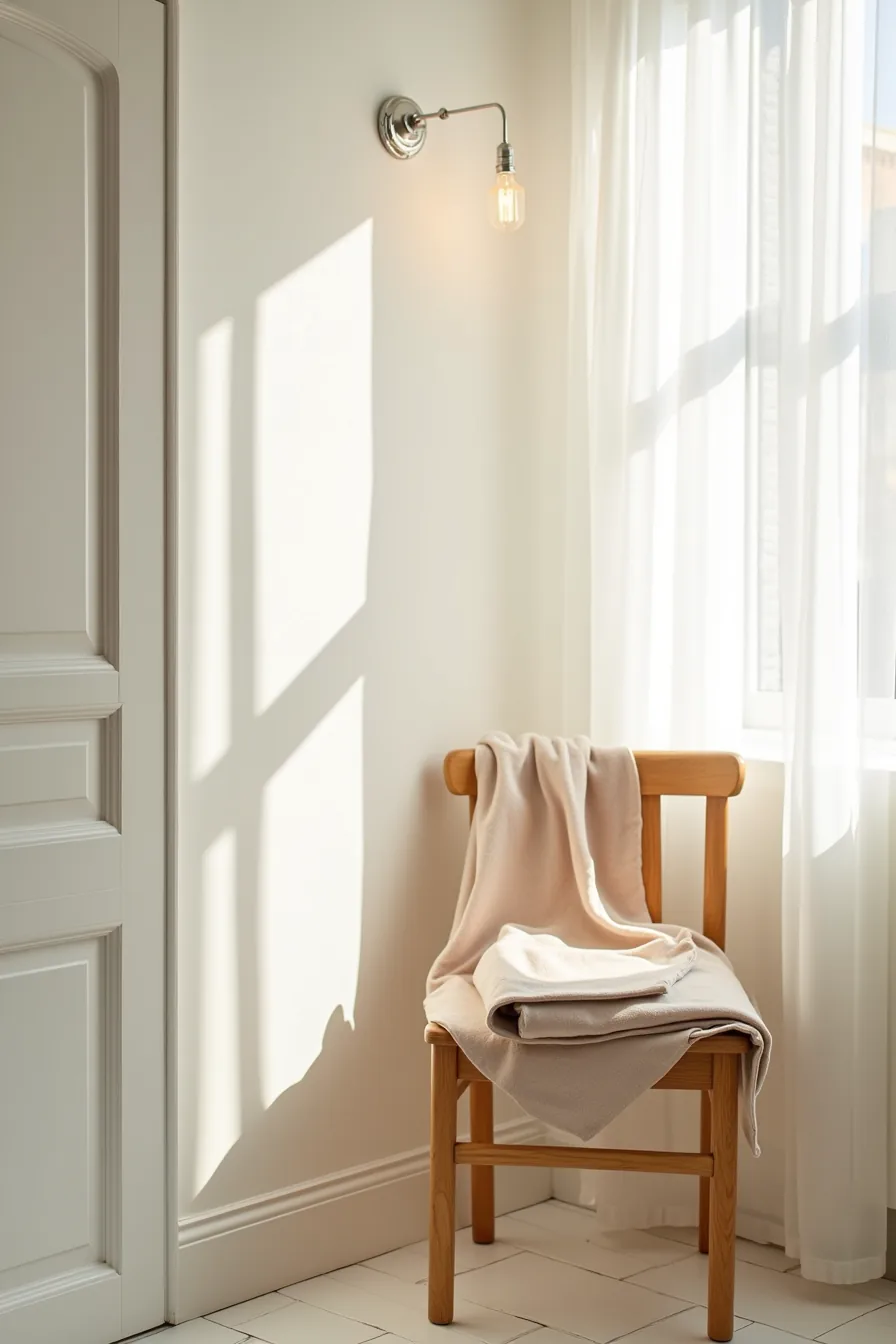
A minimalist liner is the most literal interpretation of the shower curtain aesthetic: a single, solid fabric panel in a muted tone that disappears into the room. The setup here, a beige cotton-blend curtain folded over a wooden chair, a clear plastic liner rolled beside it, and a single chrome hook on the wall, works because nothing competes for attention. The neutral fabric absorbs light rather than reflecting it, which makes a small bathroom feel larger and quieter.
This approach suits anyone who wants cohesive bathroom inspiration without committing to a pattern. The cotton-blend material is the practical choice: it dries faster than pure linen, resists mildew when aired properly, and typically costs $20–$45. For a medium bathroom, choose a 70 x 72-inch curtain; for a large space, go wider (72–78 inches) so the panel pools slightly when closed, hiding the liner edge.
You’ll need a tension rod rated for the combined weight of fabric and liner, and you should machine-wash the curtain monthly on cold to prevent soap scum buildup. The trade-off is visual simplicity, if your tiles or vanity are busy, this route amplifies them rather than distracting.
Botanical Print: Bringing Texture Without Clutter
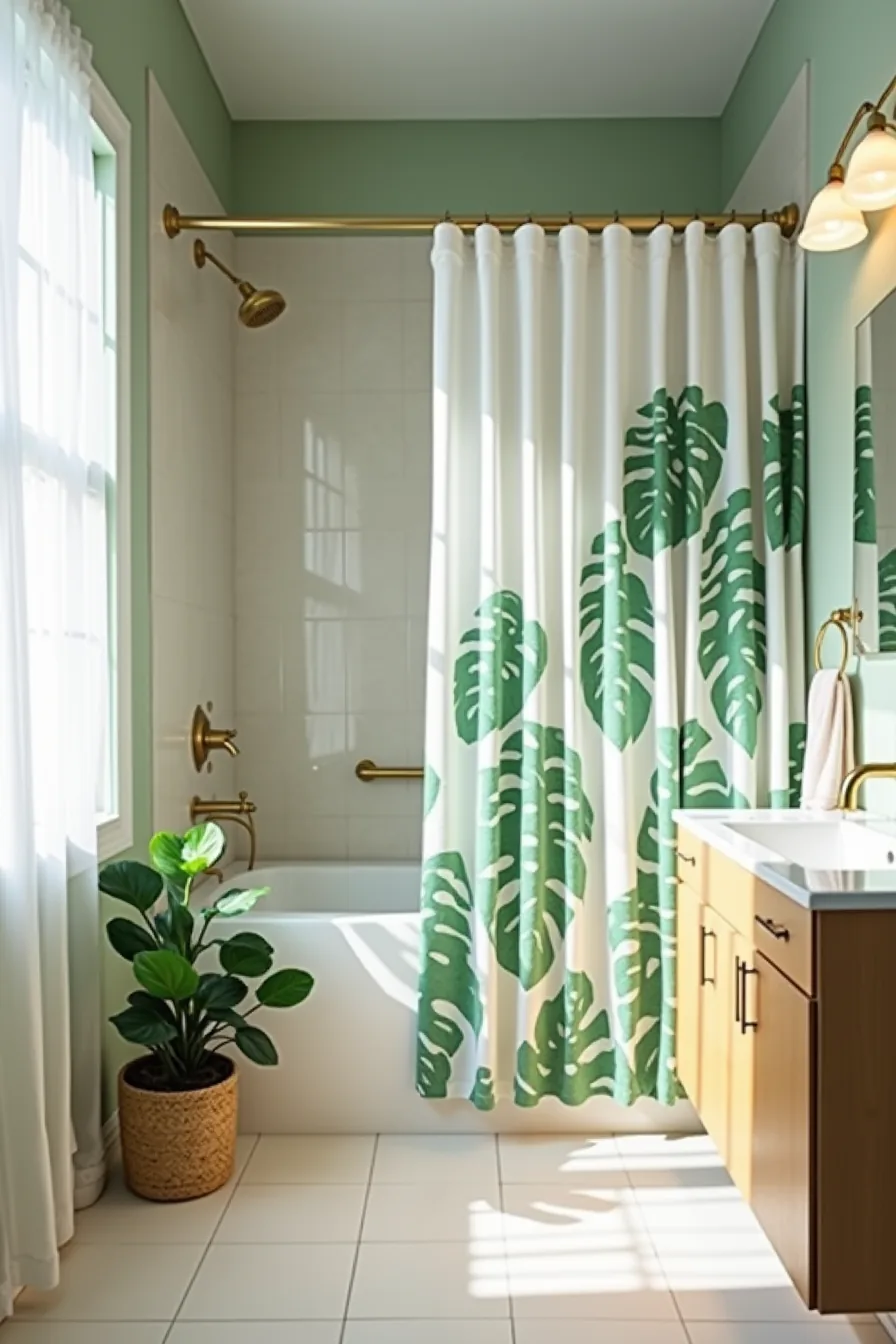
Large-scale botanical prints deliver visual richness without the busyness of dense florals or geometric repeats. The monstera-leaf curtain here works because the print’s negative space matches the sage green wall color, so the pattern reads as texture rather than noise. Unprinted areas of the curtain effectively double as wall covering, which is why this look thrives in medium to large bathrooms where you can view the full panel from a distance.
In a small bathroom, keep the same plant motif on a white background and choose a smaller leaf scale to prevent the pattern from closing the room in.
The 100% cotton or cotton-poly blend at 180–220 GSM weight provides the opacity and mildew resistance you need. Polyester prints hold color longer but trap humidity; expect to replace cotton versions every 2–3 years with daily use. Match the curtain’s green undertones to your wall paint before buying, warm sage and cool eucalyptus aren’t interchangeable.
The brass fixtures and fiddle leaf fig reinforce the jungle vibe, but the terra-cotta or white tile floor shown here’s what anchors it. Wash monthly on cold, hang dry, and steam-iron if wrinkles bother you. This is the stylish shower curtain aesthetic for anyone who wants pattern to do the decorating without adding physical objects to the room.
Vintage or Retro Tile: Pattern as a Focal Point

Art deco and mid-century tile-inspired prints turn your shower curtain into the room’s anchor without requiring a single actual tile installation. The navy-and-gold geometric pattern here works because its low-contrast palette lets the design hold attention while the black-and-white hexagonal floor tiles below ground the space visually. On a polished chrome rod, the curtain’s matte finish contrasts the hardware’s shine, which keeps the fixture from competing with the pattern.
Scale your print to the room: choose motifs with 8–12 inch repeat intervals for standard 56–72 inch bathtubs, and shrink to 4–6 inch repeats in powder rooms where you view the curtain up close. Dense repeats recede in large bathrooms, so opt for oversized geometry if your space exceeds 60 square feet. Look for dye-sublimation or pigment-printed polyester at 200+ GSM, these resist fading when you hang them within 36 inches of a shower head that runs hot water daily.
Expect to replace them every 3–4 years, or spend roughly 30–40% more for a solution-dyed version that holds color for 5–7 years. The chrome towel ring beside the curtain provides a functional echo of the rod’s finish, so keep metal tones consistent across both pieces to preserve the retro cohesion.
Textured Fabric: Linen, Waffle Weave, and Layering
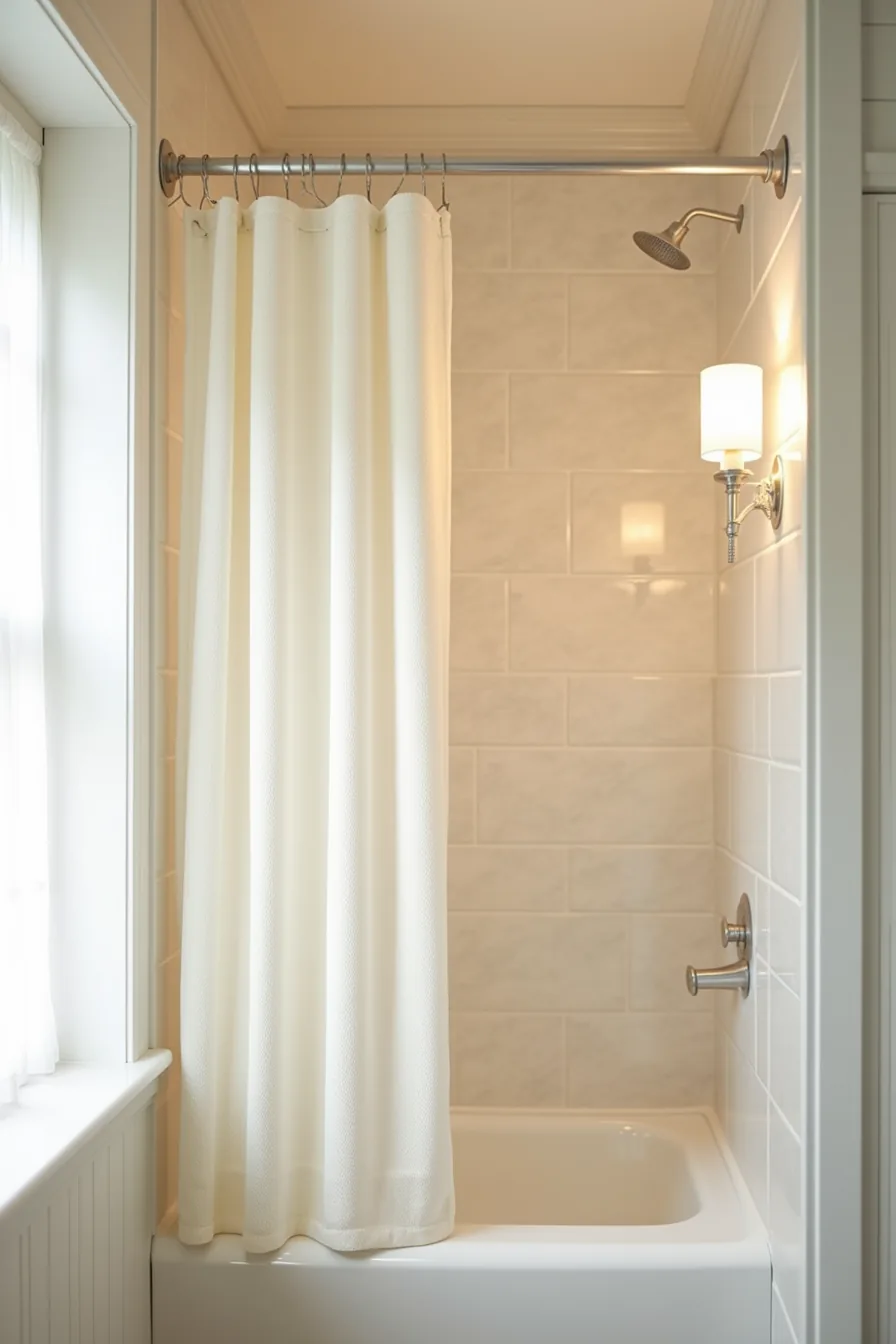
A cream waffle weave curtain delivers the shower curtain aesthetic through depth instead of print, turning a plain surface into the room’s tactile anchor. The three-dimensional honeycomb pattern catches angled light and casts soft shadows that change through the day, which suits bathrooms with matte fixtures and neutral tile, spaces where a printed design would feel busy. You see this working over a clear plastic liner, which is the correct pairing: the liner handles water while the fabric curtain remains dry, extending its life considerably.
Natural linen offers breathability and a relaxed drape but wrinkles permanently and shows water spots; expect to launder it every 2–3 weeks. Waffle weave in cotton-polyester blend (most common at 180–250 GSM) resists mildew better and tolerates a monthly machine wash on gentle with cold water. Budget 15–25% more for a textured curtain over a flat printed one, and always hang it on a double rod so the liner never touches the fabric, direct contact causes soap scum transfer and premature wear.
The white ceramic towel bar beside the curtain echoes the cream tone, which keeps the texture from feeling cold against hard tile surfaces.
Color Blocking and Ombré: Gradient Sophistication

A charcoal-to-cream ombré curtain anchors a compact bathroom by pulling the eye upward through the gradient, making the ceiling feel taller than it’s. The dark upper half recedes visually while the light lower half reflects the white subway tile, creating depth without a single pattern. This particular curtain works because the transition happens at the midpoint, around 36 inches from the hem, which aligns with the chrome shower head’s height and keeps the visual weight balanced in a room where floor space is tight.
Color blocking suits bathrooms with strong horizontal lines, like the grout rows on subway tile, because the curtain’s two-tone divide echoes that rhythm. In smaller spaces, limit yourself to two colors and keep the darker shade on top; reversing this makes the room feel bottom-heavy. Dye-based gradients fade noticeably after 15–20 machine washes, so wash in cold water with mild detergent and hang to dry.
Expect to replace an ombré curtain every 18–24 months if you shower daily, whereas a stitched two-panel color block can last 3–4 years. The folded towels on the shelf beside it pick up the cream tone, which ties the palette together without adding another hue to track.
Renter-Friendly and Budget Strategies
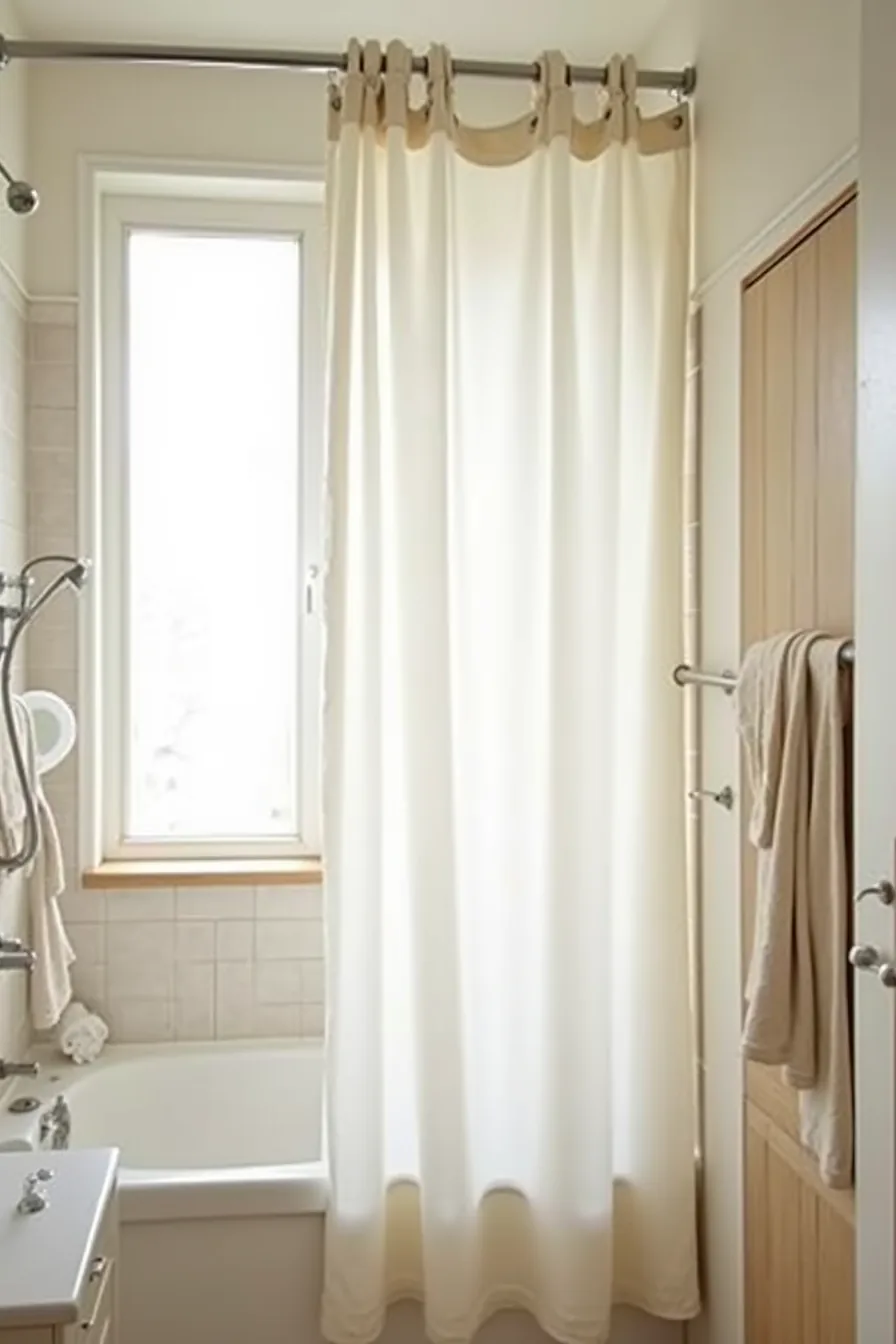
A tension rod with a solid-color polyester curtain gives you the full aesthetic without a single screw hole, and it costs roughly $25–50 for the complete setup. Polyester holds dye better than cotton blends, so a deep olive or rust tone stays saturated through 50+ washes; the plastic liner underneath takes the daily moisture hit so the curtain itself only needs laundering every 3–4 weeks. No permanent hardware means your security deposit stays intact, and swapping the color for a new season takes under five minutes.
For the towel ring, removable adhesive hooks rated for tile hold up to 5–8 pounds, which covers a standard bath towel but not a stack of linens. Position them 60–66 inches above the floor, and avoid textured or grout-line placement where the adhesive pad won’t fully seat. This practical shower curtain styling route suits renters who want a distinct look on a 12-month timeline, expect the adhesive hooks to lose grip after 6–9 months in humid conditions, so buy a two-pack and rotate replacements.
If you own the space, invest in a heavier-weight fabric curtain with a built-in liner instead; the upfront cost doubles but the lifespan stretches to 5–7 years.
Your First Step
Start with your bathroom’s natural light and existing fixtures. If you’ve a window, a translucent fabric curtain will outperform a dark vinyl one. If your hardware is chrome, skip brass accents on the curtain rod or rings, mix metals only when you’ve three or more visible fixtures.
Measure your shower opening before buying anything. Standard curtains are 72 inches wide and 72 inches long, but most tubs need an 84-inch length to avoid pooling. Check your current curtain’s hang point to confirm.
Pick one primary texture or pattern, then move on. Choose a 100% polyester fabric with a water-repellent finish for under $30, and pair it with a separate PEVA liner, this combo costs less than a single designer curtain and protects your investment. Buy your liner first, then select the curtain that works with it, not the other way around.
Frequently Asked Questions
What material is best for a shower curtain that won’t mildew or smell?
Polyester or PEVA liners dry fastest and resist mildew best. Cotton looks premium but holds moisture, pair it with a liner. Wash monthly with vinegar to neutralize odors.
Can I use a stylish shower curtain aesthetic in a very small bathroom without making it feel cramped?
Yes. Choose a light, solid-colored curtain with a subtle texture, and mount the rod 4–6 inches above the tub rim. Avoid busy patterns and dark tones that visually shrink the space.
How often should I wash or replace a shower curtain to keep it looking good?
Wash a fabric curtain every 4–6 weeks; replace a plastic or PEVA liner every 6–12 months. If you see visible mold or a persistent musty smell, replace immediately, washing won’t fully restore it.
Do I need both a decorative curtain and a liner, or can one do the job?
One waterproof liner alone works functionally but looks plain. A decorative curtain alone soaks through and breeds mildew. For an aesthetic result, use both: a liner inside, a fabric curtain outside.