

The sofa structure you choose, the frame, suspension, fill, and how those layers sit together, determines whether your seating lasts five years or twenty, and it dictates the entire look of your living room. Before you settle on fabric or color, you need to decide how the sofa is actually built. That decision separates a piece that sags within two years from one that holds its shape for a decade, and it guides every other choice you make.
Here are six distinct structural approaches, each with a clear trade-off between cost, durability, and the feel of the room they anchor.
Key takeaways
Hardwood frames with kiln-dried joints outlast softwood or particleboard by years, so check the frame material before you buy. Spring systems matter, eight-way hand-tied springs offer the best support, but sinuous springs are a solid budget alternative for everyday use. Renter-friendly structures prioritize modular or knock-down designs that disassemble into manageable pieces for easy moving through narrow stairways. Scale your frame to room size: tight-back sofas with low-profile arms suit small spaces, while deep seats and wide arms need at least 4 feet of clearance for comfortable traffic flow.
Why Sofa Structure Matters for Long-Term Use
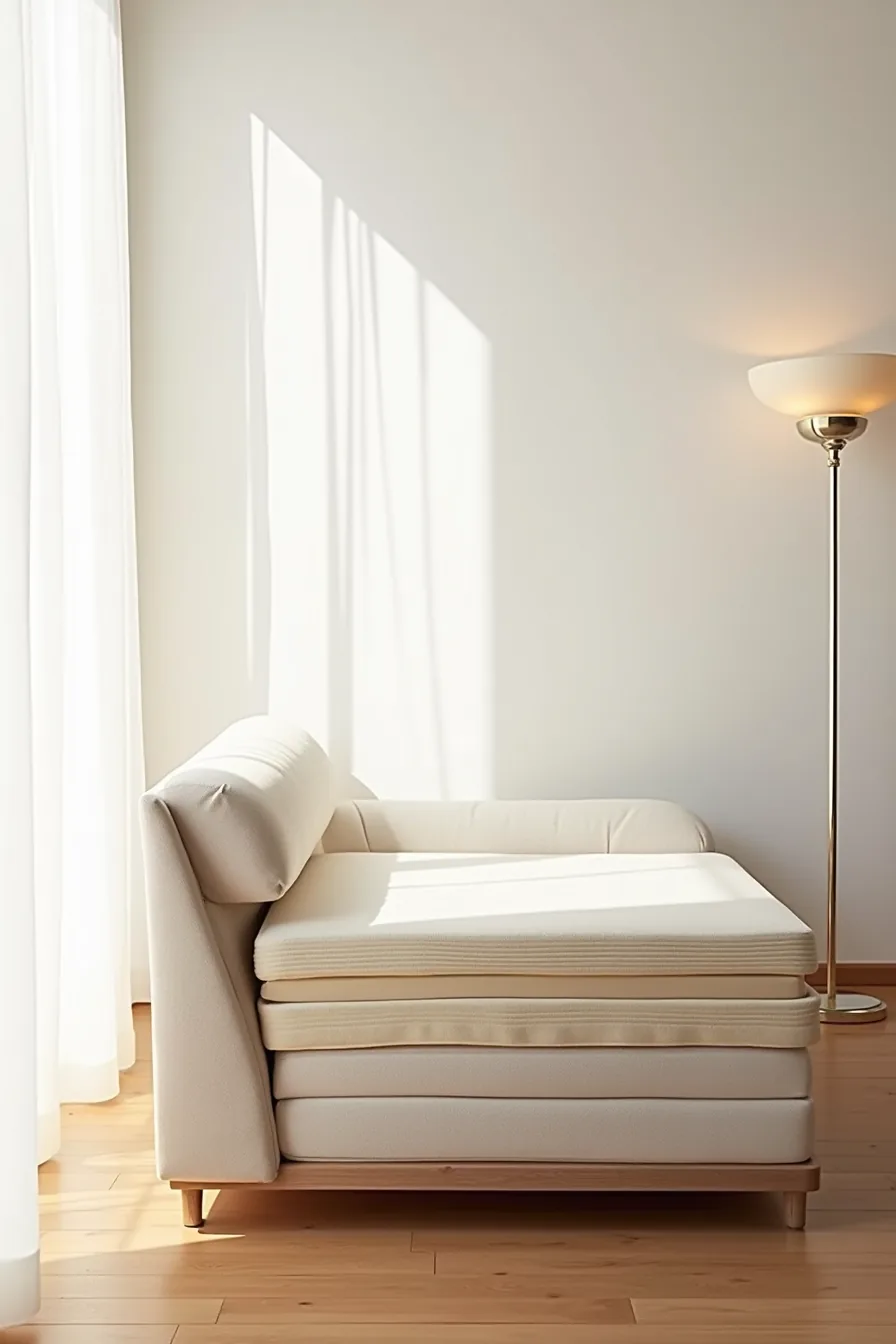
You won’t see the parts that decide whether a sofa survives five years or fifteen until something fails. A cutaway side profile tells the real story: a solid hardwood base carries the load, spring coils absorb daily compression, high-density foam holds its shape, and the fabric cover protects it all. Each layer has a job, and when one is weak, the others fail faster.
The frame matters most. Hardwood bases resist sagging and joint separation, while softer woods or particleboard can crack under repeated stress. Springs determine resilience, sinuous springs are budget-friendly, while eight-way hand-tied systems offer superior support but cost significantly more.
Foam density, measured in pounds per cubic foot, dictates how quickly cushions flatten; standard foam runs 1.8 pounds, while high-resilience options reach 2.5 pounds or more and last years longer. Choose based on how many hours you actually sit, not just how the sofa looks in the showroom.
Hardwood Frame Construction for Durability

The wood species dictates a sofa’s lifespan before any fabric or foam enters the picture. Kiln-dried hardwood, typically oak, ash, or beech, undergoes a controlled process that removes moisture down to 6-8%, preventing warping and joint loosening that plagues softer alternatives. Softwood frames, often pine or fir, flex under load and develop cracks within a few years of regular use.
A flat-lay comparison tells the story at a glance: the dense, dark grain of kiln-dried hardwood sits beside a lighter, coarser softwood sample and a layered engineered plywood piece. A metal measuring tape and carpenter’s square on the workbench reveal the practical check, hardwood corners should measure at least 1.5 inches thick, while plywood needs 11-13 layers to match that rigidity.
Expect to pay a 30-50% premium for all-hardwood construction versus mixed-material frames. Before purchase, press your thumb into the frame’s exposed edges, hardwood resists indentation while softwood gives slightly. Check corner joints for dowels or screws rather than staples, and request the manufacturer’s wood specification sheet if the salesperson can’t answer directly.
Spring Systems and Cushion Layering Explained

The support you feel when you sit comes from what sits beneath the cushions, and three systems dominate the market. Eight-way hand-tied springs, coils knotted by hand to a metal frame in a grid pattern, offer the most responsive, even support and typically last 15-20 years. Sinuous coils, those continuous S-shaped wires running side to side, cost roughly 40-60% less, resist sagging well, but transfer more motion when someone shifts beside you.
No-spring designs rely entirely on webbing or foam, which suits lightweight occasional seating but compresses noticeably within a couple of years of daily use.
Inside the sofa, cushion layering determines how firm the seat feels. High-density foam blocks (typically 2.0-2.5 pounds per cubic foot) hold their shape for 5-7 years and suit average-weight adults who prefer a firmer perch. Medium-density foam sheets, often wrapped in fabric batting, soften the initial feel but require more frequent rotation, every 3-6 months, to prevent permanent indentations.
For heavier body types or daily lounging, combine high-density foam with a sinuous coil base to distribute weight across the entire frame rather than concentrating pressure on one spot.
Budget-Friendly Structure Without Sacrificing Support

When your budget rules out eight-way hand-tied springs, put your money into the two components that determine longevity: the frame and the foam core. A kiln-dried engineered wood frame with reinforced corner blocks, typically 1.5–2 inches thick, holds up for a decade or more, and you can verify it by checking the weight of the piece before you buy. A 90–110 pound sofa almost always contains solid framing; anything under 70 pounds likely uses particleboard that will loosen at the joints within a few years.
What you’ll see in a cutaway display on a warehouse floor is a high-density foam block sitting on an engineered wood frame piece, with a metal ruler and density swatches set out for comparison. Test the foam yourself by pressing two fingers into the block: it should resist visibly but spring back within a second. That firmness, not plushness, is what keeps a budget sofa from sagging, so add a separate feather or fiber topper later if you want a softer landing.
The price tag on the block tells you where to compromise: choose a medium-density foam over high-density if you must, but never downgrade the frame.
Renter-Friendly Sofa Structure and Portability

Modular frame sections are your best ally when stairwells and elevators dictate your furniture’s fate. Look for a sectional where each seating unit separates into pieces that weigh less than 50 pounds, that threshold lets one person manage a move without hiring help or damaging drywall. A partially assembled setup in a hallway, with individual frame pieces stacked beside the assembled unit, demonstrates the real advantage: you can move the entire sofa through a 30-inch doorway by disassembling rather than wrestling a monolithic piece.
Removable cushions serve double duty here. They lighten each frame section for lifting, and they let you replace worn upholstery without reupholstering the whole structure. Test the connection system before you buy, metal cam locks with hand-tightened knobs survive repeated assembly cycles better than plastic clips, which typically crack by the third move.
The trade-off is that modular frames flex more under weight than a solid one-piece base, so expect minor shifting at the joints; tightening the connectors every few months keeps the structure quiet and stable.
Scaling Sofa Structure for Small, Medium, and Large Rooms

The structural baseline shifts with your floor plan, starting with a shallow 28-inch-deep loveseat against a 9-foot wall. That depth suits a compact living room because it leaves a 36-inch clearance behind a coffee table, enough for one person to pass while another sits. A standard sofa with a 36-inch depth belongs in a 12-by-14-foot room; pair it with a low 15-inch arm height so the frame doesn’t visually crowd the sightline from entryways.
For a large open plan, a 42-inch-deep sectional anchors the space, but only if you’ve at least 48 inches of walking space around its perimeter. Scale your seat height to your ceiling: an 18-inch seat height balances an 8-foot ceiling, while a 20-inch height suits 10-foot ceilings by reducing the void above the backrest. The room dividers between these zones let you place the loveseat perpendicular to traffic, the sofa across from a media wall, and the sectional to define a lounge area, each structure chosen so its frame depth never pinches a walkway below 30 inches.
Where to start
You now have six distinct paths, but the right one starts with your room’s dimensions and your daily habits. Measure your floor space first, then decide whether you need maximum seating, flexible rearrangement, or a piece that will outlast two moves.
Your immediate next step is simple: grab a tape measure, mark your floor with painter’s tape, and live with that outline for one day. That test will reveal whether your chosen sofa structure fits your traffic flow and lifestyle before you spend a cent.
Frequently Asked Questions
What is the difference between eight-way hand-tied springs and sinuous coils in sofa structure?
Eight-way hand-tied springs are individually knotted to the frame, offering superior support and durability but costing more. Sinuous coils are continuous S-shaped wires, cheaper and firmer, but they sag sooner with heavy daily use.
How do I know if a sofa frame is kiln-dried hardwood or cheaper softwood?
Check the manufacturer’s spec sheet for “kiln-dried hardwood” explicitly. Softwood frames feel lighter, show visible grain, and often use corner blocks with staples. Hardwood frames have smooth, tight joints with screws and glue, no exposed staples.
What foam density should I look for in a sofa cushion for everyday use?
Look for foam rated at 1.8–2.5 pounds per cubic foot (PCF). Below 1.5 PCF will flatten quickly; above 2.5 PCF feels rock-hard. For a family room, 2.0–2.2 PCF with a 1.8 PCF core offers balance.
Can a sofa with a particle board frame last more than five years with regular use?
Unlikely. Particle board is moisture-sensitive and screws strip easily. Expect visible sagging or joint failure within 3–5 years under daily sitting.
If budget forces this, reinforce corners with metal brackets and rotate cushions weekly to extend life.