French Sofa Vintage isn’t a single look, it’s a spectrum from a $200 flea-market find reupholstered in linen to a $4,000 Louis XV-style antique with original carving, and the right choice depends entirely on your room’s scale, your budget, and how much wear you’re willing to accept. Before you commit to curved arms and carved wood, you need to know which era suits your proportions, which fabrics survive daily use, and where a vintage piece actually fits without blocking a doorway. The six approaches ahead break down by room size, lifestyle, and investment level, so you can match the sofa to your reality, not a mood board.
Key takeaways
- A faded linen reupholstery job typically costs 40–60% less than buying new, but budget for replacing foam padding every 10–15 years to maintain comfort.
- Mixing a vintage sofa with modern metal or oak furniture prevents the room from feeling like a period replica, and it suits apartments under 700 square feet best.
- Slipcovers offer a renter-friendly route at $200–$600 per sofa, but expect to re-tuck them weekly and wash them monthly to avoid a rumpled look.
- Investment-grade antique sofas require a $1,500–$4,000 restoration budget for rewebbing and springs, and they demand a room with at least 36 inches of clearance for safe entry.
The Faded Linen Route: Budget-Friendly Reupholstery
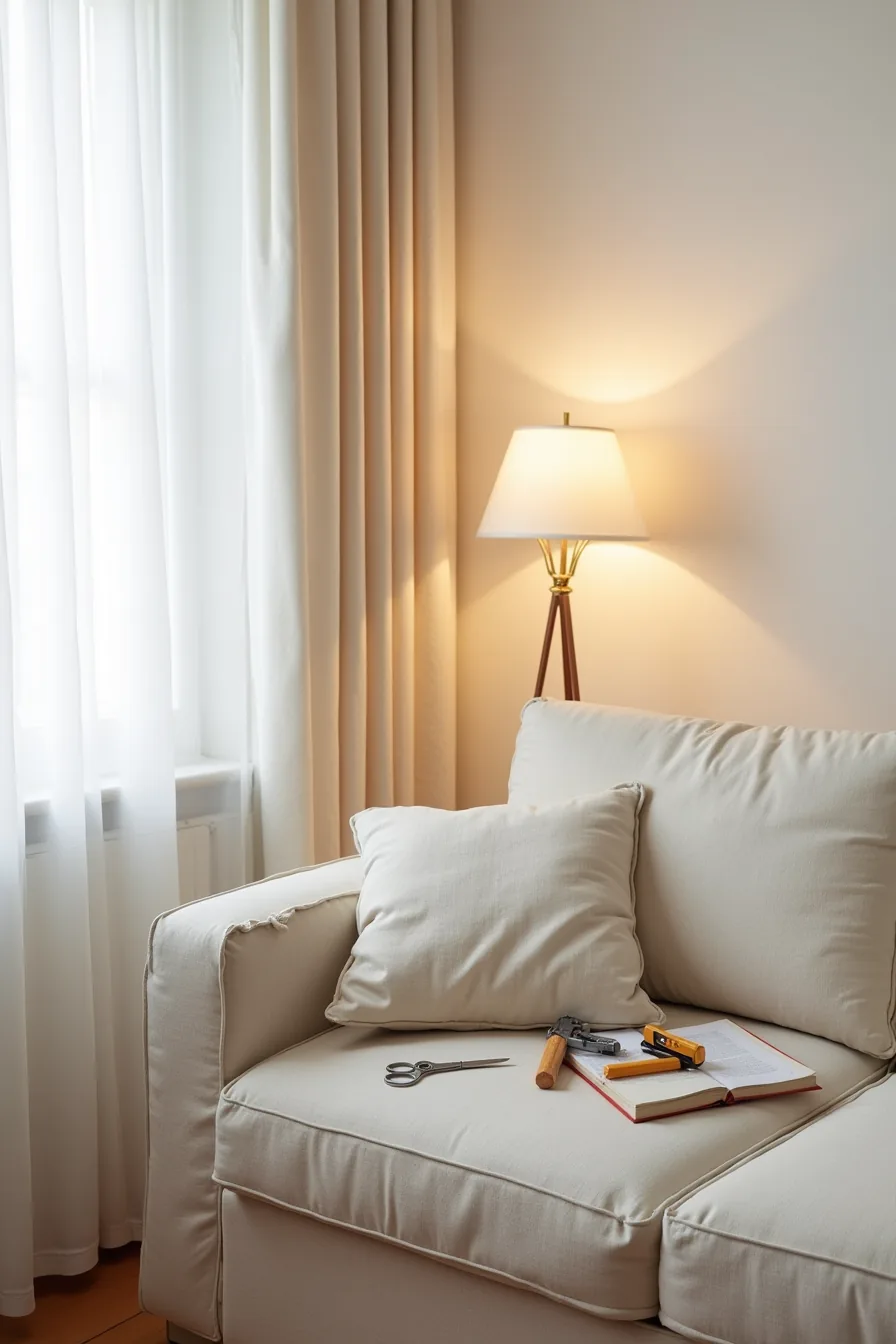
Reupholstering a modern or tired sofa in aged linen is the most cost-effective path to French Sofa Vintage, typically running 30–50% less than buying a new piece in that style. The key is choosing a washed, slubby linen in a chalky off-white or warm oatmeal, finishes that read as decades-old rather than crisp and new.
A mid-project look shows the practical mechanics: the sofa frame is exposed on one arm, with pale linen fabric partially pinned and stapled across the seat. A staple gun, hammer, and scissors rest on the cushion, while old worn fabric bunches on the opposite side, awaiting removal. This staged approach lets you work one section at a time, which suits a weekend DIYer with basic tools and patience.
For a 6–7 foot sofa, expect to invest 10–15 hours across two sessions and roughly $200–400 in fabric and supplies if you do the labor yourself. This route fits renters on a timeline or first-time homeowners who want the aged aesthetic without antique pricing, but it demands a solid frame, check for sagging springs before committing your fabric budget.
Collected French Mood: Mixing Periods and Textiles
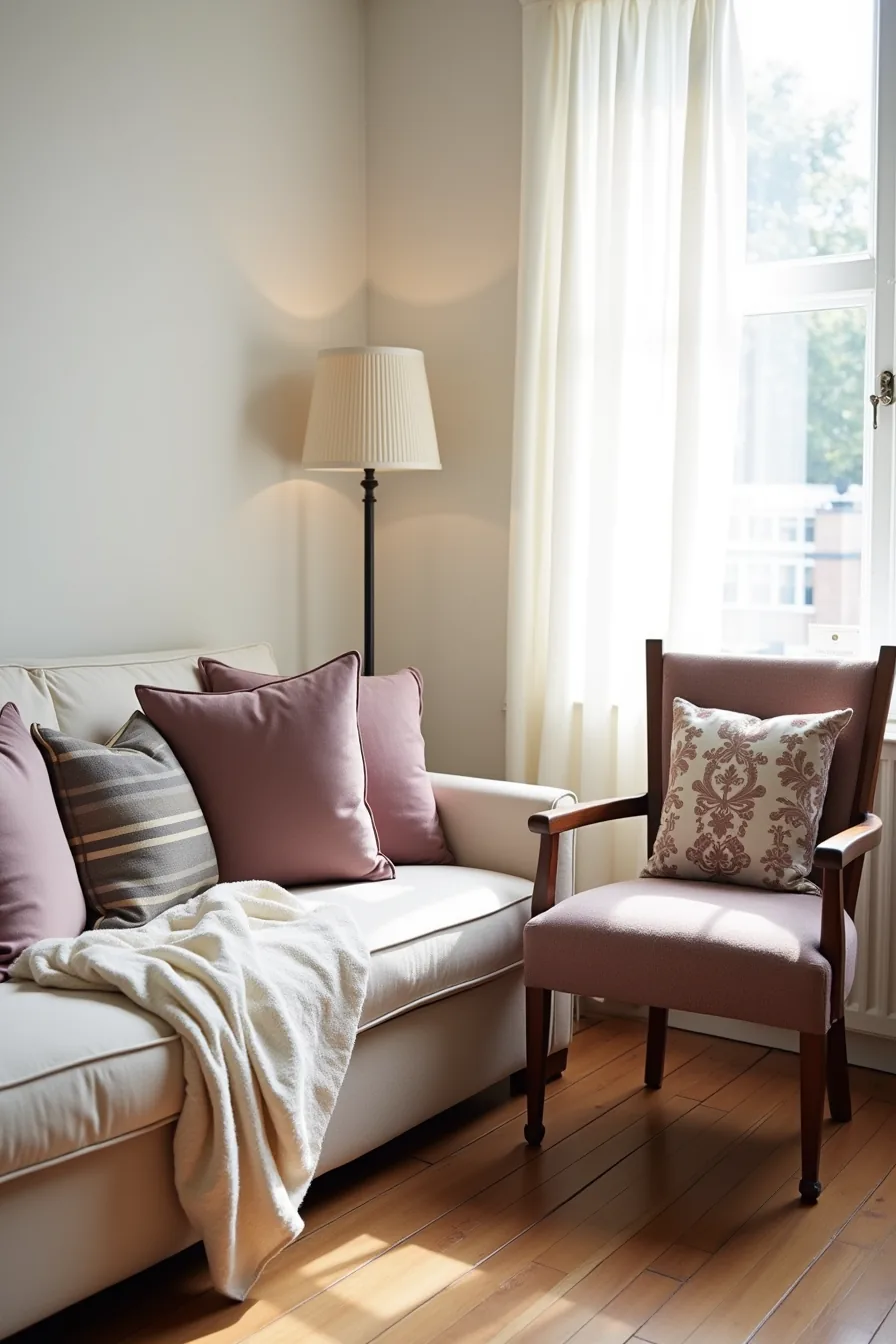
The settee anchors this approach, but its mismatched cushions make the look. Pair a faded stripe linen with a worn velvet in mauve and an antique damask-patterned cotton, and you create visual rhythm that a matched set never achieves, each fabric reads as its own small chapter with a shared muted history. The layered throws in cream and dusty rose, draped rather than folded, soften the seat line and add practical warmth for cool evenings.
This collected French mood suits a sitting room or reading nook where you entertain casually, not a formal parlor. You can build it over time by sourcing cushions individually at flea markets or estate sales, expect to pay $15–60 per cushion cover depending on condition and fiber. Pull a wooden armchair close beside the settee to complete the seating group; the contrast of hard and soft textures keeps the arrangement from feeling overly precious.
Mixing periods works here because the unifying factor is patina, not era, every piece should show some wear, whether natural or induced.
Faded Textile Palette: Color and Pattern Strategy
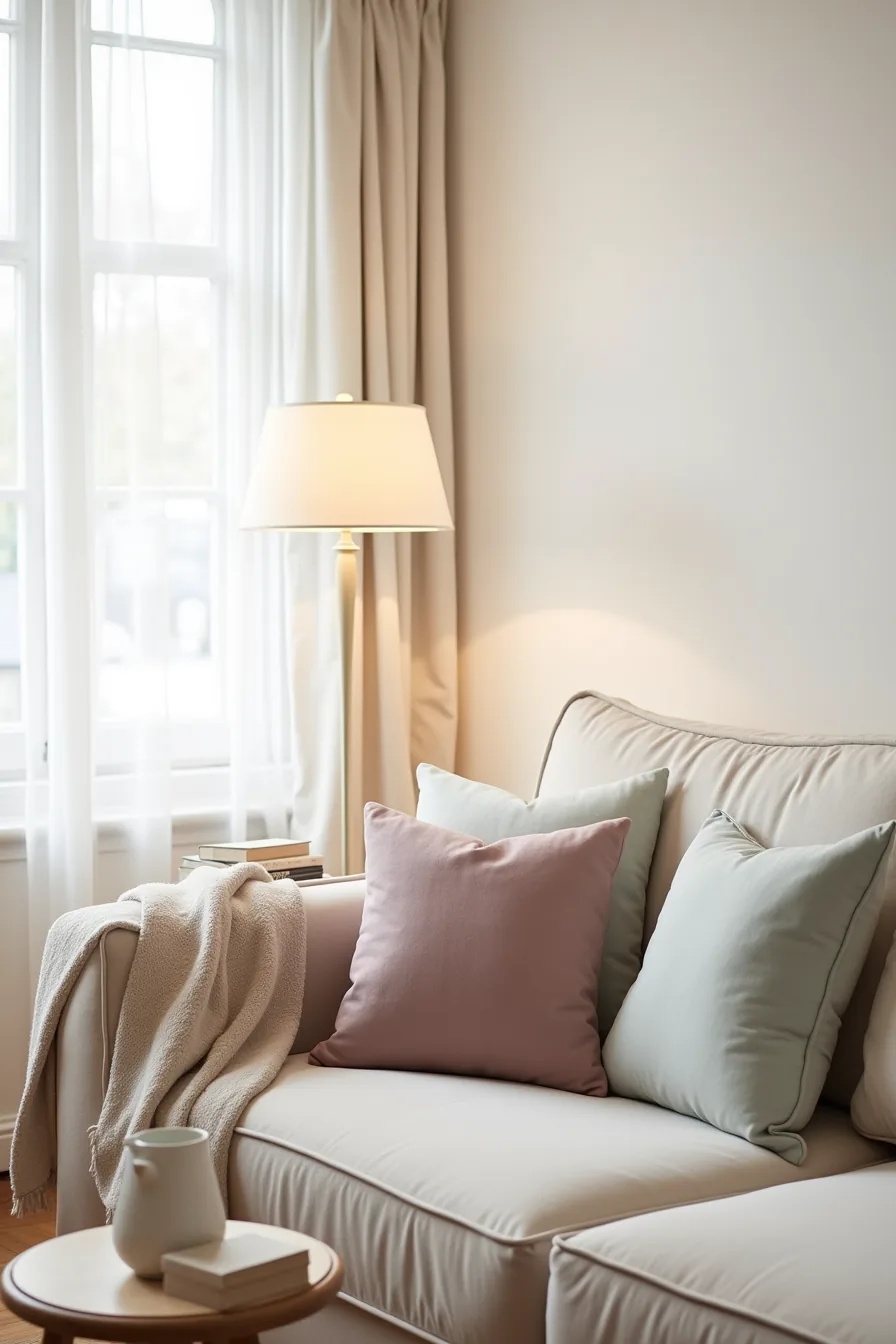
The faded textile palette works because it treats color like light aging, not a flat shade, but a gradient of sun-washed tones. On this sofa, four cushions graduate from cream to soft gray to pale mauve to faded sage, each hue sitting close enough in value that no single piece dominates. That graduated sequence creates depth without contrast, which is why it reads as vintage rather than merely muted.
Apply the same logic to your complementary pieces: the warm beige linen throw folded across one arm echoes the cream cushion, while the ceramic pitcher and linen napkin on the side table pick up the sage and gray undertones. Keep patterns minimal, a subtle stripe or faded floral on one cushion only, and let the solid tones carry the composition. Stick to colors within two steps of each other on the value scale; pairing dark forest with pale cream breaks the effect.
For a larger sofa, repeat the four-tone sequence across eight cushions; for a loveseat, drop to three tones and skip the throw.
Vintage Plus Modern: Balancing Eras in Small Spaces
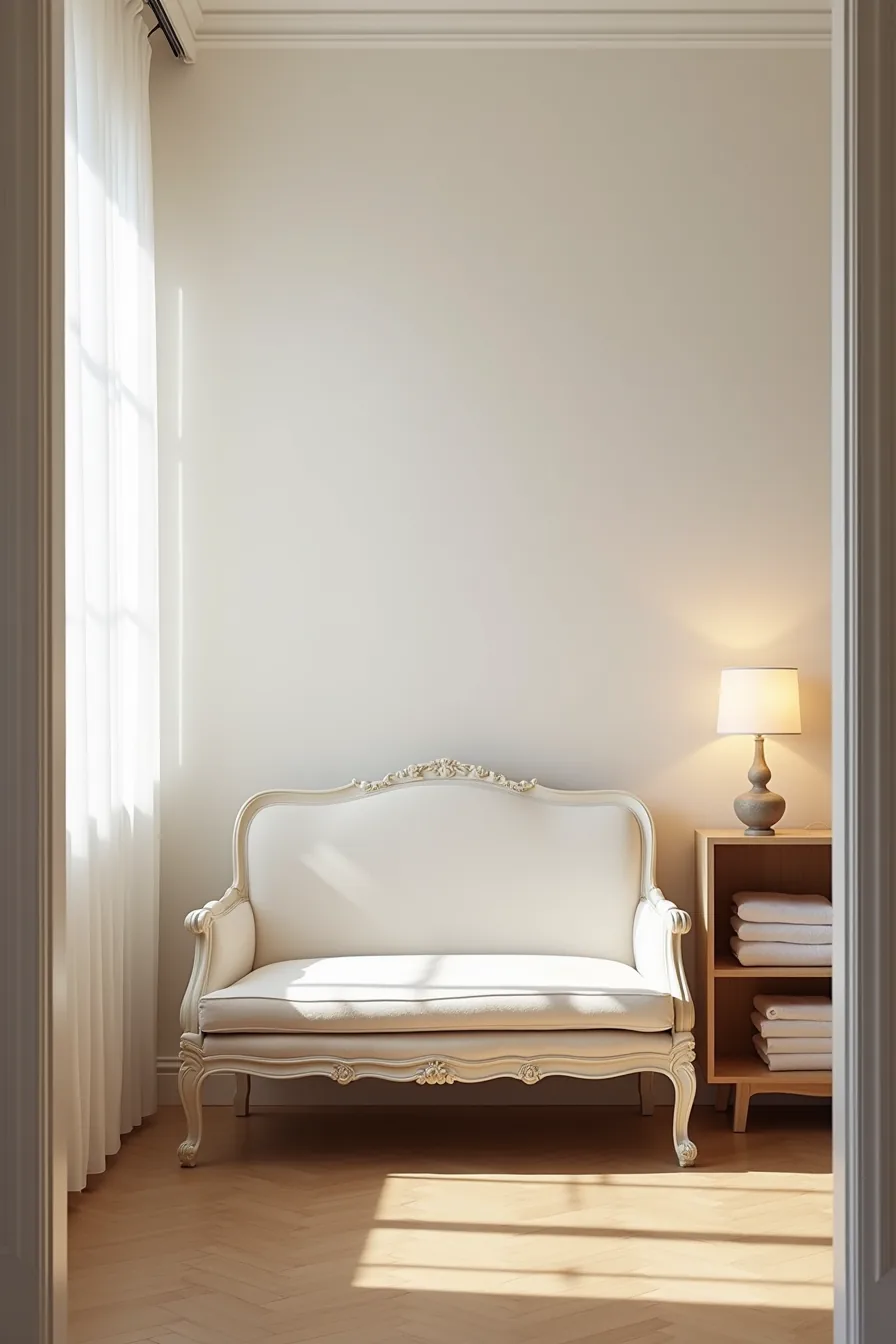
In a room under 200 square feet, a period French sofa can easily overwhelm, the visual weight of carved wood and curved lines dominates. Pairing it with a low modern shelving unit in natural wood, placed directly behind the settee, solves that problem by grounding the antique silhouette in clean horizontals. The shelving holds stacked linens and a single modern table lamp, creating a functional backdrop that draws the eye upward without adding visual clutter.
Why this works: the cabriole legs of the French settee improve the frame, so the sofa reads as lighter than its footprint suggests. The modern shelving repeats that lifted quality with its open base. Keep the contrast intentional, one period piece, one contemporary piece, and everything else minimal.
For a room this size, leave at least 24 inches of clear space in front of the sofa for circulation, and choose a settee with a seat depth under 22 inches so it doesn’t encroach on the walkway. The modern lamp introduces a crisp line that balances the sofa’s curves; skip ornate sconces, which would tip the room into museum territory. This approach suits renters who can’t alter walls and small-space dwellers who want character without sacrificing function.
Investment-Grade Antique Sofas: Sourcing and Restoration
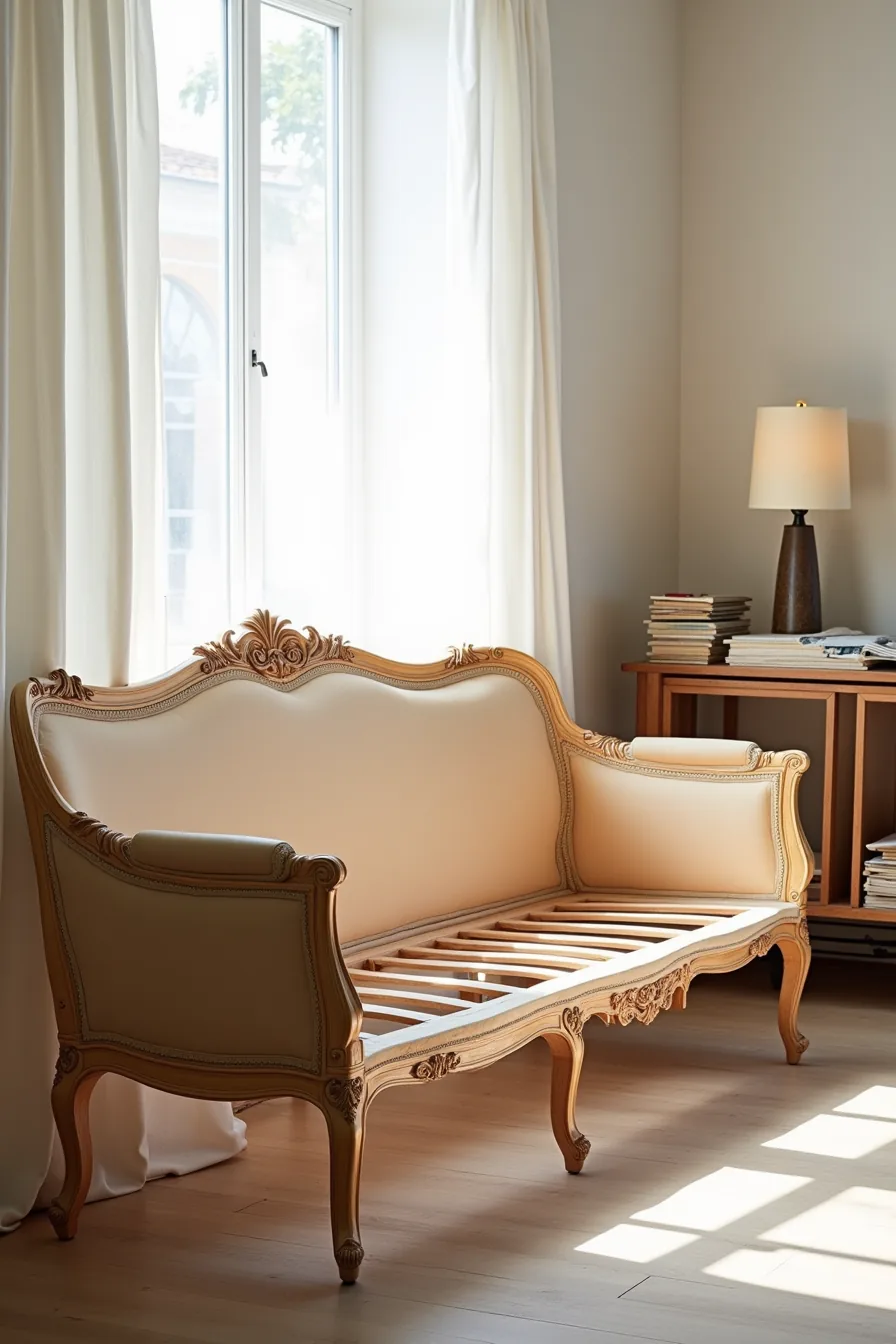
When you commit to a genuine 18th- or 19th-century French frame, you’re buying the carved crest rail and ornate legs first, the upholstery is replaceable, the woodwork isn’t. Look for solid beech or oak construction, hand-carved details with visible tool marks, and original joinery that fits tightly without glue bulges. Avoid frames with fresh paint or heavy varnish, which often hide replaced or spliced sections; a stripped frame lets you inspect the webbing and springs directly for rust or fatigue.
Budget for restoration in layers: re-webbing and re-springing typically runs $300–$700, while custom upholstery with proper horsehair or cotton padding starts around $1,200 and climbs with fabric choice. The frame itself, if structurally sound, needs only consolidation, expect $200–$500 for regluing loose joints and touching up the wood stain. Over a decade, annual conditioning with beeswax polish keeps the timber stable, and you’ll re-upholster once or twice depending on usage.
This route suits collectors and long-term homeowners who accept that the piece appreciates slowly but never depreciates, and who prefer patina over convenience. For everyone else, the slipcovered alternatives in this guide deliver the look at a fraction of the maintenance.
Renter-Friendly Styling: Slipcovers and Temporary Fixes
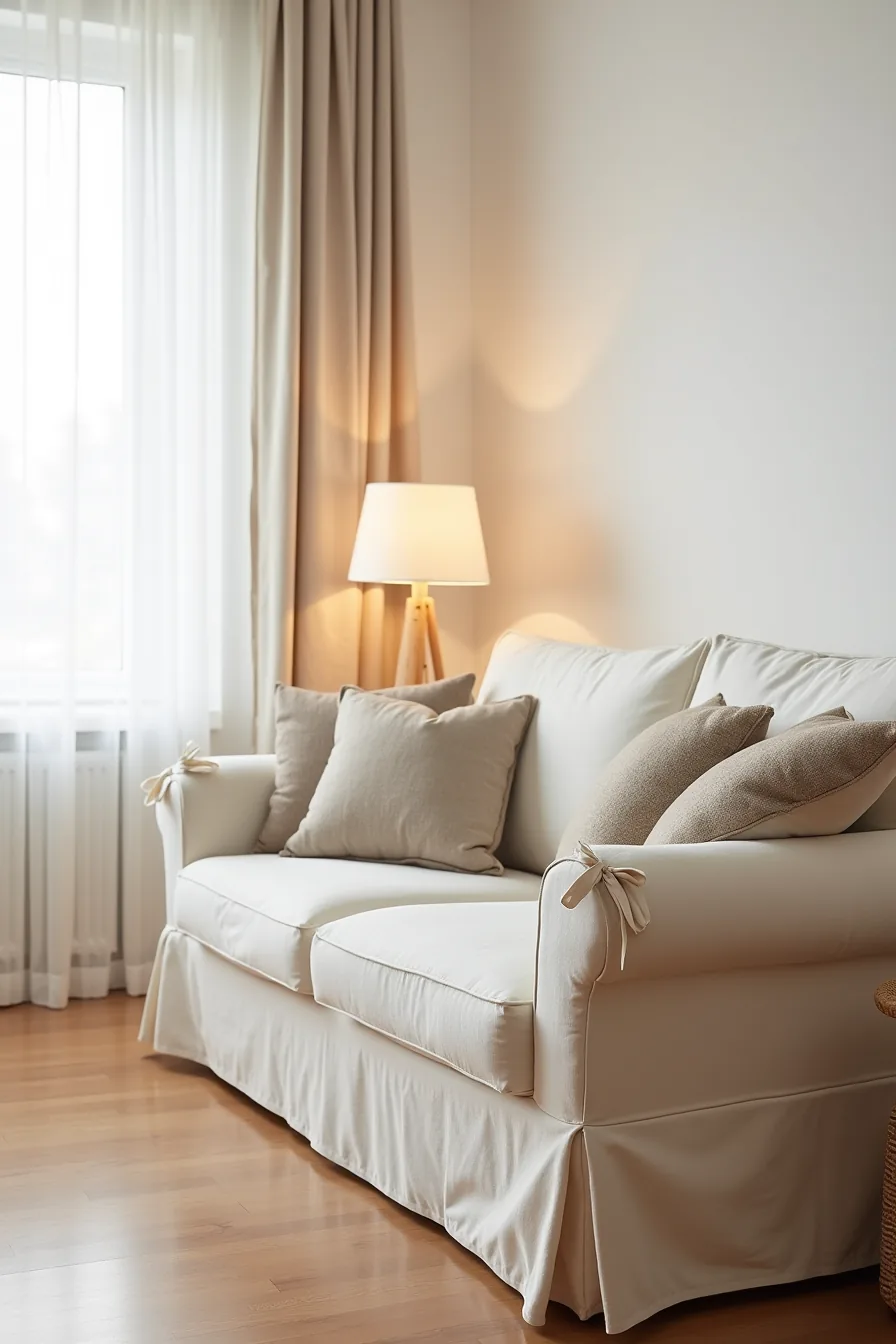
A fitted slipcover transforms an ordinary modern sofa into a convincing French Sofa Vintage without touching the frame. Choose a cream linen blend with some stretch, 100% linen wrinkles beautifully but shifts out of place, while a cotton-linen mix holds its shape through daily use. Tuck and pin the fabric at the seams so it reads as upholstery rather than a draped sheet, and secure the armrests with removable fabric ties that echo traditional French detailing.
Layer the look with throw blankets and detachable cushion covers in muted tones like oat, sage, or dusty blue. These removable elements do double duty: they protect the slipcover from spills and pet hair, and they let you shift the palette with the seasons. Budget $150–$400 for a quality fitted cover, depending on sofa size, far less than reupholstering, and you can wash it at home.
This route suits renters, families with young children, or anyone who wants the aesthetic without the commitment; the moment you move, the cover comes off and your landlord’s original sofa remains untouched.
Your Decision Checklist
Before you commit, verify three things. Measure your room’s longest wall and the doorway width, a 72–86 inch sofa won’t fit through a 30-inch opening without disassembly. Confirm the seat depth: 22–24 inches suits lounging, while 20–22 inches works better for formal sitting.
Finally, touch the upholstery. If it’s linen or cotton, accept that it will fade in direct sunlight within 18–24 months and plan rotation.
Your next step: Take a tape measure and mark the sofa’s footprint on your floor with painter’s tape tonight. Live with the outline for 48 hours before ordering anything.
Frequently Asked Questions
What fabrics work best for a French Sofa Vintage look without fading quickly?
Choose linen blends with at least 30% synthetic fiber, or performance velvet with high rub count (over 30,000 Martindale cycles). Both resist sunlight and wear while keeping that soft, matte French texture.
Can you achieve French Sofa Vintage with a modern IKEA or West Elm sofa?
Yes, if the frame has clean, curved arms and a low back. Swap the legs for turned wooden ones, add a linen slipcover, and layer with vintage pillows. Avoid boxy, sharp-cornered frames.
How much does it cost to reupholster a sofa in vintage French style?
Expect $1,200 to $3,500 for a standard three-seater, depending on fabric and labor. High-end materials like silk-blend velvets push costs toward $5,000. Compare this against buying a new vintage-style sofa at $1,500–$4,000.
What’s the difference between French Sofa Vintage and French Country style?
French Sofa Vintage emphasizes aged, curved silhouettes, distressed wood, and faded upholstery, think Parisian flea market. French Country leans rustic, with toile prints, painted finishes, and heavier provincial woodwork. Vintage is more refined and neutral; Country is busier and more decorative.