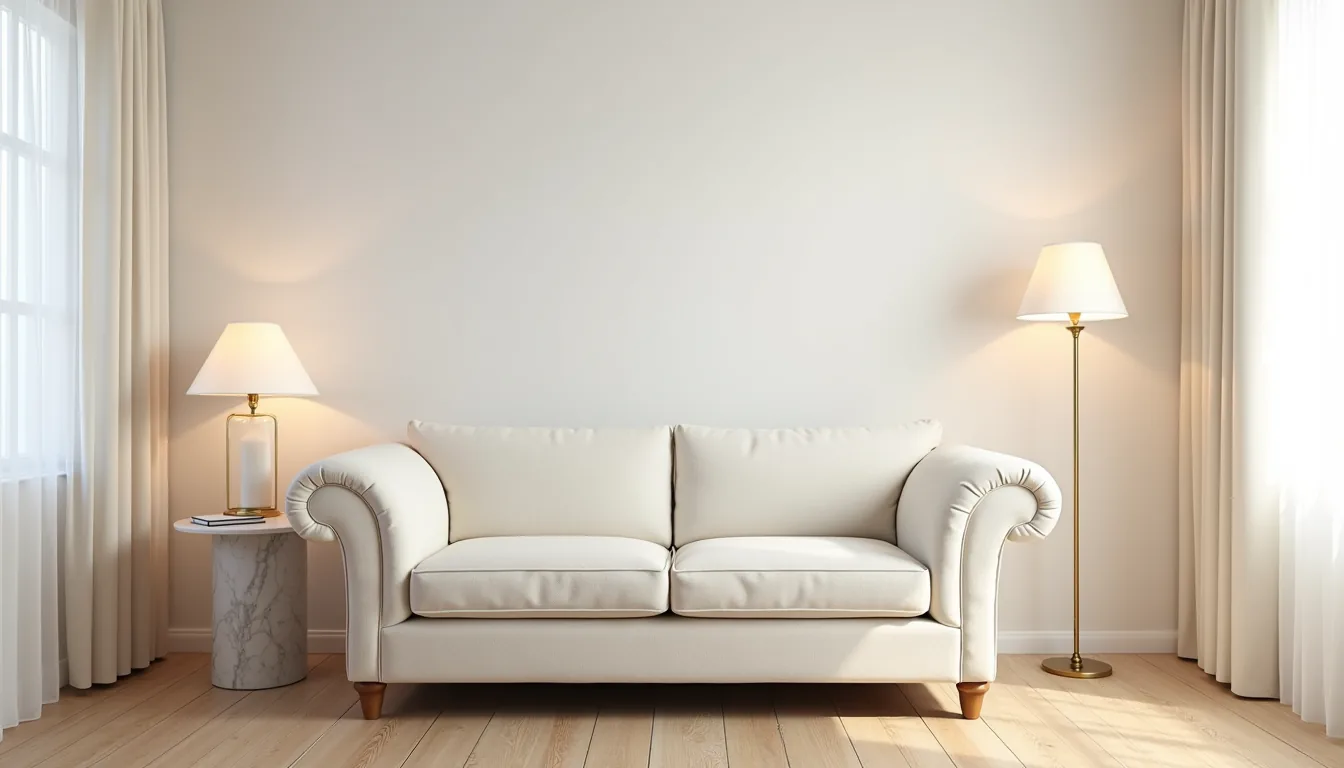
A neoclassical sofa isn’t a single rigid style but a flexible framework of symmetrical lines, tapered legs, and restrained ornament that adapts to everything from a compact apartment to a formal living room. In practical terms, it means you can choose a sculptural, gilded piece for a long-term investment or a clean, slipcovered version that suits renters and modest budgets. The six interpretations ahead break down exactly which frame, fabric, and placement works for your square footage, and which choices will fight your room’s proportions.
You’ll also find the maintenance trade-offs and the one detail that separates an elegant neoclassical look from a dated one.
Key takeaways
- Measure your room before shopping: a formal symmetry layout needs at least 12 feet of unobstructed wall, while an apartment-sized space can work with a 72–84 inch sofa against a shorter wall.
- Pair a curved-back sofa with a rectangular coffee table and straight-backed chairs to balance the silhouette, and budget $300–$800 for a used piece plus $150–$300 for reupholstery fabric.
- Choose a renter-friendly setup with a slipcovered sofa in a light linen or cotton blend, securing it with tension rods and non-damaging furniture pads, so you can swap the look without patching walls.
- Invest in kiln-dried hardwood frames and 8-way hand-tied springs for a long-term piece, expecting to pay 2–3 times more than a particleboard alternative but gaining a 15–20 year lifespan with regular fluffing and rotation.
Formal Symmetry: The Statement Centerpiece
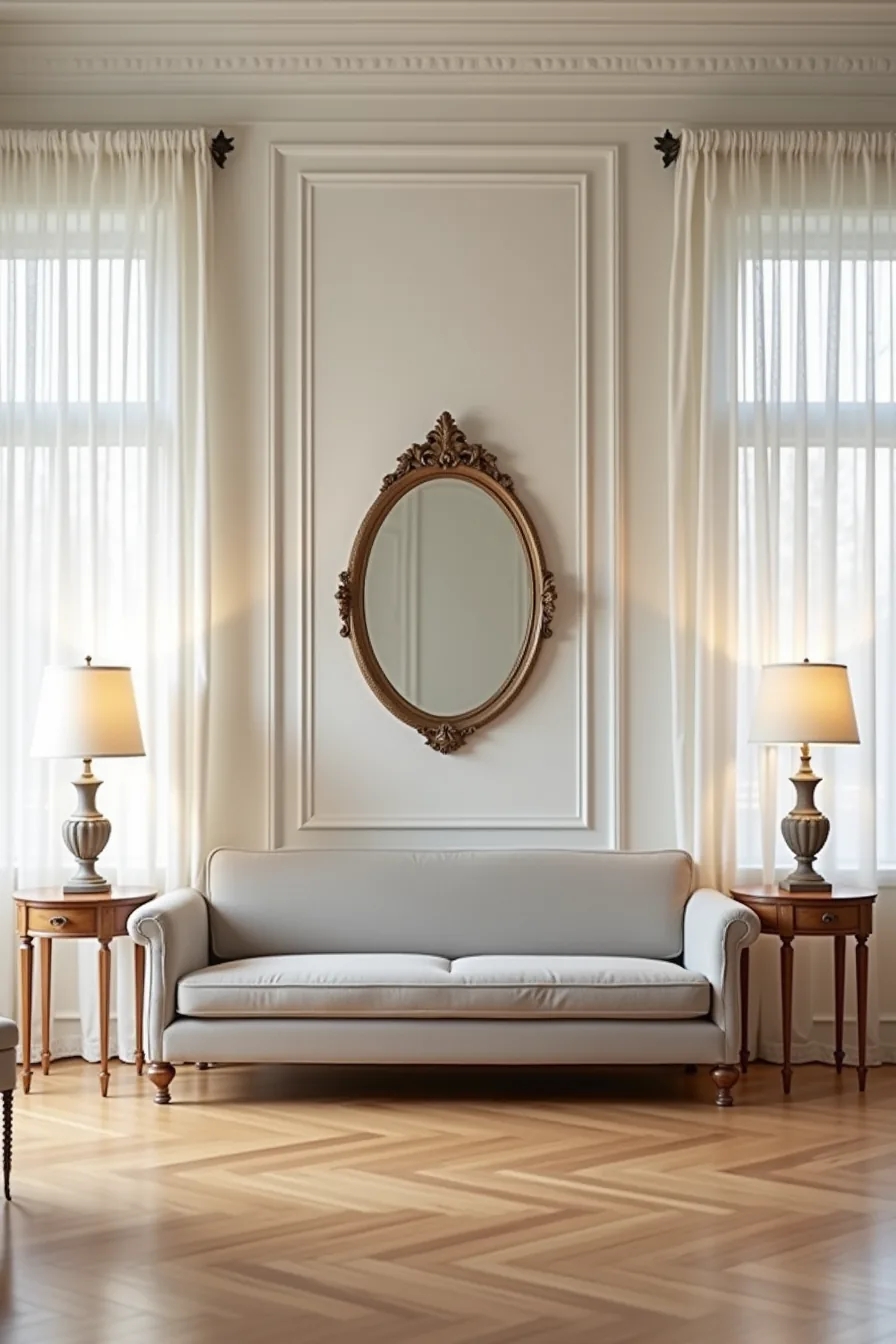
The most direct expression of a Neoclassical Sofa relies on formal symmetry, a balanced arrangement that anchors a room the way a fireplace anchors a wall. In a large space, position the sofa dead-center against the longest uninterrupted wall, leaving at least 36 inches of clearance on each side for circulation. This placement only works when the sofa is substantial enough to hold the visual weight of the room; a piece under 72 inches wide will look lost in a space over 15 feet across.
Twin console tables with classical proportions, think straight legs, subtle fluting, and a restrained silhouette, flank the sofa on both sides. These tables should match each other precisely, and their height should align with the sofa’s armrests within an inch or two. Above the sofa, an ornamental mirror reinforces the vertical axis but should stay roughly two-thirds the width of the sofa itself to avoid overpowering the arrangement.
This setup suits formal living rooms, wide entry halls, or any space where you entertain and want a clear focal point. The pale gray upholstery softens the strict geometry and works best against a hardwood floor with a large area rug that extends at least 24 inches beyond the sofa’s front edge. Keep accessories to pairs, lamps, vases, or candlesticks, on the consoles to complete the symmetry without adding clutter.
Elegant Curved Details on a Budget
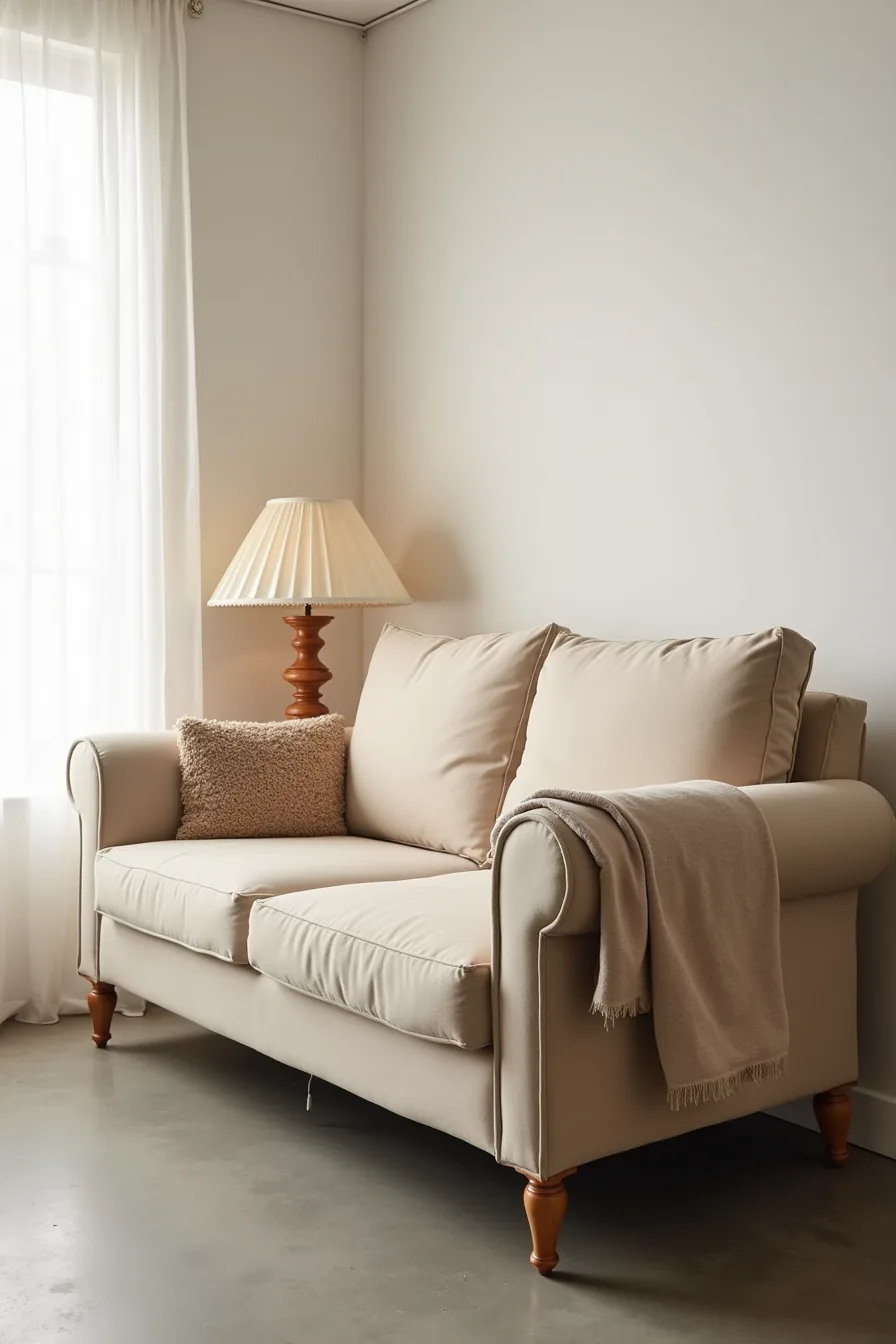
If formal symmetry asks for a substantial centerpiece, a curved silhouette delivers classical proportion at a fraction of the cost. Look for a Neoclassical Sofa with rolled arms and spindle-turned wooden legs, features that read as traditionally inspired without the hand-carving or premium joinery that drives prices up. Budget models typically run $600–$1,200, compared to $2,500+ for custom-built equivalents, and the savings come from standard dimensions and machine-turned detailing.
A beige linen upholstery keeps the piece versatile and hides everyday wear better than silk blends. The rolled arms provide a comfortable resting height for reading, while the exposed legs improve the frame so the sofa feels lighter in a modest living room corner. Drape a woven throw over one arm to soften the formality and add texture against a concrete floor, the contrast makes the classical lines read as intentional rather than stuffy.
This route suits first-time buyers, renters furnishing on a timeline, or anyone who wants neoclassical bones without committing to a high-maintenance fabric. Skip this option if you need a sofa that withstands heavy pet traffic; linen shows scratching and requires professional cleaning every 12–18 months.
Classic vs. Refreshed: Choosing Your Aesthetic
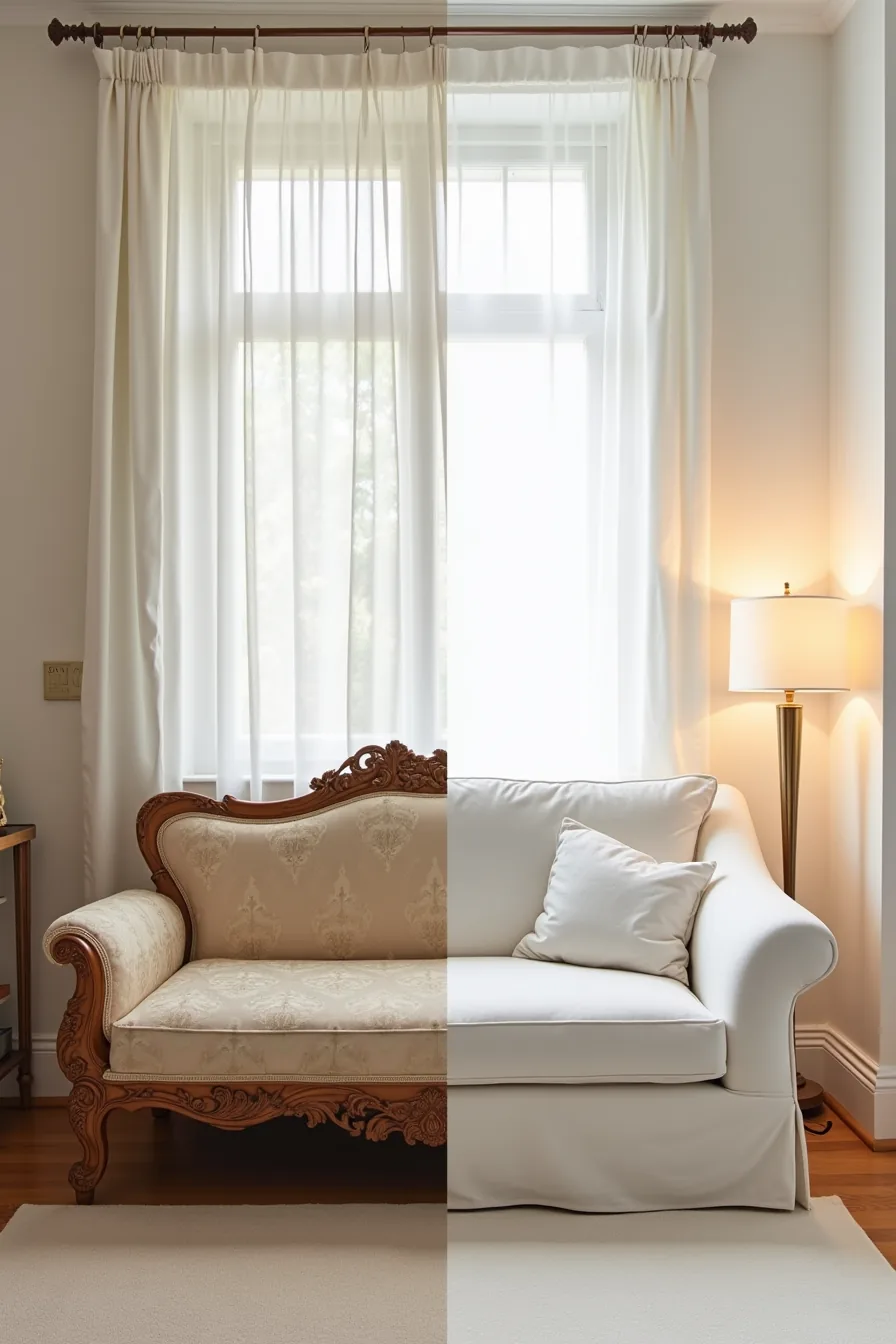
The split between strict and modern neoclassical comes down to how much ornament you tolerate. A traditional carved wooden sofa with damask fabric demands a room with molding, crystal lighting, and a formal floor plan, anything less makes the piece look like a museum castoff. This route asks you to commit to period-correct styling across the entire space, not just one seating piece.
A minimalist sofa with clean lines in neutral linen achieves the same proportional discipline without dictating the rest of your decor. The simple frame lets you pair it with industrial metal tables, abstract art, or shag rugs, and it forgives modern clutter you won’t eliminate. Choose the carved version if you own the room’s other furniture decisions; choose the refreshed take if the sofa must adapt to changing tastes over the next decade.
Neoclassical Sofa Ideas for Apartment-Sized Formal Rooms
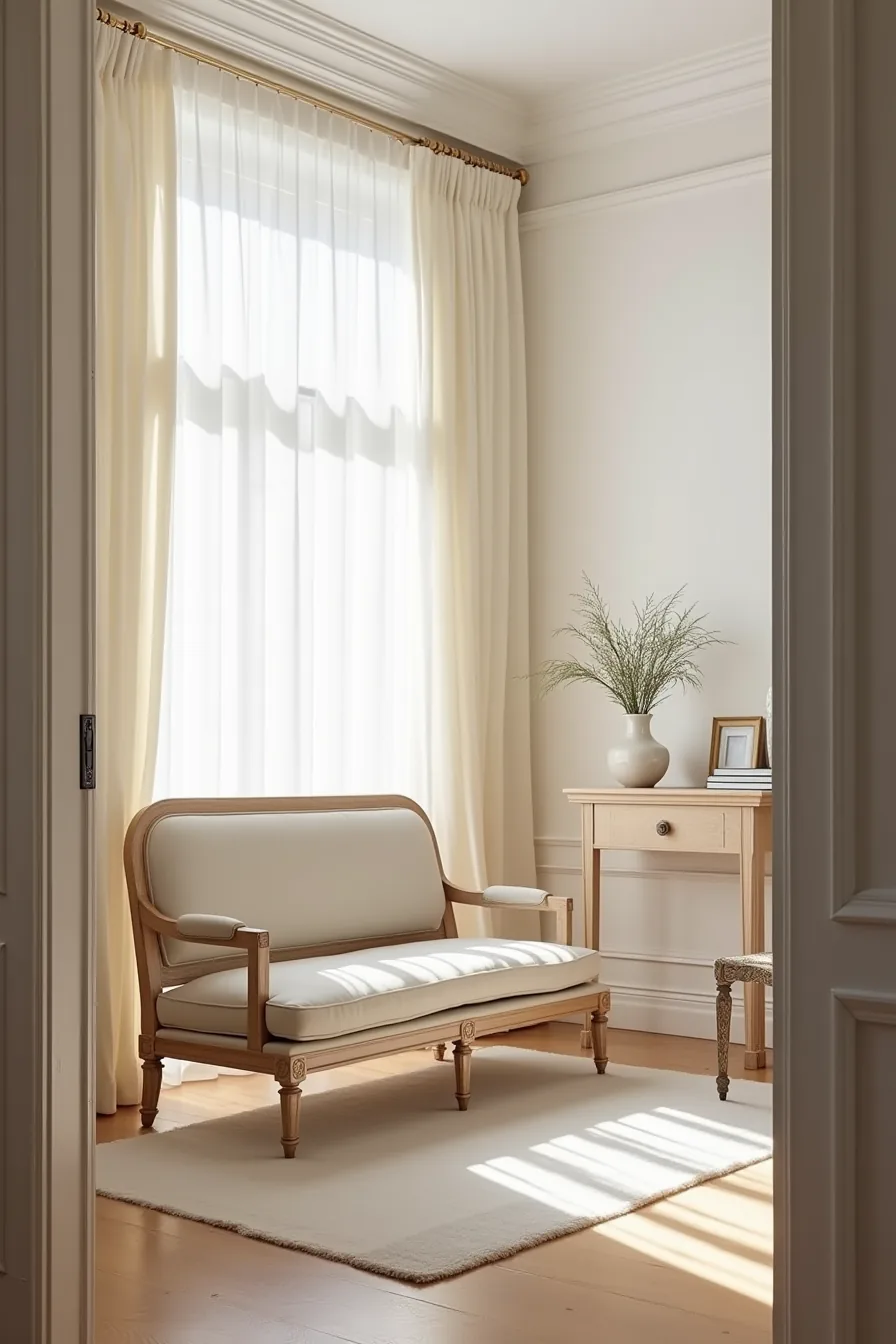
Scale is the single factor that makes or breaks a neoclassical sofa in a tight footprint. For rooms under 12 feet wide, skip the three-seater and opt for a compact loveseat that runs 60–68 inches across, this preserves the architectural presence of a formal settee without swallowing the floor plan. Pair it with a proportionally scaled side chair (not a bulky recliner) so the seating group reads as deliberate rather than squeezed.
Position a narrow console table, 10–12 inches deep, directly behind the sofa to anchor the arrangement and give the eye a place to rest against white walls. This setup suits a dining room alcove, a studio’s sleeping corner, or a narrow living room where a full sofa would block the path to a balcony or hallway. You sacrifice lounging width, but you gain circulation: keep at least 30 inches clear between the sofa’s front edge and the coffee table or opposite wall, and the room will feel composed instead of crowded.
Choose a loveseat with exposed, tapered legs to lift visual weight off the floor, and the small space will borrow elegance from the taller sightlines.
Renter-Friendly Neoclassical Setup
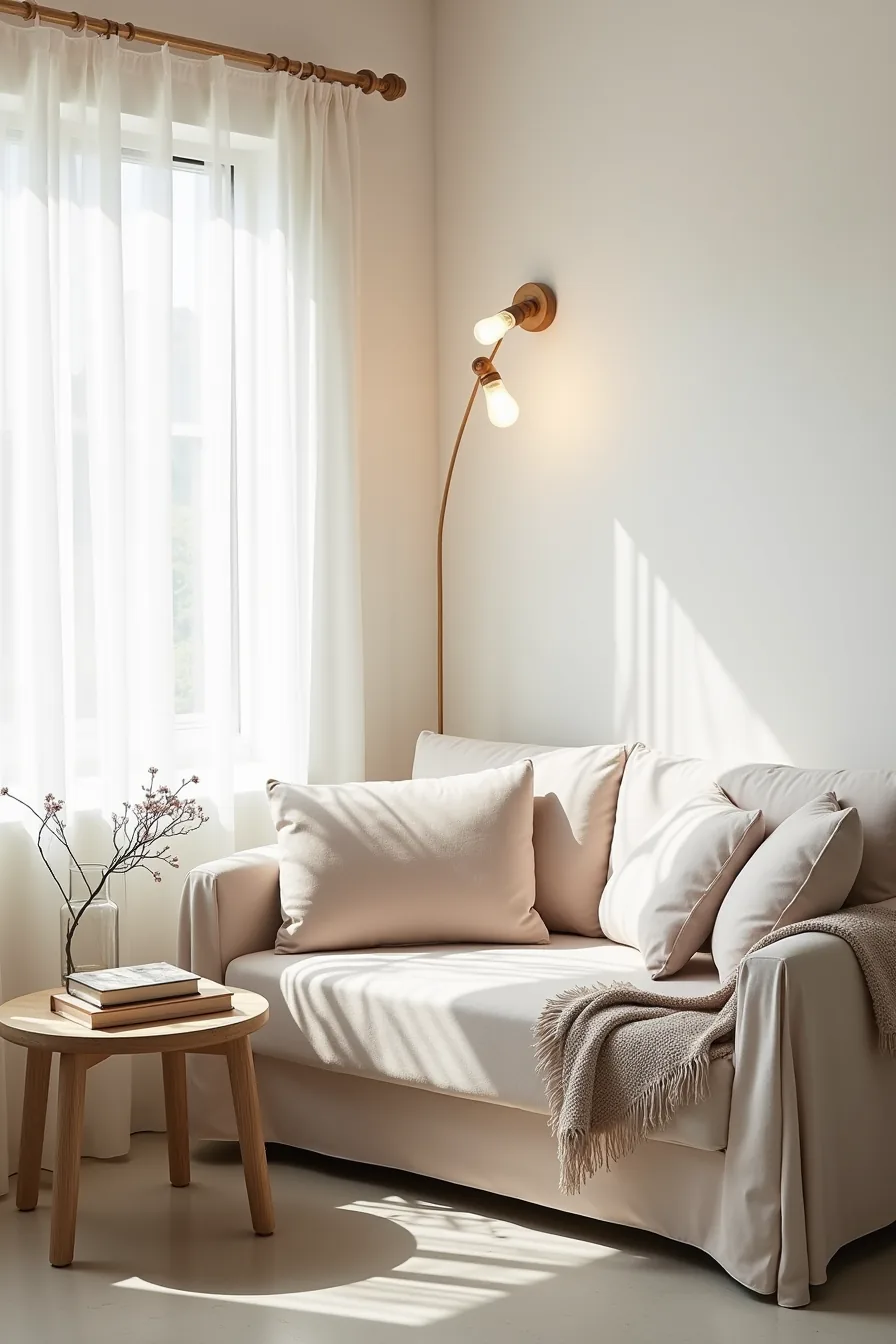
The rental-safe route trades permanent millwork for pieces you can carry out in one trip. A neutral sofa with a removable slipcover delivers the tailored, architectural lines of neoclassical seating without committing you to upholstery you can’t change, wash the cover when it wears, swap it for a deeper tone next season, and the frame underneath stays pristine. Detachable wooden legs, finished in a dark espresso or black lacquer, add the tapered, fluted profile that anchors the style; screw them on at move-in and pack them separately when you leave.
Dress the slipcovered frame with structured throw pillows in silk or velvet textures and a patterned throw blanket draped asymmetrically over one arm, these layered textiles create the formality a bare sofa lacks. Arrange the detachable legs so they’re clearly visible rather than tucked under a skirt; their exposed line is what signals neoclassical proportion instead of generic rental furniture. This setup suits a first apartment, a temporary posting, or anyone unwilling to drill into plaster walls.
You sacrifice the carved wood and hand-tied springs of a permanent piece, but you gain the freedom to change your entire palette without reupholstering.
Long-Term Investment: Premium Materials and Construction
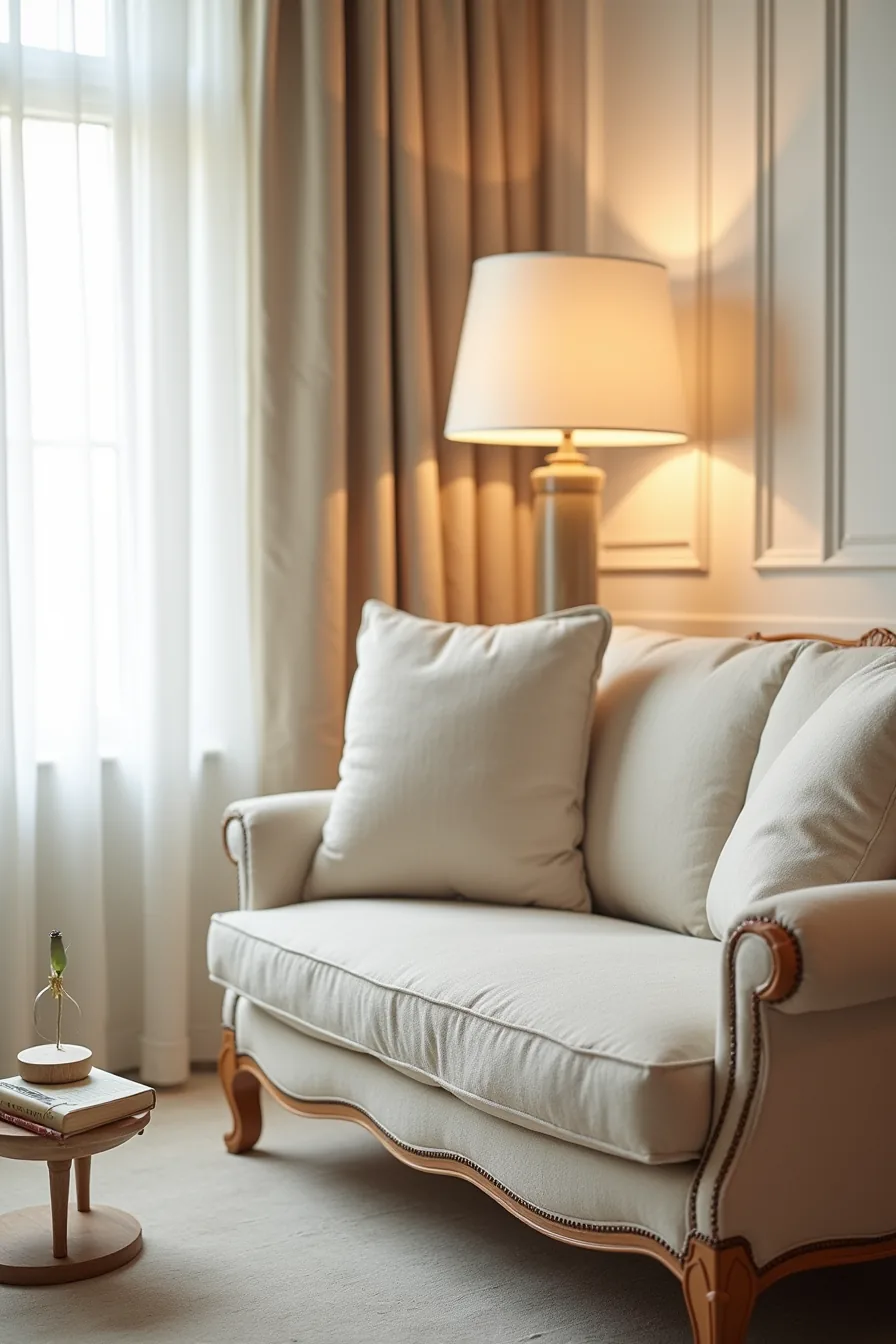
A neoclassical sofa built for a decade-plus of daily use comes down to four load-bearing decisions: kiln-dried hardwood frame, eight-way hand-tied springs, high-density foam wrapped in natural fiber, and a performance-grade wool or linen upholstery. The hardwood frame should be visible at the base, not hidden behind a skirt, this lets you inspect the joinery for dowelled or mortise-and-tenon connections rather than staples and glue blocks. Hand-stitched details along the arms and back indicate a maker who finishes edges by hand, which resists fraying far longer than machine-stitched seams.
Brass nailhead trim along the arms is both ornamental and protective; it guards the upholstery edge where abrasion occurs most. Polished wooden legs, typically turned or fluted, should be bolted through the frame, not screwed into the particleboard, so you can tighten them over the years. Budget for re-covering once in the sofa’s life, quality wool wears 10-15 years before pilling or fading becomes noticeable, and a professional reupholstery of a six-foot sofa runs $1,200-$2,500 depending on fabric choice.
This route suits a primary residence or a home office where the sofa anchors daily use; you pay three to five times more upfront than a mid-range piece, but you avoid replacing it when the cushion cores collapse around year seven.
Your next step
You now have six distinct routes into the neoclassical sofa look, from a renter-friendly slipcover to a solid-wood investment piece. The only wrong choice is one that ignores your room’s circulation or your actual maintenance tolerance.
Start by measuring your wall length and door clearance, then pick the single example that fits both your space and your lifestyle. Order a fabric swatch or visit a showroom to confirm the texture feels right against your existing flooring before you commit to any purchase.
Frequently Asked Questions
What exactly defines a neoclassical sofa versus a traditional or modern sofa?
Neoclassical sofas feature straight, tapered legs, symmetrical proportions, and restrained ornamentation like fluted details or carved rosettes. They borrow Greco-Roman forms but stay cleaner than traditional rolled-arm pieces and more structured than modern minimal sofas.
Can a neoclassical sofa work in a small apartment, or does it need a large formal room?
Yes, it works in small spaces when you choose a two-seater or armless design with exposed legs. Keep the frame under 72 inches wide and pair it with slim side tables to preserve sightlines and floor space.
How do I keep a neoclassical sofa clean if it has light-colored upholstery?
Vacuum weekly with a brush attachment to remove dust before it embeds. Blot spills immediately with a dry cloth, then use a mild upholstery cleaner tested on a hidden patch. Professional steam cleaning every 12–18 months prevents yellowing.
What’s the typical price range for a quality neoclassical sofa, and where do budget and investment pieces differ?
Budget options run $500–$1,200, using hardwood-ply frames and polyester-blend fabrics. Investment pieces cost $2,500–$6,000, with kiln-dried hardwood, eight-way hand-tied springs, and linen or wool upholstery. The latter holds shape for 15–20 years versus 5–7 for budget models.