Amazon bedroom finds only work when they match your room’s actual dimensions, traffic flow, and maintenance tolerance, not just the styling in the listing photos. A 60-inch bench that looks perfect under a window will block your closet doors; a linen duvet with a 4.5-star rating may wrinkle within a week if you skip ironing. The six picks below are graded on three hard criteria: fit for standard room sizes, real-world upkeep, and whether the photo matches the physical product.
You’ll learn which items earn their keep in a 10×10-foot space versus a 14×16-foot primary suite, and how to spot listing photos that hide scale with clever angles.
Key takeaways
- Measure your room before buying any Amazon bedroom find, since a queen headboard typically spans 54–60 inches and oversized frames can block door swings or closet access.
- Prioritize layered lighting with a dimmable floor lamp for tasks and a warm accent light for mood, avoiding single overhead fixtures that flatten the space.
- Choose washable textiles like cotton or linen blends with a 200–400 thread count, and check care labels for machine-washability to avoid high-maintenance decor.
- Verify listing photos against dimensions and material descriptions, as scale distortion is common; read recent reviews for real-world color and durability feedback before purchasing.
Storage Solutions That Don’t Consume Floor Space
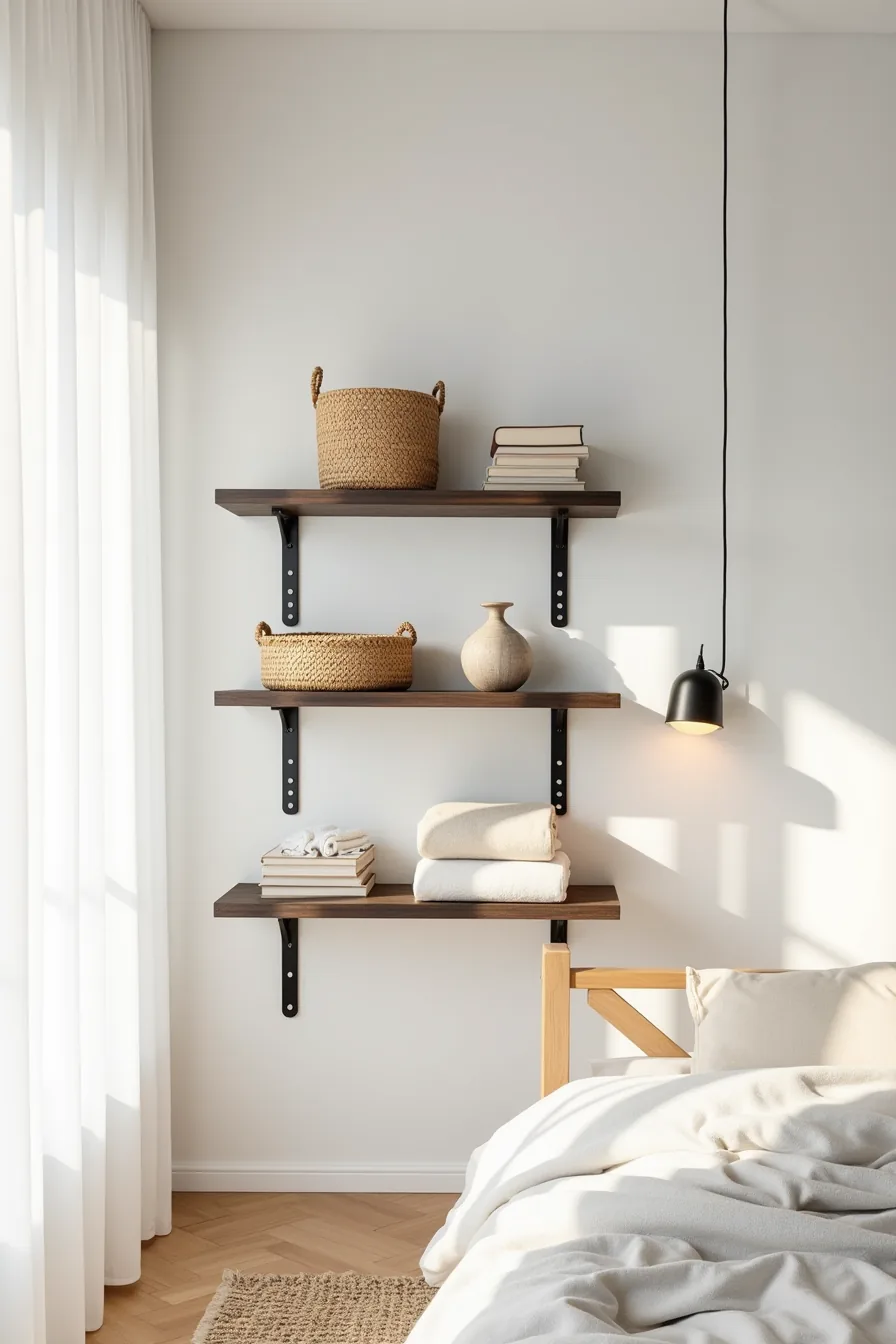
The most effective Amazon bedroom finds for small rooms are the ones that work vertically. A straight-on arrangement of three black metal floating shelves staggered at different heights on a white wall gives you roughly 6 to 9 linear feet of display space without touching your floor plan. Set the shelves 10 to 14 inches apart vertically, and keep the deepest shelf at 8 to 10 inches so it doesn’t visually crowd a narrow walkway.
Load each shelf with woven baskets for smaller items like accessories or chargers, and use solid storage boxes for anything you don’t want on display. Rolled textiles, blankets or spare pillowcases, tuck neatly on the top shelf and double as soft texture against the metal. This setup suits renters because most floating shelf brackets require only two to four drilled holes that are easy to patch later.
For a practical bedroom find, measure your wall width first and leave 4 to 6 inches of clearance on either side of the shelf span so the composition feels intentional rather than cramped.
Lighting Layers for Mood and Task Work
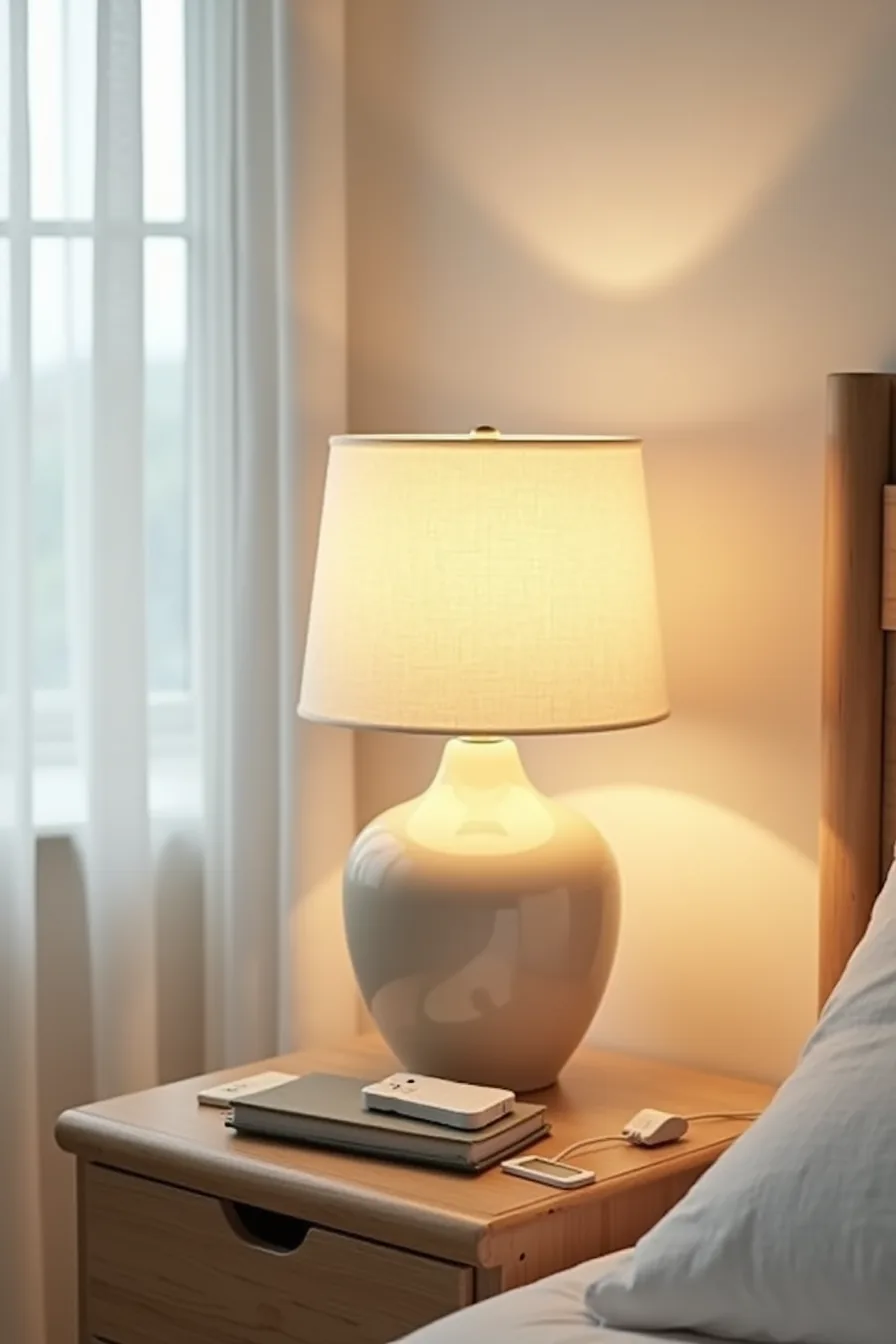
One ceramic table lamp with a linen shade handles your wind-down lighting, but it fails you at 11 p.m. When you need to read without blinding your partner. Pair it with a rechargeable reading light clipped to the headboard behind you, most models run 20 to 80 lumens on their lowest setting and recharge via USB-C in 2 to 3 hours.
That combination gives you a warm, diffused glow for evening and a focused beam for late-night pages.
Keep a dimmer remote on the bedside table surface so you can adjust both lights without moving. Look for lamps with a three-way switch or a dimmable LED bulb rated 2700K to 3000K for that warm amber tone. If your nightstand is under 16 inches wide, choose a lamp base no wider than 6 to 7 inches and a shade that sits below eye level when you’re seated, anything taller casts glare into your peripheral vision.
These functional bedroom ideas cost $25 to $80 for the lamp and $15 to $40 for the clip light, and neither requires an electrician.
Textiles That Balance Comfort and Maintenance
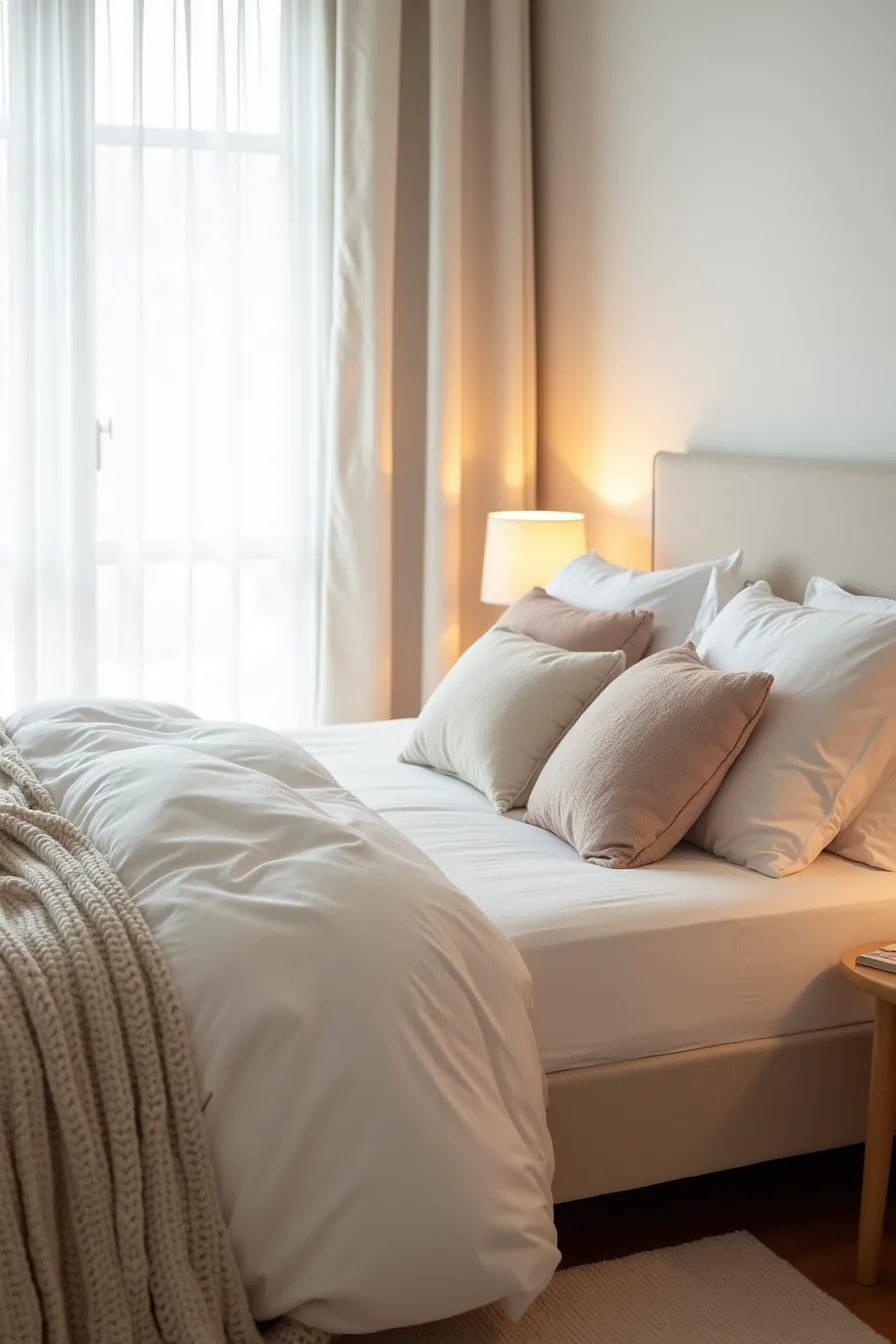
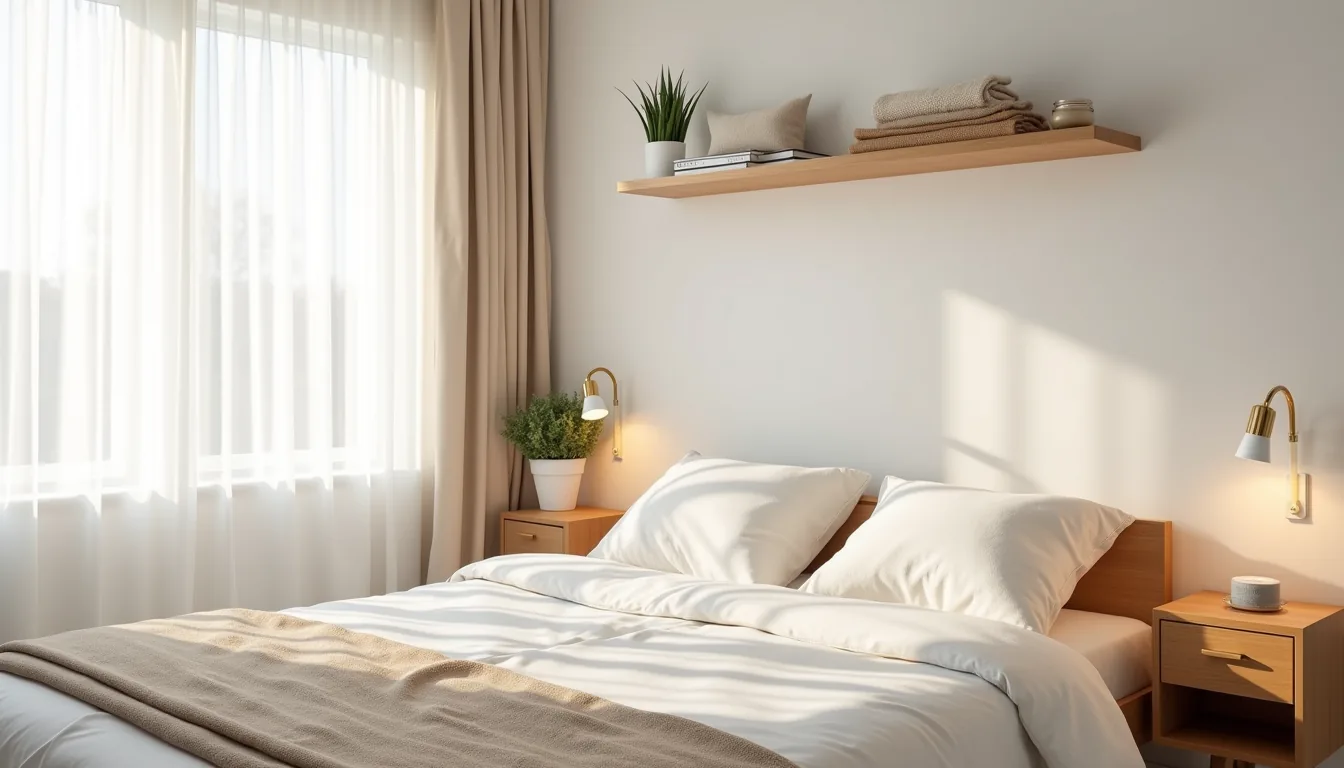
The layered setup you see here, fitted sheet, duvet cover, two contrasting throw pillows, and a chunky knit throw, works because each layer serves a different function you can replace independently. Start with a fitted sheet in a breathable cotton percale (200 to 400 thread count feels crisp without trapping heat), then add a duvet cover in a washable linen blend or performance microfiber that resists pilling. Those two throw pillows should be purely decorative; choose one textured boucle or velvet piece and one smooth cotton piece for visual contrast without committing to a theme.
When browsing stylish Amazon bedroom finds, check the care label before you click buy. A duvet cover labeled “machine wash cold, tumble dry low” will survive weekly laundering, while dry-clean-only velvet pillows become a costly obligation, plan on $10 to $20 per cleaning visit. The area rug at the foot of the bed should be a low-pile polypropylene or wool blend; both shed less than shag and vacuum cleanly.
Standard queen beds pair with a 5×7 or 6×9 rug positioned so the front feet of your bed frame rest on it, leaving 18 to 24 inches of bare floor on each side for easy vacuum access. For the knit throw, test yarn softness against your neck, wool blends can itch and require hand washing, while cotton or acrylic versions go in the machine. Expected costs: duvet cover $40 to $120, throw pillows $20 to $50 each, area rug $80 to $200, knit throw $30 to $70.
Headboards and Bed Frames: Scale and Installation Reality
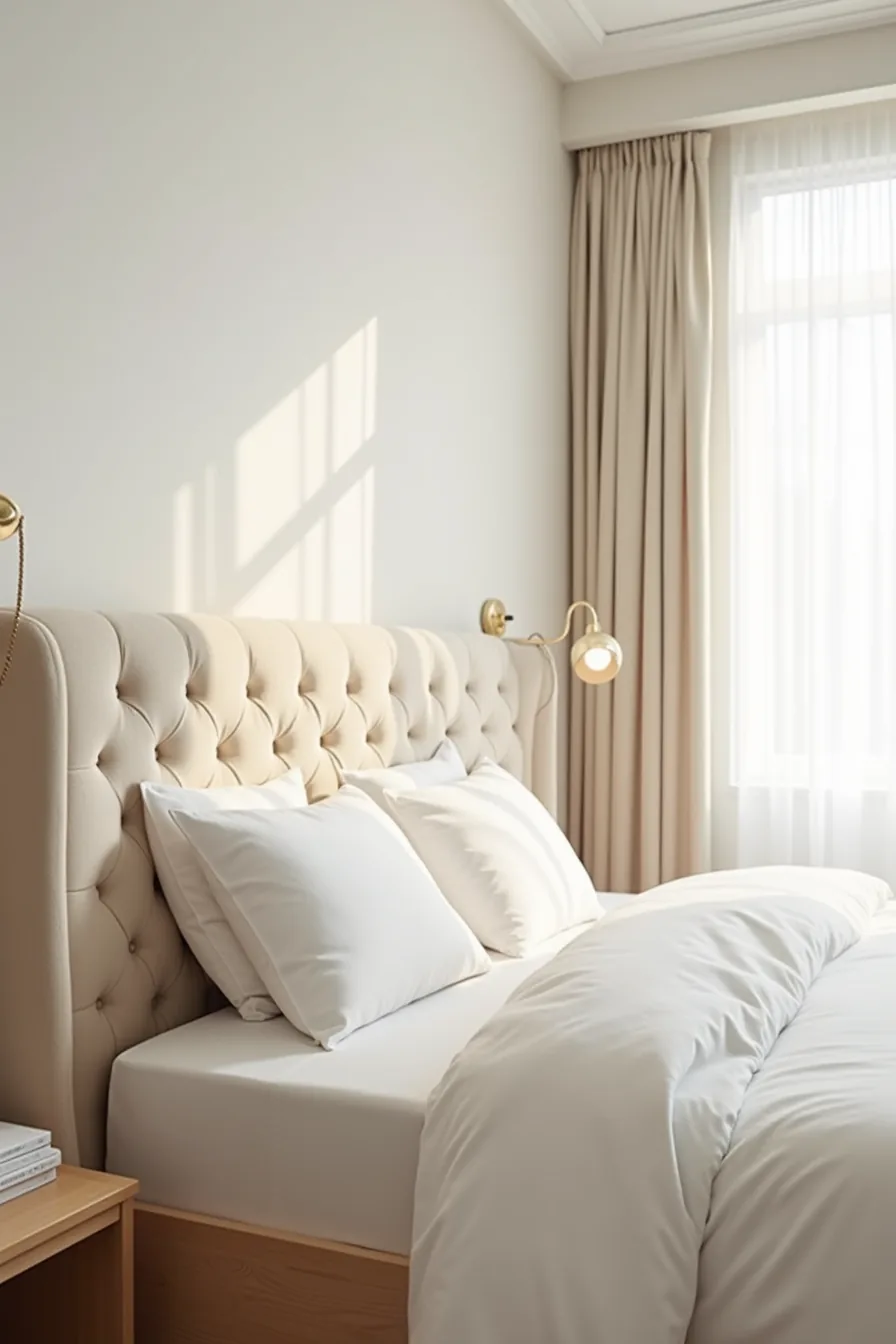
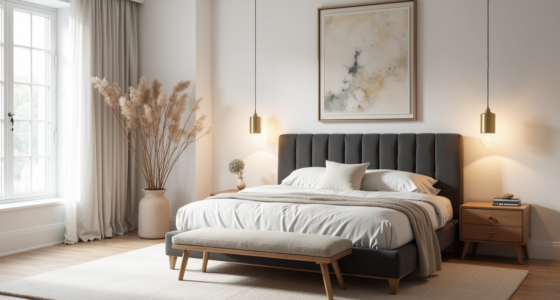
Pictured here’s a tufted upholstered headboard spanning the full width of your bed frame, anchored directly to the wall rather than relying on frame attachment points. This setup works when your room has at least 6 feet of wall clearance, you need 24 to 36 inches of walking space in front of the bed, plus room to open nightstand drawers without hitting the headboard’s edges. Before ordering, measure your bed frame’s width (standard queens run 60 to 62 inches) and confirm the headboard offers threaded inserts or pre-drilled holes matching your wall stud spacing of 16 or 24 inches.
Anchor bolts are non-negotiable for wall-mounted styles. A 40-pound headboard needs two lag screws driven into studs, not drywall anchors alone, especially if you sit upright against it. Assembly typically runs 45 to 90 minutes.
For rented spaces, choose a floor-standing headboard instead, it leans against the wall and leaves no holes, but verify your frame has compatible bolt holes since most attach via rails rather than standing free. Tufted fabric requires monthly vacuum brushing; exposed button tufts collect dust and shed fibers. Budget $90 to $250 for upholstered headboards, and check return policies, many oversized items carry 30% restocking fees if you misjudge scale.
Accent Furniture for Visual Interest Without Clutter
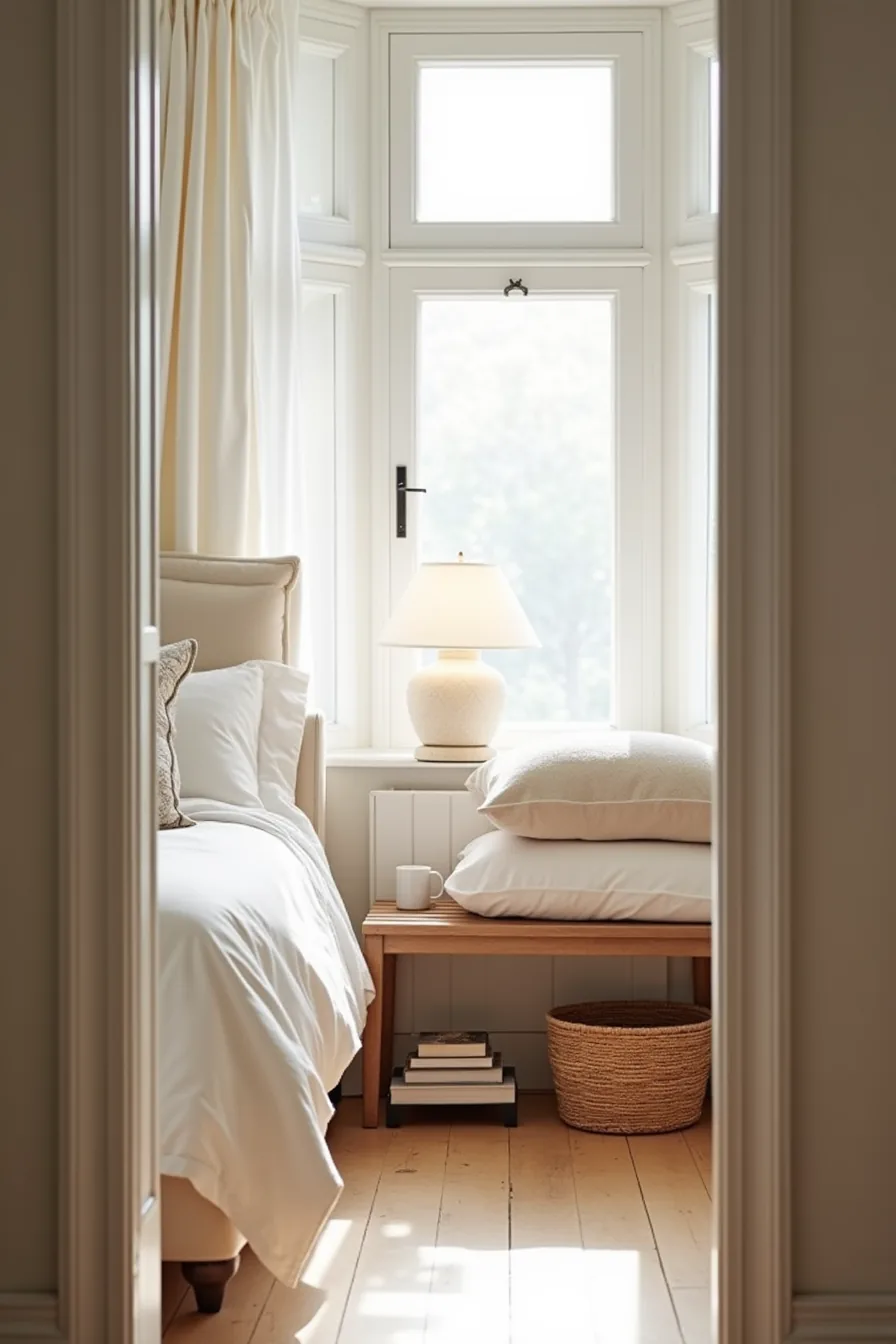
A wooden bench at the foot of the bed anchors the room without adding bulk, and it solves the “where do clothes go” problem with a flat surface you can actually use. Pair it with two stacked throw pillows in complementary textures, linen over cotton works well, to add depth while keeping the look intentional. A side table beside the bench should hold only a lamp and a single mug; anything more turns a styling moment into a catch-all.
For small rooms, choose a bench no deeper than 14 to 16 inches so you retain at least 30 inches of walking space between it and the opposite wall. A woven basket underneath the table doubles as concealed storage for extra blankets, but keep it shallow enough that it doesn’t push the table forward and narrow your path. Acacia or mango wood benches run $80 to $180 and need monthly dusting plus occasional oiling; avoid light-colored finishes if you plan to place them in direct sunlight, since they yellow within a year.
For medium rooms, swap the single side table for a pair of matching stools that can tuck under the bench when not in use, this preserves your bedroom upgrade inspiration without sacrificing floor clearance.
Window Treatments That Control Light and Sound
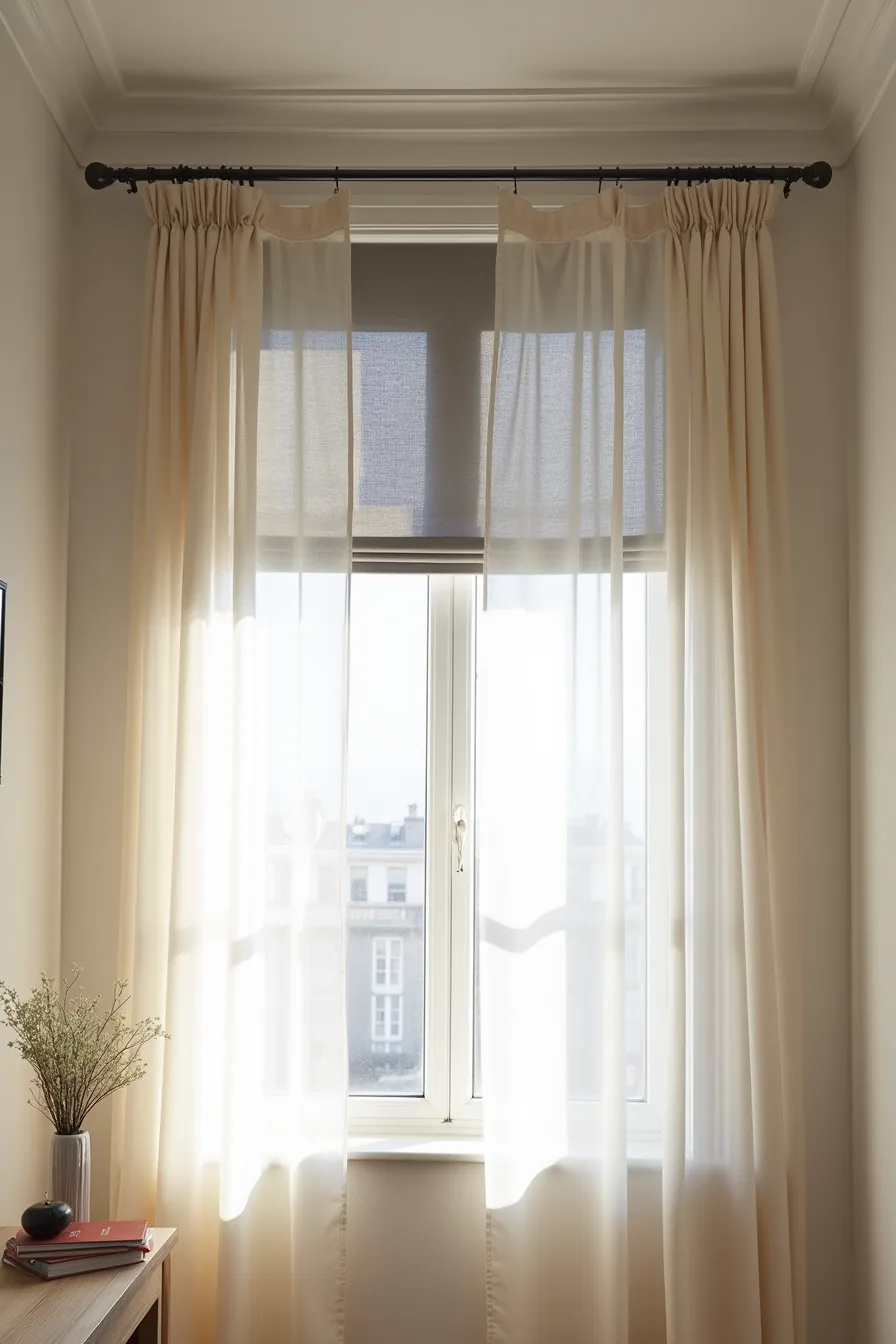
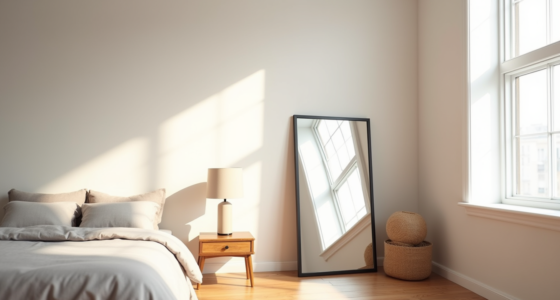
Start with a ceiling-mounted metal curtain rod, positioning it 2 to 4 inches below the crown molding and extending it 6 to 10 inches past each side of the window frame. This trick visually widens the window and, more importantly, leaves enough wall space for the panels to stack fully open, so you’re never covering the glass when you want daylight.
For light control, choose blackout curtains with a thermal foam backing rather than a simple tight-weave fabric. The foam layer blocks roughly 85 to 99 percent of incoming light depending on the brand, and it adds meaningful sound dampening for street noise. Charcoal gray performs better than lighter colors for blackout purposes; white panels with the same foam core will still let a soft glow bleed through the edges.
Measure your window width and multiply by 1.5 to 2 to determine total panel width, this gather ratio ensures the curtains close flush without gaps. Behind the blackout panels, hang sheer linen curtains on a second, inner rod. The sheers let you filter light during the day while maintaining privacy, and they soften the visual weight of the heavy outer panels when both are drawn open.
Installation takes 20 to 40 minutes with a drill and a level; expect to spend $60 to $150 total for two blackout panels, two sheer panels, and the rods. Wash the sheers every 2 to 3 months on a gentle cycle, but dry-clean the blackout panels, machine washing degrades the foam backing and creates permanent creases within a year.
Your 15-minute decision checklist
Before you hit buy, run each item through this filter: measure your floor space, note the listing’s stated dimensions, and compare them against your actual layout. Check reviews for photos from real buyers, listing shots often use wide-angle lenses that distort scale. Confirm the material (solid wood vs. MDF, cotton vs. Polyester) and its cleaning requirements.
If return shipping isn’t free, factor that cost into your budget.
Your next step: Grab a tape measure, mark the footprint of your target piece on the floor with painter’s tape, and live with it for 24 hours. If it doesn’t obstruct your path or storage access, you’re clear to order.
Frequently Asked Questions
How do I know if an Amazon bedroom find will actually fit my space before ordering?
Measure your room’s length, width, and door clearance, then compare against the listing’s exact dimensions. Always subtract 24–36 inches for walkways and account for radiator or window overhangs.
What’s the return window for bedroom furniture on Amazon, and what condition must items be in?
Most items have a 30-day return window from delivery. Items must be unassembled, in original packaging, and free of scratches or stains; some oversized pieces require a restocking fee.
How can I tell if product photos on Amazon are misleading about color, material texture, or assembly difficulty?
Read verified-purchase reviews that mention “color is darker/lighter” or “took hours to assemble.” Filter for 3-star reviews, they often describe real texture and fit issues. Zoom into lifestyle photos for wood grain or fabric weave details.
Which Amazon bedroom finds hold up best after 2–3 years of regular use?
Solid wood or plywood headboards, metal bed frames with welded joints, and upholstered benches with high-density foam (1.8–2.0 lb density) outlast particleboard or MDF pieces. Check for “kiln-dried” or “hardwood” in materials, and avoid items with plastic connectors.