
A black bathroom floor is a deliberate design decision that changes how the entire room reads, and choosing the right material comes down to your budget, your plumbing, and how much scrubbing you’re willing to do. You can achieve the look through matte porcelain, polished stone, or even peel-and-stick vinyl, each with distinct trade-offs in slip resistance, grout upkeep, and installation cost. The six approaches below break down what actually works in small powder rooms versus large master baths, including which finishes hide hard water spots and which will demand a weekly mop.
You’ll also see where to spend for longevity and where a temporary fix holds up just fine.
Key takeaways
- Polished black tile delivers dramatic contrast but demands regular cleaning since water spots and footprints show immediately on glossy surfaces.
- Matte black tile offers better slip resistance and hides smudges, making it the safer choice for bathrooms with frequent moisture or foot traffic.
- Peel-and-stick black vinyl costs a fraction of tile and installs in an afternoon, but you’ll need to replace it every 2–4 years in high-wear zones.
- Black concrete or epoxy creates a smooth, waterproof floor that suits large bathrooms, yet requires professional installation and periodic resealing every 1–3 years to prevent staining.
Polished Black Tile for High-Impact Contrast
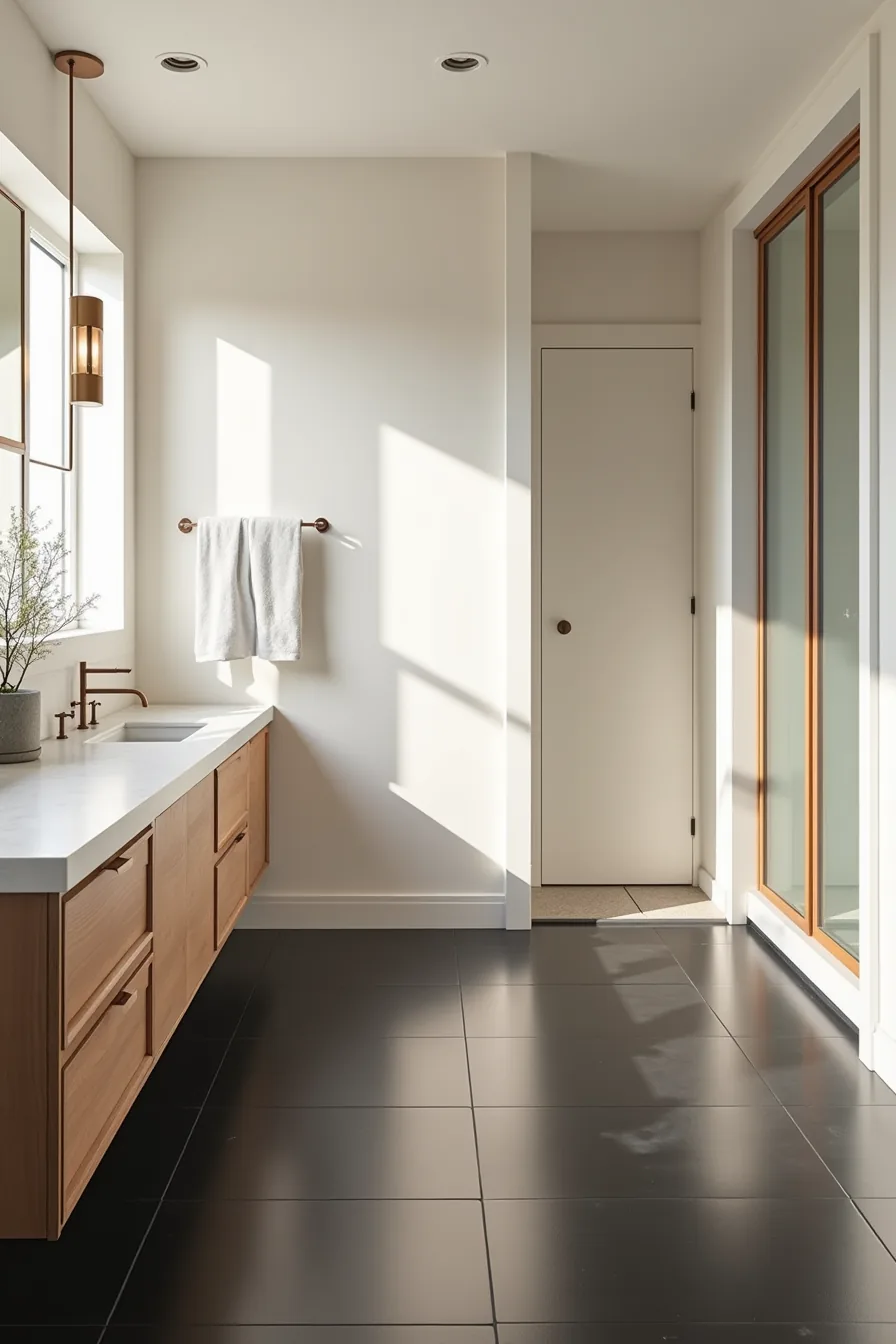
Glazed porcelain in a polished finish delivers the strongest reflective payoff of any black floor bathroom option, bouncing ceiling light back into the room while anchoring white fixtures with graphic weight. This setup suits medium-to-large bathrooms (roughly 60–100 square feet) where the gloss has room to register; in a tight powder room, the effect can feel cavernous rather than dramatic.
The critical trade-off is upkeep. Polished black tile shows water spots, soap film, and every bare footprint, so you’ll be wiping it down every two to three days in regular use. Adequate ventilation, an exhaust fan rated for the room’s square footage, is non-negotiable to prevent streaking and slippery conditions.
Pair it with a textured bath mat near the tub and a frameless glass shower enclosure to keep the floor plane uninterrupted. White marble countertops amplify the contrast, but budget for sealing the stone annually if you follow that route. Grout lines should be narrow (1/16 to 1/8 inch) in a matching dark shade to preserve the smooth, lake-like surface that makes this look work.
Matte Black Tile: Grip and Subtlety
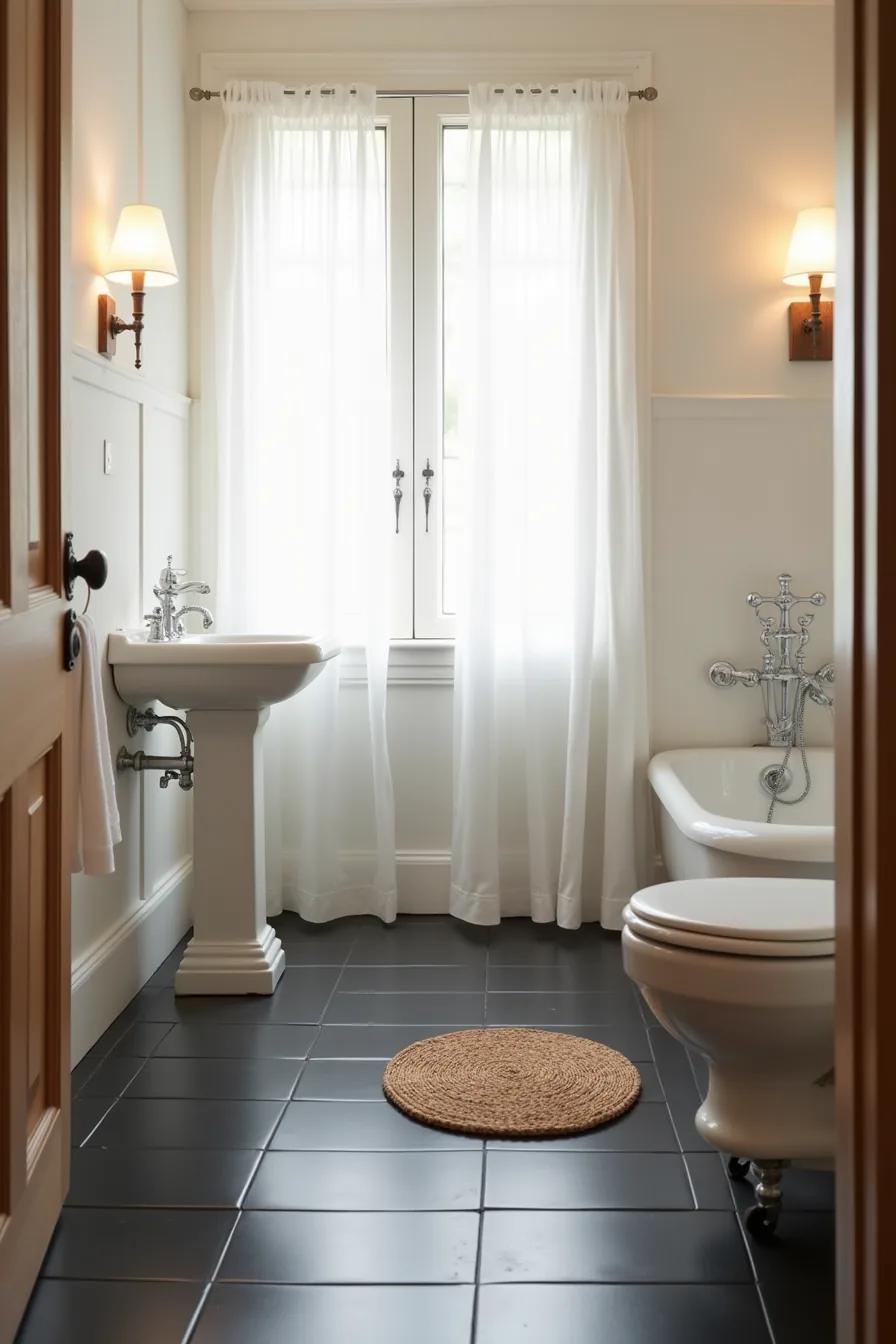
Matte black porcelain provides the practical counterpoint to polished gloss. The non-reflective surface scatters light instead of bouncing it, which means water spots, toothpaste splatter, and hair strands stay visually quiet between cleanings. If you share a bathroom with kids or pets, this is the black floor bathroom interpretation that forgives daily life.
The slip story matters more than the color. Matte tiles typically carry a higher coefficient of friction than polished equivalents, and you’ll notice the difference on wet feet. In the setup here, a compact powder room anchored by a pedestal sink, the matte tile keeps the space from feeling like a cave while the white grout lines break up the dark plane into a subtle grid.
This grid trick is what makes matte black work in small footprints; the grout spacing (typically 1/8 to 3/16 inch) creates visual texture that adds perceived depth.
One installation note: the rubber bath mat in the corner isn’t optional decoration. It protects the tile from abrasive grit dragged in on shoes and gives you a dry landing zone after washing up. Cleanup stays simple, a pH-neutral cleaner and a soft mop handle the routine maintenance without special treatments.
Black Hexagon or Geometric Patterns
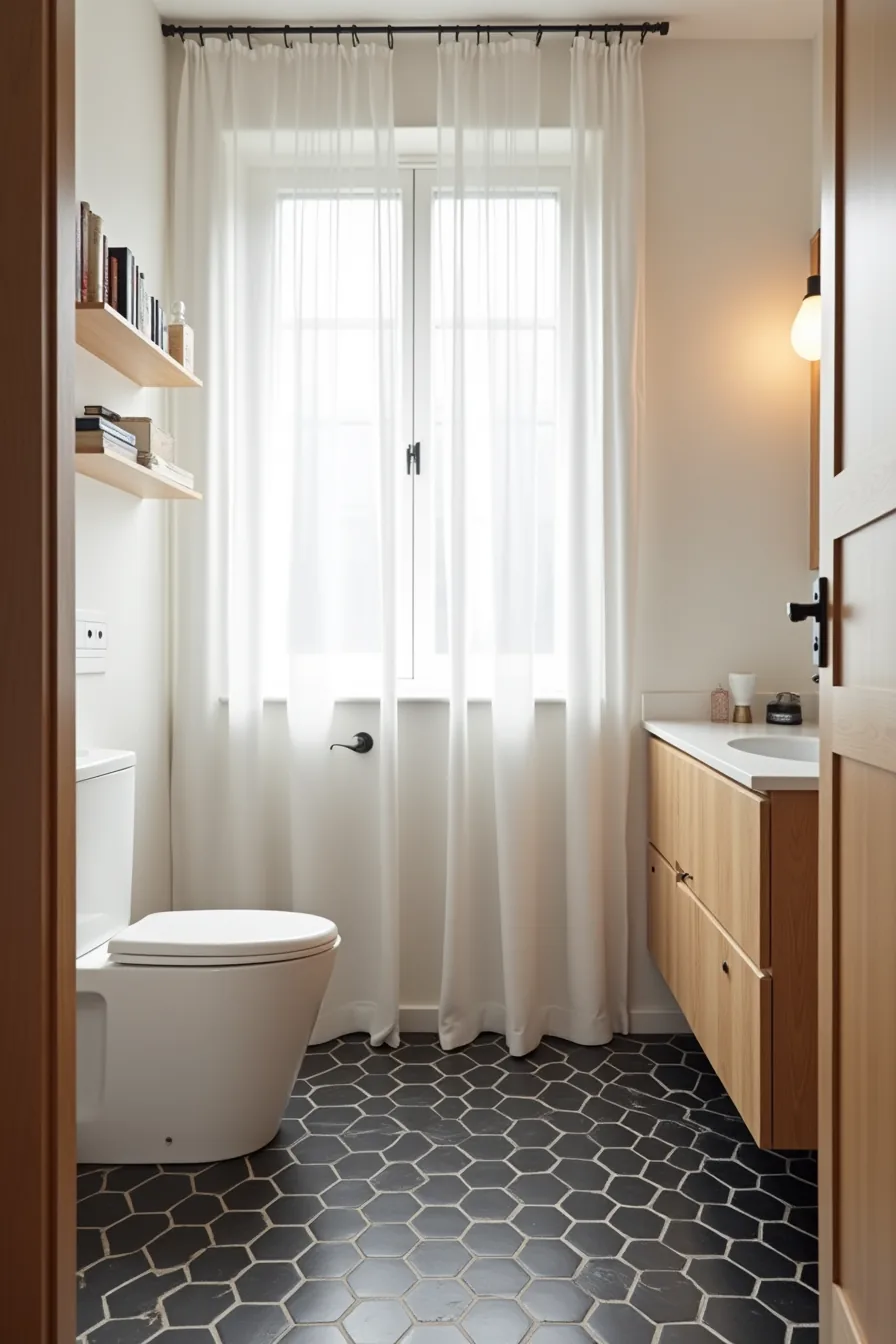
Hexagonal tiles shift the black floor bathroom ideas conversation from color to geometry. The six-sided shape creates a honeycomb rhythm that reads as intentional design, not just a dark surface. In this compact layout, the black hexagons pair with light gray grout, typically 1/8 inch, to produce a pattern that adds visual texture without overwhelming the small footprint.
The light grout line acts as a highlight, defining each tile edge and preventing the floor from merging into a solid black void.
The geometric layout suits any room size, but it shines brightest in tight spaces where a plain grid might feel static. The repeating angles draw the eye across the floor, making the room feel wider than its physical dimensions. The wooden vanity base anchors the pattern with warmth, while the white toilet provides a crisp contrast that keeps the overall look balanced.
For maintenance, the grout lines demand periodic sealing to resist staining, expect to reseal annually if the bathroom sees daily use. Choose a matte finish on the hexagons to maintain grip; polished geometric tiles look striking but become slippery when wet.
Black Stone Flooring: Slate and Granite
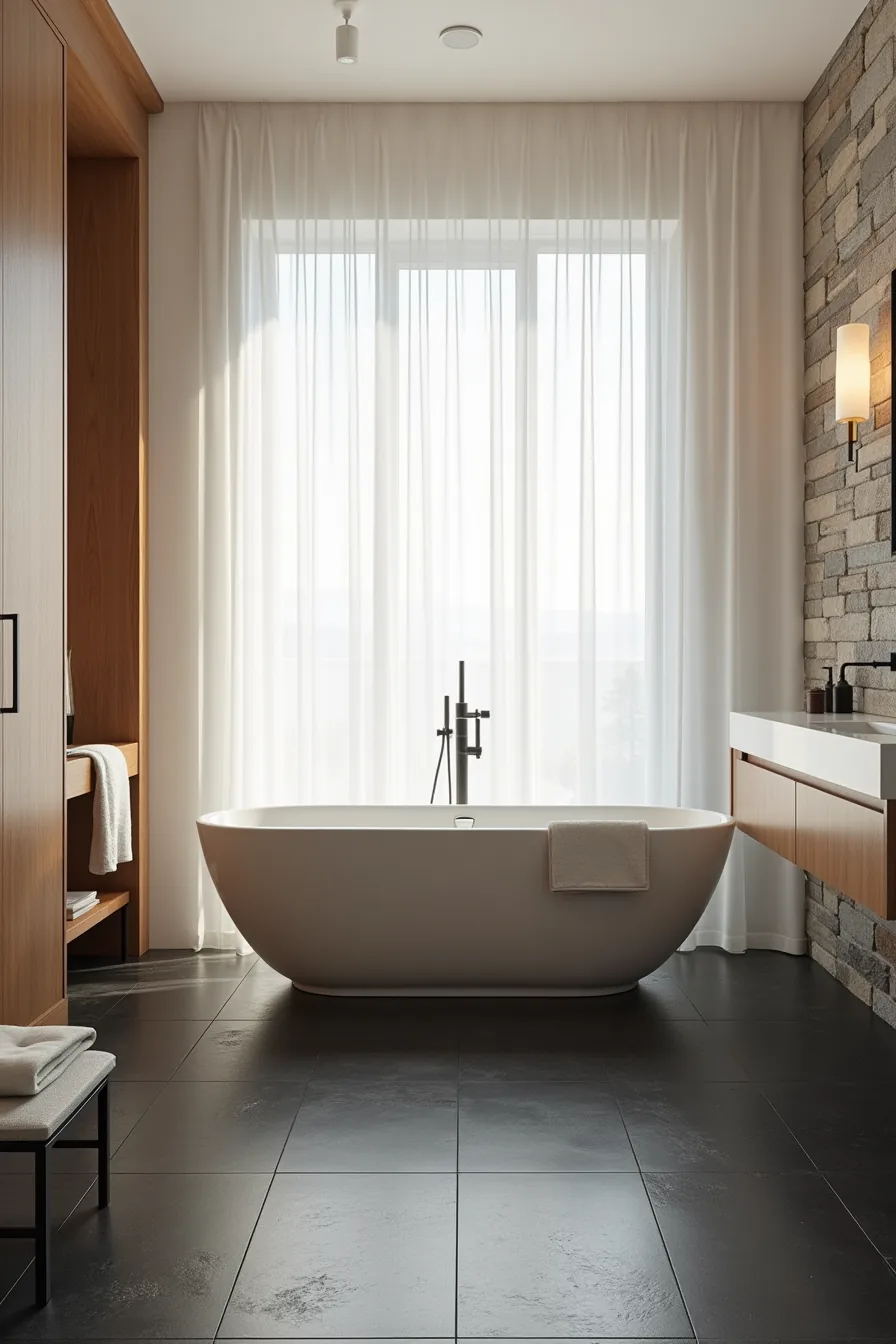
Natural stone moves the black floor bathroom idea from pattern-driven to material-driven, and it changes the maintenance contract entirely. Slate delivers what manufactured tiles can’t: a cleft, uneven surface that varies in tone from charcoal to deep black across every single tile. That natural variation creates a textured, organic plane that feels grounded and permanent, ideal for a large master bathroom where the floor performs as a visual anchor rather than a backdrop.
The low-angle setup here shows exactly why it works: the slate’s veining and surface irregularity echo the raw stone wall surround, while the freestanding soaking tub anchors the composition with clean, sculptural lines. A heated towel rail adds function without competing for visual attention, keeping the warmth where you need it.
Granite, by contrast, offers a denser, more uniform appearance with subtle mineral flecks, better suited to smaller bathrooms or rooms where you want the stone to read as a solid color rather than a textured field. Both materials demand sealing on installation and resealing every 12 to 24 months depending on traffic; skip it and water spots and soap scum will etch the surface permanently. This is a long-term investment route, not a quick refresh.
Budget for professional installation, slate’s natural cleavage makes it brittle at edges, and DIY cuts typically lead to chipped tiles. It suits established homes where the floor will stay for a decade or more, and it pairs best with matte fixtures and warm wood or brushed brass accents to prevent the space from feeling cold. For stylish dark floor inspiration that ages with character rather than against it, natural stone is the definitive choice.
Peel-and-Stick Black Vinyl for Renters
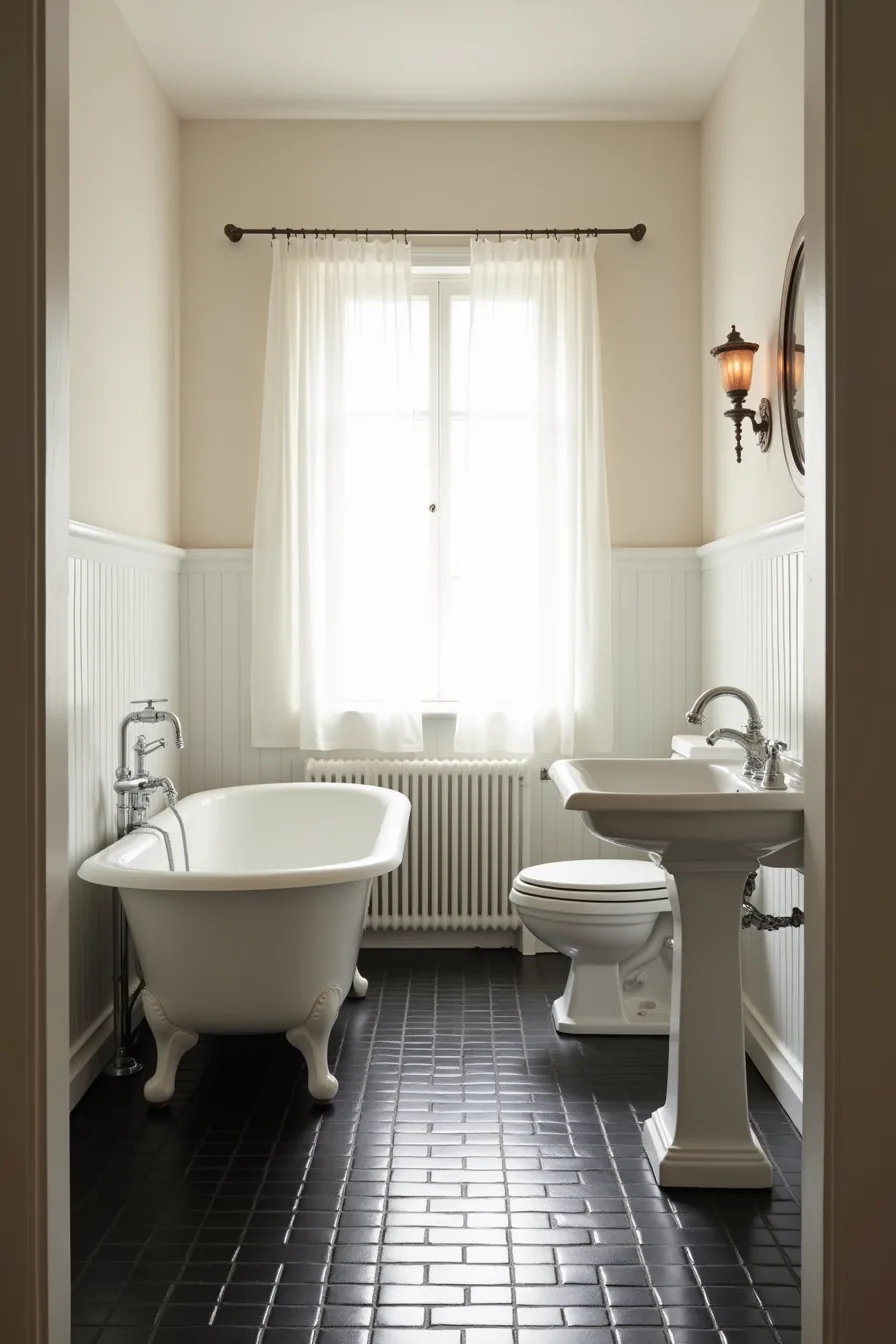
Peel-and-stick vinyl gives you the black floor bathroom look without a security deposit at risk. The tiles in this rental mimic square stone with a matte finish, so they read as natural material from standing height, the only giveaway is the slight edge shadow near the baseboard trim. You install them by peeling the backing and pressing down; a standard 50-square-foot bathroom takes one afternoon and nothing more than a utility knife and a straightedge.
The material costs roughly one-tenth of what porcelain tile runs, and it suits any bathroom size because you cut each tile to fit as you go. It removes cleanly with a hair dryer to soften the adhesive, leaving no residue on most subfloors. Avoid it in bathrooms with standing water or poor ventilation, vinyl can lift at seams over time.
Pair it with a vintage clawfoot tub and simple chrome fixtures, as this space does, to lean into the contrast between the dark floor and the pale walls.
Black Concrete or Epoxy Flooring
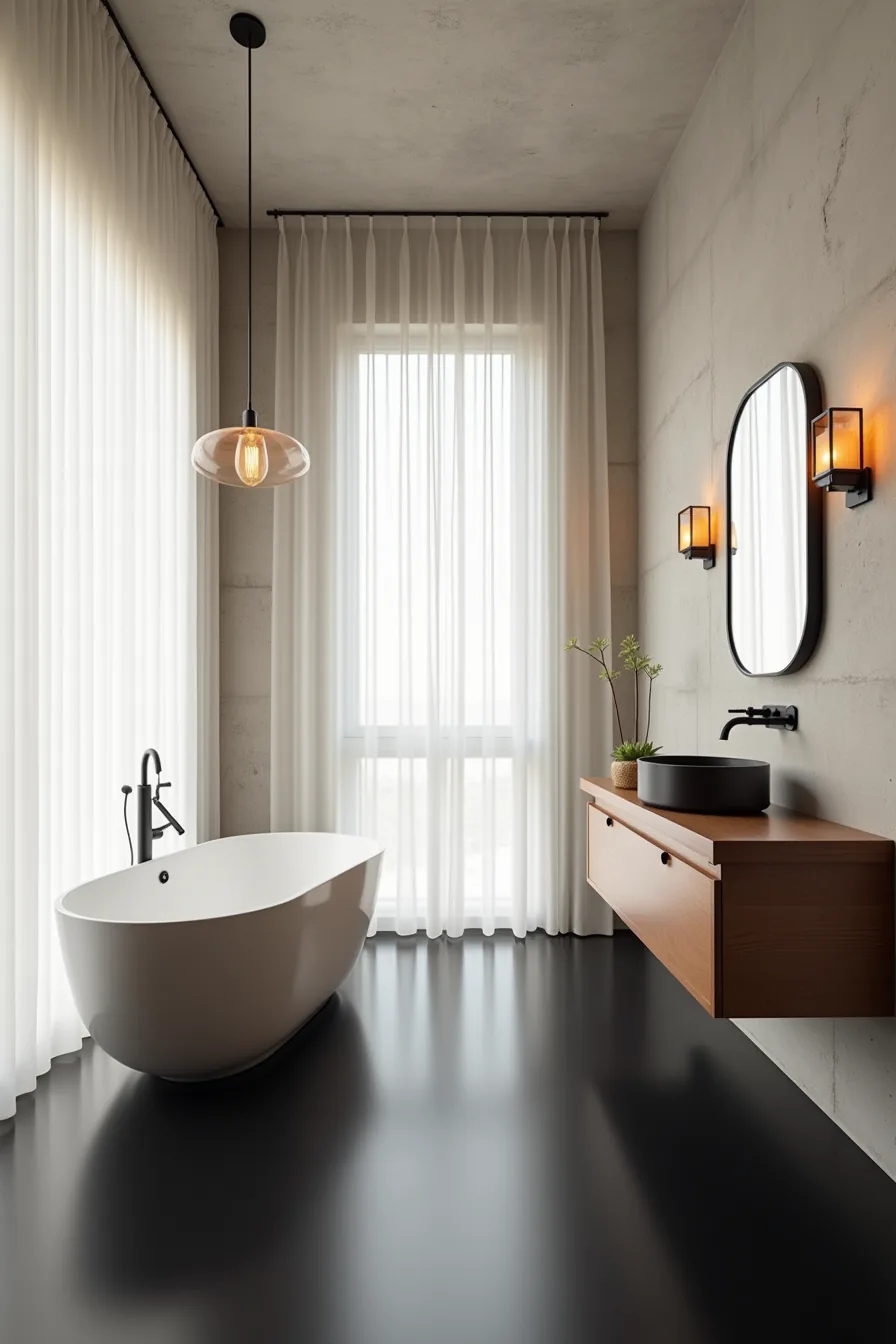
For the smooth, industrial loft look, a black epoxy or polished concrete floor removes grout lines entirely, making a small bathroom feel larger by eliminating visual interruptions. The black epoxy in this space reflects the industrial pendant light overhead, doubling the brightness from a single fixture and helping the stainless steel sink stand out as the functional focal point.
Professional installation is non-negotiable here, you need a moisture barrier, proper surface prep, and a multi-coat application that runs 3-5 days including cure time. Expect to pay 2-3 times what porcelain tile costs, but you gain a waterproof, crack-resistant surface that lasts decades with the right care.
Maintenance is stricter than tile: use only pH-neutral cleaners, never abrasive scrubbers, and place a mat outside the shower to minimize grit that microscratches the finish. This suits large, open bathrooms or loft conversions where the exposed concrete wall ties the palette together, it feels cold and unwelcoming in cramped, windowless spaces.
Where to start
You don’t need to commit to black floors everywhere. Start with one small space, a powder room or laundry room, where the drama feels deliberate, not overwhelming. That single room will teach you how the material behaves with your lighting, humidity, and cleaning habits before you scale up.
Match your choice to your actual constraints: renters should pick peel-and-stick vinyl, budget renovators should spec matte porcelain tile, and long-term owners should invest in honed natural stone. Each delivers the same visual weight with very different commitments.
Measure your room, order one sample tile, and live with it for a week under your real lighting before you buy the full quantity. That’s your first move.
Frequently Asked Questions
Does a black bathroom floor make a small bathroom feel smaller?
No, not automatically. A matte black floor with light walls and a large mirror creates depth, not claustrophobia. The trick is keeping the floor unbroken and the grout matching, so the surface reads as continuous.
How often do you need to seal black stone bathroom floors?
Natural black stone, like slate or granite, needs sealing every 12 to 18 months with a penetrating sealer. Porcelain tiles that mimic stone require no sealing at all. Test your stone yearly by dripping water on it; if it darkens, reseal.
Can you install black floor tiles over existing bathroom flooring?
Yes, if the existing floor is sound, level, and dry. Use a crack-isolation membrane and a flexible thin-set adhesive. You’ll add roughly 1 to 1.5 inches of height, so check door clearances and the toilet flange before committing.
What grout color works best with black bathroom tiles?
For a smooth, monolithic look, use a charcoal or dark grey grout that matches the tile. If you want to define each tile and add texture, choose a light grey or white grout, but be prepared for more visible staining and higher maintenance.