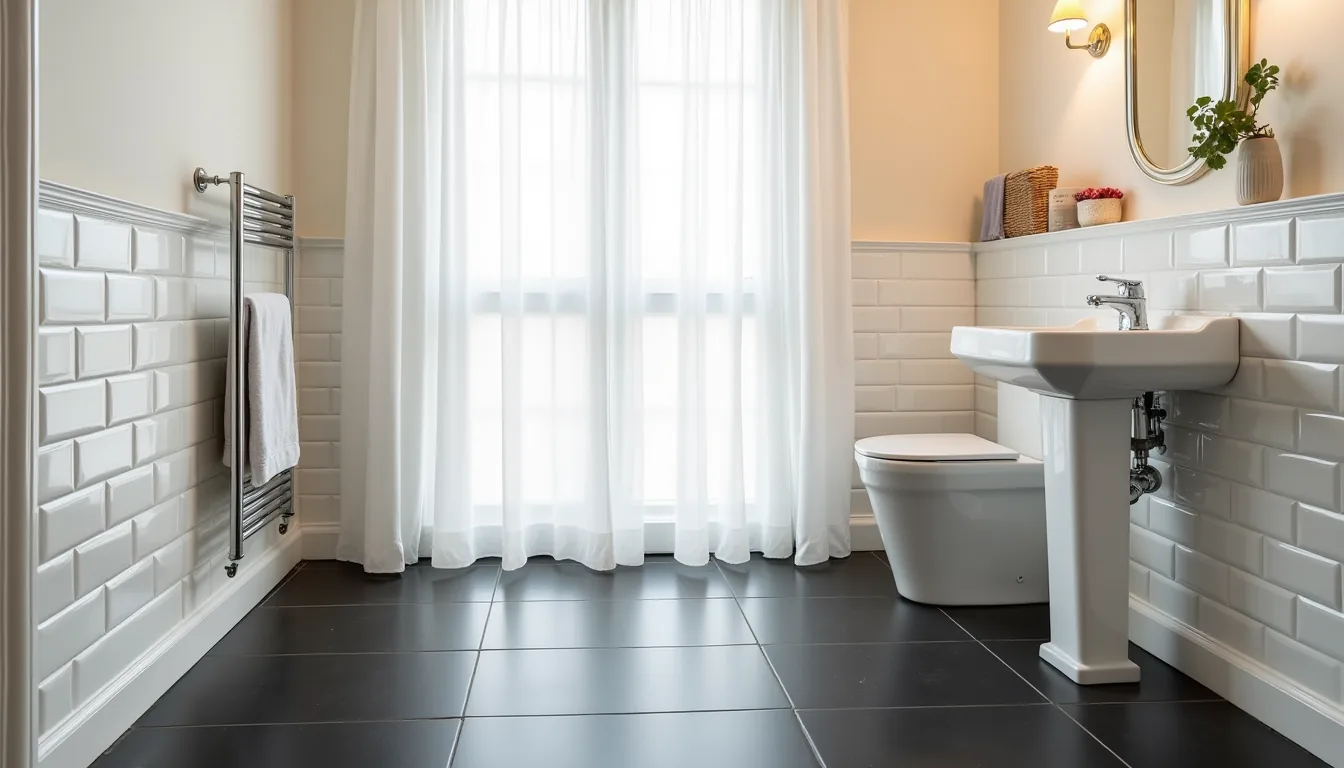
A black tile bathroom floor is a design decision that works in every room size, but only if you choose the right finish, format, and grout color for your specific space and maintenance tolerance. The difference between a stunning, low-maintenance floor and a constant-scrubbing regret comes down to six practical choices, from matte porcelain to polished natural stone. You’ll see exactly which one matches your budget, your cleaning habits, and your room’s proportions, then walk away with a checklist to lock in the decision.
Key takeaways
- Large-format black tiles (typically 12×24 inches or larger) minimize grout lines, making small bathrooms feel more expansive, but require a perfectly level subfloor to avoid lippage.
- Small black tiles with white grout create high-contrast visual texture, yet demand diligent sealing and monthly scrubbing to prevent grout discoloration in moisture-prone areas.
- Matte black finishes hide water spots and dust far better than polished surfaces, but you must choose a tile with a PEI rating of 3 or higher to resist scratching in high-traffic zones.
- Peel-and-stick black tiles offer a renter-friendly route at roughly $2–$4 per square foot, but expect them to last only 2–5 years and to peel at edges if installed over uneven or damp subfloors.
Large-Format Black Tiles for Smooth Modern Spaces
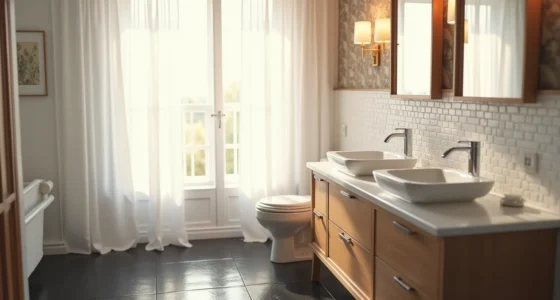
If your bathroom runs medium to large, roughly 60 square feet or more, 24×24-inch matte black tiles are your strongest move toward a smooth, minimalist look. The oversized format cuts grout lines dramatically compared to 12×12-inch tile, so the floor reads as a single, unbroken surface that visually expands the room.
For this setup to work, your subfloor must be level within 1/8 inch over 10 feet. Large tiles flex with any unevenness, causing lippage (edges that sit higher than their neighbors), so budget for self-leveling compound if you’re not certain what’s beneath your current floor.
The matte finish in this example, paired with a floating vanity and round mirror, suits anyone aiming for a hotel-bathroom aesthetic who wants minimal grout maintenance. Use a charcoal or gray grout with a 1/8-inch joint to keep the grid subtle. This is a mid-to-high investment route, expect material and installation costs well above small-format options, but the visual payoff lasts for decades.
Small Black Tiles with Contrast Grout for Visual Interest
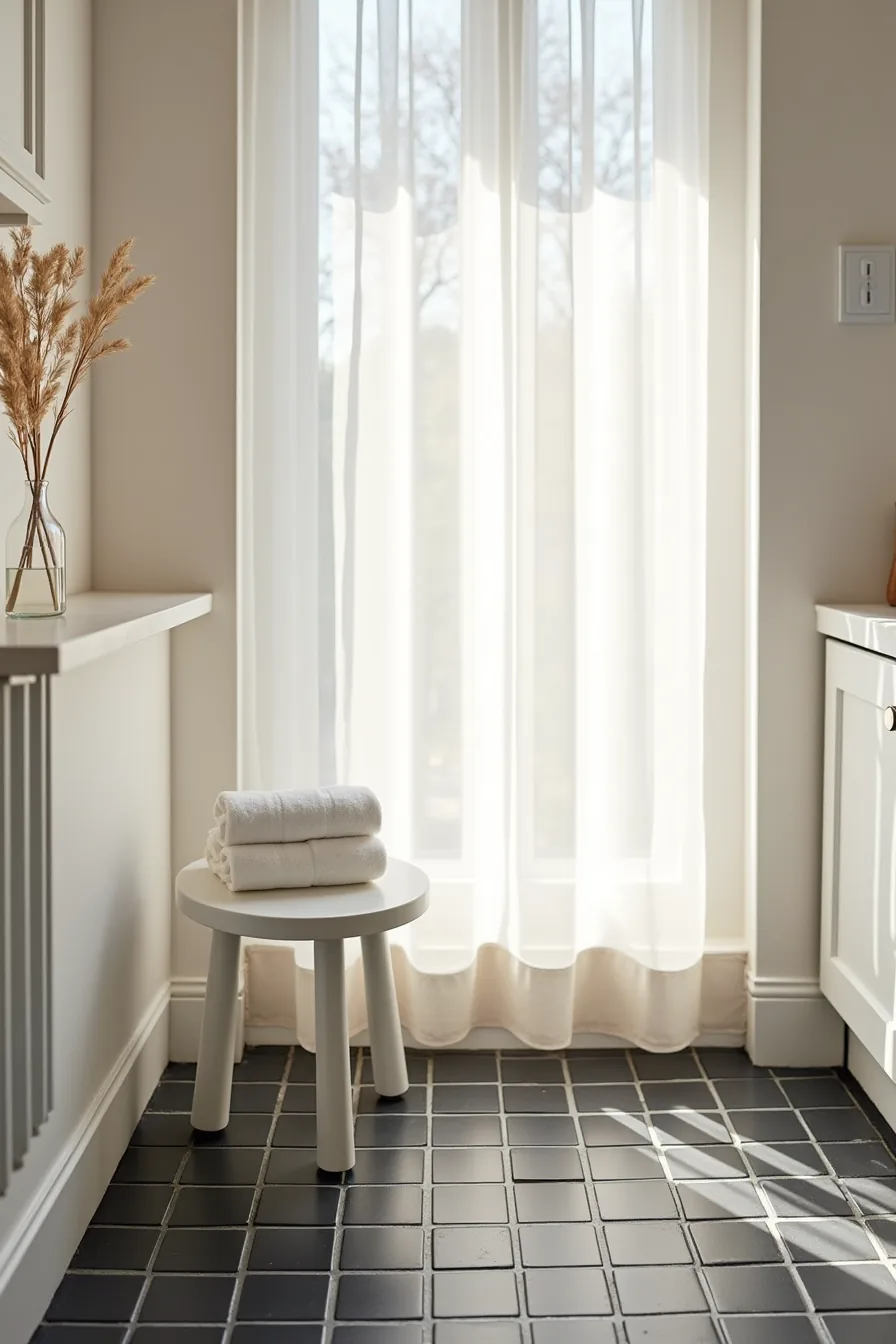
When your bathroom runs small, under 50 square feet, 4×4-inch black tiles with light gray grout transform the floor into a deliberate grid, adding texture that oversized slabs can’t. The contrast grout lines become the design element, so the eye reads pattern over darkness, which keeps the room from feeling like a cave. This approach suits renters or first-time renovators who want high visual payoff at a low price point, since small-format tile and standard grout are among the most budget-friendly materials on the market.
The maintenance trade-off is real: light grout on a floor means visible dirt within weeks, not months. Plan to seal the grout annually and use a pH-neutral cleaner weekly. To reproduce this look, choose a warm white or light gray grout, pure white can look stark against warm-toned black tile.
Pair it with a white ceramic stool and rolled white towels to echo the checkered rhythm, grounding the pattern without competing for attention.
Matte Black Finishes That Conceal Water Spots and Dust
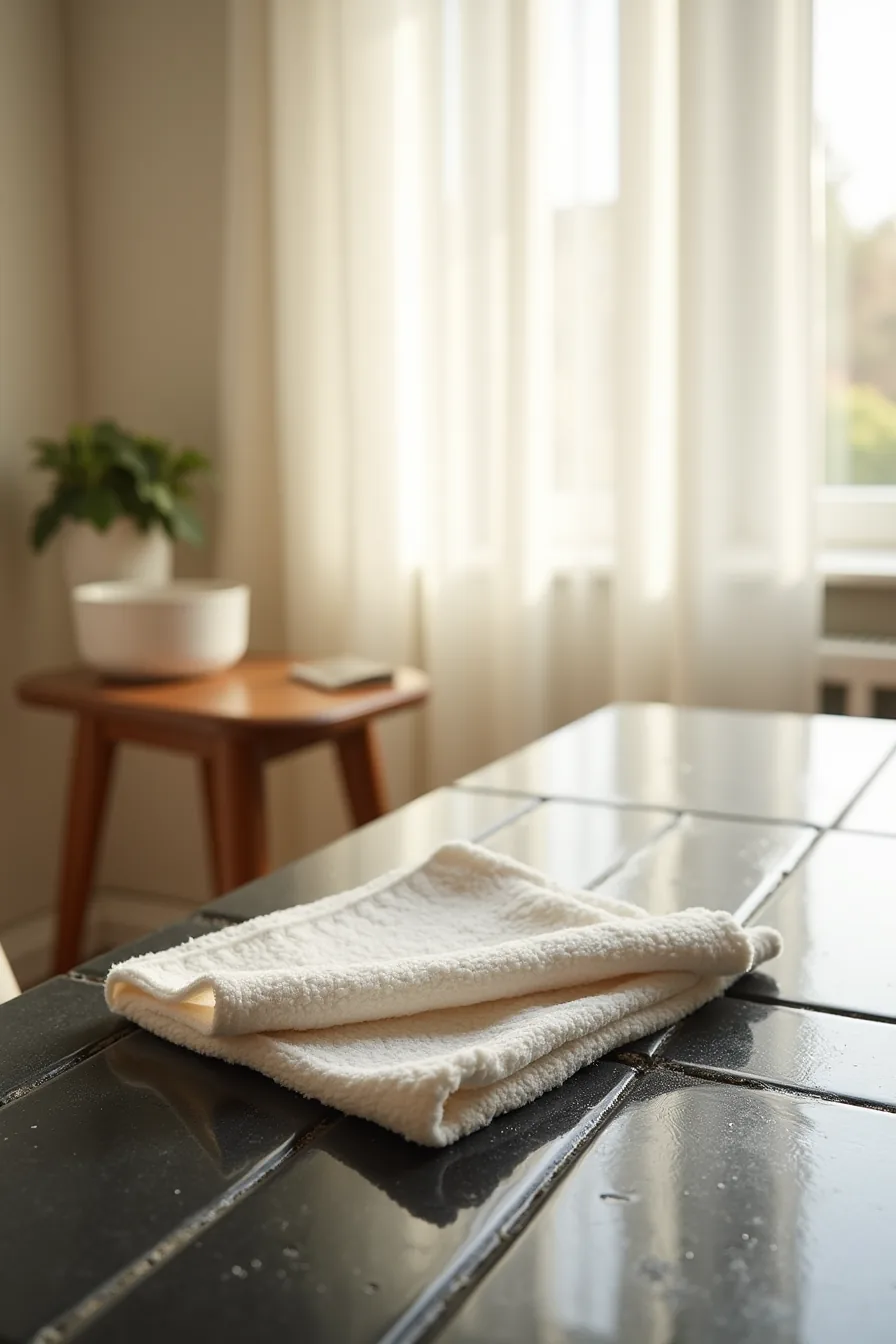
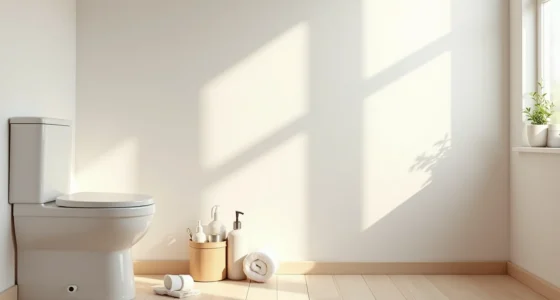
A matte black tile surface, like the one catching the light in your space, solves the daily frustration of smudges and limescale that glossy tiles advertise within hours. Water droplets bead and evaporate without leaving the telltale mineral rings you’d see on polished finishes, and dust settles into the subtle texture rather than sitting visibly on top. One wipe with a microfiber cloth handles the soap residue that accumulates near the dispenser, no speciality cleaner required, just a pH-neutral solution weekly.
For material selection, porcelain with a matte glaze delivers slip resistance in the 0.42–0.60 COF range, making it safer for wet zones than polished stone. Natural slate or honed granite offers deeper character but demands sealing every 12–18 months to prevent staining. If you want black bathroom floors that hide everyday wear without babysitting, matte porcelain is the sweet spot between durability and realism, just confirm the tile carries a PEI rating of 3 or higher for foot traffic.
Extending Black Tile from Floor to Shower Walls
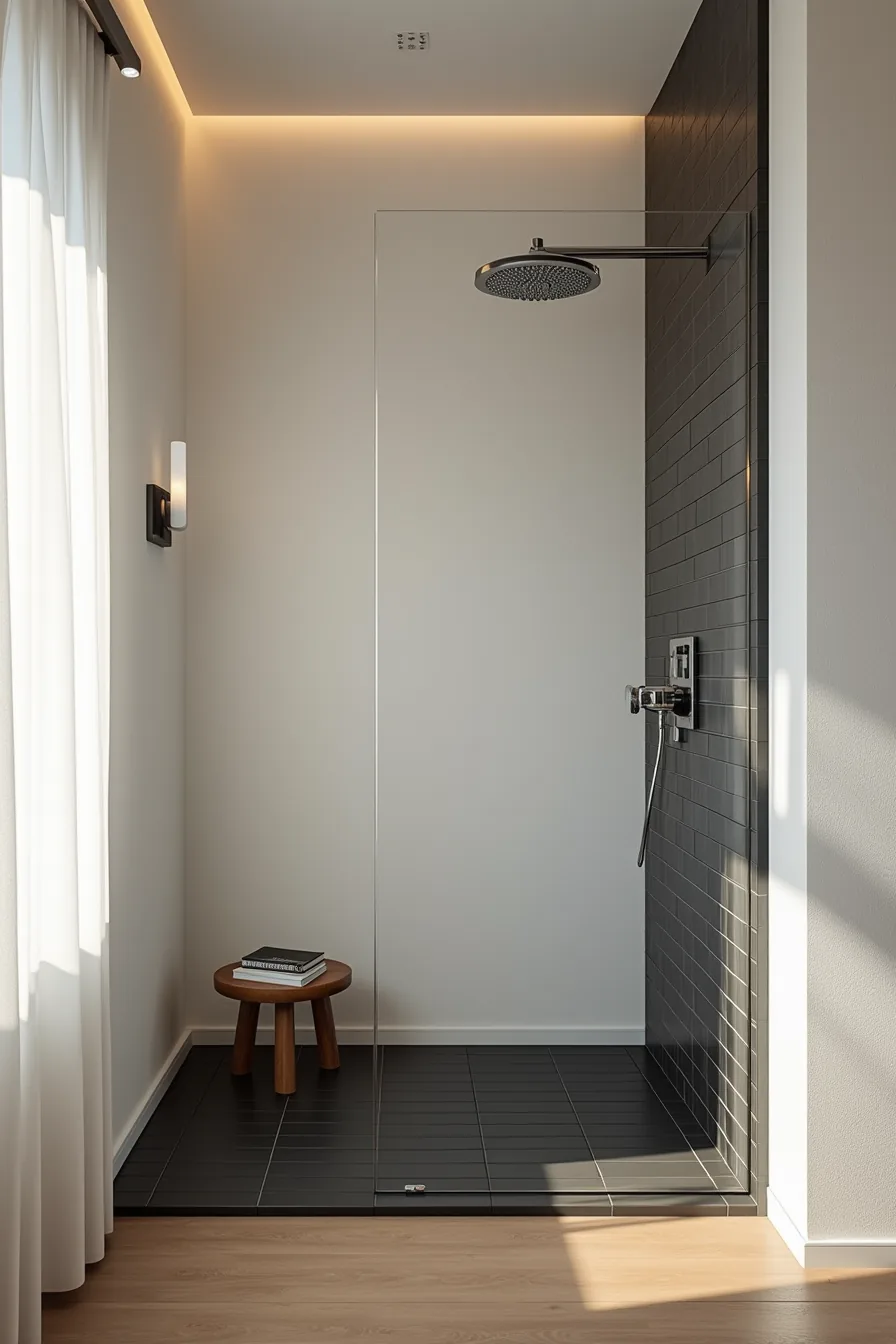
Extending the same black tile from the floor up the shower walls creates floor-to-shower continuity that makes a large bathroom feel like a single sculpted volume rather than a collection of separate fixtures. In this walk-in setup, the tile climbs to shoulder height (roughly 48–54 inches) on the back and side walls, with the chrome rainfall showerhead and glass enclosure frame breaking the dark mass. The horizontal and vertical grout lines become a design feature, so keep them uniformly narrow, 1/8 inch works best for a smooth grid.
This approach suits bathrooms over 80 square feet, where the visual weight of continuous dark tile reads as intentional drama rather than a cave-like squeeze. In smaller spaces, stopping the wall tile at waist height and switching to light paint above preserves the cohesion while bouncing light off the upper walls. Waterproofing is non-negotiable here: use a liquid membrane over cement board, and run it at least 6 inches past the shower pan before setting any tile.
Expect your tile budget to rise 15–25 percent versus floor-only installation, since wall coverage roughly doubles your square footage.
Budget-Friendly Peel-and-Stick Black Tile for Renters
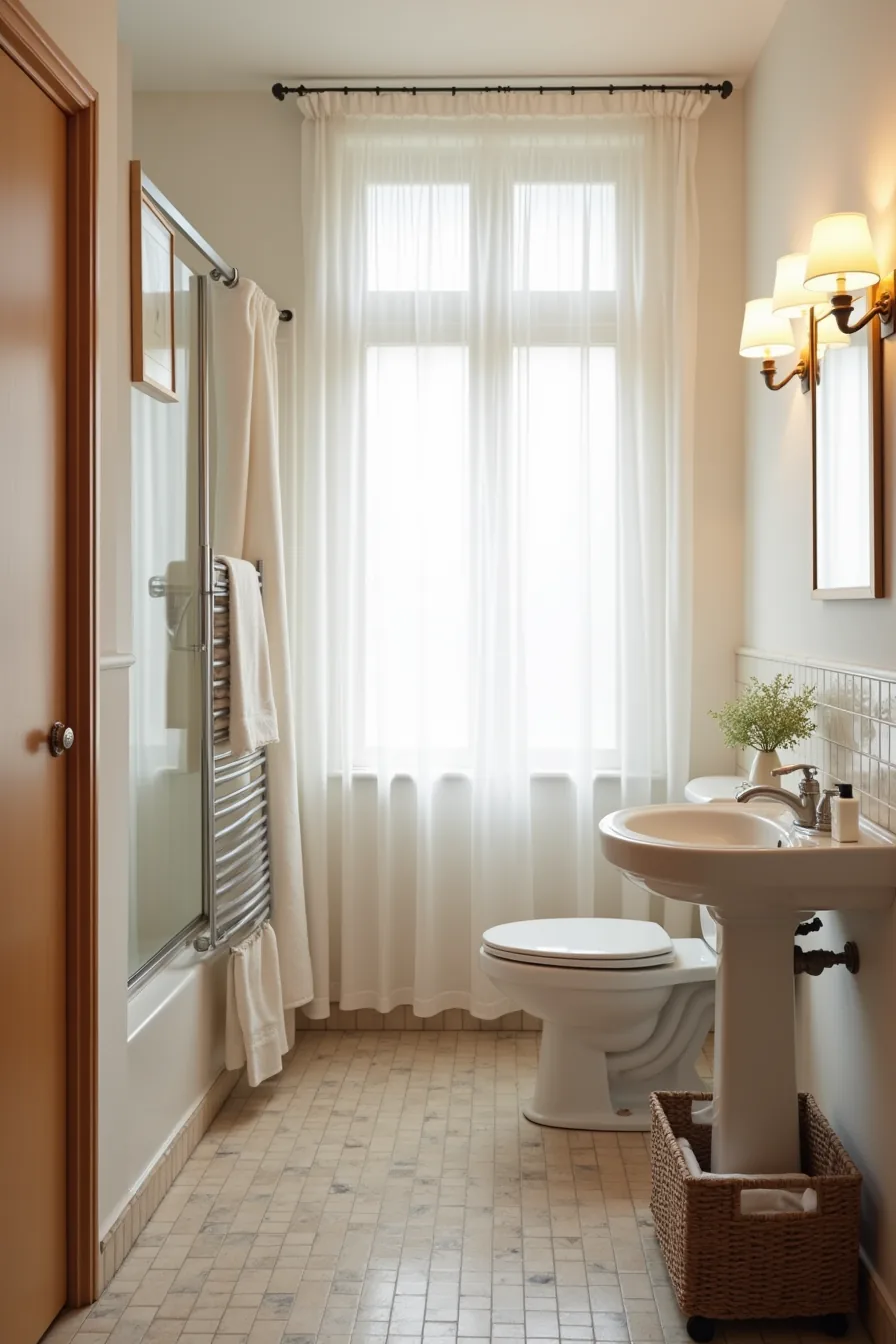
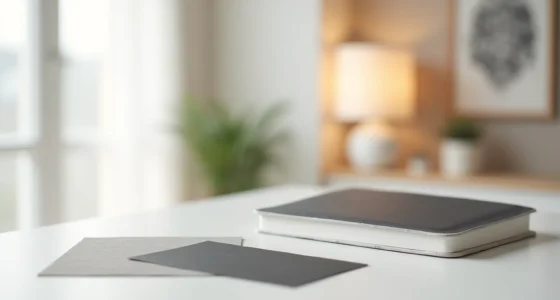
Peel-and-stick black tile delivers the matte, dramatic floor you want without a single drill hole or permanent adhesive. On the older beige tile floor shown here, the adhesive-backed squares sit directly on top, with visible seams at tile edges that read as a deliberate grid rather than a flaw. A portable towel rack and removable storage basket keep the room fully furnished with items you can pack up and take with you.
Plan for a 2–5 year lifespan, these tiles handle foot traffic and splashes fine, but they can curl at edges if water pools. Clean with a damp mop and mild soap; avoid steam cleaners, which can soften the adhesive. Most peel-and-stick options run $2–$4 per square foot, roughly one-tenth the cost of installed porcelain.
Before application, clean the existing floor with a degreaser and let it dry 24 hours. When you move out, lift a corner and pull slowly at a 45-degree angle, any sticky residue comes off with rubbing alcohol, restoring the original beige tile underneath.
Textured and Patterned Black Tiles for Long-Term Investment
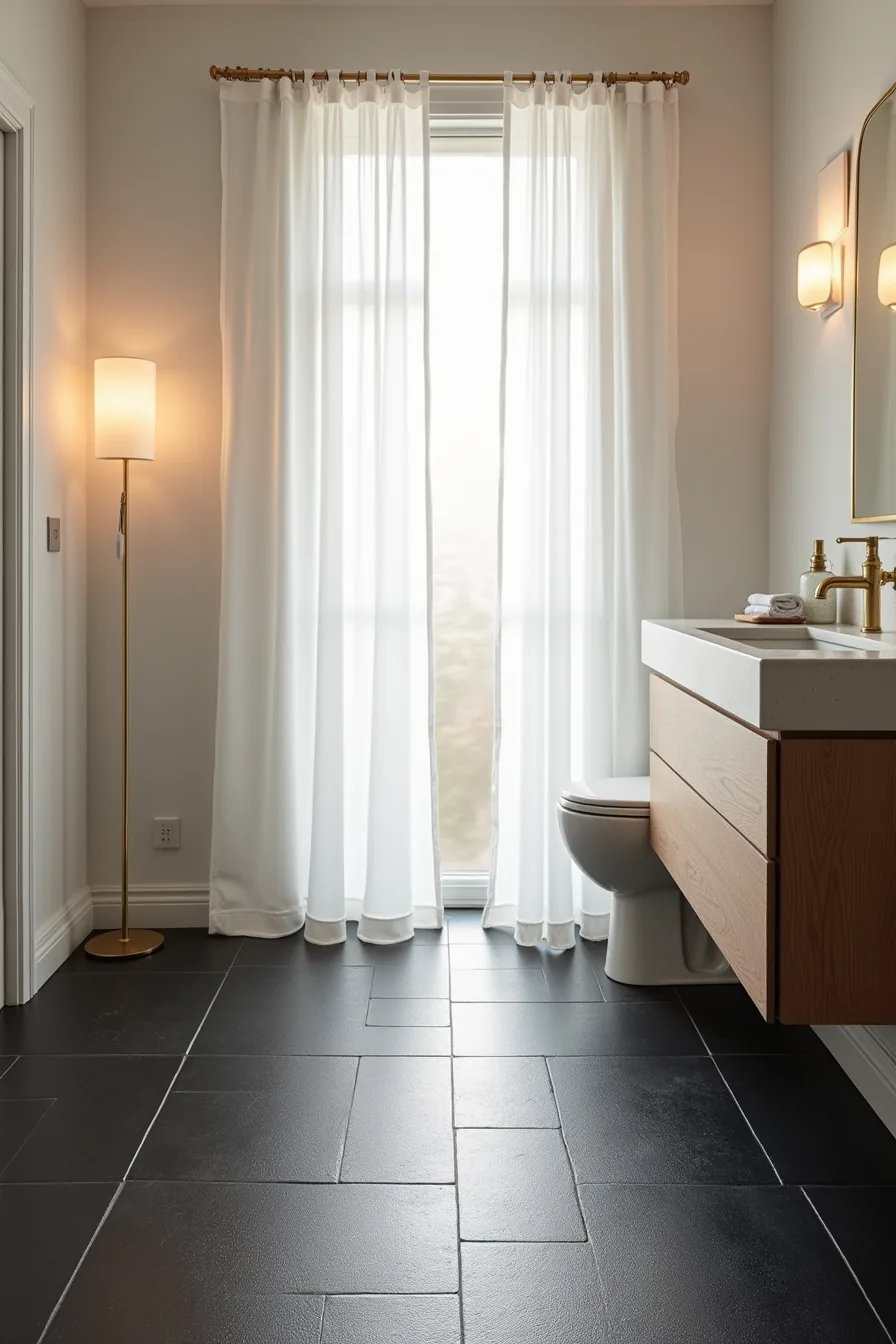
When you own the home and plan to stay a decade or more, honed black tiles with an embossed surface texture justify their higher price tag. The honing process, grinding the tile face to a flat, matte finish, reduces slipperiness compared to polished alternatives, while the subtle embossed pattern adds grip underfoot and masks water spotting between cleanings. Deep grout lines, kept at 3–5 millimeters, give the floor visual rhythm and make the tile edges catch light from multiple angles, which keeps a dark floor from reading as a flat black void.
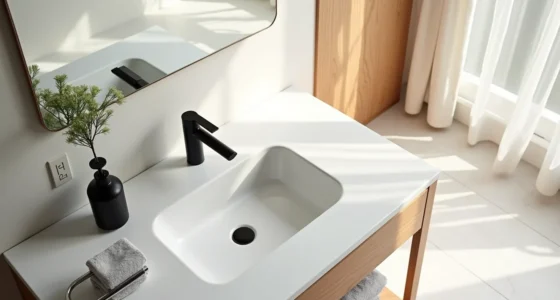
Expect to pay $8–$15 per square foot for this specialty finish, roughly 2–3 times standard porcelain. The trade-off: a 15–20 year lifespan with proper sealing every 3–5 years, and the surface hides daily wear far better than glossy tile. This setup pairs naturally with the brass faucet base and polished stone vanity edge framing the space, the warm metal tones prevent the black floor from making the room feel cold.
Choose this route if you want a permanent floor that still looks intentional when the rest of the bathroom trends shift.
Where to start
Before you buy a single tile, tape out the footprint on your floor with painter’s tape. Walk through your morning routine: where you step, what you drop, where water pools. That 30-minute test tells you more than any Pinterest board about which finish, size, and slip rating you actually need.
Then order one sample tile in your top two finishes, matte and satin, and live with them in the room for a week. Run water over them, drop a soap bottle, drag a towel across. Pick the one that looks better dirty than clean, because that’s what it will look like at 7 a.m.
On a Tuesday.
Frequently Asked Questions
Do black bathroom floors show water spots and soap residue?
Yes, especially with glossy finishes. Dark, shiny surfaces reflect mineral deposits and soap scum. Matte or textured black tiles hide these far better, but you’ll still want to squeegee after showers.
What size black tile works best in a small bathroom?
Use 12×24-inch or larger rectangular tiles. Fewer grout lines make the floor feel more expansive and reduce visual busyness. Small mosaics can make a compact space feel cluttered and harder to clean.
Can I install black tile over existing bathroom flooring as a renter?
Not traditional tile, it requires a stable subfloor and permanent adhesive. Instead, use peel-and-stick vinyl tiles or a waterproof tile-look mat. Both are removable and won’t damage the original surface when you move out.
How often do I need to clean a black tile bathroom floor?
Expect to sweep or vacuum daily and mop with a pH-neutral cleaner once a week. In high-traffic bathrooms, you may need to mop every 3–4 days to prevent film buildup. Use a soft mop to avoid scratching.