A dark bathroom isn’t a single look, it’s a design strategy that trades bright, sterile surfaces for moody contrasts, layered lighting, and materials that absorb rather than reflect light. Done well, it can feel intimate, spa-like, and dramatically larger than its square footage. Done poorly, it becomes a cave.
The difference comes down to six specific approaches, each with distinct material requirements, cost ranges, and maintenance realities. Here’s how to choose the one that fits your space, budget, and tolerance for upkeep.
Key takeaways
- Charcoal reads warmer than black in bathrooms, so choose a soft graphite tone (like Sherwin-Williams’ Peppercorn) over true black if your space lacks natural light.
- Layer three light sources, a dimmable ceiling fixture, sconces at mirror height (around 60–66 inches from floor), and an accent light behind the vanity, to prevent a dark bathroom from feeling like a cave.
- Pair deep walls with matte brass or unlacquered bronze fixtures to inject warmth, but expect to wipe down these finishes weekly to avoid water spots in high-humidity zones.
- For a renter-safe dark look, use peel-and-stick matte vinyl tiles on the floor and a tension-rod shower curtain in charcoal; both remove without residue and cost under $150 for a typical 5×8-foot bath.
Charcoal vs Black: Choosing Your Base Tone
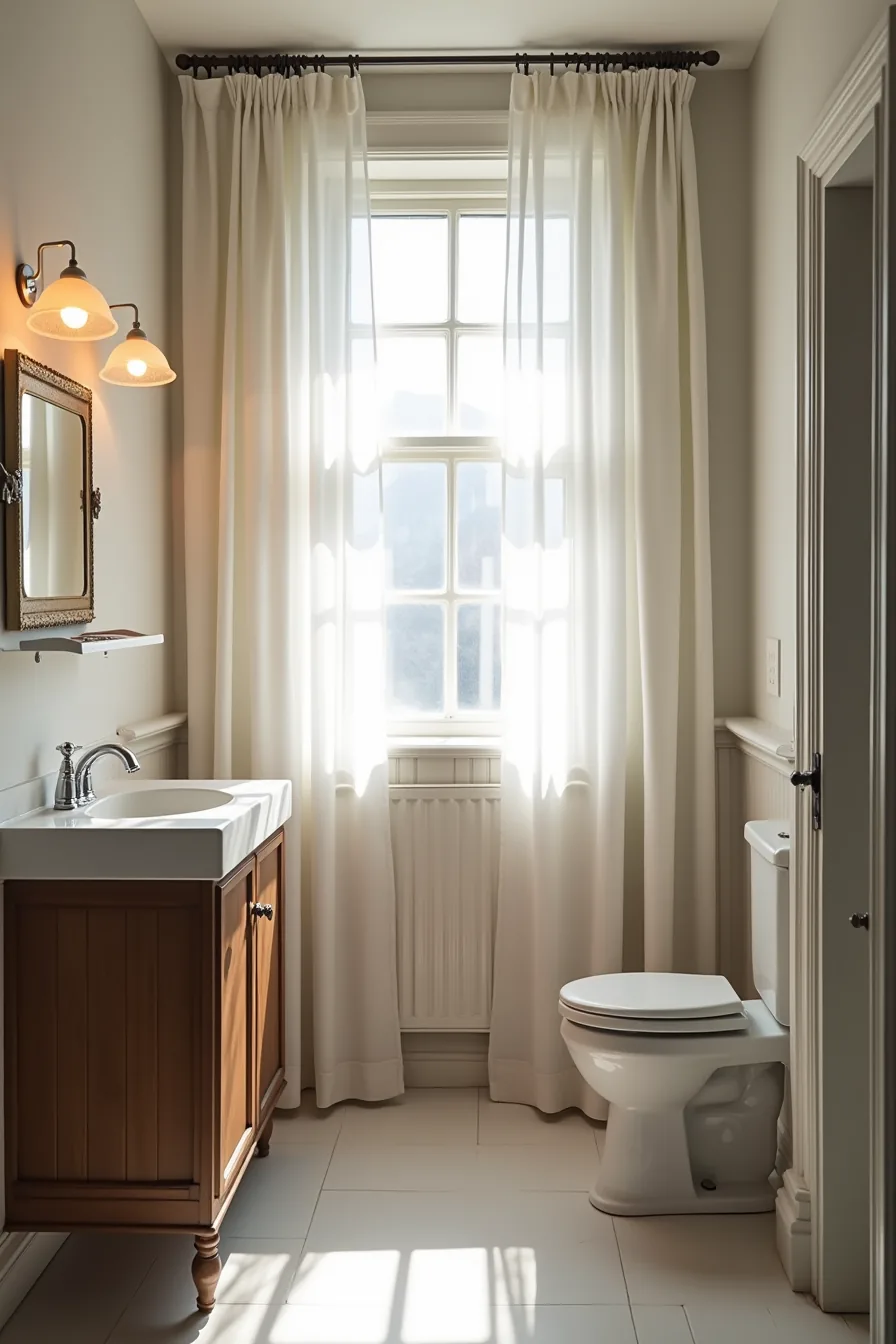
Charcoal and black aren’t interchangeable. Charcoal is a blended dark gray that shifts with available light, reading as warm gray beside natural daylight and deepening to near-black under warm bulbs. Black paint, by contrast, absorbs light and holds its tone regardless of the source, which makes it a stronger choice for dramatic contrast but a riskier one for small rooms.
The image-worthy setup of charcoal walls, white trim, and a chrome faucet beside a single window works because the charcoal carries the gray undertones of the daylight and turns the chrome into a bright focal point.
For most bathrooms, charcoal is the forgiving baseline. Small or north-facing rooms should stay with charcoal if they get fewer than four hours of direct sun; black suits larger rooms with multiple light sources. If you want the depth of black without the flatness, use black on an accent wall behind the vanity and charcoal on the remaining three.
This gives you a dark bathroom in both tones while preserving a sense of room volume.
Mood Lighting for Dark Bathrooms
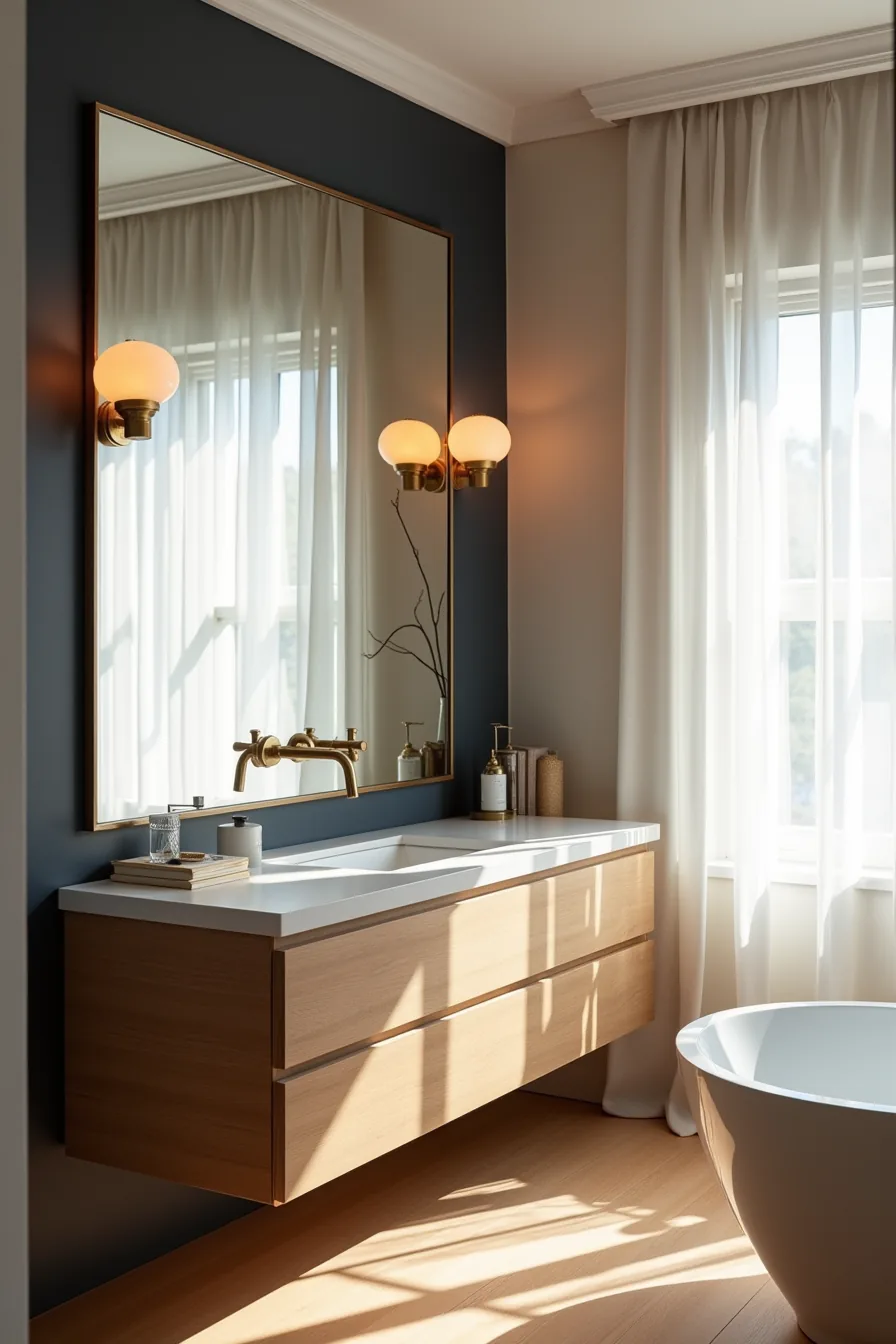
A dark bathroom fails when it relies on a single overhead light. The setup you see here, three recessed ceiling fixtures aligned above the mirror, paired with two wall sconces flanking each side, creates separate pools of light that define distinct work zones. The recessed fixtures handle task lighting for grooming, while the sconces add vertical illumination that softens shadows across your face.
Color temperature matters more than fixture count. Warm-toned bulbs in the 2700K to 3000K range keep deep navy walls feeling rich rather than cavernous; anything cooler will read as sterile and harsh. Install dimmers on both circuits so you can drop to 20-30% brightness for evening baths without losing the ability to see clearly during your morning routine.
Place sconces at eye level, roughly 60-66 inches from the floor, to ensure even light distribution across the mirror reflection.
Dark but Warm: Balancing Depth with Comfort
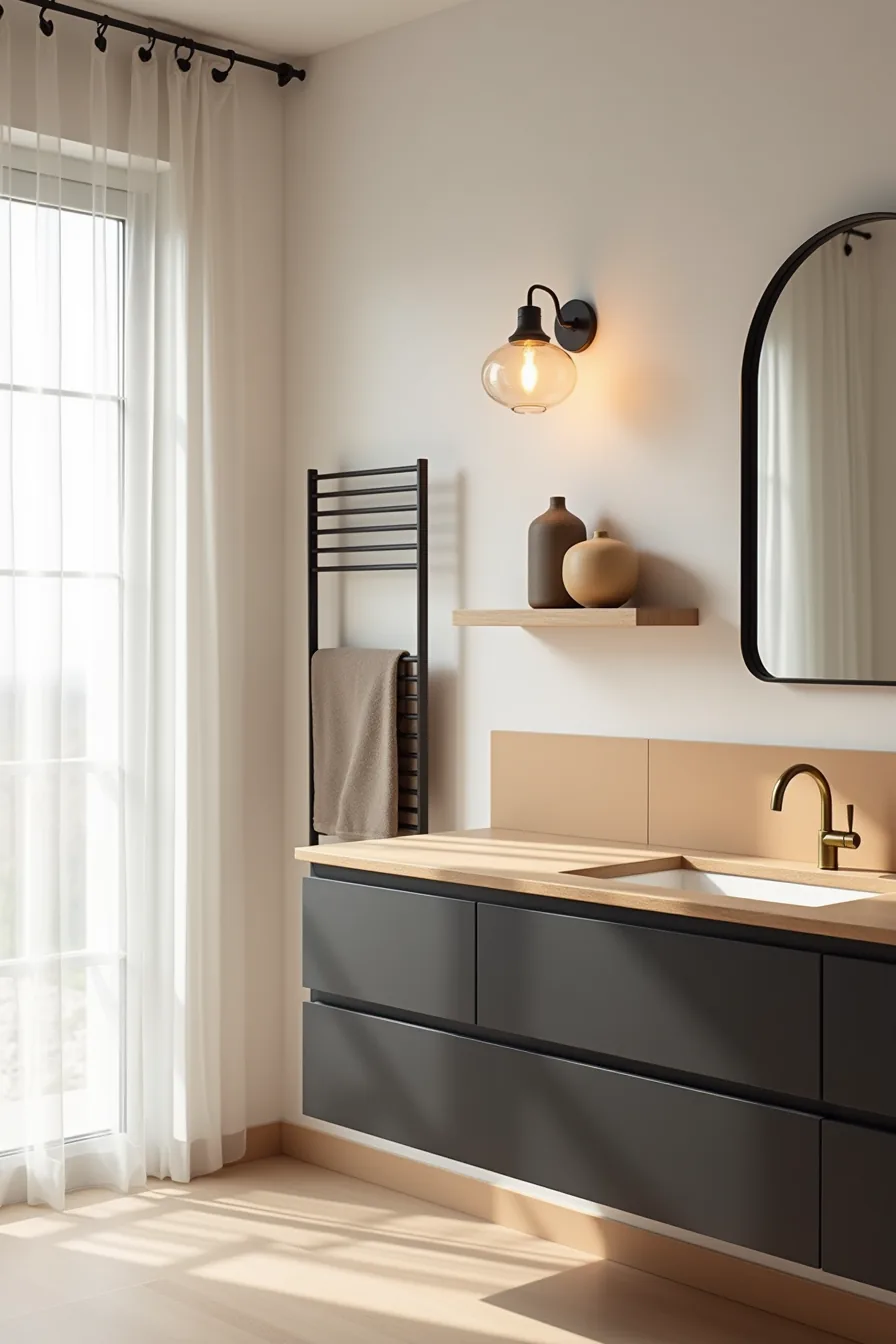
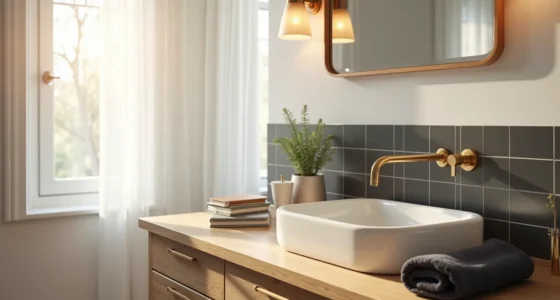
A dark bathroom becomes hostile when every surface carries the same cool undertone. The charcoal wall color in this setup gains warmth from the surrounding brass towel rack and faucet, whose golden tones catch light and throw it back softly across the room. Brass reads warm against deep gray because it reflects the yellow end of the spectrum, so aim for unlacquered or satin finishes rather than polished chrome, which will only amplify the cold.
Wood and ceramic interrupt the heaviness of a dark wall. The light oak floating shelf introduces a mid-tone that breaks up the vertical mass of charcoal, while the ceramic vessels in matte finishes give your eye a place to rest between the vanity and the wall. For the lower wall, soft ochre tiles serve a practical purpose: they anchor the room with a lighter base that visually widens a narrow footprint and prevents the dark upper walls from closing in on you.
Limit warm accents to three material families, brass, oak, and clay tones, and repeat them across fixtures and accessories. More than that reads as cluttered rather than curated. This approach suits bathrooms that receive moderate natural light, since the warm additions compensate for the absence of direct sun without requiring you to abandon the moody palette.
Material and Finish Selection for Dark Spaces
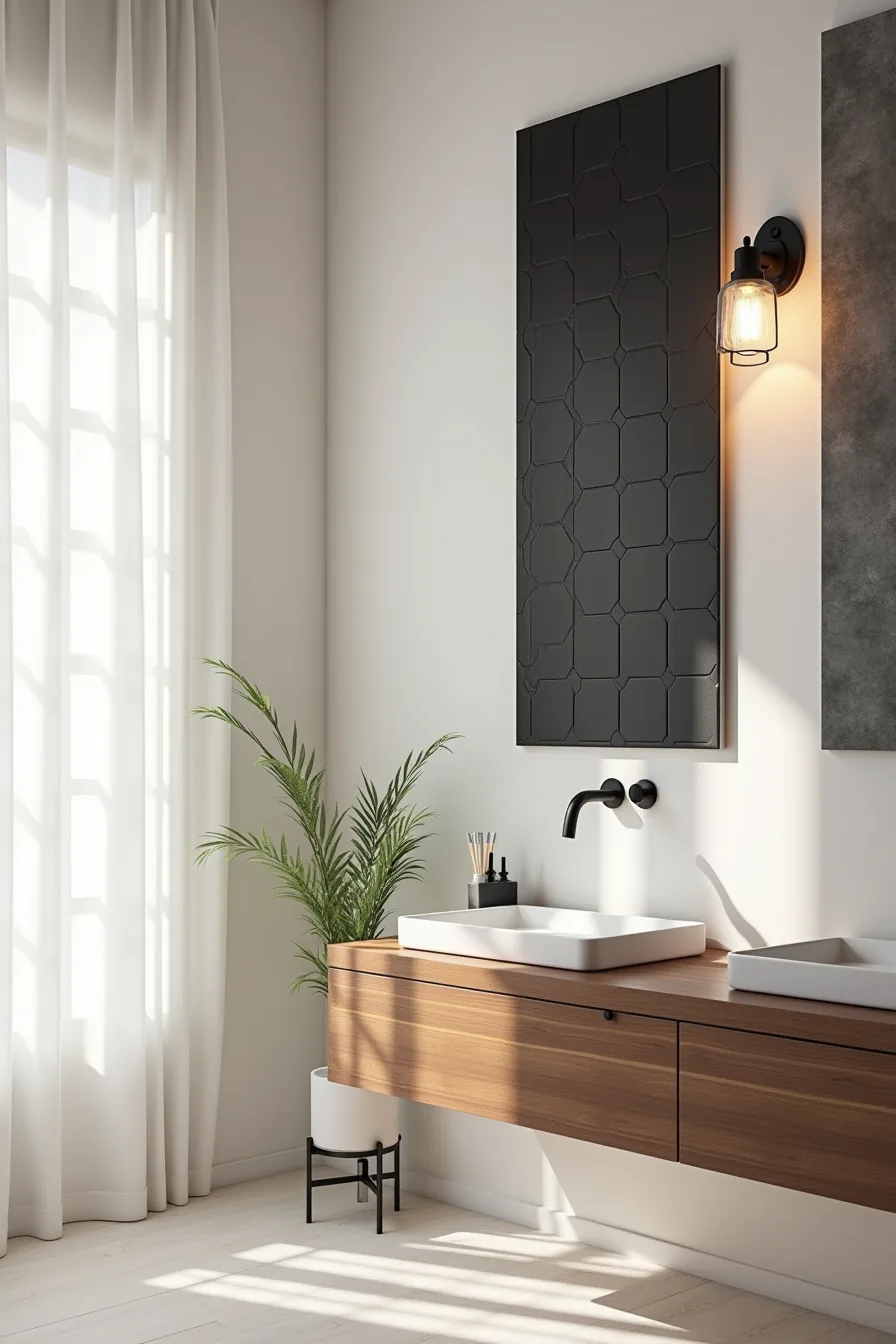
Finish choice determines whether a dark bathroom feels deep or flat. Matte black subway tile absorbs overhead light and softens reflections, which suits a compact powder room where you want the walls to recede rather than glare. Glossy black hexagonal tile behaves in the opposite way: it bounces light around the space, adding a subtle shimmer that reads larger than the square footage actually is.
Honed black stone sits between the two extremes, offering a low-sheen surface that hides water spots better than either tile option. Maintenance follows the same logic, glossy surfaces show every streak and fingerprint, while matte and honed finishes tolerate daily use with only periodic wiping. If you choose paint instead of tile, restrict it to a maximum of three walls; the fourth wall in a contrasting finish breaks up the darkness and prevents the room from feeling like a cave.
Spec a semi-gloss or satin sheen, since flat paint in a humid bathroom will blister and peel within eighteen months.
Adapting Dark Bathroom Ideas to Room Size
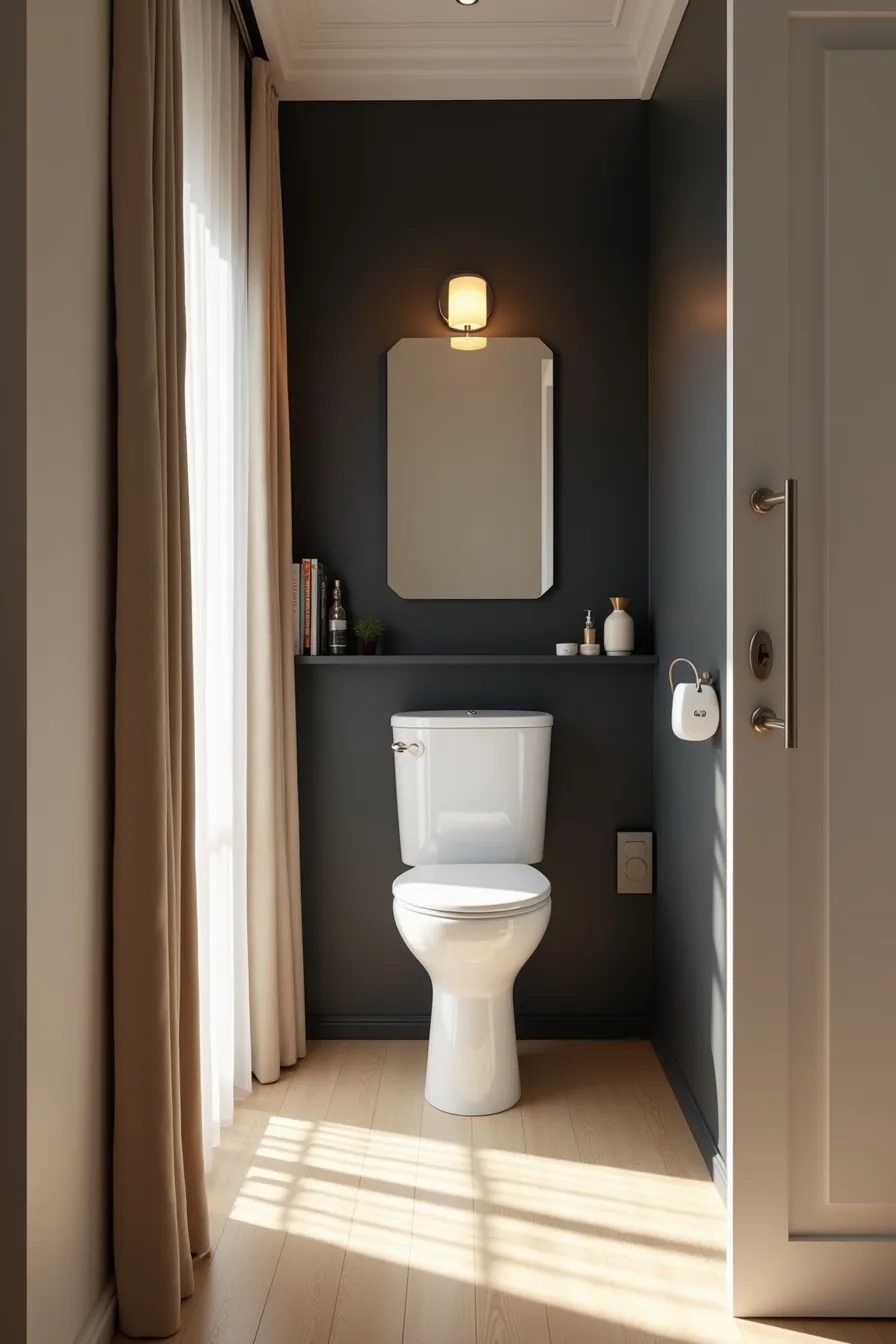
In a small bathroom under 40 square feet, the classic 5-by-8-foot layout with black walls and a white pedestal sink works because the contrast stops the darkness from swallowing the room. Hang a single large mirror rather than a cabinet, it doubles the perceived depth, and wall-mounted shelving beside the sink keeps towels off the floor without eating into your turning radius. Keep the light fixture close to the mirror plane so it bounces off the sink and walls, not the ceiling.
Medium bathrooms between 40 and 80 square feet let you commit to dark fixtures, like a black vanity or freestanding tub, without overwhelming the space. Reserve one full wall for the darkest treatment and use the remaining walls in a lighter tone to define zones. In a large master bath exceeding 80 square feet, break the darkness into panels, alternating black tile with a contrasting material every three to four feet keeps the room from feeling like an empty cavern.
This scale of Dark Bathroom Ideas for a Relaxing Evening Retreat suits a deep soaking tub positioned away from the window, where the low light reads as intentional rather than gloomy.
Budget, Renter, and Investment Routes
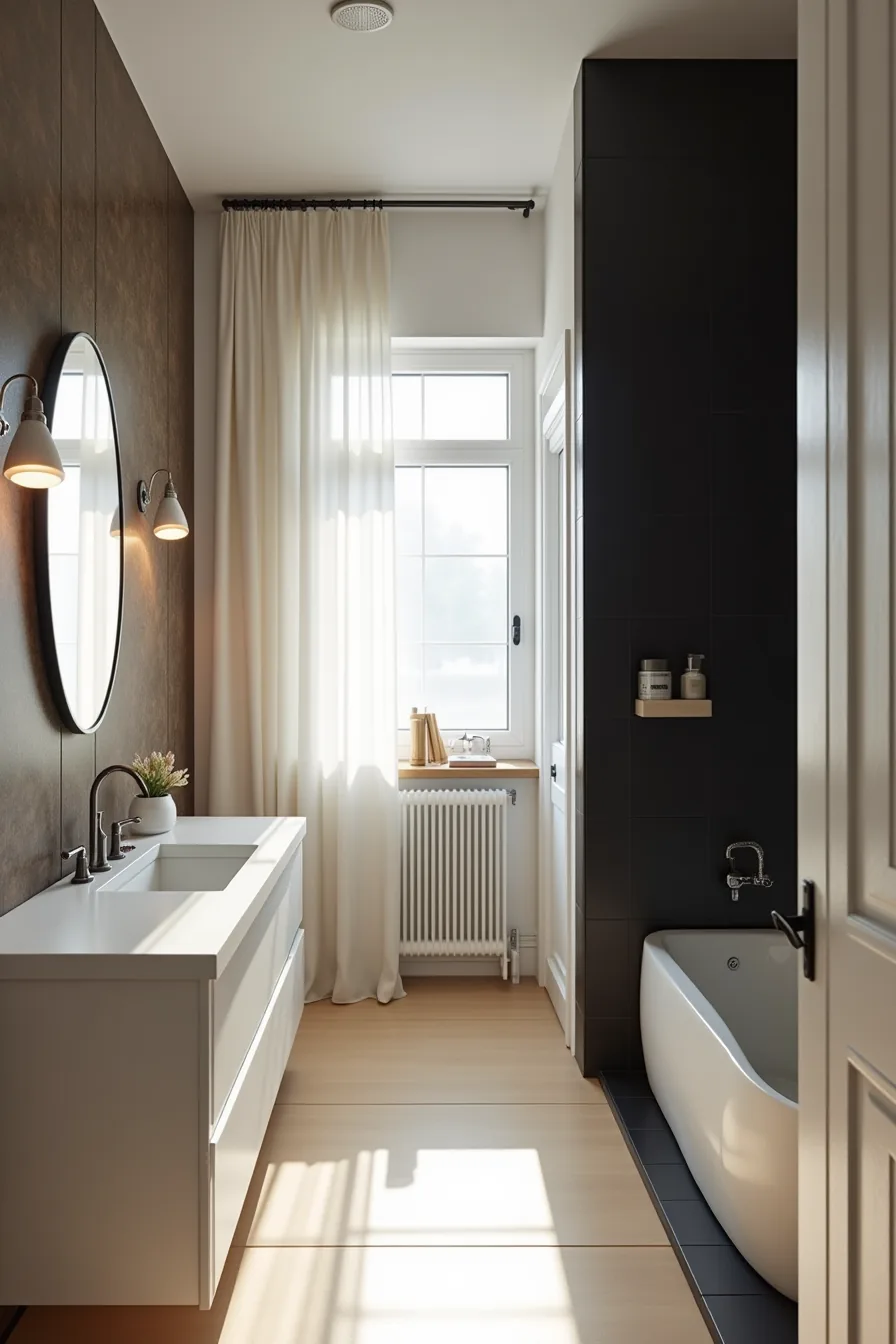
Start with the least permanent option: peel-and-stick wallpaper on one wall and a clip-on lamp aimed at the mirror. This route costs roughly $50–150 total, installs in under an hour, and removes cleanly with a hairdryer and a putty knife, ideal if you rent or change your mind seasonally.
For a semi-permanent middle ground, use black paint rated for high-moisture areas and portable plug-in sconces. You get the full moody effect for $30–80 in materials, but you’ll repaint before you move out, and the cords require strategic routing to avoid dangling hazards.
The long-term investment route pairs installed black tile with recessed fixtures and custom cabinetry. Expect $5–15 per square foot for tile, plus labor, costs that pay off in durability and resale appeal, but demand professional waterproofing and a ventilation fan rated for the room’s square footage. Choose this only if you plan to stay at least five years.
What to do first
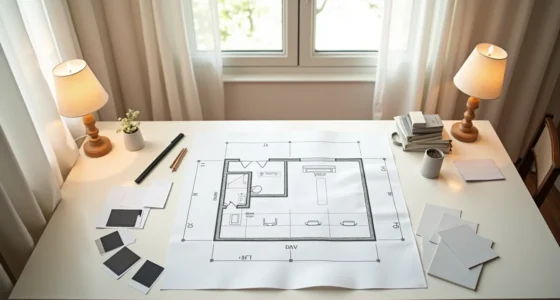
Map your room before you commit to a single shade. Measure the floor space, note where natural light enters, and identify the fixtures that must stay. A dark bathroom works when the contrast is deliberate, matte black against warm wood, deep green beside brushed brass, not when it swallows the room whole.
Start with one surface. Paint the wall behind the vanity, not the entire room, and live with it for two weeks. If the space still feels inviting at night with the lights on, extend the scheme.
If not, you’ve saved yourself a repaint.
Pick your paint this weekend, buy a sample pot, and paint a 2-by-3-foot swatch beside the mirror. That single act will answer every question you’ve about going dark.
Frequently Asked Questions
Will a dark bathroom make my small bathroom feel smaller?
Not necessarily. Dark walls recede when paired with bright grout, mirrors, and layered lighting. Use matte paint and a large mirror to visually double the space; avoid dark floors and ceilings together.
What lighting color temperature works best in a dark bathroom?
Use 2700–3000K for a warm, flattering glow, and add 4000K task lighting at the mirror for grooming. Avoid single overhead fixtures; install sconces or a backlit mirror to eliminate shadows.
Can I rent an apartment and still create a dark bathroom look?
Yes, use peel-and-stick wallpaper in a deep print, temporary vinyl tile, and a dark shower curtain. Skip paint unless your lease allows it, and stick to removable hooks for accessories.
How do I prevent a dark bathroom from looking dingy or dated?
Choose a deep hue with an undertone (navy, forest, charcoal) over pure black, and pair it with high-gloss trim and brass or chrome fixtures. Clean grout monthly and add plants or warm wood to keep it fresh.