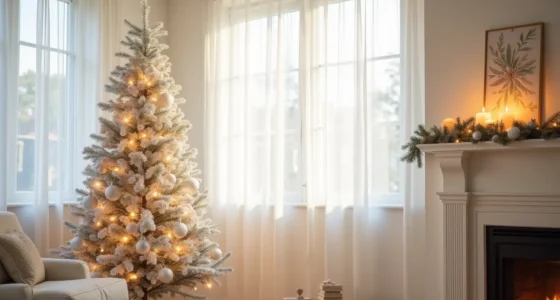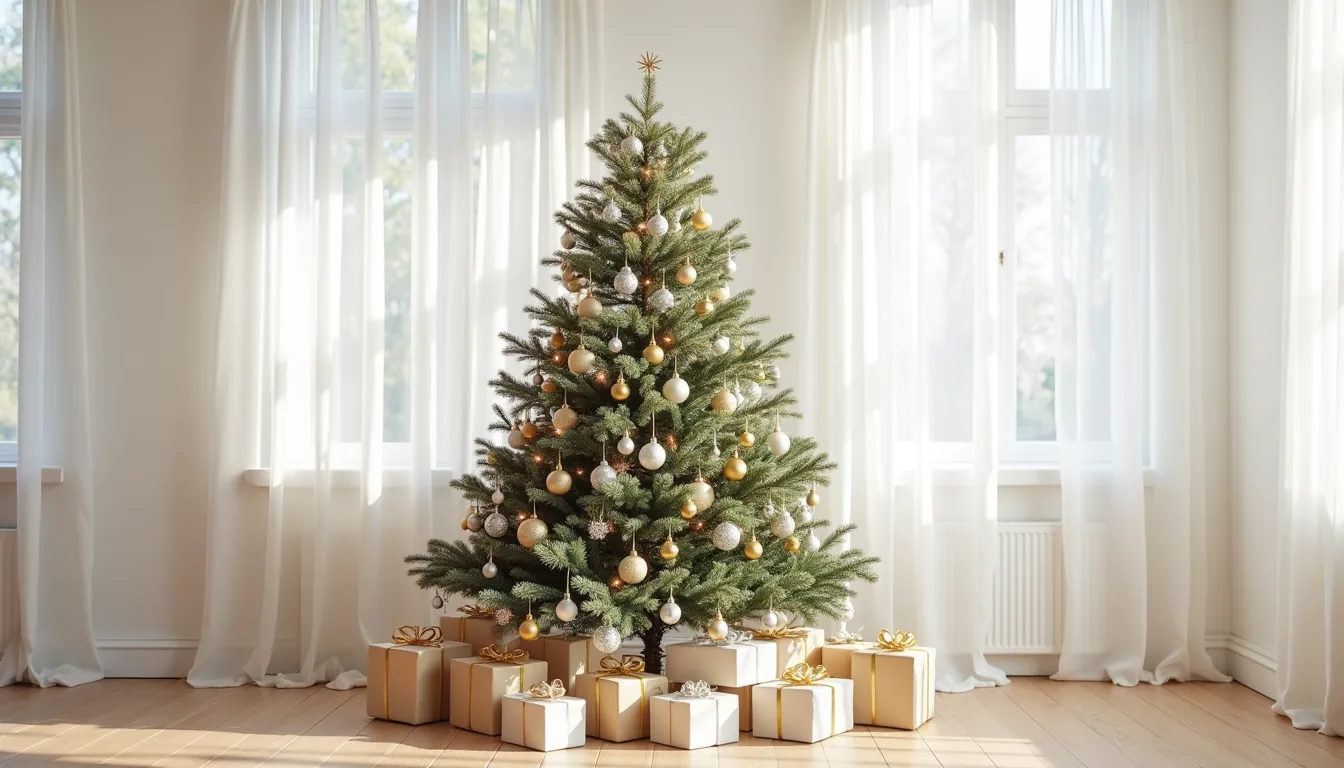
The six Christmas tree decor ideas that follow are chosen to solve a specific problem, matching your tree to your space, budget, and maintenance tolerance, rather than to chase a single trend. You’ll find a renter-friendly option that leaves no wall damage, a long-term investment in heirloom-quality ornaments, and a budget route that reuses materials you already own. Each idea includes the exact scale, placement, and upkeep trade-offs so you can decide in minutes, not evenings.
Key takeaways
- Match scale to space: compact rooms under 200 square feet suit monochromatic trees under 6 feet, while large open-plan areas handle 8-foot trees with bold color blocking.
- Renters should prioritize removable adhesive hooks and ribbon wraps over drilled anchors, keeping walls and ceilings damage-free with zero repair costs at move-out.
- Budget builds cost 40-60% less by mixing 60% filler ornaments with 20% statement pieces and 20% natural elements, while premium materials like glass and brass last 10+ years versus 2-3 for plastic.
- Heirloom styling requires a dedicated storage box with acid-free tissue and annual inspection, adding roughly 15 minutes per year to preserve sentimental pieces for decades.
Monochromatic Elegance for Compact Spaces
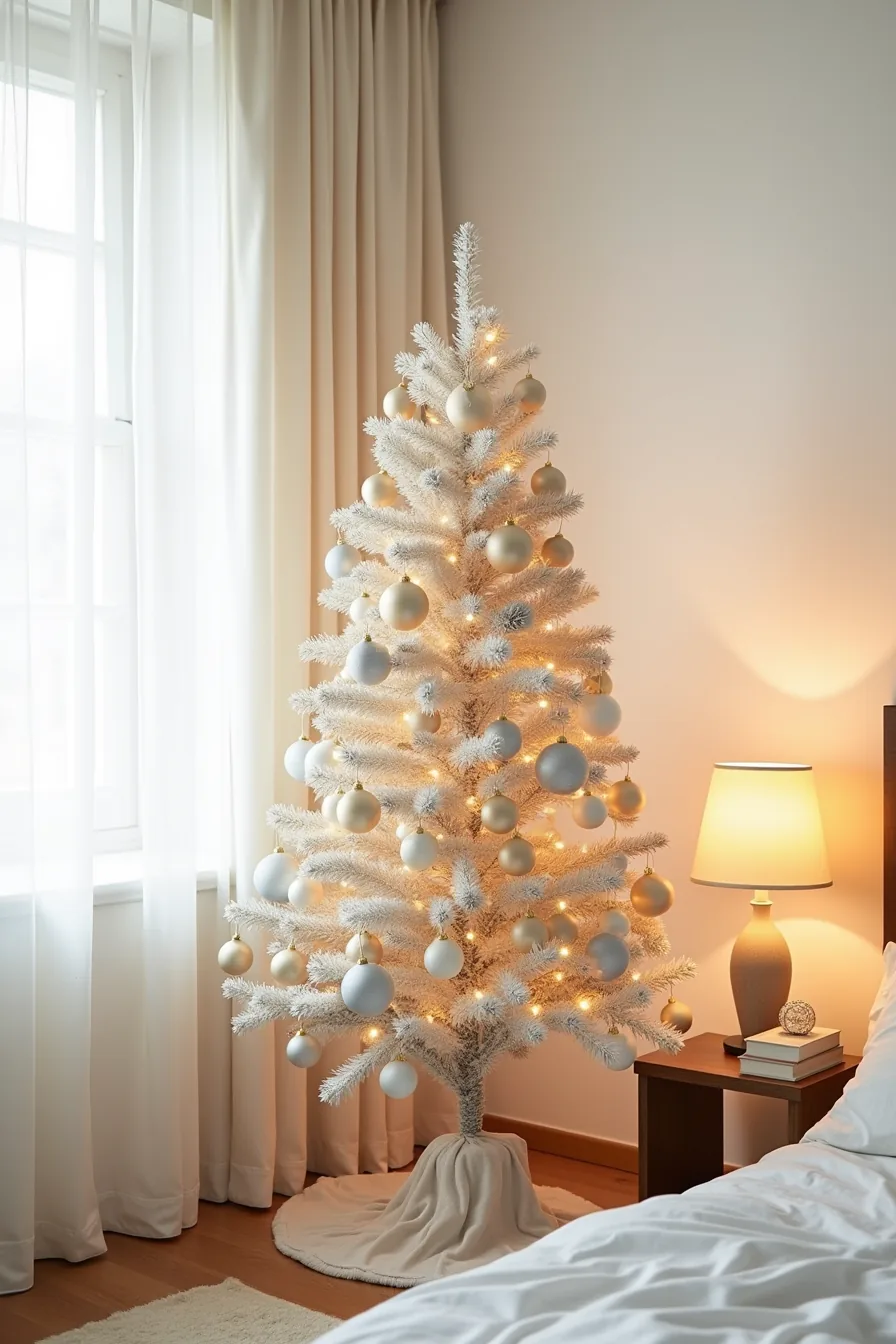
If your living room doubles as a home office or your bedroom floor space is measured in inches, a single-color ornament scheme is your strongest move. A 4-foot tree in a corner with cream matte ornaments transitioning to ivory glossy finishes creates the illusion of depth without adding visual clutter. The tonal shift between finishes, matte absorbing light, glossy reflecting it, gives the tree dimension that a uniform finish never achieves.
A single cream velvet ribbon spiraling down the branches ties the look together while breaking up the vertical line. This approach suits anyone who prefers calm over spectacle or who needs the tree to coexist with existing decor rather than dominate it. The practical trade-off: monochrome shows dust and pine needles more readily than multicolored schemes, so budget for a quick wipe-down every few days if your tree sits near a high-traffic doorway.
Layered Texture and Natural Materials
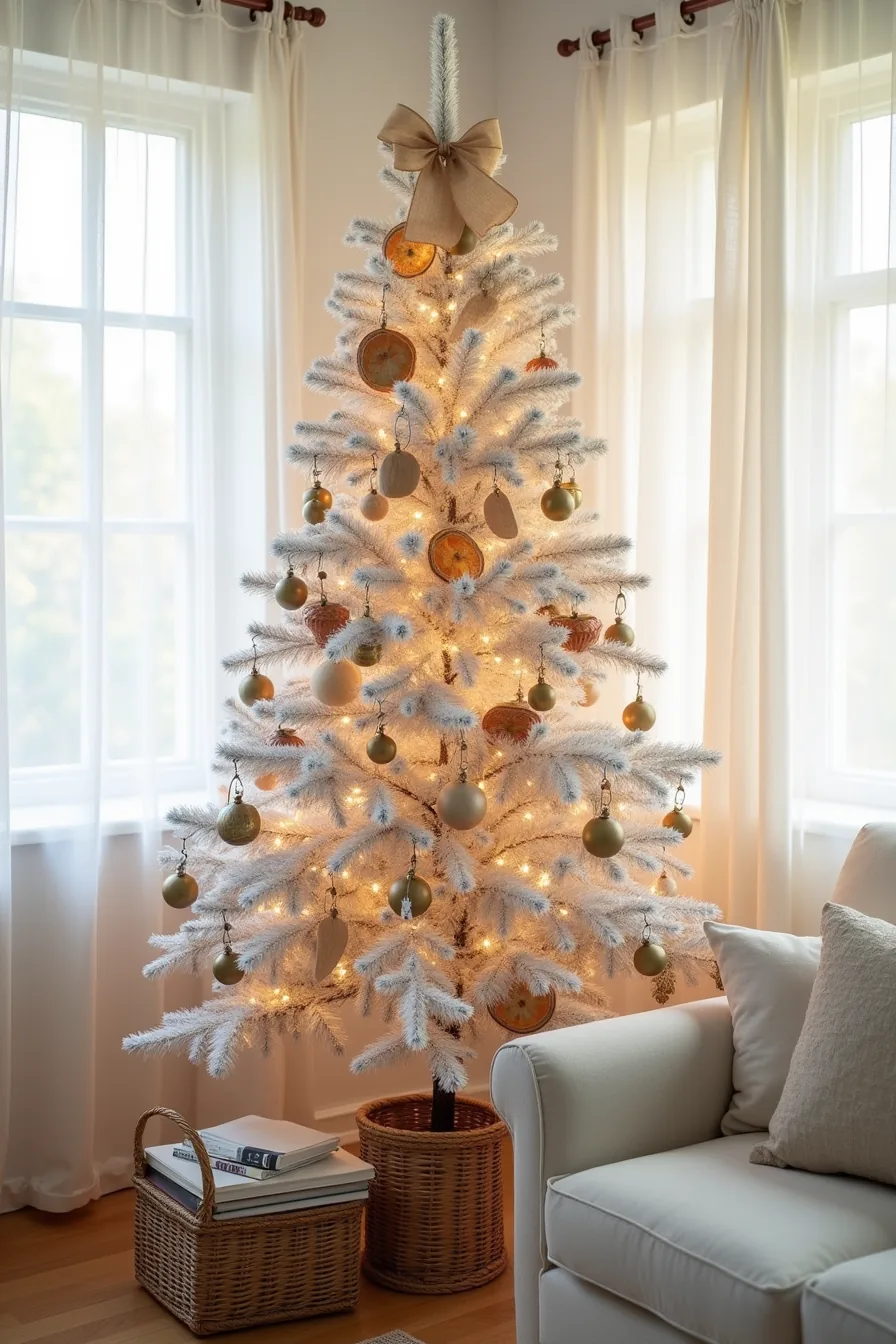
For medium-sized living areas, a textured tree creates visual richness without overwhelming the space. Layer a burlap ribbon diagonally from top to bottom, allowing it to cascade naturally rather than wrapping tightly. This single element grounds the entire design and pairs beautifully with a wooden bead garland draped in loose loops between branches.
Dried citrus slices add organic color and subtle fragrance, simply bake orange rounds at 200°F for three hours, then hang with twine. Brass bells introduce a metallic accent that catches light without competing with the natural palette, while linen ornaments in neutral tones tie everything together. Place the tree in a woven basket instead of a traditional skirt to extend the earthy aesthetic.
This approach works best in rooms with existing wood furniture or natural fiber rugs. The mixed textures hide sparse areas in artificial trees, making it forgiving for budget-friendly options. Expect to refresh dried citrus yearly, but the wooden and linen pieces become long-term staples.
Keep the color story strictly earthy, adding red or green ornaments here disrupts the cohesive, grounded feel.
Maximalist Color Blocking for Large Rooms
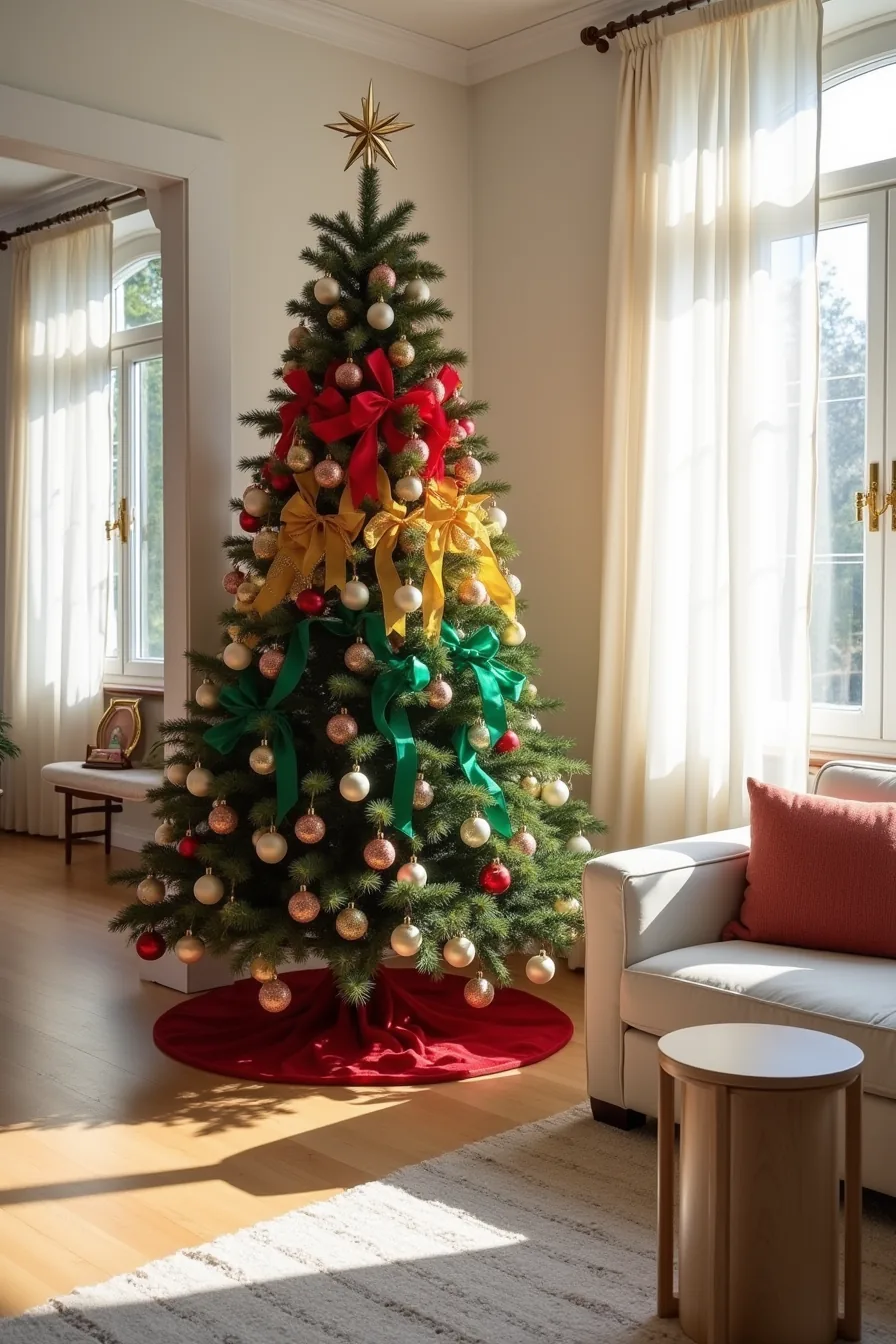
For open-plan living areas with a 7-8 foot tree, commit to horizontal color zones rather than scattered ornaments. Divide the tree into thirds and assign one saturated hue per band: deep red on the lower third, emerald green through the middle, and gold on the upper third. The visual separation needs breathing room to read clearly, so this technique requires at least 6 feet of clearance on all sides, anything tighter and the zones blur into visual noise from most viewing angles.
Bold geometric ornaments within each color zone reinforce the segmented effect, while wide ribbon bands wrapped horizontally at each transition line sharpen the boundaries. This look suits contemporary, industrial, or transitional interiors where the tree becomes the room’s primary color source. Use matte finishes for the largest ornaments to prevent glare from competing with the color statement, and reserve metallic gold for the top zone where it catches ambient light.
Expect to spend 30-45 minutes arranging ornaments by zone during setup, and store them grouped by color to make next year’s assembly faster.
Renter-Friendly Removable Decor Systems
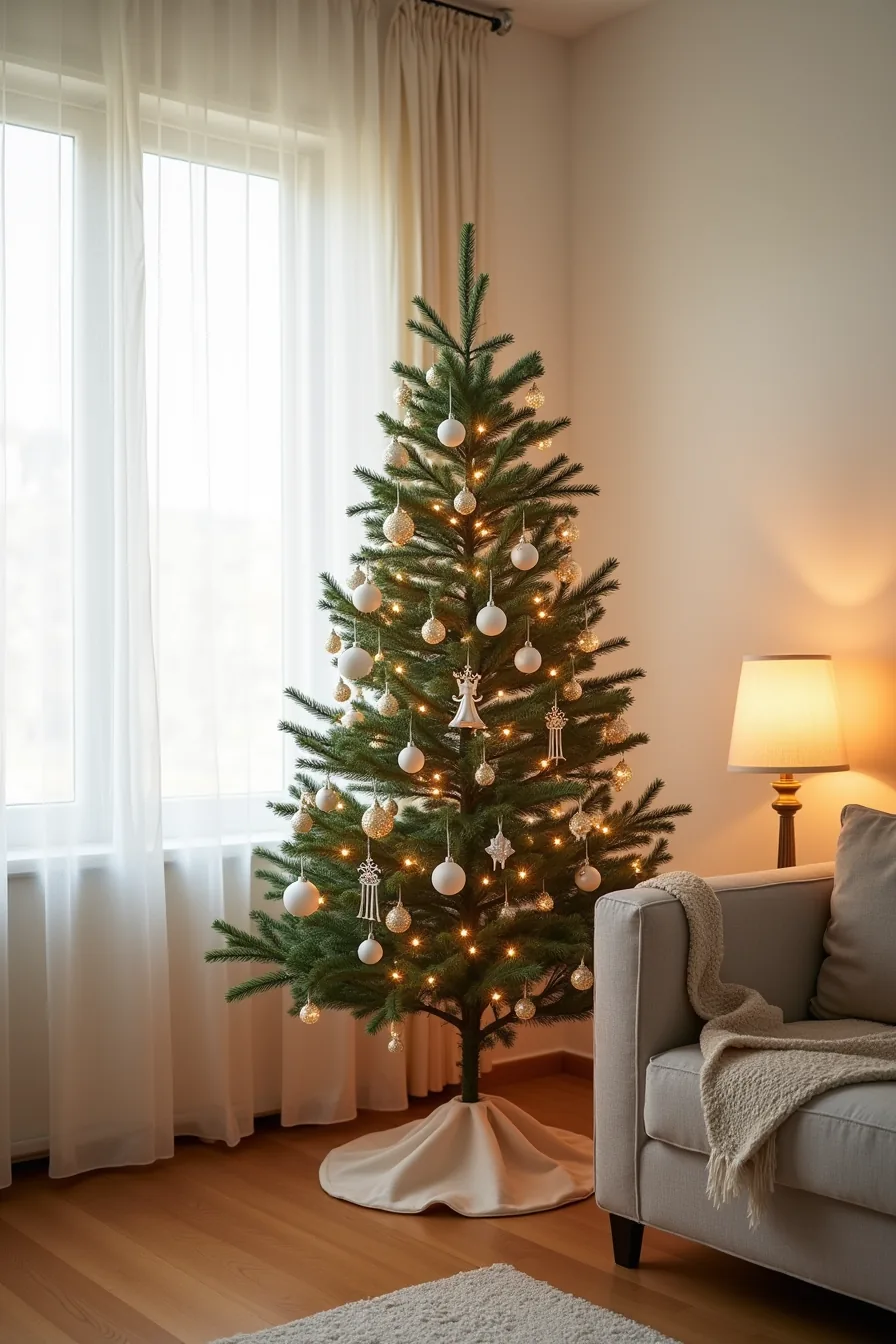
For apartments or leased homes, focus on attachment methods that leave zero trace. Clip-on ornaments and magnetic hooks grip branches and metal stands without screws or adhesives, protecting walls and ceilings from damage. Adhesive-backed ribbon, used sparingly, can wrap banisters or frame doorways, but test it on a hidden patch first to ensure it lifts cleanly.
This system suits renters, students, or anyone who prefers to change the tree’s look each year without commitment. A magnetic collar around the trunk can hold lightweight garlands, while clip-on candle lights eliminate the need for electrical wiring through walls. Skip flocking sprays or permanent tree paints, as they can stain floors or void security deposits.
When you move, pack everything into labeled bins, clips, magnets, and ribbons included, and reinstall the same setup in minutes. This approach keeps your deposit intact and your holiday stress low. For larger spaces, combine magnetic hooks with floor-weighted tree skirts secured by Velcro strips, but avoid overloading branches; stick to lightweight ornaments under 4 ounces per clip.
Heirloom and Keepsake-Focused Styling
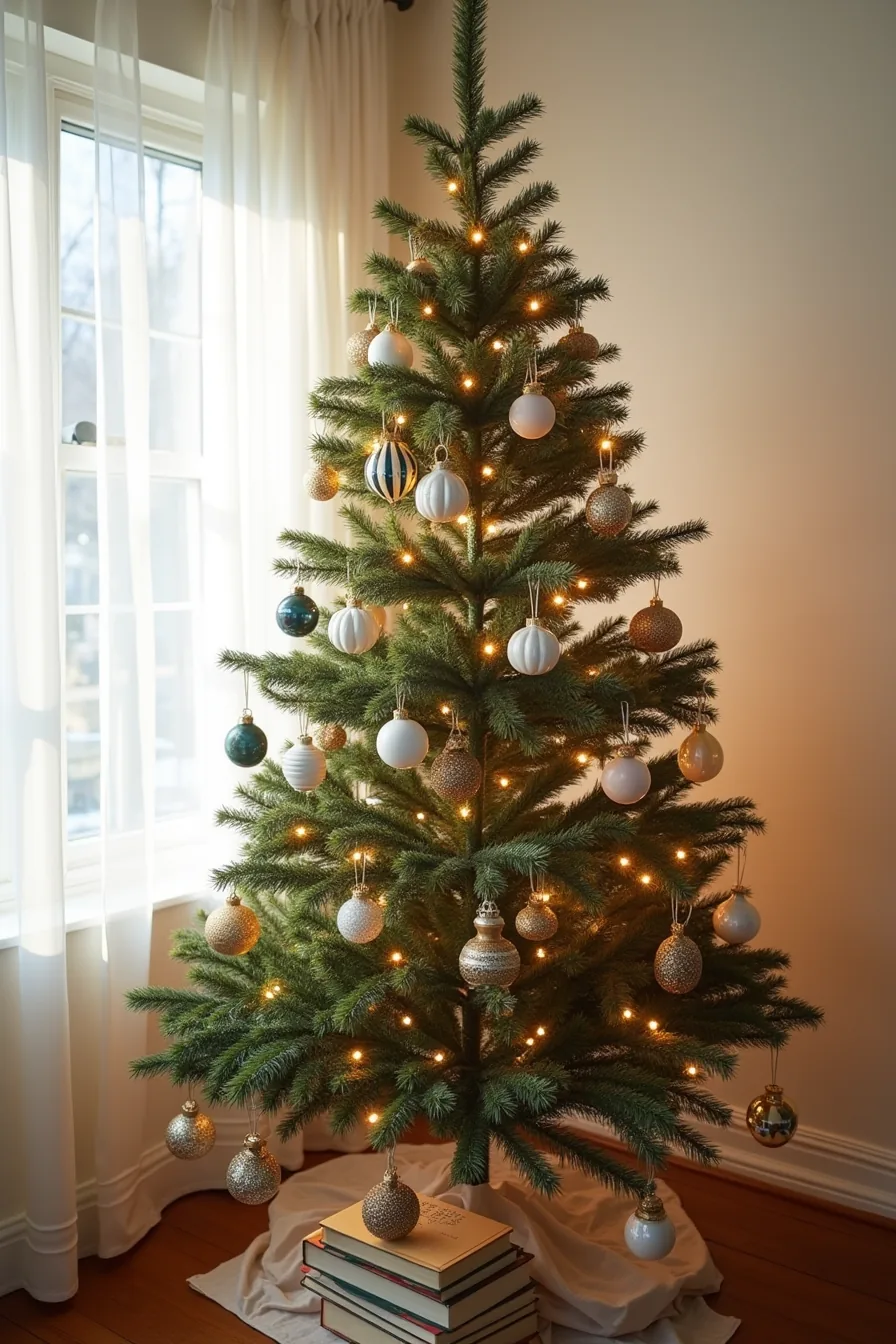
This tree prioritizes curation over volume, trusting that a single vintage ceramic piece catches more eyes than a dozen plastic spheres. The strategy is simple: place your most meaningful ornaments at eye level and let sparse spacing grant each one the stage it deserves. For a six-foot tree, that means using only 300 to 400 lights instead of the typical 800, allowing the ornaments to pop against the dark green rather than compete with a blinding glow.
The setup suits anyone whose collection tells a story, a 1980s hand-blown glass bird next to your child’s first-Christmas clay fingerprint. The visible archival tissue and storage box are non-negotiable; wrap each vintage piece in acid-free tissue before nesting it in a compartmentalized box. Store the box in a climate-controlled area, as attics and garages can crack the aged glazes and stress the metal caps on ceramic and glass pieces permanently.
Budget Constraints vs. Premium Materials Trade-offs
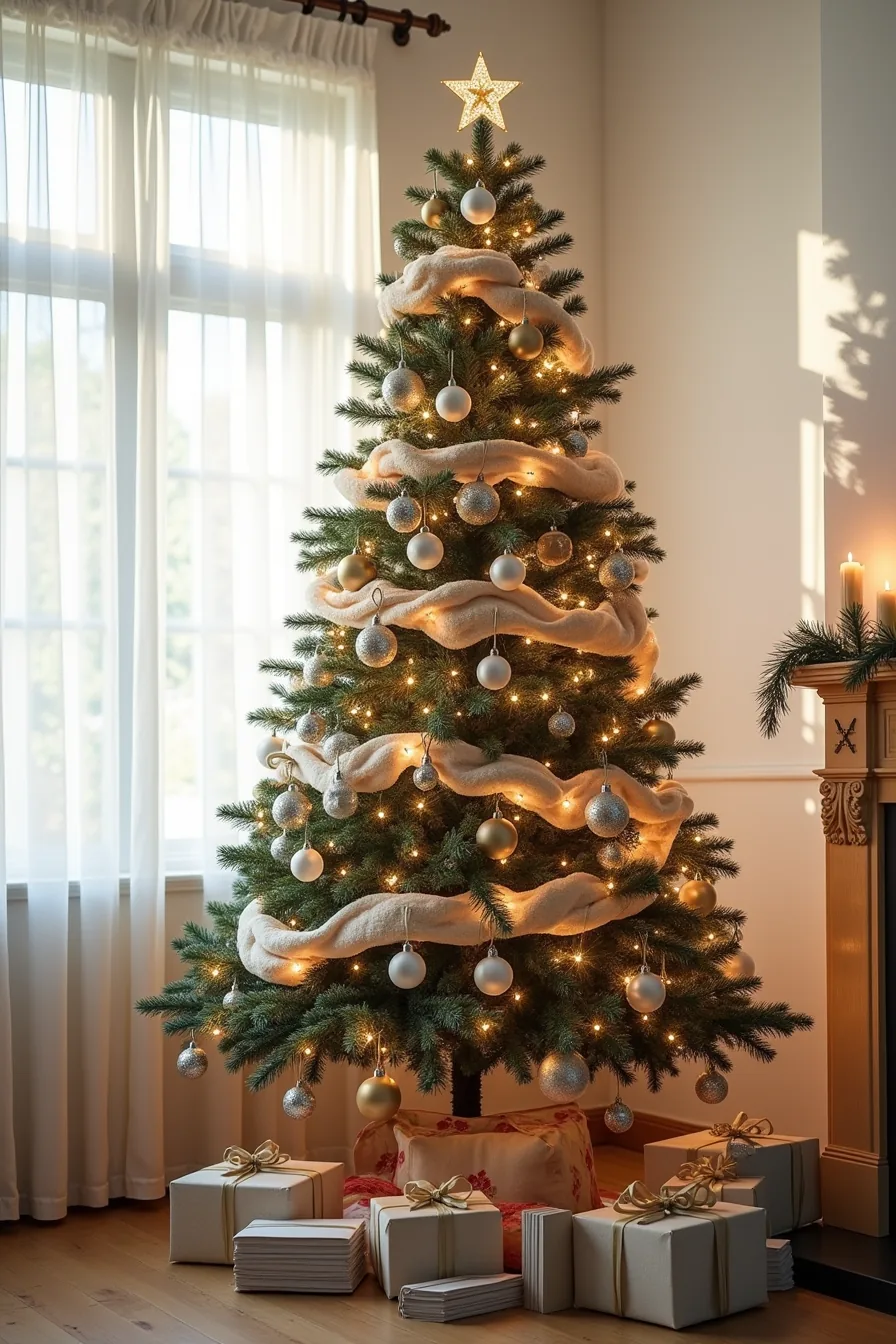
The hybrid approach lets you spend where it counts without blowing your seasonal budget. Cluster plastic ornaments and plastic garland densely on the back branches, where texture reads more than material quality, then reserve your premium glass and metallic pieces for the front-facing third of the canopy. Silk ribbon adds a high-end finish at roughly half the cost of an equivalent number of glass ornaments, making it the smartest single upgrade for a mixed tree.
Before you buy, calculate cost per year, not cost per item. A $12 plastic ornament set may last two seasons before fading or cracking, while a $6 glass ball can survive a decade with careful storage. Spend on items you’ll reuse, garland, ribbon, and top-tier ornaments, and rotate the budget pieces annually.
The most common Christmas Tree Decor Ideas mistakes to avoid: hanging premium ornaments on inner branches where they catch nothing, and scattering budget pieces front-and-center where every scratch shows. These Budget vs. Splurge Christmas Tree Decor Ideas work best when the premium layer occupies roughly 30 percent of the tree’s visible surface area.
Where to start
Pick one anchor element first, whether that’s a color, a material, or a budget ceiling, and let it filter every other choice. A $40 tinsel garland plus string lights reads just as intentional as a $400 designer ribbon set, provided both share the same finish.
Measure your tree’s height and width before shopping, then cap your ornament count at roughly one per foot of tree height to avoid overcrowding.
Your next step: photograph your bare tree against the wall where it will stand, then sketch three placement zones, top, middle, skirt, before buying anything. That single photo will resolve half your proportion questions.
Frequently Asked Questions
How do I prevent ornaments from sliding down a sparse tree?
Wrap pipe cleaners or floral wire around each ornament hook, then twist the ends around a branch. For bare spots, use ornament hooks with rubber grips or attach lightweight ornaments directly to the trunk with twist ties.
What’s the maximum weight a standard artificial tree branch can hold?
Most standard artificial tree branches support 1–2 pounds per tip, but distribute weight evenly. Hanging multiple heavy ornaments on one branch causes sagging. Test with your hand, if the branch bends significantly, reduce load or relocate ornaments to sturdier lower branches.
Can I mix real and artificial garland on the same tree safely?
Yes, if you keep real garland in water-soaked floral picks or mist it daily. Artificial garland won’t dry out, but real greenery sheds needles and requires cleanup. Avoid placing real garland near lights or heat sources to reduce fire risk.
How should I store delicate ornaments between seasons to avoid breakage?
Wrap each ornament in acid-free tissue paper, then place in a compartmentalized ornament box with padded dividers. Store boxes upright in a cool, dry location away from attics or basements with temperature swings. Never stack heavy ornaments on top of fragile glass ones.