A closet wall is simply the vertical surface you dedicate to storage, and the way you outfit it determines whether that space works as a functional system or becomes a visual bottleneck. You can interpret it as a built-in wardrobe, a modular rail system, or even a freestanding shelving unit. The right choice depends on your room’s dimensions, your lease terms, and how much you’re willing to spend.
The six approaches below range from a $150 renter-friendly tension rod setup to a custom joinery investment that runs several thousand dollars.
Key takeaways
- Open shelving wins when you need to see everything at a glance, but it demands dusting and visual tidiness, limit it to daily-use items you can fold or stack neatly.
- Floor-to-ceiling built-ins maximize vertical space in large rooms, yet they cost more and are permanent, so reserve them for homeowners who won’t move for at least five years.
- Pegboard and modular accessories offer renter-friendly flexibility without drilling large holes, and you can reconfigure hooks, shelves, and bins in under an hour as your storage needs shift.
- Vertical rod systems double hanging capacity in narrow closets, but check your ceiling height, most standard rods sit 60–72 inches from the floor, leaving room for a lower shelf or shoe rack beneath.
Open Shelving for Visibility and Access
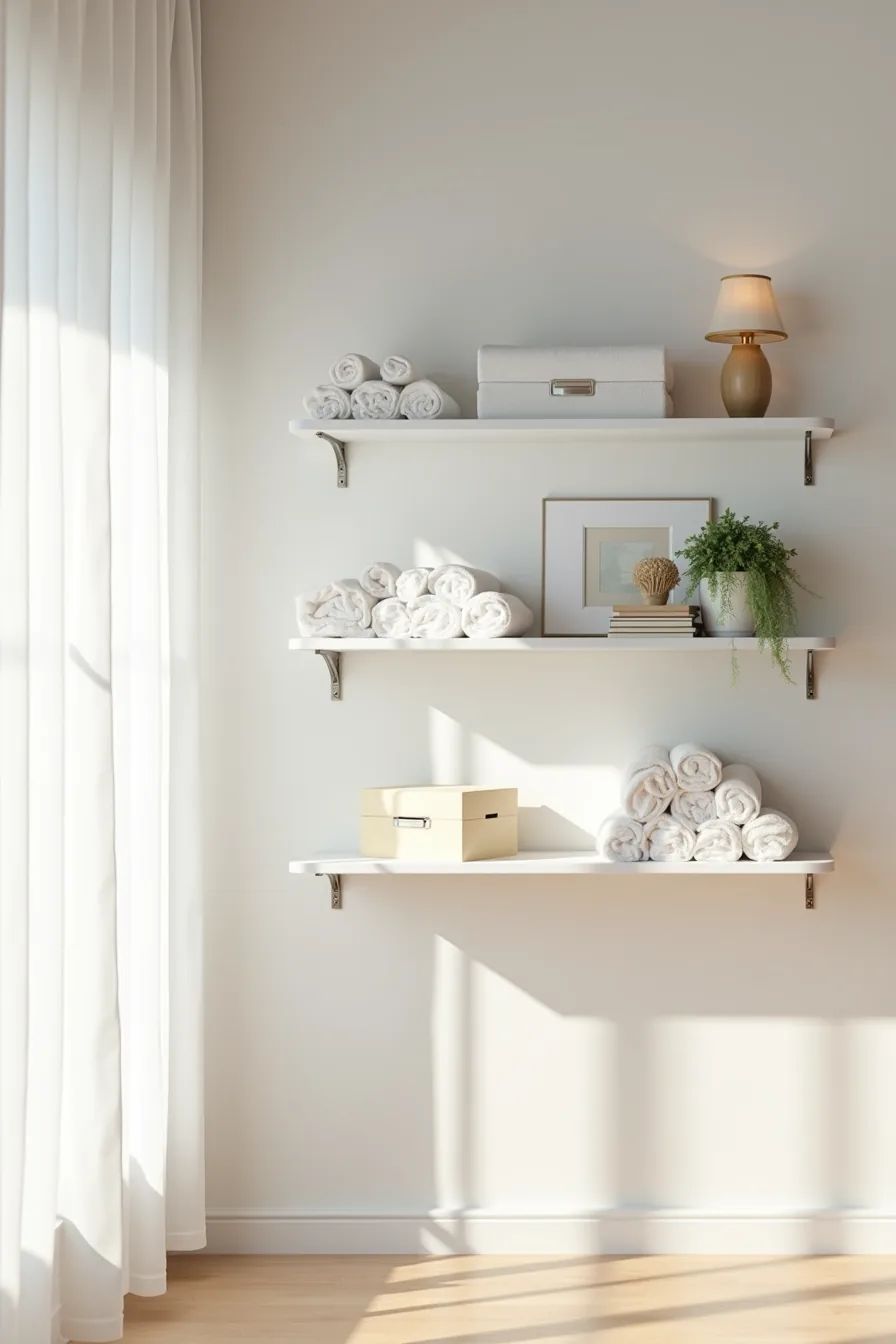
Floating shelves turn a closet wall into a display-and-grab system, which suits anyone who forgets what they own when it’s hidden behind doors. The setup pictured here uses three 24-inch white shelves on a pale gray wall, spaced 14 inches apart, a comfortable gap for stacking towels or sliding boxes in and out without scraping your knuckles. Rolled towels give you a color-coded inventory at a glance, while small storage boxes catch loose items and the potted plant softens the utilitarian vibe.
This works best in small to medium spaces where deep cabinets would eat floor area. Install into studs with heavy-duty brackets; most drywall anchors top out around 50 pounds per shelf, so keep full storage boxes on lower levels. White shelves vanish visually, letting you read the contents rather than the hardware.
Dust exposed items weekly, open shelving trades privacy for accessibility, so daily-use goods belong here, not holiday decorations.
Floor-to-Ceiling Built-In Storage
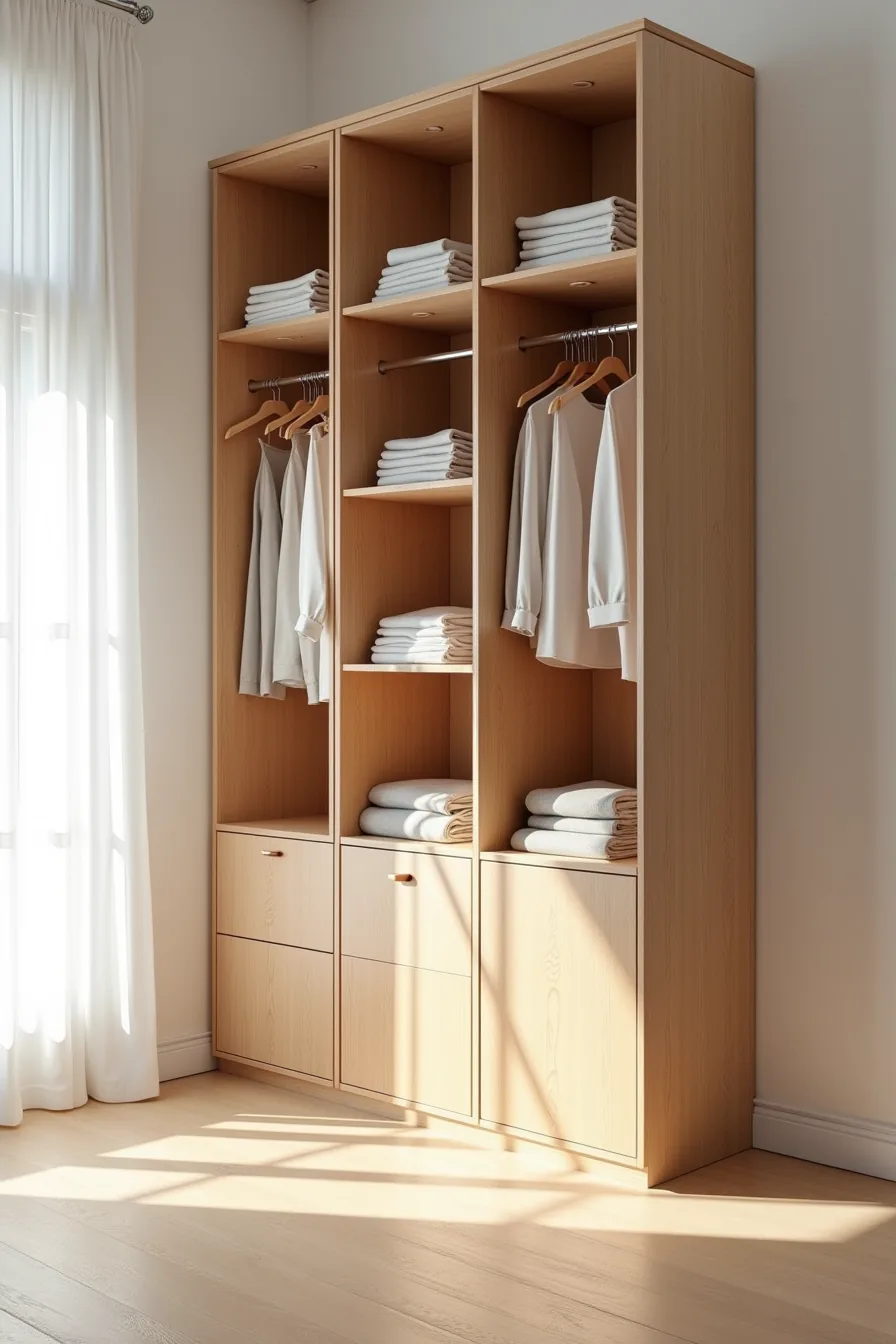
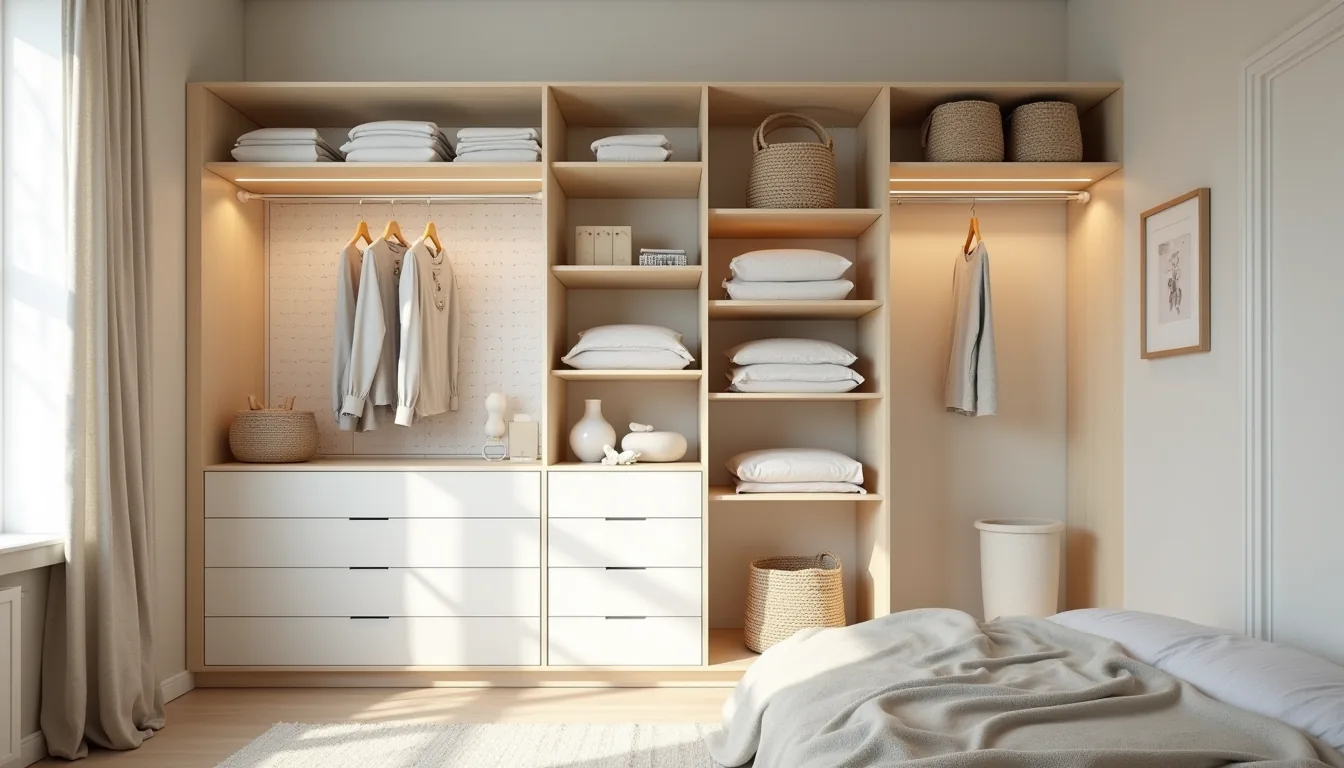
A floor-to-ceiling system like this one transforms an underused corner into a vertical wardrobe, giving you roughly triple the storage of a standard 6-foot tall cabinet. Six stacked compartments mix closed cabinet doors with open shelves, so you can hide folded items below while keeping frequently worn clothing visible at the top. The natural wood frame anchors the room and reads as furniture, not utilitarian closet hardware.
This is the long-term investment route: expect $3,000–$8,000 for semi-custom units, or $10,000+ for true custom millwork, with a 2–6 week lead time before installation. It suits permanent homes and large walk-in closets where you want the wall itself to become the architectural feature. Because the built-in frame carries the load, you get maximum clearance between shelves, ideal for bulky items like luggage bins or stacked denim.
Factory-finished wood requires only occasional dusting and the occasional wipe-down with a damp cloth, but budget for professional measurement if your floors or ceiling are out of level. For a functional closet wall design on a smaller budget, consider stock cabinets with a custom filler panel kit instead of full custom build-outs.
Pegboard and Modular Accessories
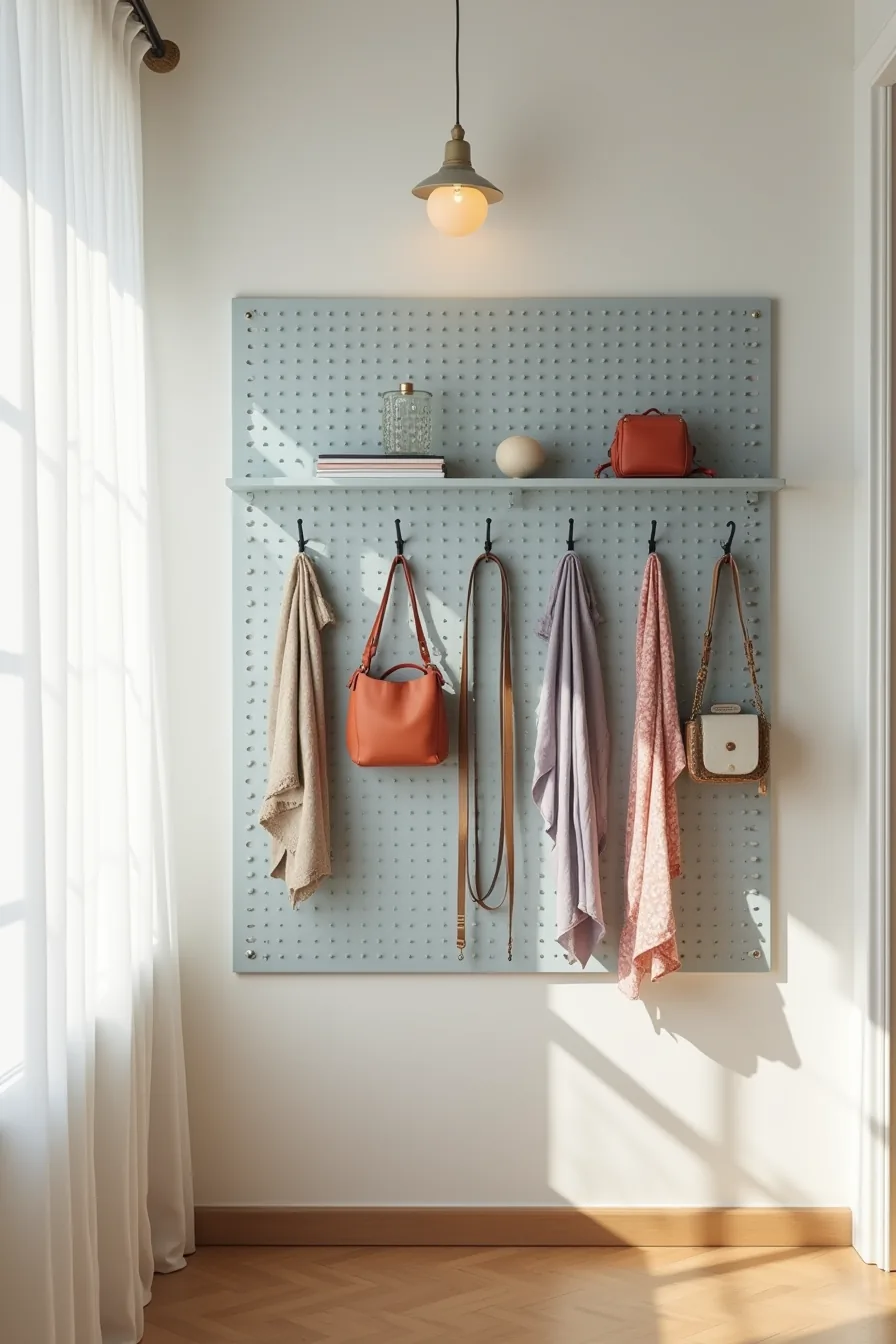
A 4-by-5-foot pegboard in soft gray-blue turns a bare stretch of drywall into an organized closet wall inspiration without a single permanent fastener. Metal hooks in loose rows hold scarves, belts, and small bags at eye level, while the low shelf below catches folded totes or shoe boxes. The entire system reconfigures in under a minute, move a hook, shift a bag, and your layout changes with your season.
This is the renter-friendly route: a standard 4-by-8-foot pegboard sheet runs $15–$30, with hooks costing $1–$4 each, and mounting requires only four screws into studs (patchable with spackle on move-out). It suits small spaces, entryways, or kids’ rooms where storage needs shift frequently. Use 1/4-inch hardboard pegboard for lightweight accessories; upgrade to 3/4-inch for heavy coats or backpacks.
Keep peg spacing at 1-inch on center so hooks sit close enough for dense hanging, and leave 6–8 inches of clearance above the shelf for easy reach. Dust the board monthly with a dry microfiber cloth to prevent buildup in the holes.
Vertical Rod and Hanging System
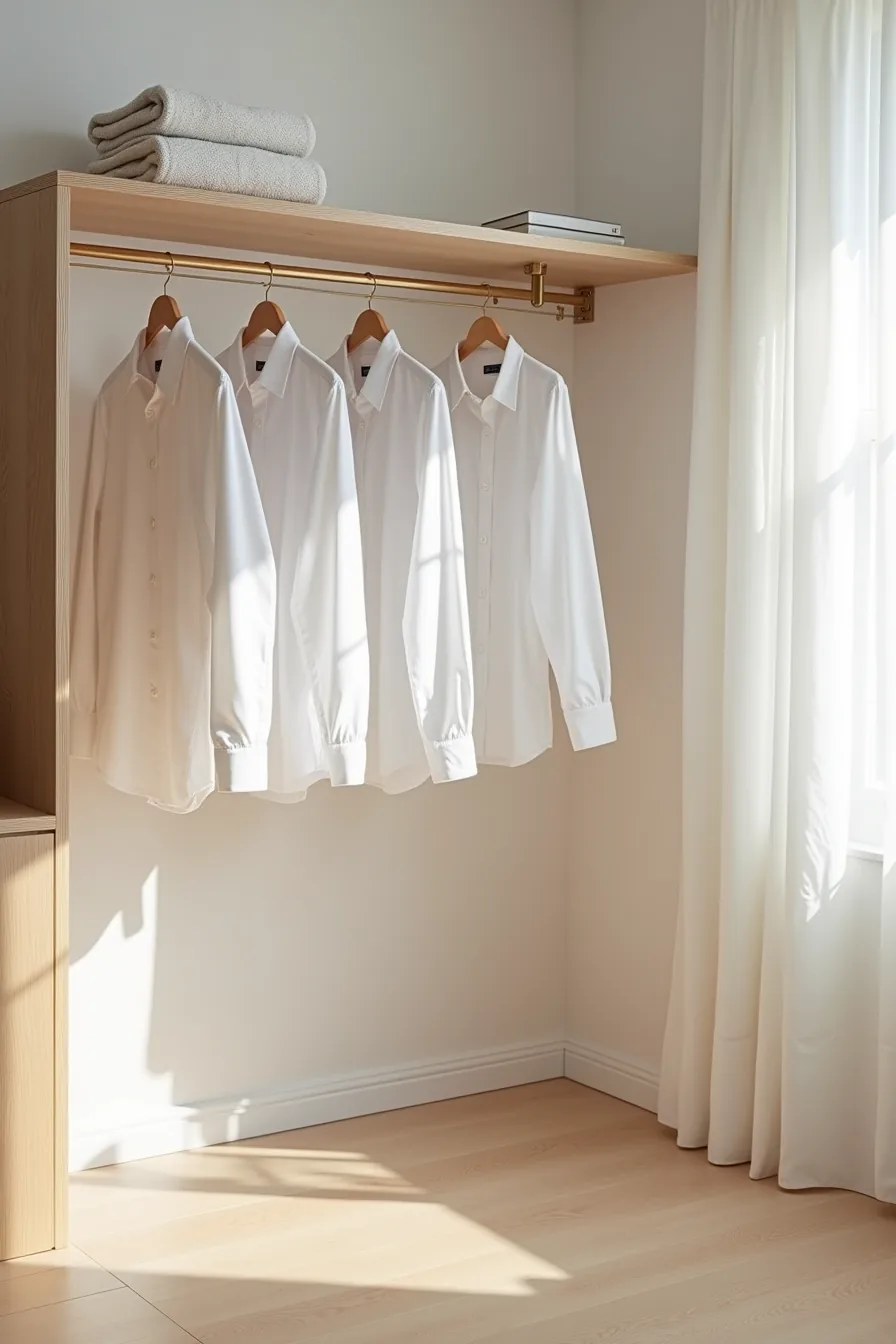
A double-rod setup maximizes vertical space in clothing-heavy closets where floor-to-ceiling hanging is non-negotiable. Mount the upper rod at roughly 80–84 inches from the floor for shirts and jackets, the lower rod at 40–42 inches for pants and folded-over skirts. In this arrangement, a shelf above the top rod catches sweaters or out-of-season items, and the metal brackets anchoring both rods sit at 16-inch intervals for even weight distribution.
This system suits medium-to-large walk-ins or reach-in closets with at least 24 inches of depth. For structural safety, screw brackets into wall studs, not drywall alone, and keep total rod load under 50 pounds per linear foot. Use a single continuous rod spanning 4–6 feet for shirt-heavy wardrobes, or split into shorter 3-foot sections if you need separation by family member or garment type.
The trade-off: double hanging cuts full-length space, so long dresses or coats need a dedicated 60-inch-plus section elsewhere. Wipe rods monthly with a damp cloth to prevent rust on chrome or coated steel finishes.
Basket and Bin Wall Storage
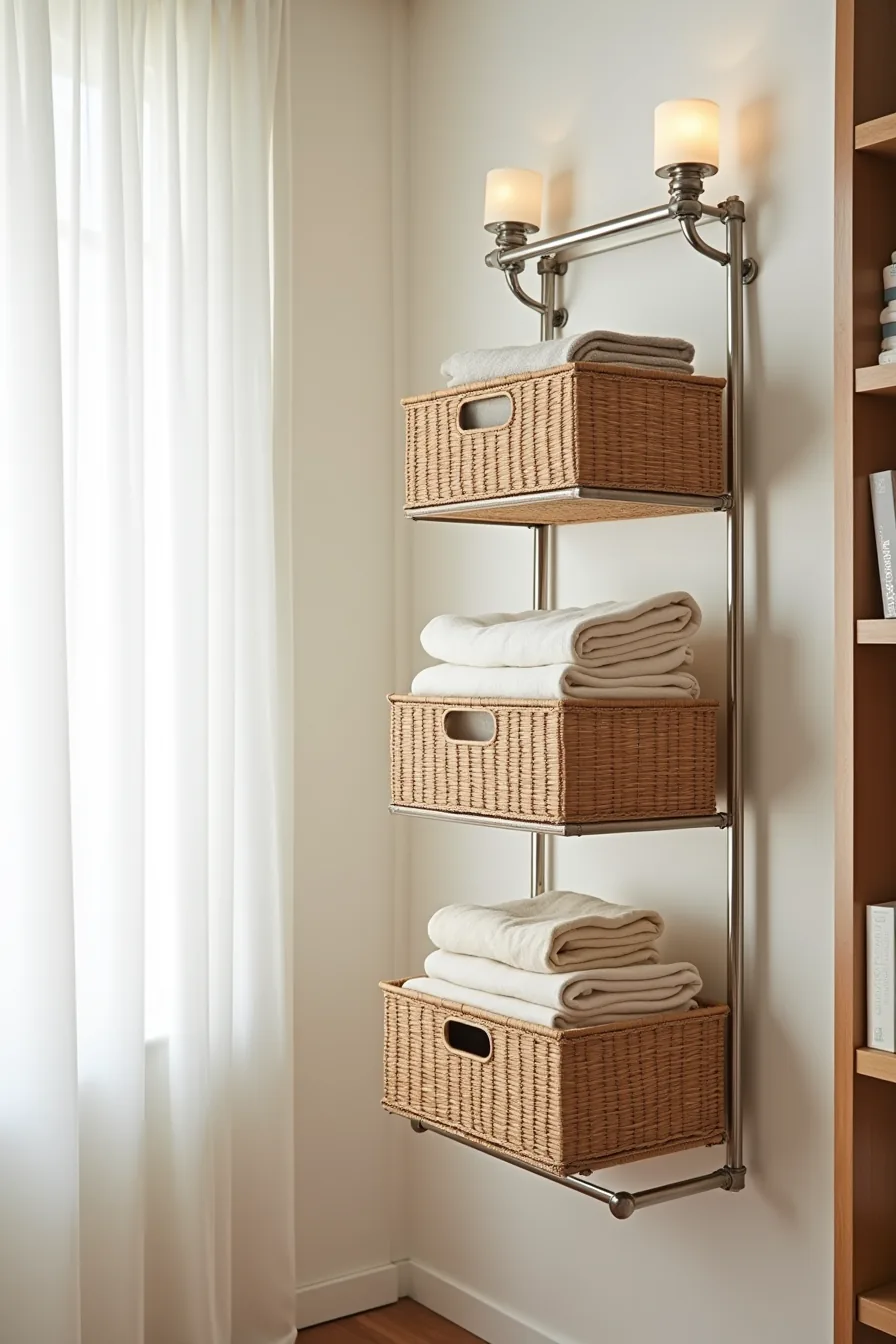
A wall rail with four stacked seagrass and cream linen baskets gives you visible, breathable storage for folded sweaters and soft goods without committing to permanent cabinetry. Sizing matters: on a 24-inch-wide rail, use baskets 10–12 inches deep; on a 36-inch rail, step up to 14–16 inches. Deeper baskets at the bottom anchor the composition visually and handle bulkier knits, while shallower ones up top keep scarves and accessories within easy reach.
This route suits renters, most rails mount with four screws into studs and patch cleanly when you leave, and anyone mixing open storage with existing décor. Use baskets in two natural tones max (seagrass plus cream linen works) to avoid visual noise against a neutral wall. Vacuum baskets monthly with a brush attachment; wipe the rail with a damp cloth to prevent tarnish on brushed nickel.
Budget range: $60–$120 for a four-basket rail system versus $300-plus for built-in cubbies.
Mirror and Lighting Integration
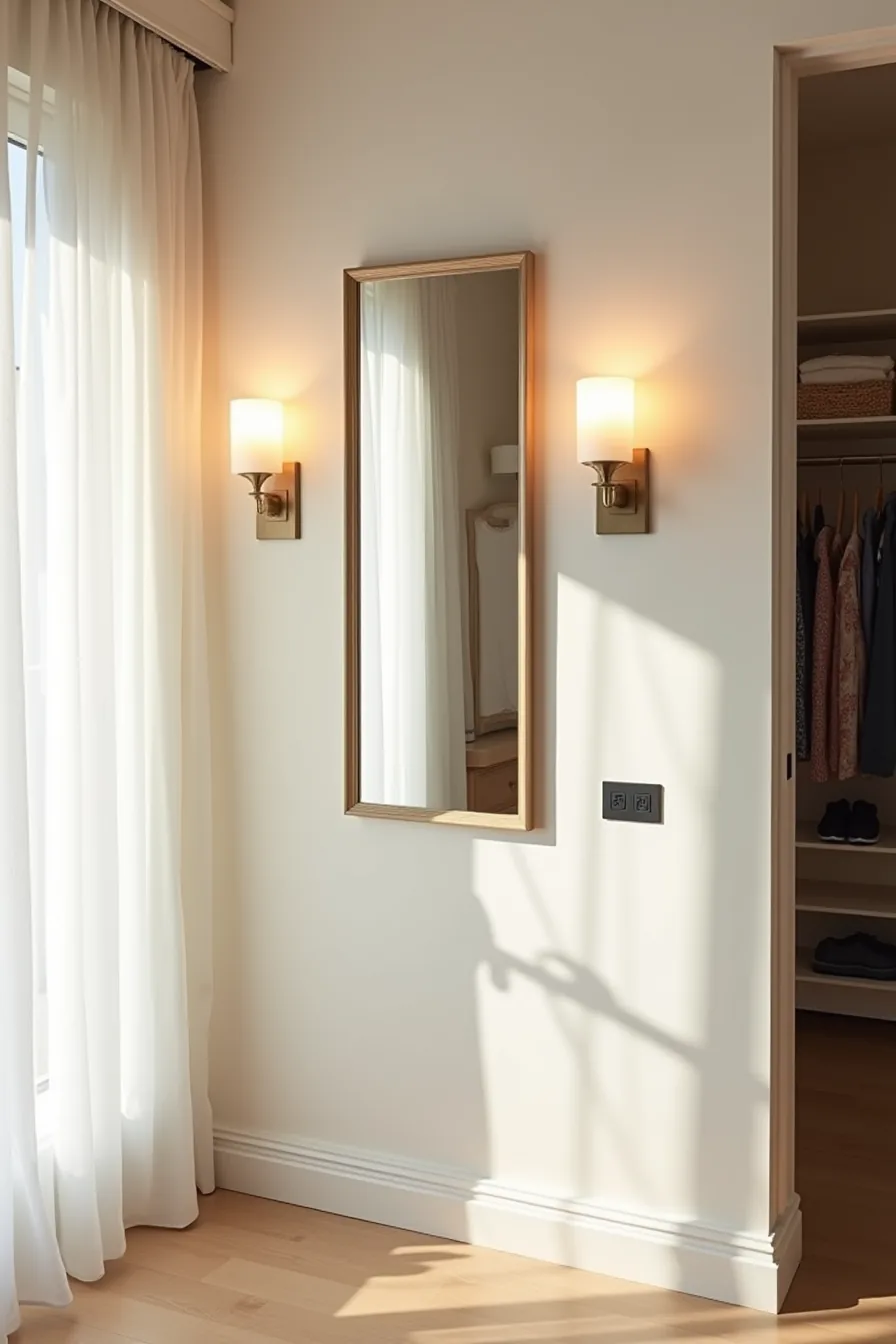
Mount a rectangular mirror 30 inches wide at eye level, typically 58–62 inches from floor to center, on the wall opposite your primary hanging rod. This positioning gives you a full-length check while dressing instead of forcing a separate full-length mirror that eats floor space. Flank it with two adjustable sconces fitted with frosted shades at 60 inches high, angled slightly inward to cast even light across your face without harsh shadows.
This setup works best in a walk-in or reach-in closet with an existing electrical outlet within 3–4 feet of the mounting point. If you lack that outlet, budget for a licensed electrician to run a new line ($150–$400 depending on wall access) or choose battery-powered sconces with integrated dimmers that run 6–12 months per charge. Use LED bulbs rated 2700–3000K for warm, true-to-life color rendering, cooler 4000K light distorts fabric tones when you’re matching outfits.
Maintain the mirror with glass cleaner and a microfiber cloth weekly; wipe sconce shades monthly to prevent dust buildup from dimming output.
What to do first
Start by measuring your wall and walking the room’s traffic path before buying anything. A 24-inch-deep wardrobe needs about 36 inches of clear floor space in front for comfortable access to drawers and hanging rods.
Pick your priority, display, storage, or flexibility, and commit to one interpretation. Sketch a rough layout on graph paper, then tape the footprint on the floor to test circulation. That ten-minute check prevents the most common mistake: a beautiful closet wall that blocks the door or makes the room feel cramped.
Frequently Asked Questions
How much weight can floating shelves hold in a closet wall?
Most floating shelves support 20–50 pounds per shelf when anchored into studs with proper brackets. Drywall alone, using toggle anchors, handles roughly 15–25 pounds. Always check bracket specifications before loading heavy folded items.
Can I install a closet wall system as a renter without damaging the wall?
Yes, use tension rods, freestanding modular units, or adhesive-mounted tracks that peel off without residue. These hold lightweight clothing and accessories but not heavy shelving. Avoid drilling into walls unless your lease explicitly permits it.
What is the ideal depth for closet wall shelves?
Standard closet shelves run 12–16 inches deep, sufficient for folded clothes, bins, and shoes. Go 18–20 inches if storing large baskets or small appliances. Shallower depths sacrifice storage, while deeper shelves make rear items hard to reach.
How do I choose between open shelving and closed cabinet storage for my closet wall?
Choose open shelving for daily-use items you want visible and accessible, but it demands frequent tidying. Closed cabinets suit dust-prone infrequent items or clutter you prefer hidden. Balance both: open on eye-level shelves, closed below or above.