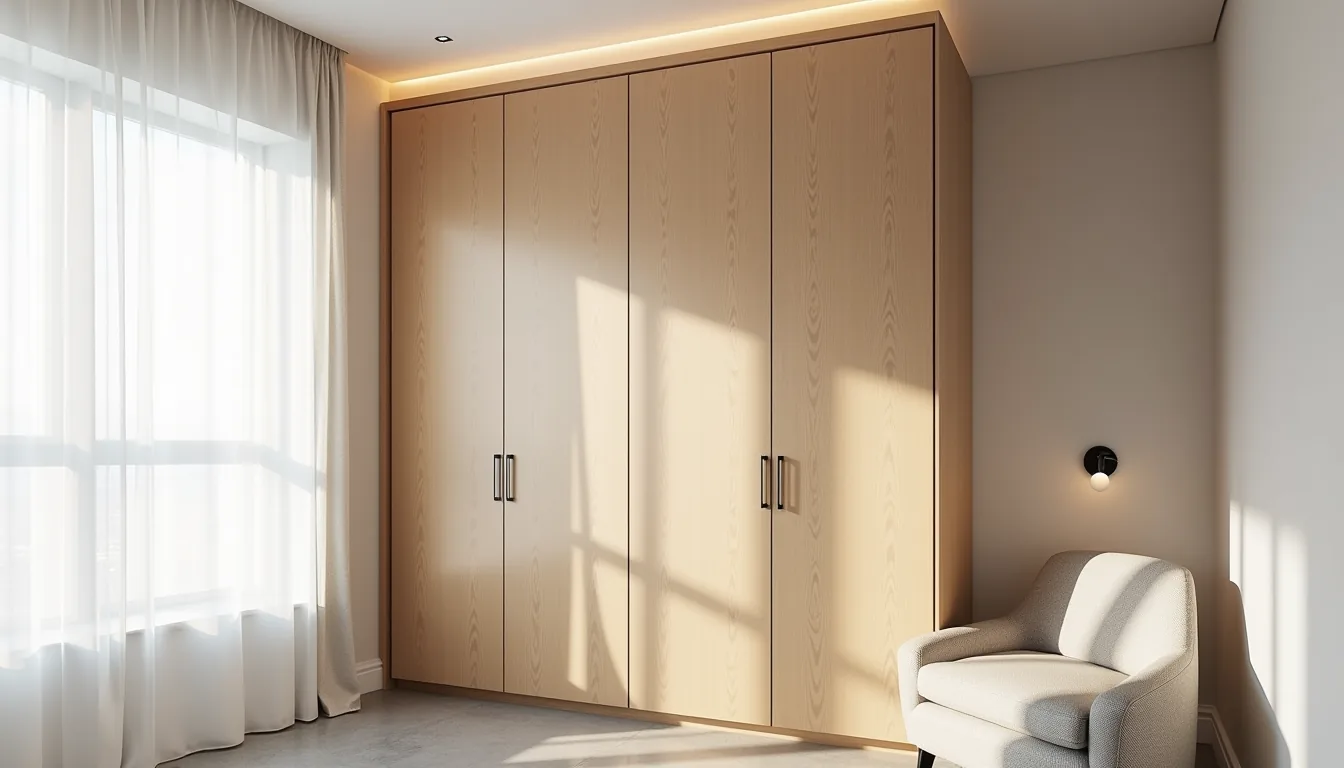
Wardrobe design bedroom modern luxury is less about owning an expensive closet and more about how you balance statement storage with restraint so the room feels calm, expansive, and quietly sophisticated. You achieve this through deliberate choices in proportion, material contrast, and lighting, not by stacking features. The practical difference between a room that looks styled and one that feels cluttered comes down to six specific, reproducible moves.
Here’s how each one works, who it suits, and the exact trade-offs to expect.
Key takeaways
Glass fronts suit large, low-traffic bedrooms but demand disciplined styling and frequent dusting; solid doors hide clutter better for busy households. Integrated lighting works best as 2700–3000K LED strips under shelves and inside drawers, not ceiling spots, to avoid glare and heat buildup. Proportion beats price, a wardrobe should occupy no more than 40–50% of the wall length in small rooms, leaving 30 inches of clear walkway. Renter-friendly upgrades include peel-and-stick wood veneer, magnetic push-latches, and battery-operated puck lights, all reversible without drilling or rewiring.
Glass vs Solid Doors: Which Suits Your Space and Style
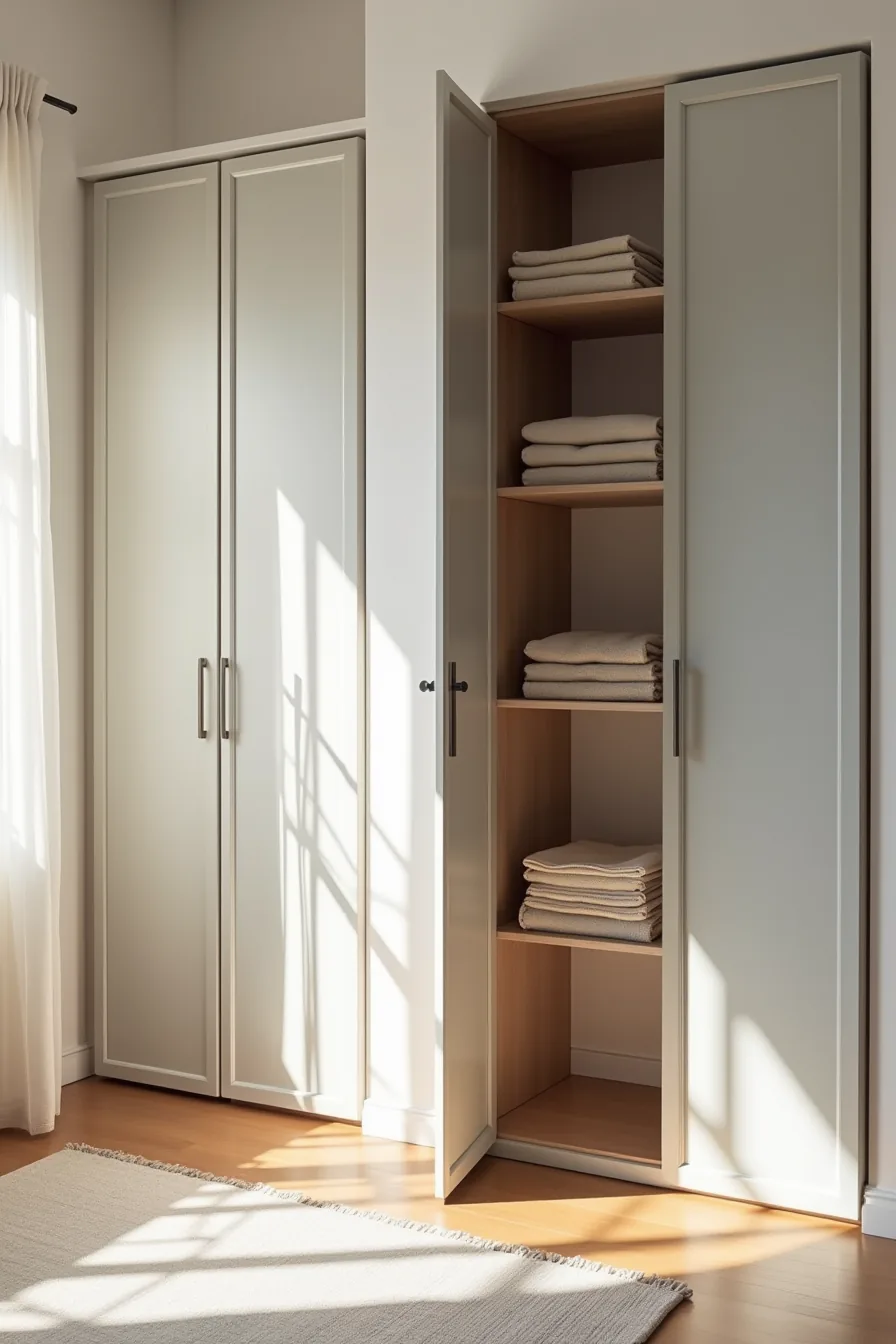
Frosted glass wardrobe doors against white bedroom walls give you the luxury of display without the pressure of perfect folding. In the split-frame setup, folded neutral textiles remain visible through the glass, which works best in medium to large rooms where the wardrobe can act as a soft focal point rather than competing for attention. Solid charcoal doors on the matching wardrobe offer the opposite logic: they erase visual noise, making them the stronger choice for small bedrooms where a busy front would shrink the space.
Your maintenance tolerance decides this faster than aesthetics. Frosted glass shows every fingerprint and dust line, so expect weekly wiping with a microfibre cloth and streak-free spray. Solid charcoal doors hide marks well but show scratches more readily, so choose matte finishes over gloss.
Both options suit a wardrobe design bedroom modern luxury approach; the difference is whether you want the room to feel curated or calm. Scale matters too, use glass on wardrobes 60 inches or wider, and reserve solid doors for narrower units where a reflective surface would overwhelm the wall.
Integrated Lighting That Elevates Without Overwhelming
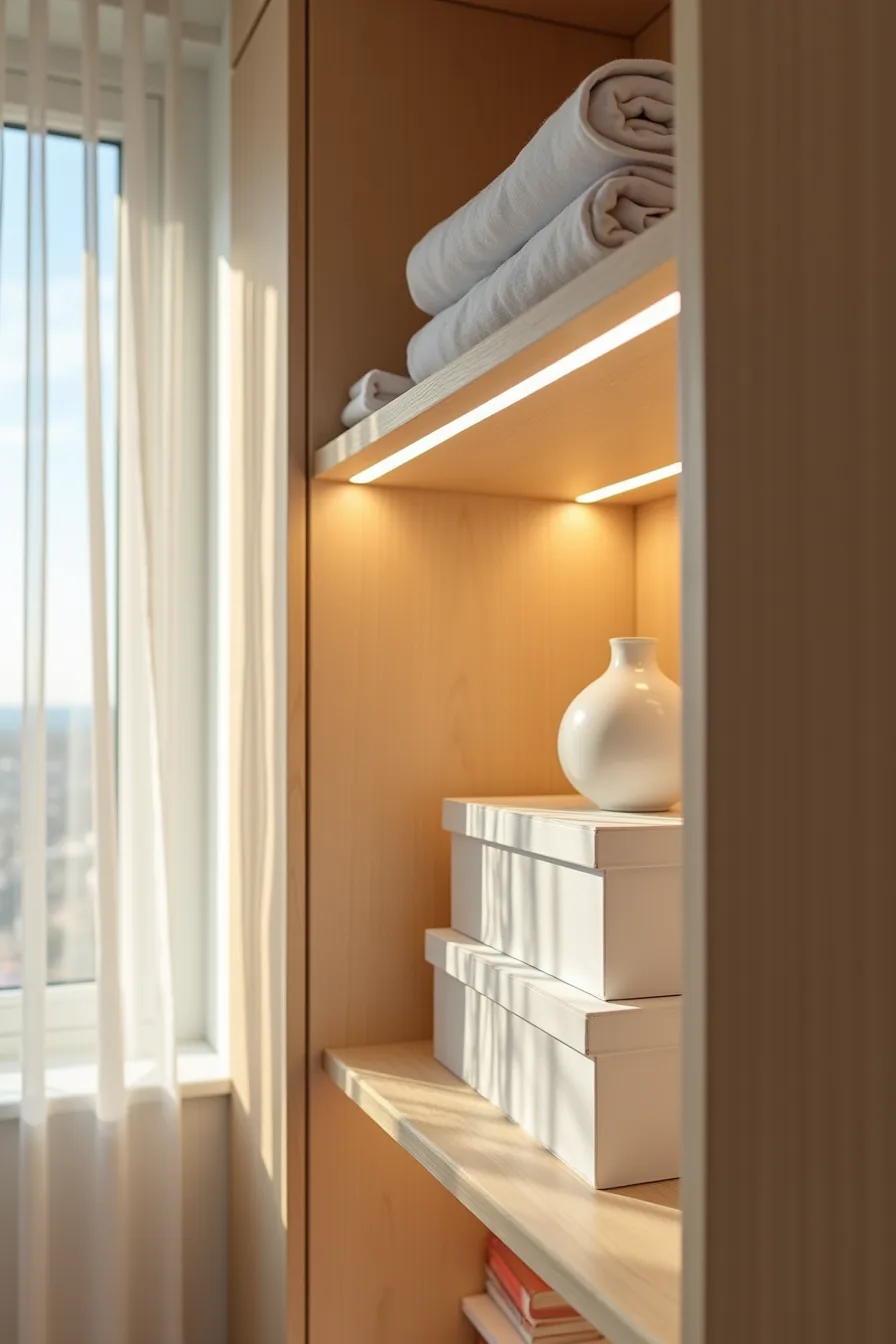
Linear LED strip lighting mounted flush to the underside of a wardrobe’s top edge delivers the quietest form of luxury lighting: it defines the silhouette without glare. In the dusk-lit setup, a warm 2700K strip casts downward light onto stacked linen storage boxes and a ceramic vase on the low shelf below, turning everyday storage into a composed vignette. For most wardrobes, a strip running 40–90 percent of the cabinet’s width at 4–6 watts per foot provides ample depth without washing out the room.
Placement matters more than fixture cost. Mount the strip 1–2 inches back from the front edge so the light grazes the shelf surface rather than shining into your eyes when you stand close. Pair it with a dimmer switch or motion sensor to keep the ambience adjustable, full brightness for outfit selection, 10–20 percent for late-night ambiance.
Integrated lighting of this type suits medium to large bedrooms where the wardrobe has clearance from the bed; in tighter spaces, restrict strips to one shelf per section to avoid turning the unit into a glowing block.
Quiet Luxury Finish: Materials and Color Palettes That Work
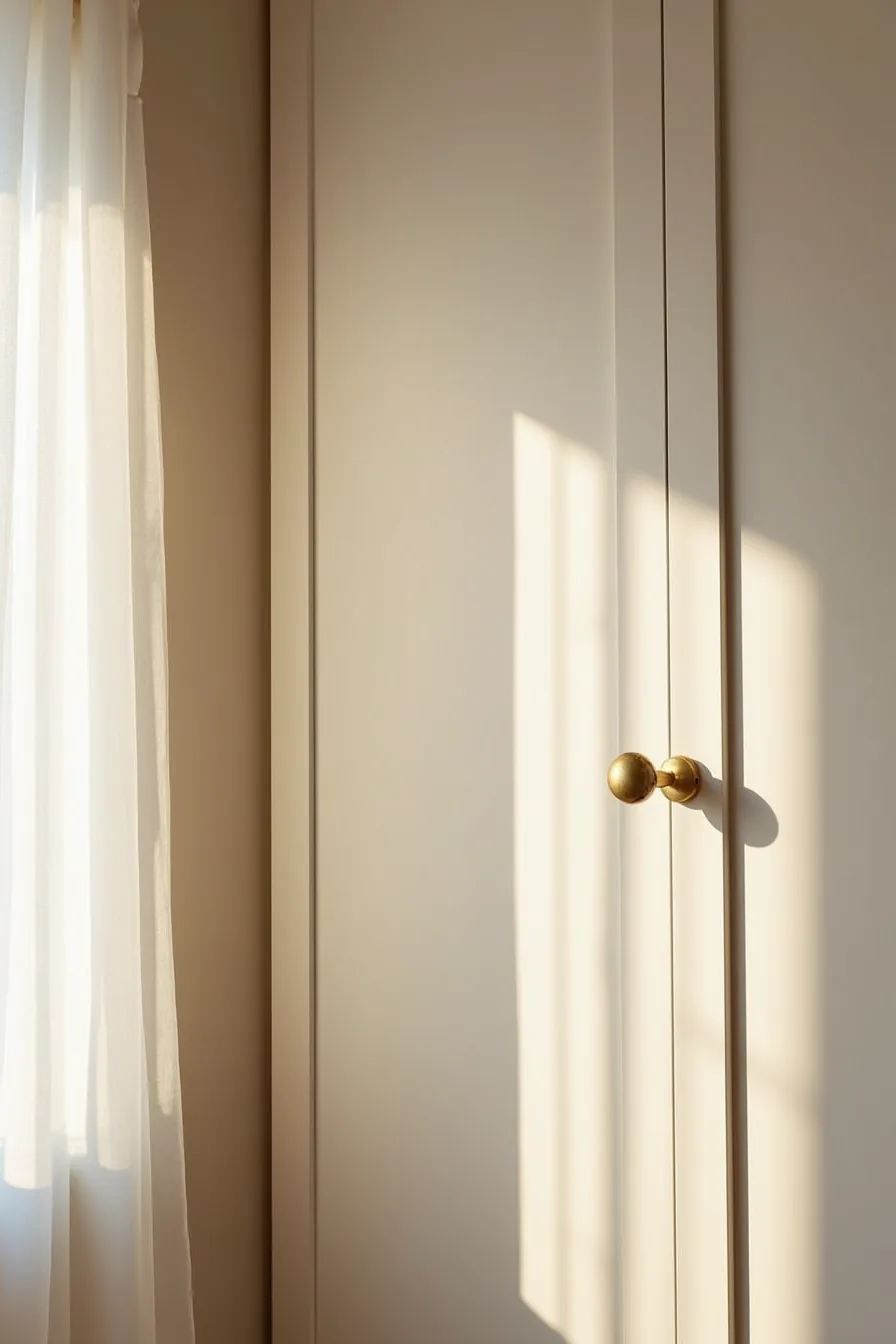
Quiet luxury in a wardrobe finish reads through texture and restraint, not ornament. A matte lacquer door in warm greige, a neutral that straddles beige and gray, absorbs light rather than reflecting it, which visually softens the unit’s mass in a bedroom. Pair it with a hand-brushed brass handle; the subtle irregularity of the brushed surface catches light differently at each angle, signaling craftsmanship without shouting.
This combination suits bedrooms with ample natural side-lighting, where the wood grain detail on the door can cast gentle shadow lines.
You’re choosing these finishes for longevity, so prioritize lacquer with a satin-to-matte sheen rating (typically 10–20 percent gloss) over high-gloss alternatives that show fingerprints and require weekly polishing. For the wood grain, opt for open-pore varieties like oak or ash, which feel warm to the touch and develop a patina over years, closed-pore woods like maple read flatter and less tactile. Budget-wise, matte thermofoil mimics the lacquer look at roughly 40–60 percent of the cost, but it lacks the depth of real lacquer and can yellow near strong UV exposure; if you invest in actual lacquer, plan for touch-up kits since chips are more visible on matte surfaces than on textured ones.
Proportions and Placement for Small, Medium, and Large Bedrooms
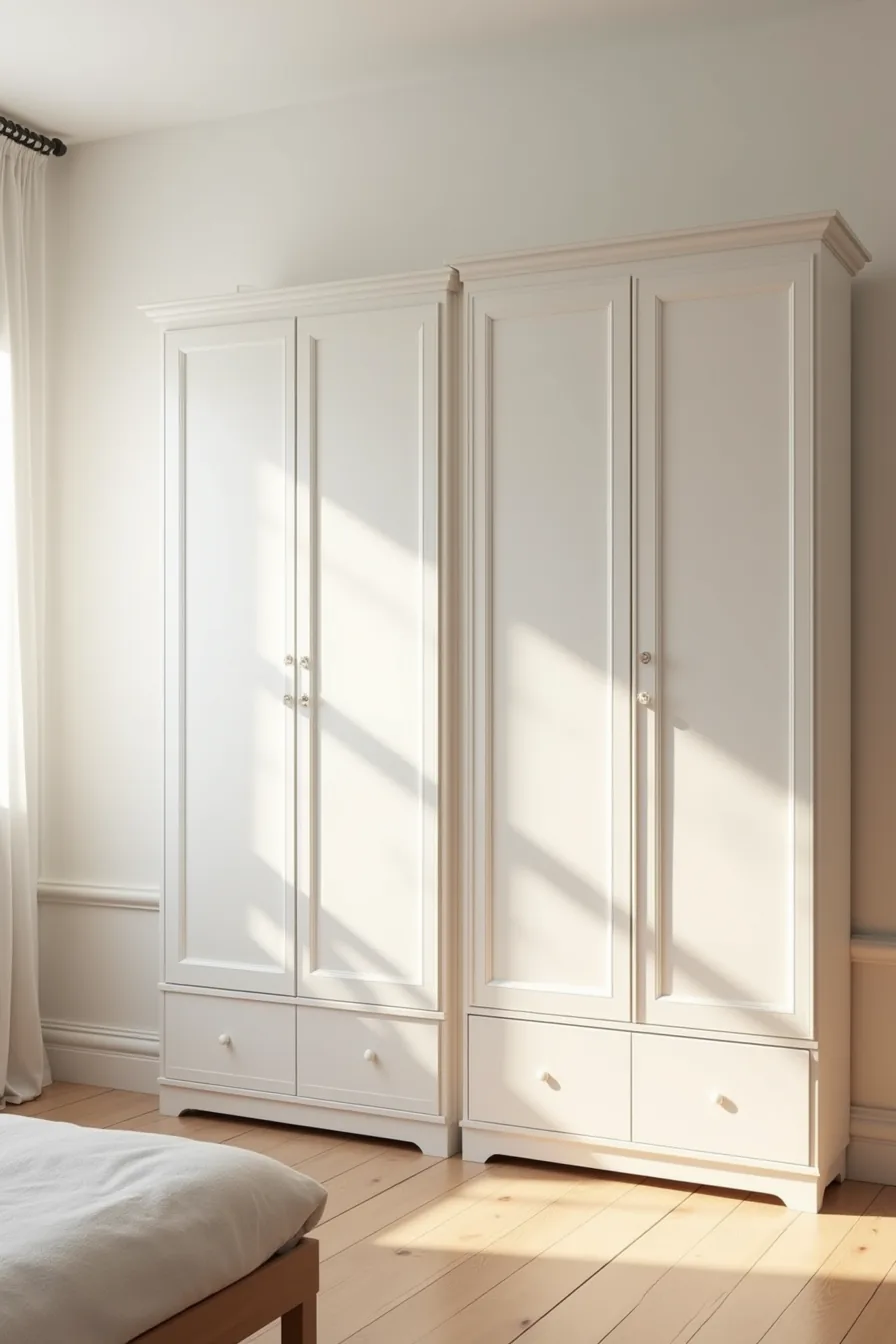
Start with depth before width. A 24-inch-deep wardrobe fits most clothing on hangers, but 26–28 inches gives bulky coats and suits breathing room; push depth past 30 inches and you waste floor space in any room under 12 feet wide. Height matters more than you think, a unit that stops 12–18 inches short of the ceiling collects dust and visually truncates the wall, while floor-to-ceiling cabinetry draws the eye upward and makes a low ceiling feel taller.
For a wall under 10 feet, a single compact unit around 36 inches wide keeps the room from feeling crowded; you gain storage by going taller, not wider. A 48-inch standard unit suits most 10-by-12-foot bedrooms, leaving at least 30 inches of clearance in front for opening doors and dressing. On walls over 14 feet, a 60-inch floor-to-ceiling unit anchors the space, but verify your ceiling is at least 8 feet, or the proportions feel top-heavy.
Place the wardrobe on the wall opposite the bed’s longest sightline, not beside a window where morning light creates glare on the doors.
Make a Luxury Wardrobe Feel Calm Not Showy: Interior Organization
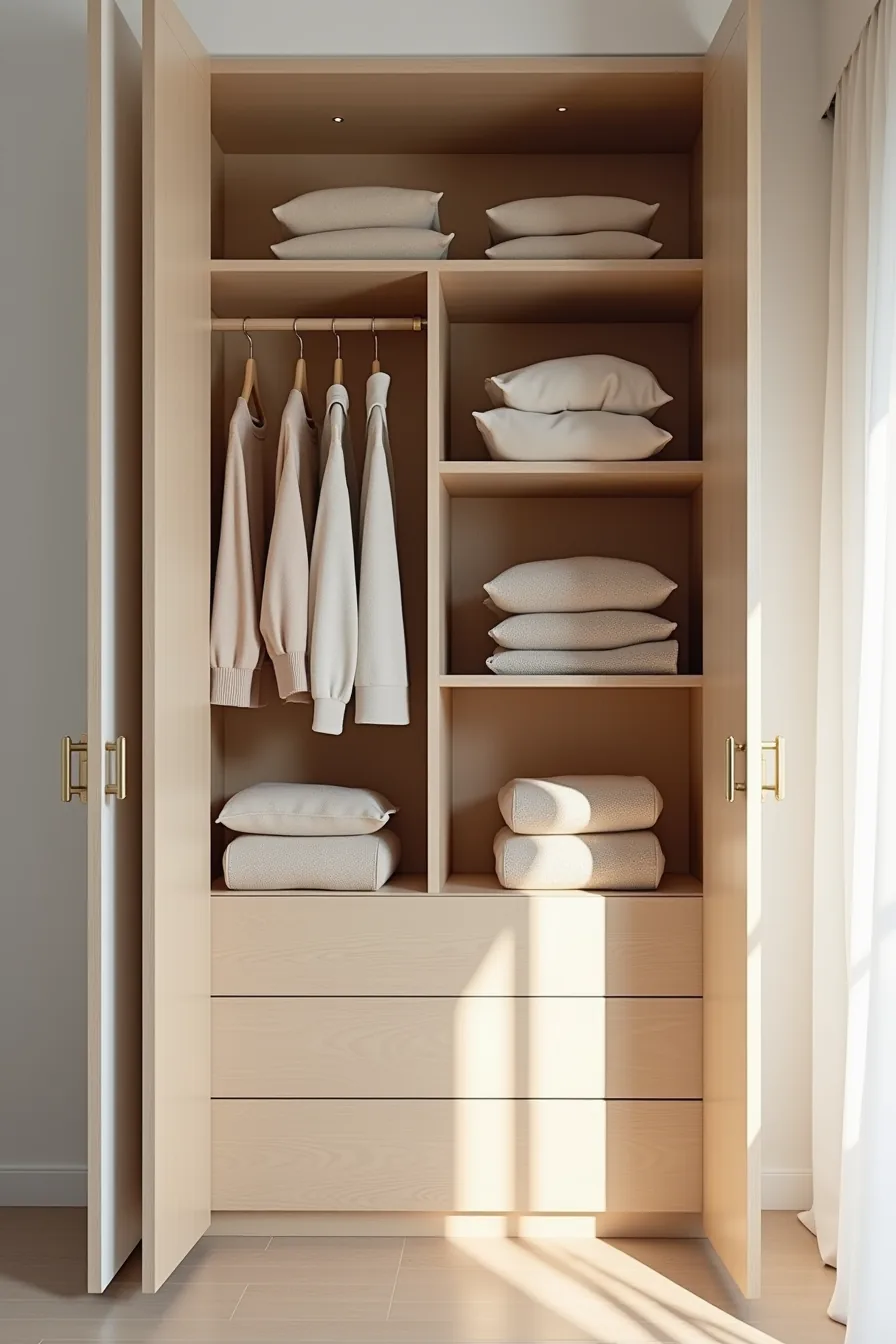
The quiet luxury of a wardrobe lives inside the doors. Open a modern unit and you should see folded neutral sweaters stacked by color gradient, cream to taupe to charcoal, each pile no more than six pieces high to prevent toppling and wrinkles. Wooden shelf dividers break the visual mass; they also stop stacks from sliding sideways when you pull out a single garment.
Soft-close drawer fronts matter more than their finish. Push a drawer shut and let it ease in silently; that 2–3 second delay eliminates the hardest sound in the room and reads as deliberate craftsmanship rather than showy hardware. Keep visible handles minimal or absent entirely, integrated pulls or touch-latch mechanisms preserve the clean sightline.
For daily ease, reserve the prime zone between eye level and hip height for items you wear weekly. Store seasonal pieces on upper shelves and shoes on lower, angled racks so you scan everything at a glance. The calm you feel comes from knowing exactly where each category lives; a luxury wardrobe that requires rummaging is just an expensive closet.
Budget, Rental, and Investment Routes to Modern Luxury Wardrobes
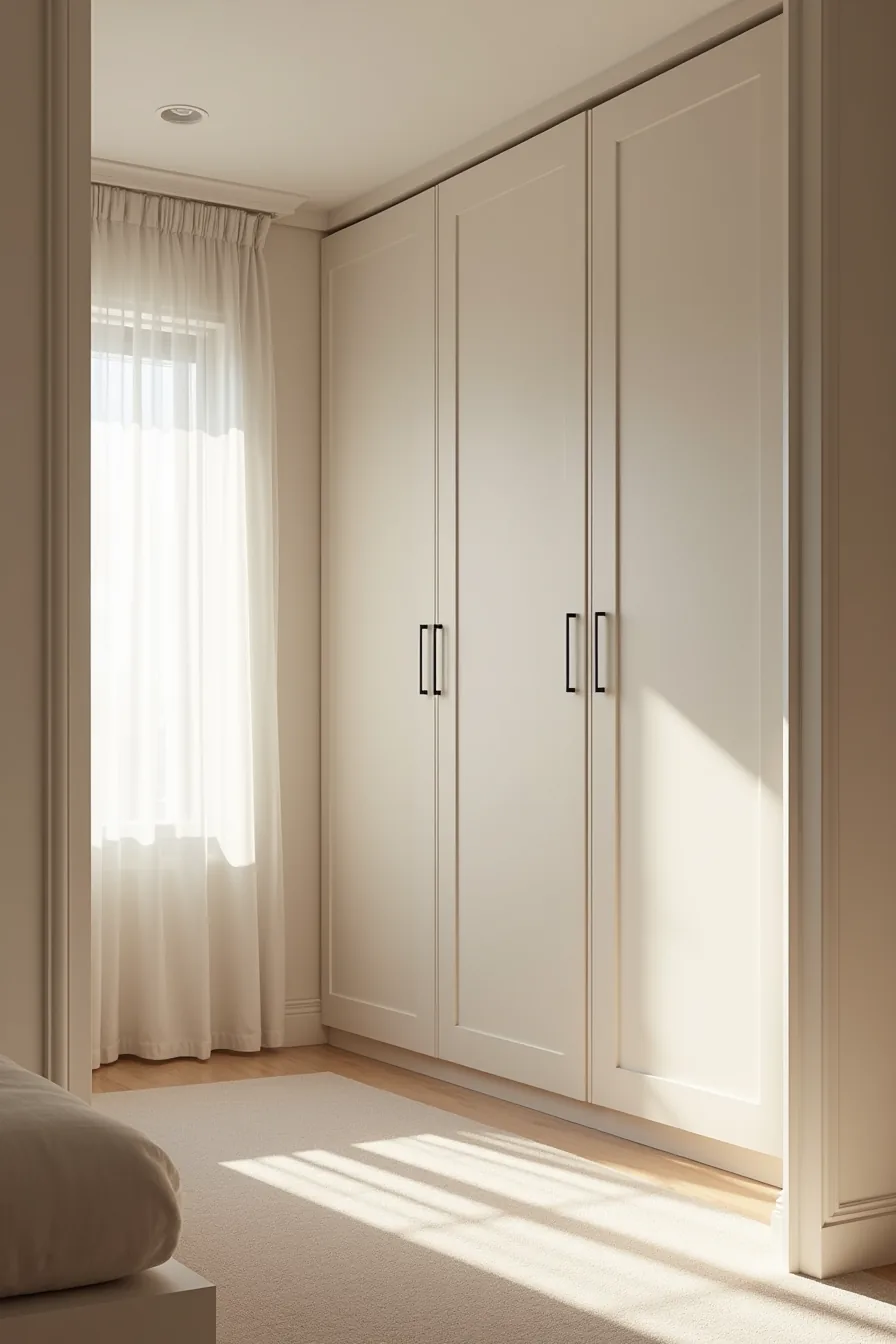
The flat-pack unit on the left is your budget route: expect to spend $200–$600 for a 60–72 inch wide wardrobe, and plan for 4–6 hours of assembly with a cordless drill. It reads as luxury if you replace the included plastic cam locks with brushed brass or matte black magnetic catches, and match the wall color behind it to the unit’s finish so the bulky depth disappears. This works best in a small bedroom where you need storage now and the unit stays put for 3–5 years; the melamine edge banding will chip if you move it more than once, so treat it as semi-disposable.
The semi-custom wardrobe on a low platform base is your rental-friendly middle ground. You buy a quality carcass from a specialist supplier at $1,500–$3,500, but skip permanent wall attachment, the base lifts the unit 4 inches off the floor, hides uneven rental carpet, and protects the wall from screw damage. You can take the whole structure with you, and the platform base adds visual weight that mimics a built-in.
Choose this route if you’ve a medium to large space, plan to stay 2–4 years, and want to reclaim resale value later.
The built-in integrated wardrobe is the long-term investment: $4,000–$10,000 installed, with a 2–3 week lead time for custom measurements and millwork. It becomes part of the wall, no gap, no base visible, and you gain smooth floor-to-ceiling height that flat-packs can’t achieve. You’re paying for the installation labor and the precise joinery that eliminates the shadow lines you see on freestanding units.
This suits a large primary bedroom where you intend to stay 7+ years, and it adds tangible resale value if the design is neutral enough to outlast your personal taste.
All three routes share one non-negotiable: keep the visual height consistent. The flat-pack, semi-custom, and built-in units shown together read as cohesive because their top edges align at the same height. Measure your ceiling clearance first, most standard wardrobes run 70–84 inches tall, and verify your room has at least 36 inches of clear floor space in front of the doors for comfortable opening and circulation.
Where to start
Walk into your bedroom and stand where the wardrobe will live. Measure the wall, the ceiling height, and the door swing, that takes five minutes and prevents the most common sizing mistakes.
Decide your route first: paint or peel-and-stick for renters, modular units for budget builds, or made-to-measure joinery for long-term owners. That choice narrows every material and finish decision that follows.
Then take one action today: sketch your layout on graph paper with door and window positions marked. A ten-minute drawing saves you from ordering a piece that blocks your light or leaves you unable to open drawers fully.
Frequently Asked Questions
What’s the difference between a modern luxury wardrobe and a standard bedroom closet?
A standard closet is a functional recess with a rail and shelf. Modern luxury design treats storage as architecture: full-height panels, integrated lighting, soft-close hardware, and curated materials that match your room’s finish, not just utility.
Can you achieve wardrobe design bedroom modern luxury in a small bedroom under 120 square feet?
Yes, but scale down. Use a single 24-inch-deep sliding-door unit, mirror fronts to double visual space, and skip internal drawers. Built-in lighting and flush handles deliver the luxury feel without consuming floor area.
How much does integrated lighting add to the cost of a luxury wardrobe?
Expect a 15–30% increase over unlit cabinetry, typically $300–$800 for a standard 6-foot run. Sensor strips and glass shelves cost more; simple LED puck lights under shelves stay cheaper and are DIY-installable.
Is a glass-door wardrobe harder to maintain than solid doors in a bedroom?
Yes. Glass shows every fingerprint, dust film, and smudge, requiring weekly cleaning with a microfiber cloth and streak-free spray. Solid matte or lacquered doors only need monthly dusting and hide daily clutter better.