A luxury sofa bed isn’t a single product but a set of design decisions, upholstery grade, mattress depth, and frame mechanics, that let you swap a guest room for a living space without sacrificing comfort. The real work begins when you match those decisions to your room’s dimensions, your guest’s height, and your tolerance for daily setup. The six approaches below range from a $900 renter-friendly fold-out to a $4,000 heirloom-grade sleeper, each with the specific measurements and maintenance trade-offs you need before you buy.
Key takeaways
Daily-use sofa beds need a real mattress core (at least 10–12 cm thick) and a fold-out or click-clack mechanism rated for 300+ opens, not a thin foam fold-out. Compact rooms under 2.5 m in width should use a 140–160 cm wide sleeper with a chaise that pulls out, leaving a 90 cm walkway when opened. Renter-friendly luxury means modular pieces with slipcovers and no fixed hardware, think a two-seat frame with a separate pull-out ottoman that doubles as the mattress base. Investment-grade models cost 2–3× more upfront but use kiln-dried hardwood frames and high-resilience foam that hold shape for 10+ years, while budget options need replacing every 3–4 years.
The High-Performance Sleeper: Luxury Sofa Bed for Daily Use
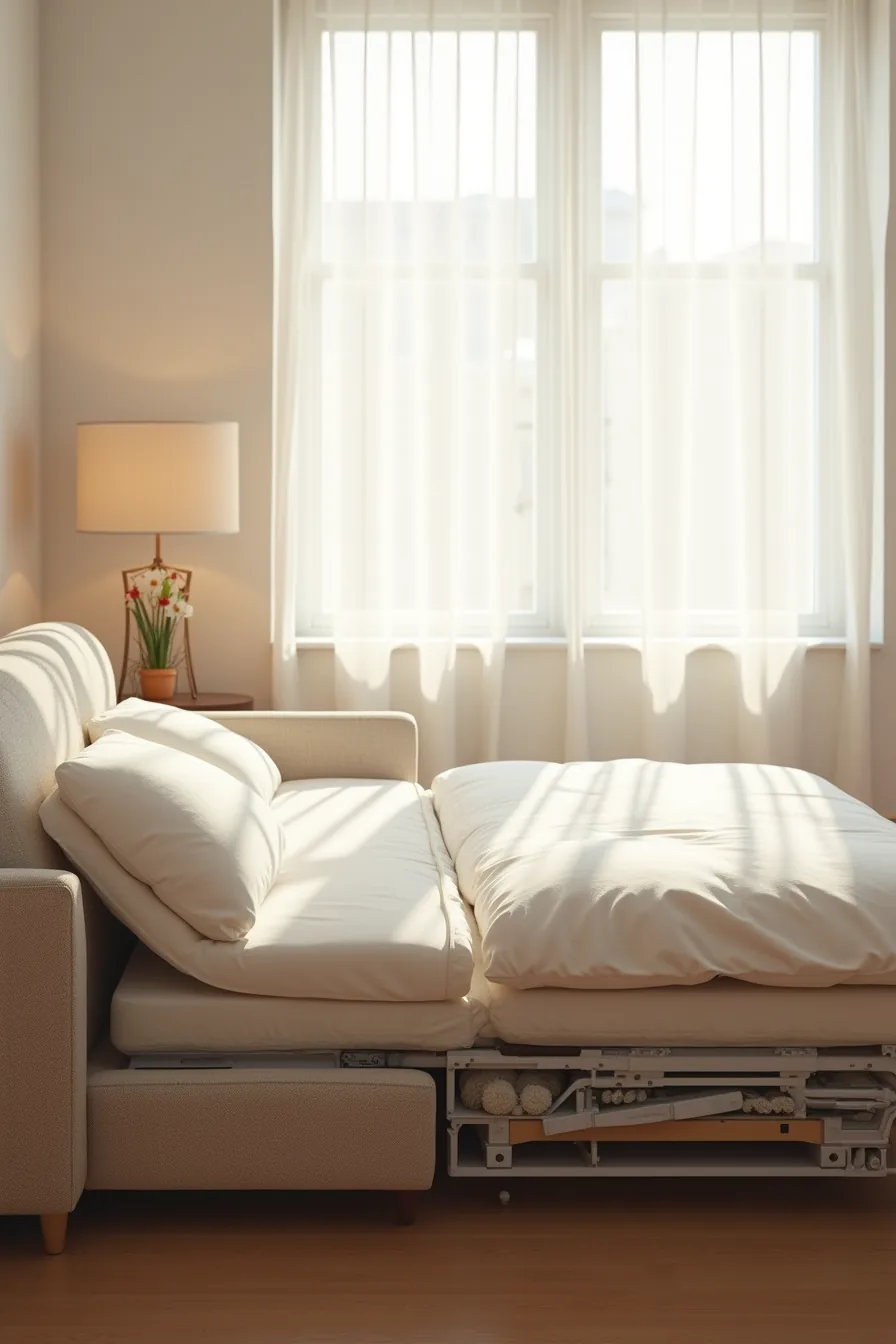
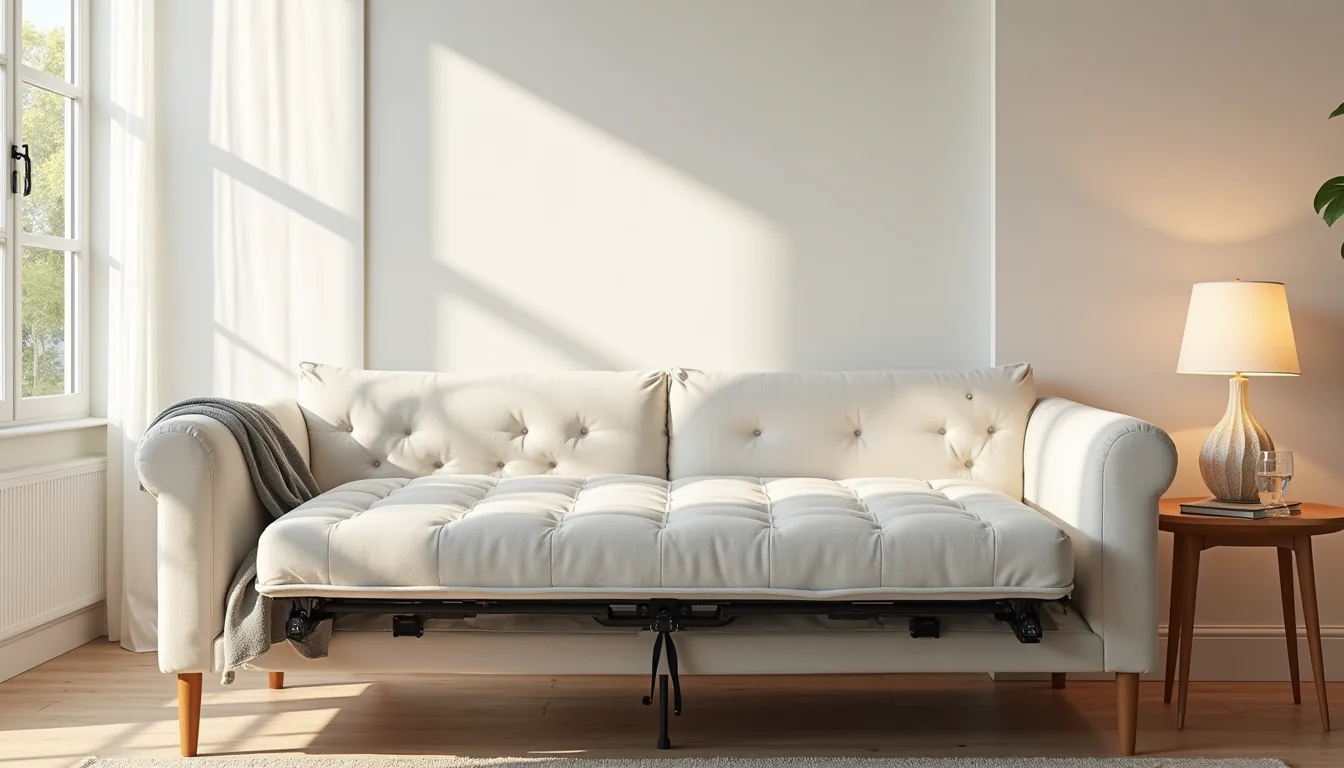
If you plan to host guests three or more nights a week, the mattress is the entire decision. A luxury sofa bed for daily use hinges on a high-density foam core, look for at least 2.5 pounds per cubic foot, paired with a steel support mechanism that doesn’t sag mid-span. The exposed cross-section reveals exactly what separates a nightly sleeper from an occasional nap spot: layered foam (a firm base for sitting, a softer top for sleeping) over a slatted metal frame that distributes weight evenly.
Choose this route if your living room doubles as a guest suite and you prioritize wake-up comfort over a feather-soft seat. The trade-off is weight and cost: expect the unit to run heavier and 20-40% pricier than equivalent sofas with thin fold-out mattresses. Sofa vs sleep comfort is a genuine tug-of-war here, so test the sitting depth while the bed is deployed, if you sink below two inches when seated, the foam is too plush for nightly use.
Maintain the mechanism with annual hinge lubrication, and rotate the mattress layers every six months to prevent permanent body indentations.
Scaled for Compact Rooms: Luxury Sofa Bed in Small Spaces
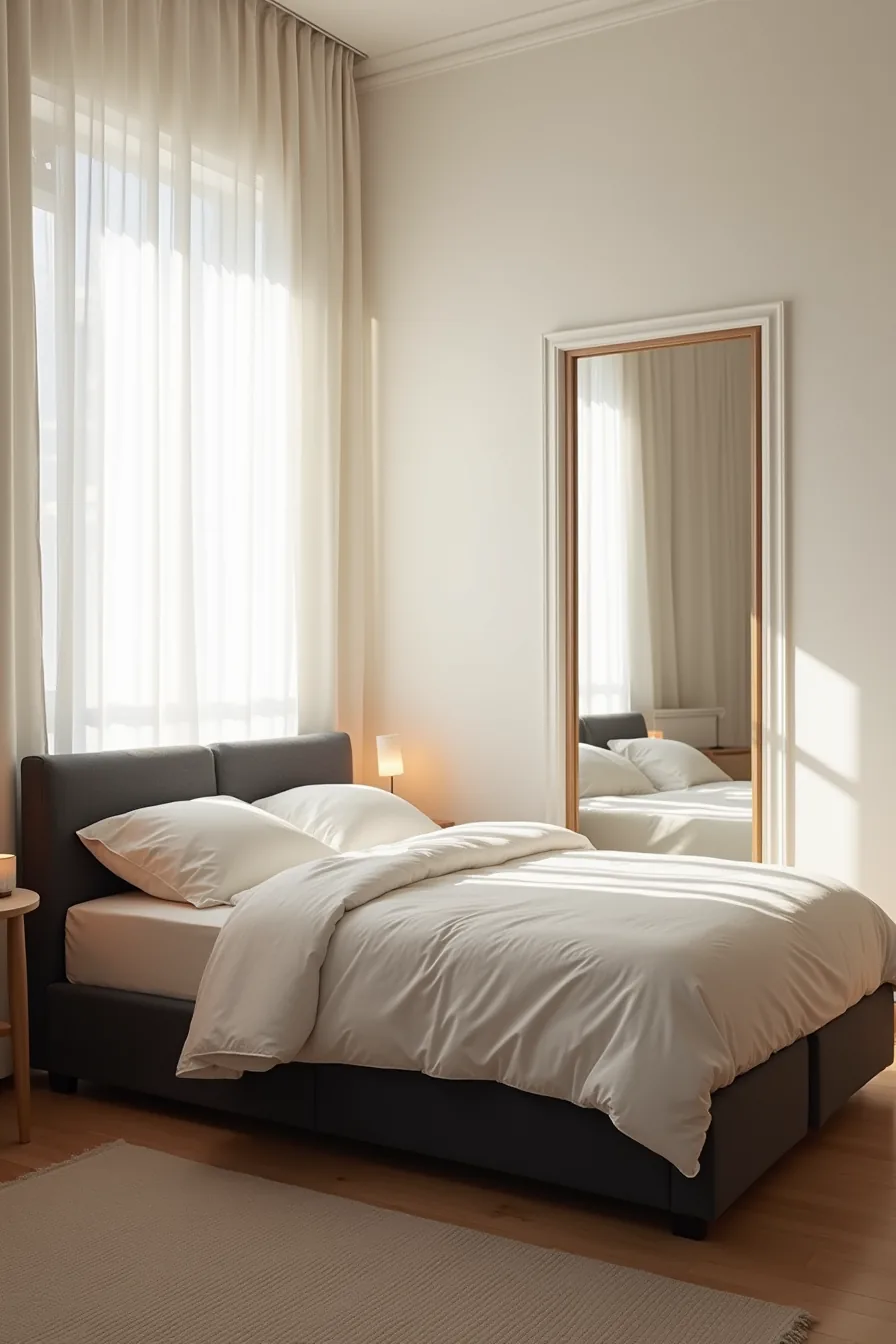
In a studio or one-bedroom, the full-extension clearance matters more than the mattress. Measure your doorway and hallway width first, most interior doors run 28–32 inches, but a sofa bed’s folded frame can exceed that. You need at least 2–4 inches of spare width on each side for maneuverability, so bring a tape measure to account for baseboards and corner turns before you commit.
A 72-inch charcoal model placed against the wall leaves roughly 18–24 inches of walking space when fully extended, which suits rooms where the bed becomes the floor plan’s centerpiece. Keep the window behind it unobstructed to preserve natural light, and angle the narrow doorway clear of the mattress footprint so morning trips to the bathroom don’t require climbing over bedding. A compact sofa bed with a click-clack mechanism, rather than a pull-out, saves up to 6–8 inches of depth, though it typically sleeps firmer.
Skip oversized armrests; they eat visual space without adding function. An opening-space check of your daily walking paths, not just the bed’s deployed length, prevents that cramped, furniture-dominated feel small rooms are prone to.
Renter-Friendly Luxury: Modular and Temporary Solutions
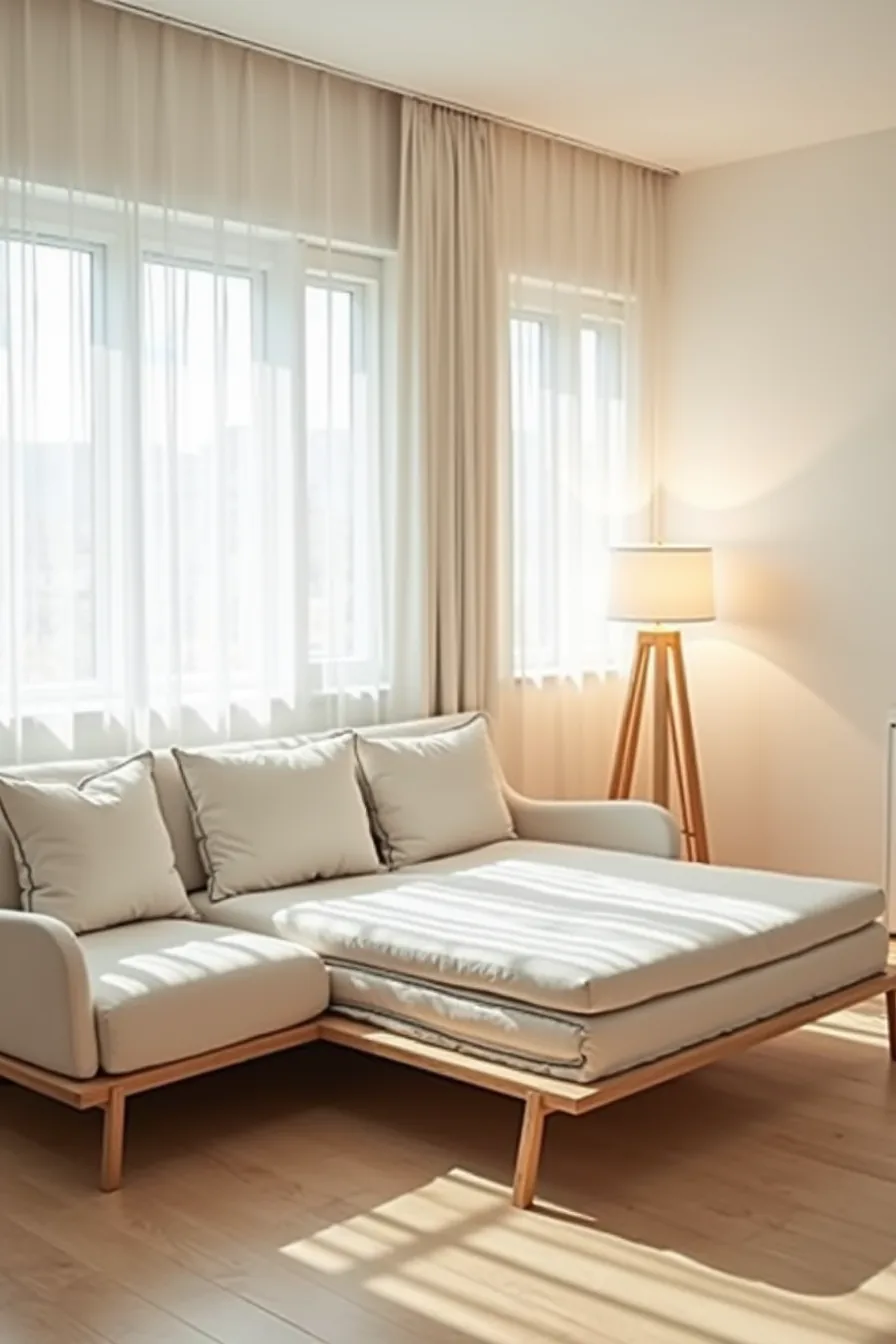
Modular sections give you a luxury sofa bed without a single permanent anchor point. Each piece stays light enough to carry solo, and removable legs let you reconfigure the whole setup in under five minutes. That flexibility suits furnished rentals, apartments with strict deposit rules, or anyone who moves every few years and refuses to haul a heavy pull-out frame up another stairwell.
Stack the modular sections near the wall during the day, with removable legs grouped alongside and loose cushions arranged for seating. When guests arrive, rearrange the sections into a flat sleeping surface, no tools, no wall mounting, no holes. The light wood floor keeps the aesthetic airy, which compensates for the slightly lower back support these modular frames provide compared to fixed sofas.
Expect to spend $600–$1,200 for a set that reads as genuinely luxurious rather than dorm-room basic. If you’re working with a budget, buy two matching armless sections first and add a third later; the system still functions as both sofa and bed mid-build.
Luxury Sofa Bed Ideas for Home Office Conversions
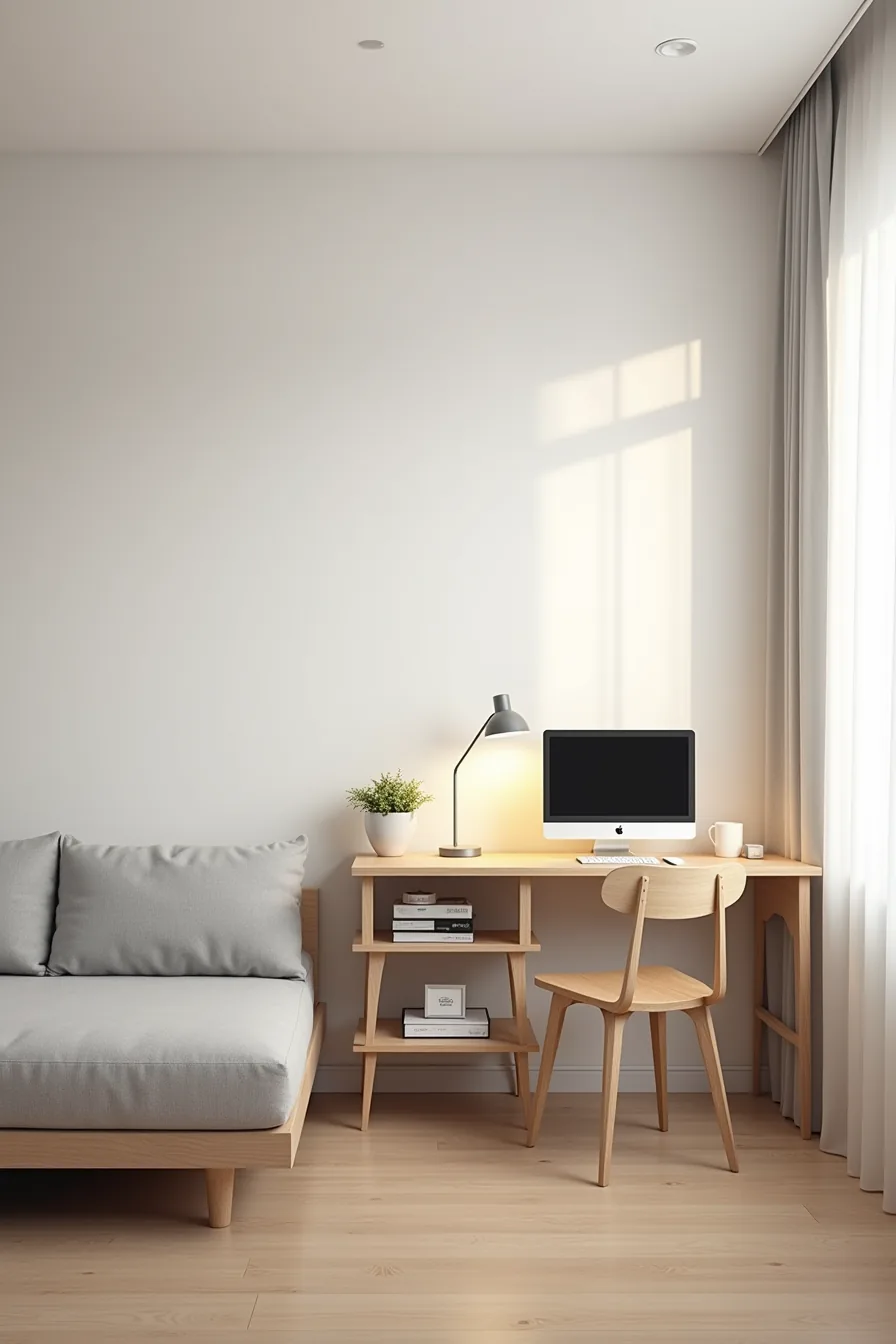
A gray sofa bed transforms a home office into a functional guest room without sacrificing your workday setup. Place the desk with monitor against the opposite wall, and let a low shelving unit act as a visual and physical divider between work and sleep zones. That shelving holds office supplies within arm’s reach of the desk while creating a distinct boundary that signals “work ends here” to your brain and your overnight guests.
Choose a sofa bed with a chaise on the same side as your desk’s dominant hand, right-handed workers want the chaise on their left to avoid bumping the mouse arm during focused sessions. Performance fabrics like Crypton or Sunbrella resist the dust and ink smudges that office environments generate; expect to vacuum the seating weekly and spot-clean monthly. A pull-out mechanism beats a click-clack frame here because you can keep the desk fully operational while the bed deploys, and the sleeping surface sits at a proper mattress height rather than hip-level.
Most compact office layouts work best with a 68–72 inch sofa bed, leaving 30 inches of clearance behind the desk chair and 18 inches beside the shelving unit for traffic flow.
The Investment Piece: Premium Materials and Long-Term Value
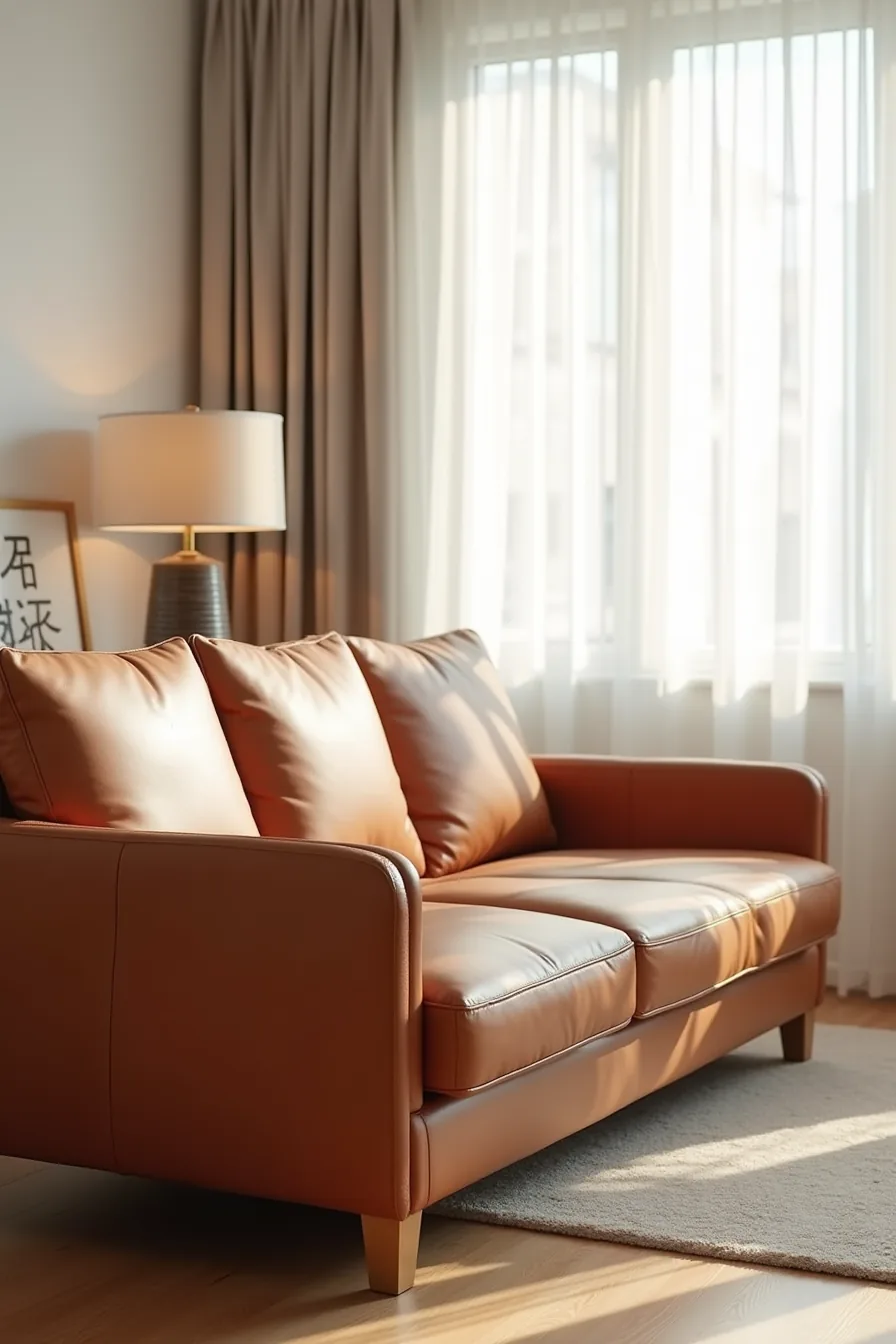
When you step up to the $2,000–$5,000 tier, you’re paying for a frame and suspension that will outlast three cheaper sofas. A kiln-dried hardwood frame, typically maple, birch, or beech, resists warping and joint failure for a decade or more, while an eight-way hand-tied coil suspension maintains its support without the sagging you’ll feel in a sinuous-spring model after year three.
Cognac leather in a full-grain or top-grain grade develops a rich patina over 8–10 years, with visible stitching detail signaling a hand-finished edge rather than a glued seam. Budget a yearly conditioning treatment (roughly $30–$60 in product) and expect the hide to soften and darken naturally; scratches from pets or keys often buff out with finger pressure alone. A hardwood frame edge at the base, left exposed as a design detail, also serves a practical purpose, it’s easier to repair or replace a damaged corner than reupholster an entire piece.
This route suits a primary living room where the sofa bed works daily, not just for guests. You’ll sacrifice the ability to swap styles every few seasons, but your per-use cost drops dramatically against a $500 replacement cycle.
Opening-Space Check: Circulation and Functionality Planning
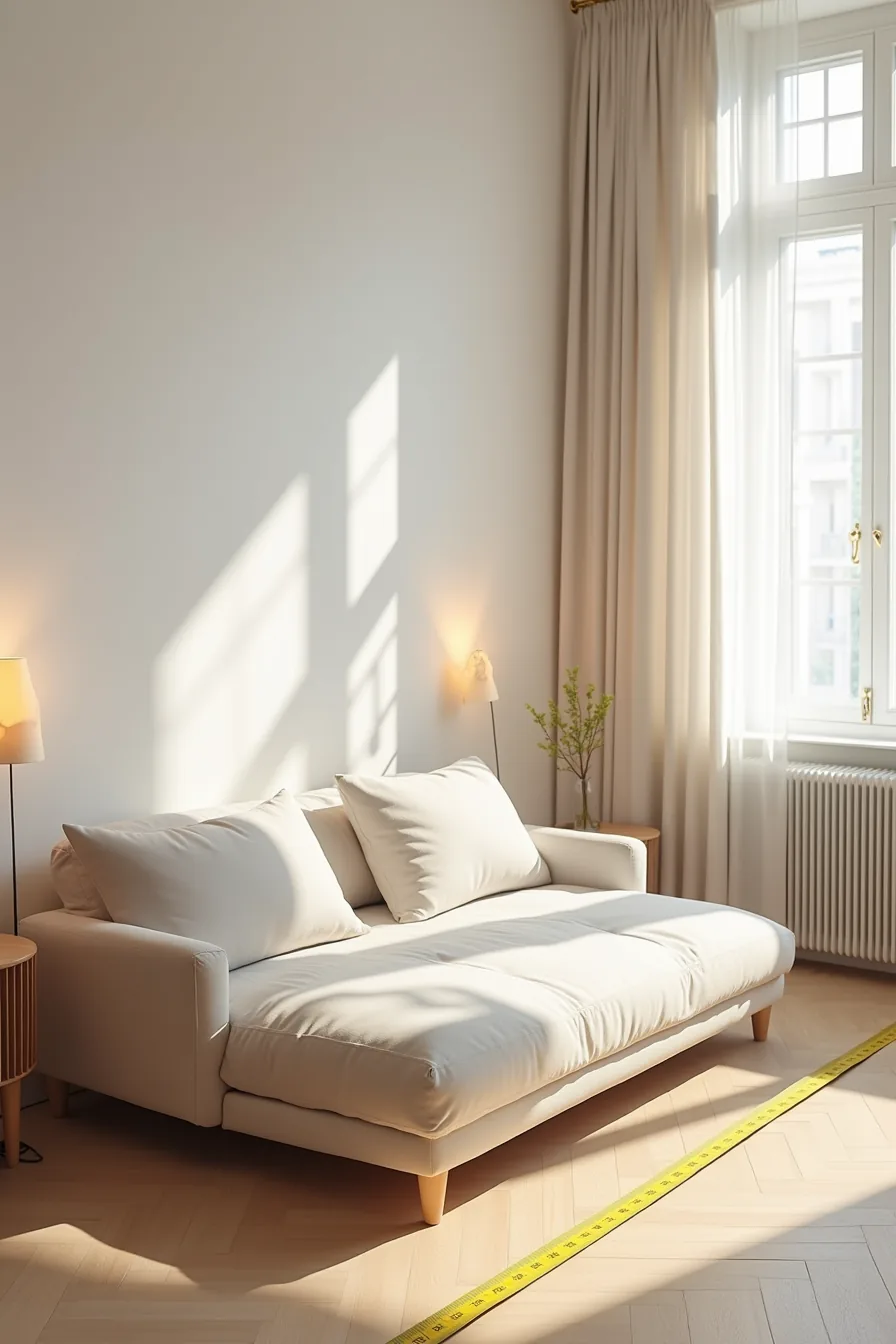
Before you commit to a layout, measure the room’s actual walking paths, not just the perimeter. Pull the sofa bed fully open during your planning phase, most mechanisms extend 70–80 inches from the backrest, and confirm you’ve at least 24 inches of clearance around all three exposed sides. In a tight space, that means the foot of the bed will sit 30–40 inches from the opposite wall, which still allows a person to pass sideways without climbing over furniture.
Use a measuring tape to trace the arc of the mechanism’s swing or pull-out track, since some models require 12–18 inches of extra floor space just to deploy. Position the piece so the fold-out side faces the room’s center, keeping the radiator and open doorway fully accessible. A sofa bed that blocks a heat source or egress route fails as a functional piece, regardless of how it looks, test the clearance with the bed extended and the room’s door swung fully open before you finalize placement.
Your Decision Checklist
Before you buy, verify three things: the mattress thickness (aim for 6-10 inches for daily sleeping), the fold mechanism’s durability (test it 10 times in-store), and the clearance behind the sofa when reclined. Measure your doorways, stairwells, and elevator access, many full-size sofa beds won’t fit standard 30-inch interior doors without disassembly.
Match the investment to your use case. For weekly guests, a mid-range piece with a replaceable mattress works. For daily sleeping, allocate budget for a higher-density foam or innerspring unit with a warranty of 5+ years.
Your next step: Measure your room’s length and width tonight, then compare those numbers against the fully extended dimensions of your top three candidates before you browse another showroom.
Frequently Asked Questions
What’s the difference between sofa vs sleep comfort when choosing a luxury sofa bed?
Sofa comfort prioritizes firm seat depth and supportive backrests for daily lounging; sleep comfort requires a flat, cushioned mattress surface without bar gaps. Most luxury models compromise, test both positions for 10 minutes before buying.
Can a luxury sofa bed work as a guest-room alternative in a small apartment?
Yes, if you choose a click-clack or wall-hugger mechanism that folds flat without pulling forward. Look for a queen size under 36 inches closed depth. Keep the surrounding floor clear for mattress deployment.
How do I know if a luxury sofa bed will fit through my doorway?
Measure your doorway width, hallway turns, and stairwell clearance first. Most sofa beds range 32–40 inches wide when closed, but arms and legs add 2–4 inches. Request the manufacturer’s shipping dimensions and compare against your tightest point.
What maintenance does a luxury sofa bed require, and how often?
Vacuum upholstery and crevices weekly; rotate and flip the mattress every 3 months. Lubricate the folding mechanism twice yearly with silicone spray. Clean spills immediately with a fabric-safe solution, professional deep cleaning is recommended every 12–18 months for high-use pieces.