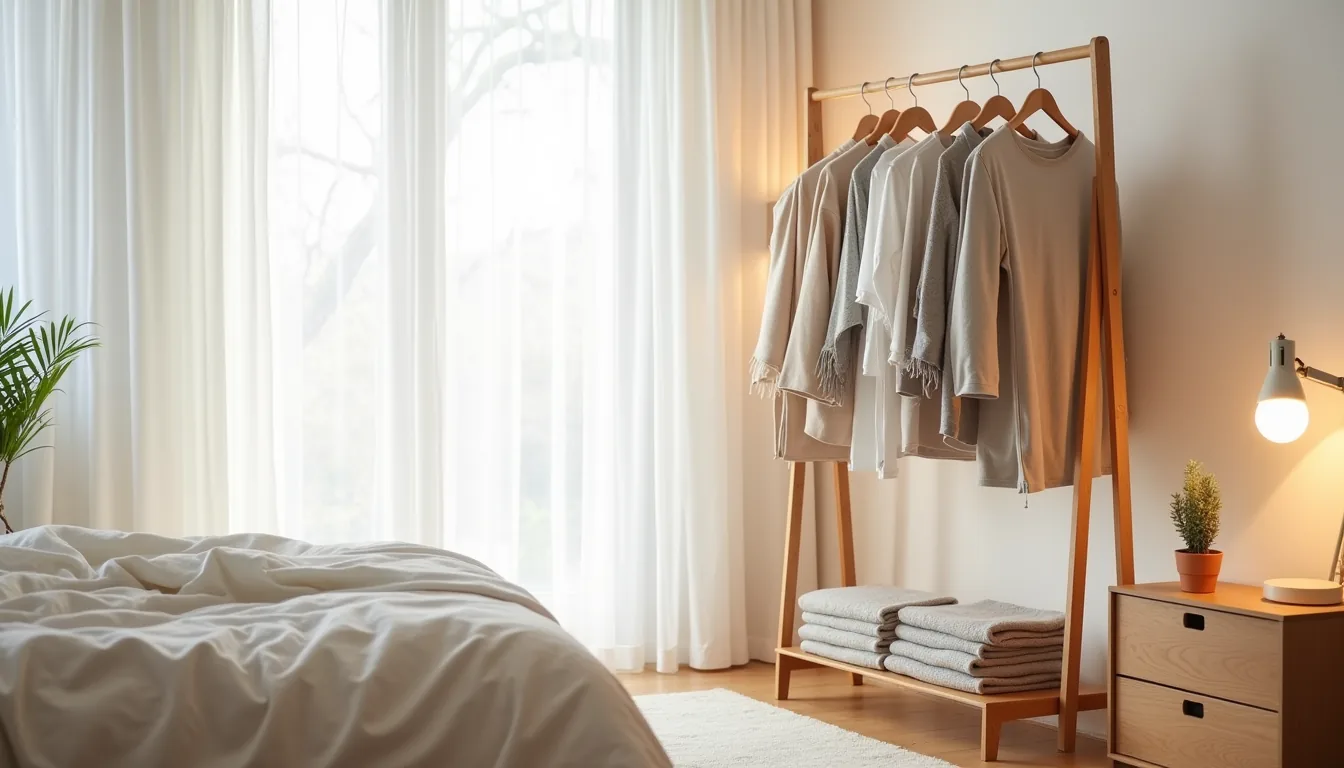
An open wardrobe replaces the closed closet with a visible system of rails, shelves, and hooks, and it works best when you treat it as a design feature rather than a storage afterthought. Done well, it cuts morning decision time by displaying your options at a glance, but done poorly, it broadcasts clutter. The difference comes down to a few non-negotiable rules about proportion, airflow, and what you actually hang.
Below are six proven layouts, each matched to a specific space and budget, plus the exact measurements and maintenance trade-offs you need before committing.
Key takeaways
- An open wardrobe works best when you commit to a color-coordinated clothing palette that looks intentional on display rather than chaotic.
- Hang only 30–40 of your most-worn items on a freestanding rail, keeping seasonal pieces stored elsewhere to prevent visual overload and dust buildup.
- Use a tension rod with floor-length curtains for a renter-friendly option that hides clutter without drilling holes or altering walls.
- Measure your room for at least 24–30 inches of clear walking space in front of any open storage, ensuring the display doesn’t block daily traffic or airflow.
Open Wardrobe vs Closed Closet: When Display Works
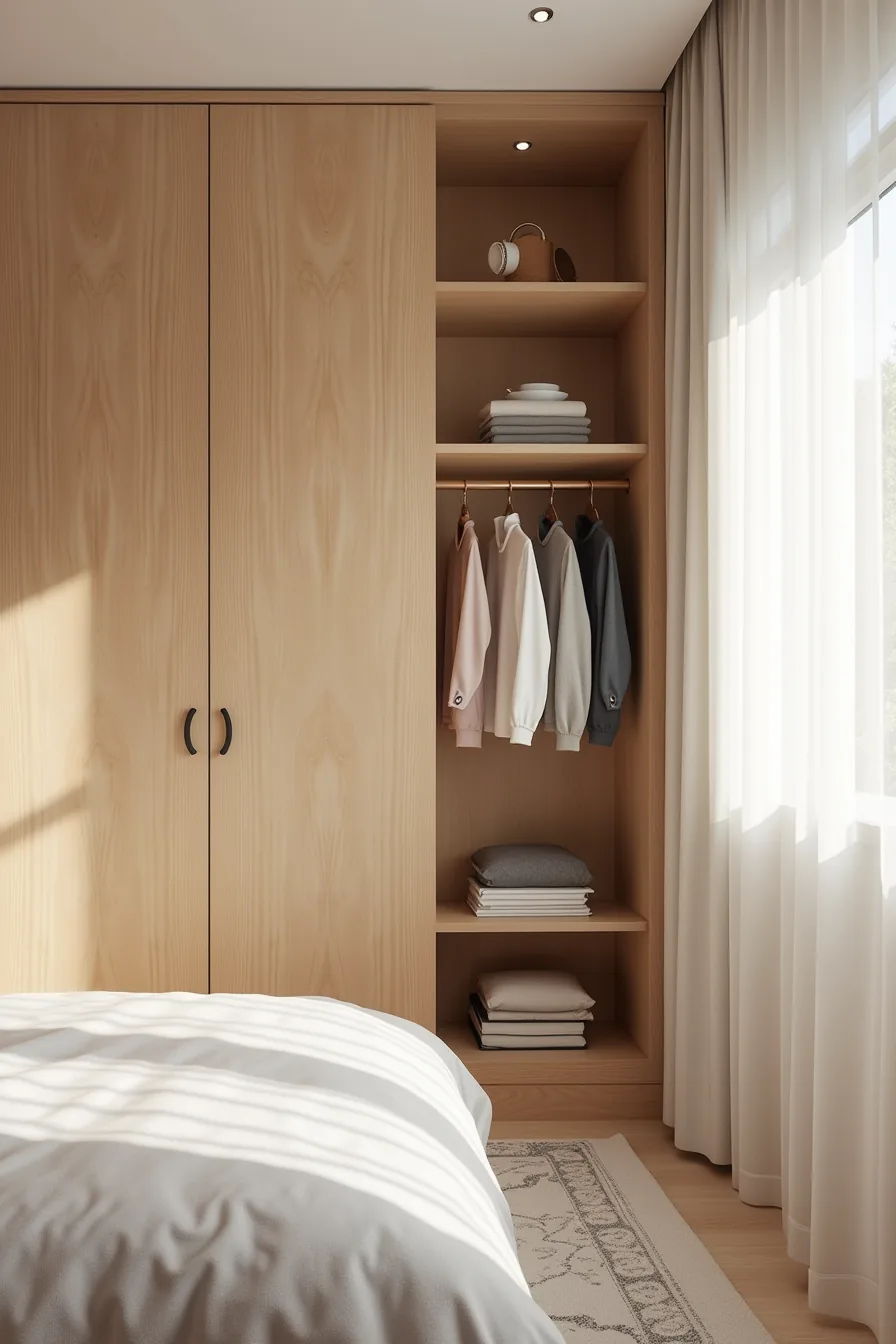
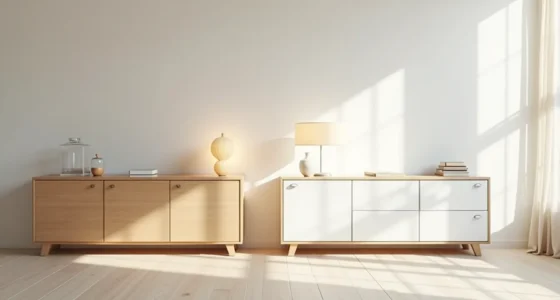
The split-frame example, solid wood doors on one side, an open hanging rod with stacked shelves on the other, shows the real trade-off in a single bedroom. What changes isn’t the space, but how much you’re willing to manage daily. An open wardrobe vs closed closet decision comes down to three factors: your tolerance for visible mess, your dust situation, and how often you actually rotate your clothes.
Open storage wins when you wear most of what you own within a two-week window. If you routinely grab the same five items and ignore the rest, display forces you to confront that pattern. It also suits rooms with high ceilings and good airflow, since hanging garments need circulation to stay fresh.
A closed closet remains the better call for seasonal storage, formal wear, or any room where you can’t commit to tidying a visible rail every morning.
For this to work, limit the open section to your active rotation, roughly 20 to 30 garments. Stack shelves below for folded knitwear and denim, and keep the rod at 60 to 66 inches from the floor so long coats clear the shelves beneath. If you live in a dusty area or have shedding pets, expect to wipe the rod and shelves weekly.
The Freestanding Rail: Budget-Friendly Entry Point
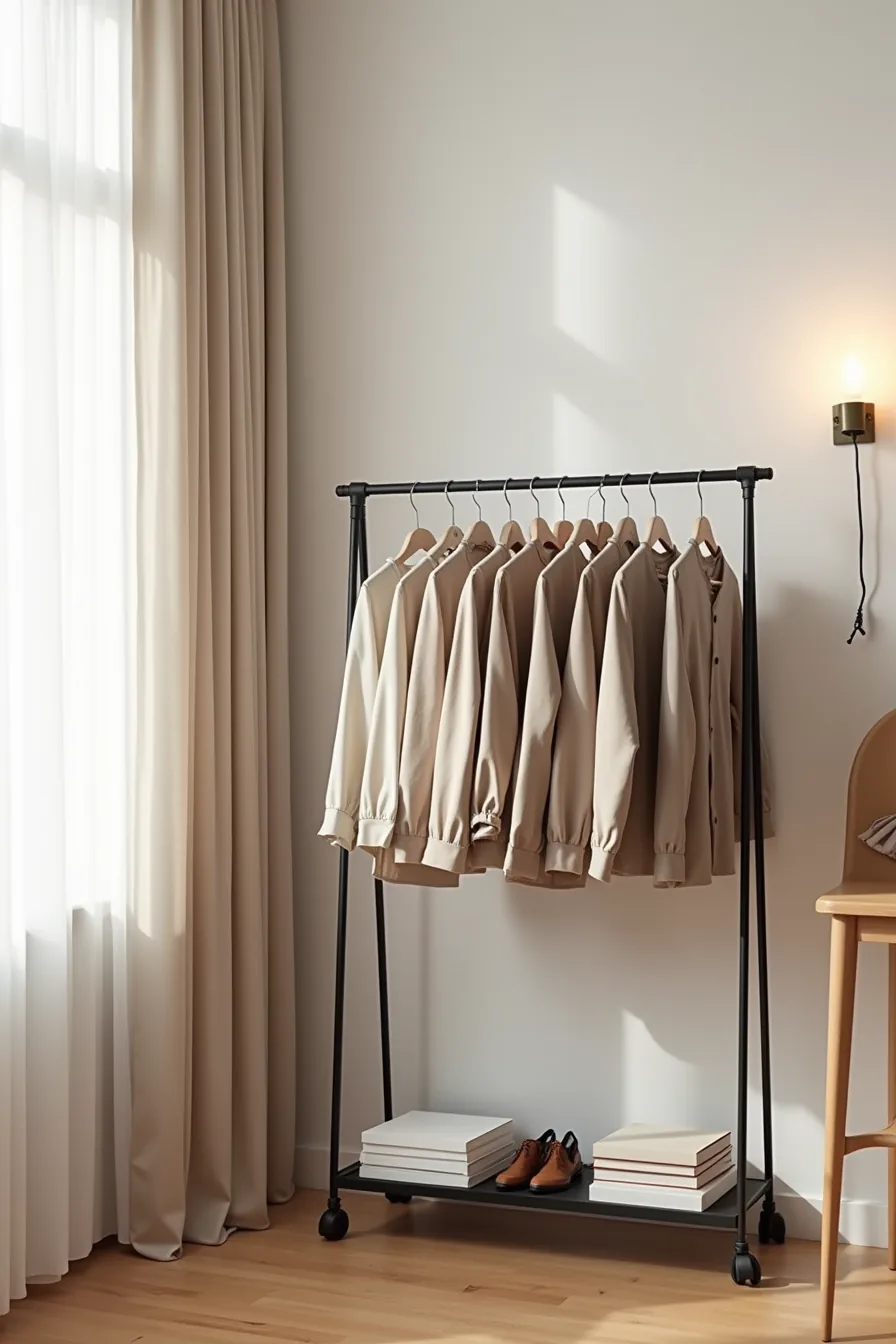
A single black metal rail with a wooden base is the least expensive way to test an Open Wardrobe without committing to construction. Most units span 3 to 5 feet wide and hold 50 to 100 pounds, which translates to roughly 20 to 30 garments depending on fabric weight. That footprint suits a corner in a bedroom or even a living-area niche where a closet never existed.
The rail works because it forces curation, you can only hang what fits, so the visible collection stays manageable. It suits renters, students, or anyone who wants to reorganize seasonally without drilling into walls, since the unit is freestanding and fully movable. Position it at least 18 inches from the wall to let air circulate behind jackets and coats, reducing mustiness in humid climates.
Maintenance is straightforward: wipe the metal frame weekly with a damp cloth, and vacuum the base monthly to catch dust and pet hair collecting under the rod. For dust control, hang items you wear daily and rotate the rest into bins. A plain black steel frame fades into the background, so your neutral-toned garments and the wooden floor beneath do the visual work, no styling effort required.
Curtain-Covered Storage: Renter-Friendly Hybrid
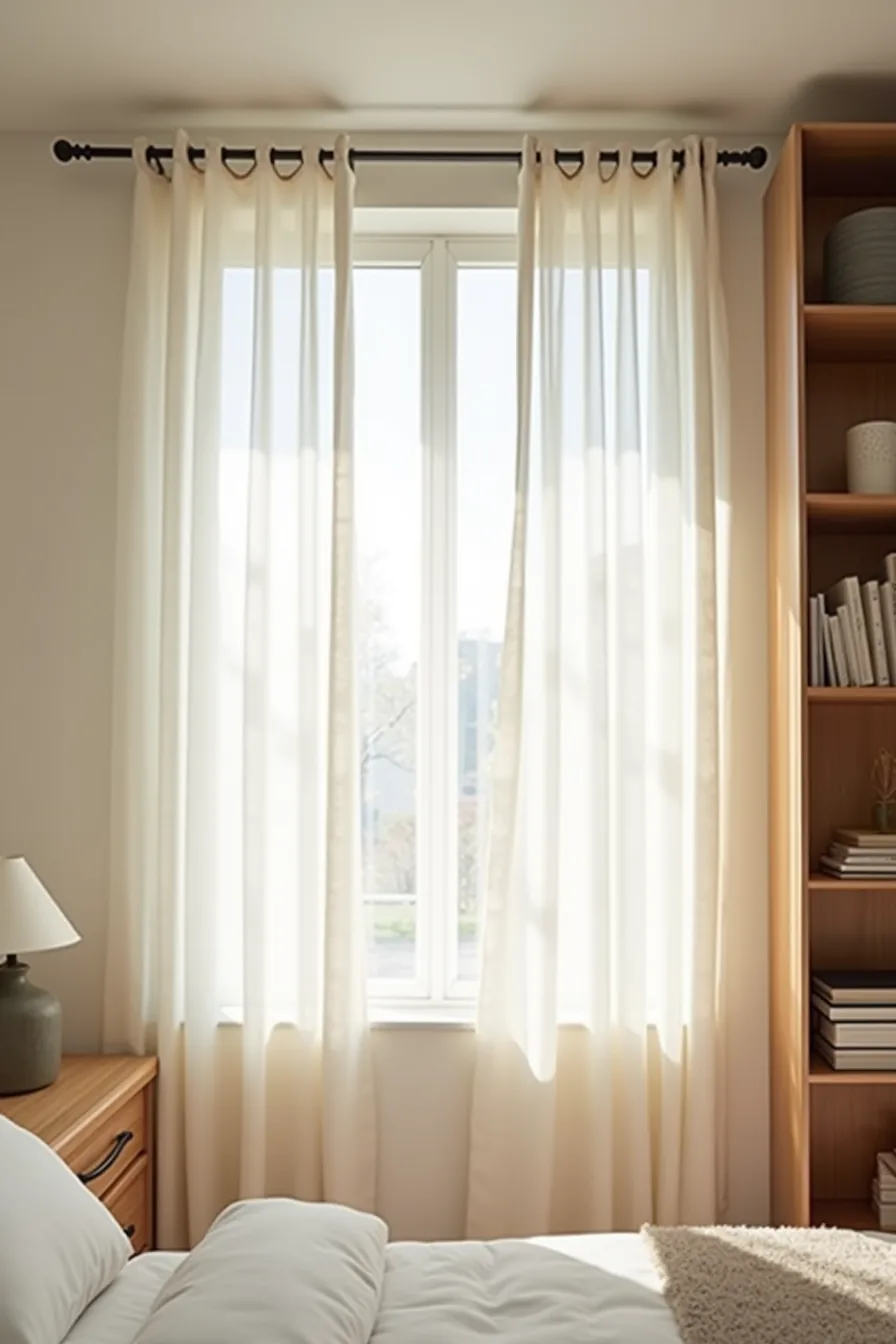
A wall-mounted rod fitted with linen curtain panels turns an open shelving unit into a flexible wardrobe you can close in seconds. The key upgrade over the freestanding rail is a tension rod mounted at the base, which anchors the fabric and prevents panels from billowing into your walking path, a common annoyance in drafty rooms. Use lightweight linen, which filters dust while still letting you glimpse color blocks behind the translucent weave, so the space reads as intentional rather than chaotic.
This setup suits renters because nothing requires drilling beyond the two brackets holding the rod, and you can remove every component without patching large holes. The fabric panels drop to within a foot of the floor, leaving the bottom shelf exposed for shoes or folded denim you grab daily. Clean the linen quarterly on a gentle cycle, and re-iron or steam it to remove creases that accumulate near the rod rings.
Built-In Open Wardrobe for Medium to Large Bedrooms
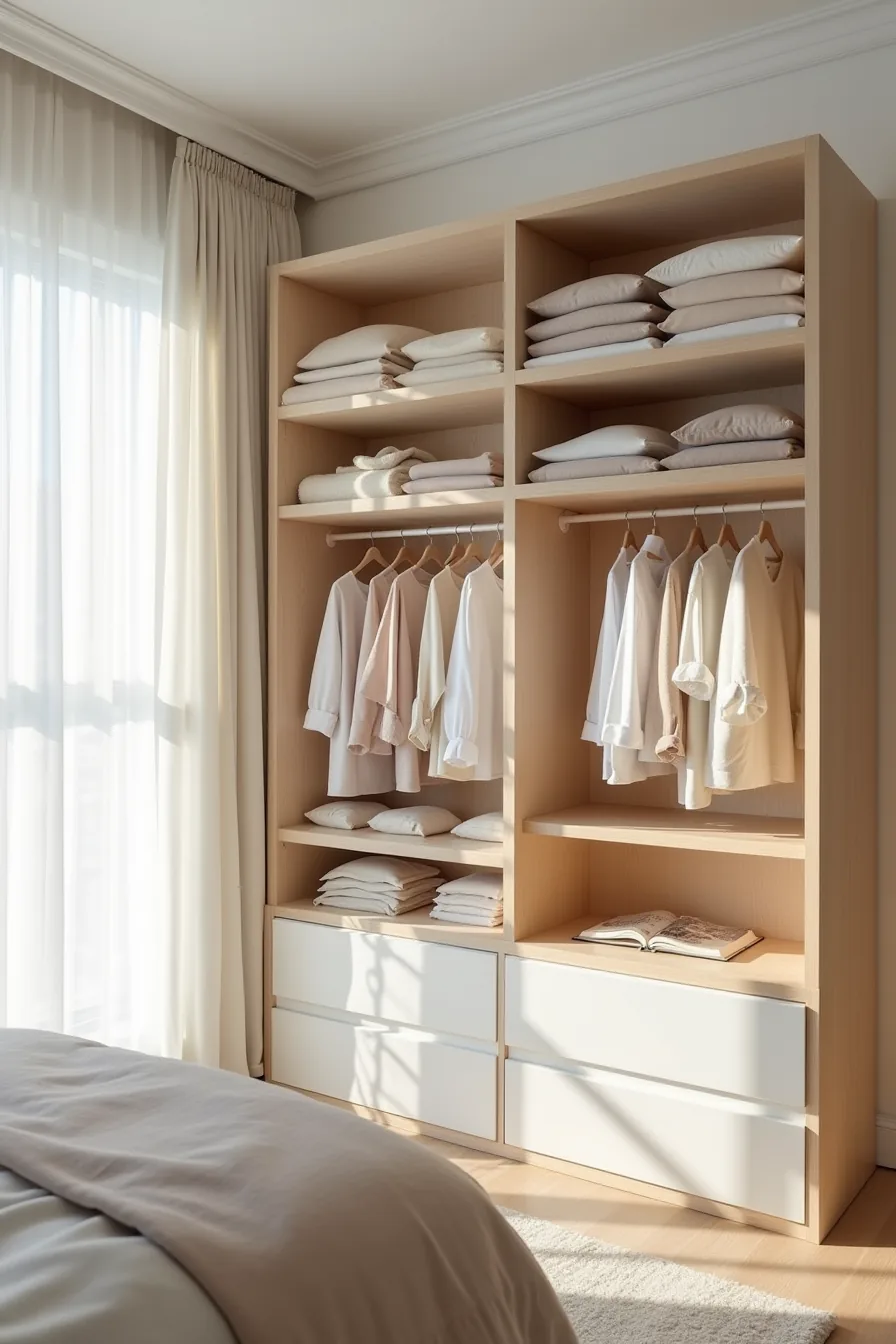
A wall-spanning built-in system converts an entire alcove or wall into a permanent dressing area, with upper open shelves for folded garments and a lower rail for hanging pieces. This configuration typically holds 30–40 garments on the rail alone, with the white painted wood frame keeping the visual weight light even at full capacity. The built-in nature means the wardrobe becomes part of the room’s architecture rather than a piece of furniture, which suits bedrooms with 10-foot-plus wall runs where a freestanding unit would leave awkward gaps.
You’ll need a carpenter or a semi-custom modular system from a supplier like IKEA or California Closets, with installation costs ranging from $1,500 to $6,000 depending on wall condition and material choices. Plan the hanging rail at 60–66 inches from the floor for shirts and jackets, and allocate 12–14 inches of shelf depth for folded stacks you can see at a glance. Proportion the display space so the upper shelves occupy roughly one-third of the total height, keeping the lower two-thirds for hanging items you access daily.
This route suits homeowners planning to stay for five or more years, as the fixed structure adds resale value but is costly and disruptive to remove.
Keep an Open Wardrobe Tidy in Small Bedrooms
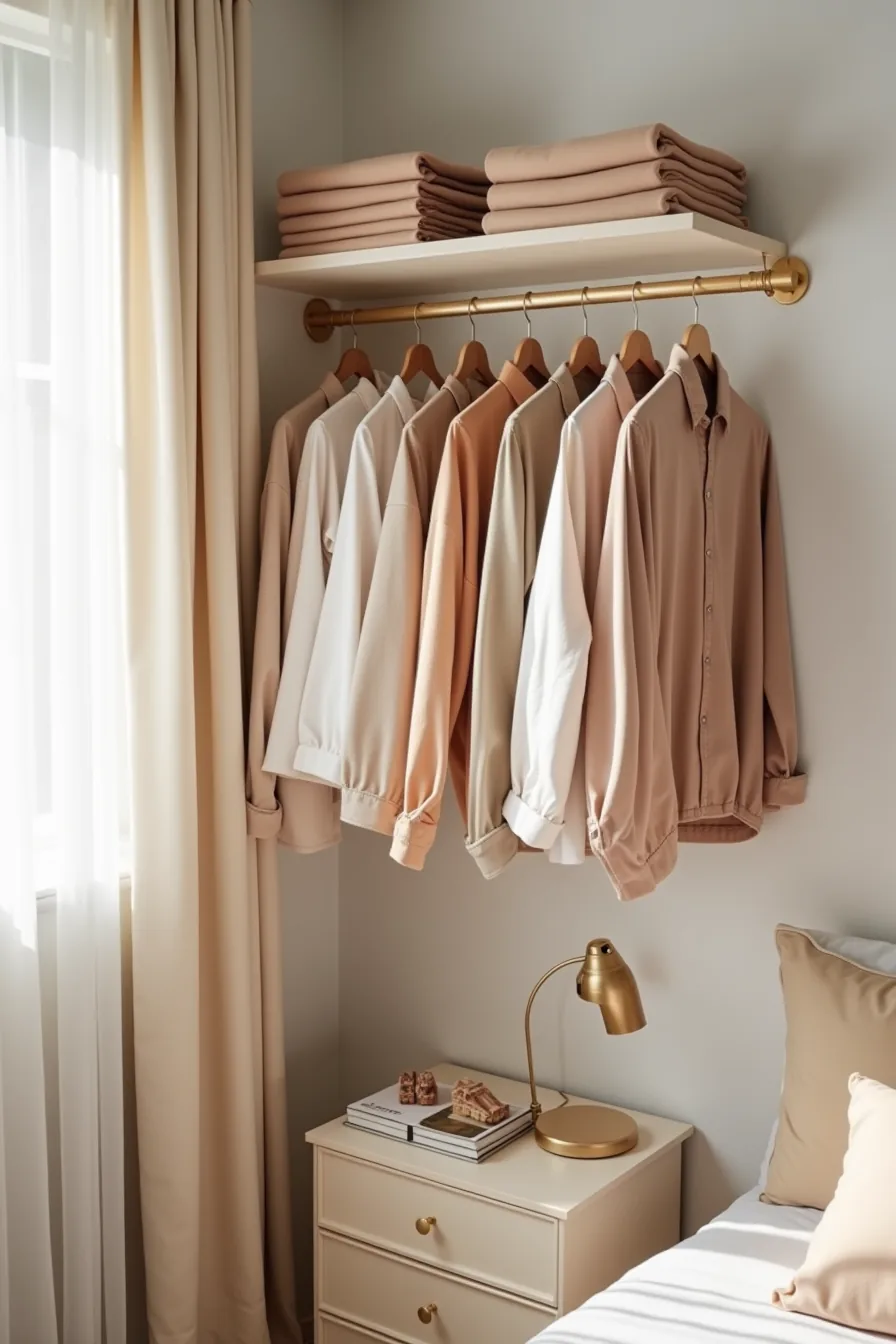
In a tight space, the discipline of editing matters more than the hardware. Restrict the rail to 15–18 garments in a coordinated palette, neutrals with one accent color, so the visual noise stays low even when everything is visible. The narrow rail in this corner setup holds only what you wear in a two-week cycle, and the single shelf above it carries just one folded stack of sweaters or jeans, capped at eight items deep.
Fold everything to the same width, roughly 10–12 inches, and stack them vertically rather than piling, so you can pull one piece without toppling the column. Keep the rail at eye level (around 60 inches) and leave 6–8 inches of clearance on either side for easy access without brushing the wall. A full-wardrobe display in a small bedroom reads as chaos; a capsule display reads as intentional.
If you own more than 25–30 items, store the off-season remainder in a vacuum bag under the bed, not on the rail. Dust settles on exposed fabric within a week, so budget five minutes twice a week to wipe the rail and shelf with a microfiber cloth.
Capsule Wardrobe Display: Curated and Intentional
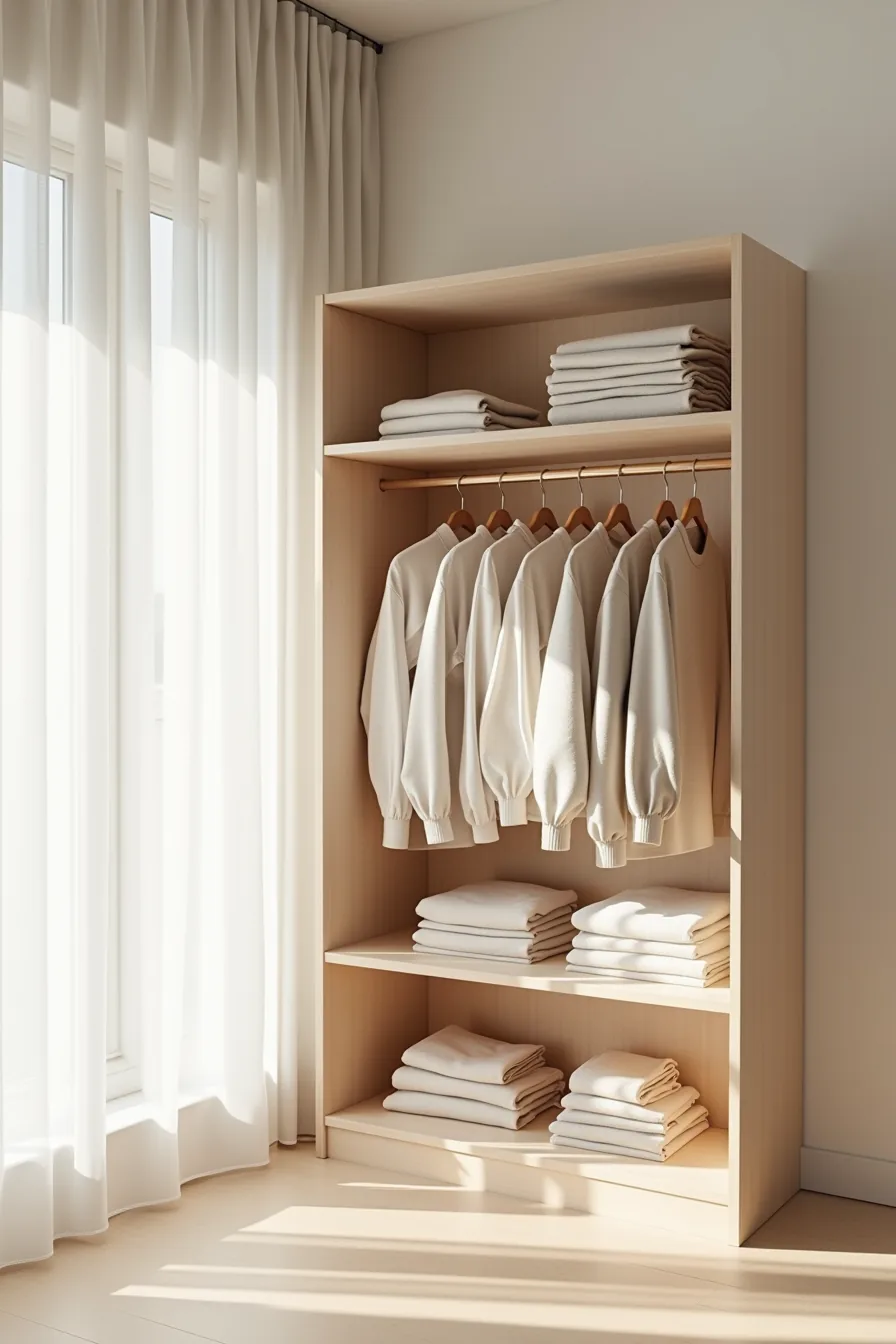
A capsule wardrobe display works when you commit to a hard number: 20–40 pieces total, including shoes and outerwear. The open shelving unit holding 25–30 selected items creates a visual rhythm because every piece earns its place, there’s no filler, only garments you reach for weekly. Folded basics in neutral shades fill the lower shelves while 8–10 hanging items (jackets, button-downs, dresses) occupy the rod above, leaving visible gaps between each category.
The gaps aren’t wasted space; they’re the design. Negative space between items tells the eye where one category ends and another begins, so the display reads as a boutique installation rather than a storage unit. This approach suits anyone who wears a limited rotation daily, remote workers, minimalists, or style-conscious professionals who prefer quality over volume.
Maintenance drops to a monthly 15-minute dusting session because fewer exposed surfaces mean less accumulated lint. Budget roughly $200–400 for the shelving unit itself, or repurpose a solid bookcase with a tension rod for the hanging section.
Your decision checklist
Before you commit, measure your available wall depth, the shallowest practical open wardrobe hangs clothes at roughly 60-65cm deep, while a shelving-only version works at 30-40cm. Check your room’s dust levels and whether you’re willing to dust shelves weekly; open storage in a high-traffic bedroom shows every fibre. Decide your budget first: a track-and-rail system with curtains costs the least, while a custom joinery unit is the long-term investment.
Start by hanging your ten most-worn items on a temporary rail for one week. If you use them daily, you’re ready to build permanent open storage around that exact habit.
Frequently Asked Questions
How do I prevent dust and odors when using an open wardrobe?
Use frequent rotation, wash worn items before storing, and add cedar blocks or silica gel. Vacuum weekly and store off-season clothes in lidded bins. Air out the space daily.
Can I use an open wardrobe in a rental apartment?
Yes, choose freestanding, wall-mounted rails or tension-pole systems that don’t require drilling. Look for renter-friendly options with adhesive hooks or adjustable tension rods. Ensure you can remove everything without leaving marks.
What’s the difference between an open wardrobe and a capsule wardrobe?
An open wardrobe is a storage system, exposed rails and shelves. A capsule wardrobe is a curated, minimal clothing collection. You can have either without the other, but they pair well: open storage suits a small, intentional capsule.
How much wall or floor space do I need for an open wardrobe system?
For a single rail, allow 24-30 inches of wall width and 18-24 inches of floor depth. For a double rail, you need 48-60 inches wide. Always add 36 inches of clear floor space in front for comfortable access.