Patterned Sofa: 6 Stylish and Practical Ideas for Your Home
A patterned sofa is a single piece of furniture that can define an entire room, shifting it from neutral to memorable without a single accessory. But the term covers far more than floral chintz, it spans geometric weaves, bold botanical prints, and subtle tonal textures that read as pattern from a distance. Each interpretation demands different care, placement, and budget, so the right choice depends on how you live, not just how it photographs.
Here are six distinct routes, each with the practical trade-offs you need before you commit.
Key takeaways
- Geometric patterns anchor modern, minimalist rooms best when the sofa’s lines are straight-backed and the pattern scale matches your wall size, large prints for open-plan spaces, small repeats for compact living areas.
- Floral sofas thrive in soft, natural-light rooms with organic textures like linen or rattan, but avoid them if your space has busy wallpaper or patterned floors that compete for attention.
- Pattern mixing works when you limit yourself to three textiles max, match at least one color from the sofa’s palette, and vary scale, say, a large floral sofa with small pinstripe pillows and a solid-toned throw.
- Budget route means buying a slipcovered sofa in a solid base and adding a patterned throw or cushion covers (under $50 total), while rental-friendly options use peel-and-stick fabric panels or a patterned rug draped over the back, and investment pieces cost $1,500–$4,000 for high-density weave upholstery that lasts 10+ years.
Geometric Patterns: Bold Structure for Modern Spaces
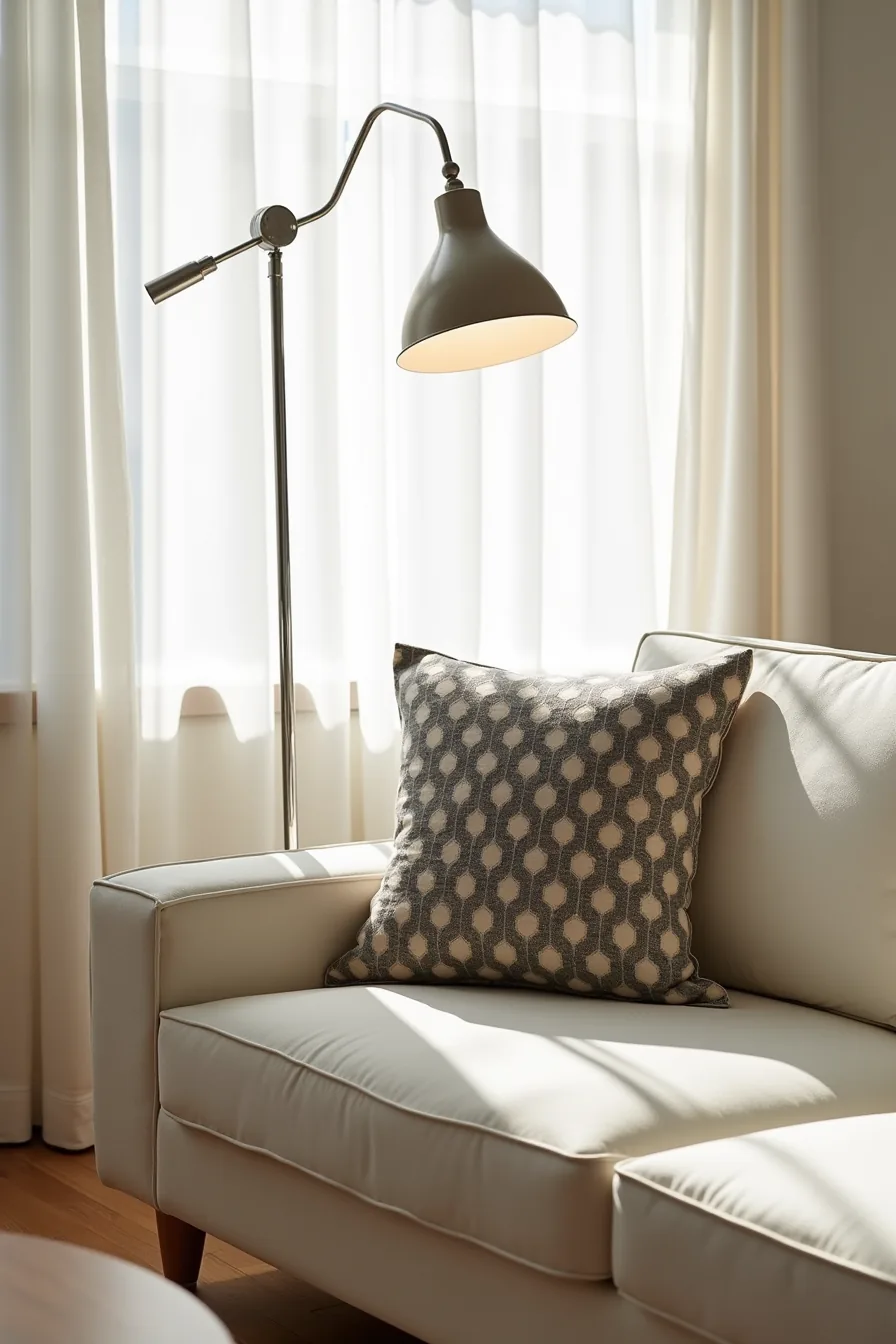
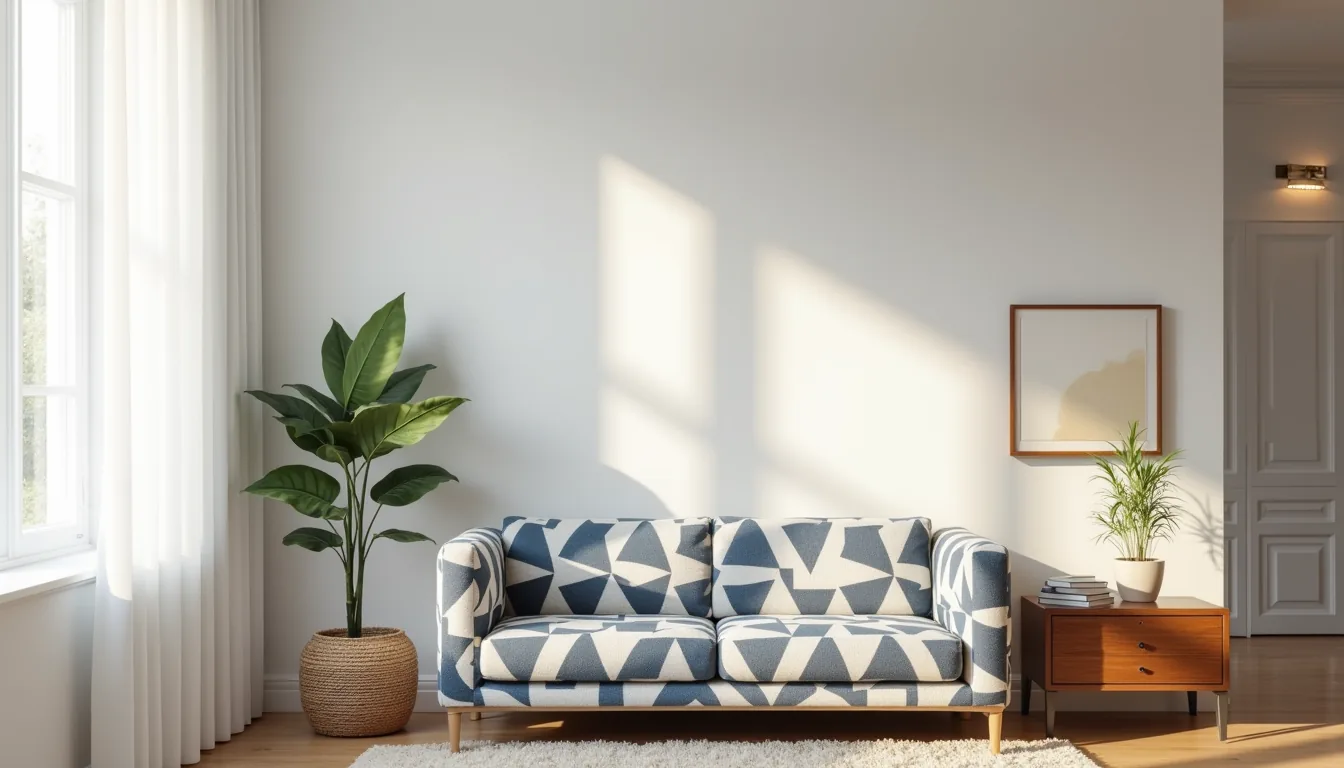
A geometric patterned sofa works because it gives a contemporary room its architecture instantly. Interlocking hexagons in charcoal and cream, like the ones on the cushion beside that minimalist chrome floor lamp, read as deliberate design rather than decoration. The high-contrast repetition anchors the space without requiring a single artwork on the wall behind it.
For scale, keep the pattern size proportional to your room. In a compact living area under 200 square feet, choose geometric motifs with a repeat of 4–6 inches; anything larger will visually swallow the seating. In open-plan spaces, you can push that repeat to 8–12 inches and pair the sofa with solid charcoal or cream armchairs to let the geometry lead.
That concrete floor grounds the look, avoid adding a second competing pattern in rugs or curtains within the same sightline. You want the pattern to act as the room’s one strong statement, backed by quiet, matte textures.
Floral vs Geometric: Which Pattern Type Suits Your Room
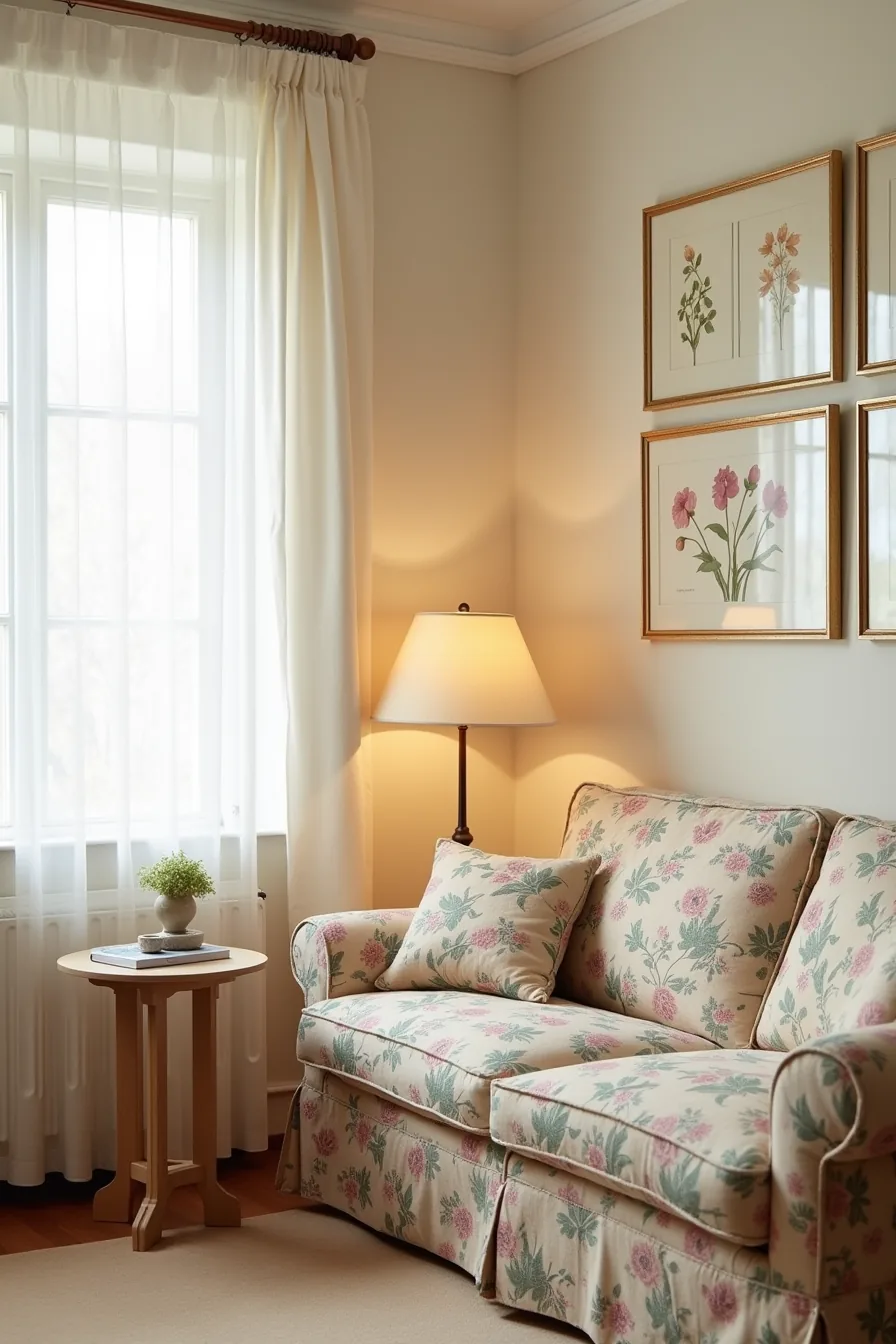
The choice between floral and geometric patterned sofa styles comes down to the energy you want the room to project. A floral pattern in rose and sage tones, like the one beside that round side table with its ceramic vase, reads as softer and more inviting than any geometric alternative. The organic, irregular spacing of blooms creates visual movement without demanding attention, it supports conversation rather than dominating it, which suits living rooms meant for lingering.
Maintenance is where the two diverge significantly. Florals hide everyday stains and pet hair far better than sharp geometrics, because the irregularity of the print disguises disruptions in the pattern. Geometrics, by contrast, expose every wrinkle and spill as a visible break in the repetition, you’ll find yourself smoothing cushions constantly.
If your household includes children or animals, the botanical prints and floral upholstery in that corner setup will age more gracefully than a high-contrast geometric would. For a formal sitting room with controlled traffic, though, the crisp precision of geometry signals intentionality that florals can’t match. Match the pattern’s temperament to your actual daily use, not your aspirational one.
Using Your Patterned Sofa as a Focal Point
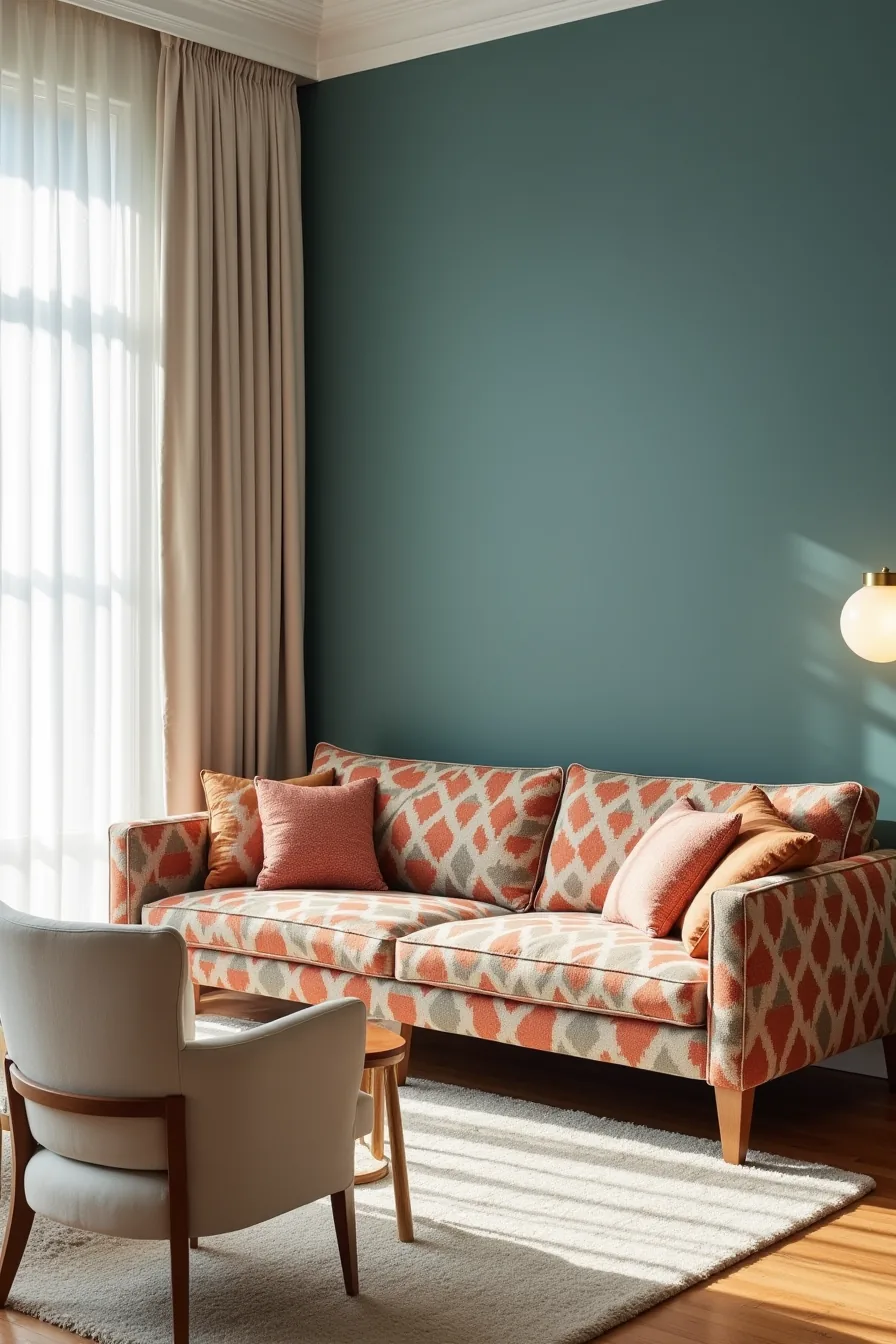
To make your patterned sofa the anchor of the room, position it dead-center against your most substantial wall, then angle secondary seating toward it rather than parallel. An ikat patterned sofa in jewel tones demands this treatment, the deep teal feature wall behind it absorbs competing color so the print’s intensity reads as deliberate, not chaotic. Paint adjacent walls a lighter neutral; a tonal backdrop lets the pattern breathe while keeping the eye locked on the upholstery.
Flanking the ikat sofa with two matching linen chairs creates a contained conversation zone within 8 to 10 feet of floor space. Place the brass floor lamp to one side, not directly overhead, so its warm glow grazes the pattern’s texture and reveals the weave’s depth. Set the area rug so its front edge sits 6 to 8 inches beneath the sofa’s front legs, extending 18 to 24 inches beyond each arm, this anchors the arrangement and defines the boundary between seating and circulation paths.
Keep 18 inches minimum between the rug’s edge and nearby walls to preserve walkway clearance. For smaller rooms, skip one linen chair and substitute a slim ottoman to maintain the same focal-point effect without crowding the perimeter.
Pattern Mixing: Layering Textiles Without Clashing
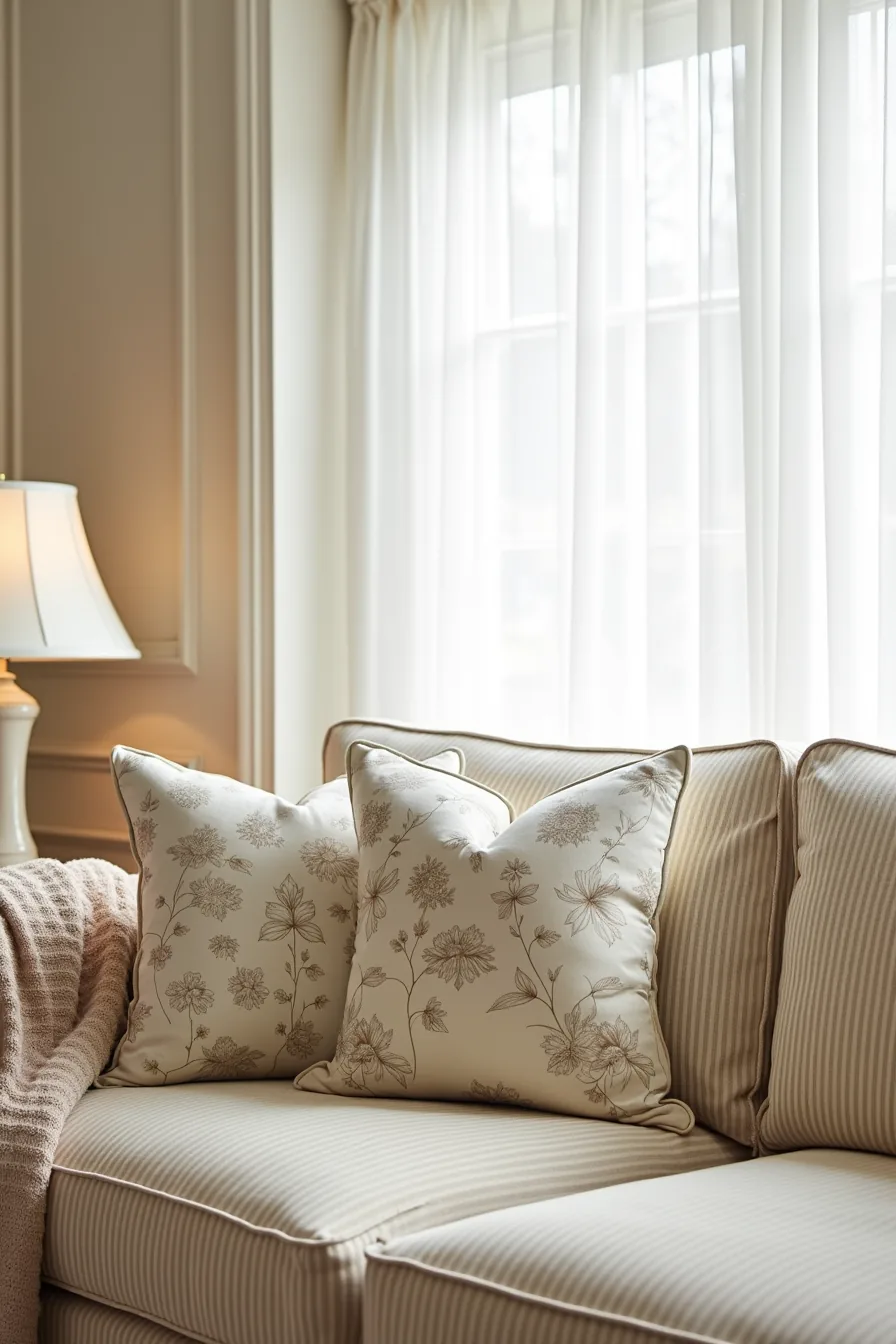
A patterned sofa doesn’t demand plain companions, it just requires a discipline of scale and color bridging. The striped sofa base acts as your constant; every layered textile must share at least one hue from that stripe. Pair a small geometric pillow (repeating the sofa’s darkest line) with a medium damask in the same color family, and finish with a large botanical print that introduces a supporting tone without introducing a new palette.
Three scales, one color story, zero competition.
Your pattern-mixing question resolves to a simple ratio: anchor, bridge, accent. The geometric ties to the sofa, the damask carries the mid-range visual weight, and the botanical breaks up repetition. Drape a patterned throw over one arm, not both, so the sofa’s stripes remain partially visible, preserving your primary pattern’s identity.
Keep pillows within the 18-to-22-inch range for a standard six-foot sofa; anything larger overwhelms the seat depth. If the combination feels busy from five feet away, remove the damask, not the geometric, the smallest pattern always reads as intentional while the mid-scale one risks blurring into noise.
Patterned Sofa Styling for a Collected Look
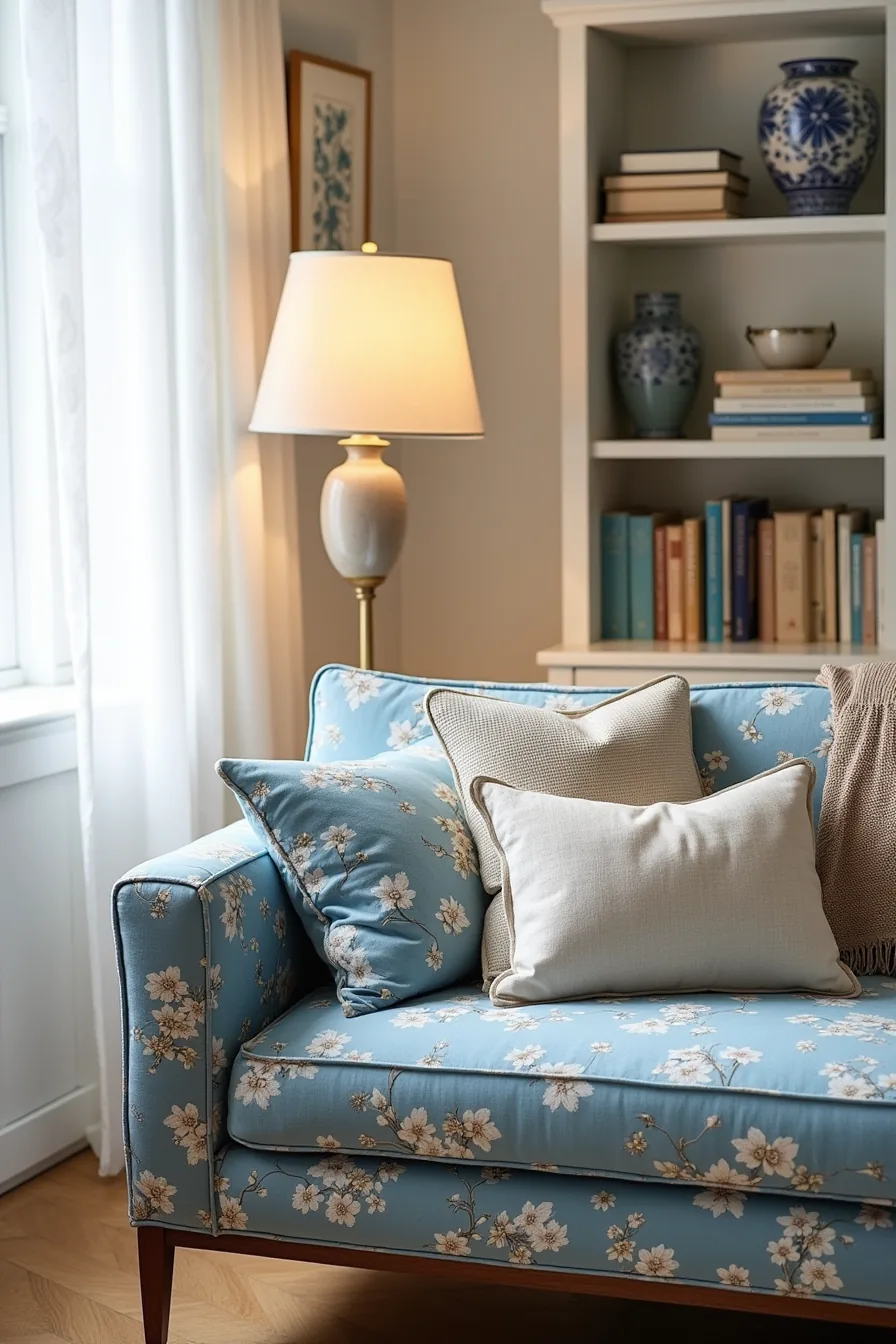
A chinoiserie patterned sofa with a deep blue ground anchors a collected aesthetic precisely because it reads as art rather than upholstery. Place a brass table lamp directly on the arm, not a side table, so the light source visually ties the sofa to the shelving unit behind it. That shelving should hold ceramics and books in the same blue-and-cream family as the pattern, creating a continuous visual line from seat to shelf without matching anything exactly.
Layer pillows in graduated sizes: a solid cream lumbar at 12 by 20 inches, then a floral square at 18 inches, then a textured woven throw draped over the back corner. The throw softens the formality of the chinoiserie print, while the lamp introduces warmth that prevents the pattern from feeling cold or museum-like. This setup suits a living room with at least 10 feet of wall space, since the sofa and shelving need breathing room to read as a deliberate vignette rather than clutter.
Budget, Rental, and Investment Routes
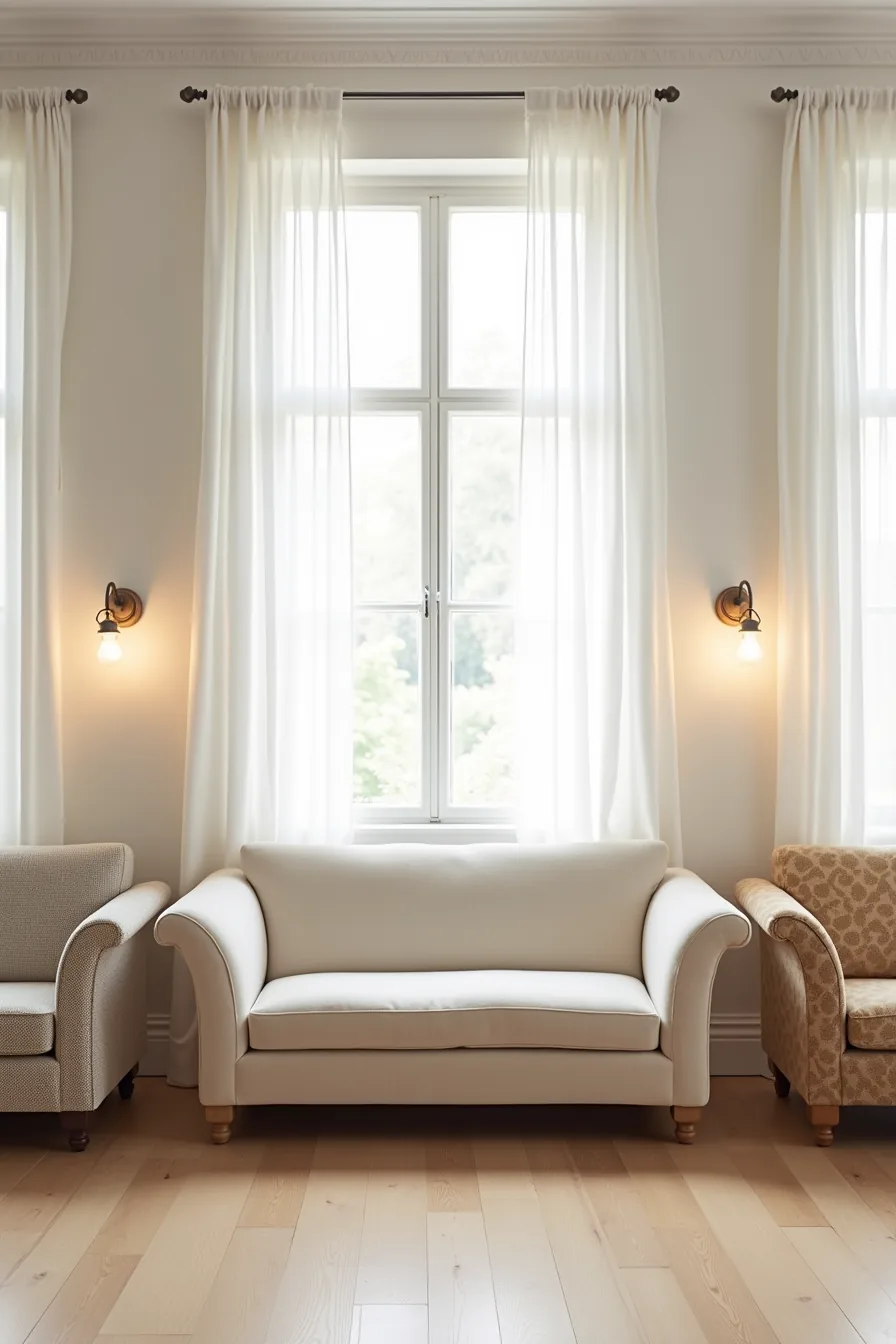
Your budget route starts with a patterned sofa featuring a removable, machine-washable slipcover, typically in cotton or a cotton-poly blend. Expect to pay roughly $800–$1,500; the trade-off is a tighter weave and simpler pattern repeat, but you can replace the cover seasonally for a fraction of the cost of reupholstery. This option suits renters because you can store the original cover and swap in a neutral one to match a new apartment’s walls.
The mid-range patterned sofa, usually priced $1,800–$3,500, sits on exposed tapered legs that improve the frame and make the piece feel lighter in a small studio. Choose a flat-weave fabric like tweed or linen blend; it resists wear better than velvet at this price point and accepts a steam cleaner without watermarks. Pair it with a washable rug in a coordinating solid tone, a patterned sofa doesn’t need a patterned floor beneath it to stay interesting.
For the long-term investment route, a high-end patterned sofa in velvet, often $4,000 and up, demands a commitment to maintenance: professional cleaning every 12–18 months and immediate blotting of spills with a dry cloth. Velvet’s pile catches light differently from each angle, so the pattern shifts as you move through the room, which rewards a large, low-traffic living area where the sofa is the undeniable focal point. Budget for a custom-fit, non-slip pad underneath to prevent the seat cushions from shifting on a leather or wood floor.
Your decision checklist
Before you buy, confirm the pattern scale against your room size, small spaces need smaller repeats, large rooms can carry bold motifs. Check the fabric’s rub count (most durable upholstery sits above 30,000 Martindale cycles) and ask about removable covers if you’ve kids or pets.
If you’re renting, stick to a slipcovered option you can wash and swap. If you’re investing, prioritize high-density weave and a pattern that hides everyday wear.
Start now: measure your wall length and doorway width, then save three pattern references that match those numbers. That single step eliminates half the wrong choices before you even browse.
Frequently Asked Questions
Will a patterned sofa make my small living room feel cramped or busy?
Only if you choose a large-scale, high-contrast pattern. Opt for a small-scale geometric or tonal print on a light base; it adds depth without overwhelming the space. Keep surrounding furniture solid and low-profile.
How do I clean and maintain a patterned sofa fabric?
Vacuum weekly with an upholstery attachment to prevent dirt from settling into the weave. Spot-clean immediately with a mild soap and water solution, test on a hidden seam first. For high-traffic homes, choose a performance fabric like Crypton or solution-dyed acrylic that resists stains.
Can I use a patterned sofa in a minimalist or Scandinavian interior?
Yes, if the pattern is muted and the palette stays neutral, think charcoal stripes, soft herringbone, or tonal botanical prints. Balance it with clean-lined solid furniture, natural wood, and plenty of negative space. Avoid mixing more than one pattern in the same room.
What size patterned sofa works best for a medium-sized bedroom or apartment?
A 2-seater or loveseat, typically 60–70 inches wide, fits most medium rooms without crowding circulation. If you’ve a larger apartment, a 3-seater around 80–90 inches works, just leave at least 18 inches of walkway in front. Measure your doorways first; a patterned sofa you can’t move in is a costly mistake.