

A sofa is the single largest piece of furniture in most living rooms, so choosing one without a plan for scale, seat depth, and fabric often leads to a costly mismatch that dominates the space for years. This guide breaks down six distinct interpretations of the sofa, from a compact apartment anchor to a sprawling family investment, so you can match the silhouette to your room’s square footage, traffic flow, and daily habits. You’ll learn exactly which frame suits a 10-foot wall versus a 14-foot one, why a 90-inch model outperforms a 72-inch in a shared space, and where to spend versus save on upholstery.
Key takeaways
- Seat depth dictates your comfort: choose 20–22 inches for upright sitting and TV watching, or 24–26 inches for lounging and napping.
- Fabric performance beats looks: opt for a high-rub-count cotton or a solution-dyed acrylic if you’ve kids or pets, and expect to vacuum weekly to prevent dirt abrasion.
- Scale your sofa to your room: leave at least 18 inches of walkway clearance in front, and keep the sofa length at roughly two-thirds of the wall it sits against.
- Renters can skip the sofa purchase entirely by using a washable slipcover over a secondhand frame, protecting the landlord’s piece while achieving a custom look for under $150.
Deep vs. Upright Seat: Which Depth Works for Your Body and Space

The most consequential measurement on any sofa isn’t the overall width, it’s the seat depth. A deep-seated sectional with a low back typically runs 30–36 inches from the front edge to the backrest, while a compact upright sofa measures a firmer 24–28 inches. When you see both side by side with a measuring tape draped across their seats, the difference becomes obvious: the deep model invites sprawling, while the upright one demands a more formal posture.
Choose a deep seat if you’re 5’10” or taller, prefer reclining with your feet up, or use the sofa for nightly movie sessions. It also suits larger rooms where you can pull the piece 12–18 inches off the wall without crowding the walkway. The trade-off?
Deep seats are difficult for shorter individuals, who will find their feet dangling, and they make conversation awkward because sitters recline away from each other.
An upright seat works better for a compact living room, a home office, or anyone under 5’8″ who wants to sit with both feet planted. It also reads more formal, making it a better fit for parlors or rooms used for entertaining rather than lounging. If you can’t decide, measure your own thigh length, from the back of your knee to your hip, and add 2–4 inches for clearance.
That number is your ideal depth, regardless of what the style dictates.
Fabric Choice: Durability, Maintenance, and Aesthetic Trade-offs

Hold four swatches side by side, raw linen, synthetic microfiber, wool blend, and performance fabric, and you’re holding the full spectrum of sofa upholstery trade-offs. Linen offers that relaxed, breathable aesthetic but wrinkles easily and stains within days of heavy use; expect to dry-clean or steam it seasonally. Microfiber resists spills admirably and wipes clean with mild soap, making it the pragmatic pick for households with children or pets, though its tight weave can feel plasticky to the touch.
A wool blend splits the difference: it naturally repels moisture, wears well under daily use, and develops a pleasing patina, but it requires professional cleaning and sheds slightly for the first few months. Performance fabrics, typically solution-dyed synthetics, handle red wine and pet accidents with a simple blot, cost 20–30 percent more per yard than standard polyester, and feel closer to cotton than microfiber. Your actual fabric choice question should center on traffic: a formal sitting room tolerates linen; a family den warrants performance weave or microfiber.
For maintenance, vacuum weekly with an upholstery attachment and rotate cushions monthly to distribute wear evenly.
Sofa Scale and Placement: Matching Size to Room Dimensions
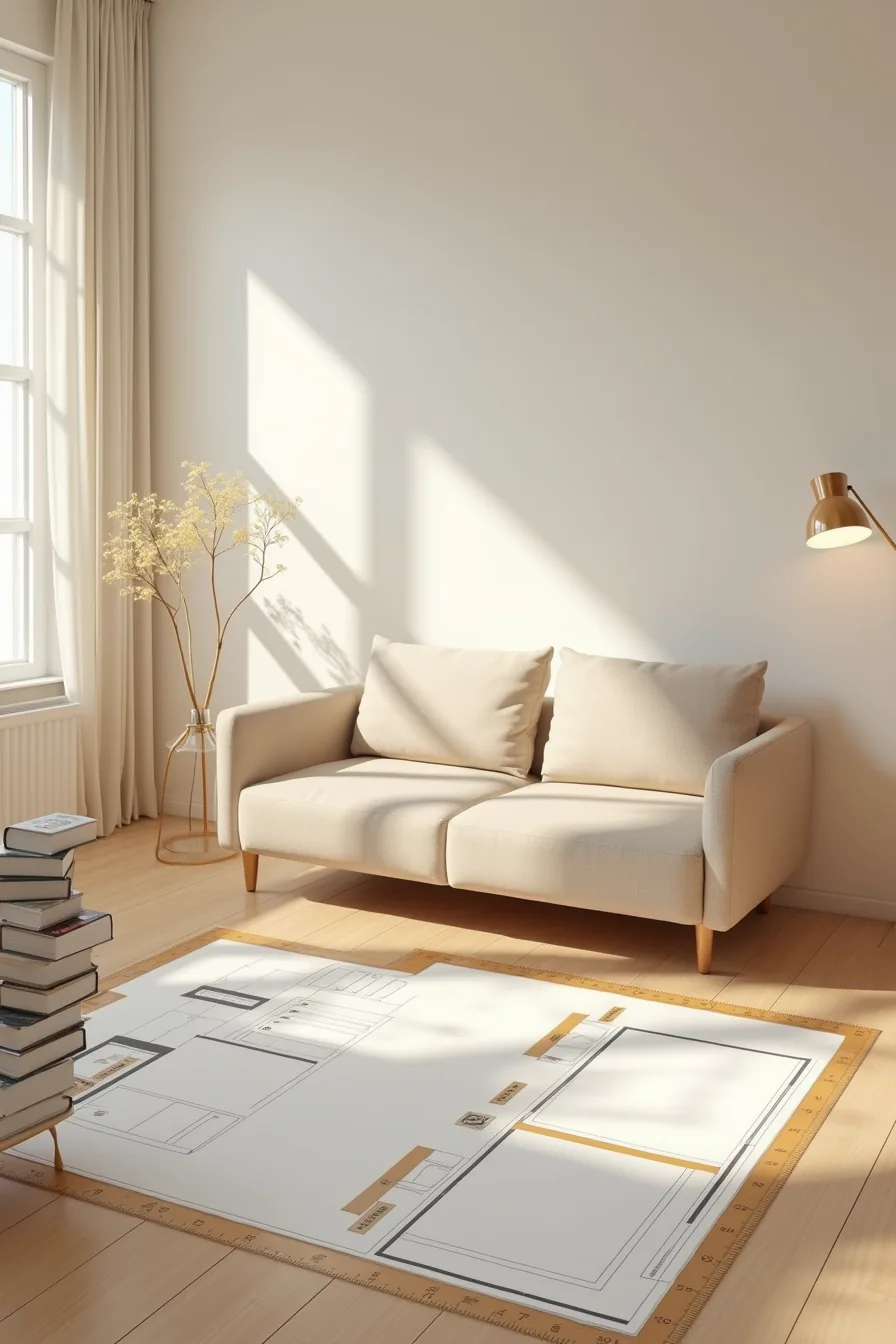
Measure your room’s length and width, then subtract the clearance you need for walking paths, typically 18–24 inches behind the sofa and 12–18 inches in front of coffee tables. For a small apartment, a floor plan with a scaled sofa positioned against one wall leaves the center open; keep sofa width to 60–72 inches in rooms under 150 square feet. Medium rooms of 150–250 square feet accommodate 72–84 inches comfortably, while large open-plan spaces handle 84–96 inches plus a chaise or sectional.
Position the sofa perpendicular to the room’s main focal point, a window, fireplace, or media console, rather than parallel to it, which blocks sightlines and shrinks the perceived space. A floor ruler stretched across the plan verifies the clearance; tape markers on the doorway and window outline the traffic zone you must keep unobstructed. Pull the sofa 8–12 inches off the wall in medium rooms to create depth; in small rooms, flush placement maximizes floor space.
Use this room-scale checklist before browsing: measure the wall, subtract clearance, and only then consider sofa depth (most run 35–40 inches) to avoid blocking vents or radiators.
Budget, Rental, and Investment Routes: Three Paths to Ownership

Budget route: starter frame. Expect to spend $400–$900 on a simple frame with basic polyester upholstery. These sofas typically last 3–5 years with regular use; the trade-off is a firmer seat and thinner cushions that flatten faster. Choose this if you’re furnishing a first apartment or expect to move within two years.
Reinforce the frame with a plywood sheet under the cushions if you notice sagging by year two.
Renter-friendly route: modular sectional. A modular sectional in the showroom center solves the two biggest rental problems, narrow doorways and unpredictable room dimensions. You buy individual pieces ($250–$600 per seat) and reconfigure them as your layout changes. The trade-off is visible connector clips and seams, which read as casual rather than polished.
This route suits you if you move frequently but still want a sofa that can grow from a two-seat setup to a full L-shape.
Investment route: tufted sofa with rolled arms. The high-end options on the right run $2,500–$6,000, but the construction justifies the price. Kiln-dried hardwood frames and eight-way hand-tied springs support 10–15 years of daily use; the tufted cushions are reversible, extending fabric life by 30–40% compared to fixed cushions. This suits you if you’re furnishing a primary residence and prioritize resale value, a well-maintained investment sofa retains 40–60% of its original price on the secondhand market.
Color and Pattern: Strategic Choices for Visual Impact and Longevity

The charcoal sofa against pale walls shrinks visual noise, making a large room feel more intimate while hiding everyday spills, a practical pick if you’ve kids or pets. Dark upholstery demands less frequent cleaning, but it shows lint and dust clearly, so budget for a weekly roller pass. The cream sofa opposite reads as an airy anchor, visually expanding a narrow space, yet it requires removable, washable covers to stay viable beyond a season.
A geometric patterned sofa works best as the room’s singular statement piece; pair it with solid walls and plain textiles to avoid visual chaos. Patterns disguise stains and wear better than any solid, but they lock in your decor direction, swapping accent pillows won’t shift the overall feel. For medium rooms, choose a mid-tone pattern that bridges light and dark walls; in small spaces, a tight, small-scale print prevents the sofa from dominating the floor plan.
Sofa Styling Ideas for an Instant Living Room Refresh
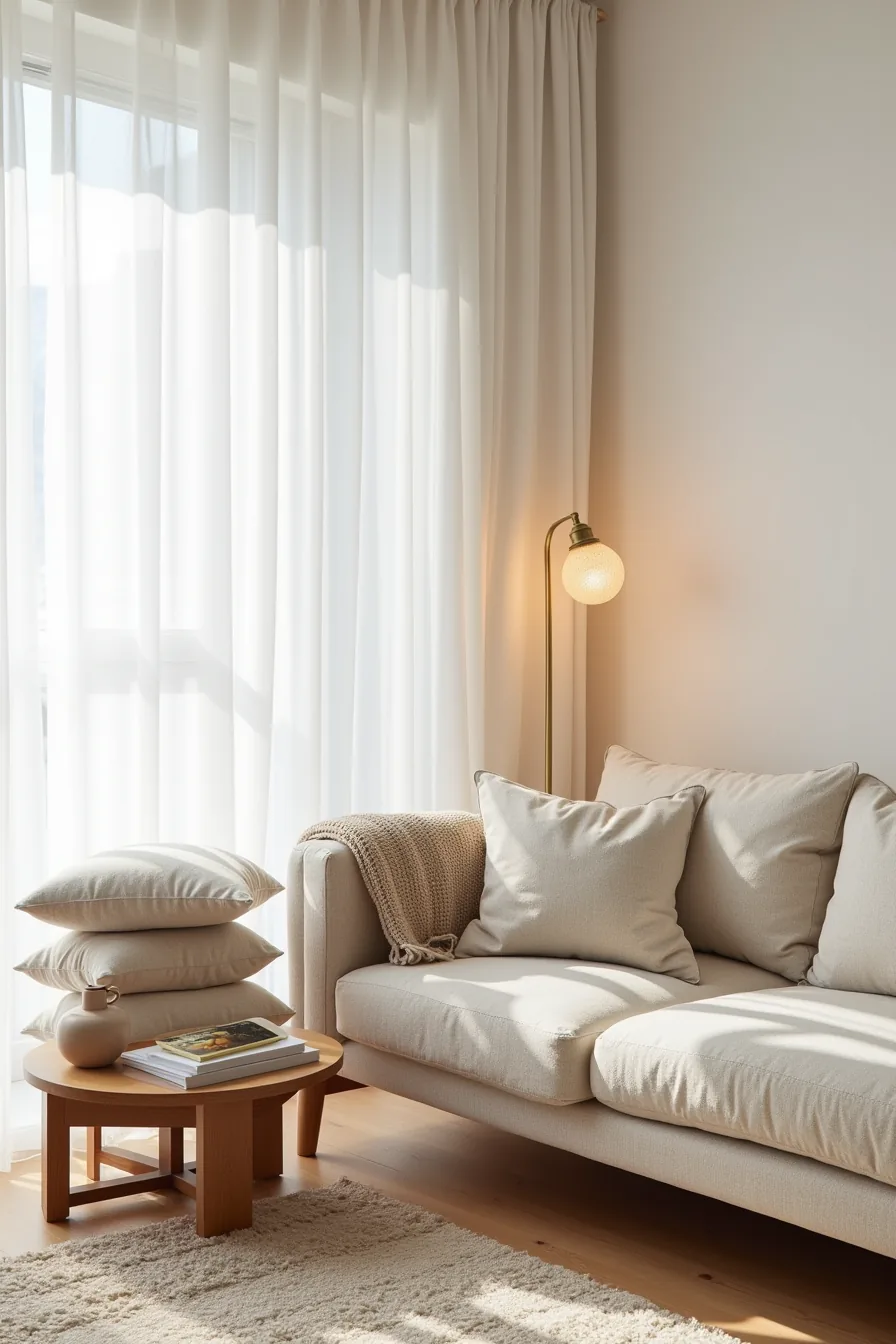
Stack three pillows at one end, mixing a linen square, a velvet lumbar, and a textured boucle piece, to create asymmetry that draws the eye without the stiffness of a mirrored arrangement. Fold a knit throw over the arm nearest the seating zone rather than draping it across the back, which reads as tidier and keeps the throw within easy reach for chilly evenings.
Anchor the composition with a brass floor lamp placed at the opposite end of the sofa to balance the visual weight of the pillow stack, casting warm light across the seating area. A low wooden side table beside the arm holds a ceramic vessel, use it for remotes or a single dried branch, and keeps the surface visually light while providing genuine function.
This setup works best in medium to large living rooms where you can pull the sofa 12-18 inches from the wall to let the lamp and table sit flush against the frame without blocking walkways. For small spaces, reduce to two pillows and skip the side table; the lamp alone can define the zone. Total cost for this refresh ranges from $150 to $400 depending on pillow fills and lamp finish, and you can rotate pillow covers seasonally to shift the palette without reupholstering.
Where to start
Begin with your room’s dimensions and your non-negotiables. Measure the wall you plan to use, check door widths and stairwell corners for delivery access, and set a budget range before browsing a single fabric swatch. Those constraints will eliminate half your options before you fall for a silhouette that can’t physically make it through your front door.
Your next move: grab painter’s tape and outline your top three candidates directly on the floor. Live with those footprints for 48 hours, walk past them, sit across from them, and confirm you can vacuum around them. That fifteen-minute exercise prevents the most common sofa regret: buying for the showroom, not for your actual room.
Frequently Asked Questions
What is the ideal sofa depth for a small living room?
Choose a seat depth of 20–24 inches. This leaves enough legroom for walking paths and prevents the sofa from visually swallowing the room. Pair it with low arms to enhance the sense of space.
How often should I clean my sofa, and does fabric type matter?
Vacuum cushions and crevices weekly; deep-clean every 6–12 months. Fabric type matters: cotton and linen require gentler cleaning, while polyester and microfiber resist stains and handle more frequent washing. Always check the care label first.
Can I fit a sectional sofa in a medium-sized room, or should I choose a standard three-seater?
Yes, a sectional works if your room is at least 12 feet wide. Choose a compact L-shape with a 90–100 inch length. Otherwise, a three-seater (80–90 inches) offers more flexible placement and easier traffic flow.
What’s the difference between a sofa and a couch, and does it affect my buying decision?
A sofa typically has a formal, symmetrical design with two arms; a couch is more casual, often with one arm or none. This affects style and placement, sofas suit formal living rooms, couches fit relaxed family spaces. Functionally, the terms are interchangeable.