A Scandinavian TV unit is less a single piece of furniture and more a disciplined approach to storage, proportion, and material honesty, here are six distinct ways to build that foundation, each with its own sizing, budget, and room-type fit. You’ll find a floating oak console for tight rentals, a closed-front system for family chaos, and a raw pine solution that costs less than a weekend away. Each option comes with exact clearance ranges, weight limits, and the maintenance reality you need before you commit.
The right choice depends on your wall type, viewing distance, and how much visual noise you can tolerate.
Key takeaways
- Floating shelves with tapered legs suit small rooms by keeping the floor visually clear, but require solid-wall mounting for safety.
- Low-profile closed cabinets in pale wood hide clutter best for family spaces, though you’ll need at least 12–18 inches of clearance for ventilation.
- Modular units let renters reconfigure layouts without drilling, but choose interlocking pieces under 40 pounds per section for easy transport.
- Corner TV placements with angled storage maximize awkward layouts, yet demand a minimum 6-foot viewing distance to avoid neck strain.
Floating Shelves with Tapered Legs
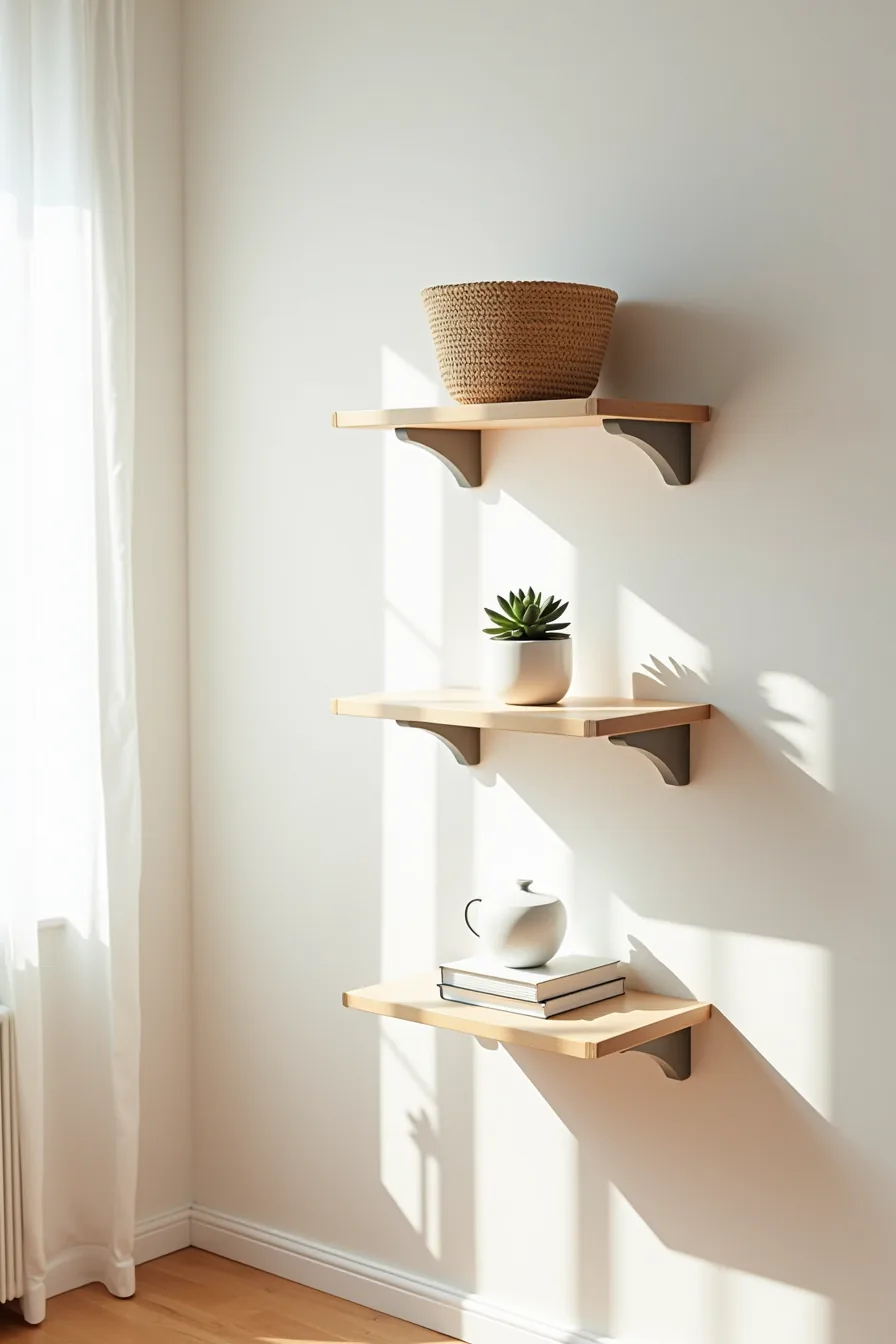
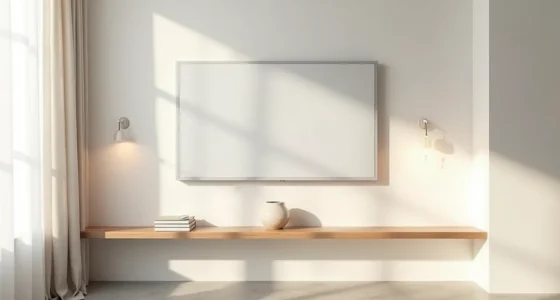
This setup reads as a Scandinavian TV unit without a single enclosed cabinet. Three open shelves mount directly into your wall studs using metal brackets, while four angled ash legs touch the floor to take the visual weight off the brackets. The legs aren’t structural, they steady the frame and prevent a floating look from feeling precarious.
You get display space without the 15–18 inches of depth a credenza demands, making this ideal for narrow living rooms where floor space is at a premium. The woven basket hides cables and remote controls, while stacked white ceramics and a small succulent keep the styling minimal and intentional.
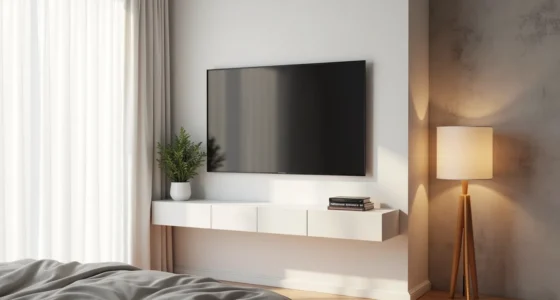
Reproducing this requires locating studs before drilling, drywall anchors alone won’t support the combined weight of shelving, electronics, and décor. Budget roughly $120–$250 for lumber, brackets, and legs if you build it yourself, or double that for a pre-finished version. Sand and seal the ash annually to prevent warping in humid climates, and keep the lowest shelf at least 24 inches from the floor to maintain clearance for soundbar placement.
Low-Profile Closed Cabinet with Pale Wood
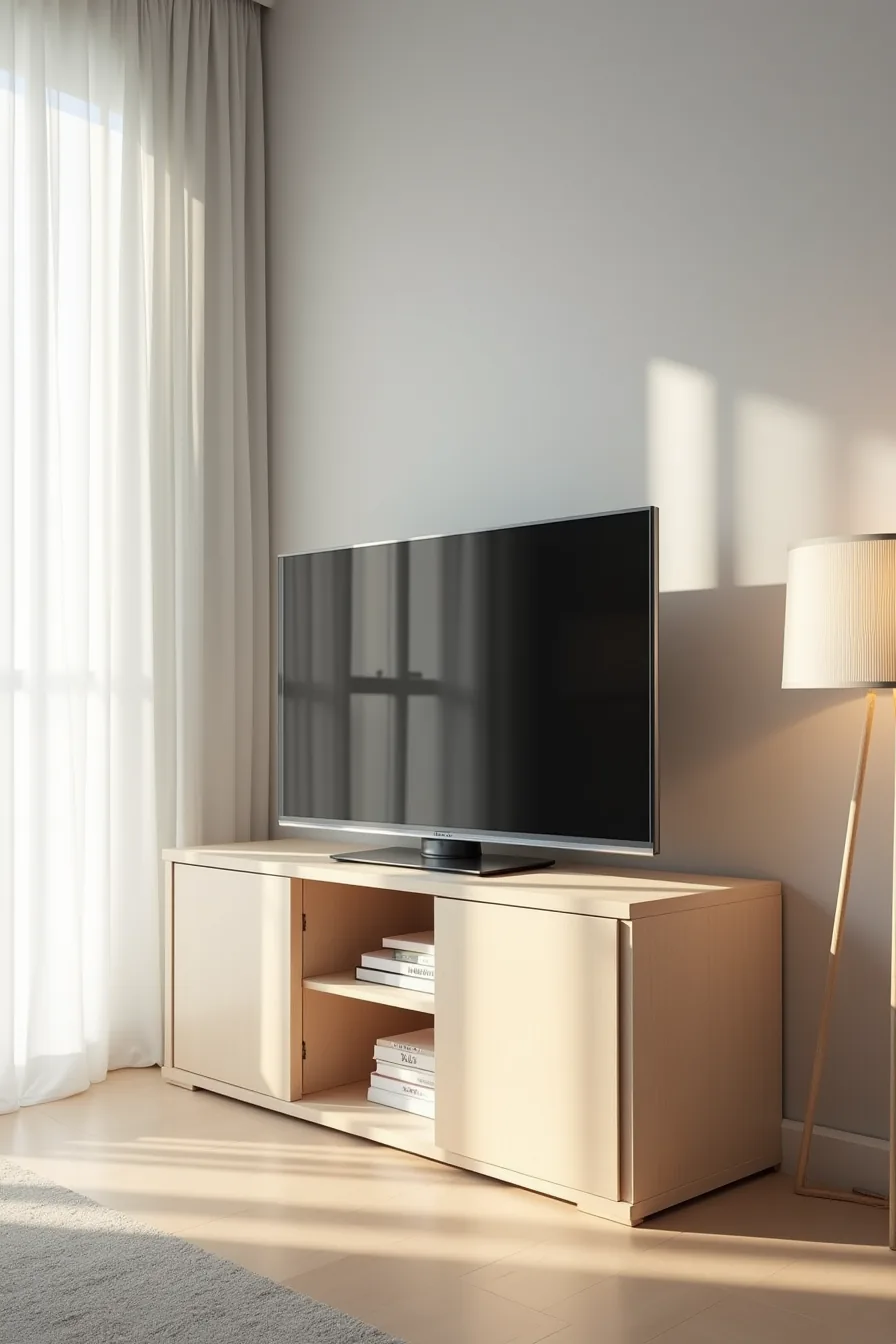
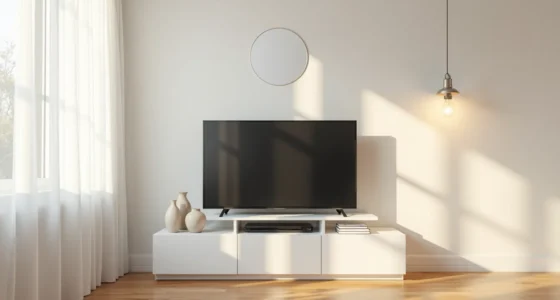
A pale birch cabinet standing just 16–20 inches tall delivers the quiet anchor most Scandinavian TV units aim for. The two hinged doors close over shelving that holds gaming consoles, streaming boxes, and the inevitable tangle of chargers behind them, visible through the slight gap when ajar, but hidden when you want a clean sightline. The handle-less edges rely on a push-to-open mechanism, which means you’ll need to check the hinges annually for debris buildup; they’re the first thing to fail in dusty rooms.
This low silhouette works best in medium-to-large spaces where you want the wall to breathe. The flat-screen TV sits directly on top, so measure your TV’s stand width, most range 20–28 inches, and confirm it fits within the cabinet’s surface depth of 14–16 inches, or the set will overhang and look precarious. Pair the pale wood with a soft gray wall to emphasize the warm minimalism; the contrast keeps the piece from disappearing into beige-heavy palettes.
Budget $350–$600 for a solid birch version, or $150–$250 for veneer over MDF, which scratches more easily but suits renters who won’t commit to a decade. Dust the surface weekly with a dry microfiber cloth, water-based cleaners will strip the matte finish over time.
Mixed Open and Closed Storage
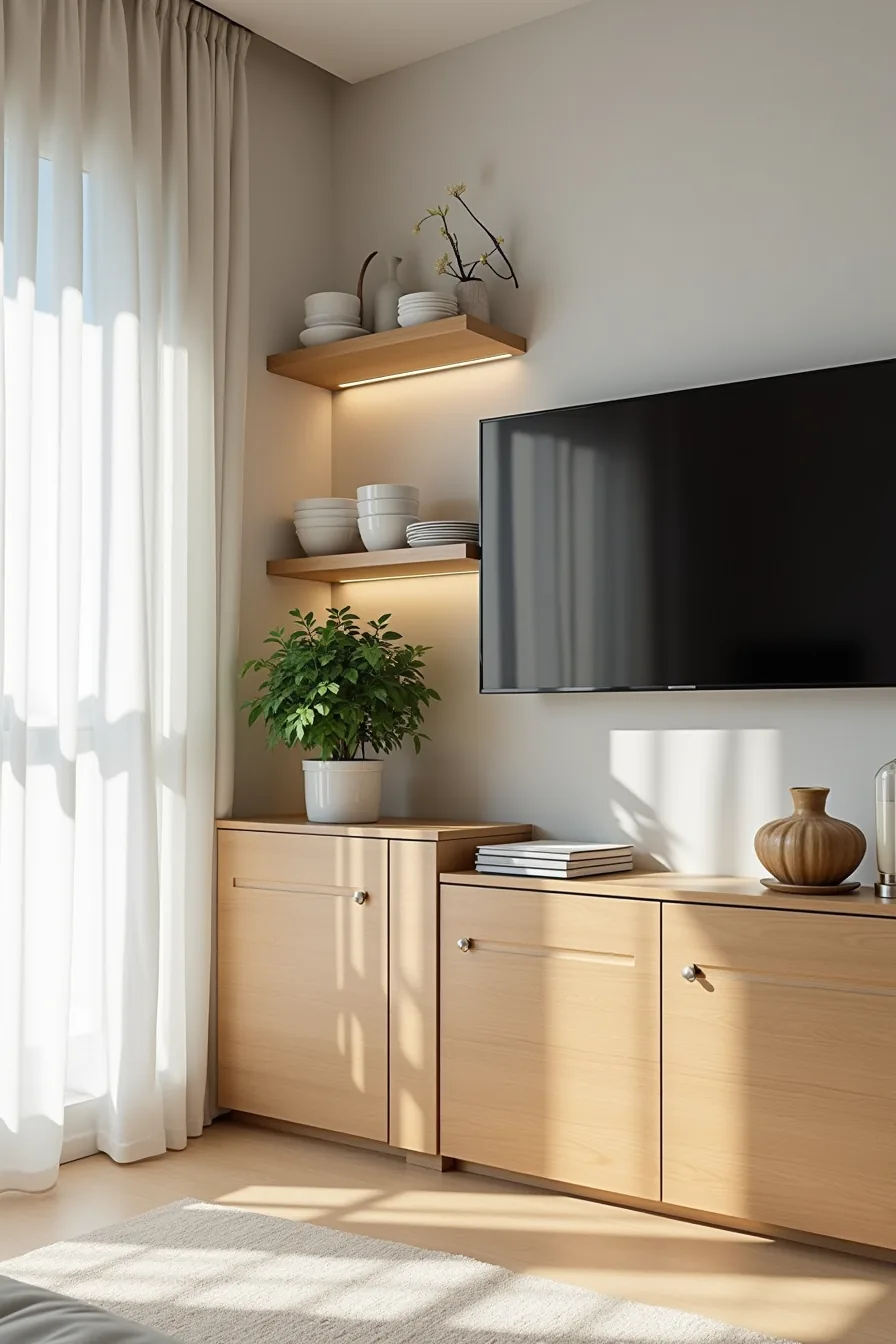
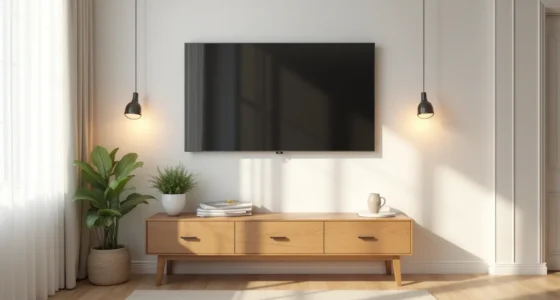
This interpretation stacks upper open shelves over closed drawers, a deliberate balance of display and concealment. The open tiers hold white dinnerware and a potted fern, turning everyday objects into the decor, while the natural pine drawers below absorb the visual clutter of cables, remotes, and rarely used accessories. Because the TV mounts on a separate arm above the unit, the furniture itself stays shallow, typically 12–14 inches deep, which keeps circulation clear in narrower rooms.
This suits a medium living room where you entertain often and want the storage to feel curated, not cluttered. The trade-off: open shelving demands disciplined styling, so restrict display items to a single material family (ceramic, wood, or glass) and leave 30–40% of each shelf empty. For renters, skip wall-mounting the TV and set it on the closed drawer section instead, you lose the floating effect but avoid drilling into walls.
Dust the open shelves weekly; the closed drawers only need a wipe-down monthly.
Modular Units for Rental Spaces
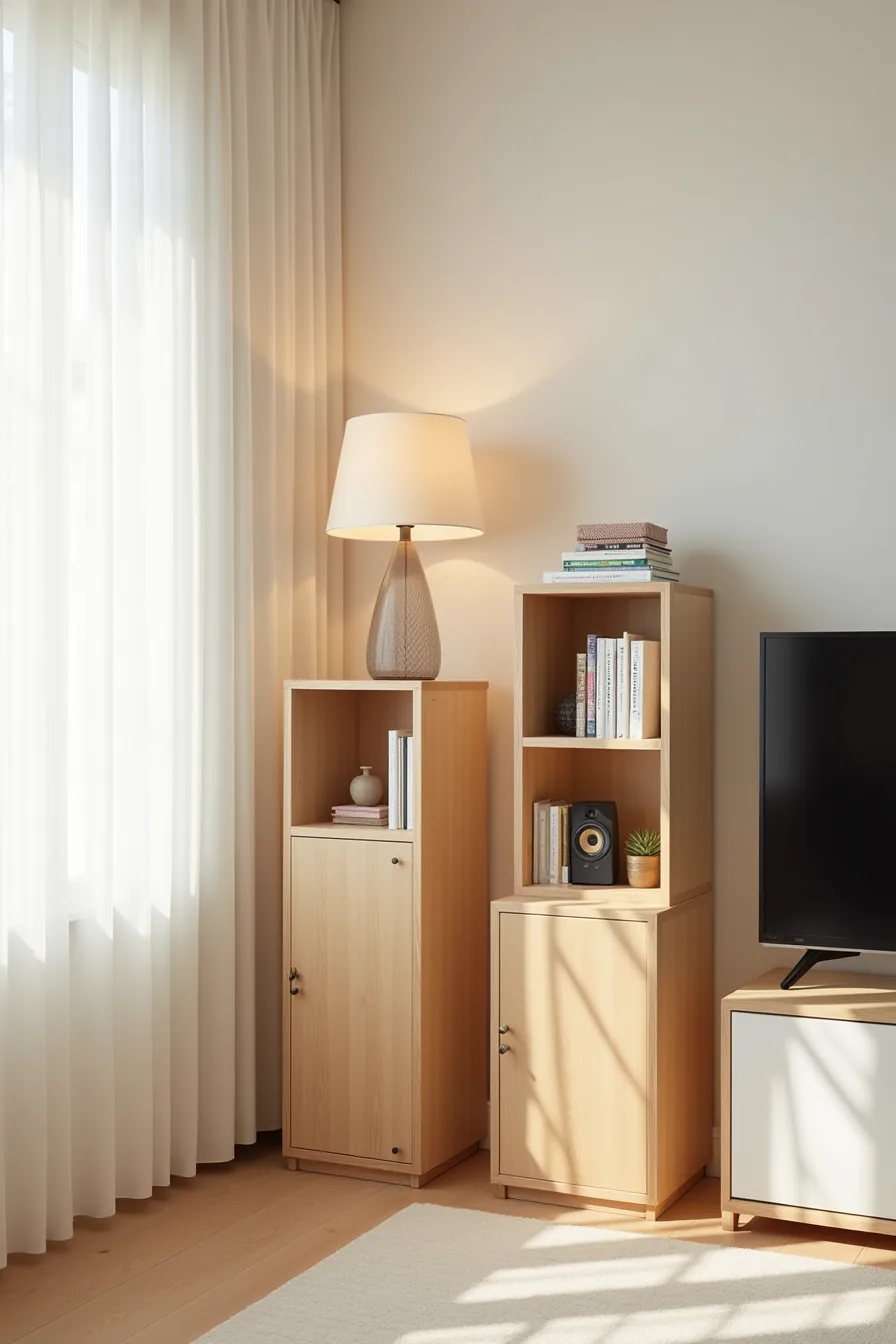
When you can’t commit to wall-mounting, a modular system of independent boxes becomes the most versatile Scandinavian TV unit idea for rental living rooms. Two freestanding wooden boxes stacked asymmetrically create the visual interest that a single monolithic cabinet would lack, and you can reconfigure them room to room. The open cubby holds books and a speaker, keeping media accessible, while the closed section with a sliding door hides cables and controllers that you would otherwise have to patch and repair at move-out.
Because the system requires zero wall attachments, your deposit stays intact. The separate TV bracket mounts independently nearby, and when you relocate, the boxes stack flat in a car and the bracket comes with you, no patching, no repainting. Choose boxes 16–20 inches deep and pair them with a low-profile TV stand if your unit sits directly on the floor; a gap of 6–8 inches between the top box and the screen keeps sightlines comfortable without demanding a mounted install.
Corner TV Placement with Angled Storage
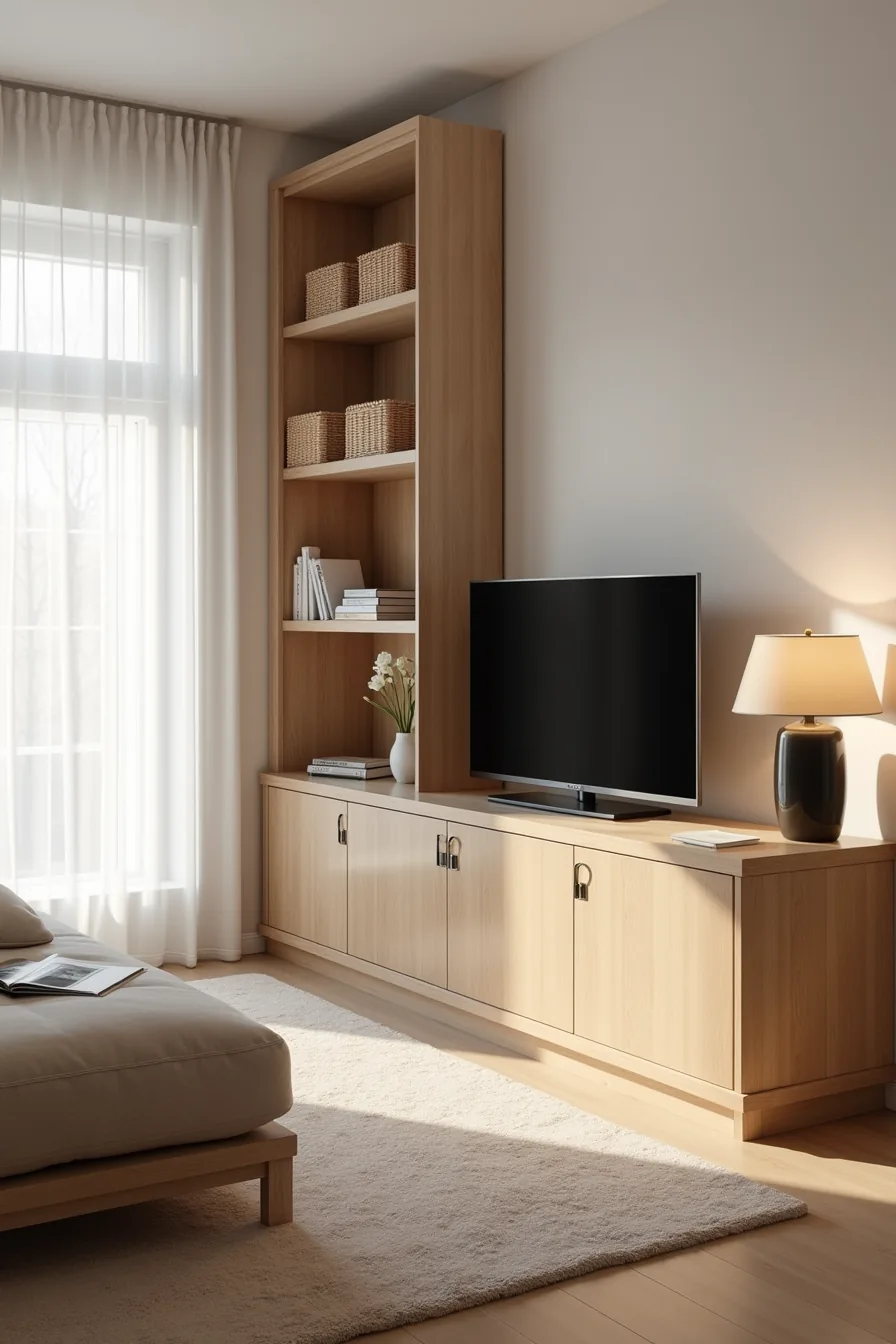
An L-shaped unit is the most effective Scandinavian TV unit solution when your room has an unused corner that could otherwise become dead space. The angled front panel positions the screen diagonally, letting you mount the TV so it faces the primary seating area directly, without pushing that seating into the opposite wall. The side wing of open shelving holds baskets for remotes, throws, and console-game storage, giving you functional volume without the visual weight of a full wall system.
This configuration suits living rooms 10–14 feet wide, where a straight wall-mounted unit would force the sofa too close to the TV or block a doorway. The oak finish keeps the unit visually light, and the baskets add texture without introducing competing colors. Measure the corner clearance first: you need roughly 24–30 inches of wall on each side for the L-shape to fit without protruding past the room’s traffic path.
The angled panel also shortens the depth requirement, so a 12–14-inch-deep side wing maintains a 3-foot walkway behind it in most layouts.
Media Wall with Integrated Lighting

A media wall built from floor-to-ceiling cabinetry turns your TV into part of the architecture rather than a floating black rectangle. The pale plywood backing creates a warm contrast against the screen, while the recessed shelving gives you display depth without protruding into the room. Closed lower cabinets hide game consoles, cables, and less attractive items, keeping the visual noise at floor level where your eye naturally rests less.
LED strips along the shelf edges serve a practical role beyond aesthetics: they reduce eye strain during evening viewing by providing ambient bias lighting behind the screen. Set them on a dimmer switch rather than a basic on-off toggle, and you gain control over the room’s mood without relying on overhead fixtures. Cables route through a channel behind the plywood backing, so you never see a single wire trailing to the outlet.
This setup suits medium-sized living rooms (12–16 feet wide) where you’ve a dedicated wall to commit to built-in joinery. Expect to pay 20–40 percent more than a freestanding unit of similar size, and plan for a carpenter who understands how to recess lighting channels cleanly. If you rent, skip the permanent build and use a shallow freestanding cabinet with clip-on LED strips and a cable raceway painted to match the wall.
Where to start
You now have six distinct routes to a Scandinavian TV unit, from a $40 IKEA hack to a solid-oak heirloom piece. Each suits a different budget, space, and tolerance for assembly. None requires you to abandon your existing decor.
Before you buy or build, measure your wall width and note the distance from floor to eye level when seated. That single measurement will eliminate more wrong choices than any style guide.
Take the first step tonight: photograph your current TV setup and sketch the clearance you’ve on either side. That image becomes your shopping brief tomorrow.
Frequently Asked Questions
What wood colors work best for a Scandinavian TV unit in a small room?
Light woods, pale oak, birch, or ash, keep a small room airy and reflective. Avoid dark walnut or teak, which absorb light and visually shrink the space)Skip these unless you want a moody accent.
Can you mount a Scandinavian TV unit on a rental apartment wall?
Yes, but only with a floating cabinet designed for wall mounting and proper anchors. You’ll need to check your lease’s drilling policy and patch holes before moving out. Free-standing units with legs are the safer, deposit-friendly alternative.
How deep should a Scandinavian TV unit be to fit a modern TV and soundbar?
Most flat-screen TVs and soundbars sit comfortably on a unit 12–18 inches deep. Go deeper (18–20 inches) if you’ve a large center-channel speaker. Shallower than 10 inches risks the soundbar overhanging the front edge.
What’s the typical height range for a low-profile Scandinavian TV cabinet?
Low-profile models usually stand 16–22 inches tall, leaving 10–14 inches of wall visible above. If your sofa seats you at eye level around 40 inches, pair this height with a TV mounted 6–10 inches above the cabinet top.