The sofa back wall is the largest uninterrupted surface in your living room, and what you do with it determines whether the space feels finished or abandoned. Six distinct approaches, ranging from a 3-inch-deep floating shelf system to a full-length gallery rail, can transform that blank stretch without forcing a single layout change. You need to know which one matches your room’s proportions, your maintenance tolerance, and your lease terms.
Key takeaways
- Measure your sofa depth before choosing a wall treatment, since a 90-100 cm deep sofa needs 60-90 cm of clear walkway space in front of it.
- Pair wallpaper or paint with a 55-65% lighter shade than your sofa color to prevent the furniture from visually overpowering the wall.
- Hang gallery frames with their centers at 145-155 cm from the floor, keeping the arrangement within 10-15 cm of the sofa’s top edge for cohesion.
- Use floating shelves at 30-40 cm above the sofa back, spacing them 25-30 cm apart to allow for styling without blocking access to the seating.
Accent Paint or Wallpaper Behind the Sofa
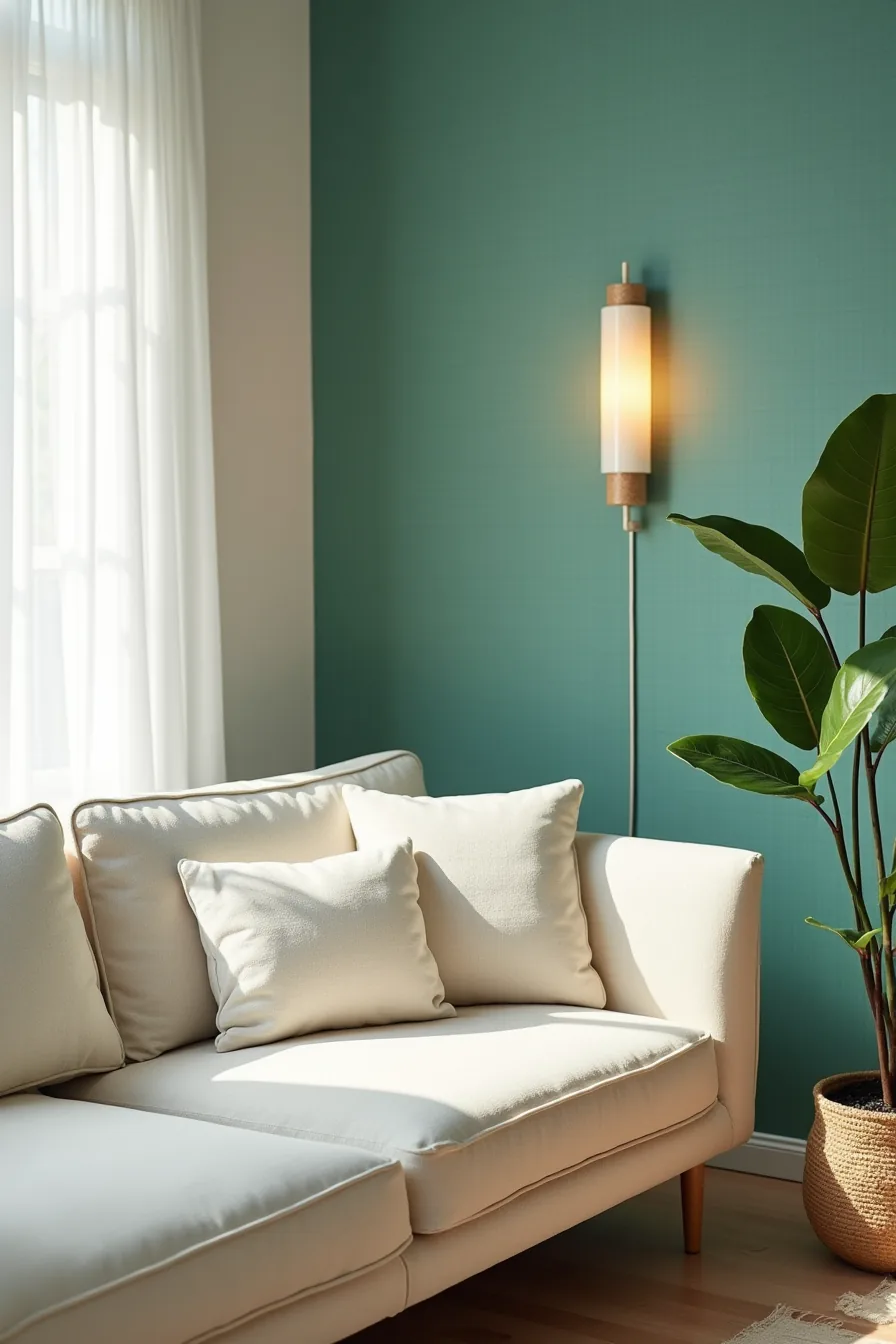
A bold wall treatment directly behind your seating does the heavy lifting of defining the entire room’s mood without adding a single piece of furniture. The cream linen sofa against a jewel-tone emerald wall creates instant contrast that makes the seating silhouette pop, while the subtle geometric texture prevents the flat color from feeling sterile. This setup suits medium to large living rooms where you’ve at least 18–24 inches of clearance between the sofa back and the wall, allowing the pattern to breathe rather than fight with your headspace.
For paint, a matte or eggshell finish hides imperfections better than satin but requires more careful cleaning, expect to repaint high-touch zones every two to three years. Wallpaper demands a perfectly smooth, primed surface; any existing texture will telegraph through and ruin the effect. The potted fiddle leaf fig to the right anchors the composition and softens the transition from bold wall to neutral floor, a simple trick that costs nothing extra.
If you’re renting, opt for removable peel-and-stick wallpaper rated for at least three years of adhesion, or negotiate with your landlord to paint and restore before you leave. Budget route: a single gallon of deep emerald or navy paint covers roughly 350–400 square feet and transforms the space for under $60.
Gallery Wall Arrangement Above and Around Seating
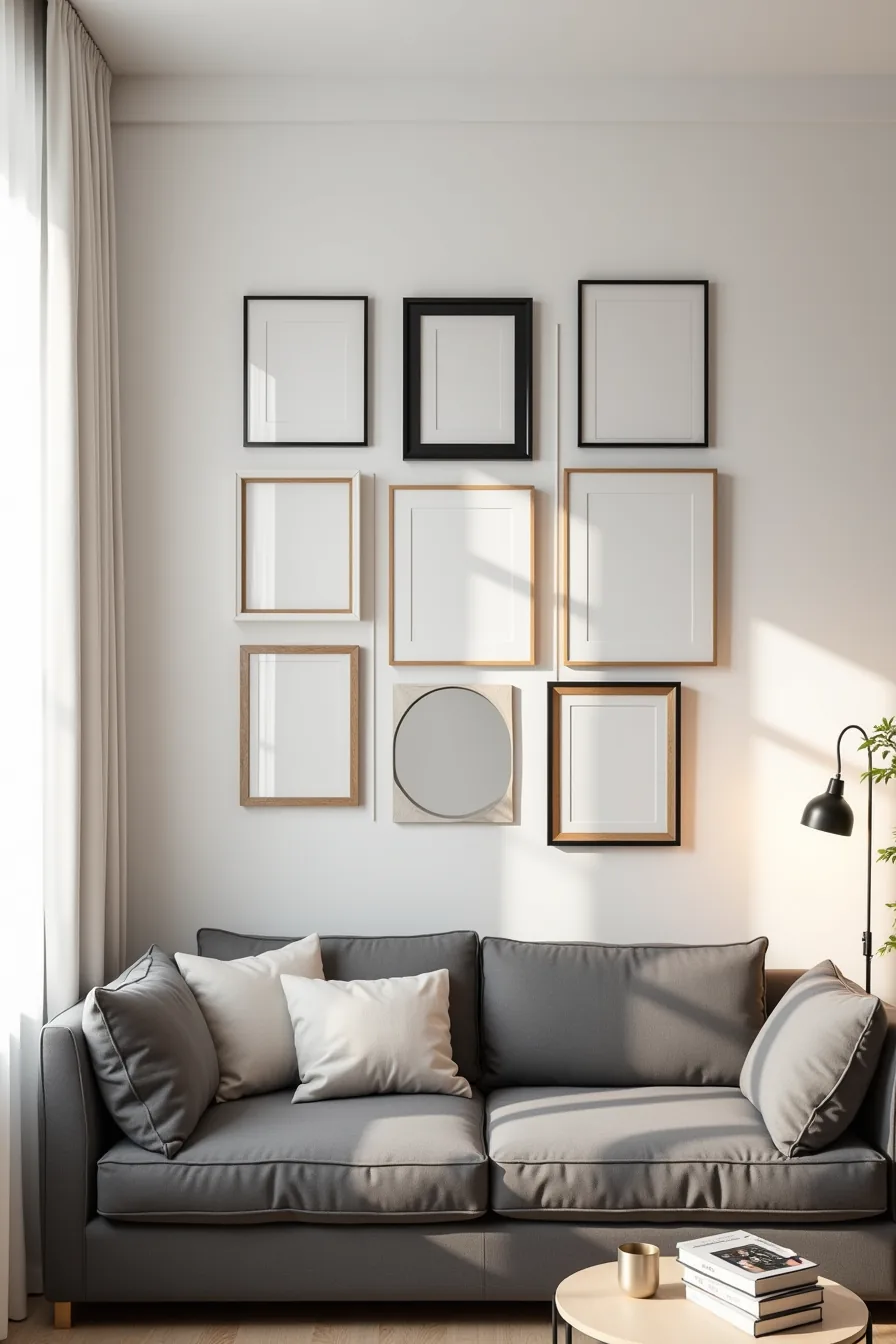
The charcoal sofa against a white wall offers a neutral canvas, so the nine-piece gallery wall carries the visual weight through deliberate contrast. Black frames ground the composition, natural wood adds warmth, and brass introduces a reflective accent that catches evening light. The small round mirror serves a functional role beyond aesthetics, it bounces light across the room and visually doubles the depth of a narrow space.
For a wall measuring 60–90 inches wide behind your sofa, scale the gallery to occupy roughly two-thirds of that width illustrative of the arrangement above. Keep the outer edges of your frames aligned with the sofa arms, not extending far beyond them, so the composition feels anchored rather than floating. Space frames 2–3 inches apart for a tight, cohesive cluster; 4–6 inches reads more casual and suits larger artwork.
Lay your layout on kraft paper first, tape it to the wall, and mark nail points, this prevents the common mistake of eye-level placement that ignores the seated perspective. Center the gallery 55–60 inches from the floor when standing, but adjust so the middle row sits at your eye level while seated, roughly 42–48 inches. This suits anyone who spends significant time reading or conversing on the sofa and wants the arrangement to integrate with the room, not dominate it.
The asymmetrical grid works because it follows a loose diagonal rhythm: largest pieces anchor the lower left and upper right, while smaller frames weave between them. Mirrors mixed with art reduce visual monotony and double as practical light sources for small rooms without overhead fixtures. For renters, use damage-free picture hanging strips rated for 5–10 pounds per frame, they hold firm on smooth painted walls and peel off cleanly without patching.
Budget route: source six to nine frames from thrift stores and spray-paint them a single unifying finish, like matte black, to create cohesion without buying new at retail markup.
Shiplap, Paneling, and Textured Wall Treatments
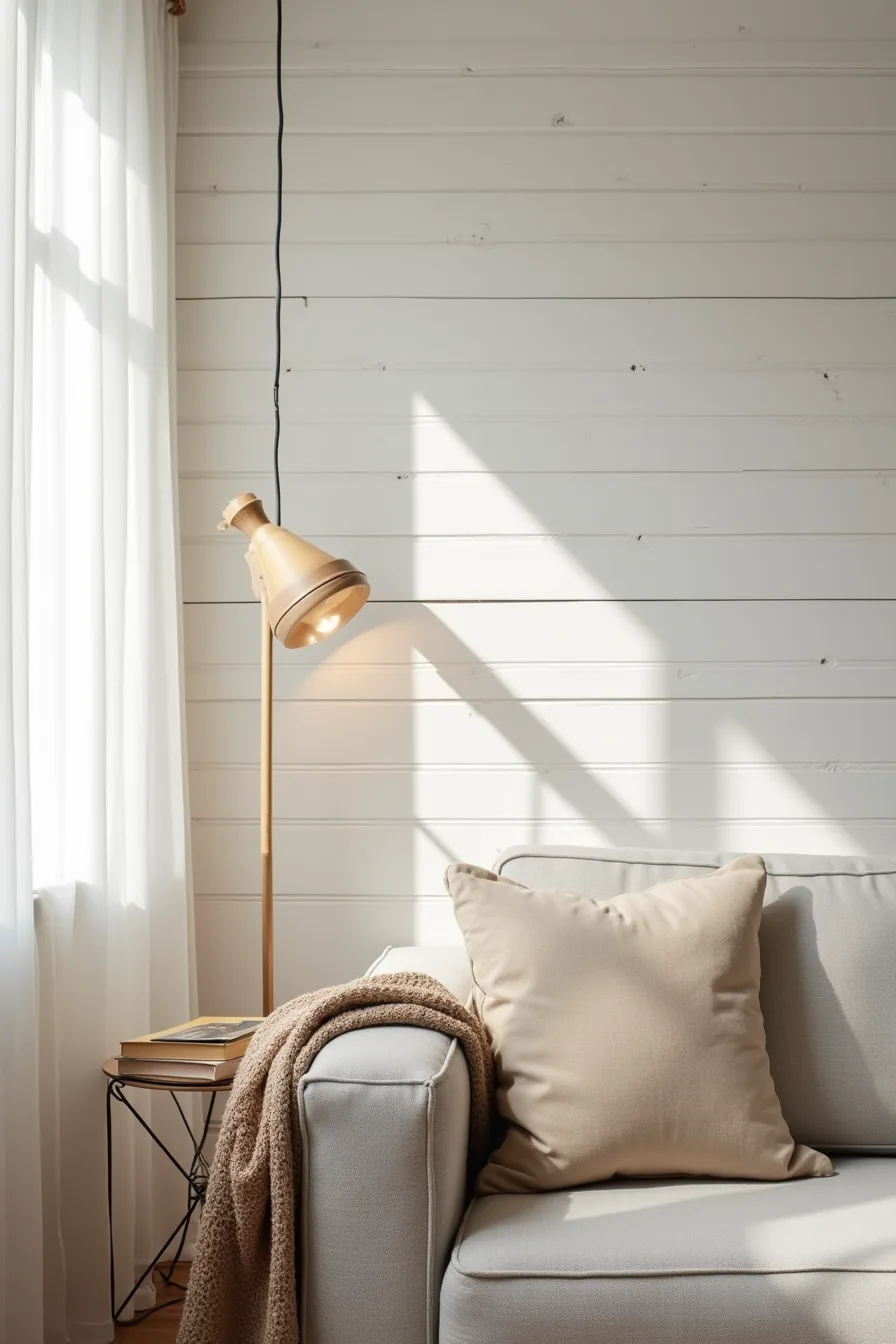
Horizontal shiplap behind a warm gray sofa creates depth through shadow play rather than color contrast. The afternoon light catching each board seam gives the wall a living texture that shifts throughout the day, while the woven throw over the arm softens the transition between upholstery and wood. This treatment suits rooms where you want architectural interest without committing to wallpaper patterns or bold paint.
Installation runs 2–3 days for a standard 8–10 foot wall, with materials costing roughly $2–4 per square foot for MDF boards versus $5–8 for solid wood. The key proportion rule: board width should relate to sofa scale, 5–7 inch boards complement most sofas, while oversized 9–11 inch boards suit sectionals in large open-plan rooms. Painting boards the same color as your wall, as with white-on-white, emphasizes texture over contrast and works better in smaller spaces where dark paneling would feel heavy.
Maintenance is straightforward but real: horizontal ledges collect dust, so plan to wipe them down every 1–2 weeks. For renters, peel-and-stick shiplap panels offer the same visual effect without nails or adhesive damage, most brands remove cleanly within 12 months of application. Budget route: plywood cut into strips and installed with a nail gun costs under $150 for a typical sofa wall, but sanding edges smooth is non-negotiable to avoid splinters.
Floating Shelves with Styling and Storage
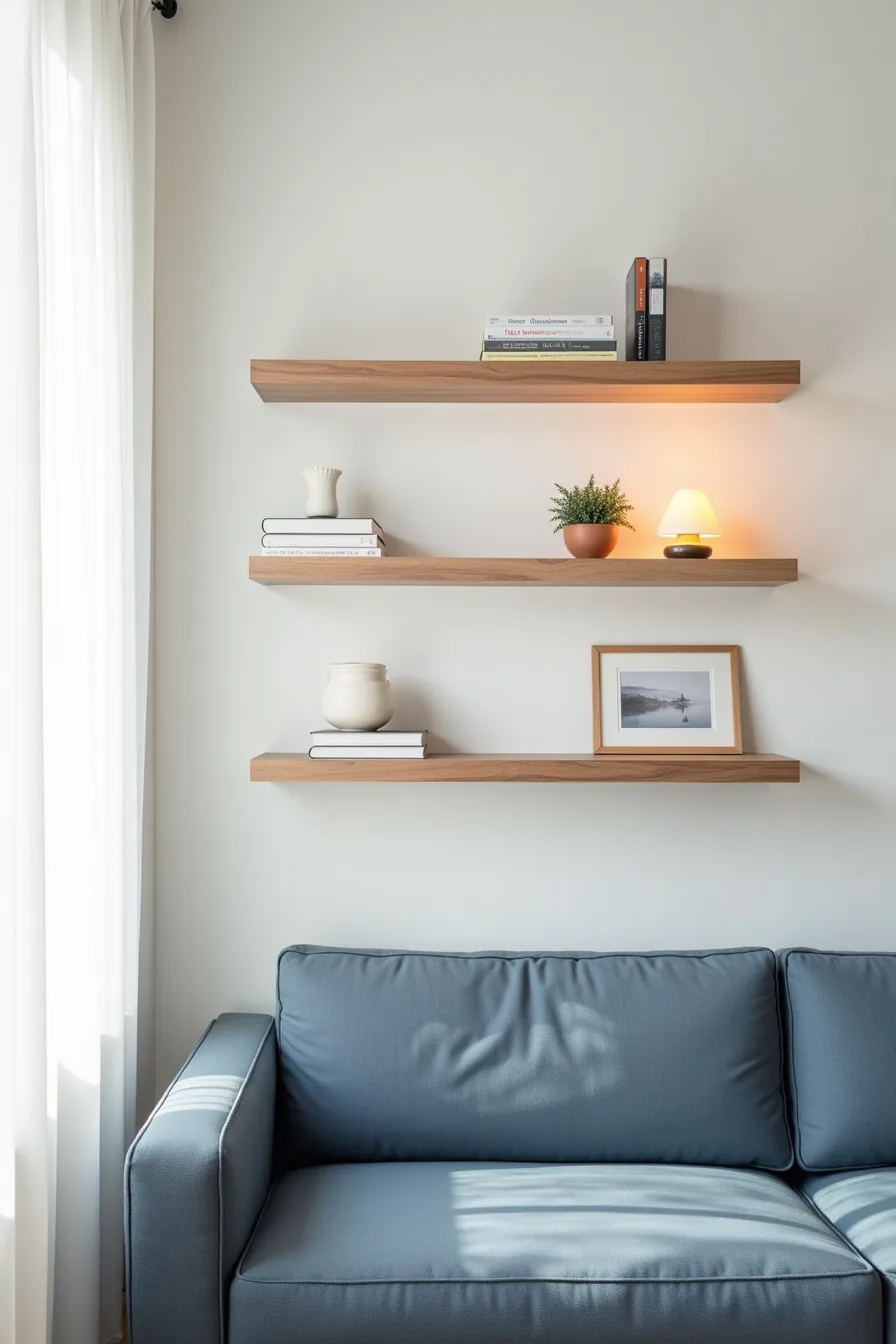
Floating shelves turn the dead zone behind your sofa into usable square footage, but their success hinges on load-bearing honesty. A slate blue sofa against a white wall with three wooden shelves at staggered heights creates a rhythm that feels intentional rather than accidental, the varying levels draw the eye upward while keeping the seating area grounded. Stacked books anchor the lower shelf, the ceramic vase and potted succulent add organic contrast, and the framed photo personalizes the composition without crowding it.
Mount shelves into studs whenever possible; drywall anchors alone hold roughly 20–35 pounds per anchor, which fails fast under a full book stack. For a standard 10–12 inch deep shelf, keep the bottom edge 18–24 inches above the sofa back, any lower and you risk knocking items off when you reach for a throw pillow. Style in odd-numbered clusters of three or five, mixing vertical stacks with single objects, and leave at least 2–3 inches of negative space between items to prevent visual noise.
Budget route: pine boards cut to length and mounted on concealed brackets cost $40–70 per shelf. Renter-friendly alternative: adhesive floating shelves rated for 10–15 pounds offer the look without drilling, though they require a perfectly smooth, grease-free wall to bond properly.
Fabric Wall Hangings and Textile Backdrops
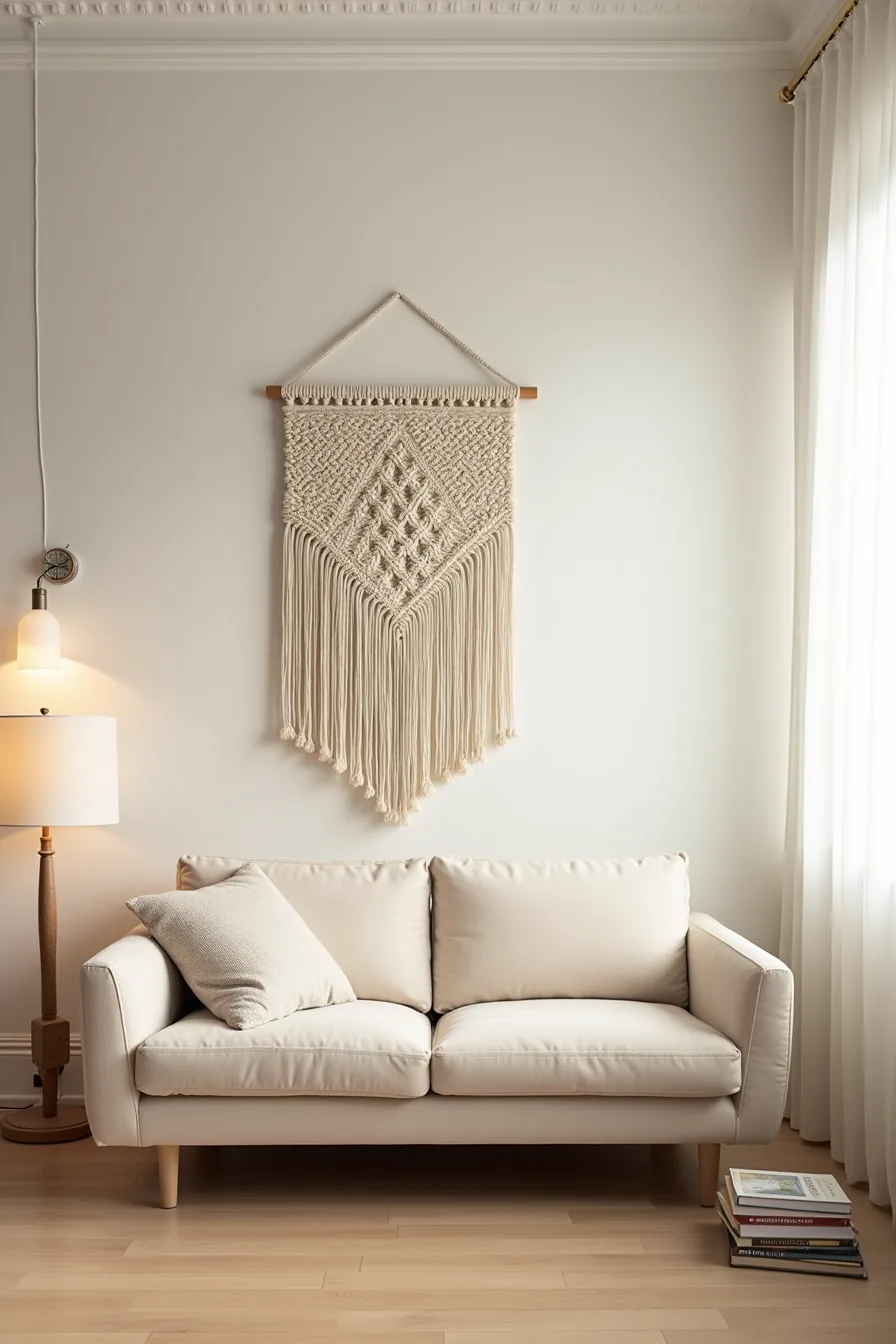
A large woven macramé wall hanging transforms the sofa back wall into a focal point without committing you to paint, wallpaper, or permanent hardware. The cream and natural fiber palette of this textile echoes the neutral beige sofa beneath it, creating a cohesive tonal block that visually anchors the seating area. Geometric knotwork adds texture and shadow play as daylight shifts across the room, giving the wall depth that flat art can’t replicate.
This treatment suits renters because most woven hangings weigh 3–8 pounds and hang from a single nail or Command-style hook rated for that load, no stud-finding required. It also works in small spaces where bulky shelving would crowd the room, since the textile sits flush against the wall and consumes zero floor space. Choose a piece roughly 60–75 percent of your sofa’s width; a 72-inch sofa pairs naturally with a 45–55 inch hanging.
To minimize dust accumulation, vacuum the piece monthly with a brush attachment and keep it 6–12 inches above the sofa back to avoid friction wear from head contact. Budget route: handmade macramé wall hangings cost $30–80 at craft fairs, or $15–25 in yarn if you knot one yourself over a weekend.
Lighting Integration and Architectural Features
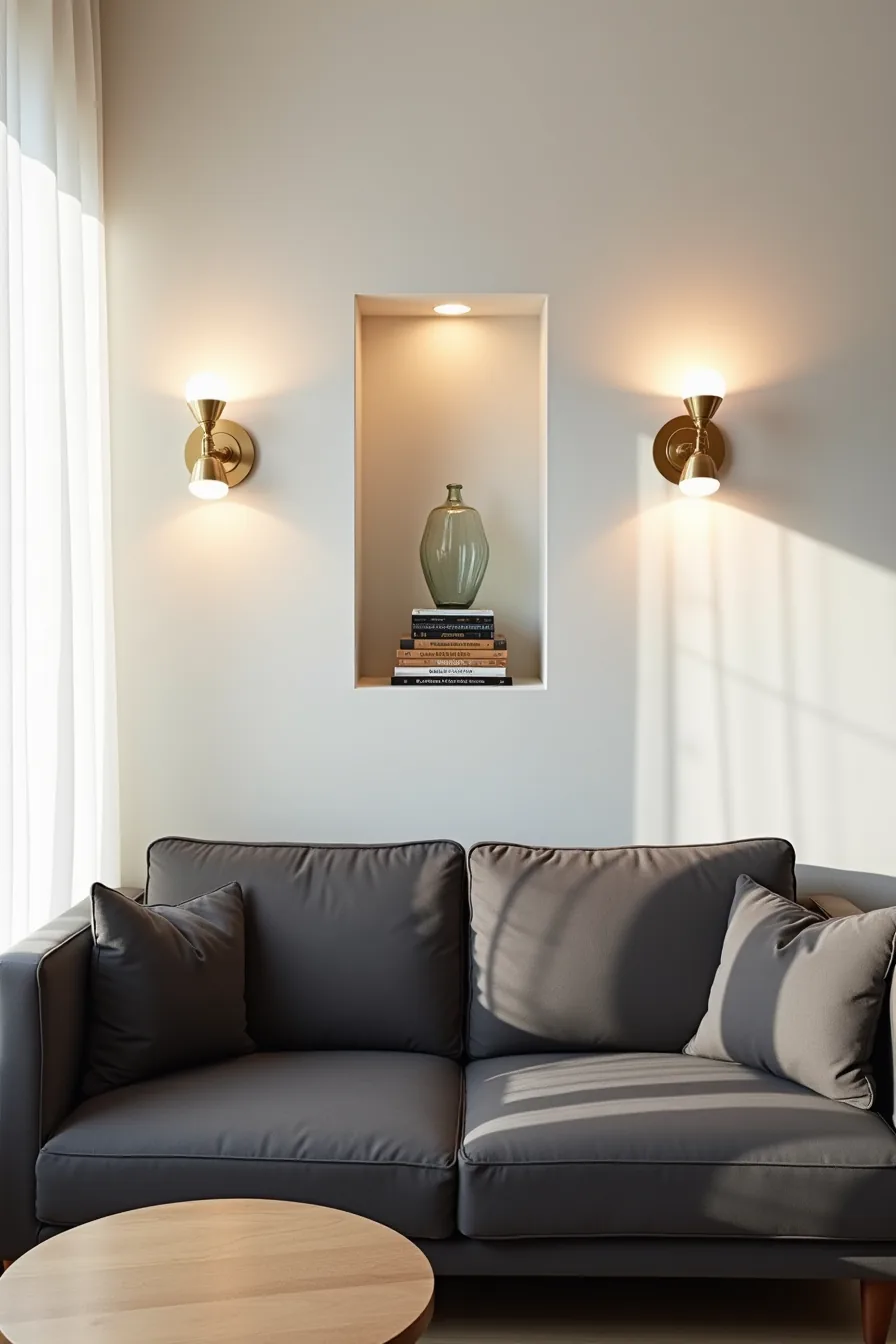
Swing-arm sconces mounted at shoulder height flanking a sofa provide focused task light for reading while freeing up floor space that floor lamps would claim. Brass fixtures with matte black or white shades complement both charcoal upholstery and white walls, and the warm glow they cast reduces the harsh contrast between a bright ceiling light and a dark seating area. Position each sconce 60–66 inches from the floor so the shade sits just above eye level when you’re seated; this placement also prevents head strikes when you lean back.
A recessed niche centered above the sofa offers display space without protruding into the room, critical in narrow layouts where shelving would encroach on walkways. The glass vase inside benefits from the sconces’ side lighting, which creates highlights that overhead fixtures wash out. Installation requires cutting into drywall: budget $200–400 per niche for framing, drywall repair, and finishing if you hire out, or use a pre-built floating shelf bracket kit for a renter-friendly alternative that mounts with two heavy-duty anchors.
For sconce wiring, hire an electrician unless you’re confident with junction boxes; expect $150–300 per fixture for professional installation. In rooms where hardwiring isn’t possible, plug-in sconces with cord covers along the wall achieve the same effect for roughly half the cost, though you’ll need an outlet within 6 feet of each mounting point.
Where to start
Pick the wall treatment that matches your room’s existing rhythm, not the one that photographs best. Measure your sofa’s silhouette against the wall dimensions first, a low-profile sofa suits a bold paint band; a tall, tufted back calls for simple art placement above it.
Start with one anchor piece: a console, a large-scale print, or a paint color. Live with it for a week before adding anything else. That single decision will tell you whether the wall needs more weight, more contrast, or simply breathing room.
Choose your priority, budget, renter-proof, or investment, and commit to that route today. Measure, mark, and hang your first piece this weekend.
Frequently Asked Questions
How wide should a sofa back wall design be relative to the sofa itself?
Your wall treatment should extend at least 12–24 inches beyond each sofa arm. For a 90-inch sofa, that means a 114–138-inch feature width. Narrower leaves the sofa looking stranded; wider swallows the piece.
Can I use sofa back wall design ideas in a rental apartment without damaging walls?
Yes, use peel-and-stick wall panels, tension-rod-mounted shelving, or freestanding room dividers placed behind the sofa. Avoid adhesive hooks or heavy brackets, they strip paint or crumble drywall. Command strips work only for lightweight frames under 10 pounds.
What is the typical budget range for a professional-looking sofa back wall installation?
Expect $150–$400 for DIY peel-and-stick panels or painted geometric patterns, $600–$1,500 for prefabricated slat or tile systems, and $2,000–$5,000 for custom millwork with integrated lighting. Labor doubles material costs if you hire out.
How do I prevent a sofa back wall from making a small room feel cramped?
Keep the treatment flat and tonal, matching the wall color or using matte finishes, rather than deep 3D panels. Leave 18–24 inches of clear floor space behind the sofa. Push the sofa 6–8 inches off the wall to create visual breathing room.