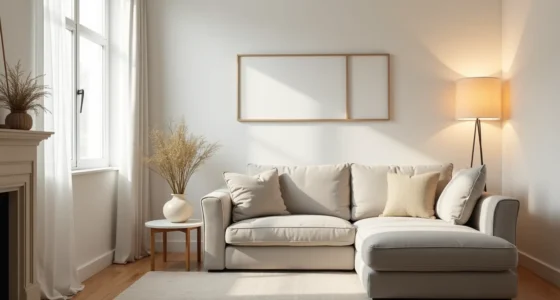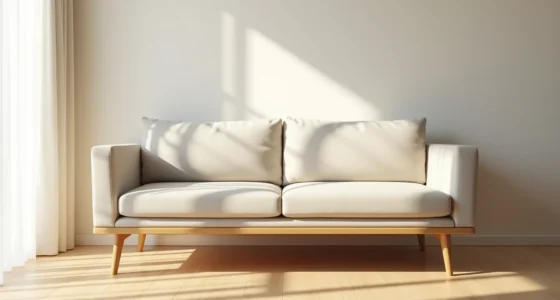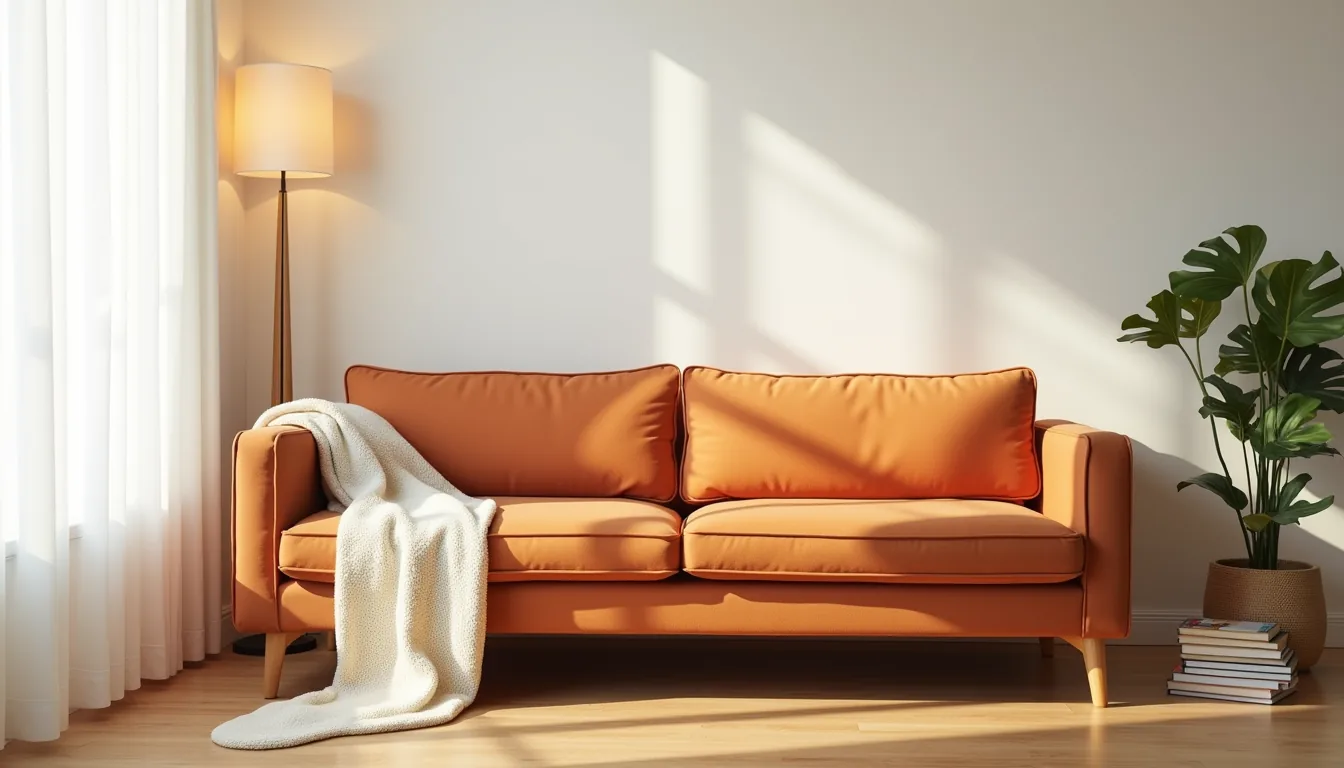
A terracotta sofa is a commitment to warmth, but whether it reads as a rustic anchor or a sculptural statement depends entirely on the room you build around it. The pigment’s natural range, from dried clay to burnt sienna, means your fabric choice dictates the entire palette. Before you buy, you need a plan for the walls, the flooring, and the traffic flow, because this isn’t a neutral piece you can ignore.
The six approaches ahead show you how to make it work with your actual space, budget, and upkeep tolerance.
Key takeaways
Pair terracotta with deep greens like olive or forest to create a botanical contrast that anchors the warm clay tone without overwhelming a small room. Choose a light backdrop of off-white, cream, or warm beige walls to make a terracotta sofa feel airy, especially if your space gets limited natural light. For a moody look, paint walls in deep charcoal or dark teal and add brass or matte black accents to give the sofa depth and a more intimate, evening-focused atmosphere. Renters can achieve the look by using a terracotta sofa cover, throw pillows, and a washable area rug instead of buying a permanent piece, ensuring a full return to neutral when you move.
Terracotta Plus Green: The Botanical Pairing
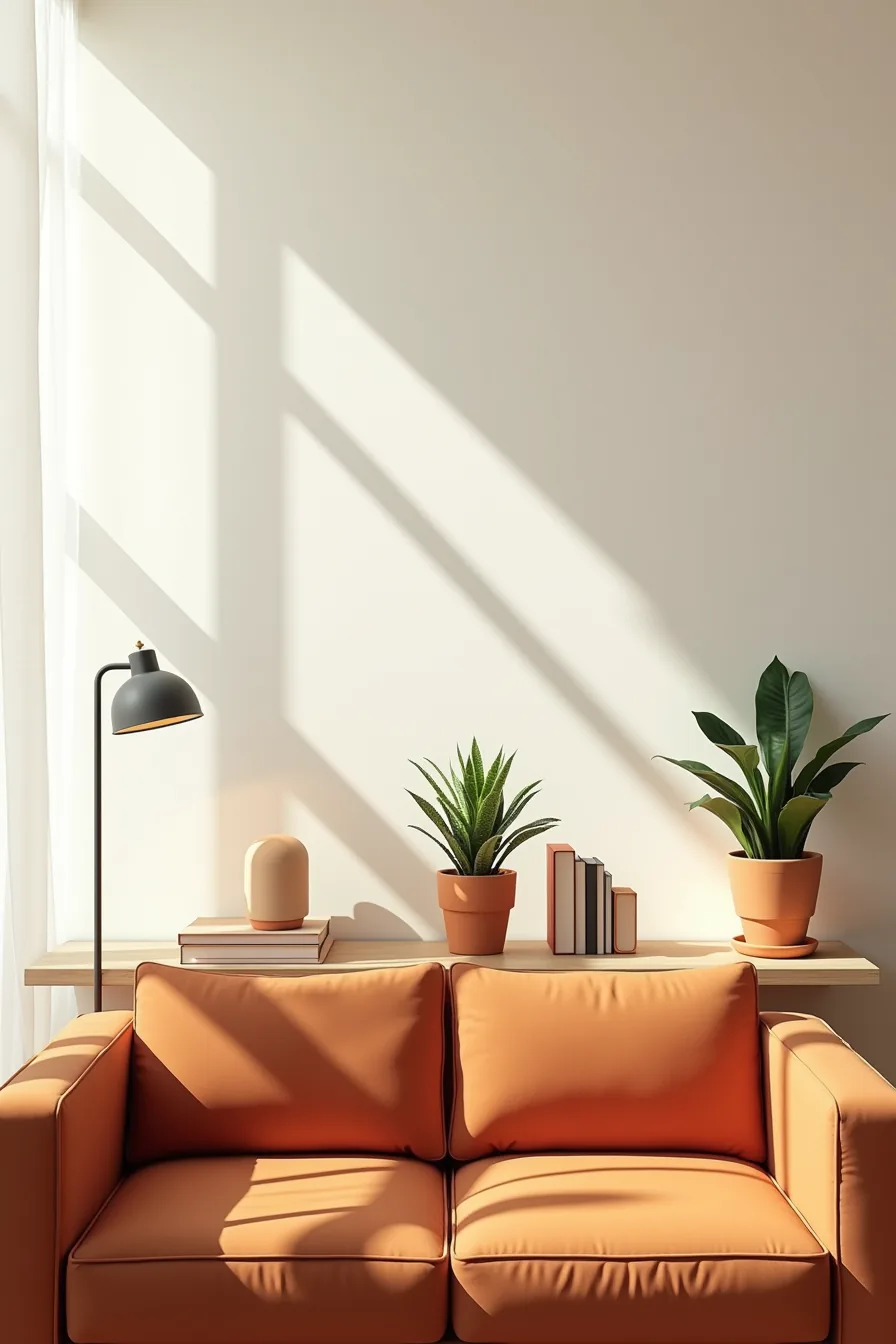
Pairing a terracotta sofa with leafy greens taps into the color wheel’s most reliable contrast: orange and green sit opposite each other, which makes both appear more saturated without adding visual clutter. This works especially well in small to medium rooms because the combination reads as one cohesive palette rather than competing zones.
Scale your planting to the sofa’s footprint. On a low wooden console table, arrange three pots at staggered heights, a tall monstera behind a mid-height snake plant, with a trailing variety at the front edge. This triangular formation draws the eye upward and softens the sofa’s horizontal mass, which keeps a compact room from feeling weighted down.
For an earth-tone living room, choose pots in unglazed clay or matte black rather than glossy ceramic. Matte finishes absorb light and reinforce the botanical pairing; gloss introduces a second reflective surface that competes with the sofa’s natural texture. Place the console within 12–18 inches of the sofa front so the greens feel intentional, not scattered.
Remember that monstera and snake plants tolerate low light but prefer indirect sun, so position the arrangement near a window rather than in a dark corner.
Light Backdrops: Maximizing Space and Airiness
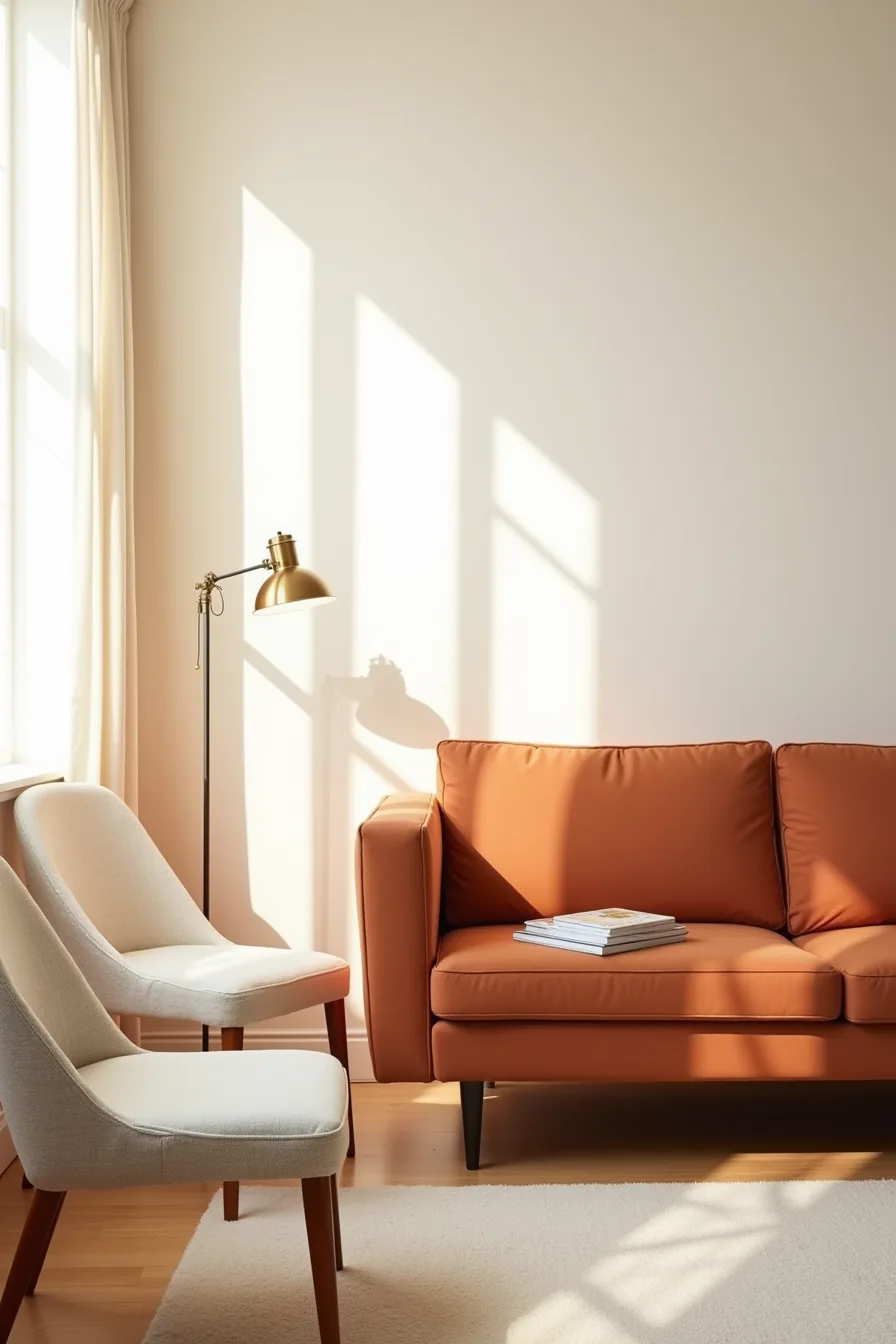
A cream or soft white wall prevents terracotta from absorbing all the light in a room, which is the primary risk when working with this saturated hue. Choose paint with a warm undertone, think ivory or greige rather than stark hospital white, because cool whites will make the sofa’s orange pigment look muddy by contrast. Pale gray works too, provided it leans slightly warm.
The light backdrop approach suits rooms under 250 square feet or spaces with limited natural light. Place the terracotta sofa against the brightest wall, then flank it with two cream linen armchairs to distribute visual weight evenly across the seating arrangement. A pale area rug anchors the group without competing for attention, while a brass floor lamp in the corner adds warmth through reflection rather than additional color.
Keep furniture proportions slightly smaller than you’d normally choose, armchairs at 28–32 inches wide instead of 36–40, so the sofa remains the clear focal point. The light vs moody backdrop decision ultimately comes down to square footage: pale walls reflect roughly three times more light than deep-toned walls, making them the smarter choice for compact layouts.
Moody Backdrops: Creating Depth and Intimacy
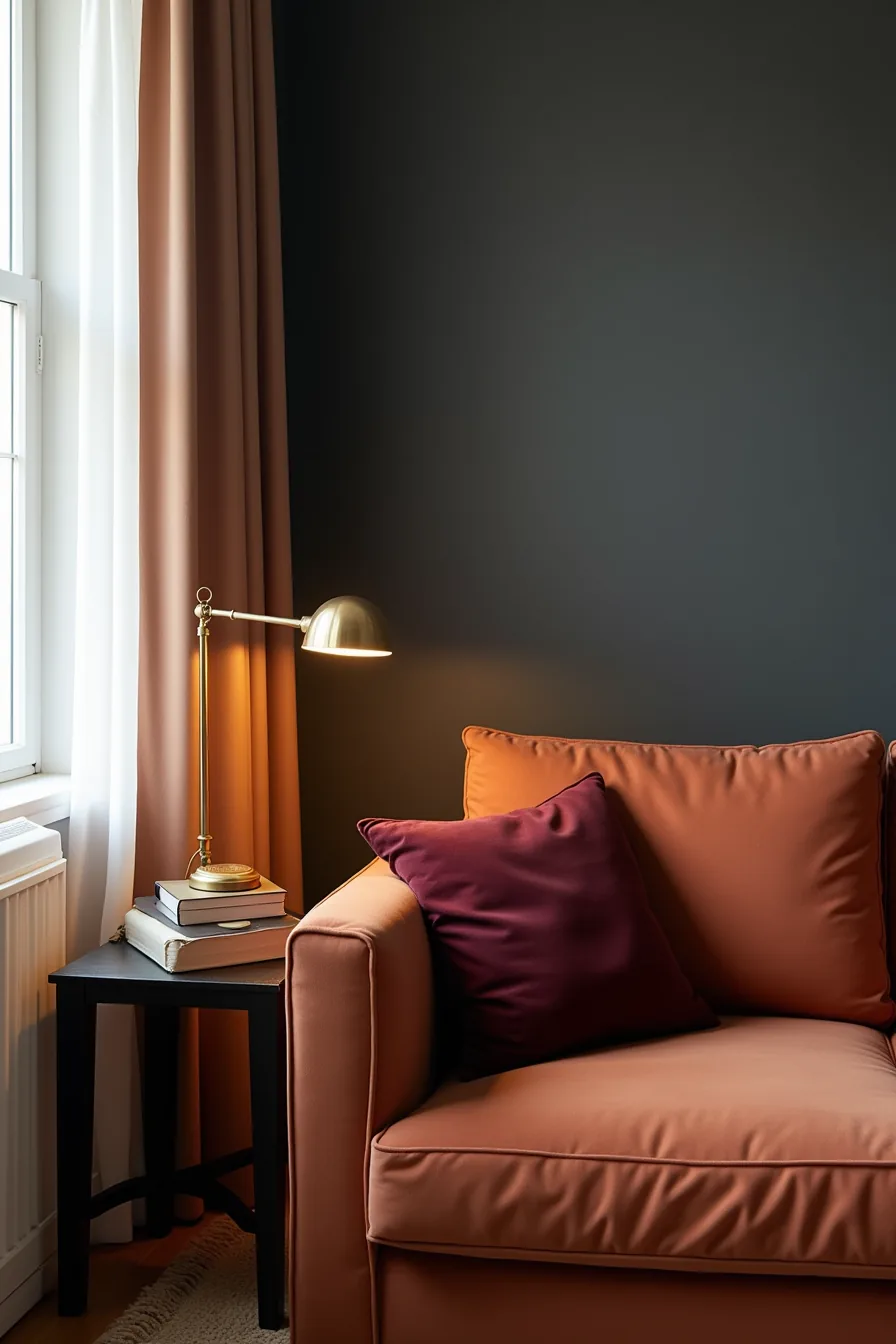
A deep charcoal or warm brown wall shifts the terracotta sofa’s character from cheerful to contemplative, making it the right choice for rooms over 300 square feet where you want defined zones rather than an open, airy feel. The saturated backdrop works best in spaces that receive evening-use only, or where you can rely on layered artificial lighting, a single overhead fixture will leave the room feeling cavernous.
In the arrangement shown here, the terracotta sofa against the charcoal wall relies on a brass table lamp positioned at seating height to cast a warm, contained glow across the cushions. That low-level light source matters more than wattage; it prevents the dark wall from swallowing the sofa’s color while creating a pool of illumination that defines the conversation area. The burgundy throw pillow bridges the gap between the orange-toned upholstery and the cool wall, while the dark wooden side table keeps the palette grounded without introducing a competing finish.
This approach suits homeowners who entertain in the evening, or anyone decorating a media room or basement lounge where daylight is already limited. You’ll need at least two light sources at different heights, the lamp plus a floor lamp or wall sconce, to prevent the space from feeling like a cave after sunset.
Budget Route: Affordable Terracotta Styling
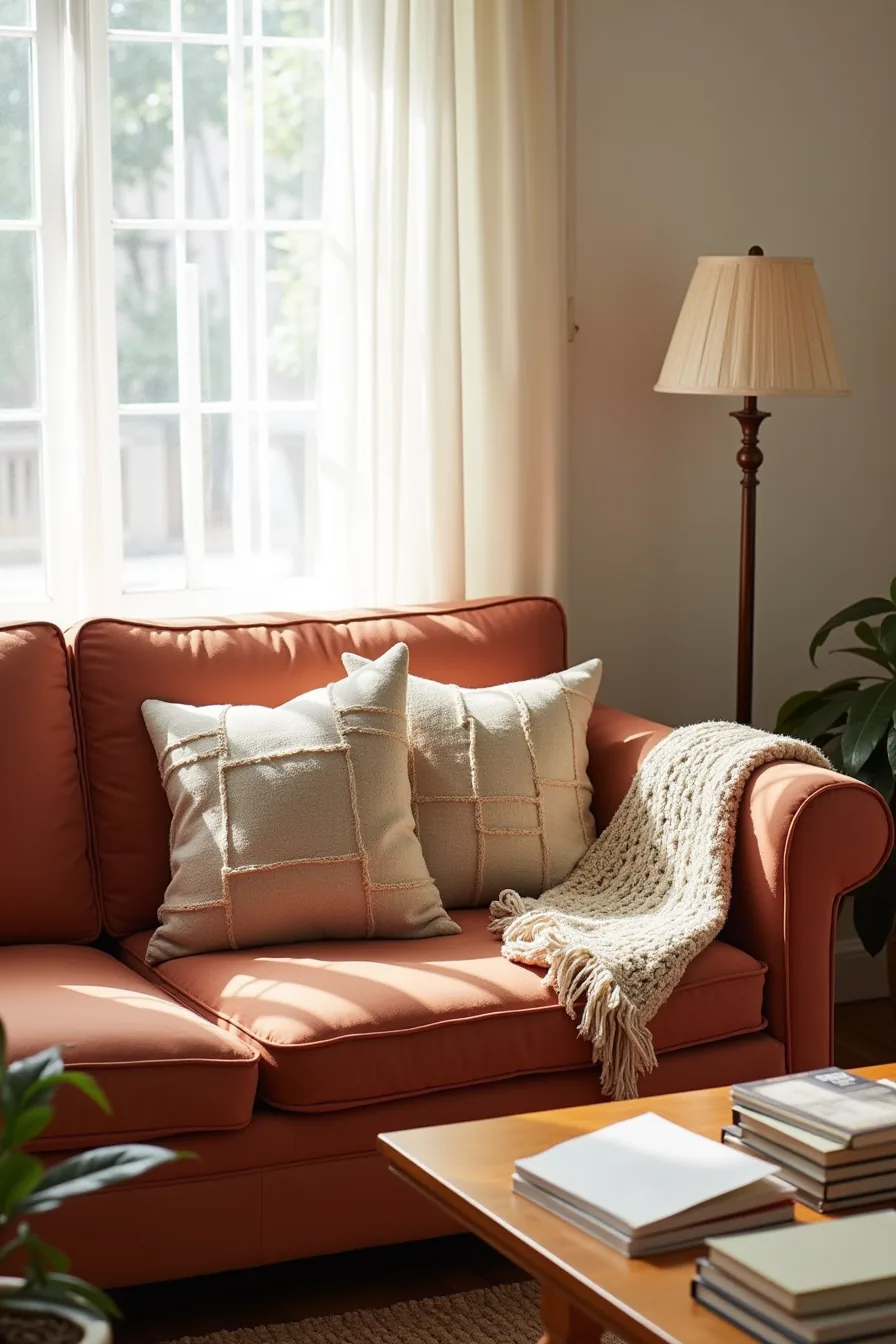
A vintage or entry-level terracotta sofa typically costs 40–60% less than a new mid-range model, but the savings come with trade-offs you should plan for. Expect visible wear like faded cushion corners or loose stitching; a cotton knit blanket folded over the arm hides the worst of it while adding texture that reads as intentional rather than accidental.
The secondhand wooden coffee table and mismatched patterned throw pillows in this setup cost under $150 combined if you source them from flea markets or Facebook Marketplace. That approach works because the pillows pull out the sofa’s warm undertones instead of fighting them, look for rust, ochre, and cream tones rather than cool blues or greens.
Budget upholstery shows wear within 3–5 years of daily use, so rotate cushions weekly and vacuum seams monthly to extend the lifespan. If you’re buying new on a budget, skip polyester blends and choose a cotton-polyester mix with at least a 50,000 double-rub rating; it will survive pets and kids noticeably better for only a small price increase.
Renter-Friendly Approach: Temporary Terracotta Impact
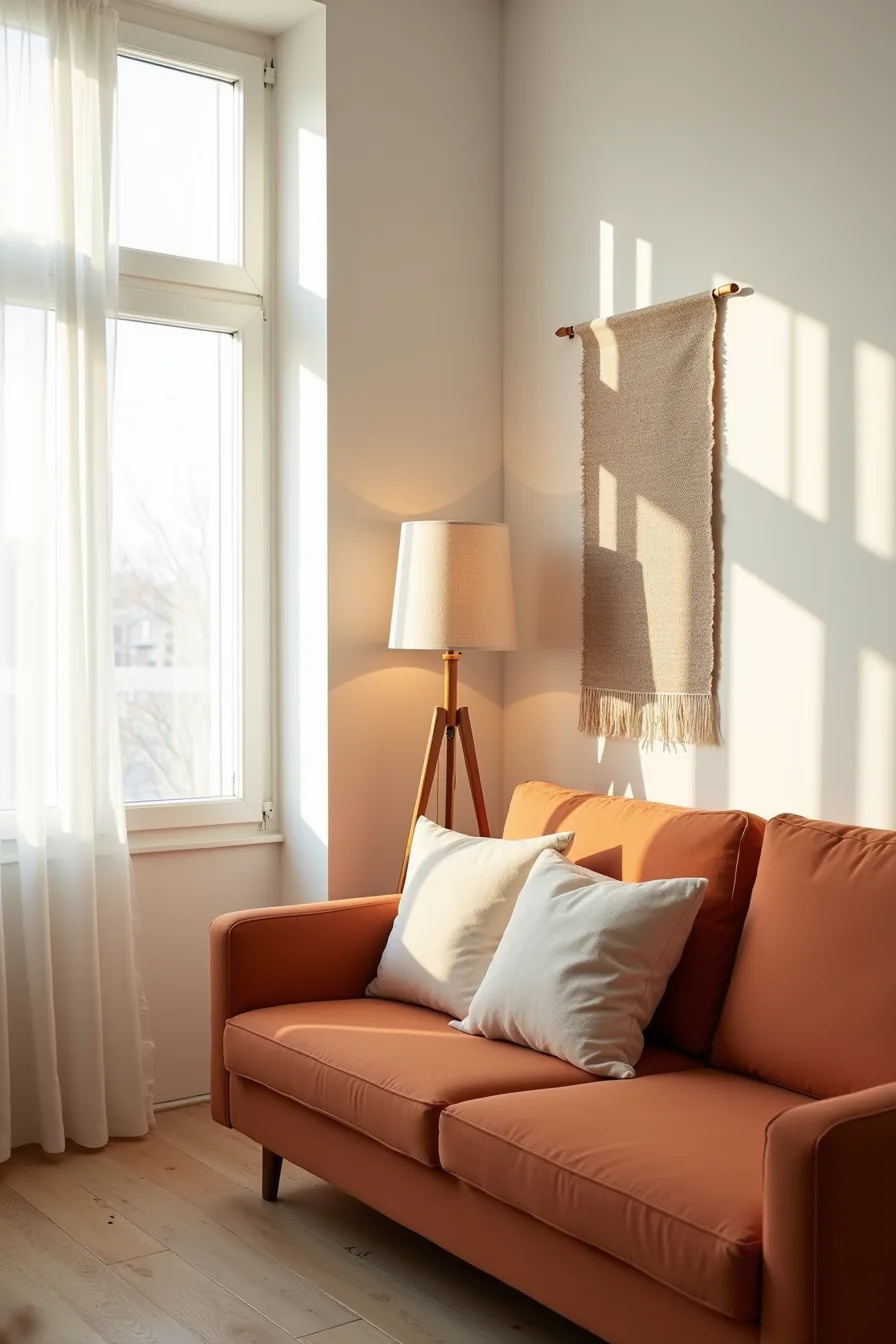
You can build a terracotta-focused living room without touching a single wall, and the setup here proves the point. A terracotta sofa anchors the space, while a peel-and-stick wallpaper sample pinned behind it introduces a matching clay tone that you can remove in under a minute when the lease ends. The removable fabric wall hanging draped over the sofa back does double duty: it softens the transition between the couch and a plain white wall, and it folds flat into a drawer for inspections.
Layer the sofa with throw pillows in slipcovers that unzip for washing, choose rust and burnt orange patterns rather than solids, since prints hide the minor fading that comes from rental-grade sunlight exposure. This entire system costs roughly $100–$200 if you already own the sofa, and it leaves zero trace. It suits renters in studios or one-bedrooms where the landlord forbids paint, and it adapts well to small spaces because nothing adds visual bulk or protrudes into walkways.
Make Terracotta Sofas Feel Fresh for Every Season
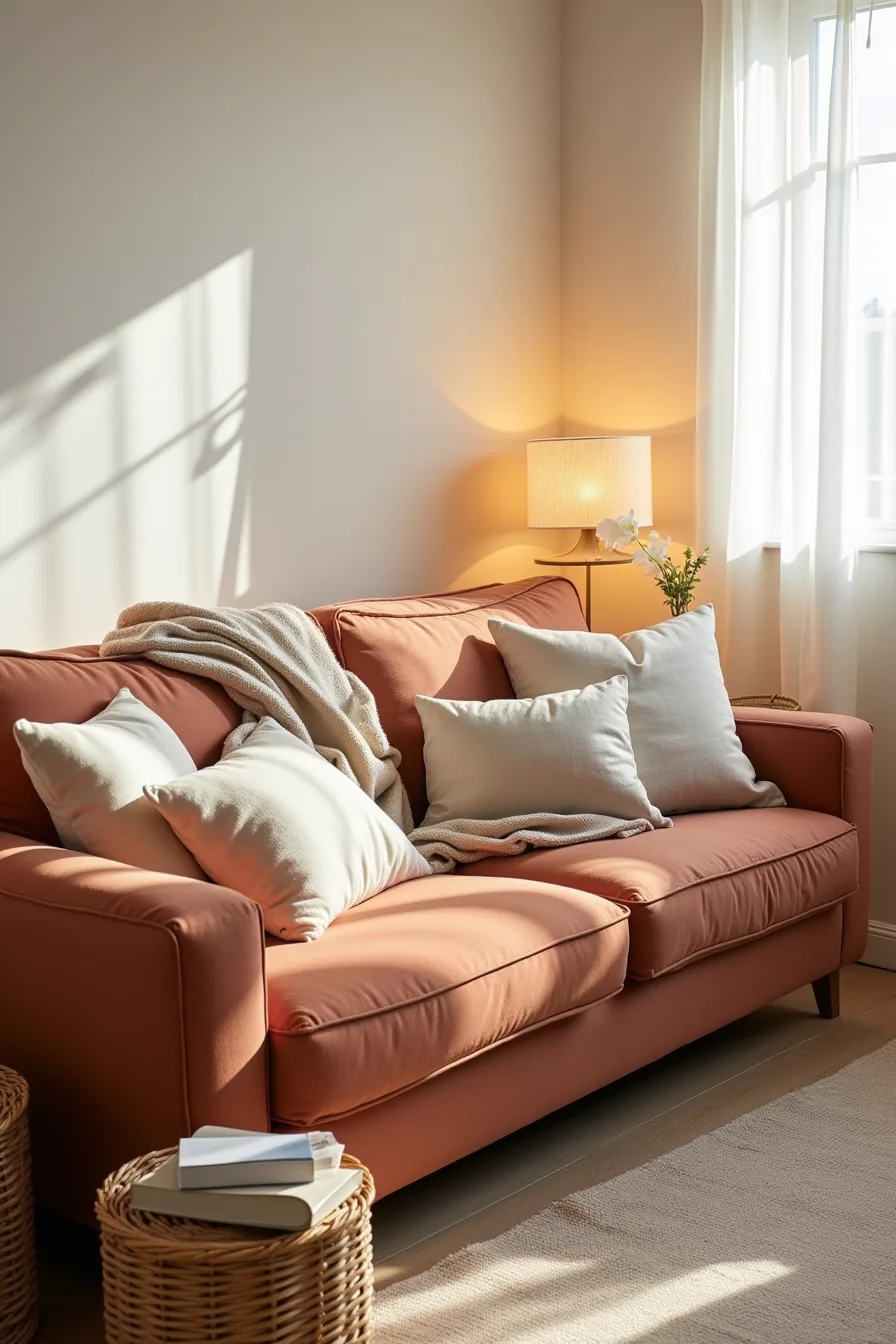
A terracotta sofa doesn’t need replacing when the weather shifts, it needs a textile rotation. Keep a wicker storage basket beside the couch stocked with folded options, so swapping takes under ten minutes. For spring and summer, switch to lightweight linen pillow covers in pale cream or sage green; the natural fiber breathes and prevents heat retention during sticky months.
Drape a matching lightweight throw over the back for cool evenings without adding the visual weight of wool.
Come fall, swap those linens for velvet or textured weaves in deep olive or mustard. The terracotta base stays constant, but the surrounding palette dictates the season’s mood, bright and airy versus rich and grounded. This system costs $40–$80 per season if you buy secondhand or off-season, and it protects the sofa’s upholstery from year-round wear.
You’ll need storage space for the off-season sets, so this works best if you’ve a closet or under-bed bins within reach. The rotation also extends the sofa’s lifespan by distributing fabric wear across multiple covers.
Your next step: measure before you buy
Before you commit to any terracotta sofa, measure your room’s longest wall and the doorway clearance. Most sofas in this category run 72–96 inches wide; anything over 84 inches needs a minimum 36-inch entry path. Test fabric swatches against your floor and wall colors in natural light, not store lighting.
Start with one terracotta piece and build around it. Order a fabric sample, place it on your floor, and live with it for three days. If it still feels right, you’re ready to purchase.
Frequently Asked Questions
What wall color works best with a terracotta sofa?
Warm whites, soft cream, or pale greige let the sofa lead without clashing. Avoid cool gray or stark white, which can make terracotta look muddy. Deep olive or sage green walls create a dramatic, grounded backdrop.
Can you put a terracotta sofa in a small living room?
Yes, if you choose a two-seater or slim-arm model rather than a deep sectional. Keep the sofa against the longest wall, use light walls, and skip bulky coffee tables. A low-profile frame preserves visual floor space.
How do you keep a terracotta sofa from looking dated?
Pair it with contemporary materials like black metal legs, travertine tables, or linen curtains. Avoid matching terracotta accessories or heavy rustic wood. Introduce geometric patterns and clean-lined furniture to shift the look toward modern.
What accent colors pair well with terracotta furniture?
Navy blue creates a striking contrast, while cream and beige soften it. Sage green, mustard yellow, and burnt orange work in tonal harmony. For a bolder edge, add black or charcoal in throw pillows and art frames.