
Fall home decor ideas fall into six practical categories, textiles, lighting, natural elements, wall treatments, furniture swaps, and architectural upgrades, and the right one for you depends on your budget, your lease terms, and how much time you want to spend on maintenance. Each category solves a different problem, from softening a sterile rental to adding warmth without touching the walls. The trade-offs matter: a $30 throw pillow and a $300 light fixture demand different commitment levels.
Below, you’ll get the specific materials, dimensions, and upkeep for each route, plus a checklist to match the idea to your space.
Key takeaways
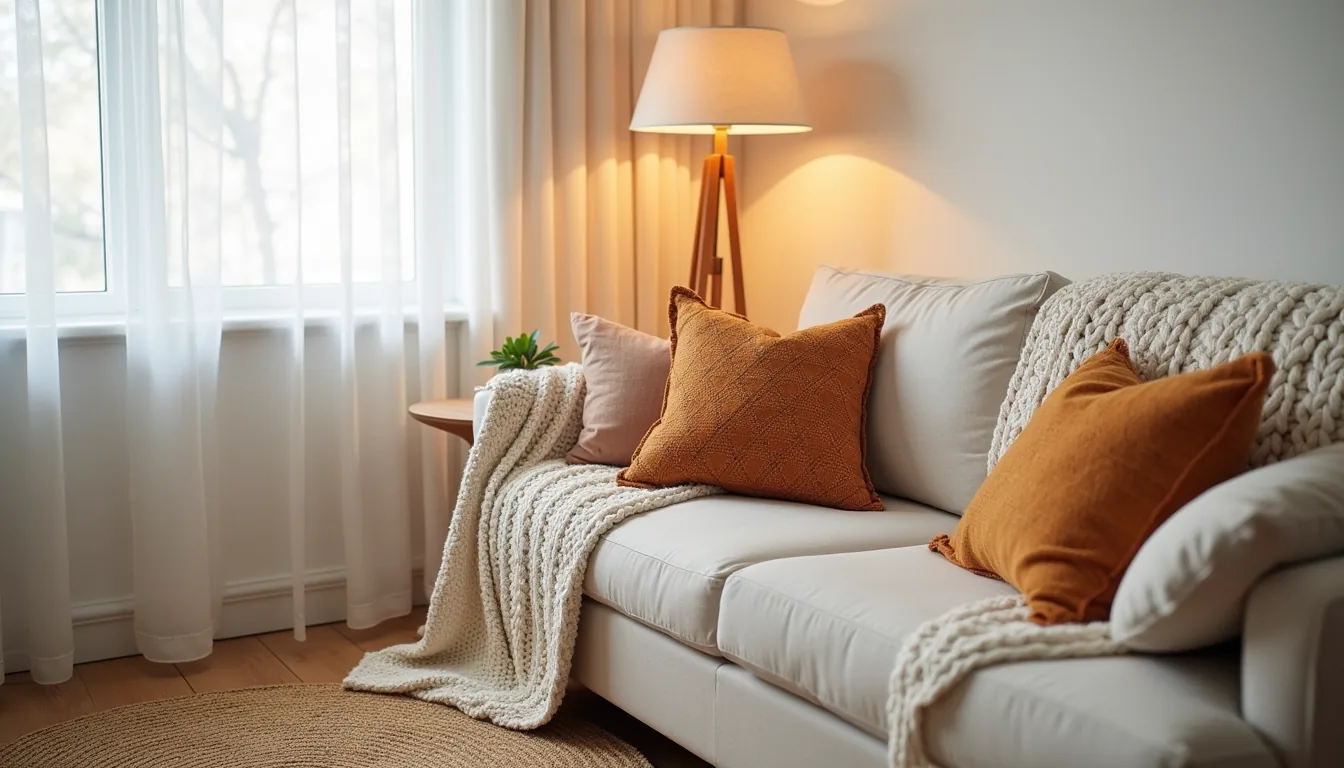
- Layer textiles first because they deliver the highest warmth-to-cost ratio, with a chunky knit throw and velvet cushions transforming a neutral sofa in under ten minutes.
- Anchor your entryway with a slim console table (18–24 inches deep) holding a tray of mini pumpkins and a vase of dried grasses, ensuring it doesn’t block the door’s swing path.
- Swap two bulbs for warm-white LEDs (2700K) and add a dimmer switch to your floor lamp, creating evening ambiance for roughly $30 and zero permanent changes.
- Style your mantel using the rule of three, one tall candlestick, one wide bowl, one low stack of books, and rotate in pinecones or faux foliage to avoid dust-heavy fresh arrangements.
Layered Textiles for Instant Warmth
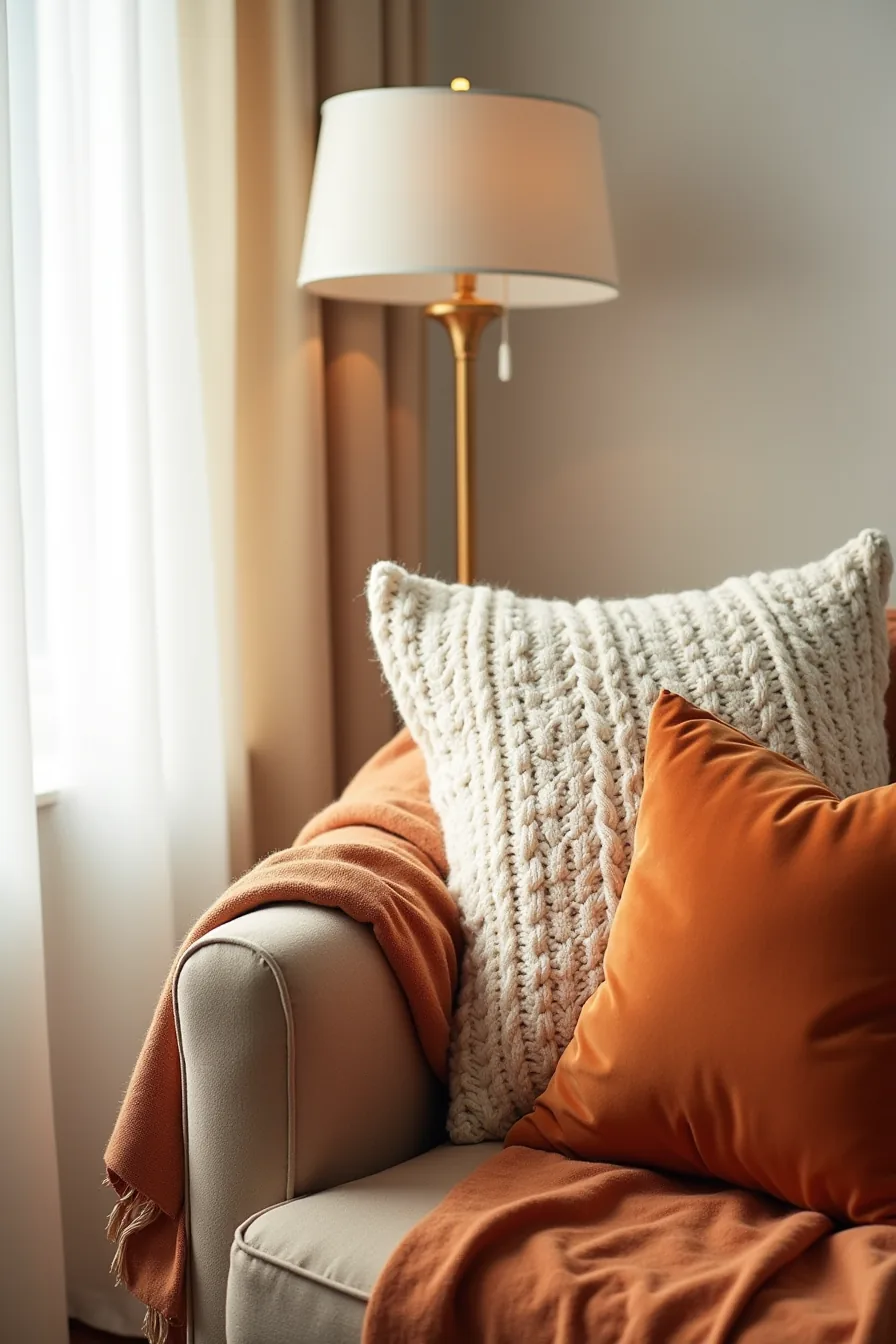
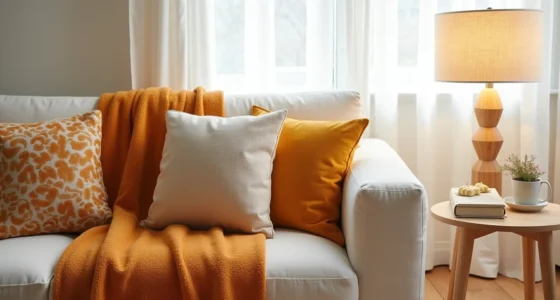
A rust-colored linen throw draped over the arm of a chair does more than add color, it signals coziness before you even sit down. Pair it with a cream cable-knit pillow and a burnt-orange velvet cushion, and you’ve created a textural contrast that reads as intentional rather than accidental.
This approach works because it’s entirely reversible. You can swap a linen throw for a chunky knit when temperatures drop, or switch burnt-orange velvet for deep olive in late November. For renters, this is your lowest-commitment route: no hardware, no paint, no permanent changes.
Scale matters more than you might think. On a standard armchair, limit yourself to one throw and two pillows, anything more crowds the seating surface and makes the chair unusable. In a small space, choose one textured piece in a saturated tone rather than three muted ones; it delivers the same seasonal shift with less visual clutter.
Linen and wool shed pet hair more easily than velvet, so factor in your household before committing to that plush option.
Entryway Focal Points with Seasonal Displays
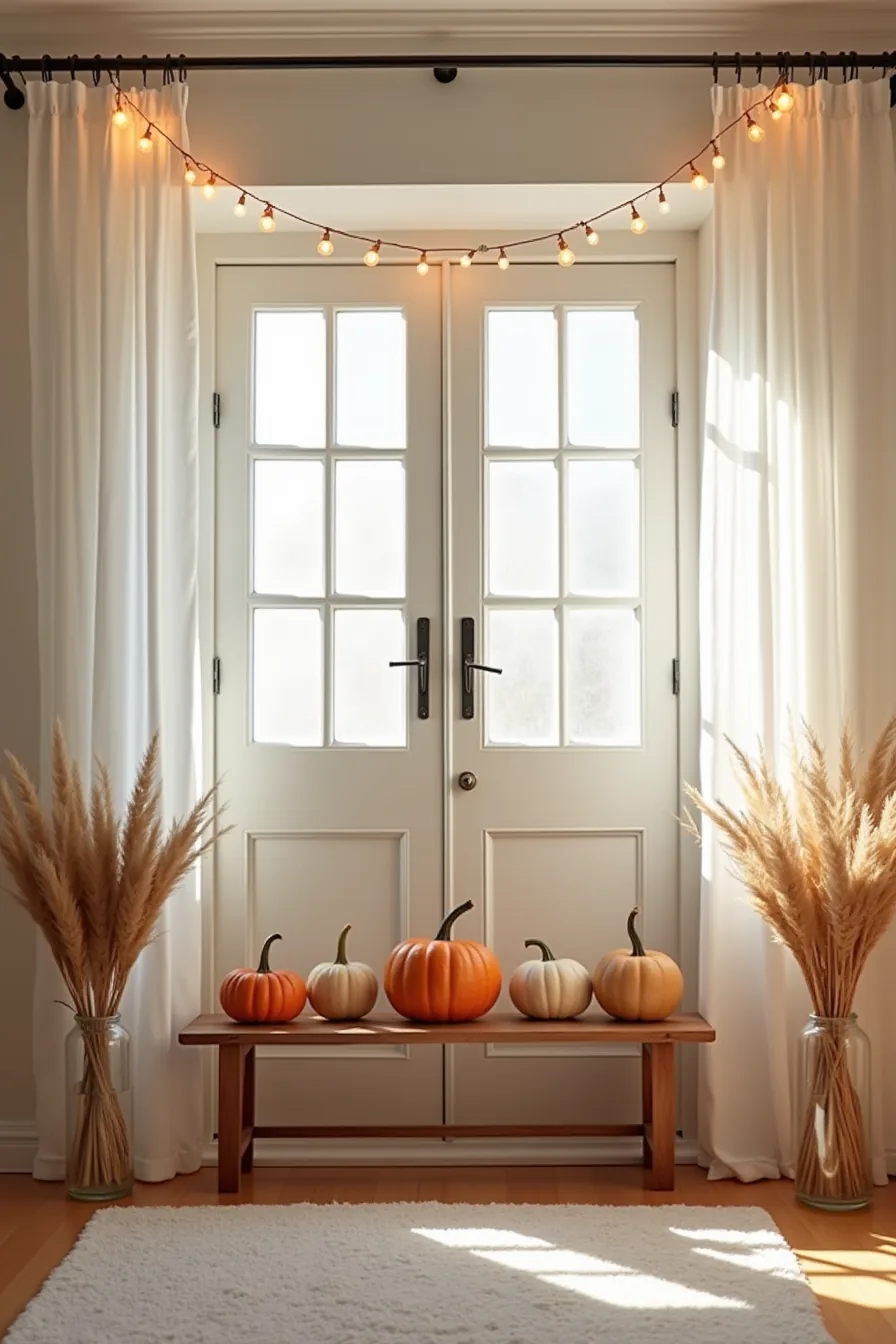
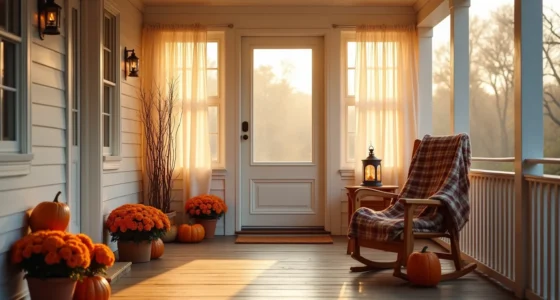
Your entryway sets the tone for the entire home, and a concentrated display of pumpkins, dried wheat, and warm lighting turns a functional pass-through into a destination. Place three pumpkins of varying sizes on a wooden bench, small, medium, and large, to create visual rhythm without looking like a grocery display. The tallest element should hit roughly two-thirds the height of your doorframe; anything taller competes with the architecture.
Flank the bench with tall glass vases holding dried wheat bundles. These add height and movement while requiring zero maintenance beyond an occasional dusting. Drape a string of warm amber lights above the doorframe to extend daylight hours visually, this also improves safety by illuminating steps and thresholds after sunset.
This setup suits medium to large entryways best. In a narrow mudroom, scale down to one vase and a single pumpkin on a wall-mounted shelf to preserve walking space. Budget-conscious decorators can substitute faux pumpkins and repurposed mason jars; just ensure they’re rated for outdoor use if your entry is exposed to moisture.
Warm Lighting Layers for Evening Ambiance
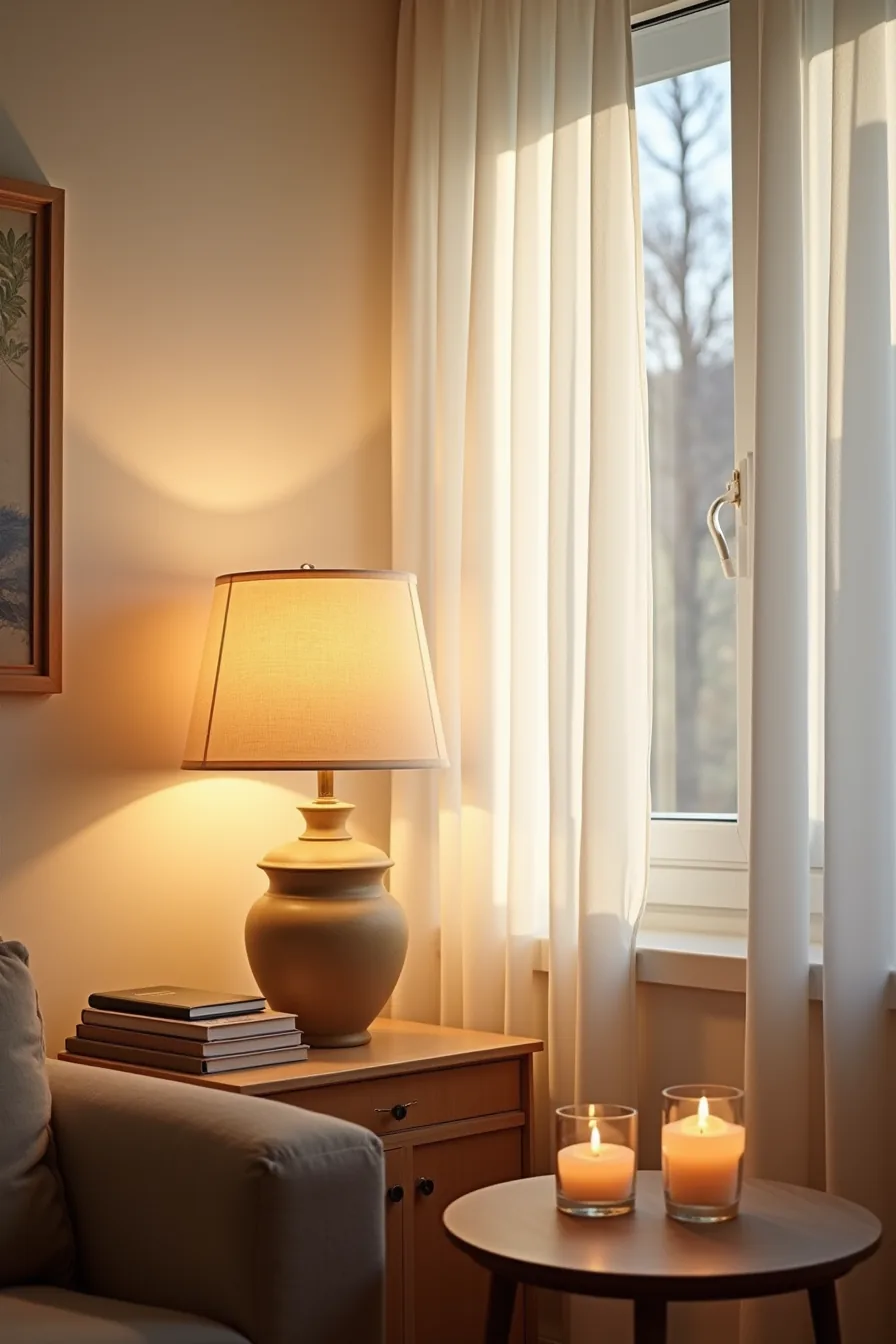
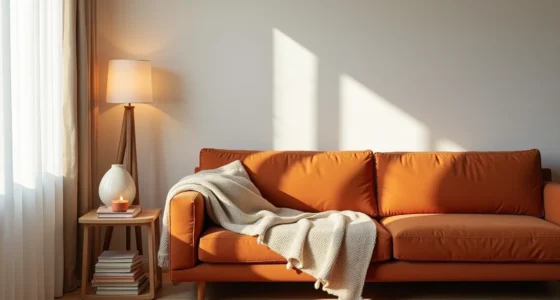
The shift from bright daylight to early darkness is where fall decor earns its keep, and lighting does the heavy lifting. Position a table lamp with a warm amber bulb at mid-height, around 42-48 inches from the floor, to cast light at seated eye level rather than glaring from above. Pair it with a floor lamp fitted with a linen shade; the fabric diffuses light into a soft, wide pool that fills a 10-12 foot corner without harsh shadows.
Candles in glass holders on a side table add a third layer of flickering warmth. Never leave them burning unattended, and keep them at least 12 inches from any fabric or paper. This three-tier arrangement, table, floor, candle, creates depth and lets you dim or extinguish layers to match the evening’s pace.
It suits medium to large living rooms best; in a compact apartment, choose just the table lamp and candles to avoid visual clutter. Swap standard bulbs for 2700K warm-toned LEDs; they cost roughly $8-15 per bulb and last years, making this the most energy-efficient route in this guide.
Mantel and Shelf Styling with Collected Objects
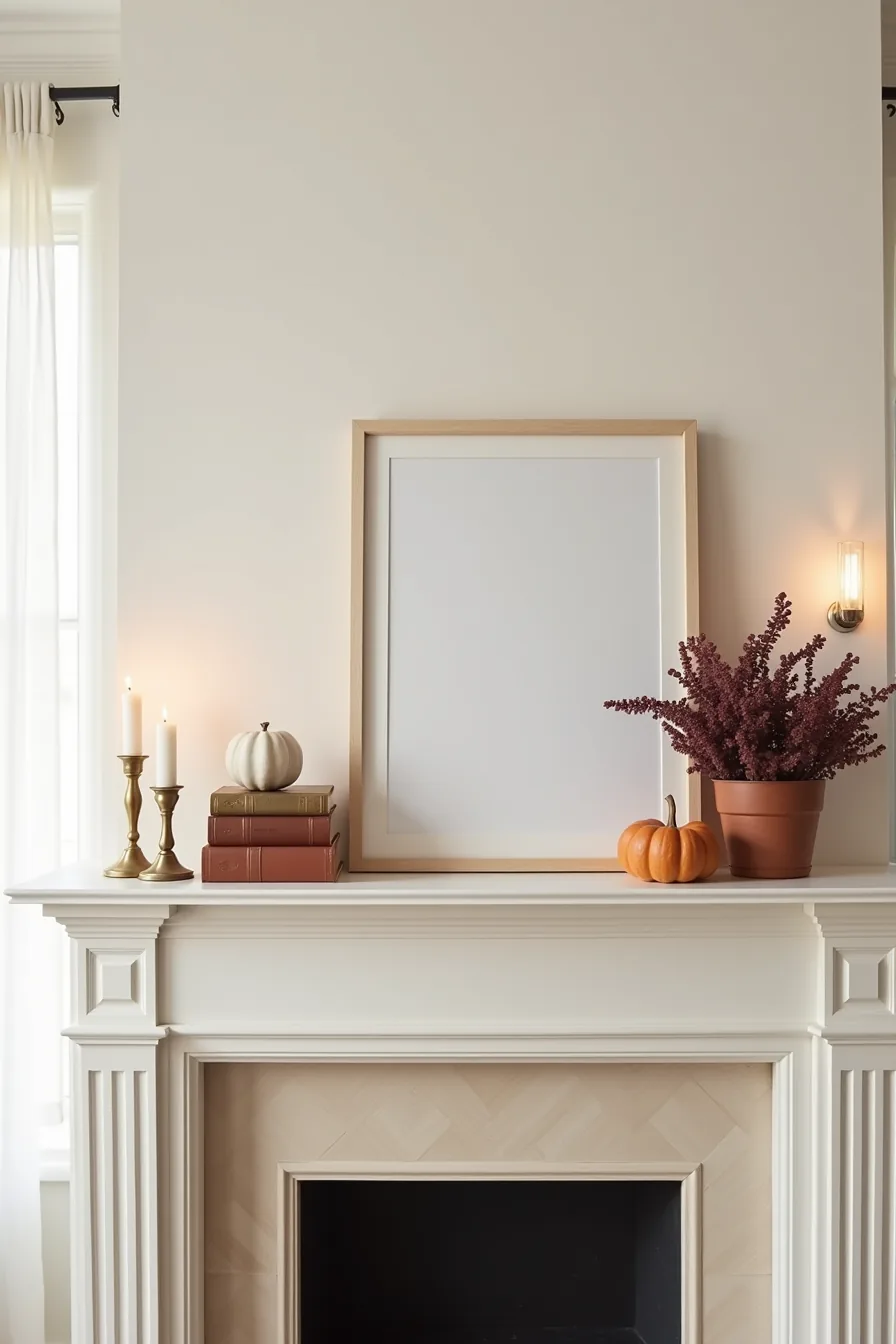
A mantel or shelf works best when you treat it as a horizontal gallery, not a dumping ground. The arrangement you’re looking at balances five distinct elements: brass candlesticks, a stack of three leather-bound books, a ceramic pumpkin, a framed empty frame, and a potted burgundy plant. The trick is scale variation, tall candlesticks anchor the left, the low, wide book stack grounds the middle, and the plant’s height returns the eye to the right edge.
Group objects in odd numbers and leave deliberate gaps between clusters; negative space prevents the surface from reading as clutter. This approach suits medium-sized living rooms or entryways where you’ve at least 48 inches of horizontal surface to work with. For smaller shelves, drop the frame and books, keeping just the pumpkin, candlesticks, and plant at reduced heights.
The ceramic pumpkin is a one-time $15-30 purchase, while the plant and books likely already exist in your home, making this the budget-friendly option in this guide. Dust the ceramics and candlesticks weekly; the plant needs watering every 5-7 days and prefers indirect light.
Window Treatments and Outdoor Visibility
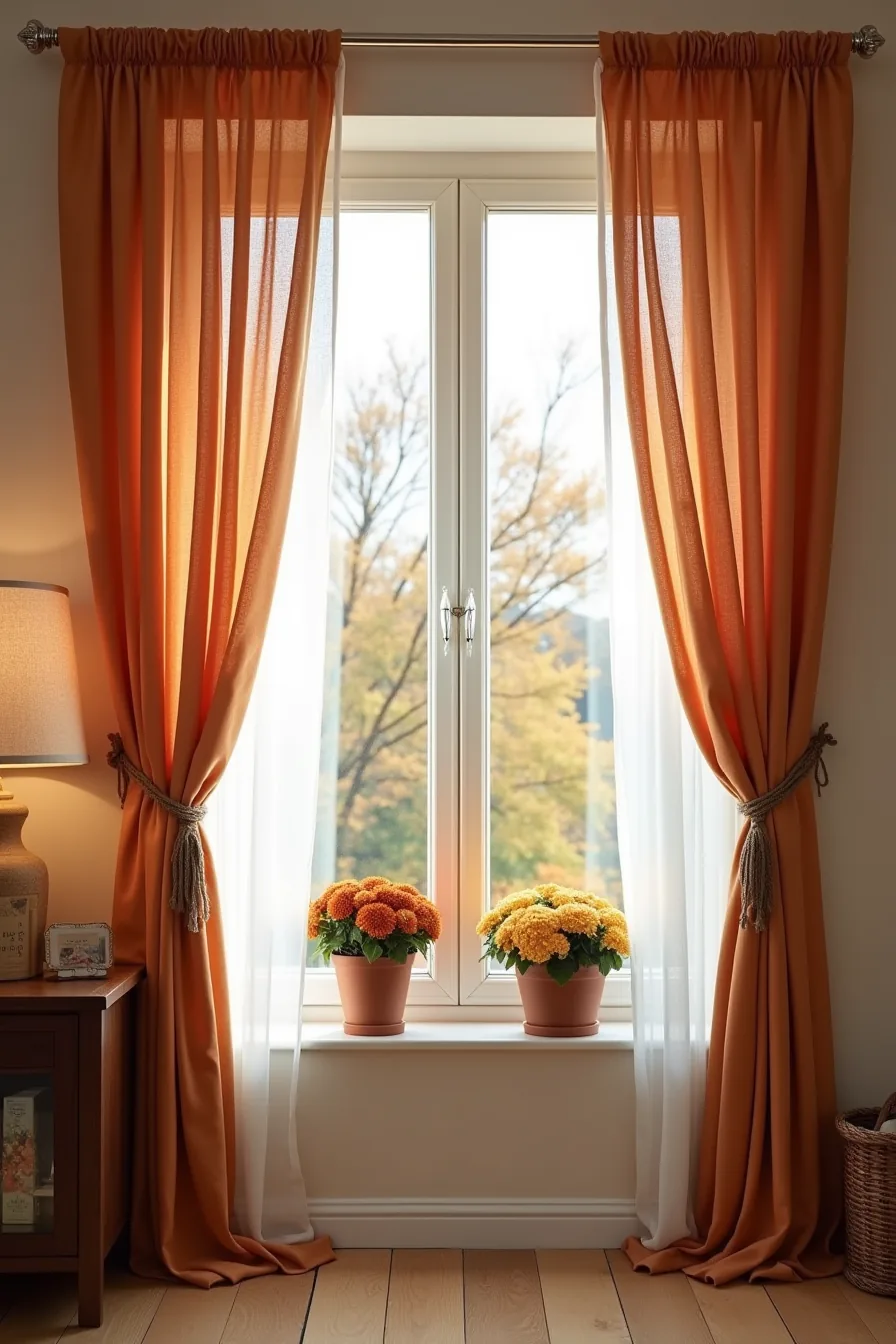
Swap heavy summer drapes for rust-colored linen curtains that filter light without darkening the room. Tie them back with natural twine to frame the view, letting the outdoor foliage and mums in planters on the windowsill become part of the decor. This setup works best in living rooms or bedrooms with south- or west-facing windows, where the sheer-ish linen softens harsh afternoon glare while still admitting warmth.
For apartment dwellers, this is entirely renter-friendly, no hardware changes needed, just replace the rod rings or use clip-on rings over existing fixtures. Expect to spend $40–$80 per panel; linen wrinkles intentionally, so skip ironing and embrace the texture. Wash cold and hang dry to maintain color.
On rainy days, pull the ties loose and let the curtains fall flat for privacy, then re-tie them when the sun returns, a two-minute adjustment that shifts the room’s mood instantly.
Long-Term Structural Additions for Year-Round Flexibility
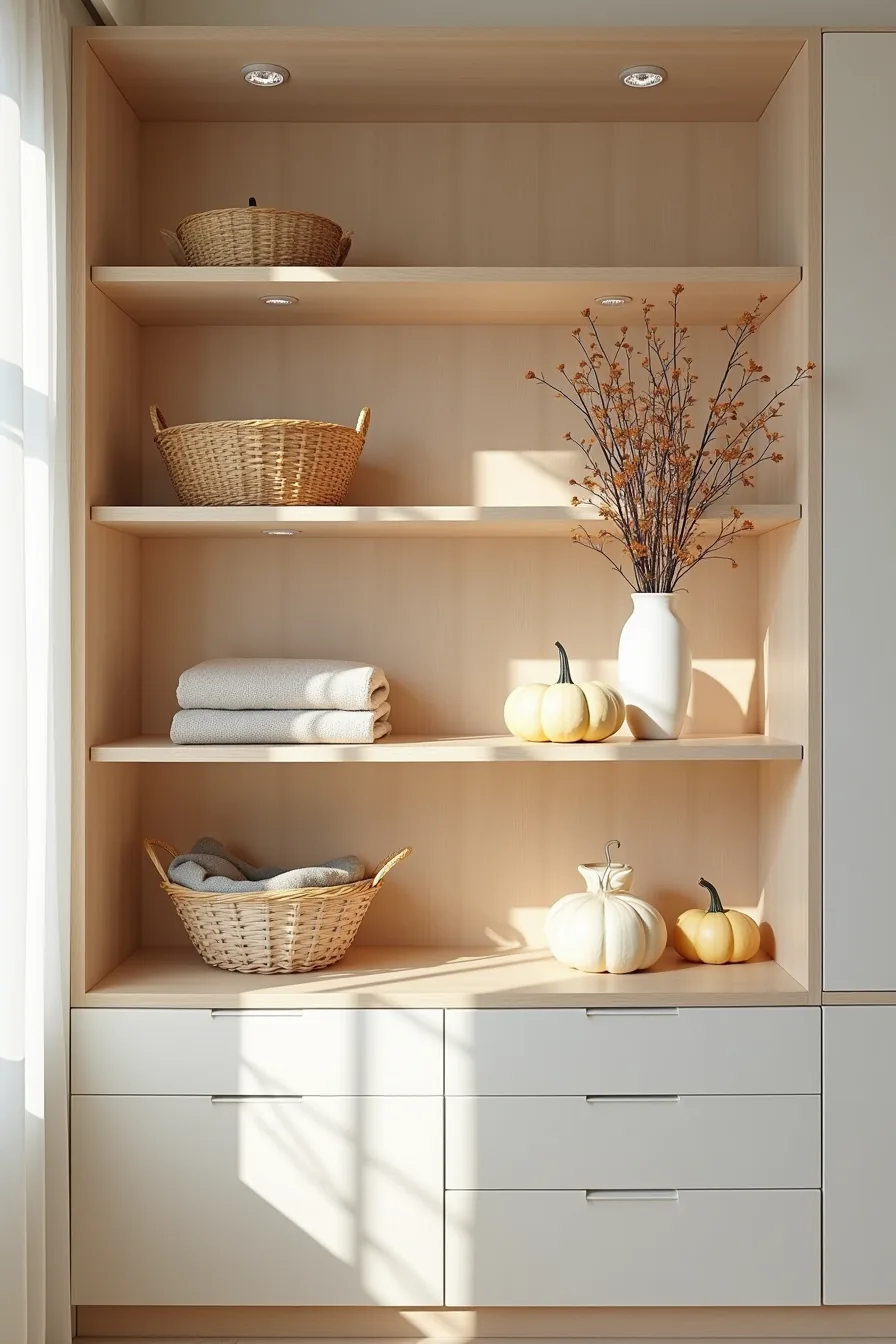
Built-in shelving transforms seasonal decorating from a full-room overhaul into a 20-minute swap. A recessed or floating unit with adjustable shelves, typically 12–16 inches deep and spaced 14–18 inches apart, gives you dedicated zones for woven baskets, small pumpkins, dried branches in a tall vase, and folded textiles. The key is leaving 30–40 percent of each shelf empty; negative space keeps the display from reading as clutter and lets your warm fall decor inspiration rotate in without displacing permanent books or ceramics.
This route suits homeowners who want a permanent anchor for four seasonal rotations per year, not just autumn. Expect to invest $800–$2,500 for custom carpentry, or $300–$600 for a freestanding floor-to-ceiling unit you secure to wall studs. Unlike curtains or throw pillows, shelving never needs seasonal storage, you simply change what rests on it.
Dust the surfaces weekly with a microfiber cloth; unfinished wood benefits from an annual beeswax conditioning to prevent drying and cracking. For renters, a tension-rod shelving system inside a closet nook offers a similar effect without drilling, though it caps weight at about 25–30 pounds per shelf.
Start with one anchor piece
Before buying anything, pick a single focal item, a chunky knit throw, a set of amber glass vases, or a weathered wood tray. Build the rest of your palette around that anchor: warm rust, deep olive, and muted gold. This prevents the cluttered, random look that happens when you shop piecemeal.
Keep it seasonal, not permanent
Limit your fall edit to swap-able items: pillow covers, table runners, candle holders, and small shelf decor. Store summer pieces in a labeled bin so the switch takes under an hour. For rented spaces or small budgets, focus on textiles and natural elements, dried branches, mini pumpkins, or cinnamon sticks, that cost little and require zero storage.
Your next step: clear one surface today
Choose a single mantel, entry table, or kitchen counter. Remove everything, wipe it down, and place just three items: your anchor piece, one organic element (like a gourd or eucalyptus), and one light source (a candle or small lamp). Live with it for 48 hours before adding anything else, this restraint is what separates styled from cluttered.
Frequently Asked Questions
How do I adapt fall home decor ideas to a small apartment without overwhelming the space?
Scale down proportions, use tabletop vignettes, a single wreath, or stackable pumpkins on shelves. Avoid bulky throws or large floor arrangements. Choose multifunctional pieces like decorative baskets that store blankets, and stick to two accent colors to prevent visual clutter.
What’s the difference between renter-friendly fall decorating and permanent home changes?
Renter-friendly decor is fully removable and damage-free, think adhesive hooks, freestanding planters, and washable textiles. Permanent changes include painting walls, installing built-in shelving, or swapping lighting fixtures. Renters prioritize easy reversal; homeowners can invest in structural or fixed upgrades that last beyond the season.
Can I use fall home decor ideas in rooms without fireplaces or mantels?
Yes. Use a console table, bookshelf, window sill, or entryway bench as your focal point. Hang a garland over a door frame, place candles on a sideboard, or arrange pumpkins on a coffee table. The key is anchoring the display at eye level or below, not requiring a hearth.
How long should fall home decor ideas typically stay up before switching to winter styling?
Keep fall decor from early September through Thanksgiving weekend, roughly 10–12 weeks. After Thanksgiving, transition to winter pieces like evergreens, snowflake accents, and neutral metallics. If you host late-November gatherings, wait until the first week of December to fully switch, but swap out obvious harvest items like cornucopias by late November.