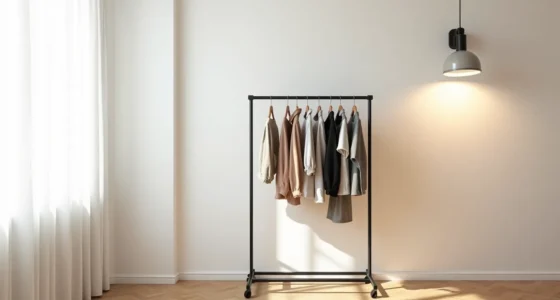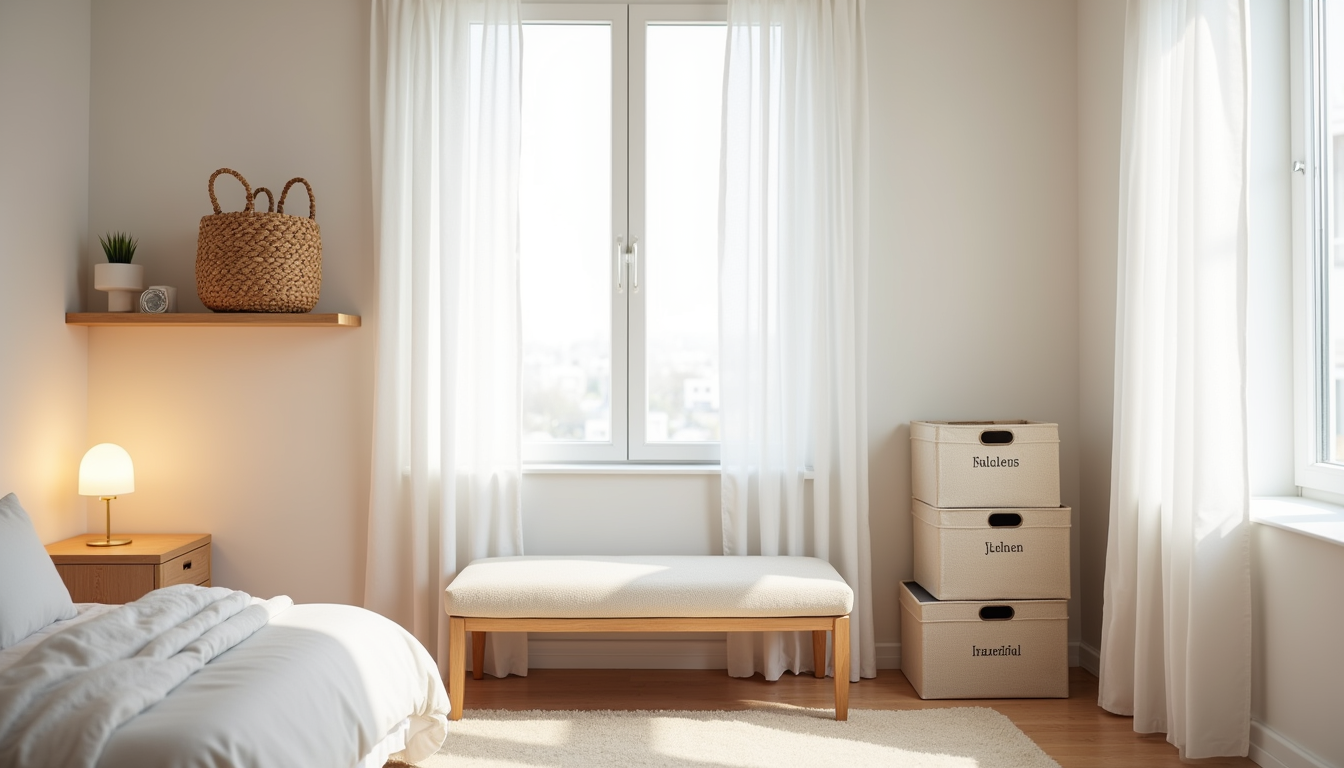

Effective bedroom storage balances accessibility and aesthetics while working within your room’s dimensions. Start by decluttering to assess what you truly need, then choose between fixed systems for permanence or adjustable options for flexibility. Renter-friendly solutions like over-door organizers maximize unused space, while built-ins offer smooth capacity.
The right mix depends on your items, habits, and room size—each decision impacts daily convenience and long-term function.
Key takeaways
- Measure your under-bed clearance first—most standard beds need storage bins under 6-9 inches tall for easy access.
- Choose wall-mounted shelves for small bedrooms, as they add 12-18 inches of storage depth without floor space.
- Match closet organizer materials to your wardrobe—wire systems suit lightweight items, while solid shelves handle 15-30 lbs per linear foot.
- Avoid overstuffing drawers—leave 1-2 inches of empty space at the top for smooth operation and airflow.
Start with a Complete Inventory and Declutter
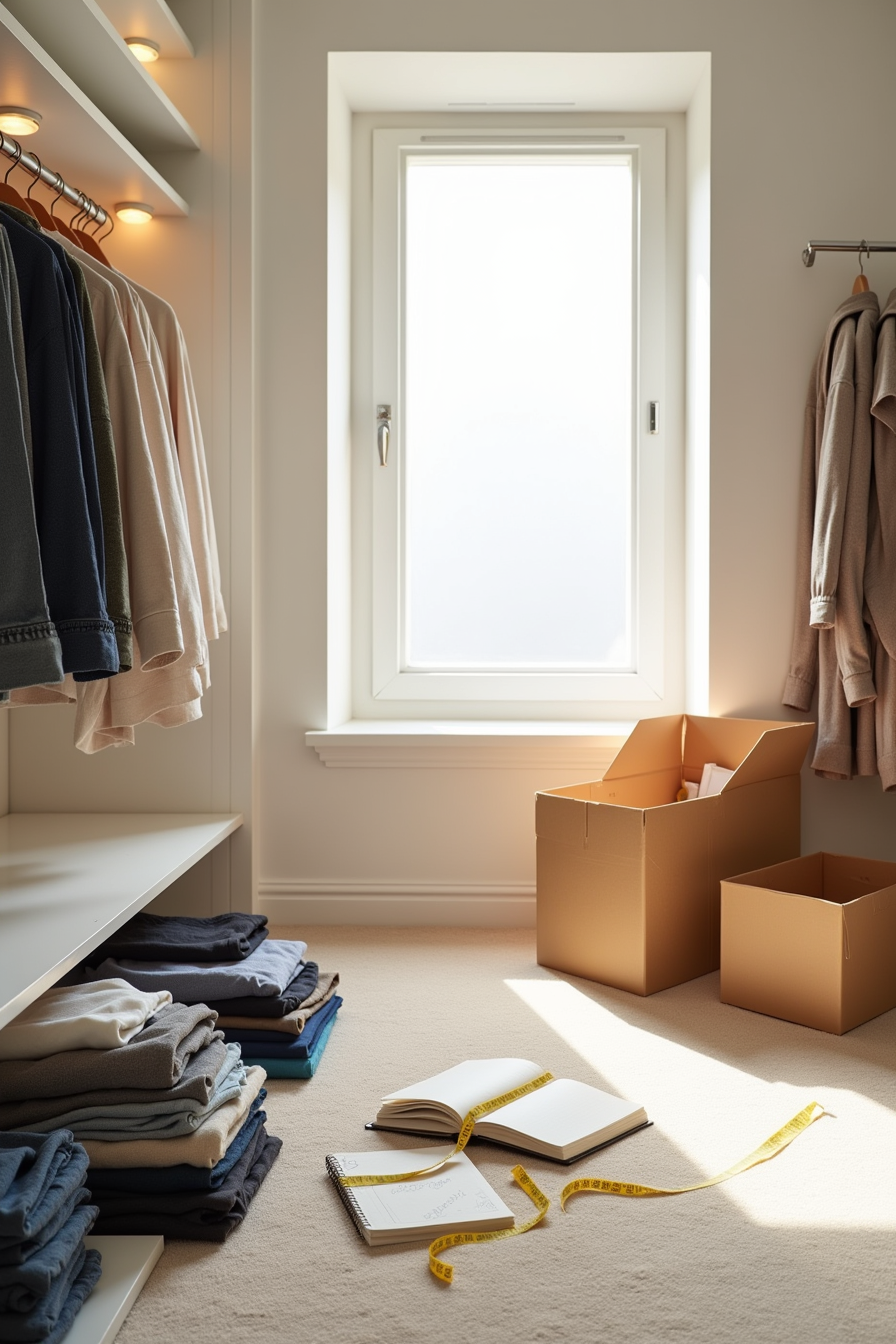
Empty your existing bedroom storage completely—closets, drawers, under-bed bins—and sort items into piles like the clothing categories spread across the floor. Keep a notebook to record what you own (e.g., “12 sweaters, 6 pairs of shoes”) and measure the exact dimensions of your available storage spaces with a tape measure. Be ruthless: if you haven’t used an item in 12 months, place it in one of the donation boxes immediately.
This process reveals three key details: how much you actually need to store, which items deserve priority placement, and where your current systems fail. A typical bedroom closet holds 25-40 linear inches of hanging space, while dressers offer 8-12 cubic feet of folded storage—benchmark your inventory against these ranges. Label temporary bins for seasonal swaps (winter coats, summer linens) to streamline future rotations.
Only after this audit should you shop for containers or organizers, ensuring every solution targets a verified need.
Under-Bed Storage for Hidden Capacity
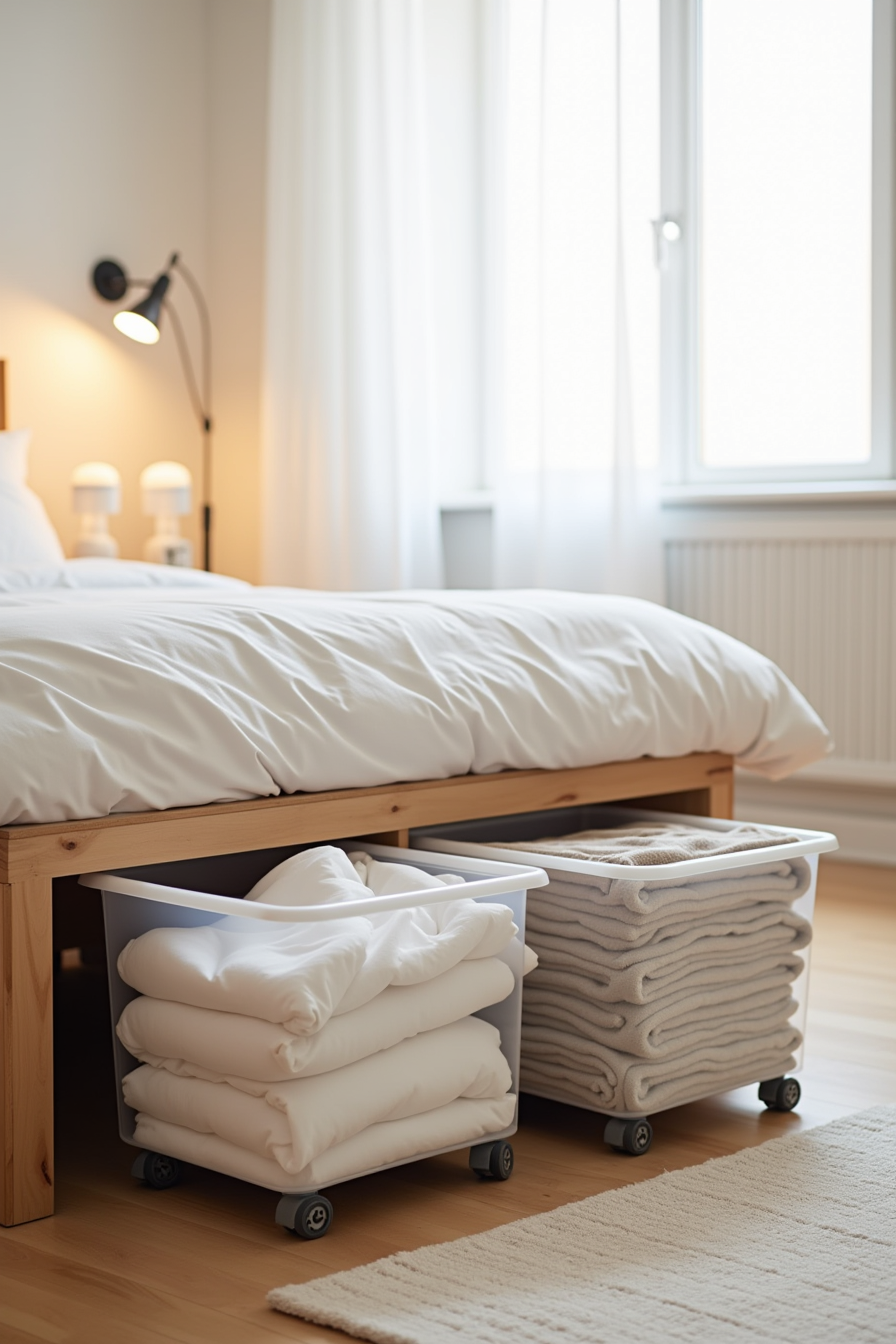
Rolling bins with clear lids beneath a platform bed frame add 12-18 cubic feet of concealed storage without occupying floor space. Plastic bins resist dust better than fabric options and slide smoothly on laminate or hardwood—measure your bed’s clearance (typically 6-12 inches) before purchasing. The example setup stores folded linens and seasonal clothing, letting you identify contents at a glance while keeping them accessible with minimal effort.
Choose low-profile bins under 7 inches tall to avoid scraping bed slats, and distribute weight evenly—overloading one side risks damaging wheels or warping the container. Avoid stacking bins unless your bed frame provides elevated support; most free-standing designs can’t handle more than 40 pounds per bin safely. For renters, soft zippered under-bed bags offer similar capacity while compressing down when not in use—ideal for temporary housing where drilling into walls isn’t allowed.
Vertical Wall Systems and Floating Shelves
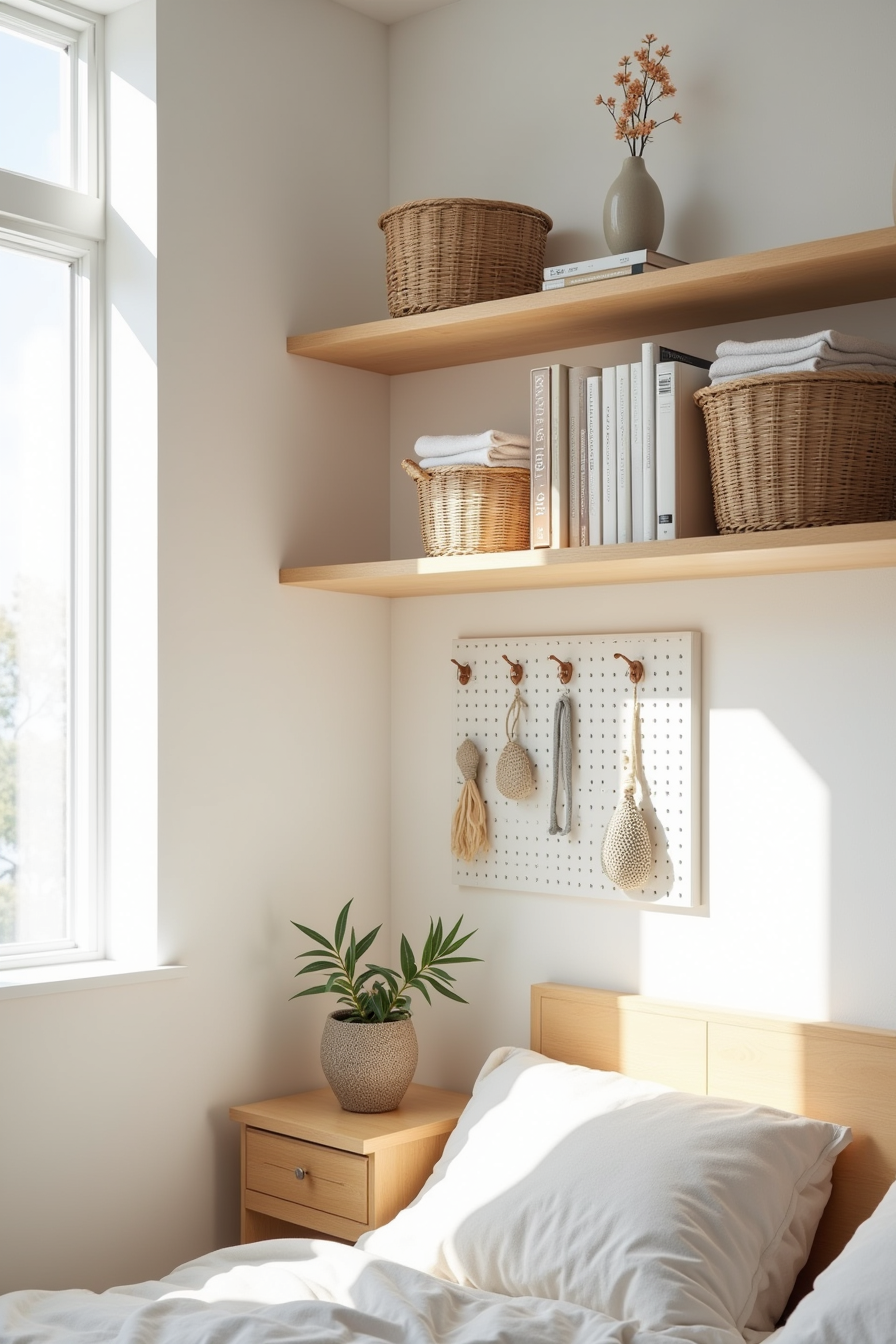
Floating wooden shelves spaced 10-14 inches apart vertically create a modular system for folded sweaters, wicker baskets, and display items like books—keeping essentials visible without cluttering surfaces. The pegboard panel beside them adds hooks for hanging accessories, combining open and concealed storage in a 3-foot-wide wall section. Wood shelves with a 1.5-inch thickness typically support 15-25 pounds per linear foot when anchored into studs, making them suitable for medium-weight textiles and decor.
Stagger shelf heights to fit baskets (usually 6-12 inches tall) while leaving clearance for removing items easily—aim for at least 3 inches of space above stored objects. For drywall without studs, use toggle bolts rated for twice the expected load; renters can opt for tension-rod systems or adhesive hooks that hold up to 5 pounds. Avoid overloading shelves near the bed where items could fall; place heavier baskets lower and lighter decor higher.
Keep pegboard hooks 6-8 inches apart to prevent overcrowding while maximizing hanging capacity for scarves or hats.
Closet Organizers: Fixed vs. Adjustable Configurations
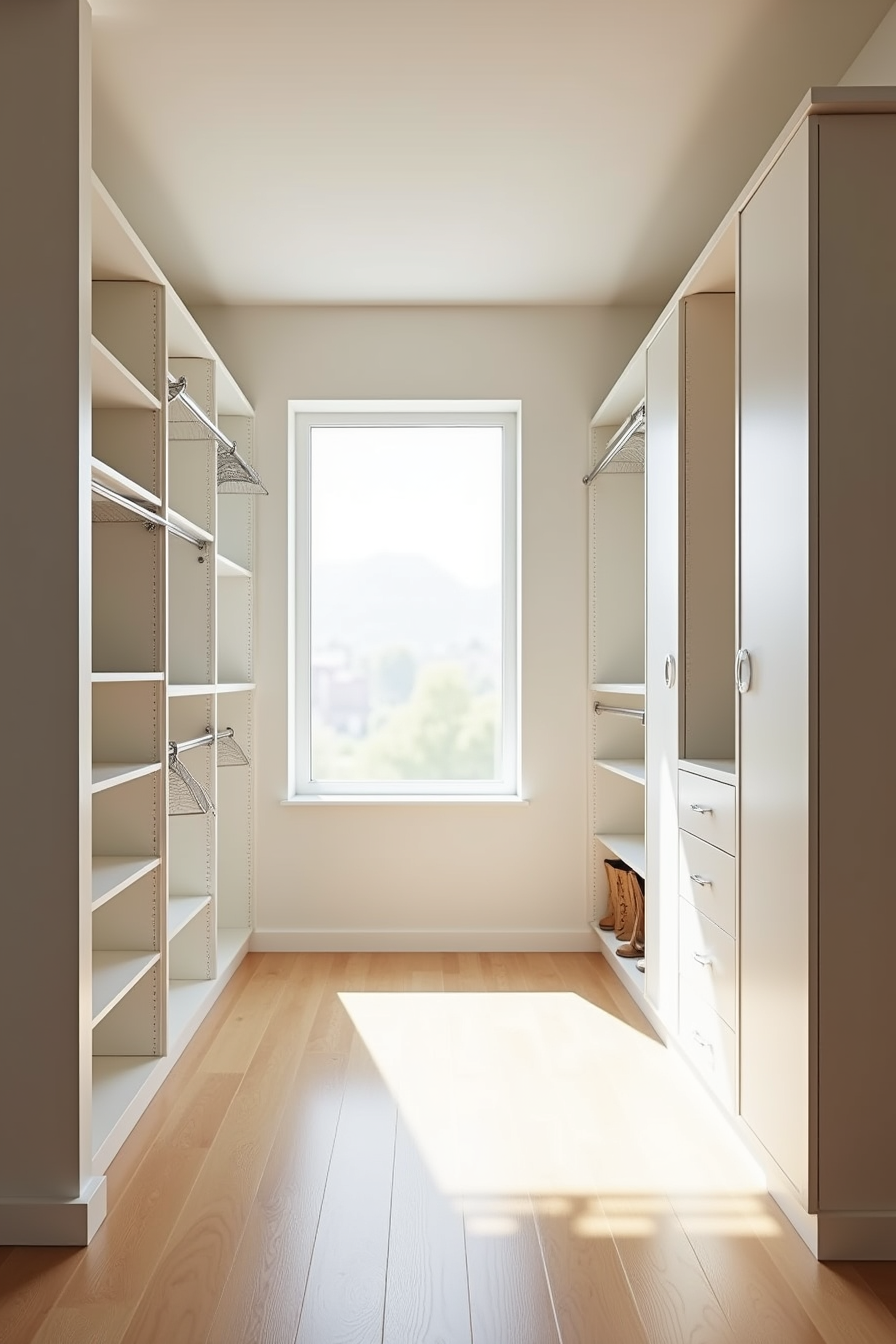
White wire shelving provides cost-effective fixed storage, typically rated for 50-75 pounds per linear foot—ideal for folded stacks of jeans or sweaters. Its open design improves ventilation but requires monthly dusting to prevent buildup in the grid. Pair it with laminate tower units, which offer enclosed compartments for shoes or accessories; these resist scuffs but can warp if overloaded beyond their 30-40 pound shelf capacity.
Adjustable dividers in the laminate towers let you customize spacing for items like handbags (allow 12-14 inches vertically) or rolled belts (6-inch slots). Hanging rods at 60-66 inches high fit most tops and dresses but leave dead space below; add shoe racks or shallow bins there. For renters, freestanding wire racks with non-slip feet offer similar function without drilling, though they occupy 4-6 inches more floor depth than wall-mounted versions.
Label wire shelf bins with clip-on tags since adhesive won’t stick to the metal.
Multi-Function Furniture with Built-In Compartments
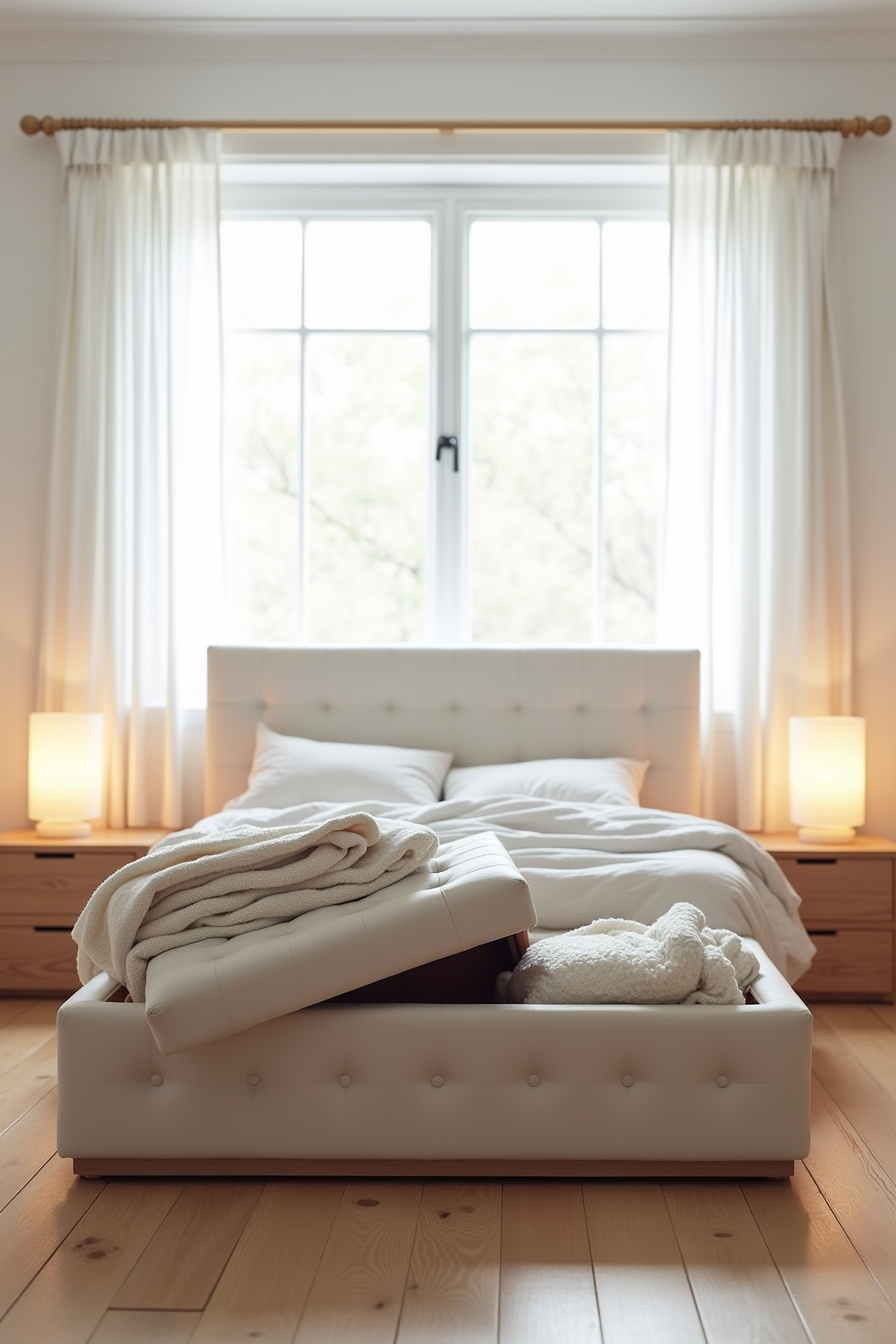
A tufted storage ottoman at the foot of your bed holds 3-5 folded blankets inside, with a hinged lid that lifts smoothly on gas struts—ideal for frequent access. Choose one 12-18 inches shorter than your bed’s width to maintain walking space. The velvet upholstery resists pet hair but requires quarterly vacuuming to prevent dust settling in the tufting.
Bed frames with pull-out drawers add 6-12 cubic feet of storage without consuming extra floor area. Shallow drawers (6-8 inches deep) organize pajamas or socks best, while deeper versions (10-12 inches) accommodate bulkier items like sweaters. Ball-bearing glides ensure smooth operation, but they collect dust; wipe them monthly with a damp cloth.
Avoid overloading drawers beyond 20-25 pounds to prevent sagging.
For smaller rooms, a storage bench with flip-up seats tucks against walls, holding seasonal items you access monthly. Look for one with removable fabric liners—they’re machine-washable and prevent mustiness in stored textiles.
Common Bedroom Storage Mistakes and How to Avoid Them
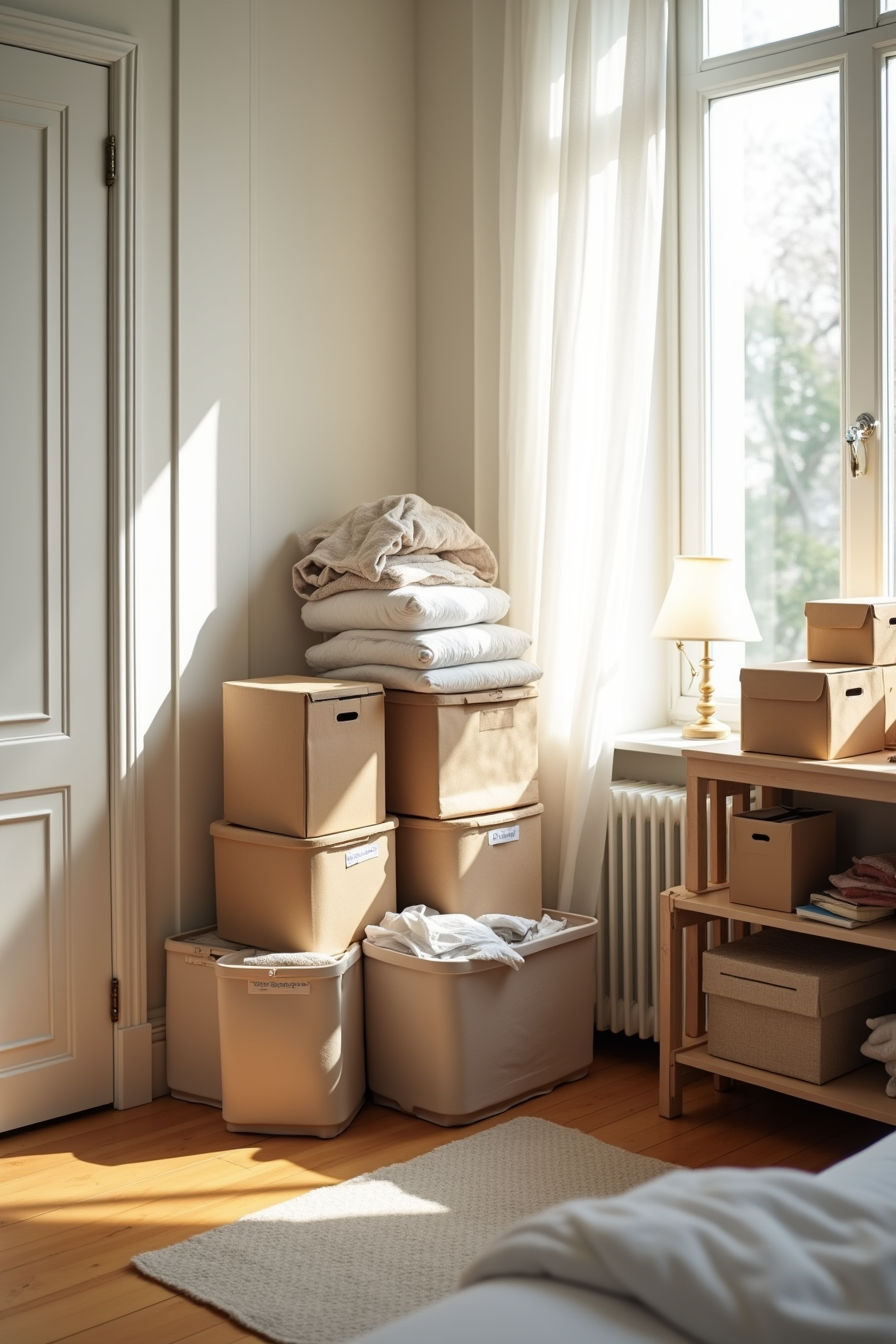
Overstuffed bins without lids topple easily and collect dust—limit fabric bins to 75% capacity and use rigid containers for heavy items like books. Cardboard boxes blocking closet doors warp from humidity and trap moisture inside stored fabrics; replace them with breathable woven baskets if you lack shelving. A sagging shelf overloaded with decor and books risks detachment; distribute weight evenly and check mounting hardware annually.
Stacking storage against heating vents blocks airflow and may warp plastic bins over time. Leave 6-12 inches of clearance around vents and radiators. Avoid placing weight-sensitive items like electronics or photo albums on high shelves where retrieval requires stretching—opt for waist-level storage to prevent drops.
Labels matter: unmarked opaque bins lead to repetitive rummaging. Use chalkboard stickers or color-coded tags for categories like “seasonal” or “linens.” Skip adhesive labels on fabric bins—they peel off; stitch-on tags last longer. Regularly purge expired medications or outgrown clothes taking up prime real estate in easily accessible drawers.
Choosing the Right Bedroom Storage
Before committing to a solution, clear under-bed and closet floorspace to measure available dimensions accurately. Check ceiling height if considering vertical units—most freestanding shelving requires 72-84 inches of clearance. For renters, adhesive hooks or tension rods typically hold 5-10 lbs, while bolt-free shelving supports 15-30 lbs per shelf.
Label fabric bins with chalk markers for easy seasonal swaps, but opt for wipeable plastic bins in humid climates. Start with one high-impact zone like your nightstand or wardrobe, using drawer dividers (1-3 inches wide) to sort small items.
Next step: Map your top three storage pain points—like shoe piles or tangled jewelry—then match them to solutions from this guide based on your room’s footprint and layout.
Frequently Asked Questions
How much clearance do I need for under-bed storage drawers?
You’ll need 6-8 inches of clearance for most under-bed storage bins or drawers. Low-profile designs work with 4 inches, while taller options require up to 12 inches. Measure your bed frame height and subtract 1-2 inches for smooth operation. Avoid overstuffing to prevent jamming.
What is the safest way to mount floating shelves in a bedroom?
Use wall anchors or toggle bolts for drywall, or drill directly into studs for heavy loads. Shelves should support 20-50 lbs per bracket, depending on material. Place them at least 12 inches above the bed or furniture to avoid collisions. Always follow the manufacturer’s weight limits and spacing guidelines.
Can I install closet organizers without drilling holes in the walls?
Yes, tension rods, freestanding units, or adhesive hooks work for renters. Over-the-door organizers hold 10-30 lbs, while modular systems with pressure-mounted poles support 50-100 lbs. Avoid overloading and check adhesive strength weekly. For heavier items, use non-marring pads to protect floors.
How do I prevent dust buildup in open bedroom storage?
Dust weekly with a microfiber cloth or use lidded bins for less-frequented items. Open shelves near windows accumulate dust faster—place them 3+ feet away. Vacuum fabric bins monthly. For display items, rotate them seasonally to simplify cleaning. Avoid overcrowding to improve air circulation.