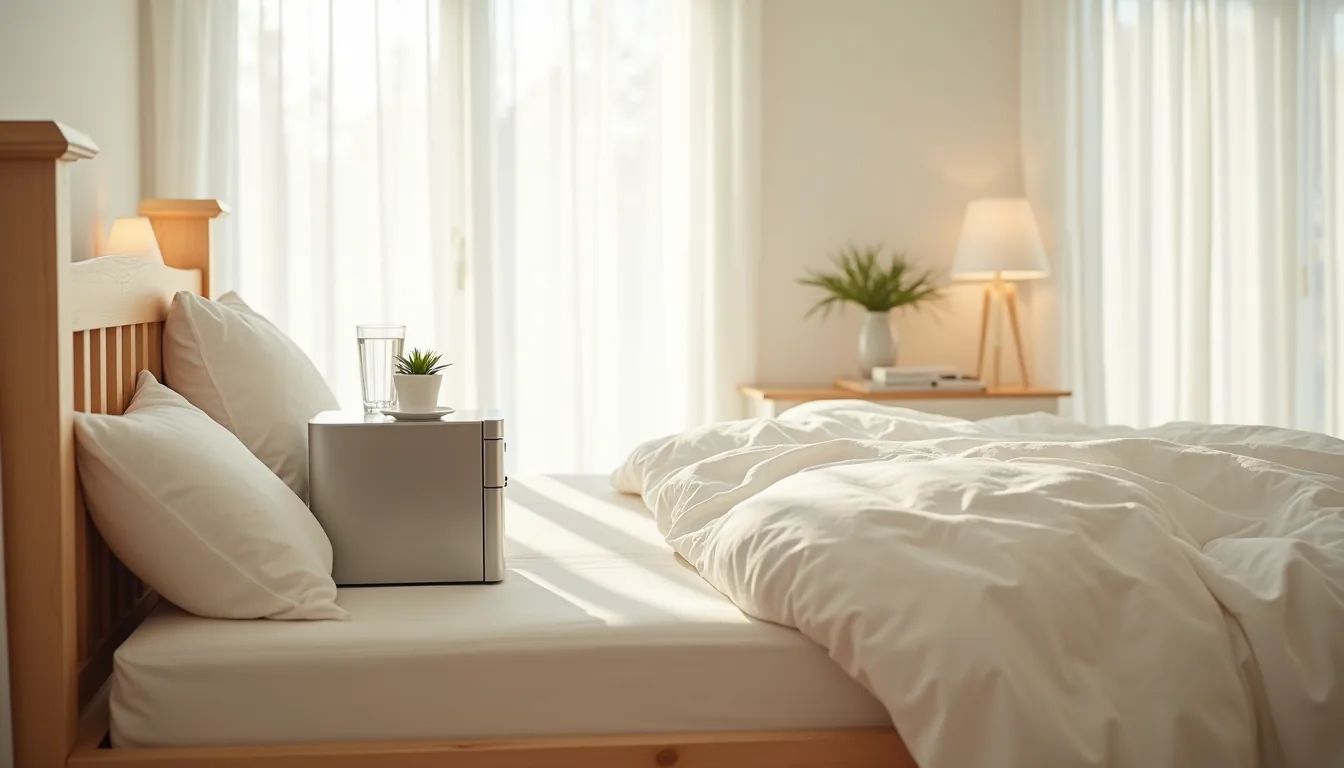

A mini fridge in your bedroom stops being a dorm-room afterthought the moment you treat it as a piece of furniture with a job, and these six setups show you exactly how to make that happen. You’ll learn which placement protects your sleep and your floors, how to match the unit’s size to your actual space, and where to spend versus save. Each option comes with the specific dimensions, ventilation requirements, and noise trade-offs you need to decide with confidence.
Key takeaways
- Measure before you buy: Most mini fridges stand 18–34 inches tall, so confirm your nightstand height and clearance zone before committing to a model.
- Ventilation is non-negotiable: Leave at least 2–3 inches of space on the sides and back for airflow, or the compressor will overheat and shorten the fridge’s lifespan.
- For renters, skip the build-in: A rolling cart or freestanding unit avoids drilling and wall damage, while a closet conversion requires you to add a vented door or grille to prevent moisture buildup.
- Budget for noise and power: Expect a range of 30–50 decibels from most compact units, audible in a quiet bedroom, and factor in roughly 60–120 watts of continuous draw if you run it 24/7.
The Nightstand-Height Compact Unit
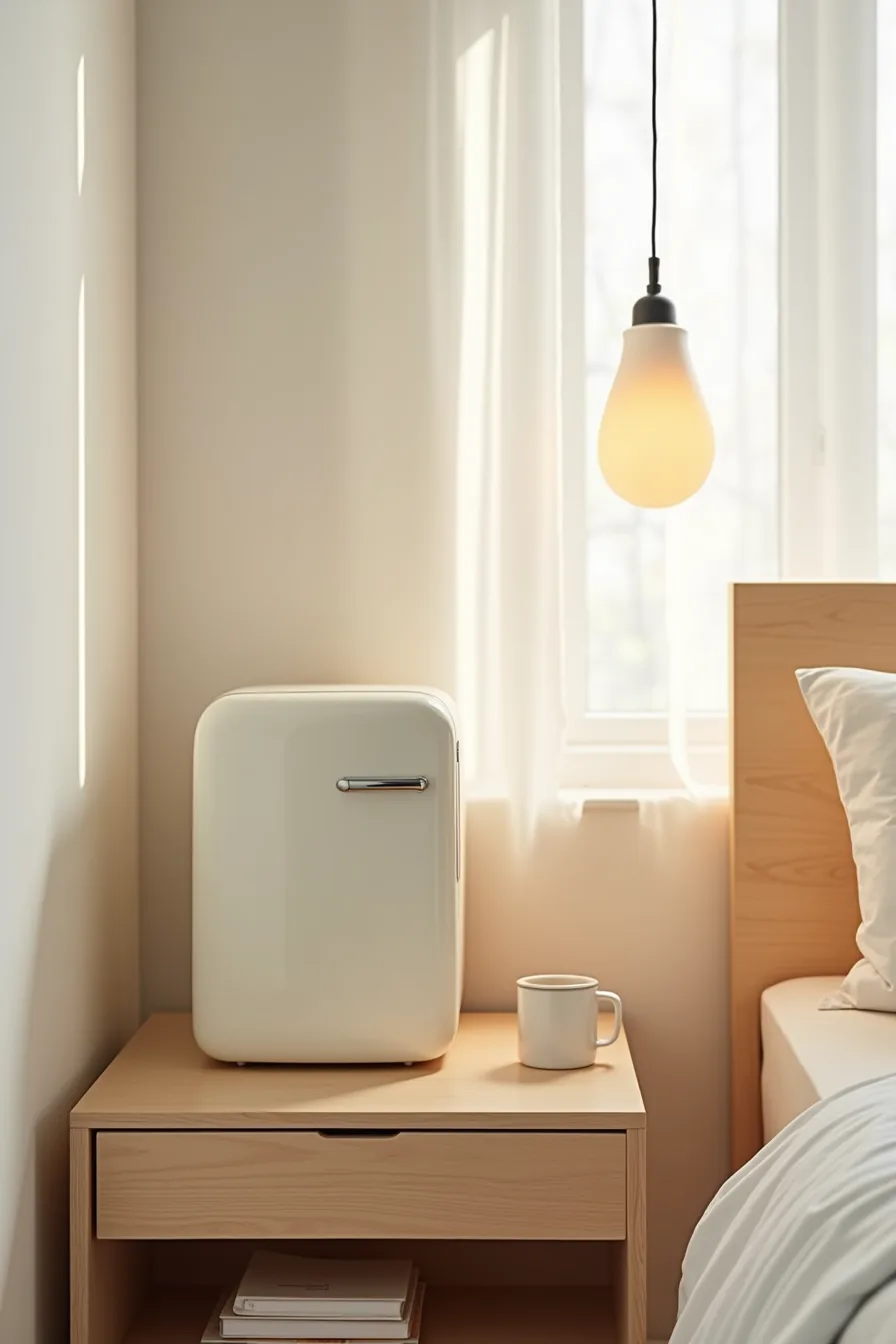
The most straightforward take on a mini fridge in bedroom starts with swapping your traditional nightstand for a compact unit that sits flush against the bed frame. A cream-colored model positioned beside a platform bed works because its horizontal footprint mirrors a standard bedside table, most units in this category measure 17 to 20 inches wide and 18 to 22 inches tall, so you lose no functional surface area.
You place a ceramic mug on top for your evening tea and run a phone charger cable over the edge, keeping both within arm’s reach while you sleep. The drawer beside it holds the items you’d normally stash in a nightstand, which means the fridge replaces, not duplicates, your existing furniture. This setup suits small bedrooms where floor space is tight, and it suits anyone who wants cold water or a midnight snack without leaving the mattress.
The trade-off: compressor models generate low hum, so choose a thermoelectric unit if you’re a light sleeper, and expect to wipe down the top surface weekly since dust accumulates around the charging cable.
Under-Desk or Workspace Integration

A black mini fridge tucked beneath a wooden desk turns unused legroom into a small-space setup that works double duty. The desk legs frame the unit on both sides, and the rolling chair pushes in far enough that the fridge sits completely within the desk’s footprint, most under-desk models run 17 to 19 inches tall, which leaves 4 to 6 inches of clearance above the unit for airflow and cable routing. The laptop and desk lamp on the surface stay put, so you sacrifice zero workspace.
This suits anyone who works from bed-adjacent desks or shares a bedroom as a home office. You reach down for a cold seltzer mid-task without breaking focus, and the fridge disappears from sight when you sit. Measure the desk’s underside clearance first, and skip compressor models if the exhaust vents face sideways, thermoelectric units run cooler and quieter here.
Wipe the top monthly; dust from the chair’s movement collects fast in that gap.
Corner Nook with Open Shelving
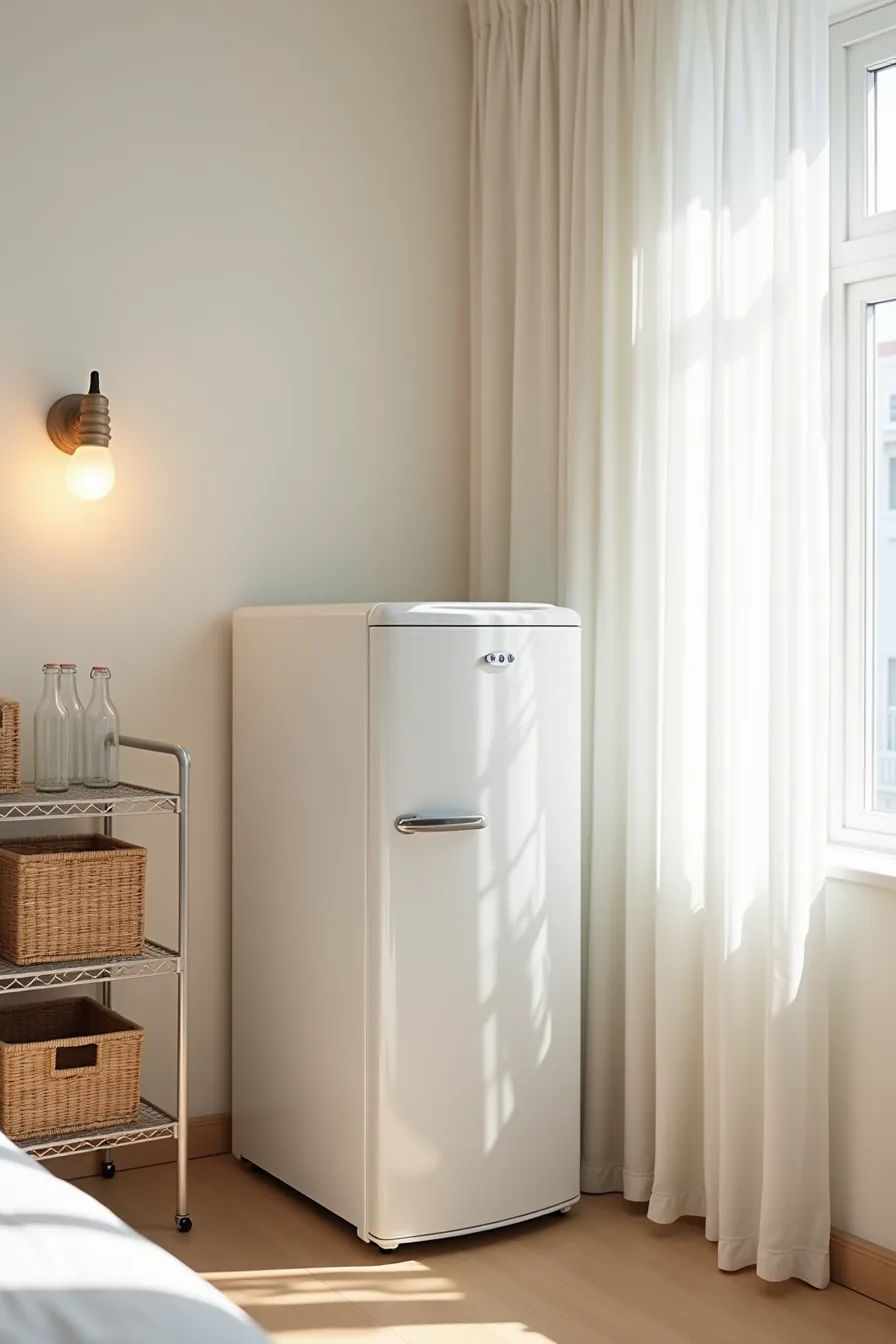
Claim an unused corner by pairing your mini fridge with a freestanding metal wire shelving unit. The white fridge sits low while the shelving rises beside it, creating a single vertical zone. Woven baskets on the lower shelves hide snacks and overflow stock, while clear glass bottles on the upper tiers turn your drink rotation into display, sparkling water, cold brew, or a few mixers arranged by height.
This approach suits bedrooms with dead corners that otherwise collect laundry or dust. The open wire construction lets air circulate behind the fridge, so you can place the unit closer to the wall than you could with solid cabinetry. Anchor the shelving to the wall if you load it with glass; a fully stocked unit can shift forward when you pull bottles from the top.
Dust the wire shelves monthly and wipe the fridge’s condenser grille every few weeks to keep the mini fridge storage zone running efficiently. Budget-wise, a basic wire shelving unit runs $20 to $40, making this the most affordable route to a dedicated beverage station.
Closet or Wardrobe Conversion
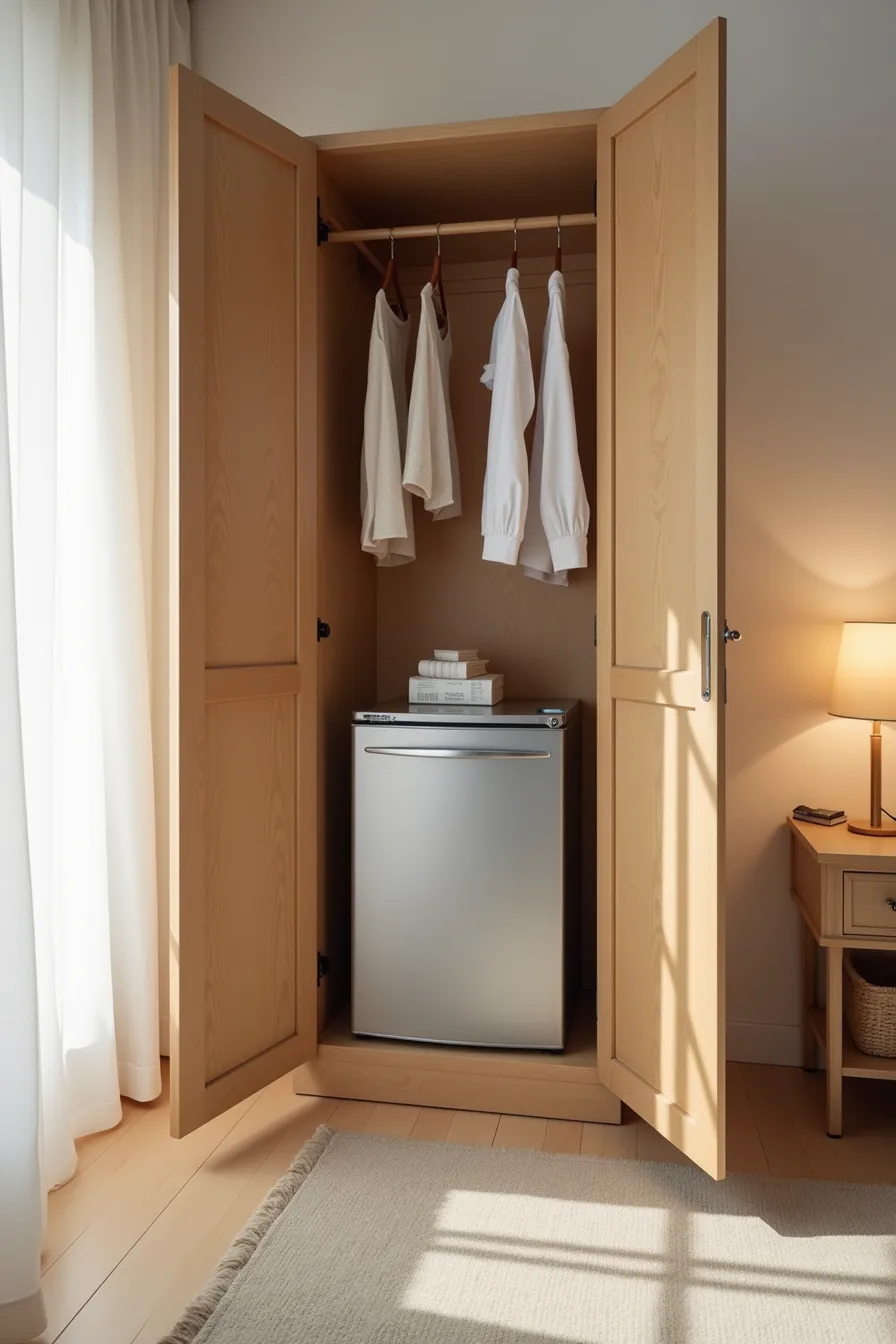
A silver mini fridge inside an open wooden wardrobe with double doors transforms unused closet space into a discreet hydration station. The fridge sits on the floor while clothing rails above hold hanging shirts and jackets, and the wardrobe doors close to hide everything when guests visit. You lose roughly 18-24 inches of hanging rod space at the bottom, so this suits wardrobes with extra upper storage or dressers elsewhere in the room.
Keep the fridge pulled 2-3 inches forward from the wardrobe’s back panel so warm air can escape. Leave the doors cracked open for an hour after the fridge runs a defrost cycle, or condensation will collect on the wood interior. This route works best for renter-friendly setups since you make no permanent changes, just clear a floor section and slide the fridge in.
A compact 1.7-cubic-foot model fits most standard wardrobe bases, and you can run the cord through the existing gap under the door.
Built-In Alcove or Recessed Setup
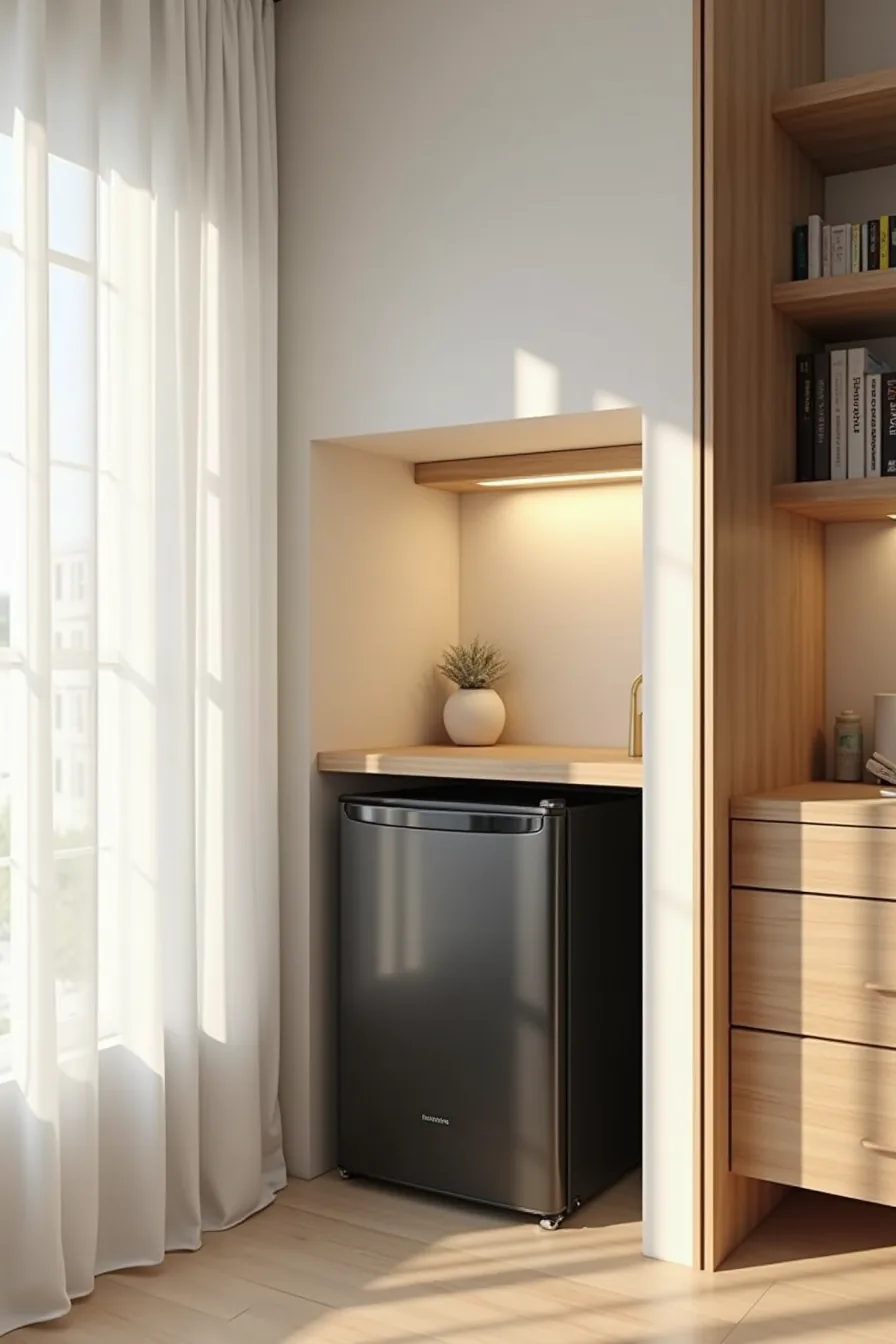
A recessed wall niche turns your mini fridge into a permanent architectural feature rather than an appliance. The matte black unit sits flush with the drywall on three sides, framed by wooden trim that matches your baseboards for a built-in look. This approach answers the best placement question definitively: the fridge occupies zero floor footprint and stays out of your walking path permanently.
Measure the alcove’s width, height, and depth before buying, most standard mini fridges need 18-20 inches of depth plus 2-3 inches of clearance behind the condenser coil for airflow. If your recess is shallower, factor in a 4-inch vent grille cut into the wall above or below the unit. The wooden trim hides minor gaps between appliance and drywall, but you must leave the front face unobstructed so the door opens its full arc.
This is a long-term investment route: it requires cutting into walls, so it suits homeowners, not renters. Expect to repaint or touch up trim edges annually, and pull the fridge out every six months to vacuum dust off the rear coil.
Mobile Cart with Mini Fridge Base
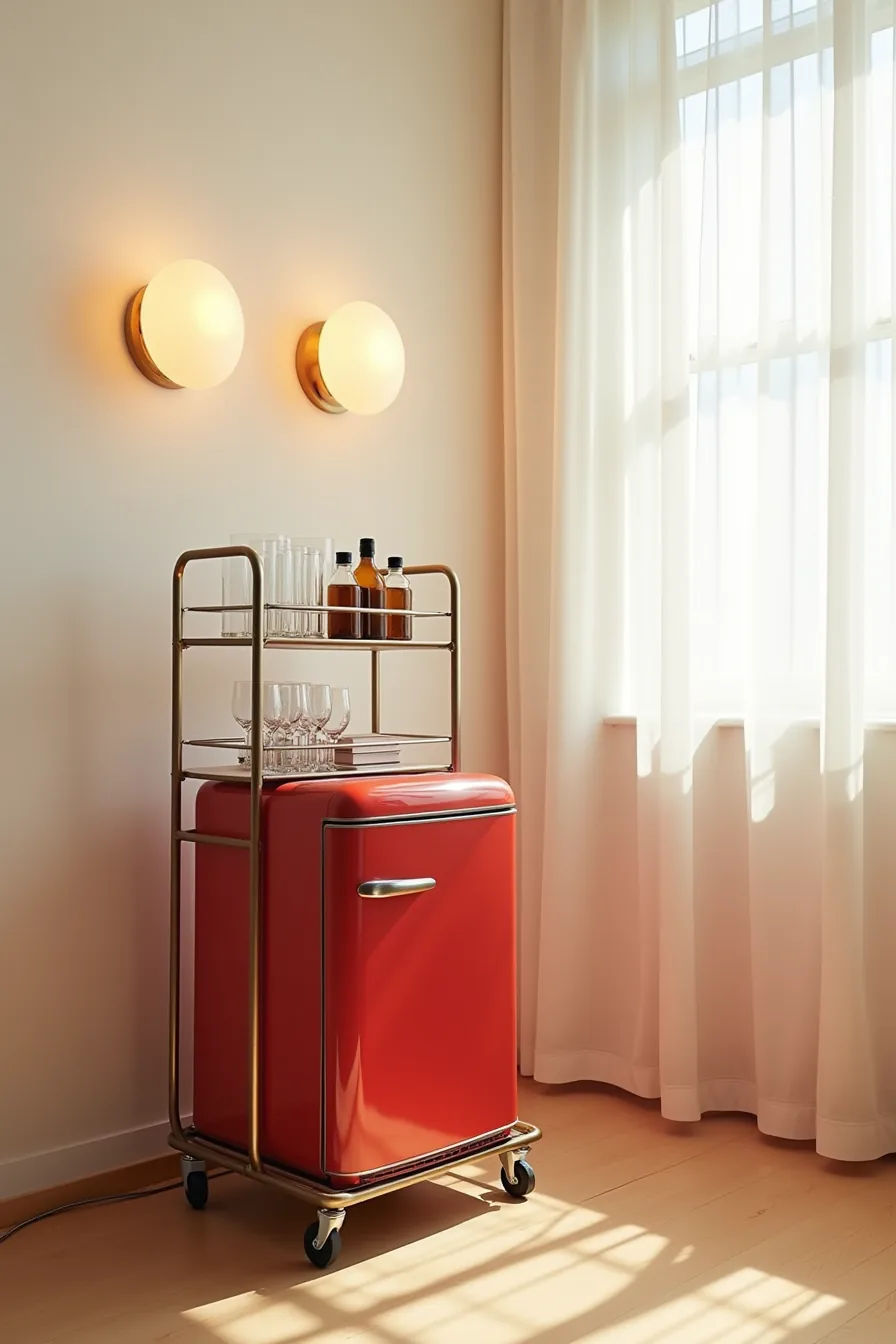
A wheeled three-tier metal cart turns your mini fridge into furniture you can relocate in under a minute. The red fridge sits on the cart’s bottom shelf, with drinking glasses on the tier above and spare bottles on the top. This setup suits renters because it leaves walls untouched, you simply roll the whole unit to a closet when the lease ends or the layout stops working.
Cart mobility solves the ventilation problem most bedroom fridges ignore. Because you can pull the cart six inches from the wall whenever you remember, the rear coil gets airflow that fixed placements often lack. Keep the casters locked once you find a spot; an unlocked cart will drift on carpet and can tip if you lean on the upper shelves.
Match the cart’s metal finish to your existing shelving or lamp bases, and expect to wipe down both cart and fridge monthly, the open tiers collect dust faster than an enclosed cabinet would. This is the budget-friendly route: a basic three-tier steel cart runs far less than custom joinery, and the fridge stays fully portable for your next move.
Your move
Start with a rough floor plan sketch, marking your bed, door swing, and outlet locations. Measure the clearance you’ve beside or under furniture, a 15–19-inch-wide fridge needs at least that much floor space plus 5 inches of rear airflow.
Choose one location and check the outlet distance before you buy anything. If you rent, skip permanent installation and pick a cordless model or a tall cabinet that masks the fridge without holes in the wall.
Order a quiet model rated under 40 dB and set it up at least 3 feet from your pillow if you’re a light sleeper. Measure twice, plug in once, and you’re ready.
Frequently Asked Questions
Where is the best placement for a mini fridge in a bedroom?
Place it near your bed’s headboard or inside a closet with ventilation. Keep it off carpet, at least 3-4 inches from walls, and away from direct sunlight to ensure proper heat dissipation.
Can you put a mini fridge in a small bedroom without it looking cluttered?
Yes, choose a 1.7-3.2 cubic foot model and mount it under a desk or inside a nightstand. Use a slim vertical unit to occupy unused floor space without adding visual bulk.
What size mini fridge works best for a bedroom setup?
For one person, a 1.7-2.5 cubic foot fridge (around 18-20 inches wide) suffices for drinks and snacks. Larger 3-4 cubic foot units suit couples or those storing meal-prepped food.
Is it safe to keep a mini fridge in a bedroom overnight?
Yes, if it’s a modern model with proper ventilation and a stable, level surface. Avoid blocking vents, keep it at least 2 inches from walls, and check for frayed cords before sleeping.