
Amazon Bedding is the fastest way to refresh a bedroom, but the difference between a photo that looks editorial and one that looks like a mistake comes down to three decisions you make before you click “add to cart”: fabric weight, drop length, and duvet fill. Get those wrong, and even the most beautiful listing will leave you with a bed that sags, slides, or suffocates. Get them right, and you can replicate a high-end hotel look for a fraction of the cost—provided you also know which product photos are lying to you.
The choices ahead aren’t about taste; they’re about physics, dimensions, and how you actually sleep.
Key takeaways
- Check the specs before the photos: verify thread count, fill weight, and dimensions against your mattress depth, since listing images routinely exaggerate loft and drape.
- Return risk drops when you buy sets from brands with 30-day free returns, but expect to pay return shipping for individual duvets or shams from third-party sellers.
- Scale bedding to your room by choosing a duvet 10–15 inches wider than your mattress for a queen, and keep patterns under 12 inches for small spaces to avoid visual clutter.
- Budget for maintenance upfront: high-fill down alternatives need weekly fluffing and a 60-minute low-heat dryer cycle, while cotton percale wrinkles fast unless you iron or steam monthly.
Understanding Material Quality and Return Risk
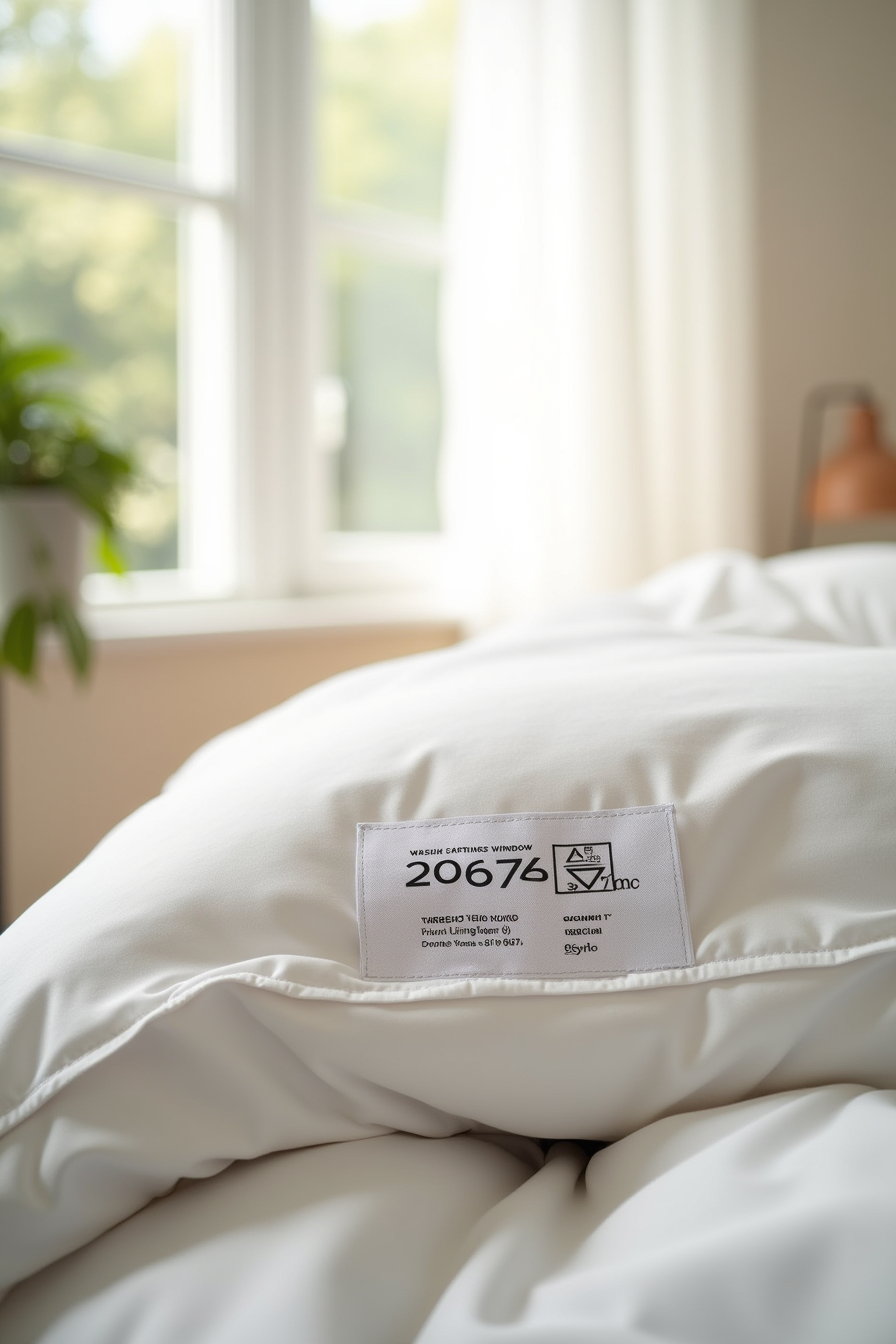
Before you add any Amazon Bedding to your cart, learn to read the care tag like a contract. The label attached to that duvet cover corner holds the three numbers that matter most: fiber content percentage, thread count, and washing symbols. Cotton percentages below 100% usually mean a polyester blend that will pill within six months of regular washing, while a thread count between 200 and 400 delivers the best balance of breathability and durability — anything above 600 is often marketing fluff or multi-ply yarns that feel stiff.
Amazon’s 30-day return window is your only real protection, so verify it on the product page before purchasing, not after delivery. A listing photo can make a $30 set look like Egyptian cotton, but the label tells you what you actually bought. If the fiber content isn’t listed in plain text, expect the worst.
For the Best Amazon Bedding examples, filter for sets that disclose material percentages in the product description — those sellers tend to have lower return rates and fewer one-star durability complaints.
Scaling Amazon Bedding to Room Dimensions

A queen bed in a small bedroom—roughly 10 by 12 feet—leaves you little margin for error. The fitted duvet cover you see on that queen frame works because it reaches the mattress edges without pooling onto the floor; excess fabric in a compact room reads as clutter and eats visual floor space. Choose a duvet with a 4-to-6-inch drop on each side for small spaces, and pair it with two standard shams leaning against the headboard rather than king-sized ones that dwarf the bed.
For medium bedrooms (12 by 14 feet), you gain permission for a fuller drape—an 8-inch drop—or a coverlet folded at the foot. Large master suites (16 by 18 feet or more) call for king bedding on a queen frame if you prefer a dramatic, tailored look, but keep the color within two shades of your wall tone so the bed anchors rather than overwhelms. Measure your mattress depth first: a 14-inch pillow-top needs a deep-pocket fitted sheet, and your duvet’s drop calculation starts from the top of the mattress, not the bed frame.
Practical Amazon Bedding planning tips start with a tape measure at your bedroom door, not a scroll through listings.
Color and Pattern Selection Without Misleading Photos

Amazon Bedding listings are shot under bright studio lights that warm whites into cream and mute deep tones. That fabric swatch pinned to your white reference board next to a smartphone displaying the same product photo will reveal the shift immediately—what looked like a soft sage on screen often reads as a gray-green in your room’s afternoon light. Order swatch cards before committing to a full set; most major bedding brands on Amazon offer them for a few dollars, and the cost is refundable against your purchase.
Patterns demand extra scrutiny. A large-scale floral photographed on a king bed will appear smaller than it does on your queen frame, so check the pattern repeat measurement in the listing description—anything over 12 inches will dominate a small headboard. When in doubt, hold your phone’s screen at arm’s length beside the swatch under your bedroom’s actual lighting, then compare the two at dusk and midday.
The color that survives both tests is the one you can trust.
Layering and Styling for Depth

The distinction between a flat bed and a layered one comes down to the order you build from the mattress up. Start with your fitted sheet, then add the flat sheet folded back at the top to expose a contrasting band of color. On top of that goes your duvet cover, pulled partially down at the head so the flat sheet reads as a deliberate design choice rather than an afterthought.
Drape a throw blanket across the foot rail—not centered, but offset a third of the way from one side—to create an asymmetrical line that draws the eye diagonally. Two coordinating throw pillows stacked against the headboard add height and soften the hard edge of the frame. Limit yourself to two throws and two throw pillows per bed; anything more adds bulk that complicates daily remaking and washing cycles.
For a queen bed, that means roughly 20 minutes of styling time each morning versus a 5-minute flat-tuck routine. The visual payoff is worth it if your bedroom doubles as a sitting space; if you prioritize speed over style, skip the flat sheet and fold the duvet back at the head instead.
Maintenance and Long-Term Care Planning

Extend the life of your Amazon bedding by washing sheets weekly in cold water and tumble drying on low. Hot water and high heat are the fastest ways to break down elastic and cotton fibers, leading to premature sagging and pilling.
Fabric-specific care matters more than you might think. Percale and sateen cotton can handle a warm wash, but linen and bamboo viscose require cold, gentle cycles to prevent shrinkage and fraying. For queen sets priced under $50, expect a two-to-three-year lifespan with proper care; premium sets above $150 can last five years or more if you rotate two sets seasonally.
Invest in a mesh laundry bag for duvet covers and shams to protect buttons and zippers from snagging. Spot-treat stains immediately rather than letting them set, and skip fabric softeners—they coat fibers and reduce breathability, which defeats the purpose of cooling or moisture-wicking materials.
A practical note on returns: Amazon’s 30-day window applies to most bedding, but washed items are often non-returnable. Unfold and inspect your set upon arrival for loose threads or uneven hems before laundering, and keep the original packaging until you’re satisfied with the fit and feel.
Common Mistakes in Sizing, Fit, and Placement

The most frequent Amazon Bedding mistakes to avoid start with assuming “queen” or “king” means one universal measurement. A queen fitted sheet can range from 58 to 62 inches in width depending on the brand, and deep-pocket versions meant for 16-inch mattresses will bunch catastrophically on a standard 10-inch one. Always check the product listing’s exact dimensions against your mattress depth before ordering, not just the size label.
The fit problems visible on a typical bed—a fitted sheet pulled taut at the corners with wrinkles across the middle, and a duvet cover hanging unevenly with fabric pooling on one side—come from two miscalculations. First, you bought a standard fitted sheet when your mattress runs thicker or thinner than average. Second, you chose a duvet cover sized to the bed frame rather than the duvet insert, leaving 6–10 inches of slack on one edge.
Measure your mattress height with a tape measure, then look for sheets labeled with that specific pocket depth range. For duvets, match the cover to the insert’s dimensions, not the bed size—a 90-inch king insert needs a 90-inch cover, not a generic “king” that may run 86 inches. If you already own a mismatched set, add duvet clips to hold the insert in place and use sheet suspenders under the mattress to eliminate corner bunching.
Your 10-minute decision plan
Start by measuring your bed frame and bedroom clearance before you open a single listing. Save three to five options that match those dimensions, then filter by material composition and read the one-star reviews for pattern alignment complaints.
Order one set, not three. Wash it immediately to test shrinkage and colorfastness—Amazon’s return window gives you 30 days, so verify before you commit.
Your next step: pull out a tape measure and write down your mattress depth and bed width right now. That single number eliminates half the options immediately.
Frequently Asked Questions
How do I know if Amazon Bedding dimensions will fit my mattress?
Check the product’s size chart against your mattress’s exact depth, not just its label. Most queen mattresses run 60 x 80 inches, but deep mattresses need fitted sheets with 14–18-inch pockets.
What thread count range should I look for in Amazon Bedding to avoid pilling?
Aim for 200–400 thread count in long-staple cotton. Below 200 feels rough; above 400 often adds weight without durability. Percale weaves resist pilling better than sateen at the same count.
Why does Amazon Bedding look different in person than in the listing photos?
Amazon photos use bright studio lighting and digital color boosting. Fabric texture, sheen, and dye depth are lost in compression. Read reviews with real customer photos and check the fabric weight in grams per square meter.
How often should I wash Amazon Bedding to maintain its quality?
Wash sheets every one to two weeks, but duvet covers and shams every three to four weeks. Use cold water and a low-heat dryer cycle. Overwashing breaks cotton fibers and accelerates pilling.