
Your small bedroom’s closet can hold twice what it does now, if you stop treating it as a single storage box and start dividing it into zones. By layering vertical stacking, door-mounted racks, and modular bins, you convert dead air into usable cubic feet without touching the floor plan. The six setups below range from a $30 renter fix to a permanent built-in, each matched to a specific room size and habit pattern.
Pick the one that fits your daily routine, not the prettiest photo.
Key takeaways
- Vertical shelving nearly doubles usable storage by stacking bins and baskets from floor to ceiling, but keep the top shelf within arm’s reach (roughly 70 inches) to avoid a step stool dependency.
- Double hanging rods work best when you’ve at least 48 inches of vertical clearance, allowing a top rod for shirts and a bottom rod for pants without crushing long garments.
- Over-the-door racks add 5–10 pounds of capacity without drilling, but verify your door’s clearance (most need 1–2 inches) and avoid blocking ventilation grilles in older homes.
- Combining slim hangers, cascading clips, and drawer dividers frees up to a third of your rod space, yet requires a 30-minute monthly declutter to keep the system from collapsing into chaos.
Vertical Shelving: Maximizing Wall Space Without Floor Footprint
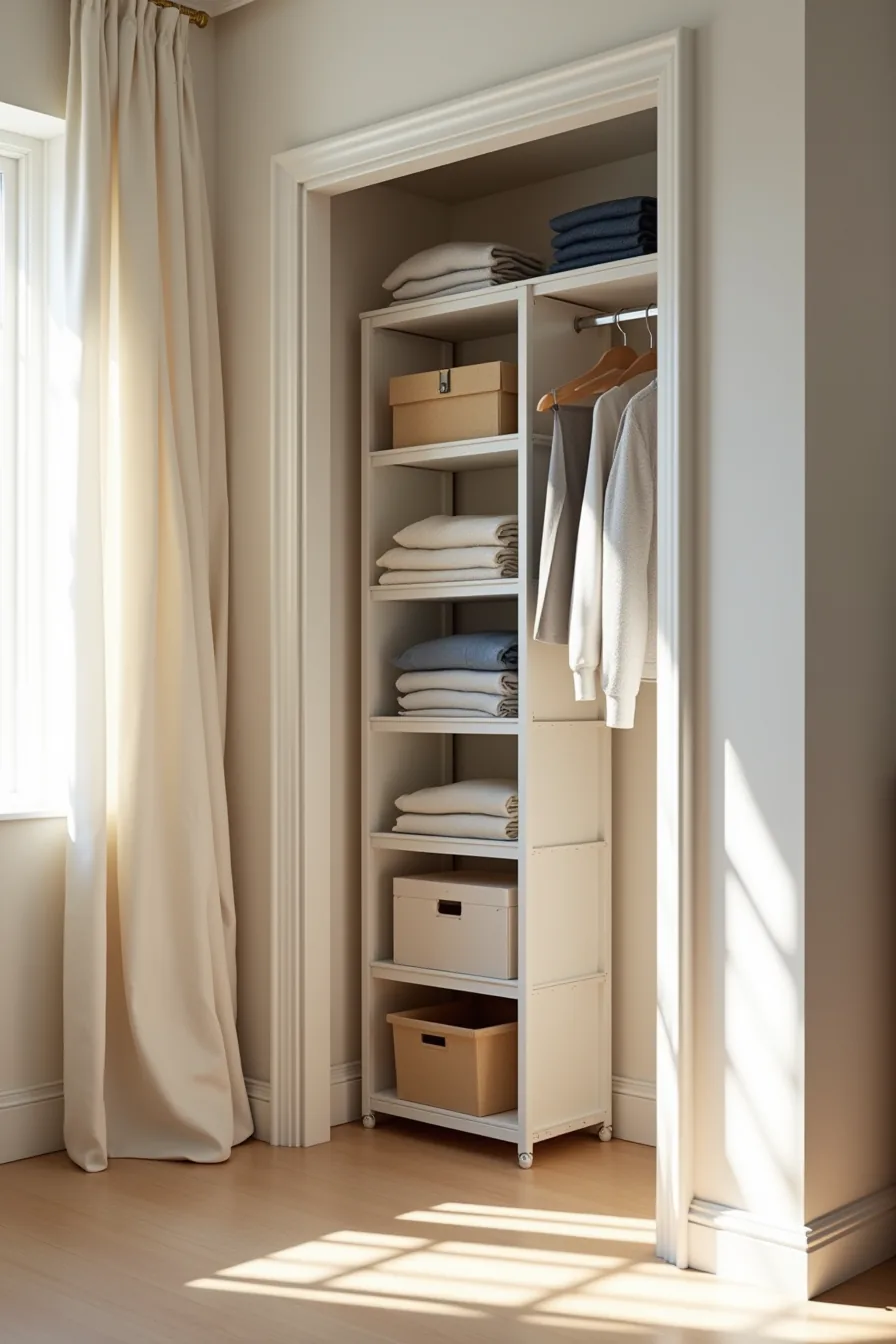
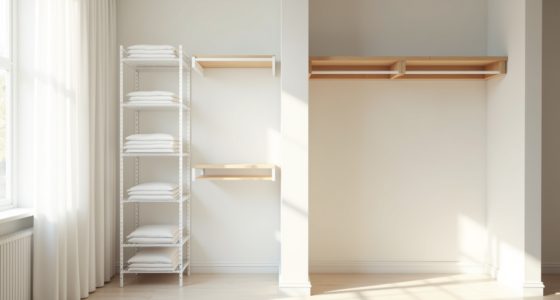
For bedrooms where floor area is non-negotiable, a freestanding tall shelving unit turns unused vertical air into prime real estate. A white metal unit around 72 inches high, tucked into a corner, holds stacked sweaters and jeans on open shelves while clear floor space below keeps the room feeling larger and easier to vacuum. Storage boxes on the upper shelves corral accessories you rarely touch, and the open design lets you see every item at a glance, no digging through piles.
This approach suits renters and homeowners alike because it requires no wall anchors if the unit is stable and level; you simply assemble it in place. It outperforms hanging-only layouts when you own more folded knits, denim, or linens than dresses or jackets. Measure your closet’s depth first, most units need at least 12–14 inches of clearance to avoid blocking the hanging rod on the opposite wall.
Metal shelves cost roughly $40–$80, while solid wood versions run higher but resist sagging under heavy loads. Dust collects on open shelves, so budget five minutes weekly to wipe them down.
Double Hanging Rods: Doubling Capacity in Standard Closet Depth
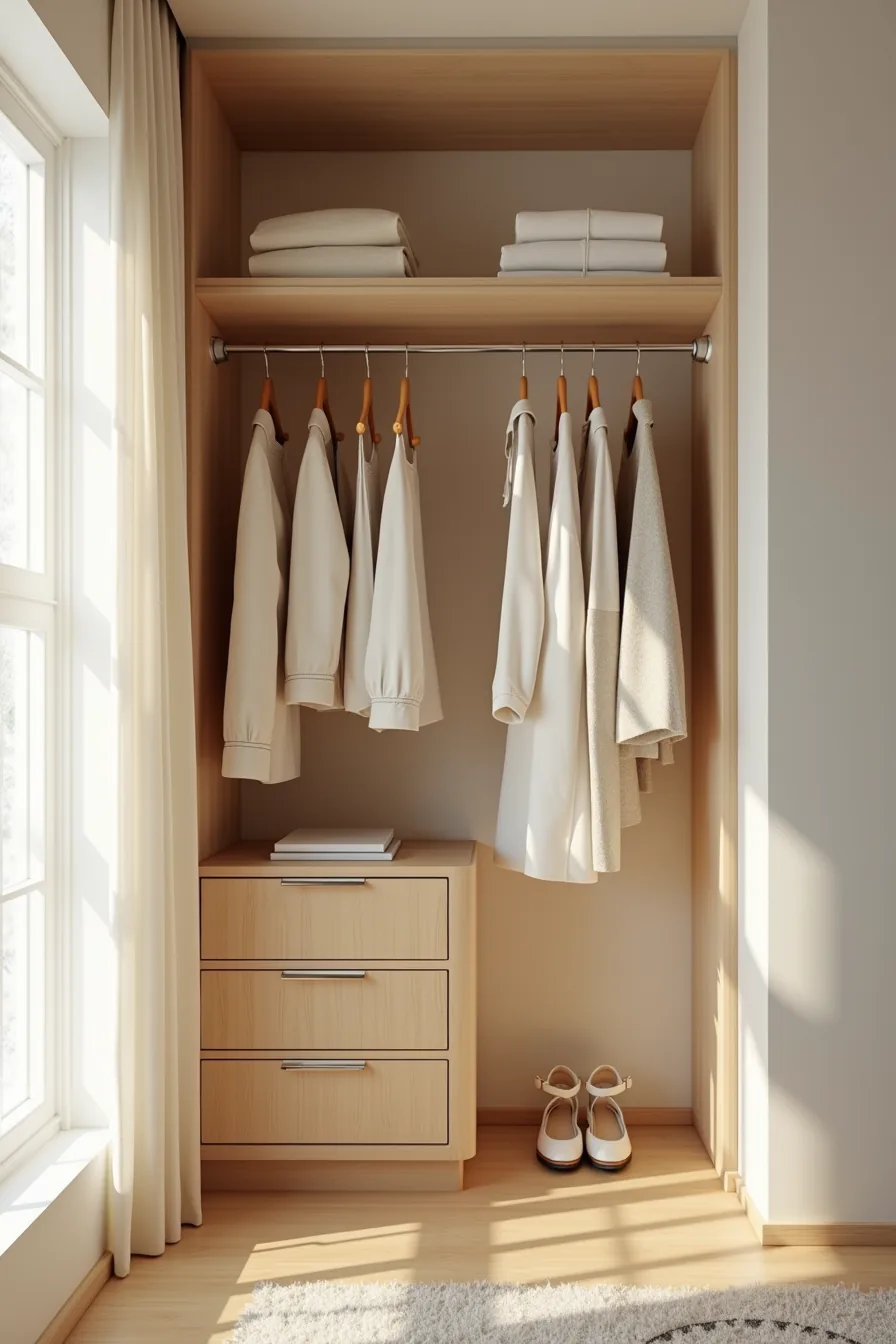
Stacking two rods vertically is the single highest-yield change you can make in a closet with 24 inches or more of interior depth. The upper rod mounts around 65 inches from the floor for long coats and dresses; the lower rod sits near 36 inches for short-sleeved shirts and folded-on-hanger items. This split instantly doubles linear hanging space without touching your floor plan.
It suits anyone with more hanging garments than shelving capacity, especially those with a mix of outerwear and casual tops. Installation requires a stud finder and drill; metal bracket kits cost $15–$30 and take about forty-five minutes to mount. Skip this layout if you own many floor-length gowns or long robes, since the lower rod will block their clearance.
Stick to slim, non-slip hangers to keep both rods from overcrowding, and reserve the upper rod for seasonal pieces to reduce daily reaching. This is a permanent modification, so it fits homeowners better than renters unless you patch and repaint before moving out, a factor to weigh into your Practical Closet Organization Ideas Small Bedrooms planning tips.
Slim Drawer Inserts and Dividers: Organizing Folded Items Without Extra Furniture
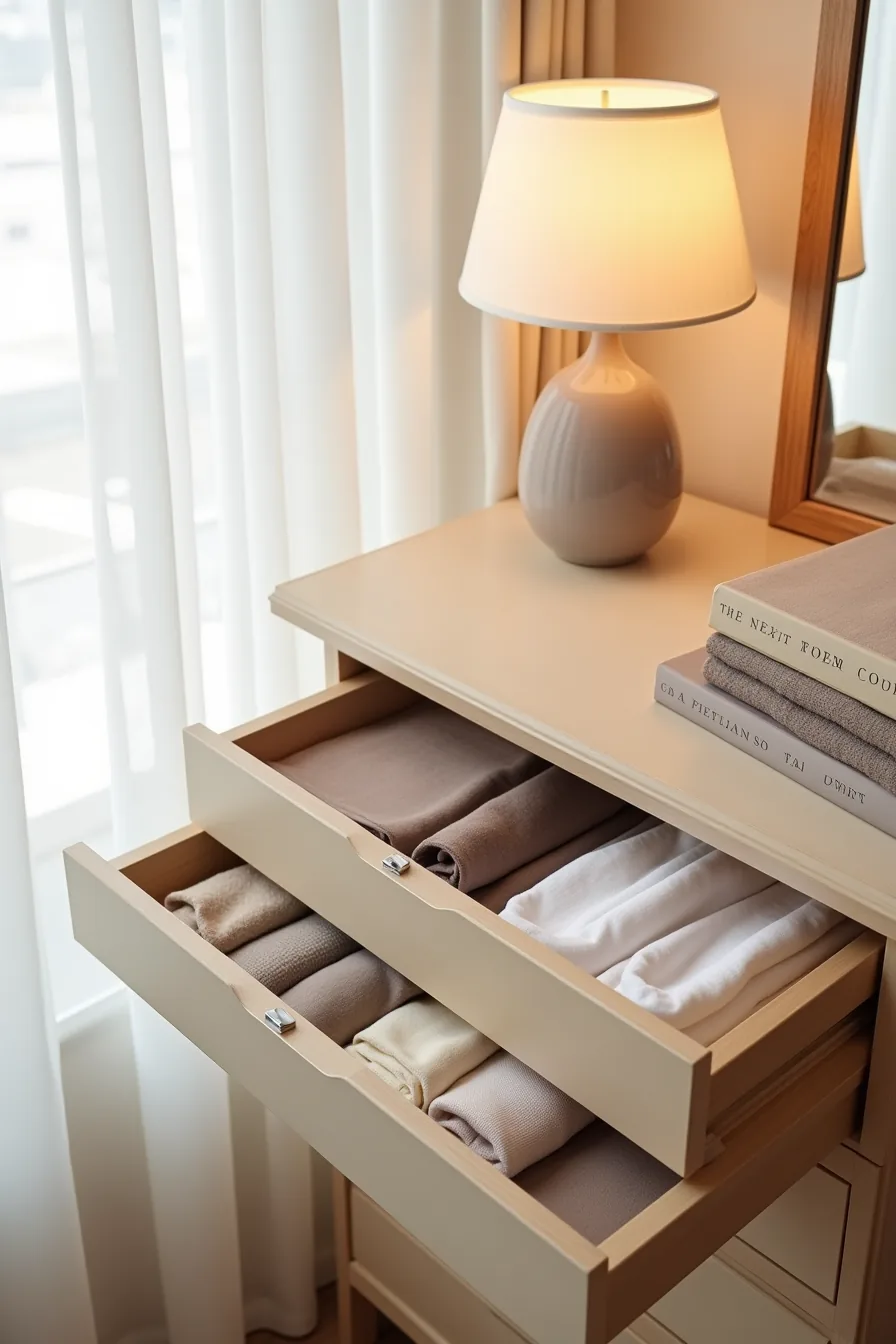
A shallow dresser drawer fitted with five fabric dividers turns loose socks, undergarments, scarves, and t-shirts into distinct compartments that stay upright when you pull one item out. The dividers keep stacks from cascading into one another, the primary reason folded clothing becomes a jumbled pile within two weeks of organizing. This setup works best on drawers 12 to 18 inches deep; anything shallower will crush bulky knits, while deeper drawers waste vertical space that stacked bins would use better.
Fabric dividers cost $10–$25 per set of four to six, while rigid bamboo or wood inserts run $30–$60 and hold their shape longer. Cardboard versions are cheapest at under $10 but warp if exposed to humidity, making them a poor fit for basements or coastal climates. All types require you to refold items to uniform widths, roughly 4 to 6 inches across, so each compartment stays visually tidy.
Vacuum the drawer liner quarterly and replace fabric dividers when they lose stiffness, which typically happens after 18 to 24 months of daily use.
Over-the-Door and Wall-Mounted Racks: Renter-Friendly Additions
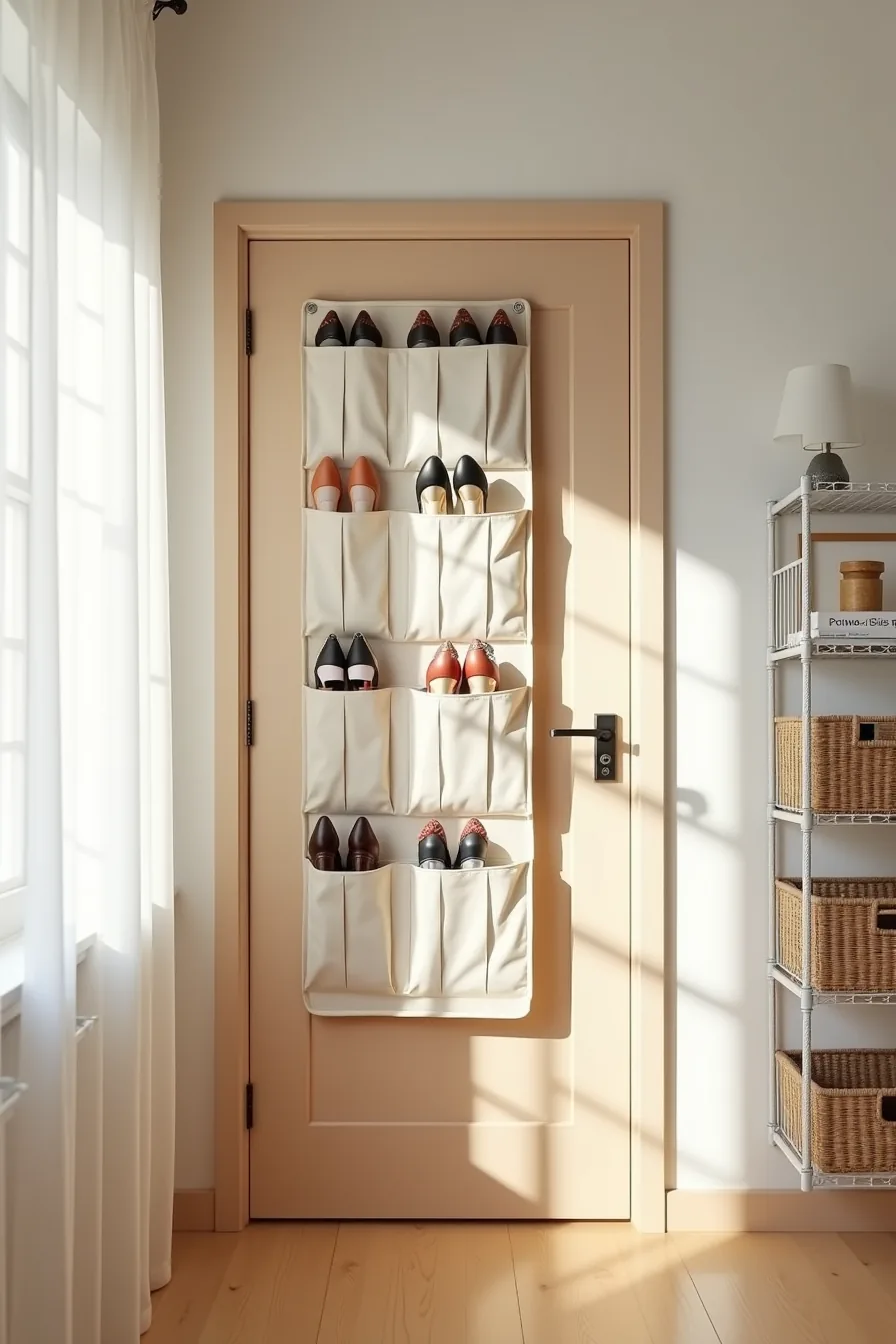
An adhesive-mounted over-the-door shoe rack with 12 clear pockets holds sneakers, flats, belts, and scarves without a single drill hole, the entire unit lifts off cleanly when your lease ends. Each pocket supports roughly 2 to 4 pounds, so reserve the top rows for lightweight accessories and keep heavier boots on the floor. This approach suits anyone renting, dorm dwellers, or homeowners who simply want zero wall damage; the wire shelf bracket beside the door frame, which hooks over the trim rather than screwing into studs, adds two woven baskets for hats and handbags at a combined cost of $25–$45.
Check the adhesive strip’s rated weight weekly during the first month, humid bathrooms and cheap hollow-core doors cause failures faster than solid wood. Clean the door surface with rubbing alcohol before mounting, and remove the rack by pulling the release tab downward, never yanking the pockets. If you own your space or plan to stay five-plus years, replacing the adhesive strips with two drilled screws costs $3 in hardware and triples the weight capacity, but leaves holes you must patch later.
This is one of the common closet organization ideas small bedrooms mistakes to avoid: overloading adhesive storage and blaming the product when the door itself is the weak point.
Slim Hangers and Cascading Clips: Reducing Visual Clutter and Physical Space
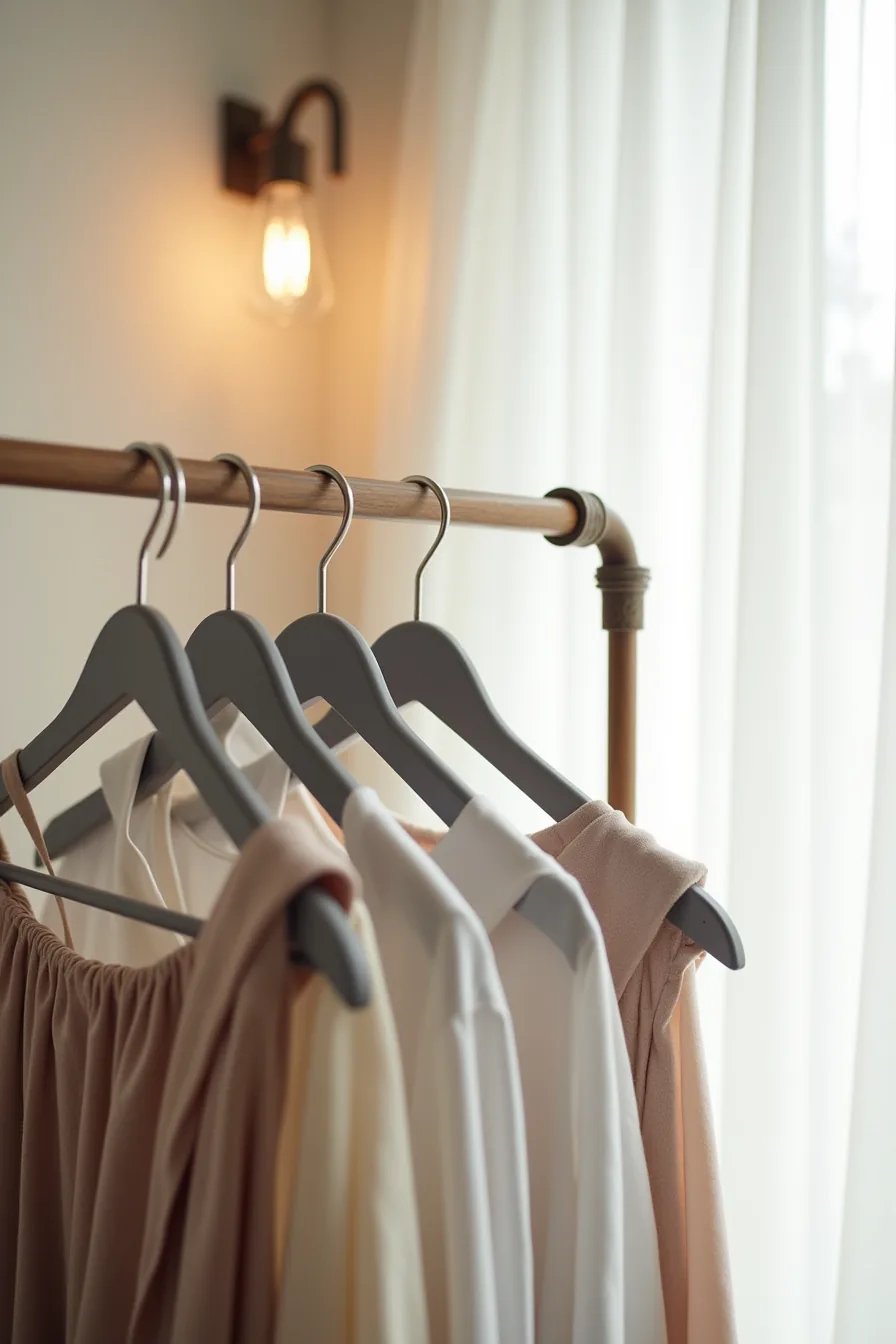
Standard wooden hangers measure about 0.4 inches thick, which means 40 shirts consume nearly 16 inches of rod width. Switching to slim velvet hangers, typically 0.2 inches thick, halves that footprint to 8 inches, freeing enough space for an additional 10 garments or a small shelf unit against the side wall. The gray velvet set in this setup also grips fabric better than wood or plastic, so silky blouses and strappy tops stay put without slipping onto the closet floor.
Cascading clip hangers stack four to six tiers vertically, turning 12 inches of rod space into storage for 24 pairs of pants or skirts. Each tier holds 1 to 2 pounds safely, making them ideal for lightweight chinos, leggings, and pencil skirts; heavy denim belongs on a dedicated pants hanger to avoid stretching the clip springs. The velvet finish reduces rust risk in humid climates, but the clips themselves wear out faster, expect 1 to 2 years of daily use before the rubber grip pads degrade.
This setup works best for capsule wardrobes under 50 items, where quick visual scanning matters more than bulk storage capacity.
Combination Approach: Layering Three Systems for Maximum Efficiency
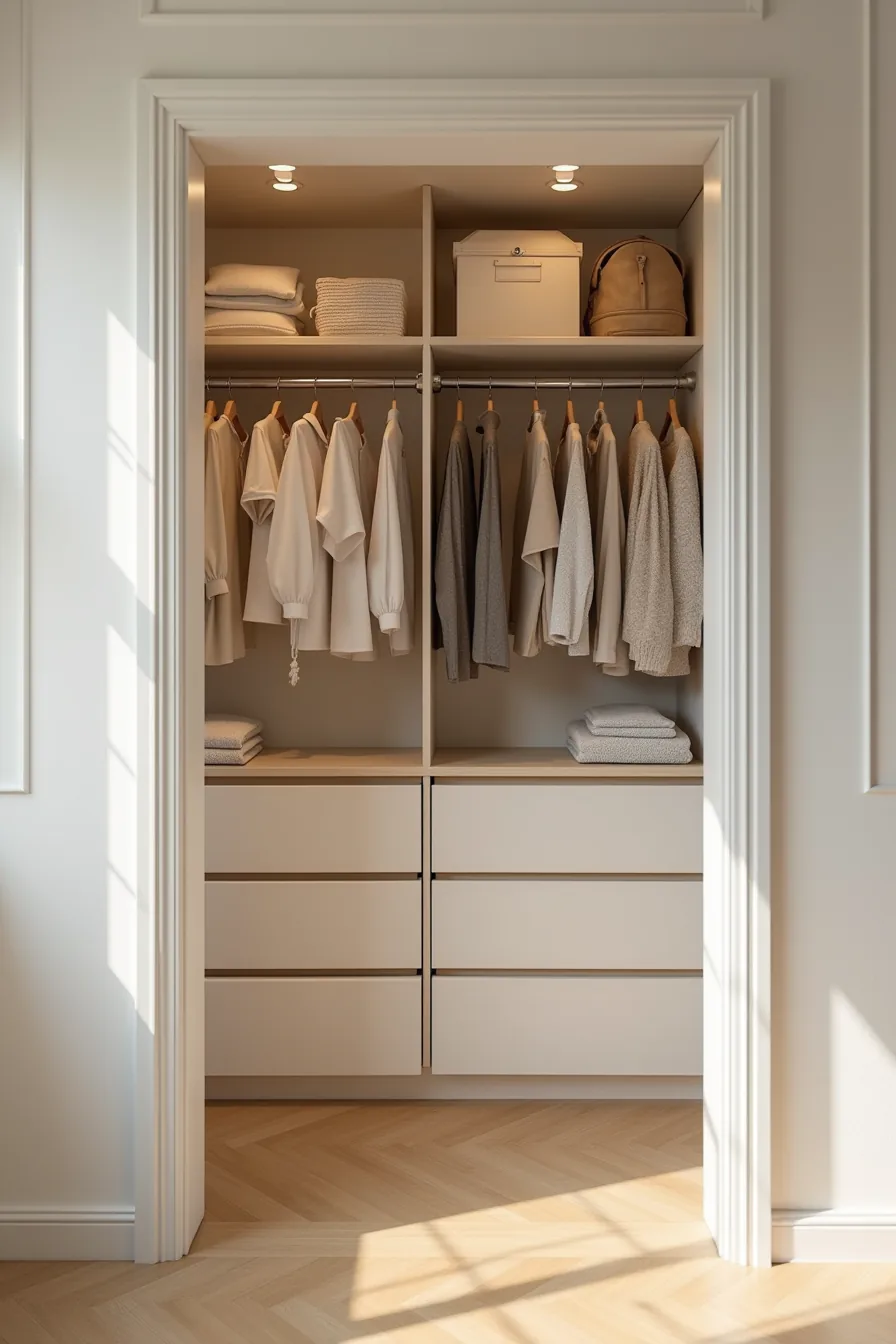
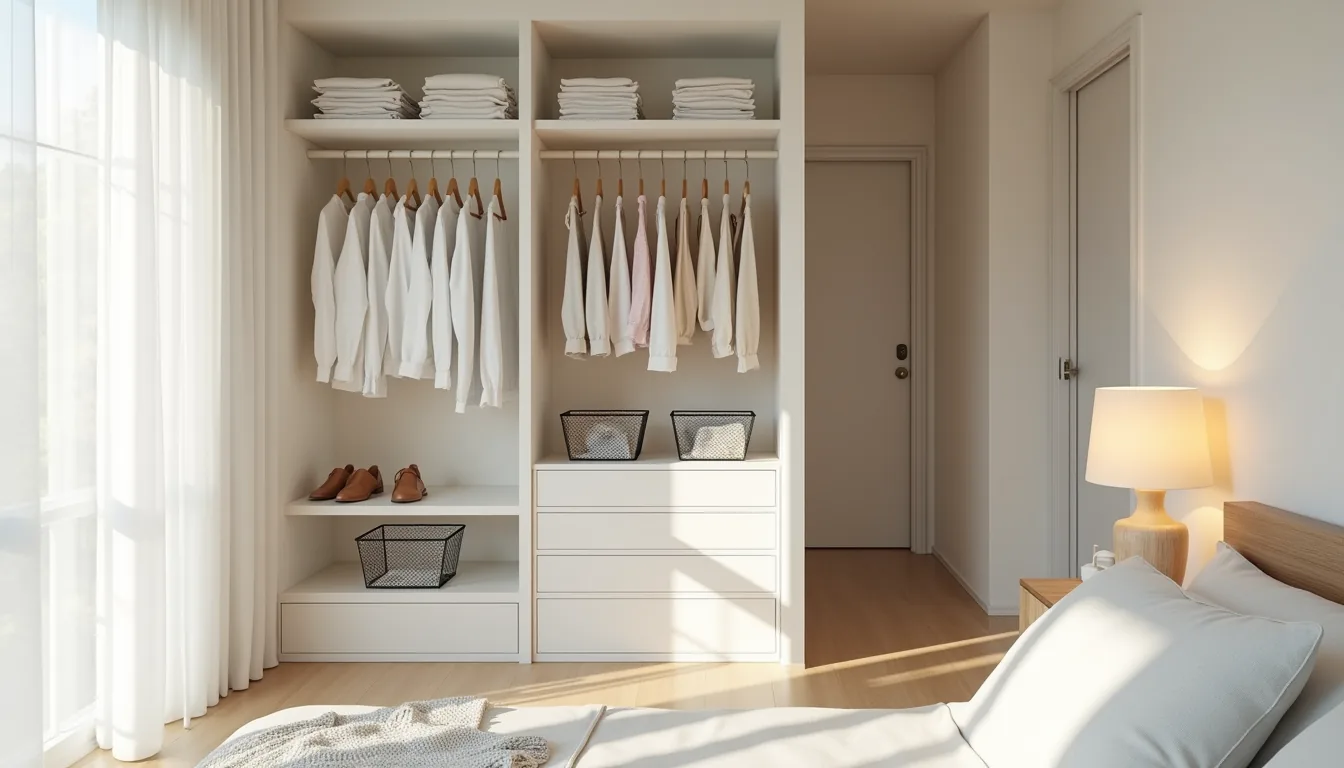
The most effective small-bedroom closets combine three zones rather than committing to a single system. A floor-to-ceiling shelving unit on one wall handles folded knitwear and storage boxes, while a double hanging rod in the center separates long coats above from shirts and blouses below, this split alone doubles your hanging capacity without adding floor space. The right wall carries an over-the-door shoe organizer, and a drawer unit at the base uses dividers to keep socks, accessories, and undergarments in distinct compartments.
This layered approach suits wardrobes of 60–120 items where no single category dominates. The budget route costs roughly $80–150 using wire shelving, a tension rod, and fabric drawer dividers; the splurge version runs $300–600 with custom melamine shelving, a solid wood rod, and bamboo drawer inserts. The trade-off is planning time: measure your closet’s depth and height first, then allocate 60% of space to hanging, 30% to shelving, and 10% to drawers, adjust the ratio based on whether you own more dresses or more folded casualwear.
Your First Move: Measure Twice, Commit Once
You now have six distinct directions, from tension-rod systems to custom built-ins. Resist the urge to buy organizers before you understand your actual constraints.
Start with a tape measure and a notepad. Record your closet’s depth, rod height, and clearance to the nearest door swing. Then photograph the contents you need to store, you’ll reference these images when choosing between, say, a dual-rod setup versus shelf cubbies.
That 15-minute audit tells you which of the six ideas fits your space, budget, and lease terms before you spend a dollar. Match the system to your storage reality, not the aesthetic you saw online.
Frequently Asked Questions
How much space do I actually gain by switching to slim hangers in a small closet?
You’ll typically gain 20–30 percent more hanging capacity on the same rod. That translates to roughly 10–15 extra garments per foot, depending on fabric thickness and shoulder width.
Can I install a double hanging rod in a rental closet without damaging the walls?
Yes, if you use a tension-mounted or freestanding rod that rests on the existing rod below. Avoid screwing into drywall unless you’ve landlord permission and plan to patch holes before moving out.
What’s the difference between budget drawer dividers and expensive ones, and does it matter for small spaces?
Budget dividers are flexible plastic or mesh, costing $5–$15, and shift under heavy items. Expensive wooden or metal dividers, $20–$40, hold their position and last years. For small spaces, stability matters more than material, buy mid-range if drawers are deep.
Should I prioritize vertical shelving or double rods if I can only do one modification?
Choose double rods if you hang mostly shirts, pants, or jackets. Choose vertical shelving if you store folded items, shoes, or bulky accessories. Double rods double hanging space immediately; shelving requires more planning but handles non-hanging categories better.