Your apartment closet is the most underutilized square footage in your home, and with the right apartment closet organization ideas, you can reclaim it without a single renovation. The key is matching the system to your space, budget, and lease terms. Below, you’ll find six distinct approaches, from renter-friendly tension rods to permanent built-ins, each with the exact trade-offs, materials, and maintenance you need to decide in minutes.
Key takeaways
- Vertical shelving doubles storage capacity in shallow closets by using ceiling-height columns, but you must keep frequently worn items at eye level (between 4 and 5 feet) to avoid daily stretching.
- Double-hanging rods add roughly 40-60 percent more linear hanging space, yet they suit only clothes shorter than 42 inches, so reserve the top rod for shirts and the bottom for pants or folded sweaters.
- Modular bin inserts cost between $15 and $60 per unit and fit any shelf depth, but measure the interior shelf height first because most stackable bins need 10-12 inches of clearance to open their lids.
- Sliding barn doors save floor space compared to swing-out doors, but they require a 6- to 8-inch wall clearance beside the closet track and add $200-$500 in hardware and installation if you can’t mount the track yourself.
Vertical Shelving for Small Closets
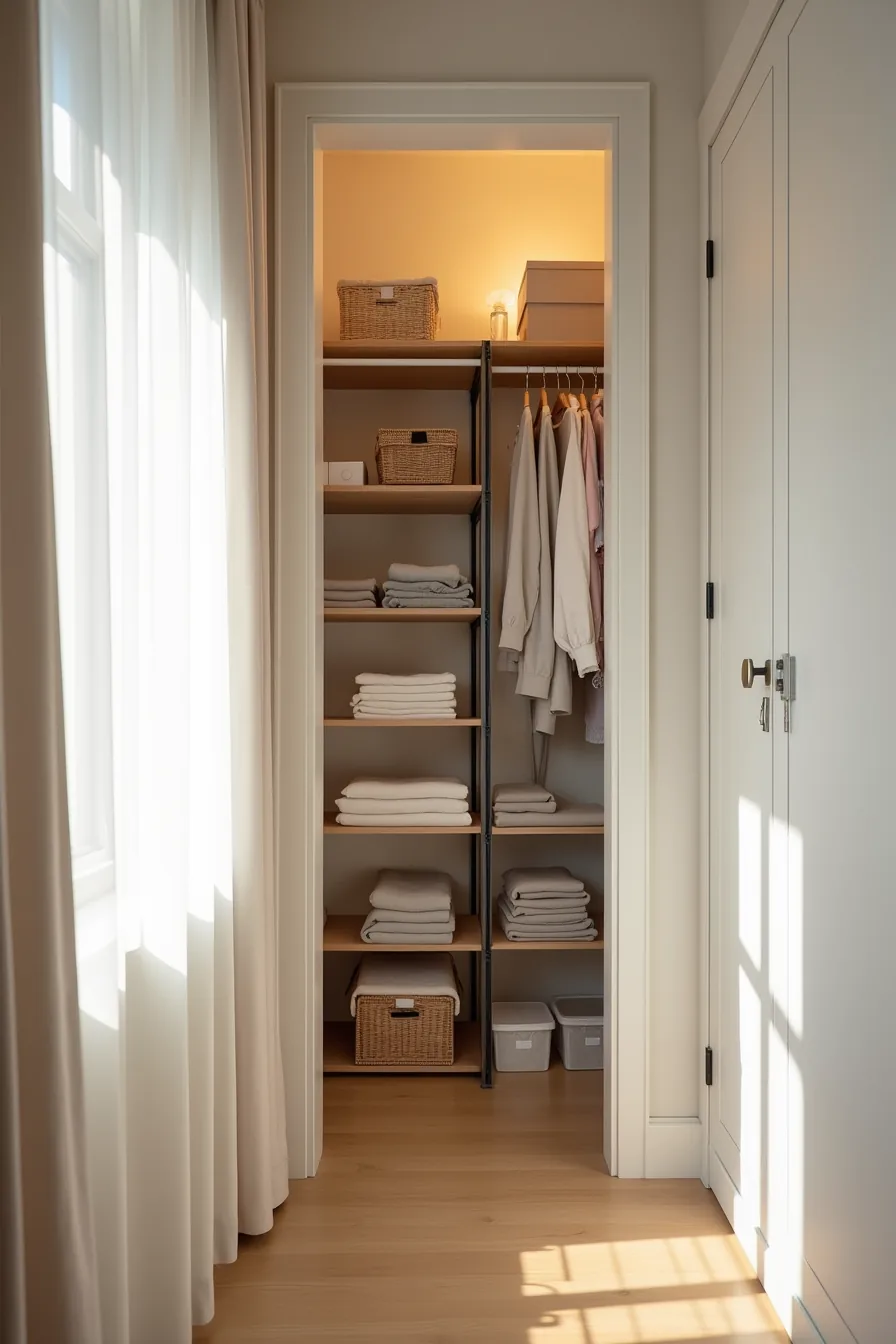
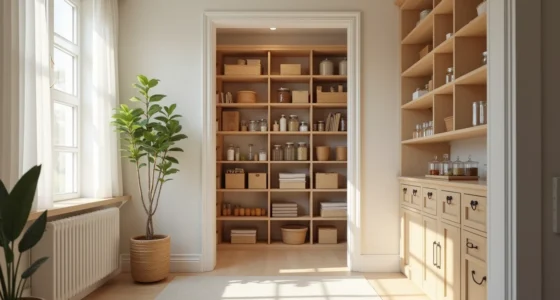
Floor-to-ceiling shelving transforms a cramped closet by converting dead air above your head into usable storage. A wall-mounted metal unit with adjustable shelves, each 12–16 inches deep, gives you room for rolled clothing, small boxes, and clear plastic containers stacked to the ceiling. The visible gaps between shelves keep the space feeling open rather than walled-in, which matters when the closet door swings into a tight bedroom.
This setup suits renters and budget shoppers because freestanding or tension-mounted metal shelving requires no permanent hardware and rarely exceeds $60–$120 per unit. Max out the weight capacity by storing heavier folded items on lower shelves and reserving the top two tiers for lightweight boxes you access with a step stool. Measure your closet’s width before buying, most standard units run 24–36 inches wide, and you need at least 12 inches of clearance from the door hinge to avoid blocking access.
Dust the tops of containers monthly, since ceiling-adjacent shelves collect grime faster than eye-level ones.
Double-Hanging Rod Systems
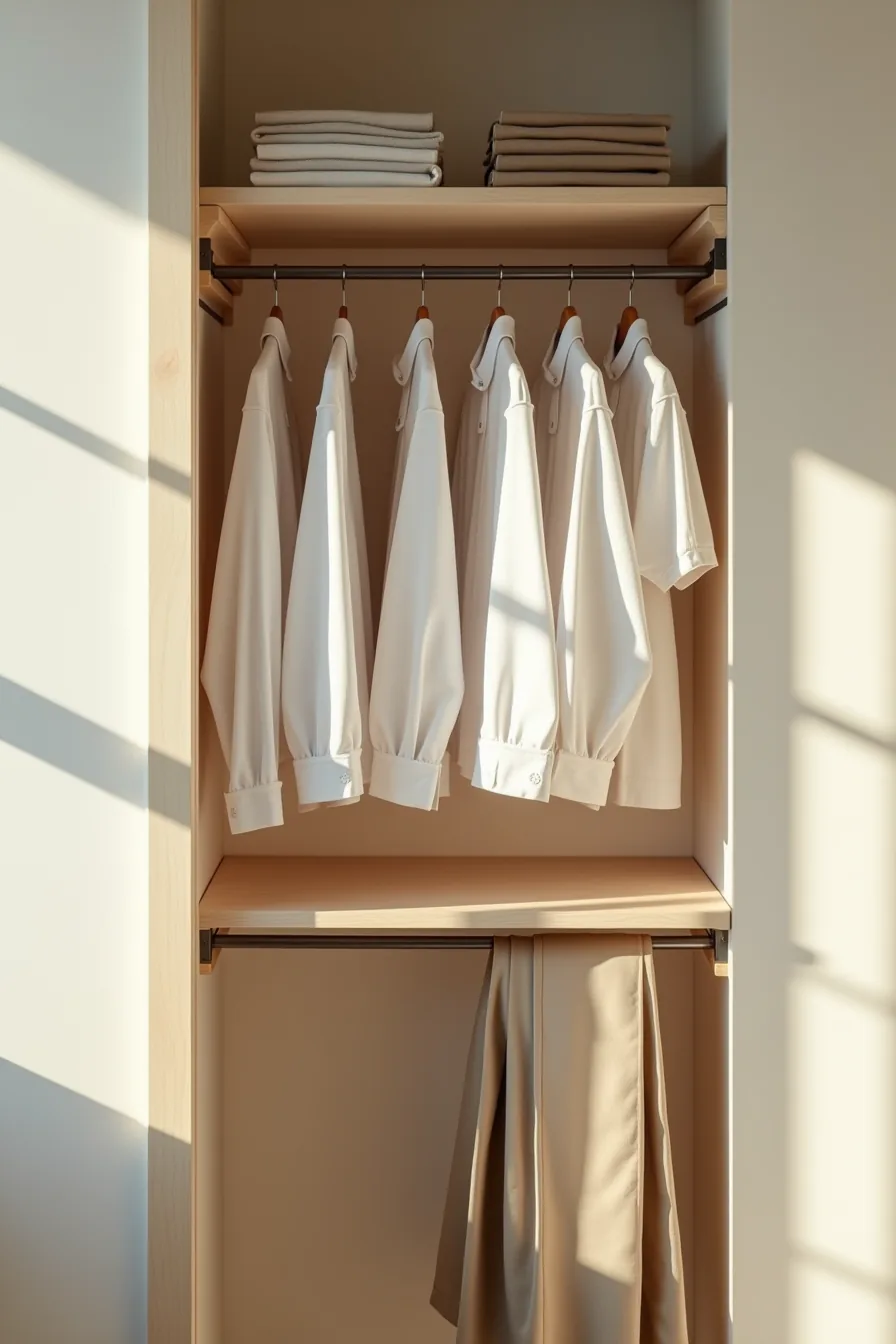
Installing a second rod below your existing one doubles your hanging capacity without requiring any extra floor space, the most efficient upgrade for a standard 24-inch-deep closet. For the setup pictured here, mount the upper rod 65–68 inches from the floor to accommodate shirts on wooden hangers, then position the lower rod at 34–36 inches for folded pants draped over dowels. This arrangement gives you roughly 30 inches of usable clearance below the upper rod and about 32 inches above the lower one, which fits most folded trousers and short dresses.
Choose this system if you own mostly hanging items under 40 inches long, shirts, blazers, skirts, and pants, but avoid it for long coats or maxi dresses, which need the full vertical run of a single rod. Weight limits matter: a standard closet rod bracket supports 40–80 pounds per side, so load the upper rod with lighter tops and reserve the lower rod for heavier denim or wool trousers. You can achieve the same effect with a tension rod that requires no drilling, making this a renter-friendly solution that costs $15–40 for the rod and brackets, plus $10–20 per set of wooden hangers.
For permanent installations, screw the brackets into wall studs rather than drywall alone to prevent sagging under sustained load.
Modular Bin and Drawer Inserts
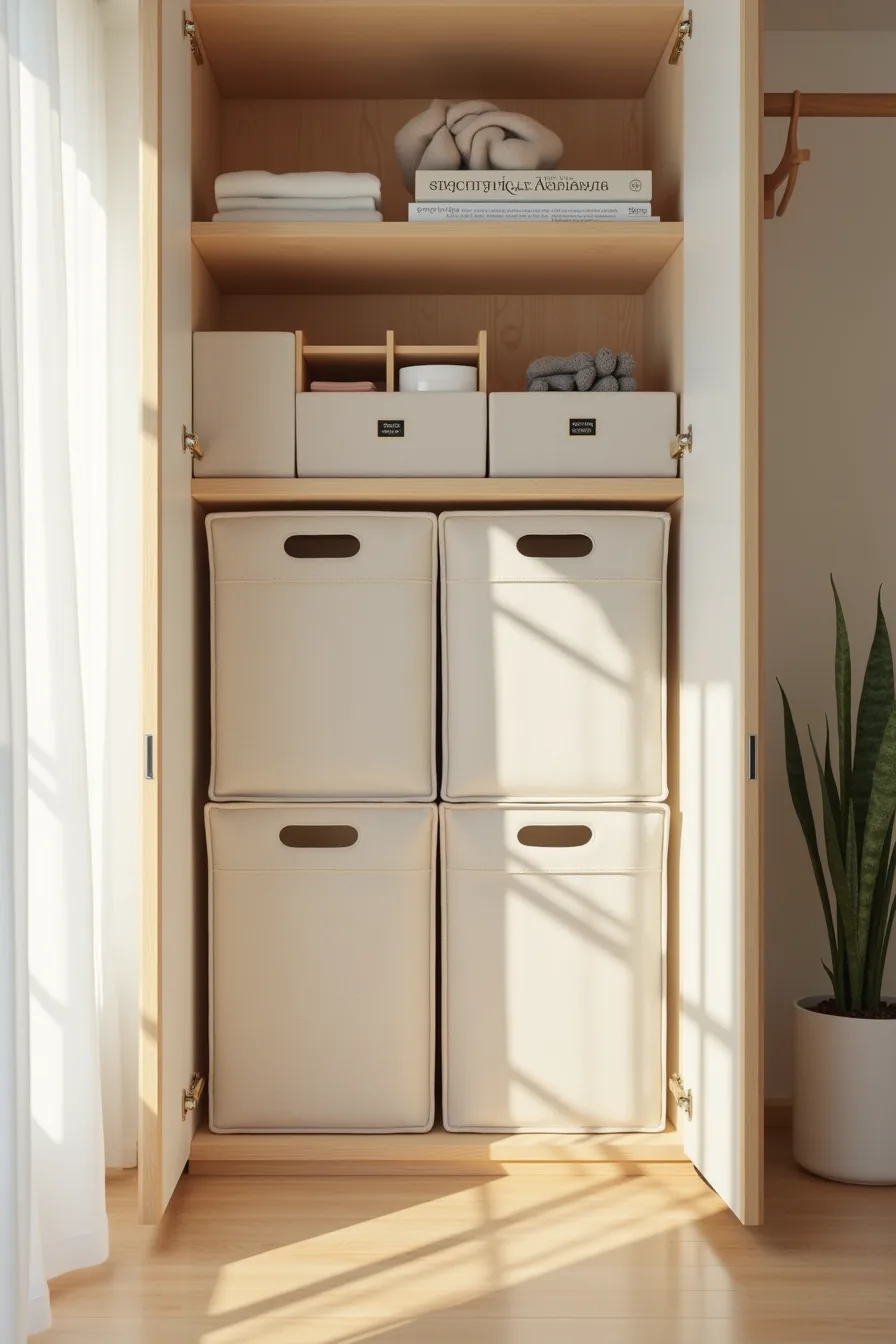
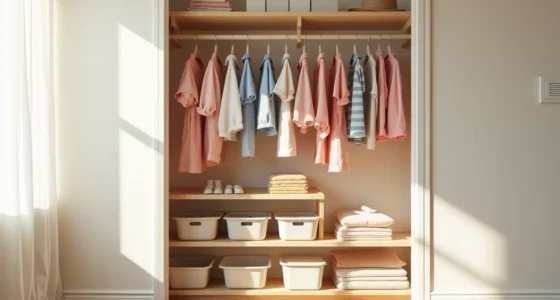
Stackable fabric bins create zones for categories you’d otherwise lose in a pile, think knitwear in one bin, workout gear in another, out-of-season accessories in a third. The 2×2 grid shown here works best in closets 48–60 inches wide; each bin should measure 11–13 inches per side so four fit comfortably with room to slide them in and out. Choose bins with structured sides and a label window if you want the stack to hold its shape under weight; soft collapsible versions are cheaper but sag when overfilled.
Drawer dividers on a shelf above convert a flat surface into a compartmentalized organizer for socks, ties, and small accessories. Measure the shelf depth first, most apartment shelves run 11–16 inches deep, then select dividers that adjust to fit, which costs $12–25 for a set of four to six. The combination suits renters because both components are freestanding and leave no wall damage; the total investment lands between $30 and $70 depending on bin quality.
For practical apartment closet organization ideas planning tips, map out which categories you own before buying so you don’t end up with bins that sit empty or dividers sized for items you don’t have.
Sliding Barn Door Closet Fronts
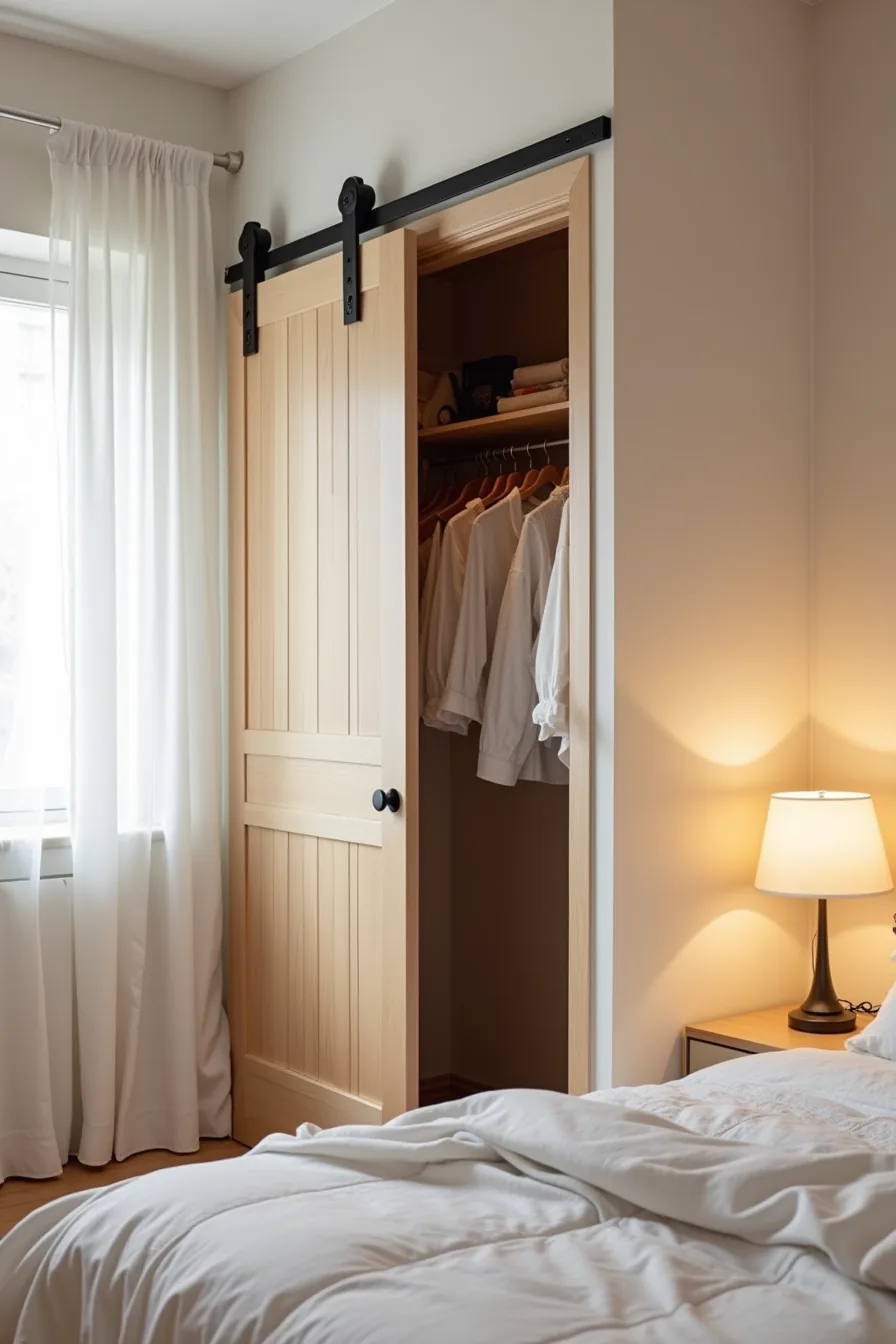
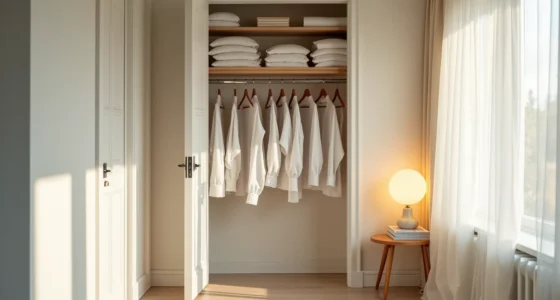
Swapping hinged doors for a sliding barn door reclaims roughly 24–30 inches of floor space, the arc a standard door needs to swing open, which matters most in bedrooms under 100 square feet where every inch counts. A single black metal-framed glass or solid panel on a ceiling-mounted track, like the one in this image with its track hardware running along the top of the wooden door frame, suits narrow layouts because it glides parallel to the wall instead of intruding into the room. The exposed hardware and full-height panel visually lengthen the wall, making the ceiling feel higher, and the clear view of hanging clothes turns the closet into a styled display rather than a hidden catch-all.
Installation requires a solid header or reinforced drywall anchors capable of holding 50–75 pounds per door, and you’ll need about 6–8 inches of clear wall beside the opening for the door to rest fully open. Expect to pay $200–600 for a pre-hung kit plus $150–300 for professional mounting if you’re not confident drilling into plaster or old framing, a cost that makes this a long-term investment route rather than a quick renter fix, since most leases require reversing the hardware and patching holes at move-out. This works best for medium closets 48–72 inches wide where the door panel covers roughly two-thirds of the opening; for wider closets, use double sliding panels that meet in the middle.
Keep the track clean and lubricated every six months with silicone spray, and confirm the bottom guide pin clears your floor molding before committing, a frequent Apartment Closet Organization Ideas mistake to avoid that turns a sleek upgrade into a scraping nuisance.
Tiered Shelving and Cascading Hangers
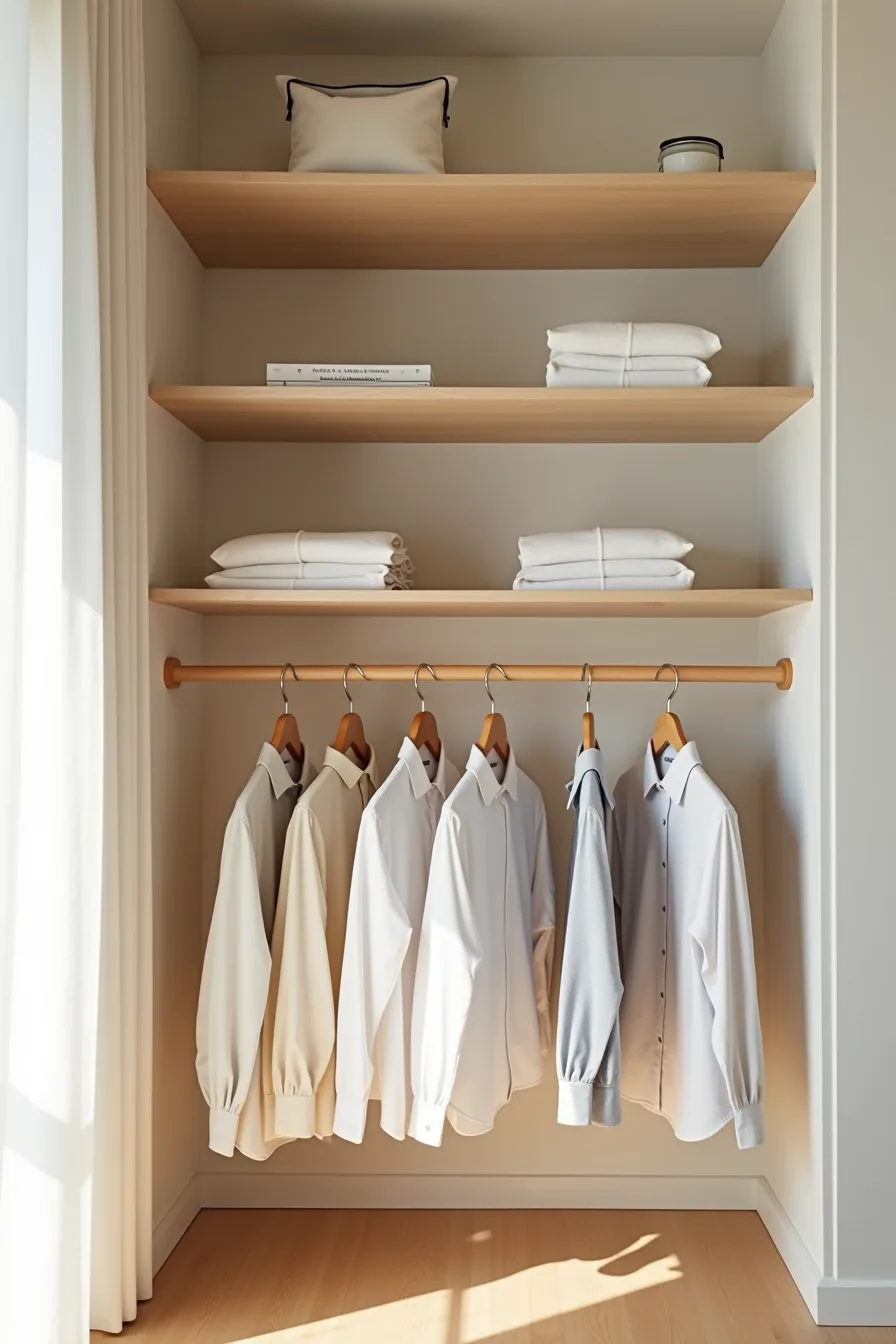
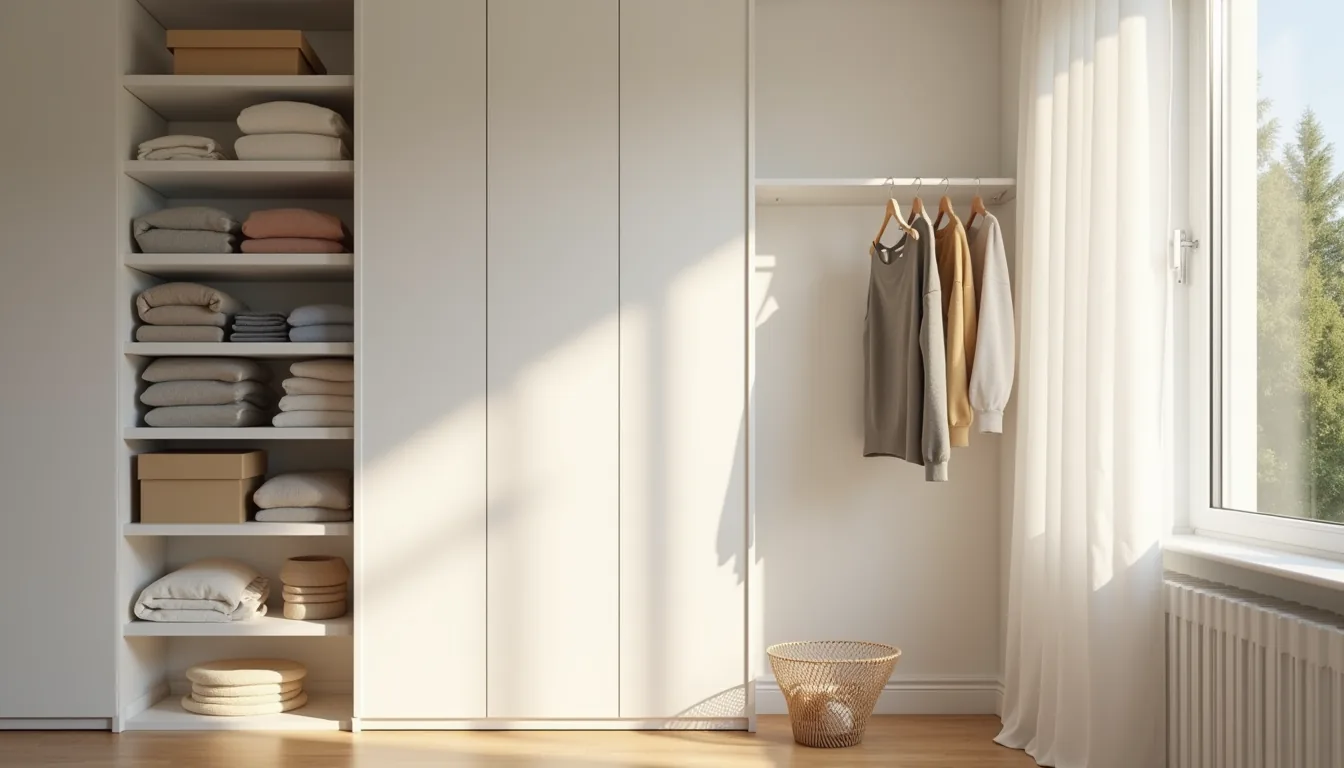
Angled shelves break the vertical monotony of a standard reach-in by giving each folded stack its own landing zone, so you can slide a sweater out without disturbing the pile beneath it. The three descending levels in this medium closet create a natural sightline from eye level down to waist height, which suits users who rotate seasonal items frequently and want to see everything at a glance without crouching.
Cascading hangers extend that same principle to hanging garments. Four staggered hooks keep shirts at descending heights, meaning each piece gets its own clip or rod position rather than sharing one crowded horizontal bar. This setup works best for closets 60–84 inches wide where you’ve at least 18 inches of depth to accommodate the angled shelf brackets without pinching the rod clearance.
Budget route: buy three floating shelves at $15–40 each and space them 12–14 inches apart vertically, then add a cascading hanger bar that clips onto your existing rod for $20–35. Renter-friendly alternative: use tension-pole shelving units that require no drilling. Expect to re-tighten shelf brackets every few months, as angled loads shift weight forward, and keep folded items to stacks of five or fewer to prevent the bottom piece from losing its crease.
Lighting and Mirror Additions
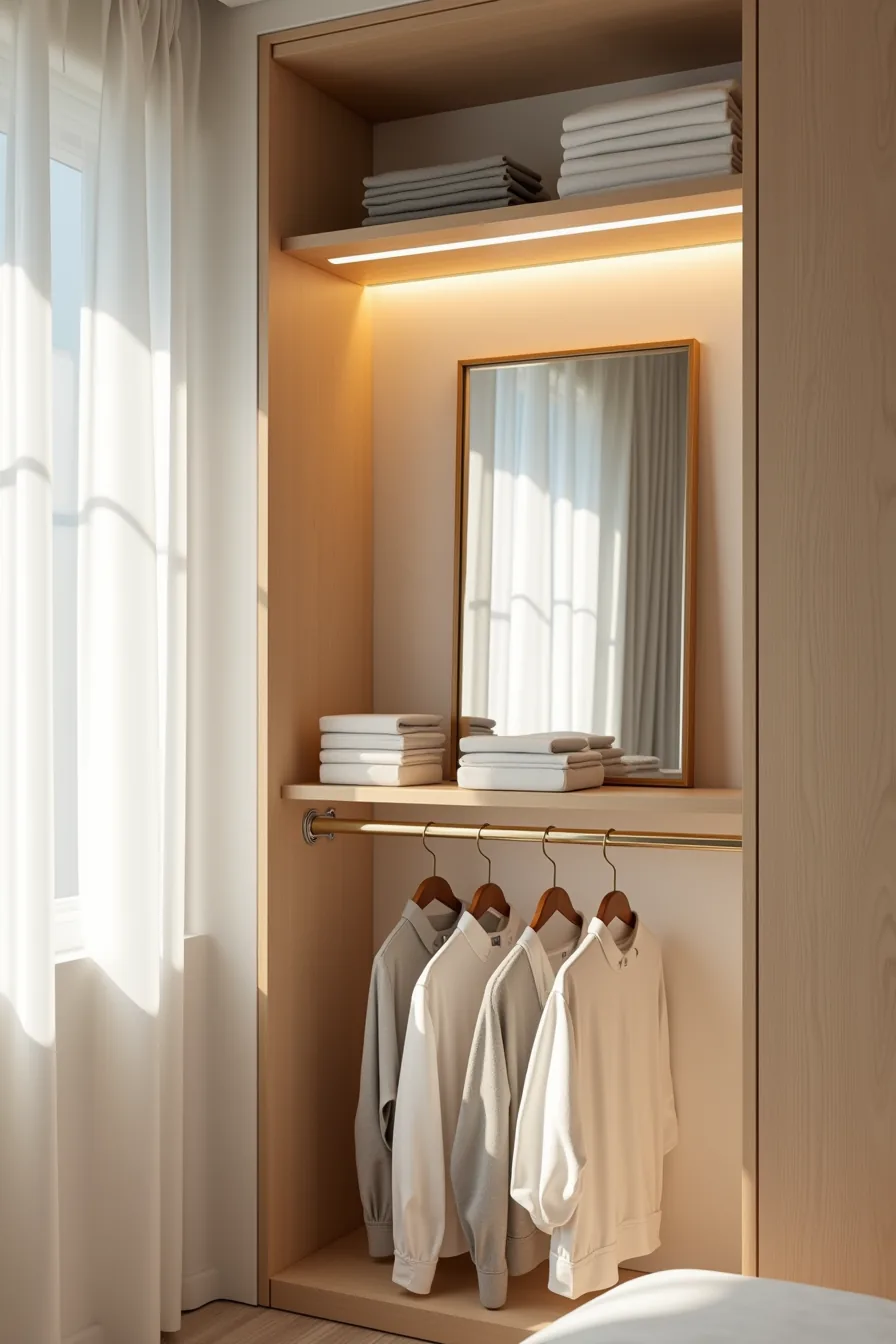
A rectangular mirror mounted on the back wall of your closet doubles the perceived depth of the space, making a narrow 24-inch-deep reach-in feel substantially larger while giving you a full-length check before you step out. Position it at eye level, roughly 12–18 inches from the top shelf, so it catches light from the room behind you rather than reflecting a shadowed wall.
An LED strip light running along the top shelf edge eliminates the blind spot where dark corners hide navy and black garments. Peel-and-stick battery-operated strips cost $15–30 and install without tools, though you’ll replace batteries every 6–8 months with daily use. Hardwired options run $100–200 installed but produce brighter, shadow-free illumination that renders fabric colors accurately.
The metal mirror frame adds a polished touch while protecting edges from snagging knitwear, and you can mount the mirror with heavy-duty adhesive strips rated for 10–15 pounds, no drilling required for renters.
Your five-minute starting point
Open your closet door and photograph every shelf, rod, and floor section. Print the photo and draw a rectangle around the single most chaotic zone, the one that makes you close the door fastest. Measure only that space’s width, depth, and usable height, then pick one idea from the six above that fits those numbers, not the ones you wish you had.
Your next step: clear that zone completely, wipe it down, and install only the organizer that matches its measured dimensions. One zone, fully finished, beats six half-started systems every time.
Frequently Asked Questions
Can I use apartment closet organization ideas in a rental without damaging walls?
Yes. Use tension rods, freestanding shelving units, and over-the-door organizers. Adhesive hooks rated for 5–10 pounds work on smooth surfaces but may leave residue.
Avoid heavy wall-mounted systems unless your lease permits patching.
What is the best apartment closet organization idea for a very small closet under 3 feet wide?
Install a single adjustable tension rod at chest height for hanging clothes, then add stackable fabric bins on the floor below. Skip shelving, vertical hanging maximizes the narrow footprint without hardware or permanent fixtures.
How much weight can wall-mounted shelves hold in apartment closets?
Drywall anchors typically support 20–50 pounds per shelf, while stud-mounted brackets hold 50–100 pounds. Never exceed 30 pounds on adhesive or toggle anchors. For heavy items like shoes, use floor-standing units instead of wall shelves.
Should I invest in custom closet systems or use modular apartment closet organization ideas?
Choose custom systems only if you own the apartment or plan to stay 5+ years. Modular options, wire cubes, canvas drawers, and freestanding racks, cost 60–80% less, move with you, and adapt to different closet widths without permanent installation.