
A mini fridge in your bedroom stops being an eyesore the moment you stop treating it as an appliance and start styling it as a piece of furniture. The shift is purely practical: choose a cabinet-style unit that blends with your nightstand height, or wrap a retro model in a cane or wood veneer to match your headboard. What follows are six tested layouts, from a $60 dorm hack to a built-in alcove for a master suite, each with the exact dimensions, clearance, and power considerations that separate a styled corner from a cluttered one.
Key takeaways
- Prioritize ventilation clearance of at least 2-3 inches on all sides and the back of the fridge to prevent compressor overheating and premature failure, regardless of your chosen aesthetic.
- Match the fridge’s finish to your room’s dominant undertone, white or black for cool grays, wood-toned or retro pastels for warm neutrals, to make the appliance recede visually rather than dominate.
- For renters, skip permanent cabinetry and use a rolling cart or a curtained console table to conceal the fridge, which leaves no wall damage and can be repositioned when you move.
- Budget for a 3-5 decibel noise increase over a standard refrigerator; place the unit on a rubber mat and away from your bed’s headboard to mitigate vibration and hum during sleep.
The Minimalist Approach: Hiding Function Behind Form
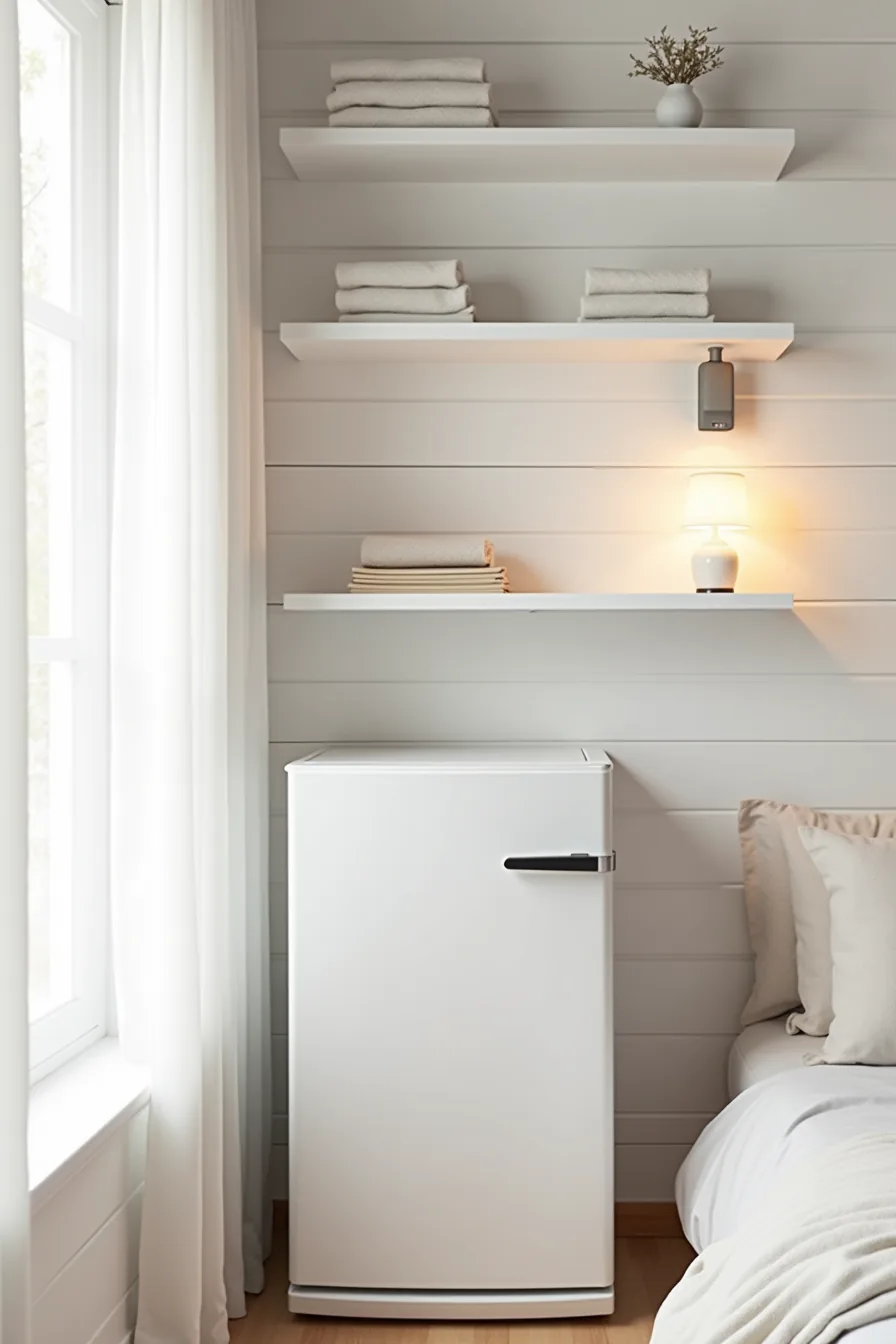
The minimalist mini fridge in bedroom aesthetic works by subtraction: you remove visual noise so the appliance reads as architecture, not electronics. A white fridge pressed flush against a white shiplap wall disappears into the surface plane, especially when flanked by floating shelves at matching depth. Folded linens stacked on those shelves pull the eye upward and horizontally, breaking the fridge’s vertical silhouette without adding clutter.
This setup suits a small bedroom, roughly 10 by 12 feet, where a bulky appliance would otherwise dominate. It also fits a calm, monochrome palette of whites and warm woods; introduce more than two accent colors and the disguise fails. To reproduce it, budget for a fridge with a smooth matte finish, not glossy (gloss reflects light and draws attention), and allow 2–3 inches of clearance behind the unit for compressor airflow.
Position it at the foot of the bed, not beside the pillow, to keep the sightline clean while you sleep.
Cute vs Minimal Setup: Choosing Your Visual Priority
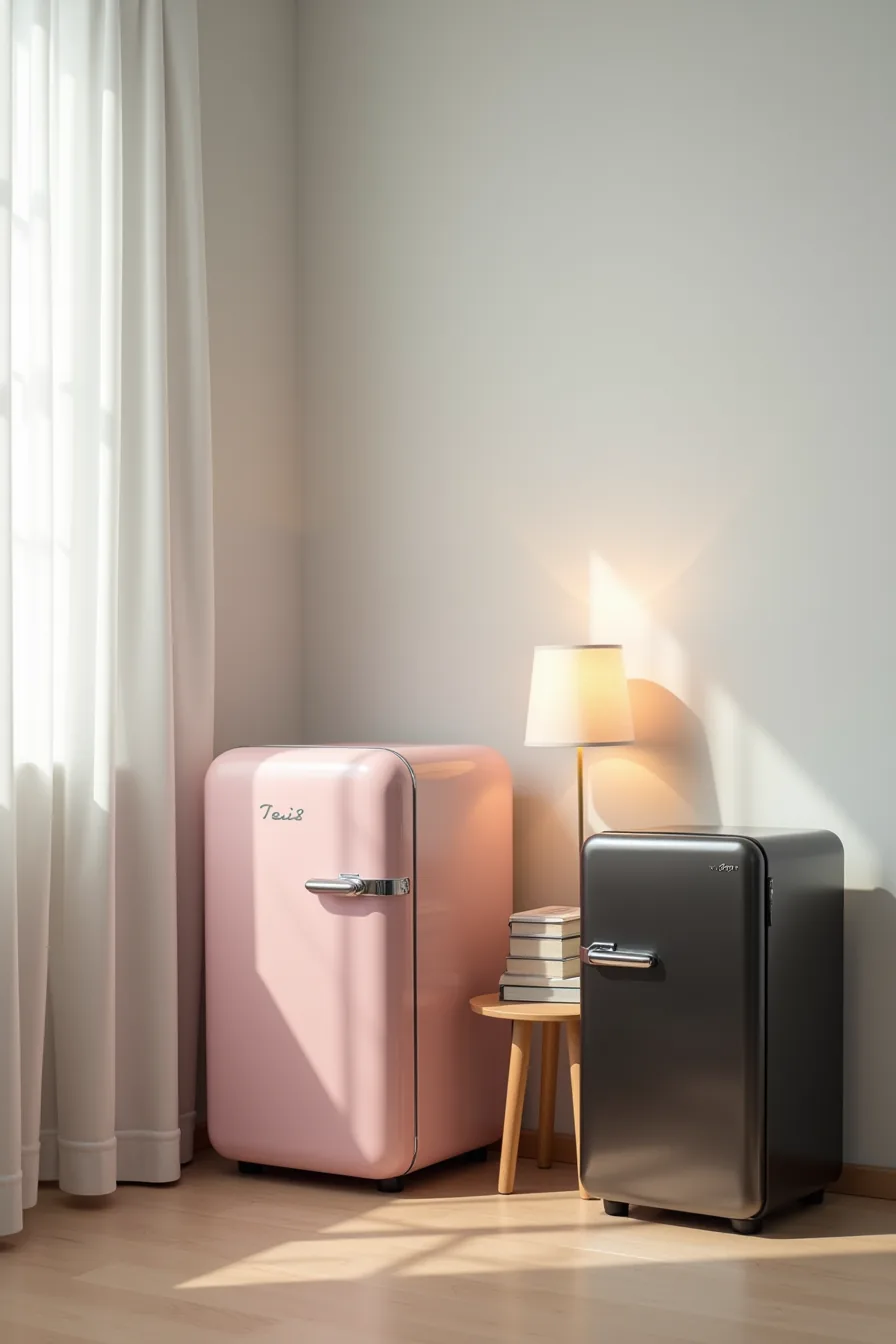
The cuter route means leaning into the fridge as a focal point. A pastel pink retro model with rounded corners, like the one beside the wooden nightstand, delivers personality instantly, everyone who enters the room will comment on it. That visual weight suits a medium to large bedroom where you’ve wall space to spare, and it pairs best with soft neutrals, like light gray, so the color feels deliberate rather than accidental.
Expect to pay 15–30 percent more for retro styling than for a comparable plain white model.
A sleek black stainless-steel fridge reads as furniture-grade equipment, not an accent piece. It disappears into darker walls and reads as intentional in a modern or industrial room. That makes it the better choice if you travel frequently, change décor often, or simply want the fridge to vanish most days and perform without insisting on attention.
The side-by-side comparison here makes the trade-off visible: pastel demands decoration around it, plants, books, a lamp, to balance the visual weight, while black steel needs almost nothing. For a small room with limited floor space, choose the minimal option; for a dedicated corner you can afford to stage, go cute. The lamp on the nightstand bridges both looks by drawing the eye upward, so neither fridge feels like the entire story.
Color Coordination Strategies for Small Spaces
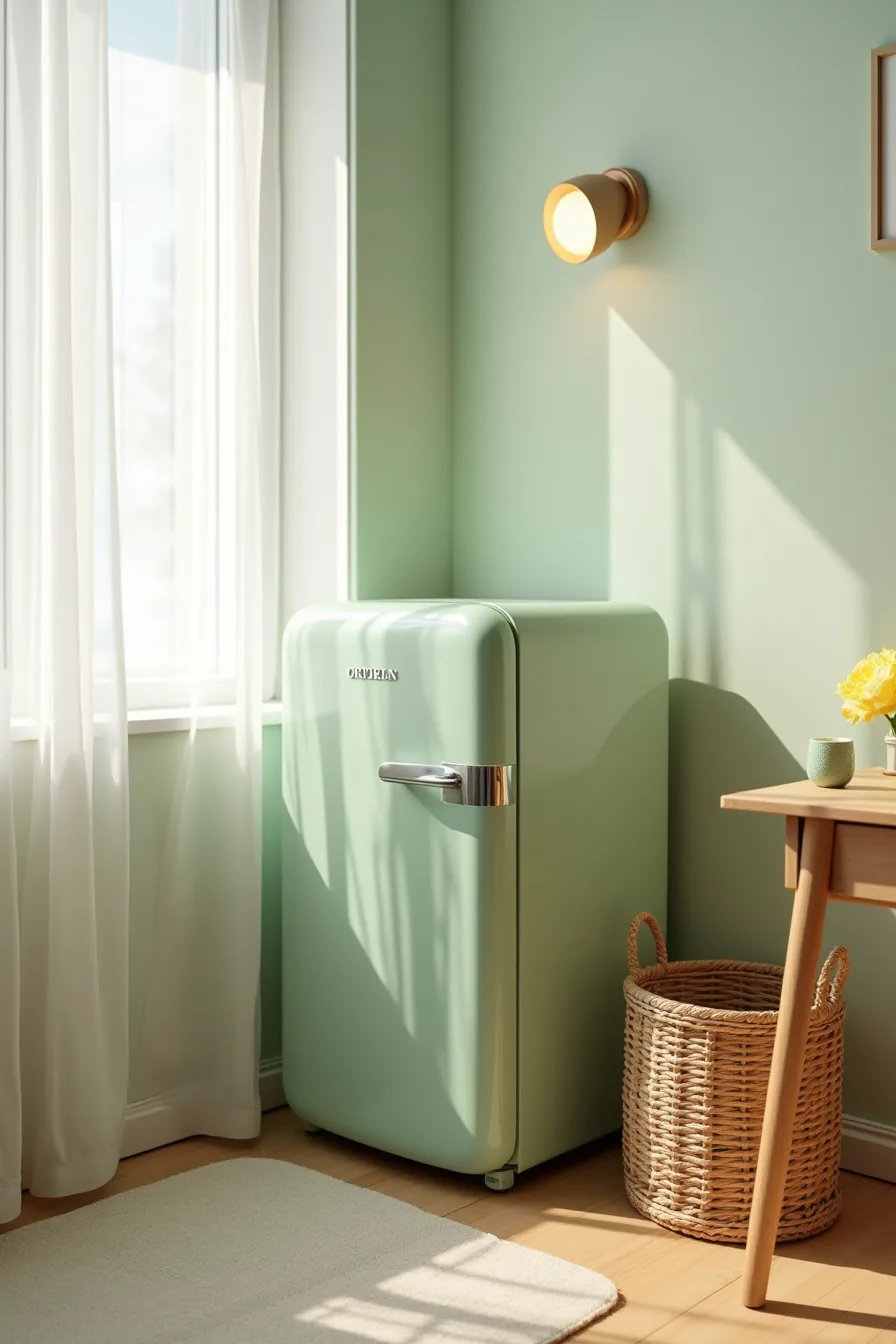
In bedrooms under 120 square feet, the fridge should either anchor the palette or dissolve into it, there’s no middle ground that reads as intentional. The sage green mini fridge against a matching sage wall is the disappearing act done right: the appliance stops reading as an appliance and becomes a texture shift instead. You need the wall color to be within one or two shade steps of the fridge body for this to work; a mismatched green will look accidental, not coordinated.
The woven rattan basket beside the fridge repeats the natural, muted tone family and gives the eye a second place to land, which prevents the corner from feeling like a green monolith. Match the wood furniture to the warm undertone in the sage, if the wall leans yellow-green, choose oak or bamboo; if it leans blue-green, go with walnut or acacia. For a true monochromatic scheme, paint the wall and fridge the same color, then add one contrasting textile (a rust or cream throw) to break it up.
If you can’t paint walls, cheat the scheme by placing the fridge next to a large plant or a rattan floor lamp that carries the same tonal family, so the coordination happens through accessories rather than paint.
Dorm-Style Makeover: Renter-Friendly Placement and Styling
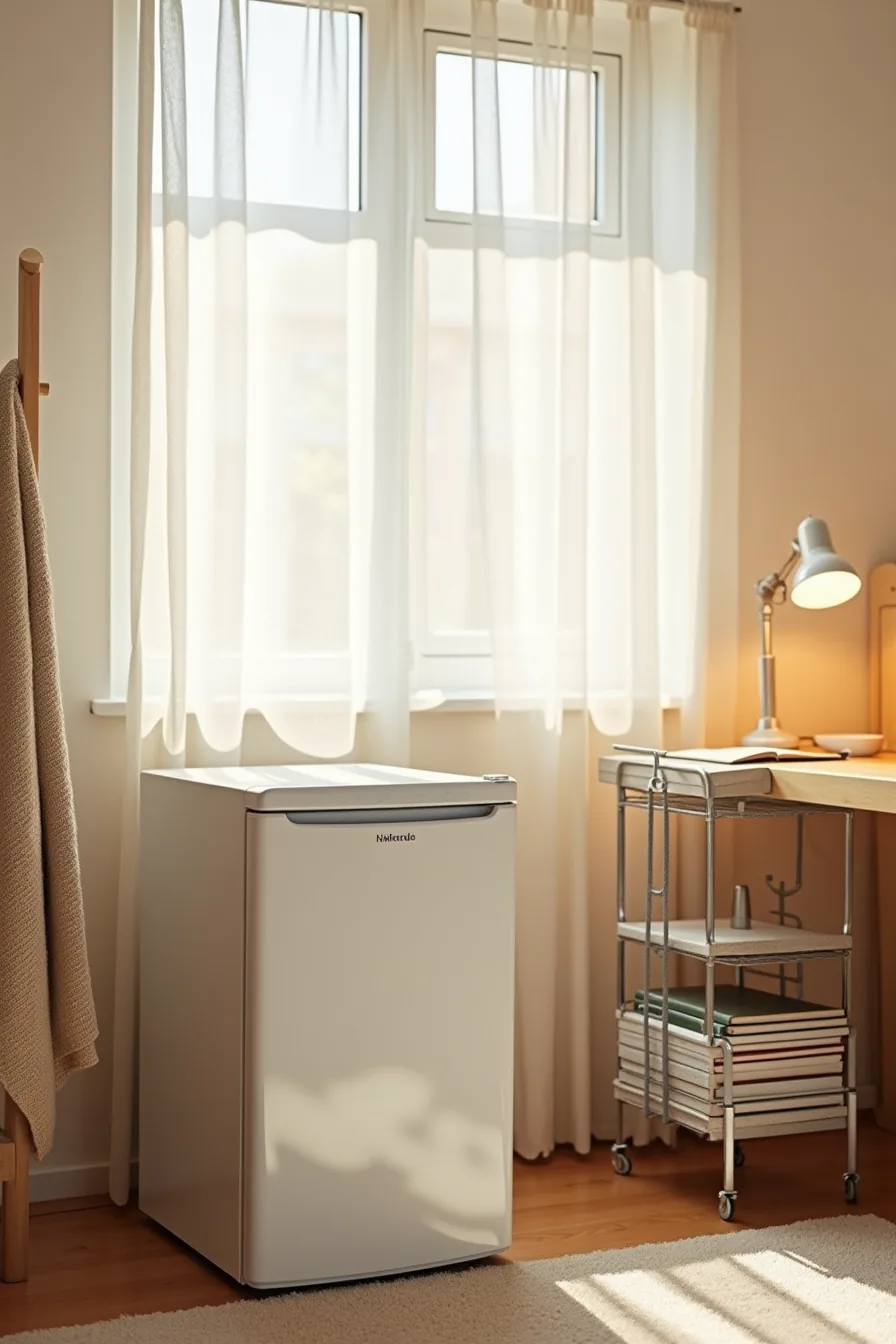
The white mini fridge on the floor against a beige institutional wall is the default rental setup, but you can make it read as deliberate without a single screw hole. Drape a woven throw blanket over the top and let it cascade a few inches down the front, this softens the appliance’s hard edges and introduces a textile layer that costs under $20. Place a wire shelving unit beside it to hold textbooks and a desk organizer, which visually groups the fridge with study essentials rather than leaving it as an orphaned appliance.
This arrangement works because it uses vertical stacking to compensate for floor-level placement. The wire shelving draws the eye upward, and the blanket breaks the fridge’s white mass against the beige wall. It suits dorm rooms, studio apartments, or any space where you can’t paint, drill, or swap furniture.
Skip adhesive hooks and command strips on the fridge itself, the textured throw and adjacent shelving do the work without risking surface damage. For a cohesive dorm-style makeover, keep the throw neutral (oatmeal, heather gray, or cream) so it pairs with whatever bedding you already own.
Make a Bedroom Mini Fridge Look More Intentional: Styling Layers
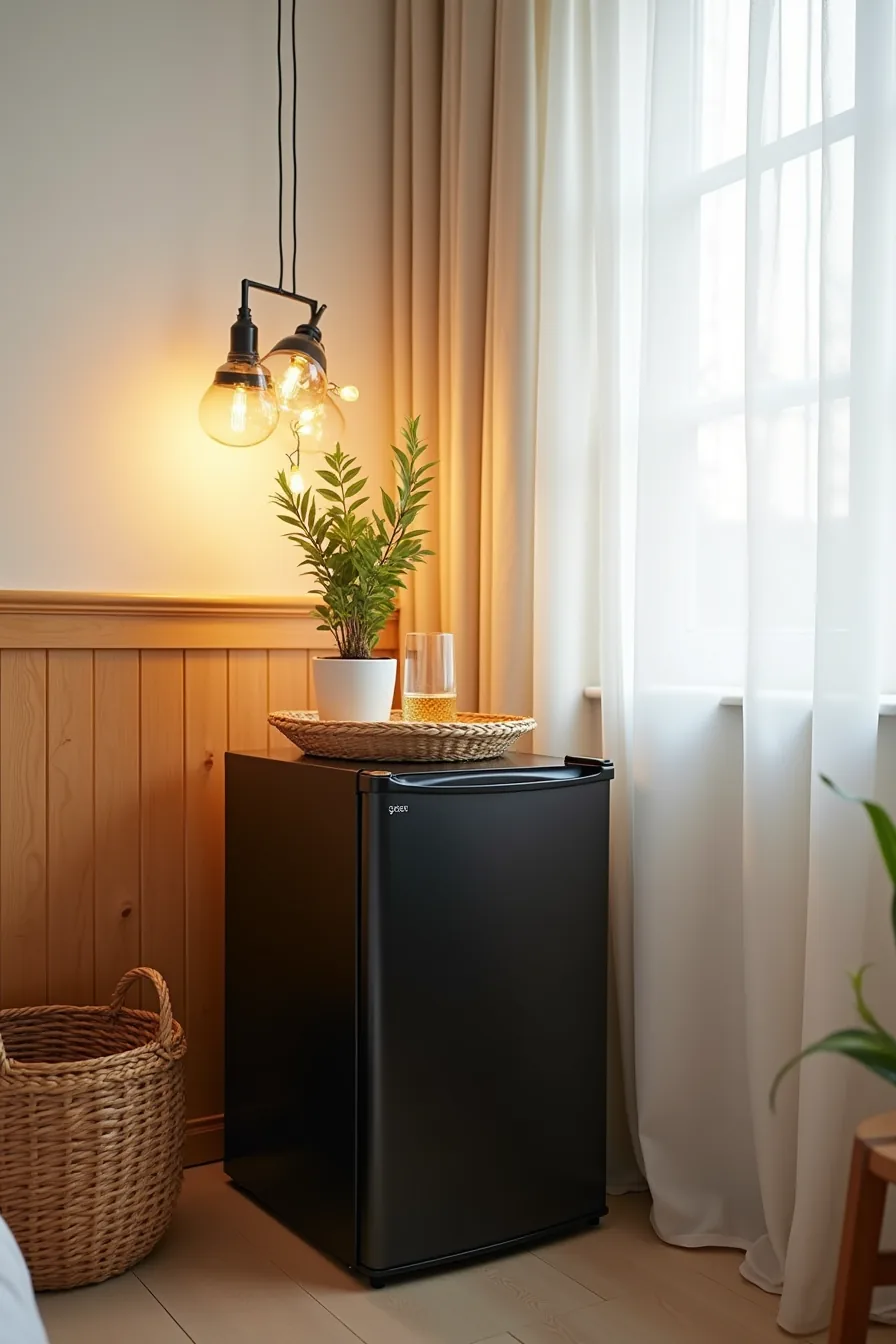
The fastest way to make a bedroom mini fridge look more intentional is to treat the space around it as a designed vignette rather than a leftover corner. Set a woven tray on top of the fridge and use it as a landing zone for a small glass, a potted plant, and a coil of battery-powered string lights. The tray contains the clutter and gives the appliance a defined “surface” purpose, it reads as a nightstand extension, not a storage afterthought.
Flank the fridge with a tall woven basket on one side and a wooden stool on the other. The basket introduces organic texture and hides loose cords or extra linens, while the stool offers a perch for a book or a phone charging station. This layered approach works best in medium to large bedrooms where you’ve 24–30 inches of floor space to dedicate.
It suits renters and homeowners alike because nothing requires mounting, drilling, or permanent modification, you can reassemble the entire vignette in under five minutes. Keep the tray’s contents to three objects maximum; anything more turns intentional styling back into surface clutter.
Long-Term Investment: Sizing, Placement, and Maintenance
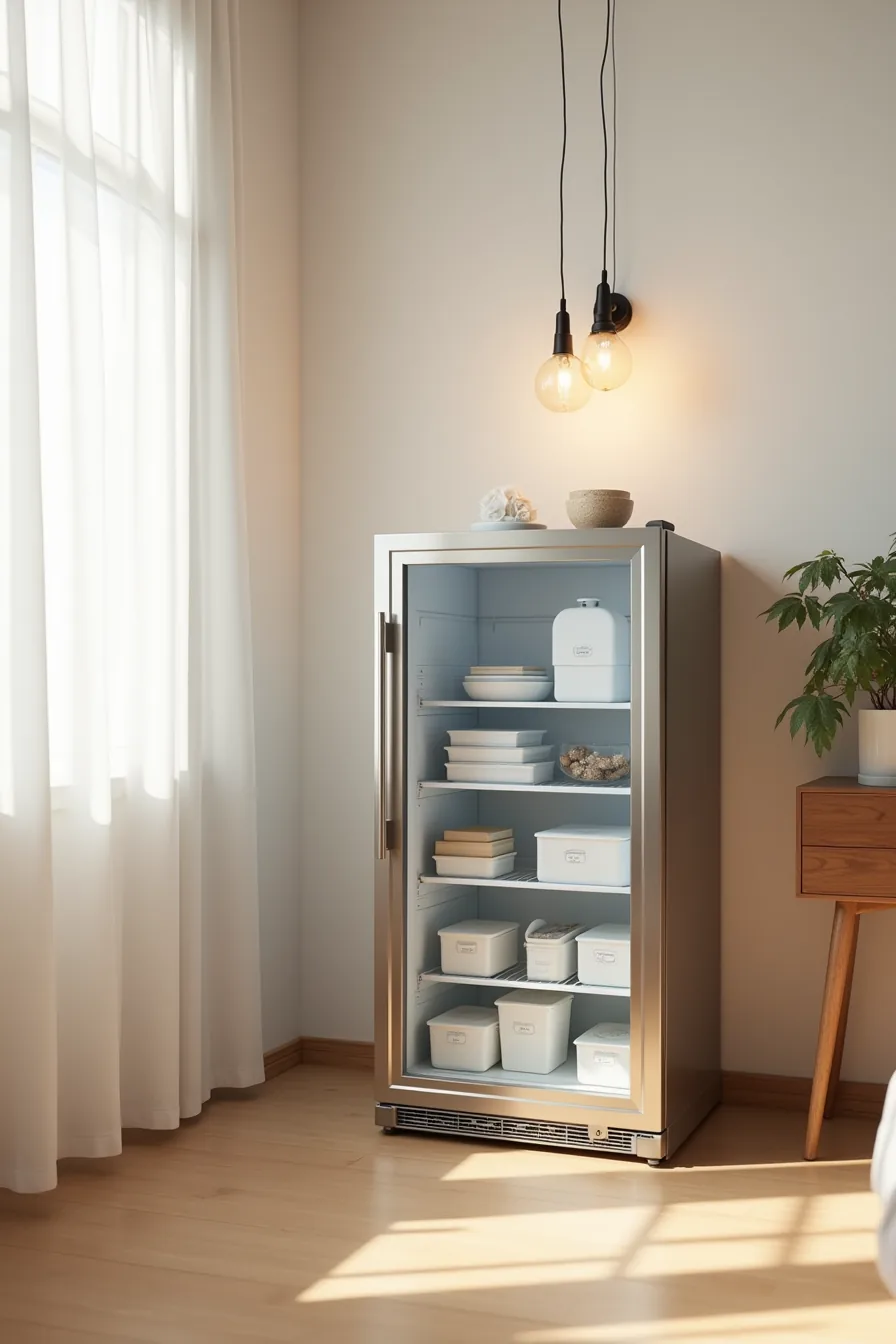
When a mini fridge becomes a permanent bedroom fixture, prioritize capacity and serviceability over style. Choose a model with 3.5–4.5 cubic feet of internal space, enough for a week of drinks, yogurt, and leftovers without requiring constant restocking. A stainless-steel finish with a glass door lets you monitor inventory at a glance, which cuts door-open time and energy use.
Placement determines longevity. Keep the fridge 4–6 inches from the wall and leave the top vent fully unobstructed; blocking it forces the compressor to work harder and shortens its lifespan. Position it so the door swings clear of your main walking path, a 30-inch clearance in front is the minimum for comfortable access.
Maintenance is weekly, not occasional. Wipe the interior with a damp microfiber cloth every seven days and check that labeled containers are sealed; a single leaking dressing bottle can sour the whole unit. Vacuum the rear condenser coils every three months using a brush attachment, and defrost any ice buildup immediately.
This routine preserves both the appliance’s function and its visual polish.
Your 10-Minute Decision Check
Before you buy anything, measure the clearance around your bed, desk, and door swing. A fridge needs 2–3 inches of open space on the sides and back for heat to escape, and the door needs roughly 180 degrees of access to open fully.
Match the fridge to your primary use, skincare, drinks, or leftovers, because a 1.7-cubic-foot model with a freezer compartment costs $30–$80 more than a compact 1.1-cubic-foot cooler-only unit. If you rent, skip permanent cabinetry and choose a freestanding model on casters so you can roll it out for cleaning or move it in minutes.
Start here: Grab a tape measure, check your outlet placement and floor clearance, then browse only fridges that fit those numbers. That single step eliminates half your options and keeps you from forcing an aesthetic that blocks your airflow or your path.
Frequently Asked Questions
Can you put a mini fridge in a bedroom without it looking out of place?
Yes, if you treat it as furniture, not an appliance. Match its finish to your nightstand or dresser, position it off the main sightline, and surround it with styling elements like lamps or trays.
What size mini fridge works best for a small bedroom?
For a small bedroom, choose a 1.7–2.5 cubic foot model, roughly 18–20 inches wide and 20–24 inches tall. It fits on a sturdy dresser top or under a low console without dominating the floor plan.
How do you hide or style a mini fridge to match bedroom décor?
Enclose it in a cabinet with a lift-up lid for counter-height looks, wrap it with stick-on wood veneer, or place it inside a pre-built IKEA sideboard with a cutout. Always leave 2–3 inches of ventilation space around the rear and sides.
Is it safe to keep a mini fridge running 24/7 in a bedroom?
Generally yes, if it’s a modern compressor model with proper clearance and you’re not sleeping directly beside it. Older thermoelectric units run hotter and hum louder. Place it at least 3 feet from your pillow to reduce noise and radiated heat.