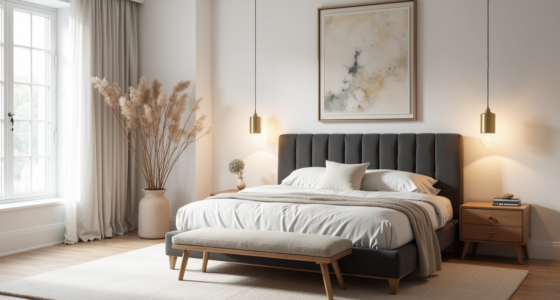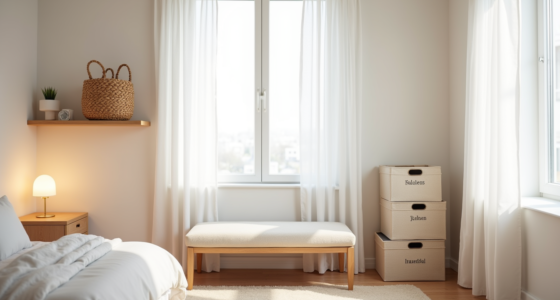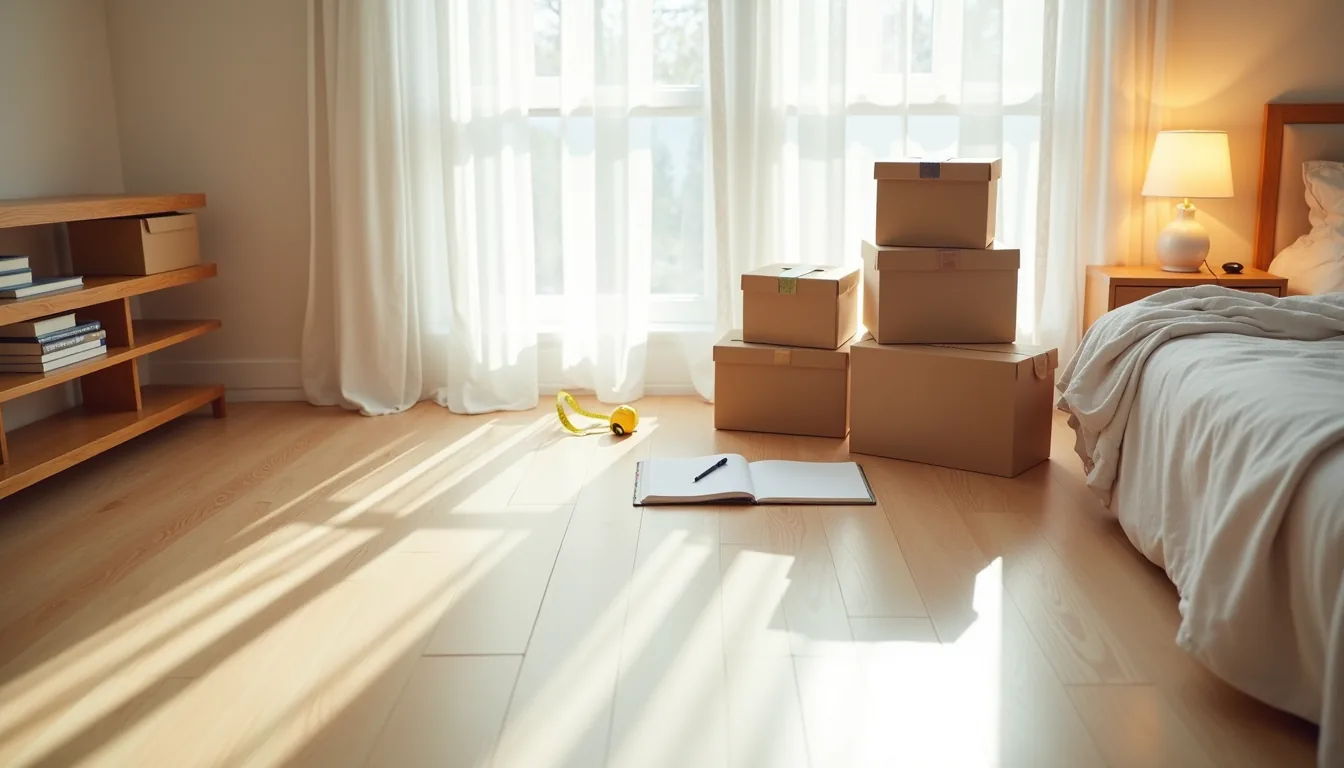
Bedroom storage ideas aren’t about buying more bins; they’re a sequence of decisions about what you keep, where you place it, and how you access it daily, decisions that shift entirely depending on whether you own your walls or rent them. Before you measure a single shelf or compare basket prices, you must confront the actual volume of clothing, bedding, and personal effects occupying your floor and surfaces. That inventory determines whether a fixed built-in, a modular cube system, or a tension-rod wardrobe insert will solve your problem or simply relocate it.
The six approaches that follow each carry distinct capacity limits, installation demands, and landlord-approval risks, so the right choice hinges on your lease terms, ceiling height, and tolerance for weekend assembly work.
Key takeaways
Start with an honest inventory: measure your room and sort belongings into keep, relocate, and toss piles before buying a single bin or shelf. Prioritize access over capacity: choose open shelving for daily-use items and opaque bins for seasonal gear, and always leave a clear path to doors and windows. Match systems to your lease and budget: renter-friendly tension rods and freestanding units avoid wall damage, while built-ins pay off only in homes you’ll own for years. Reclaim dead zones like alcoves and corners with corner shelves or a rolling cart, just verify clearance for drawers and ventilation before committing.
Audit What You Own Before Buying Any Container
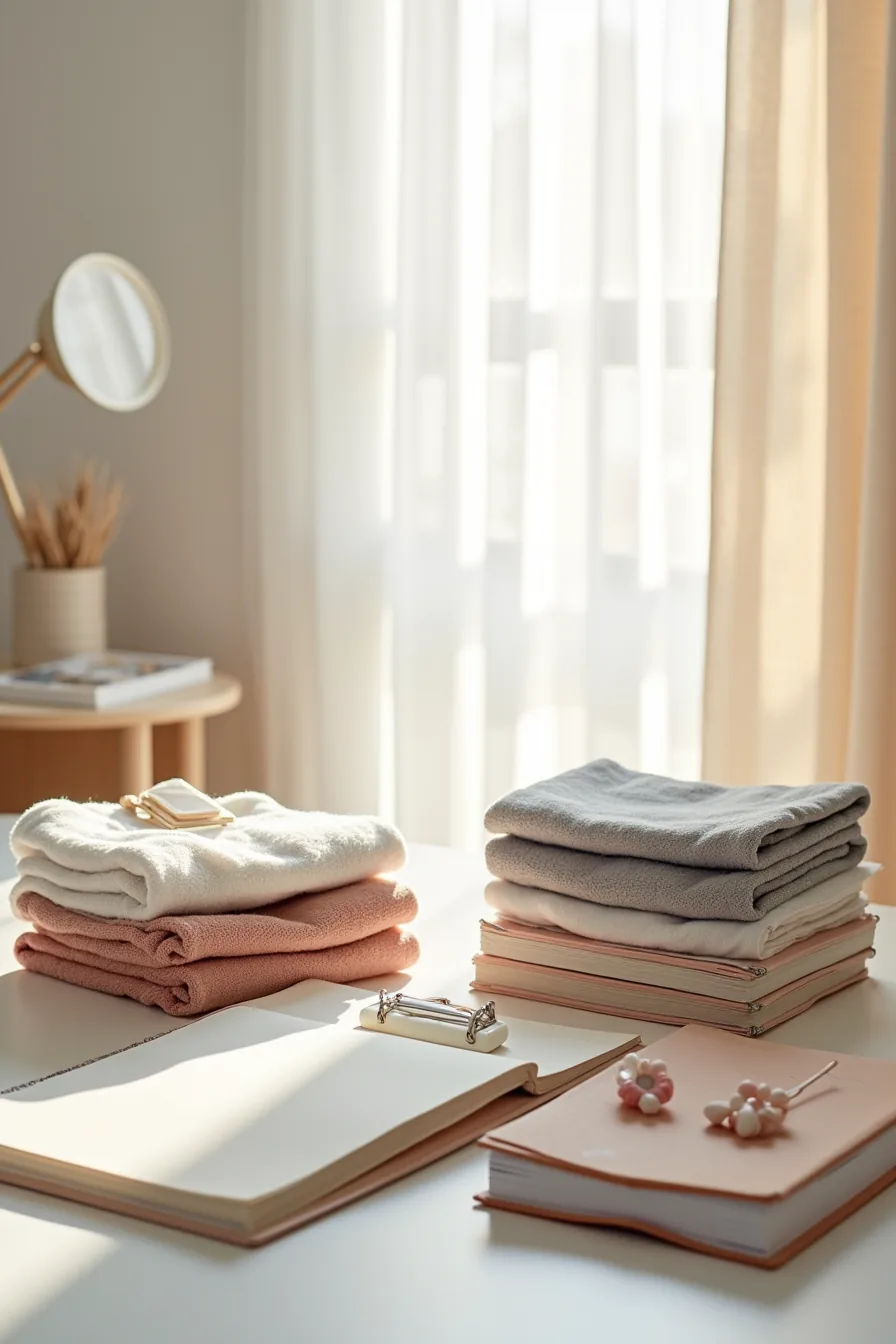
You’re not solving a storage problem until you’ve sorted the stuff that makes it a problem. Empty every drawer and shelf onto a flat, white surface, your bed or a cleared table works, and split the contents into three distinct groups: clothing, books, and accessories. A handwritten category list beside each pile forces a decision about every object, which is the entire point: you’re inventorying, not rearranging.
Ask yourself two questions per item: when did you last use it, and where should it live to be used again? Group by frequency of use, daily, weekly, seasonal, and be honest about the pieces that haven’t left the pile in a year. Those are the ones to donate or re-home before you spend a cent, because no container will make an unwanted item useful.
This audit takes 45 minutes to an hour for a typical bedroom, and it’s the step that prevents you from buying the wrong size bins or a second closet organizer you don’t need.
Fixed Storage: Built-In Closets and Under-Bed Systems
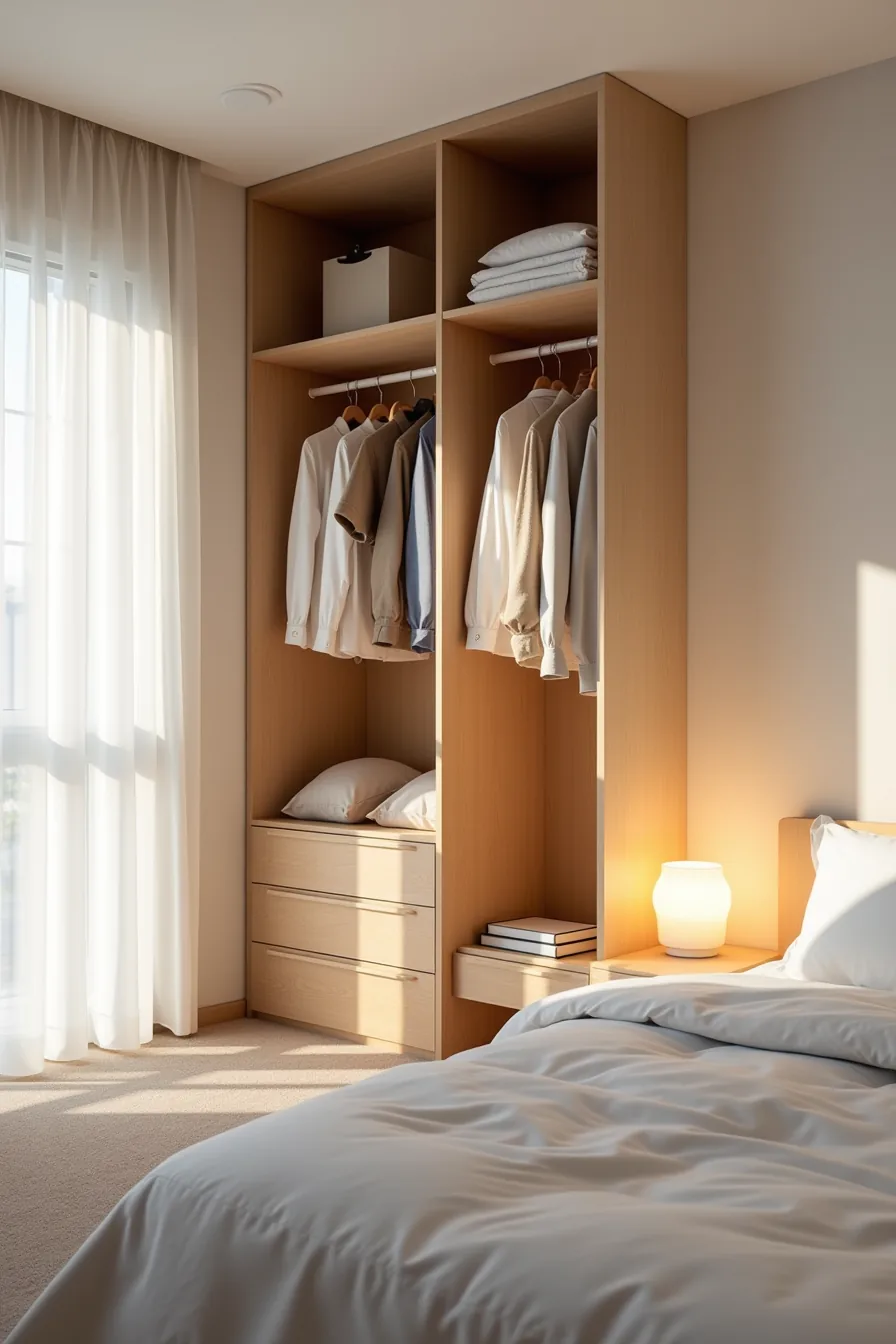
With your inventory sorted, fixed storage becomes a straightforward investment for owned homes. Built-in closets and under-bed drawers are permanent structures that maximize every usable inch of the room, but they demand planning before installation.
A typical built-in closet system with wooden shelves, a hanging rod, and pull-out drawers offers roughly 40–60 cubic feet of organized space depending on your room’s footprint. For the setup you see here, the hanging rod accommodates daily-wear clothing on hangers, while the wooden shelves above handle folded sweaters and seasonal items. The under-bed drawer at floor level is the workhorse for linens or off-season gear, it slides out fully for access, which matters more than drawer depth when you’re reaching for something at the back.
Installation costs vary widely, but expect to pay between $1,500 and $5,000 for a custom closet system, materials included. Under-bed drawers add $200–$800 depending on drawer size and hardware quality. The trade-off: permanent systems raise resale value slightly, but they’re non-negotiable once installed, you can’t reconfigure them on a whim.
Match the wood finish to your existing trim, and use soft-close glides rated for at least 50 pounds to avoid sagging under heavy loads. Annual maintenance is minimal: wipe down shelves quarterly and check drawer tracks for debris twice a year.
Adjustable and Renter-Friendly Bedroom Storage Ideas
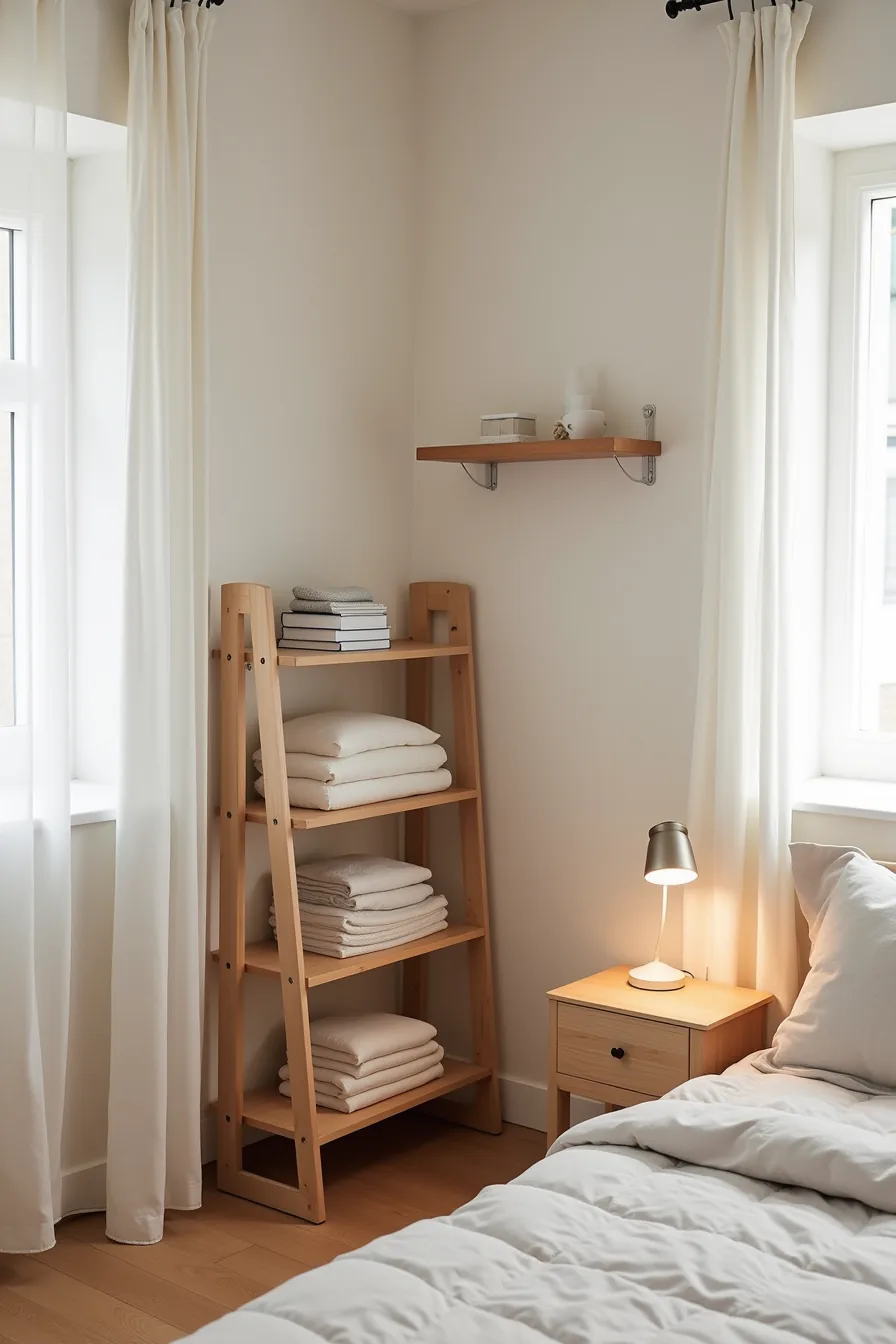
Freestanding modular shelving units are the most forgiving option if you rent or rearrange often. The unit in this setup uses adjustable shelves to match changing needs, tight spacing for folded knitwear, wider gaps for stacked baskets or a small bin for accessories. Because the shelves move along metal tracks, you can shift them in minutes without tools, adapting capacity as your wardrobe changes across seasons.
Wall-mounted tension rod shelves solve the corner problem without drilling into drywall. The two rods press between floor and ceiling to hold the shelf steady, supporting light loads, think folded T-shirts, hats, or a few books, not heavy boxes. Tension systems work best on flat, level ceilings and lose grip on textured or popcorn surfaces, so check that before committing.
For renters, the math favors modular over fixed: a good freestanding unit runs $100–$400, and the tension shelf adds $30–$80. Both move with you, leave no holes, and cost a fraction of built-ins. The trade-off is lower weight capacity and a slightly less finished look, visible brackets and gap between unit and wall.
To keep it clean, dust shelves monthly and wipe the tension rods with a damp cloth to prevent slippage from residue buildup.
Maximize Vertical Space Without Losing Floor Room
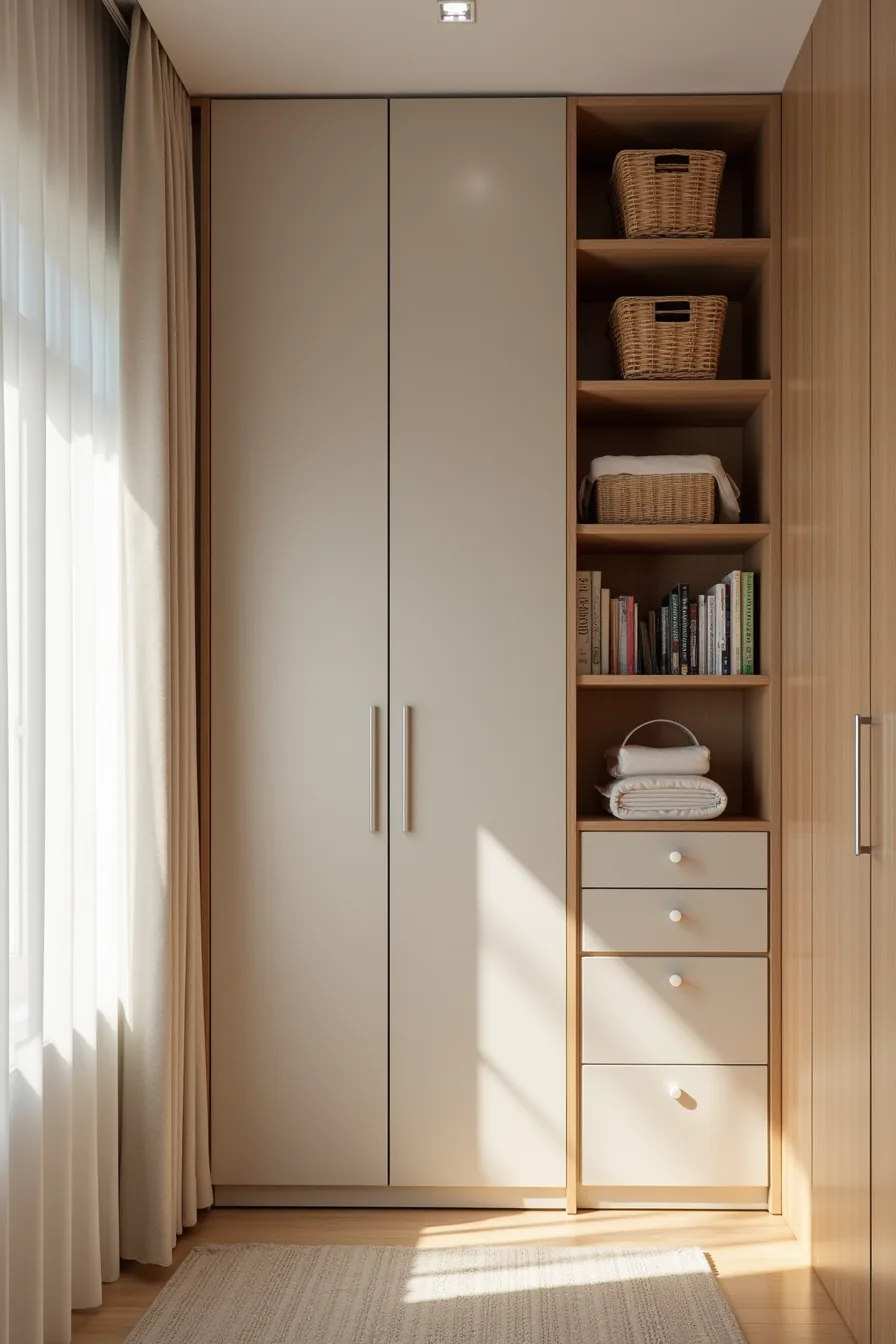
Wall-mounted shelving that runs floor-to-ceiling is the highest-capacity small bedroom solution when floor space is at a premium. In this setup, four fixed shelves span the wall’s width, each holding woven baskets and cardboard boxes that conceal the contents while keeping the visual line clean. You gain roughly 12–16 cubic feet of storage, equivalent to a large dresser, without sacrificing a single square foot of walking space.
Choose shelves 12–16 inches deep for standard baskets; deeper units turn the bottom shelves into awkward reaches.
A tall narrow cabinet beside the shelving handles the items you need daily. Look for one 18–24 inches wide and 60–72 inches tall with a mix of drawers and an open compartment; it occupies a footprint no larger than a floor lamp. Place it where the door swing clears it by at least 30 inches.
Both pieces demand secure wall anchoring, tall cabinets tip forward if a top drawer is overloaded, so bolt them to studs. Dust shelves and wipe box surfaces weekly to prevent buildup that makes the wall feel cluttered rather than spacious.
Hidden vs. Open Storage: Trade-Offs and Placement
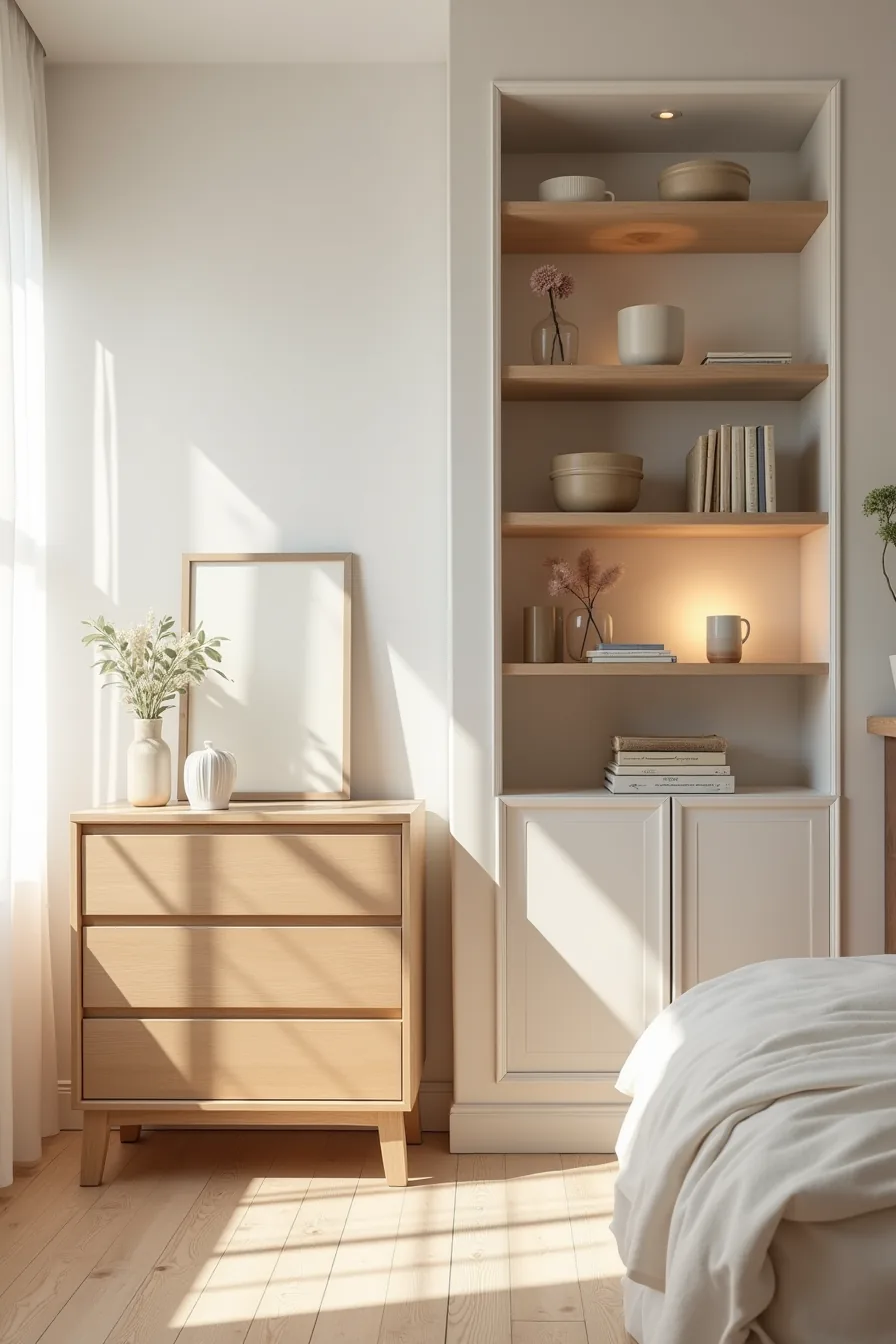
The closed wooden dresser on the left shields clutter behind solid fronts, so it suits anyone who prefers a calm, unbroken visual line. Open floating shelves on the right display neatly arranged items, which rewards tidiness but demands a consistent styling habit, every misfolded sweater becomes part of the decor. Consider what you store where: closed drawers hide off-season clothing or chargers you rarely touch, while open shelves should hold only items you use weekly and can keep organized in under two minutes.
Access speed and dust are the real trade-offs. Drawers give you one-motion access to folded stacks; open shelves require you to remove and replace each item individually. Open shelving also collects dust on every surface, so budget ten minutes weekly for wiping.
Labeling matters in both systems, use woven tags on baskets and drawer fronts, but skip labels entirely on open shelves where the contents are already visible. Match the dresser’s finish to your baseboards, and keep shelf items within a three-color palette to prevent visual noise.
Where to start
Start with the floor. Walk your bedroom’s perimeter and identify the three items causing the most visual clutter, they’re your first targets. Match each to one system from this guide, then measure the space before buying anything.
Your next step: empty one drawer or shelf, wipe it clean, and place a single labeled container inside. That one completed action creates the template for every other zone you tackle.
Frequently Asked Questions
How much bedroom storage capacity do I actually need?
Measure your wardrobe volume in linear feet of hanging space and shelf area. Most adults need 6-8 feet of hanging space and 10-12 cubic feet of shelving. Double it if you share the room.
Can I use bedroom storage ideas in a rental without damaging walls?
Yes. Use tension rods, freestanding shelving units, over-door hooks, and adhesive strips rated for your wall type. Avoid drilling unless your lease explicitly permits it.
Always patch and repaint before moving out.
What is the best way to organize small bedroom storage to keep it accessible?
Store daily-use items at waist-to-eye level. Place seasonal or rarely used items on top shelves or under the bed. Use clear bins with labels facing forward so you can identify contents without pulling everything out.
Should I choose hidden or open storage for a small bedroom?
Choose hidden storage for items that create visual clutter, clothing, paperwork, electronics. Use open storage only for a curated display of 5-7 items you use daily. Hidden storage reduces visual noise and makes the room feel larger.