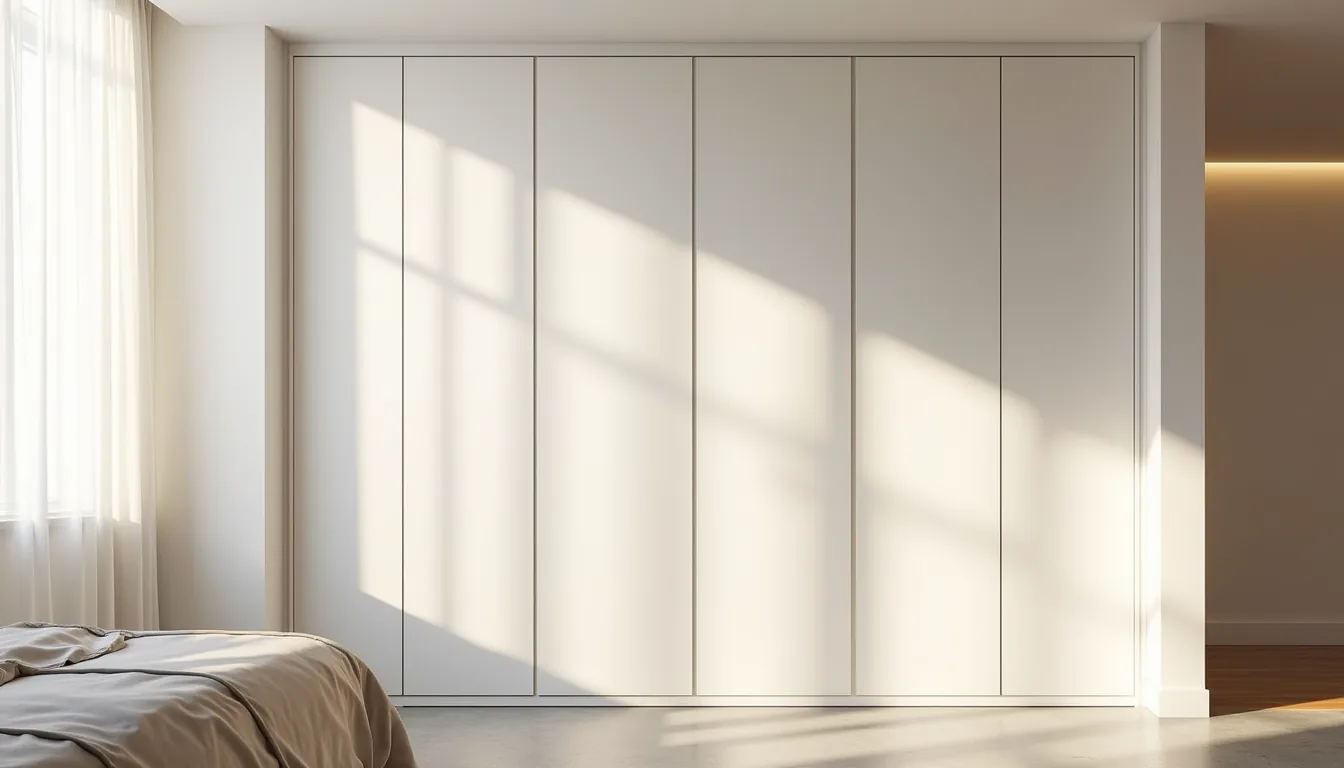

Modern wardrobe design for the bedroom isn’t one fixed look, it’s a set of practical choices about surface finish, door operation, and placement that you can tailor to your room’s dimensions, your storage habits, and your budget. From a slim sliding-door unit that leaves floor space intact to a full-height custom fit-out that hides an entire wall, the term spans six distinct solutions. Each demands different trade-offs in cost, maintenance, and clearance, so the right pick depends on how you live, not just how the room photographs.
Key takeaways
- Measure your ceiling height before choosing handleless sliding doors, since most modern systems require 96-120 inches of clearance for proper track installation and smooth operation.
- Opt for warm wood veneers over high-gloss finishes if your bedroom gets direct afternoon sunlight, as UV exposure causes glossy surfaces to yellow within 3-5 years.
- Budget 15-25% more for built-in wardrobes versus freestanding units, but expect them to last 20+ years compared to 8-12 years for most assembled furniture.
- Position wardrobe doors to open away from your bed’s footboard, leaving at least 32 inches of clear floor space for safe access and airflow circulation.
Handleless Modern Look: Clean Lines Without Hardware
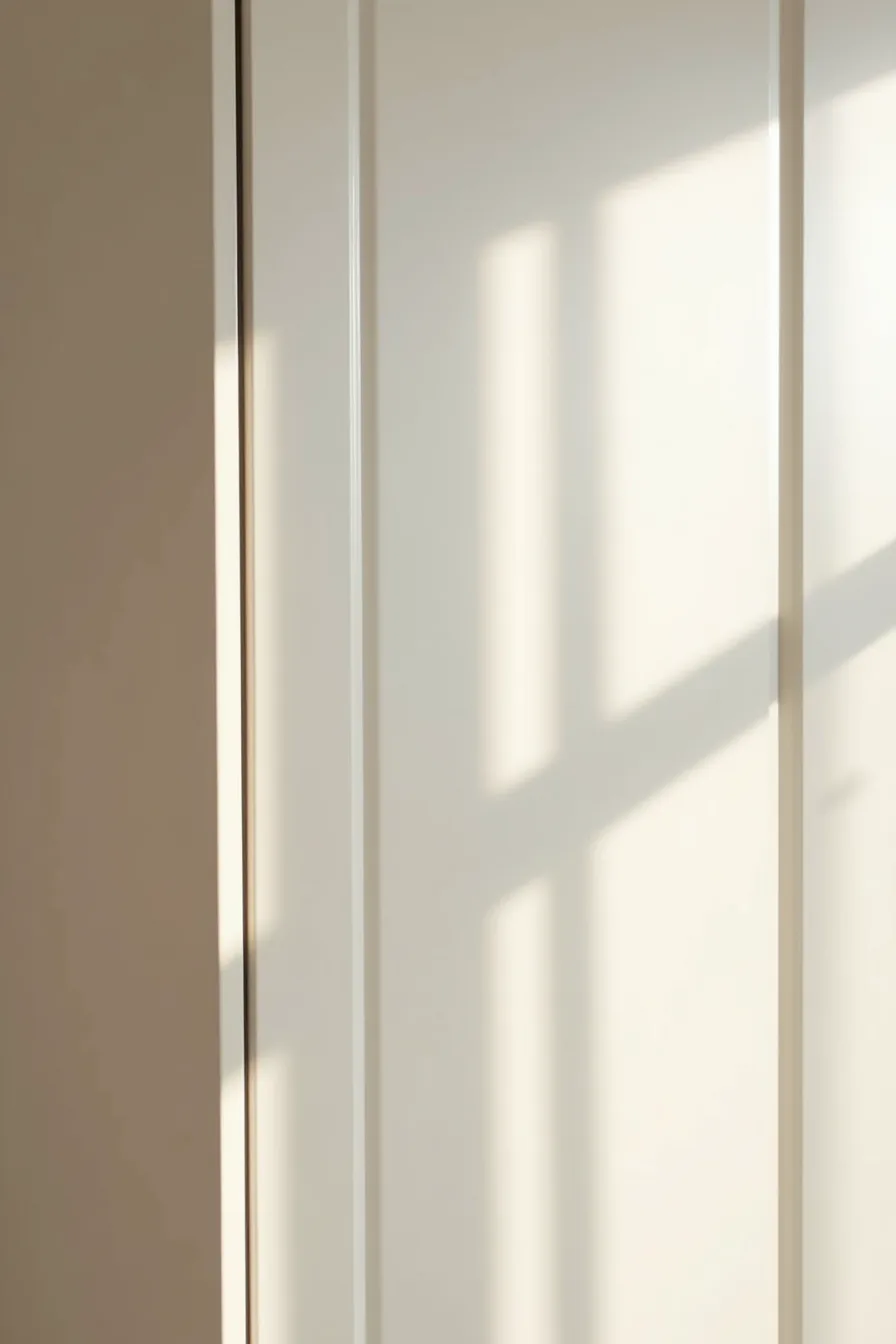
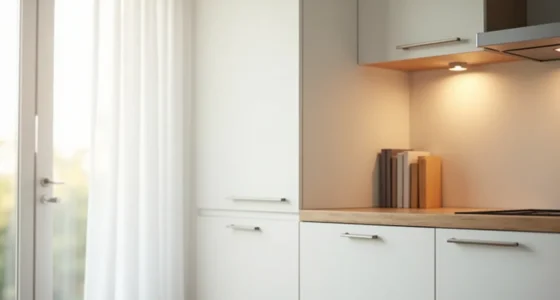
The handleless modern look delivers the purest expression of modern wardrobe design by eliminating the visual noise of knobs and pulls. Instead of hardware, the door achieves its function through a recessed push-to-open indent carved vertically at waist height. You press your finger into that groove, the door pops open on a mechanical mechanism, and the matte lacquer surface remains a single, uninterrupted plane.
This approach suits small bedrooms best. In tight spaces, minimizing protrusions prevents snagged clothing and keeps the circulation path clear. The matte white lacquer door also reflects diffused light rather than creating sharp highlights, which makes a narrow room feel slightly larger.
A subtle profile line running vertically down the door edge is the only break in the surface, giving the eye a quiet rhythm without demanding attention.
For renters, this is the smartest route. Push-to-open mechanisms attach to the inside of existing doors, so you avoid drilling visible hardware holes into landlord property. Reproducing the look costs roughly 15-30% less than a hardware-fitted wardrobe because you skip the pulls entirely.
The trade-off: you must keep the indent clean, as built-up grime becomes visible on light matte finishes, and the mechanism requires occasional adjustment if the door begins to close sluggishly.
Warm Wood Modernism: Balancing Natural Texture With Geometry
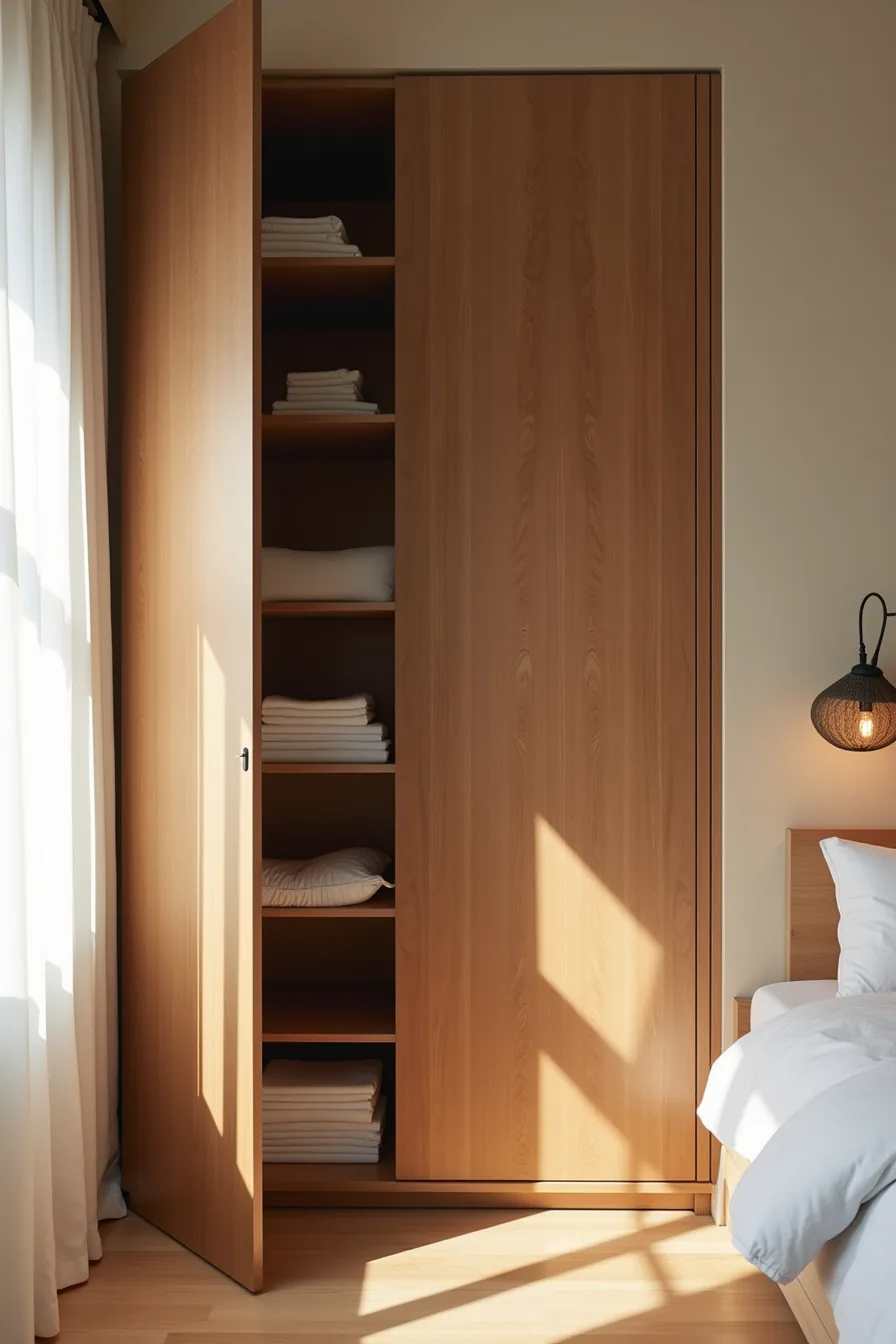
Warm wood modernism achieves its effect through deliberate restraint: the walnut veneer doors form the room’s single textural statement, while the beige plaster wall and wooden floor recede into quiet support. The horizontal grain direction is the key decision here. Running the veneer horizontally stretches the visual width of the wardrobe, which suits medium to large bedrooms where the unit anchors one full wall without competing with architectural features.
Visible interior shelving with folded linens transforms the wardrobe from a sealed box into a functional composition. You maintain this look by folding textiles in uniform stacks and limiting the palette to two or three tones. The trade-off: horizontal-grain veneer demands more careful maintenance than lacquer, requiring dusting twice monthly and occasional conditioning to prevent the timber from drying and cracking in low-humidity climates.
Expect to pay 20-40% more than a comparable lacquer finish, but the material warmth compensates for the cost in rooms that would otherwise feel sterile.
Minimal Lighting Detail: Strategic Accent Illumination
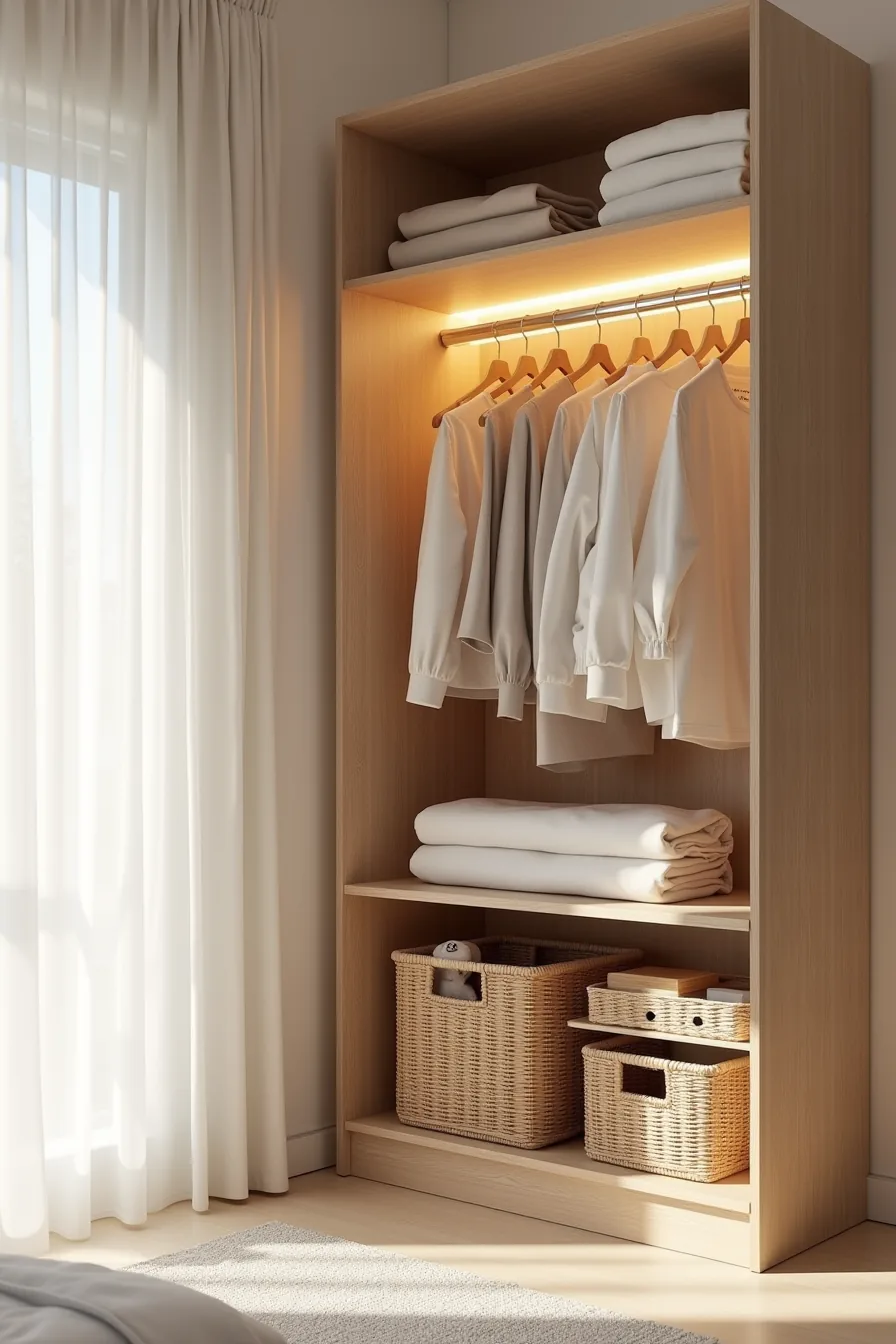
A single LED strip running along the underside of an upper shelf turns a standard reach-in wardrobe into a layered composition. The thin ribbon of warm white light grazes the front edges of folded clothing and illuminates the woven baskets below, creating depth without requiring any structural renovation. This is the most accessible entry point into modern wardrobe design: strip lighting with adhesive backing costs roughly $15–$40 per 5-meter roll and installs in under an hour with no electrician, provided you select a plug-in model with a remote or motion sensor.
This approach works best in display-focused layouts where you store everyday items openly rather than behind closed doors. Limit the light to a single color temperature around 2700–3000K to mimic incandescent warmth; cooler whites at 4000K+ make folded fabrics look clinical. Position the strip at the front third of the shelf underside, not flush against the back panel, so the beam catches the contents rather than the wall.
Dust the strip monthly along with the shelves, buildup dims the output noticeably within six months if ignored. For renter-friendly setups, use removable clips instead of permanent adhesive, and hide the power cable along the upper shelf’s back edge with small cable clips.
Built-In Versus Freestanding: Space and Flexibility Trade-Offs
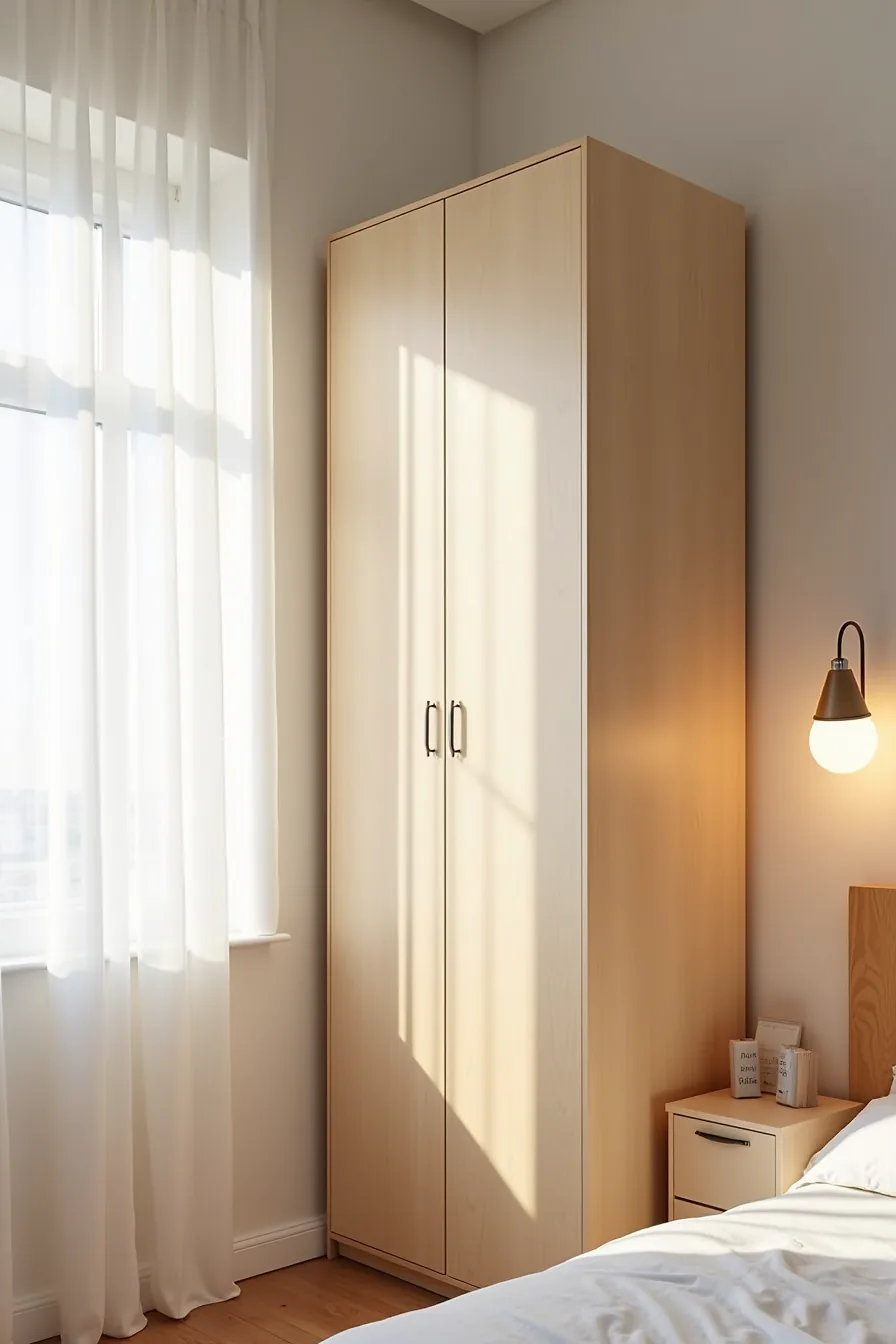
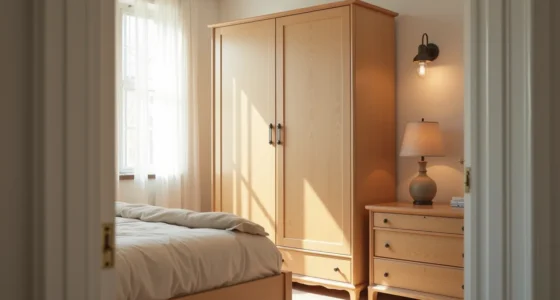
A freestanding wardrobe parked eight inches from the wall, with its unfinished plywood back panel exposed, isn’t a design oversight, it’s a deliberate flexibility play. That gap keeps the unit from trapping moisture against the plaster, lets you run cables behind it, and preserves access to the baseboard for cleaning or repairs. Built-ins, by contrast, claim every inch of floor-to-ceiling volume but commit you to that layout for as long as you own the room.
Freestanding units suit renters, frequent movers, and anyone whose storage needs shift seasonally. A typical 60–72-inch-tall model costs $300–$900, disassembles with a hex key, and relocates without patching drywall. Built-ins start around $1,200 for a basic reach-in and climb steeply with custom finishes, but they buy you uninterrupted wall coverage and eliminate the dust-collecting void behind the unit.
In a small bedroom under 100 square feet, push the freestanding wardrobe flush against the wall and accept the reduced airflow; in a large room, keep the gap and use the exposed back panel as a mounting surface for hooks or a full-length mirror.
Color and Material Pairing for Modern Wardrobe Ideas
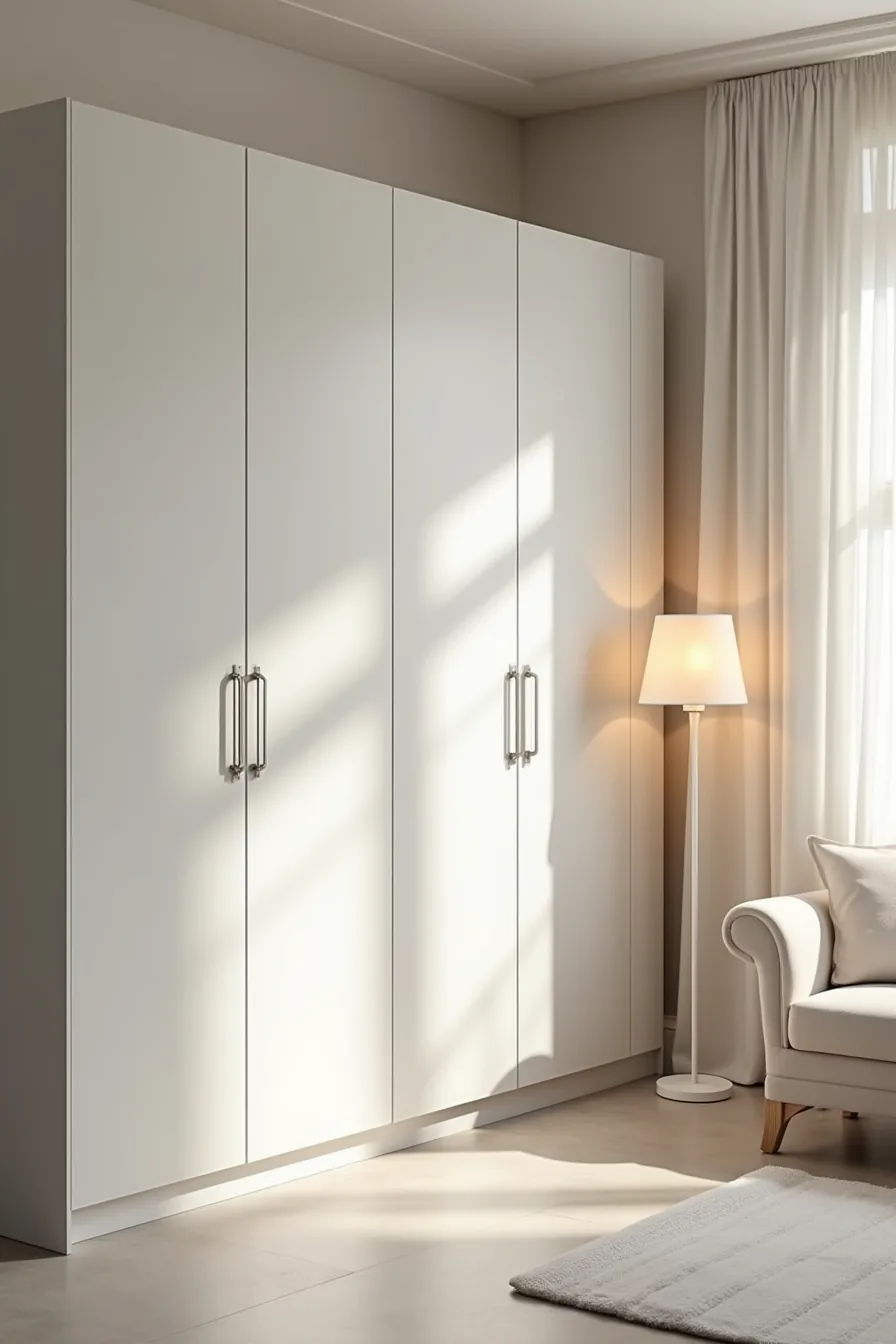
The grey lacquer doors against a warm-grey wall in this setup aren’t just a neutral-on-neutral choice, they’re a contrast in undertones. Cool grey lacquer reads crisper and more architectural, while the warm-grey wall adds softness, preventing the wardrobe from feeling clinical. On a polished concrete floor, this pairing grounds the furniture without competing with it, which is exactly what you want in a modern wardrobe design bedroom modern scheme: one material temperature leading, one supporting.
If you’re on a budget, swap lacquer for matte laminate in a light ash or greige finish; expect to pay $400–$800 for a 60–72-inch unit. Mid-range options use thermofoil, which mimics lacquer’s smoothness at roughly half the cost of true spray-painted finishes. At the investment end, real lacquer or oak veneer doors run $1,500–$3,000, but they resist yellowing and scratch more gracefully over a decade of daily use.
Match the interior lining to the door finish, light grey felt or white melamine, so the clean look continues when the doors open, and keep wall color within two shades of the wardrobe to maintain that unbroken, minimal sightline.
Layout and Proportion: Fitting Wardrobes Into Real Bedrooms
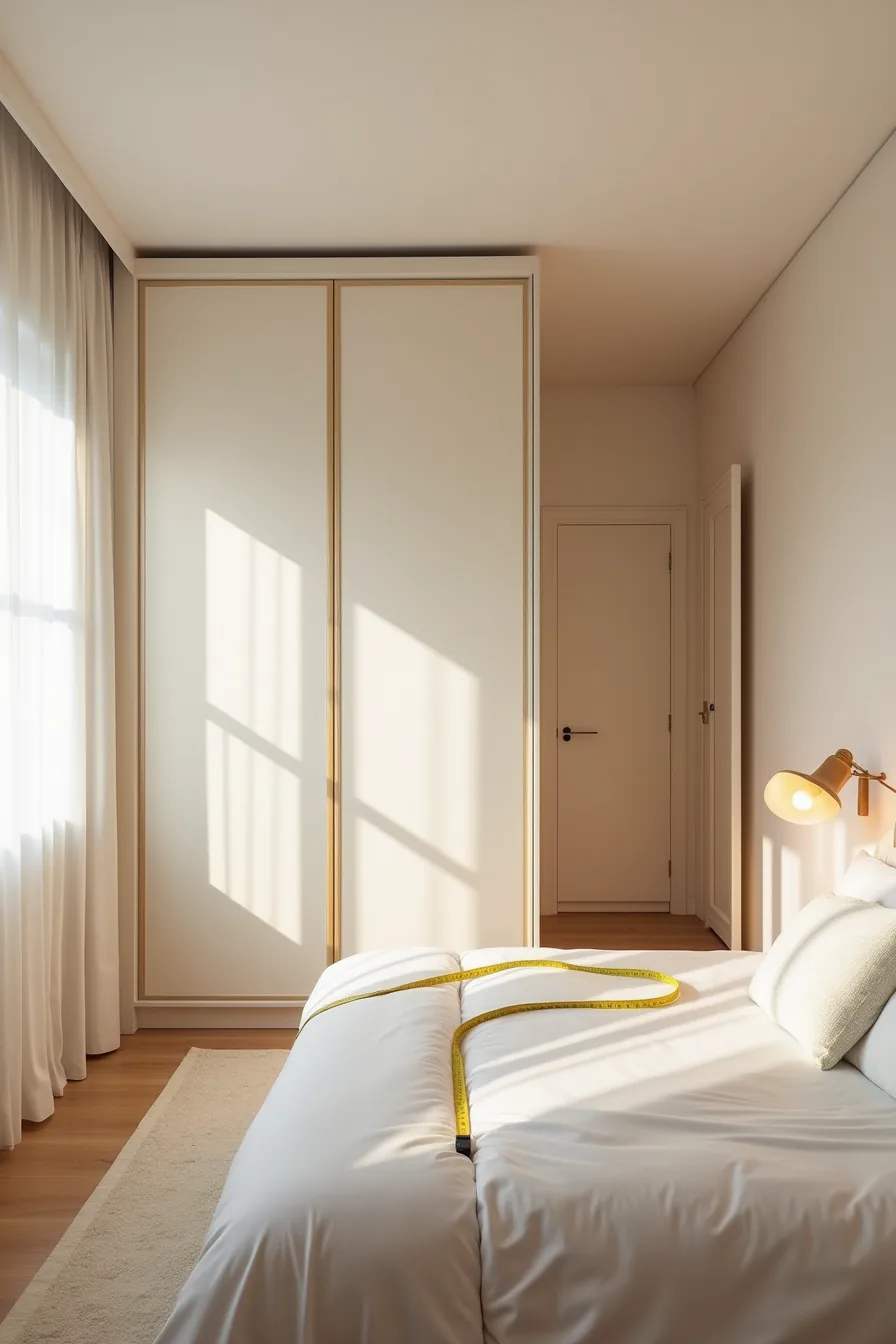
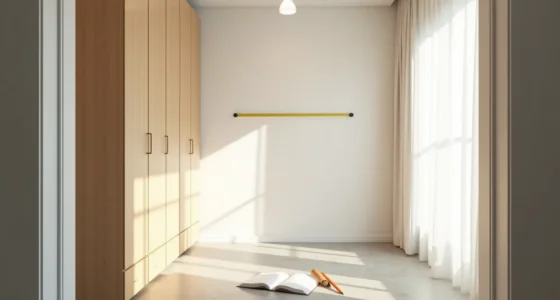
The overhead view captures the rule that matters most: the walking path stays completely clear. In a bedroom roughly 12 feet wide, placing the wardrobe at the foot-end of the bed leaves 30–36 inches of clearance on the right side, which is the minimum you need for comfortable movement and drawer access without sidestepping. The measuring tape stretched across the wardrobe width confirms the second rule, depth beats height for usability.
Most built-in wardrobes run 24 inches deep for hanging space; anything shallower than 20 inches forces clothes to angle against the door.
Scale wardrobe height against your ceiling, not the bed. If you’ve 9-foot ceilings, run the unit to 94–96 inches and use the top 12 for seasonal storage. In smaller rooms, prioritize doors that slide rather than swing, because they eliminate the 24-inch arc a hinged door requires for full opening.
For large rooms, keep 42–48 inches between the footboard and the wardrobe face, so the circulation path reads as intentional space, not gap.
Make the call in one afternoon
You now have six distinct directions for wardrobe design bedroom modern, each with different costs, permanence, and visual weight. Match your choice to your lease, budget, and how long you plan to stay.
The fastest win is measuring your wall and checking door swing clearance, that single number disqualifies half the options above. If you rent, start with the modular or freestanding route; if you own, the built-in pays off over a decade.
Grab a tape measure and map your bedroom’s longest uninterrupted wall tonight. That measurement tells you which of the six approaches fits before you spend a dollar.
Frequently Asked Questions
What is the difference between handleless and traditional wardrobe design in a modern bedroom?
Handleless designs use push-to-open or recessed grips, creating a flush, smooth front that emphasizes clean lines. Traditional wardrobes rely on visible handles, which add visual clutter but are easier to operate and cost less to maintain.
Can I install a modern wardrobe design in a rental bedroom without permanent damage?
Yes. Use freestanding wardrobes with adjustable feet instead of built-ins, or mount track systems on tension rods. Avoid drilling by securing tall units with anti-tip straps anchored to baseboards, which you can patch easily when moving out.
How much depth should a modern bedroom wardrobe have to maintain circulation?
Standard wardrobe depth runs 24–28 inches, but in tight bedrooms, reduce to 20–22 inches with shallow hanging rods and fold-flat doors. Leave at least 30 inches of clear floor space in front for comfortable opening and walking.
What lighting works best inside a modern wardrobe to keep it functional and visually clean?
Rechargeable LED strip lights with motion sensors, no wiring needed, attach magnetically to shelves or rods. Choose 4000K color temperature for true color rendering, and place strips on the top edge or side rails to avoid harsh shadows on clothes.