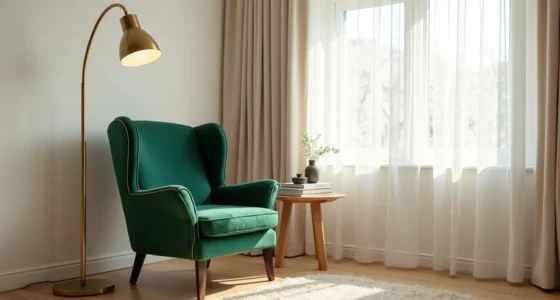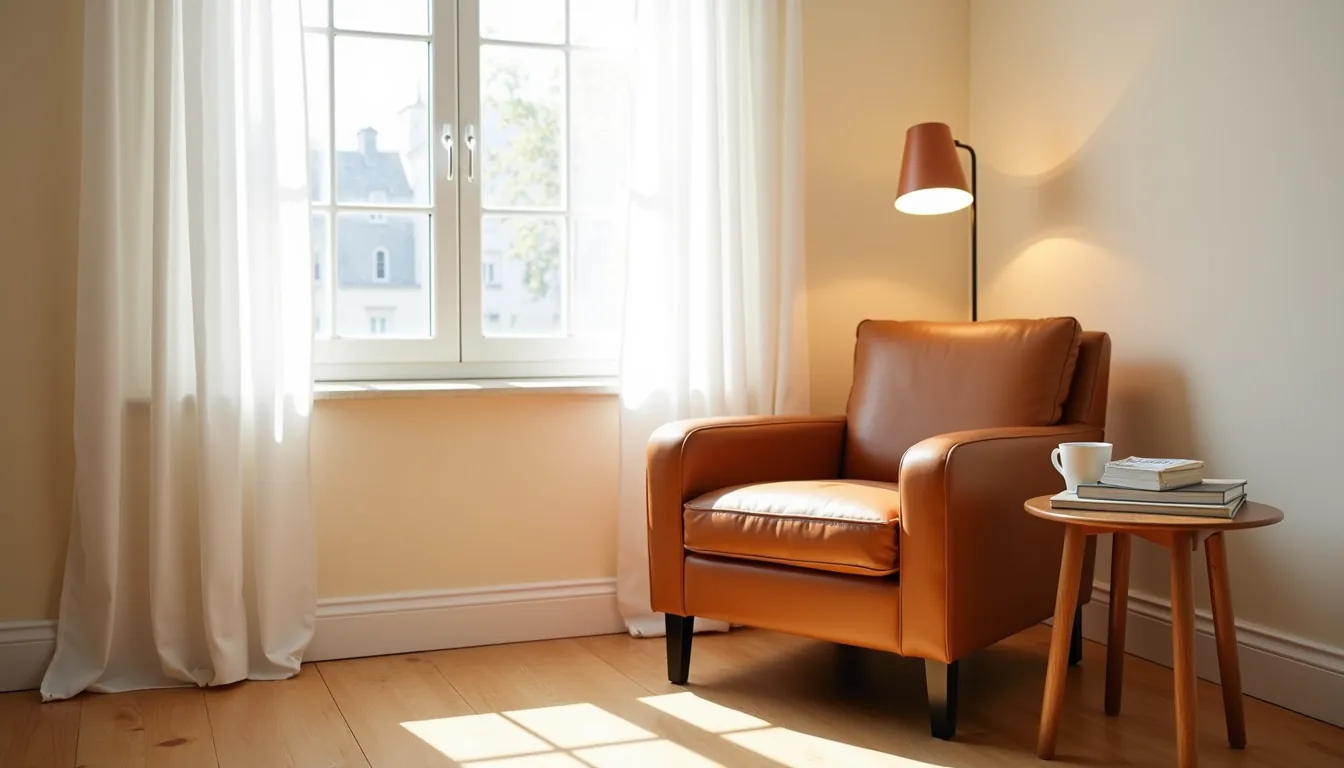

A leather arm chair earns its place in a room not through trend cycles, but through how its frame, hide, and proportions interact with your daily routines. The six approaches that follow range from a compact club chair for a city apartment to a sprawling, deep-seated lounger for a home office, plus one budget-friendly reupholstery trick and a renter-safe slipcover alternative. You’ll learn exactly which build suits your square footage, how to match leather type to pet traffic, and why a 34-inch seat height can ruin an otherwise perfect corner.
Key takeaways
- Match the frame to your room’s traffic: a low-profile leather arm chair suits modern, open-plan living, while a classic wingback demands a quiet corner with clearance for its tall back and arms.
- Expect faux leather to feel cooler to the touch and show wear faster; budget models typically last 3–5 years with regular conditioning, versus 15+ years for full-grain hides.
- Renters should secure a slipcovered leather-look chair or a secondhand piece you can sell later, avoiding permanent mounting or drilling into walls for anchoring.
- Invest in full-grain leather with a visible grain pattern and a metal or solid-wood frame; set aside 10–15% of the cost for annual conditioning and professional re-dyeing after a decade of use.
The Caramel Leather Arm Chair in a Neutral Study Corner

A caramel leather arm chair delivers the study corner mood you want without the heaviness of a dark oxblood or black hide. It reads instantly as warm and approachable, which matters when your corner measures around 8×10 feet and you plan to sit for hours with a book. In a space that size, the chair should occupy roughly one-third of the floor area, leaving at least 18 inches of clearance on both sides and 24 inches behind you for pulling out and standing up.
The caramel tone does double duty here: it softens the visual mass of a tall wooden bookshelf beside it, and it picks up the amber undertones in any warm-toned rug underneath. To avoid clutter, limit the zone to three elements, the chair, the shelf, and the rug, then layer a woven throw blanket over one arm for texture, not for warmth. If your existing wood furniture leans toward walnut or oak, caramel leather bridges them without matching exactly, so the corner feels curated rather than assembled as a set.
Keep the rug at least 6 inches wider than the chair’s footprint on all sides so the seating area reads as anchored, not floating.
Modern Low-Profile Leather Arm Chair vs. Classic Wingback Shape

The modern low-profile leather arm chair and the classic wingback shape solve opposite problems, even when both sit in cognac leather against the same neutral wall. The low-profile version keeps its arms close to the seat and its back around 28–32 inches tall, so it suits rooms with low windowsills, open sightlines, or a media console you don’t want blocked. Its shallow seat depth, typically 19–22 inches, lets you sit upright, which works for conversation areas or compact 10×12-foot living rooms where a bulky silhouette would crowd the path.
The wingback, by contrast, rises to 40–48 inches and extends wings outward to cradle your head and shoulders. That height anchors a large room visually but reads as a wall in a smaller space, so reserve it for corners with at least 36 inches of open wall behind it. Seat depth runs deeper at 22–25 inches, encouraging a reclined posture that suits reading nooks and fireside seating.
Pair the modern shape with a slim metal or wood base; the wingback needs a plinth or bun feet to balance its top-heavy frame. Choose modern when you want flexibility, classic when you want a fixed focal point, but measure both against your wall height before committing.
Black Leather Arm Chair for High-Traffic Living Rooms
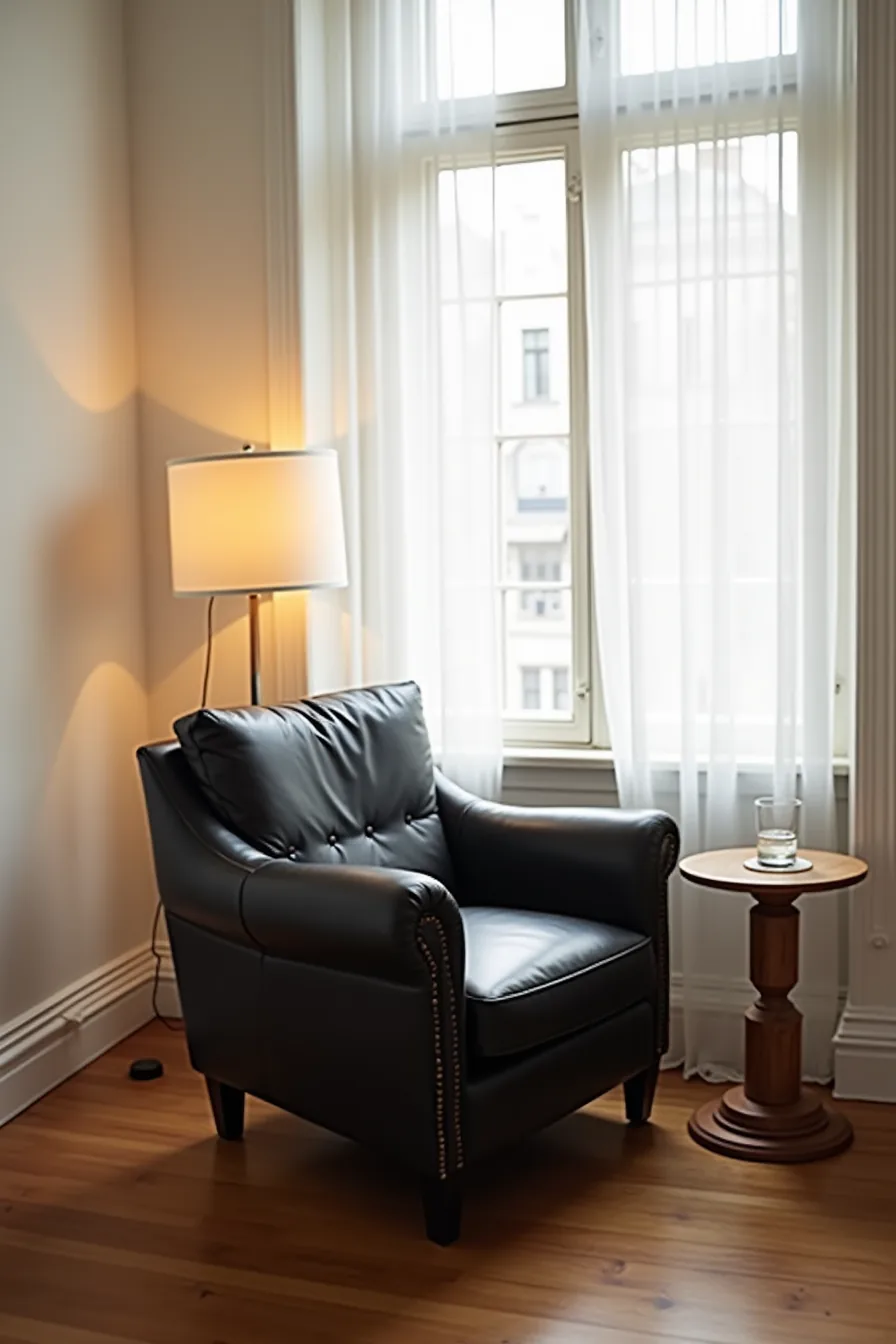
Black leather beats brown in one specific way: it hides denim transfer, pet hair, and everyday grime far better than cognac or tan, which show every scuff within weeks. The trade-off is that dust and fingerprints become more visible on black, so you trade one cleaning routine for another. Wipe the surface weekly with a damp microfiber cloth, and use a leather-specific cleaner every two to three months to prevent the finish from dulling.
Placement near a large window, with a side table holding just a water glass and coaster, works only if you manage sunlight exposure. Direct, prolonged UV light will fade even high-quality black leather to a grayish-brown within a couple of years, so either position the chair so light strikes one side at an angle rather than full-on, or use sheer curtains during peak hours. The hardwood floor beneath requires felt pads on the chair’s feet to prevent scratches when you shift your weight or reposition the piece.
Choose this route if your living room sees daily use, kids, or pets, black leather is the brown vs black leather decision that prioritizes camouflage over character.
Budget-Friendly Faux Leather Arm Chair: What to Expect
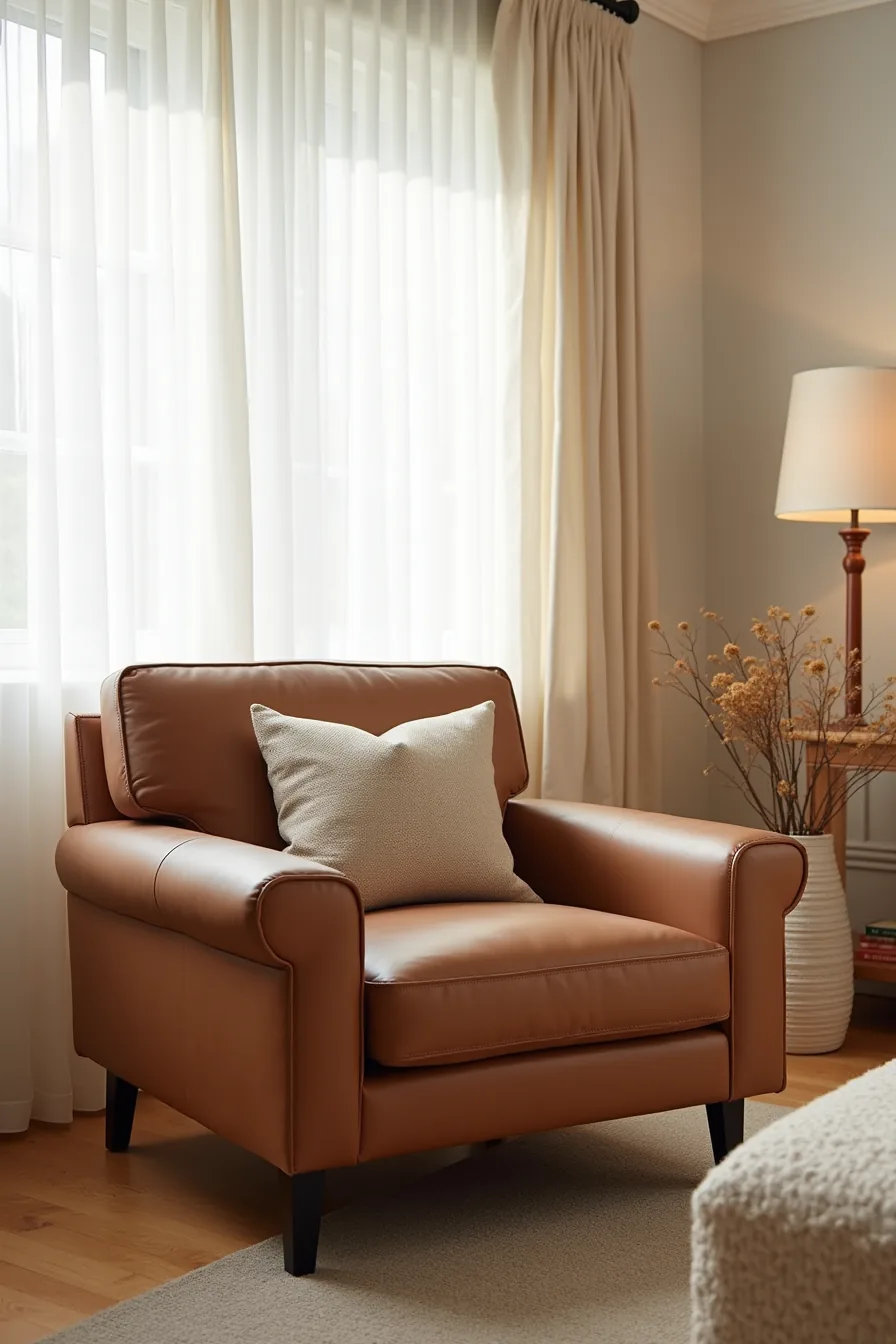
A quality faux leather arm chair typically costs $200–$450, which undercuts genuine leather by 60–70% for a comparable silhouette. That savings comes with a lifespan of roughly three to five years of regular use, versus a decade or more for well-maintained real hide. The most common failure point is the surface layer, polyester-backed polyurethane will peel or crack at stress points like the arm tops and seat edges once the topcoat wears through.
The family room setup with a throw pillow resting on the seat and a casual rug beneath is exactly where faux leather earns its place. These chairs resist moisture well, so juice spills and damp swimsuits wipe off without leaving the water rings that would mark genuine leather. However, the material doesn’t breathe, which means it feels sticky against bare skin in warm months, budget for a breathable seat cushion or accept that this works best in climate-controlled rooms.
Inspect the stitching along the arms before buying; double-stitched seams with reinforced corners typically outlast single-stitch construction by two or three years of daily sitting. Choose this route when you want the visual weight of leather without the investment, or when the chair sits in a room where children, pets, or heavy entertaining will accelerate wear regardless of material quality.
Renter-Approved Leather Arm Chair Without Commitment
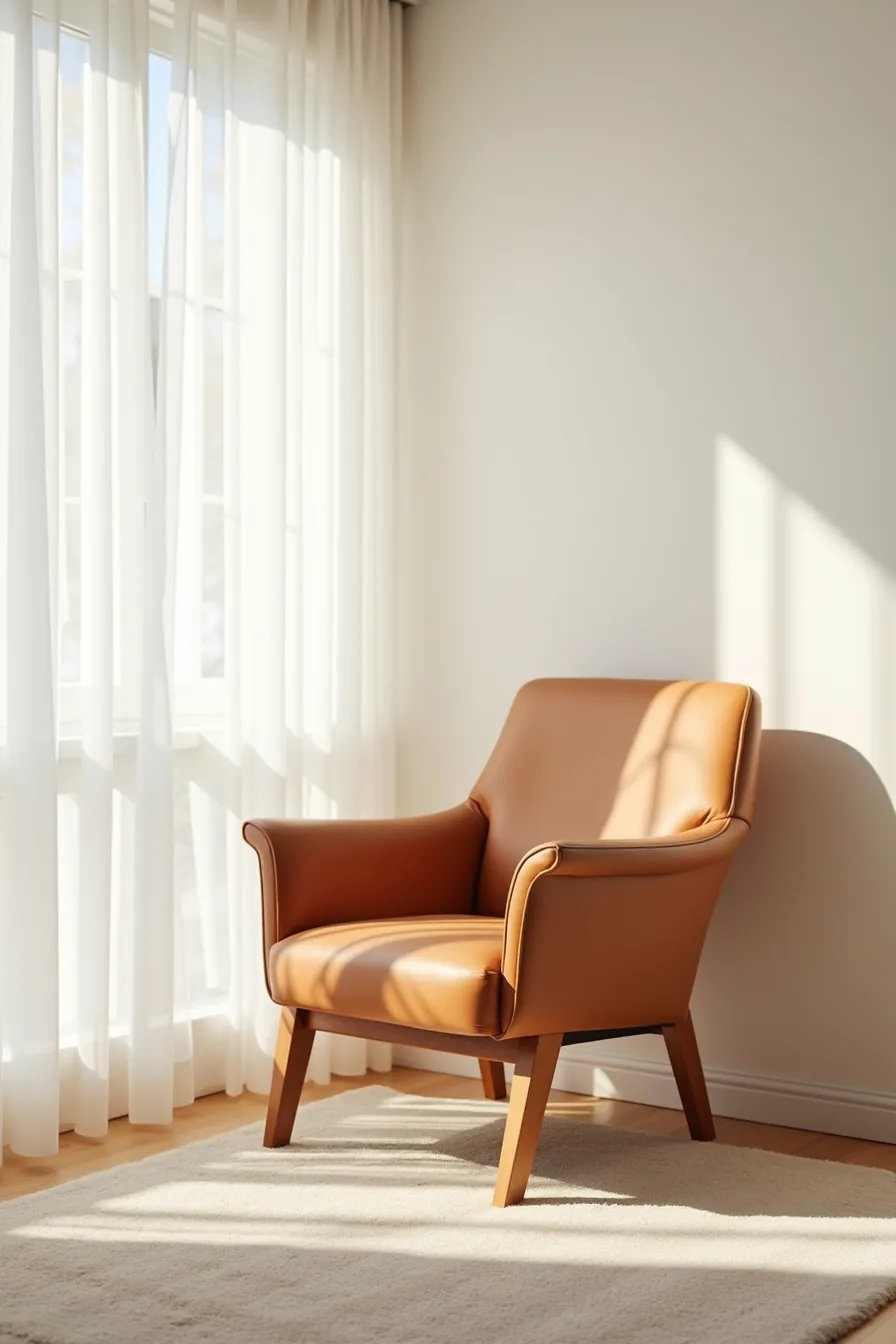
A portable leather arm chair with exposed wooden frame legs is your lease-safe entry point. This style, often built on kiln-dried hardwood with a slip-seat construction, lets you move it room to room without a single wall anchor. You can position it in front of a blank rental wall, set it on a light area rug, and relocate it whenever your layout mood shifts.
You avoid damage deposits because the design sidesteps the three rental pitfalls: no wall mounting, no heavy footprint that scuffs floors (felt glides on those wooden legs add a layer of protection), and no permanent positioning. Expect to pay $350–$700 for this format, which sits above budget faux but below custom upholstery. The trade-off is structural: exposed-frame chairs typically have less lumbar support than fully upholstered models, so pair yours with a firm back cushion if you plan long reading sessions.
Look for removable, zippered cushion covers, they let you clean spills without professional steam treatment, which landlords rarely offer to reimburse.
Investment-Grade Leather Arm Chair That Ages Beautifully in Style

A full-grain leather arm chair in deep cognac rewards you with a surface that improves yearly, developing a rich patina marked by creasing and subtle color shifts over 5–10 years of regular use. Unlike corrected leathers with a sprayed-on finish, full-grain retains the hide’s natural fiber structure, which means small scratches buff out with your fingertip instead of becoming permanent flaws. The leather-bound book resting on the seat signals this chair’s intended use: it’s built for repeated daily contact, not display-only appearances.
You’ll pay $1,200–$2,500 upfront for this tier, but the math favors you if you plan to keep the piece for over a decade. Condition the leather twice yearly with a pH-balanced cream, keep it at least 2 feet from the brass floor lamp to avoid heat drying, and expect to re-oil the hide every 18–24 months. The cognac tone hides minor wear better than black or oxblood, which telegraph every scuff immediately.
This route suits homeowners who value a piece that records their life rather than one that stays pristine, and who accept that a $400 restoration every 8–10 years is part of the ownership contract.
Your next move
Leather arm chairs reward deliberate choices, not impulse buys. You now have enough reference points to match a silhouette to your room’s proportions, daily habits, and budget ceiling. Skip the browsing spiral.
Commit to one actionable step: measure your target spot’s width, depth, and ceiling height, then screenshot three chairs from this guide that fit those numbers. That single comparison eliminates decision fatigue and keeps you aligned with your space’s real constraints. Bring those measurements to a showroom, sit in each candidate for ten minutes, and verify seat depth against your own leg length before purchasing.
Frequently Asked Questions
What’s the difference between brown and black leather arm chairs in terms of maintenance?
Brown hides scuffs and scratches far better than black, which shows every mark as a lighter streak. Black requires more frequent conditioning to prevent fading and cracking, especially near direct sunlight. Brown also tolerates dirt buildup more forgivingly between cleanings.
How much space do you actually need for a leather arm chair in a small bedroom?
You need a minimum of 24 inches of clear floor space in front for sitting and standing, plus at least 6 inches from walls for airflow. The chair itself typically spans 28–38 inches wide, so a 4-foot clearance corner works best.
Can you use a leather arm chair in a humid climate without damage?
Yes, but only with protection. Humidity above 60% encourages mold and mildew on untreated leather, so apply a water-resistant conditioner quarterly. Use a dehumidifier in the room and keep the chair at least 12 inches from exterior walls to reduce moisture absorption.
How often should you condition a leather arm chair to keep it looking new?
Condition every 6–12 months for normal use, but every 3–4 months in dry or air-conditioned rooms where leather dries faster. Wipe spills immediately and dust weekly. Over-conditioning causes sticky buildup, so follow the product’s instructions and test on a hidden spot first.